When All Your Dreams Come True - Wicked
Part One, For Good, and all the challenges of adaptation
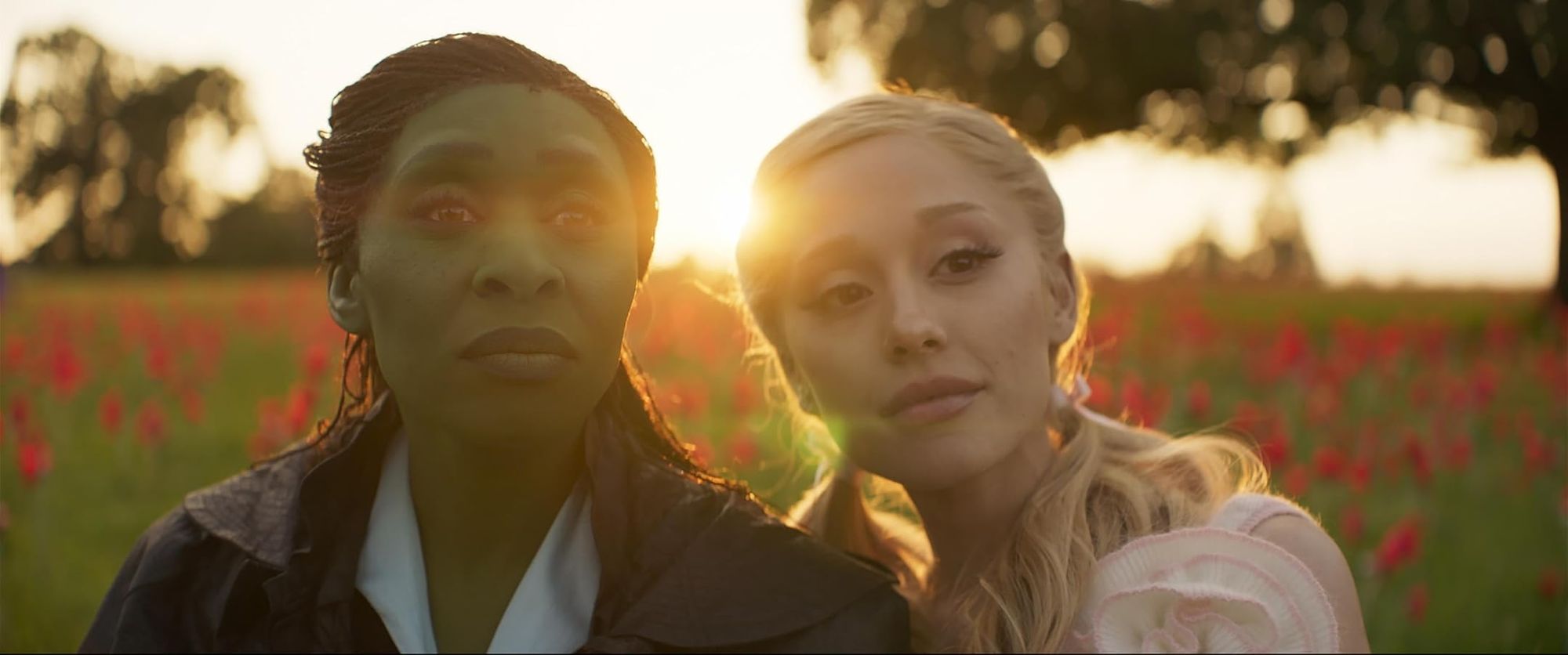
Splitting Wicked into two films was always the right call.
Unfortunately, that doesn’t fix the problems inherent in Wicked.
It’s not surprising that Wicked Part One was an insane blockbuster. It’s a long-awaited adaptation of the this century’s most successful non-Hamilton Broadway production. Composer Steven Schwartz fills the first act with nonstop bops and blends perfectly with the source material’s genius. What if The Wicked Witch of the West were just a misunderstood character? And what if she went to school just like every other kid in Oz and happened to be roommates with Glind the Good Witch of the North? Start printing money.
And yet, with Wicked For Good the response has been much more guarded. Its opening weekend might have eclipsed last year’s installment, but most of the fervor is because Part One was such a smash hit. Like the audience reaction, everything about this second installment is drafting off the momentum of the original.
There’s a reason for all of this.
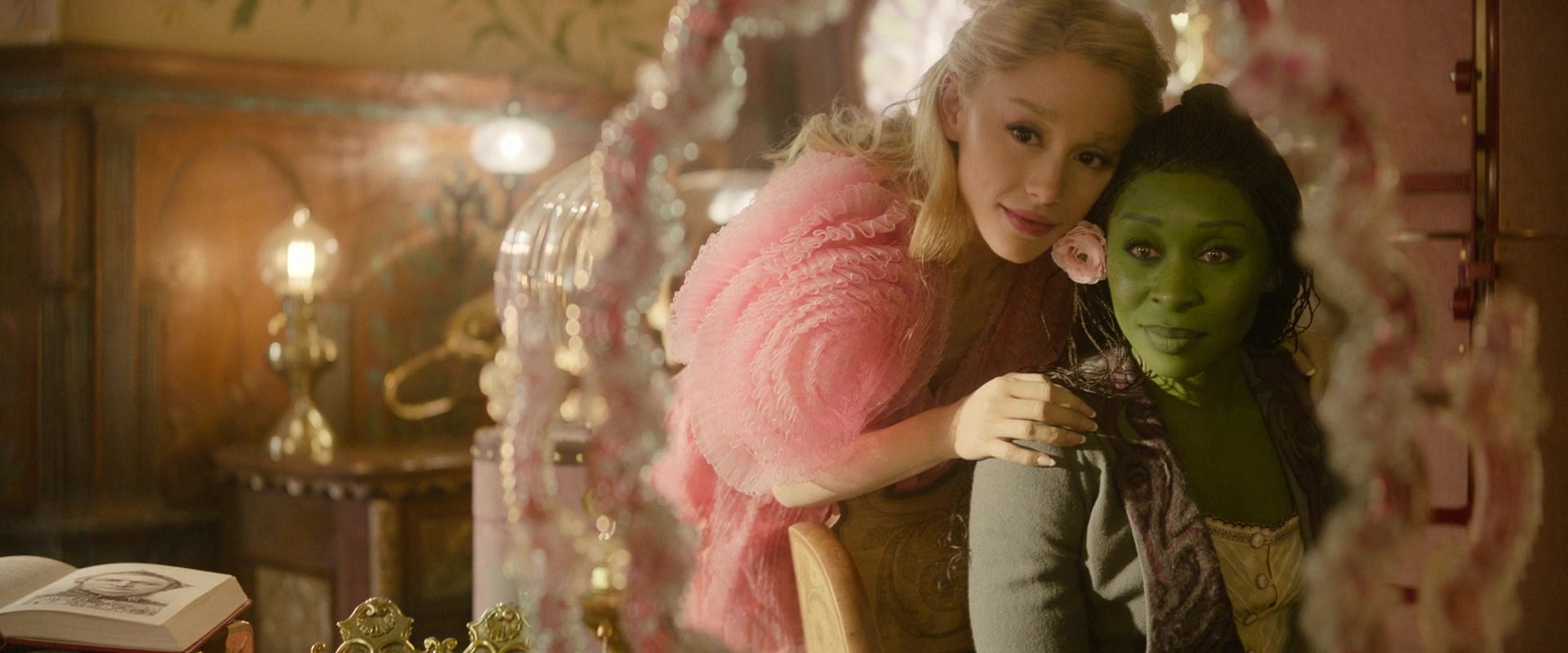
What Part One does right…
One of the most challenging aspects of adapting Wicked is that it’s never gone away. Since it opened in 2003, there’s never been a major revival. Idina Menzel and Kristen Chenoweth defined those characters, and the touring production that’s been circling the country for two decades still derives its vision from the original production (which has never closed). That means there’s no other cast albums/revivals to reshape the perception, and no one has ever had the opportunity to reinterpret or reinvent the show. Stage performers are still iterating on the vision that Menzel and Chenoweth originated.
Wicked Part One was the first significant opportunity for a fresh take on Wicked.
Director John M. Chu stepped up to the challenge and made bold choices to shake things up, the biggest among them casting Cynthia Erivo and Ariana Grande to play Elphaba and Glinda respectively.
Grande’s performance feels very Chenoweth-inspired, though it’s hard to separate the iconicness of the performance from the ditzy character as written. “Popular” is always going to be a bubblegum pop showstopper, but Grande adds a bright facade to mask the deep loneliness inside of her. Her performance elevates the role. Madame Morrible’s micro-aggressions hurt her at every turn but she keeps putting on a brave face. Glinda’s growth over the two films is evolve from a character who receives everything because of who she is to a powerful leader who seizes control of her own narrative. She is the story’s protagonist. In playing her, Grande is exceptional and underrated in every respect.
But Erivo’s performance is utterly astounding. She has specific takes on the songs and character that feel perfectly Elphaba, though they arrive through a necessarily different filter. Her “The Wizard and I” features different vocal riffs. Her battle cry to cap off “Defying Gravity” might at first sound weird (thanks to decades of hearing Menzel belt it), but it’s a magnificent modification to the song that makes it her own.
Beyond just the casting (which is otherwise fabulous), the other thing Part One has going for it is its ability to divorce itself from The Wizard of Oz. The premise of “what if Elphaba and Glinda were college roommates” is one of the great premises ever, and the film milks every bit of school drama it can out of its run time. The only way they could do more is if they turned Wicked into a television series that’s basically Freaks and Geeks but in Oz.
With its extended runtime, it has the space to breathe. Controversially, both films basically double the runtime of the stage show. It’s difficult to tell all of the differences between the stage and its cinematic adaptation, but any person saying Part One is too long should say where they would make cuts. If the goal is to get the show down to under two hours, they would have to start cutting songs. The soundtrack alone is nearly a full hour by itself. At what point should Chu start cutting musical numbers?
In the end, the thing about Part One is it took a show I’ve always loved and gave me a movie version with everything I could possibly have wanted from an adaptation. It left me jealous of all the people for whom Wicked is their favorite musical and how amazing it is that they got such a pitch perfect, big budget adaptation. No way is the eventual film of Hamilton going to be that good.
And then, of course, it split the show in half and left audiences on “Defying Gravity”. No way would audiences be able to process anything after the musical’s biggest showstopper and one of the great act-closers of all time. If studios felt comfortable releasing long films with intermissions, maybe it could have worked in long-version form. But as it stands, the cliffhanger is magnificent. Elphaba boldly declares war on the Wizard and his fascistic rule before flying away on her broomstick. The Wizard and Morrible turn all of Oz against her, declaring her an outlaw and weaponizing her inherent otherness. Meanwhile, Glinda shuffles away under Morrible’s wing, utterly incapable of denying a society that has always accepted her.
There’s nothing like a good cliffhanger.
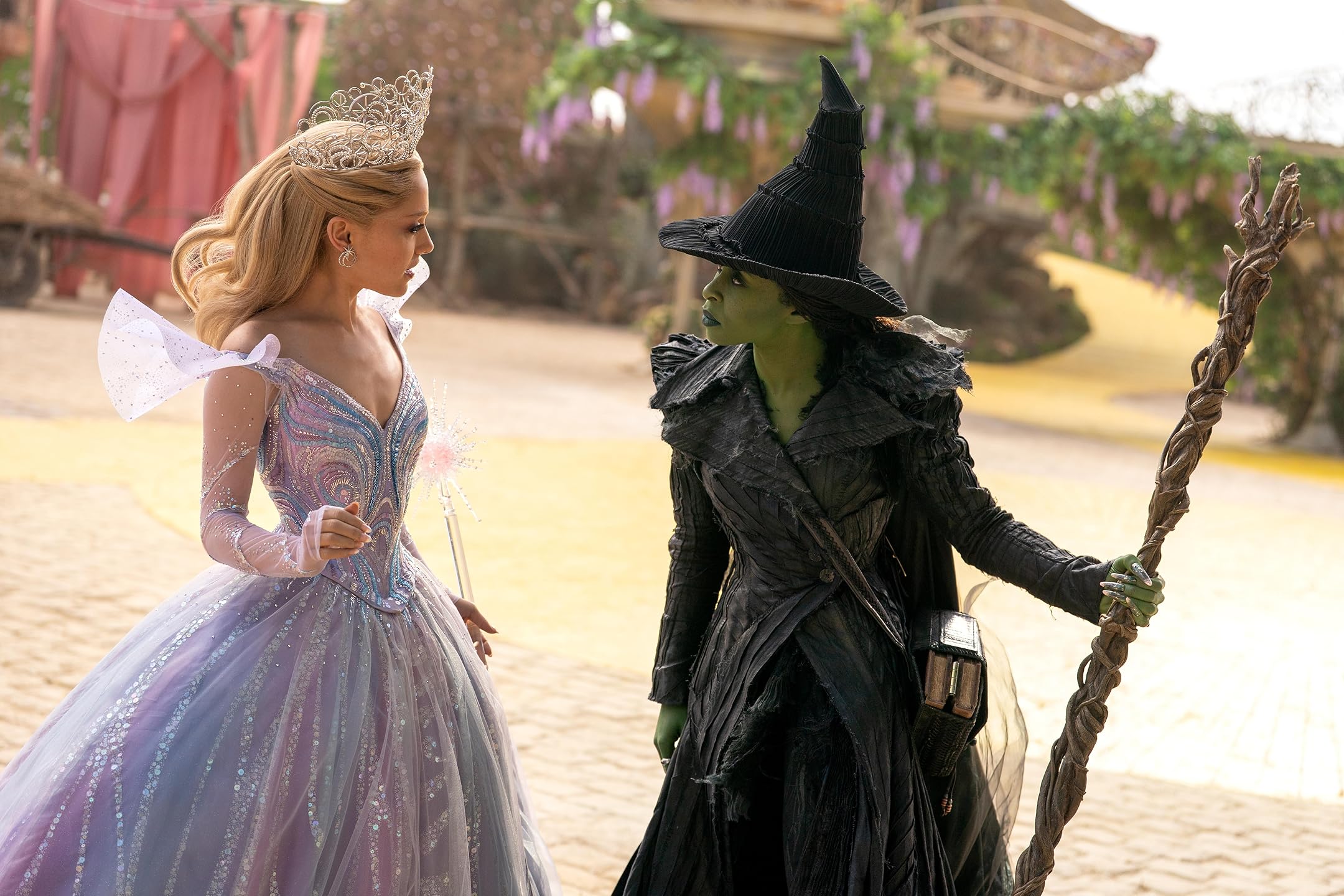
… is what more or less sinks For Good…
One of the regular refrains of Wicked is that the first act is good, but that the second act falls off. It has its moments: “No Good Deed” is a show stopper and “For Good” is a gorgeous meditation that brings it all home. Hell, I even love the sensual consummation of “As Long As You’re Mine” and the minor chords of “March of the Witch Hunters”.
But Act One features a wide open plane of story to explore: Shiz. The oppression of the animals. The relationship between Elphaba and Galinda. The tease of Elphaba and Fiyero. Everything with Nessa and Boq.
Act Two on the other hand has to diligently put the pieces together to finish the story they’ve created. And it does so like an absolute rocket, jetting from scene to scene with barely enough time to get bearings before moving on. So many balls are in the air that it would be a rush to tie them all together even without the constraint of the post-intermission hour they have.
All that, and it doesn’t include the fact that it has to loop into one of the most famous films ever.
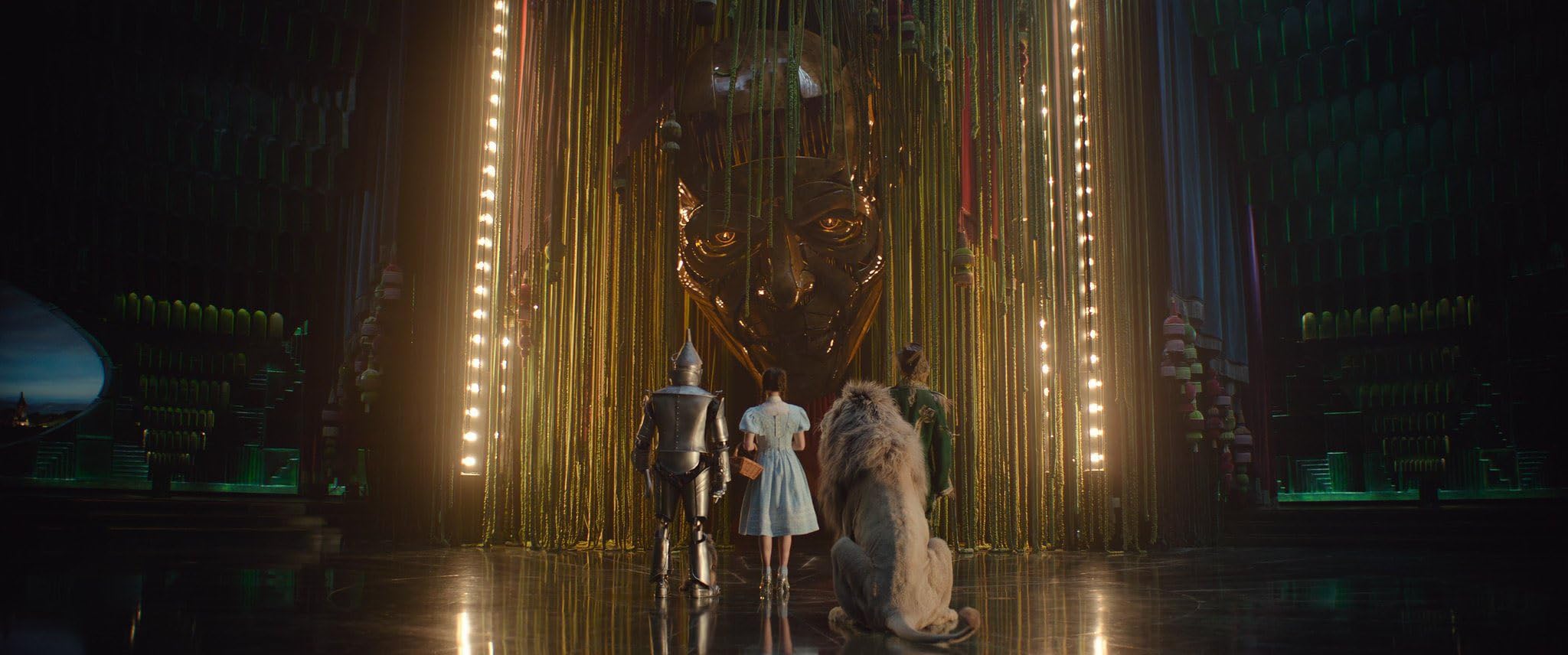
In the shadow of greatness
The Wizard of Oz is the the most famous movie of all time. More than any other, almost everyone has seen it and even if they haven’t they certainly know about it. Everyone knows about the transition to color and the red shoes and “Somewhere Over the Rainbow”. Hell, half the movie has become cliche, with iconic lines like “I’m off to see the Wizard”, “follow the yellow brick road”, “there’s no place like home”, “pay no attention to the man behind the curtain”, “I’m melting” and on and on. Everyone knows it (as they should, by the way. It’s an incredible film). Any ostensibly objective “best films” list that doesn’t feature The Wizard of Oz is not a serious one.
This presents a huge problem. If everyone knows the story then they know that Dorothy has to show up. They’re aware that (even if we don’t see it) she’s gonna do the whole song and dance with the Scarecrow, Tin Man, and Cowardly Lion… and then she splashes Elphaba and melts her. Dorothy Gale carries with her an immense narrative gravitational pull. For Good sidelines her as much as it possibly can, working overtime to try to keep the focus on Elphaba and Glinda.
None of this helps the inevitability of Wicked and where it’s going. The ending can be askew from what the audience expects, but it can’t escape Dorothy’s journey. Elphaba’s meeting Glinda in Munchkinland after the house drops on her sister plays with the “you just missed her” trope, and they can’t escape from the silhouette death that comes in the aftermath of “For Good”. It’s not like Elphaba can murder Dorothy and steal the shoes and then conquer Oz.
If it weren’t so welcome, this fidelity would be a shackling. Despite this, For Good nods deference where it has to. Part One characters slot into familiar roles in surprising ways, so much so it runs headlong into the issue of being “fan servicey”.
Over the weekend I was having a conversation with a friend about this and he cited someone saying the line “I’m off to see the Wizard” as a big cringe moment. I empathize. Though if a character has to tell someone they’re going to the Wizard and go out of their way to not say the line it will stick out even more. The audience knows all of the references. If Wicked can’t escape them (nothing could), it should at least milk it for the joy of connecting to one of the most iconic films of all time while separating itself as much as possible so it can stand on its own.
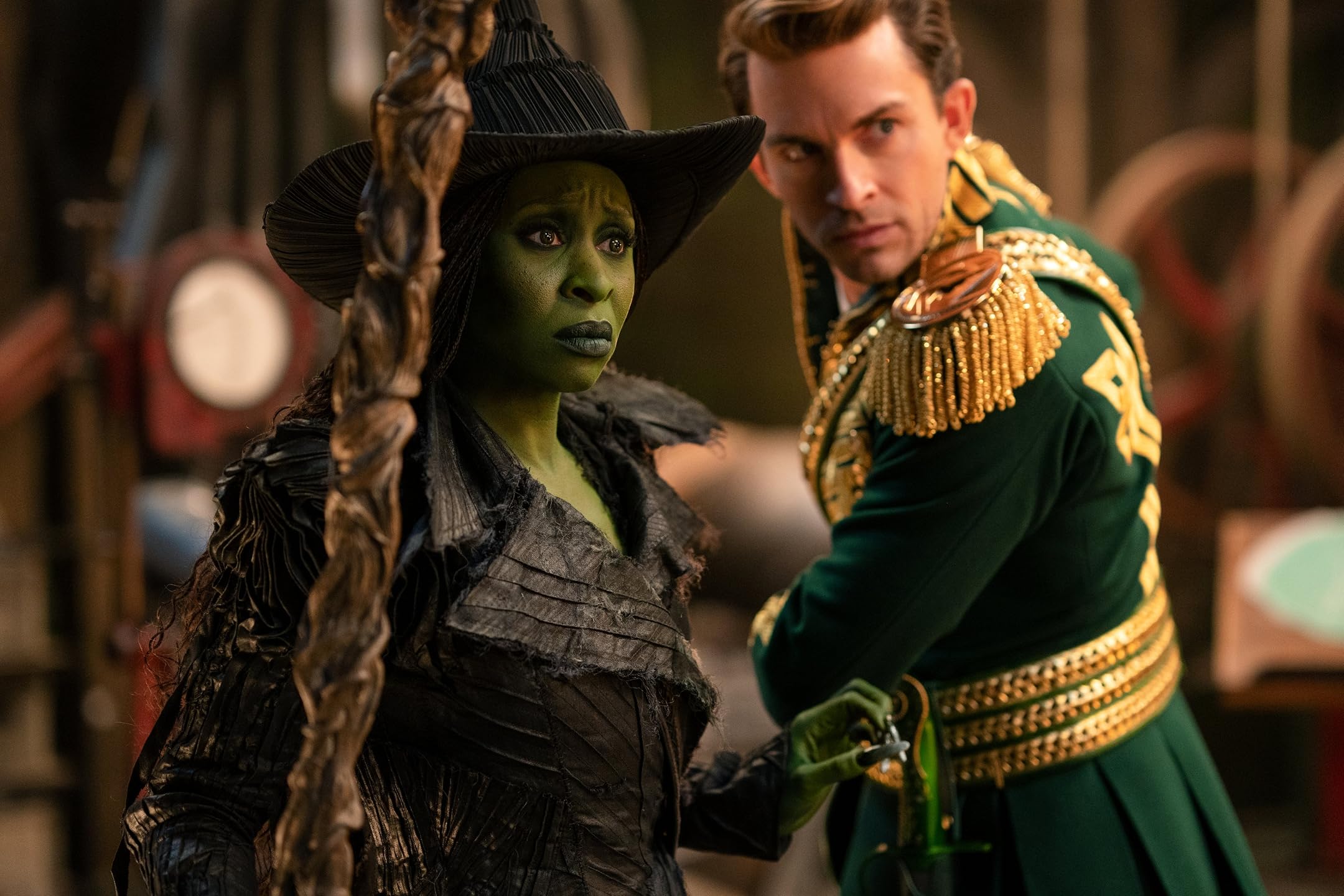
Plugging the gaps
All of this to say, for all that I thoroughly enjoyed For Good, it doesn’t really work. It’s too dependent on both Part One (in trying to continue the story) and The Wizard of Oz (in trying to fit into it), trying to juggle these two stories in a way that’s satisfying.
This, though, is a problem with the musical itself. Act Two is less popular because it’s less good. It’s too rushed, too frenetic. Nessa has basically one extended scene to shine before Dorothy’s house kills her. Marissa Bode makes the most of her time1, but it feels like scenes and texture are missing to help make the subplot resonate. Boq gets an extra scene where he tries to leave Munchkinland only to find himself trapped in an authoritarian nightmare of restricted movement. But all of his arc comes through the lens of Nessa. Part of that is choice. Boq’s niceness leaves him vulnerable to supplicating to Nessa. He is trapped and without his own life to live. When the big reveal of Boq’s “true” identity comes about, it functionally ends his story. Wicked leans on his analagous Wizard of Oz role to fill in that (unpleasant) arc resolution.
Likewise, Fiyero’s heel turn feels abrupt even though they’ve been telegraphing it since his first meeting with Elphaba. And no sooner have they gotten together than he sacrifices himself so she can make her escape from the trap at her sister’s death.
Hell, even Elphaba’s vigilante crusade to save the animals doesn’t have the weight of revolution behind it. Part of that feeds into the idea that she’s not the maniacal powerhouse of the original story. Instead, she’s an individual with a righteous cause but without any idea of what she’s doing or how she hopes to accomplish it. Fear of her comes entirely from the Wizard and Morrible’s propaganda effort. It’s a basically perfect take on her, managing to navigate both versions of the character without either contradicting the other. That said, the limited real estate doesn’t leave much time to develop that aspect of her character.
Most damningly, it separates Elphaba and Glinda for basically the entire run time. In the show, they meet only in the wake of Nessa’s death/Dorothy’s arrival and then again for “For Good”. What in Act One was an intertwined narrative breaks itself into two parallel tracks, covering the same amount of story in less time and with less real estate.
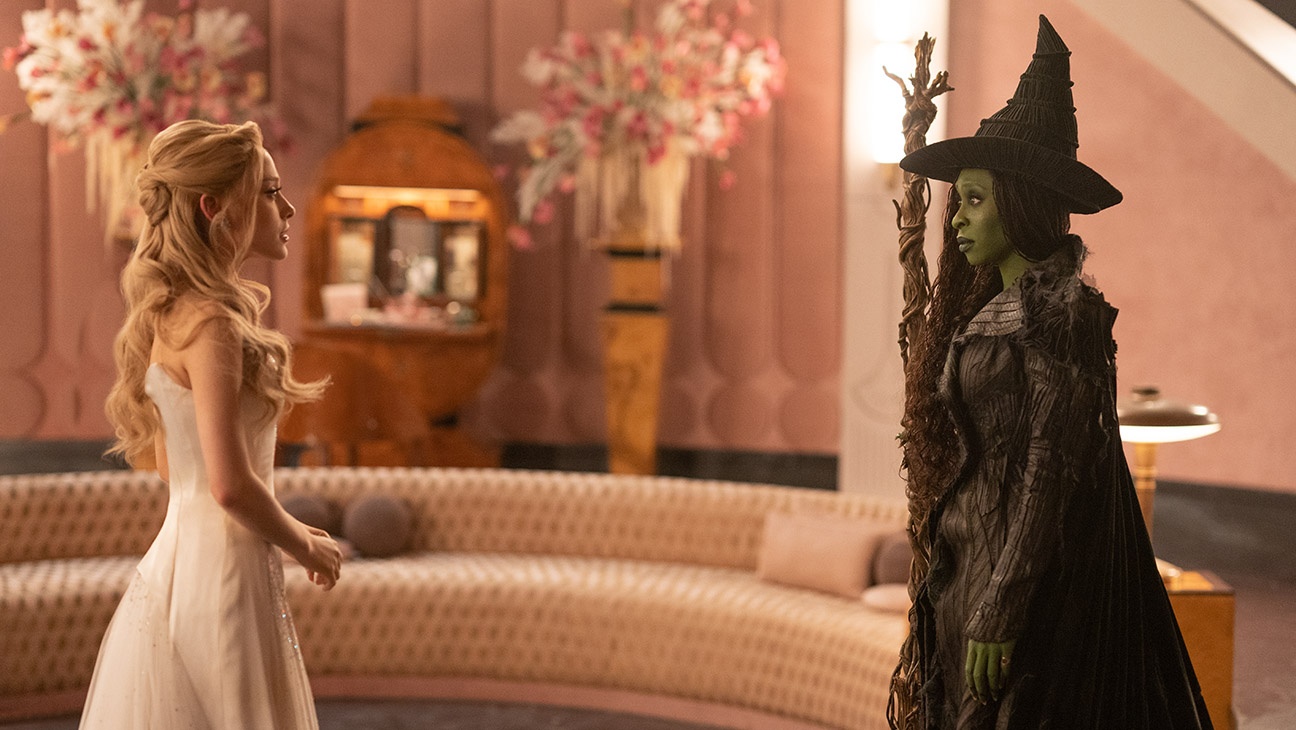
The film tries to minimize this. It might introduce Elphaba and Glinda separately, but connects them wherever it can. Elphaba’s sky writing happens while Glinda is underneath it, and the two of them meet in Glinda’s quarters prior to her wedding to Fiyero. They also rewrite “Wonderful” from a Wizard/Elphaba duet to a trio that includes Glinda. It might desaturate the relationship between Elphaba and the Wizard, but strengthening the bond between the two friends is far more important from a relationship defined by oblivion.
In this small change, keeping the two of them on their own respective journeys that slightly overlap is what makes their “For Good” reconciliation so powerful.
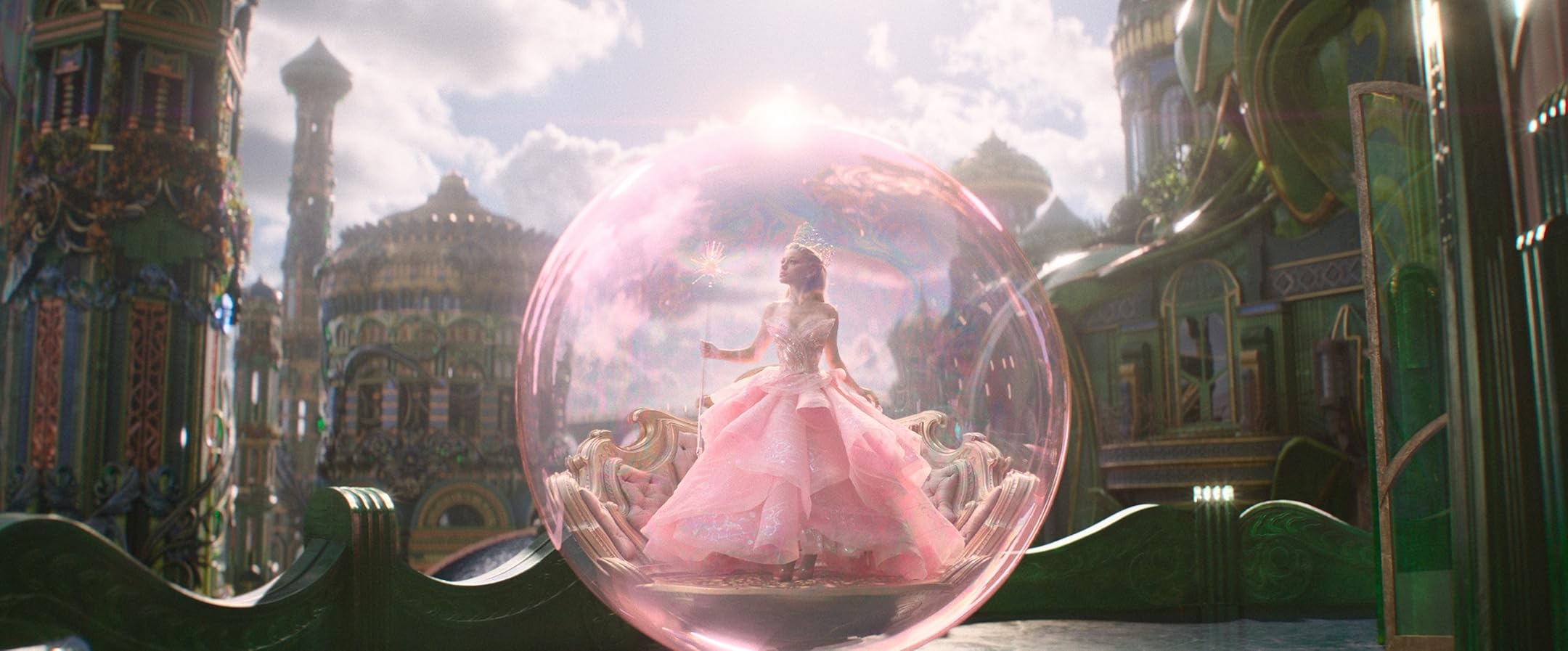
Glinda the Kick Ass
There’s parts in the adaptation that don’t work. The added songs (“No Place Like Home” and “The Girl In the Bubble”) feel like vapid Oscar plays, lacking the careful refinement that comes from a musical’s extended gestation in the workshop phase. There’s no bite to them, no playfulness, no electric musicality. It’s clear the film inserted them to give Erivo and Grande an opportunity to express their emotional state2. You can cut them, though. No one would probably miss them.
But getting through the movie, there are moments where it transcends its mediocrity. Erivo’s rendition of “No Good Deed” is an absolute barnburner. Grande’s “I’m Not That Girl (Reprise)” is tremendously affecting because it harmonizes with the undercurrent of sadness running through her entire performance (including Part One). By the time “For Good” arrives, it’s easy to miss that Elphaba’s demanding Dorothy turn over Nessa’s shoes feels rather arbitrary.
Because “For Good” utterly slays.
And… why wouldn’t it? It’s an amazing song. The performances are fabulous. And it comes at the end of almost five hours of film, watching these two go through the ebbs and flows of their relationship. If nothing else, For Good’s coasting is always going to pay off with this final duet.
John Chu also leaves the best for last. The final time Glinda and Elphaba share the frame (besides the film’s last shot) is utterly breathtaking, nearly justifying the entire adaptation on its own.
In the end, all of the shoe leather of the beginning pays off. Elphaba gets her happy ending with Fiyero, even if that is them walking off into the bleak wasteland beyond Oz’s borders.
But the secret sauce of this movie is what For Good does to beef up Glinda’s ending.
On the stage, Glinda has a tragic ending. She convinces the Wizard to fuck off and strips Madame Morrible of her status. Claiming the mantle of Glinda the Good, she prepares to be Oz’s new symbol of power. Despite this, she is alone and can never know that both Elphaba and Fiyero survived this whole ordeal and get to be together. It’s almost unfair.
In the film, however, they take time to show a brief flashback of Glinda as a child, centering her arc on both how she wants to wield magic and also on her desire for the adulation of others. While different, her sense of social isolation mirrors Elphaba’s. Even within her popularity, Glinda has always been lonely.
Following “For Good”, the narrative is basically Glinda’s as she takes control of Oz and scours out the bad element. After all the micro-aggressions she took from Morrible Glinda has her carted off by winged monkeys3. After being the Wizard’s pawn, she shatters his reality with the connection to Elphaba’s green bottle4 and convinces him to abandon Oz. The last we see her, she stands at the top of the tower from “Defying Gravity” amidst the wreckage and broken dreams from what the story/this society has wrought.
Then the Grimmerie activates. A remarkable moment. Whatever made it open for Elphaba has now made it open for her. This could be anything, but the one thing that makes Glinda so powerful now is her independence and self-acceptance. She might be alone again, but it’s better to be alone and self-assured like Elphaba than popular and empty like she was in Part One.
Finally, she gets to be the sorcerer she always wanted to be. It’s a hell of an arc.
… and yet it works?
For all its flaws (and there are many), Wicked basically works. If the duology falls apart, it’s because no one wanted to chuck out the entire second half and start over (even if what they tossed was the book and kept the songs it, figuring that out is a massive lift). Faced with that dilemma, it’s hard to be mad at the film for going through and adapting a flawed product. The time to fix these problems was over two decades ago. Wicked For Good was always going to be like this.
What matters here is emotional catharsis. How the movie makes the audience feel and satiating investment in the characters (especially Elphaba and Glinda) should be the barometer for success here. Taken through that lens, For Good is basically a triumph. So what if “For Good” works mostly because of Part One. The finale is not emotionally manipulative. It’s emotionally cathartic. It pays off Part One. Any film this messy that can also demolish the final act and make people cry is worth it. So what if a lot of that is because “For Good” is a great song? It’s part of the narrative fabric and the show perfectly lands that moment.
Taken together, this duology is a gold standard of how to adapt a musical for the big screen. Setting Spielberg’s West Side Story aside (because Spielberg), I can’t really think of another adaptation that nails it as hard as this one does.
Thank goodness.
To Nessa’s credit, because of her offscreen in The Wizard of Oz she’s the one character who has fresh characterization and no ties to the original film it’s easy to forget that the house is going to drop on her and that she has an ignominious end in store. ↩
Despite not working, “No Place Like Home” happens early to help illuminate the audience on Elphaba’s thoughts (in the same section where Glinda sings “Thank Goodness”) while “The Girl In the Bubble” happens late (to counter “No Good Deed”). ↩
People are being hard on Michelle Yeoh for her Morrible, but given the current state of the world, the Wizard’s aloofness pales in comparison to her utter malice. Sometimes it’s not the person on the throne you should worry about. Sometimes, it’s their underlings who weaponize their power and standing. ↩
Really wish they hadn’t tried to de-age Goldblum on that. That looked nightmarish. ↩