In Need of a Good Schism - Star Wars: The Mandalorian & Grogu

Despite having spent years in youth choir, partaken in dozens (hundreds?) of communions, and listened to dozens of random selections of scripture readings, my favorite part of a church service is the sermon. There's something about the monologue that draws me in. The structure of extended speech, the storytelling, the performance, the analysis...
For my partner, meanwhile, the sermon is the worst part. (But that's probably the difference between a Catholic vs Protestant upbringing...)
Church, fellowship, religion... everyone has a different relationship with what they believe in and how they practice. Some go for the singing. Some go for the rituals like communion or the fellowship (like the donuts after) or the Bible study. Emotional and spiritual enrichment is an individual experience based on personal necessity.
This week, on the eve of the release of the first new Star Wars film in seven years, Damon Lindelof did a guest spot on House of R and revealed details about his thought process in approaching a script following up on the character of Rey. It's a long quote, but it's been stuck in my head since I heard it:
“I was fired off of a ‘Star Wars’ movie... They asked me, ‘What do you think a “Star Wars” movie should be?’ And I said, ‘Here’s what it should be.’ And they said, ‘Great, you’re hired.’ And then two years later, I was fired. And so I was wrong, at least through that prism. But what we were attempting to do, my partner Justin Britt-Gibson, Rayna McClendon and I, what we were attempting to do was to have this conversation in the movie, which is to say there is a Force of nostalgia and there is a Force of revision, and they are at odds with one another, and let’s do the Protestant Reformation inside ‘Star Wars,’ and it didn’t work. You have your cake and eat it too. The conversation that the fandom is having, without winking and looking at the audience, that didn’t feel necessarily that risky.”
The writing was really hard... It was slow. Like the tone, getting it right, where it was inside of the canon, what its relationship was to Episode IX. Is it starting a new trilogy? Is it like all of those things? They’re so massive. They’re so big. It’s sort of a tanker equation, which is you turn the wheel and it takes five minutes before it turns a little bit like this. When Episode VII came out, we all knew what it was Rey and it was Finn and it was Poe and then we were migrating back in and Luke and Leia and Han and Chewy and all those guys. But we got the sense that, when this new trilogy was over, we were going to be launching with these new characters, and that was the center of ‘Star Wars.’ The new question is are Mando and Grogu the center of ‘Star Wars’?”
Lindelof is dead on. Star Wars is directionless and torn amidst a fandom laden with conflicting philosophies. With its roots in film, Star Wars is always going to define itself by its movies. That's slightly changed since 2019, where the cinematic collapse caused by The Rise of Skywalker came simultaneous to the premiere of The Mandalorian launching Disney+'s original programming. Since the films went into their forced hibernation, Disney+ has pumped out 85 episodes of live action Star Wars television across seven television series. Disney's famously voracious merchandising arm shifted its focus circa 2022, replacing Rebel Alliance and Darth Vader merch with The Mandalorian and "Baby Yoda".
There's no use pretending like The Mandalorian hasn't been the standard bearer for Star Wars in this decade, and so it's not really surprising that The Mandalorian & Grogu was the first project to make it to the big screen in seven years. It's the Star Wars with the most cross-generational appeal. New Star Wars fans who can view this as "their" Star Wars just like younger Gen-Z'ers claim the Sequel Trilogy/spinoffs, like older Gen-Z'ers revere the animated series like Clone Wars and Rebels, like Millennials profess love for the Prequels, and like Gen-Xers demand Original Trilogy purity. Because of its childhood accessibility, the "newest" Star Wars is almost always what fans experience first.
All of this puts new Star Wars in a weird position. Disney's philosophy is to appeal to the broadest swath of population possible, but this will always lead to disgruntled fans who reject whatever vision doesn't comport with their own nostalgia of the long time ago/galaxy far, far away. And because fans come to Star Wars for different spiritual and emotional fulfillment, if they're not getting what they want/need from the sole arbiter at the pulpit, discord ensues.
Simply put: Star Wars really does need a Reformation. And The Mandalorian & Grogu is the best possible example of why that is so.
The modern orthodoxy
Towards the end of The Mandalorian & Grogu, there reached a point in the plot where I seriously questioned the point of Star Wars. As a squadron of X-Wings arrived to help with teh big third act battle, I asked myself why any of this was ever actually cool? On paper, this should have been enough. X-Wings are a staple of the series, and the Battle of Scarif in Rogue One is one of the best sequences in all of Star Wars.
But by that point the exhaustion was such that it felt like the ultimate empty calories. The X-Wings did nothing I'd never seen before, and all of those examples did it better than they did here.
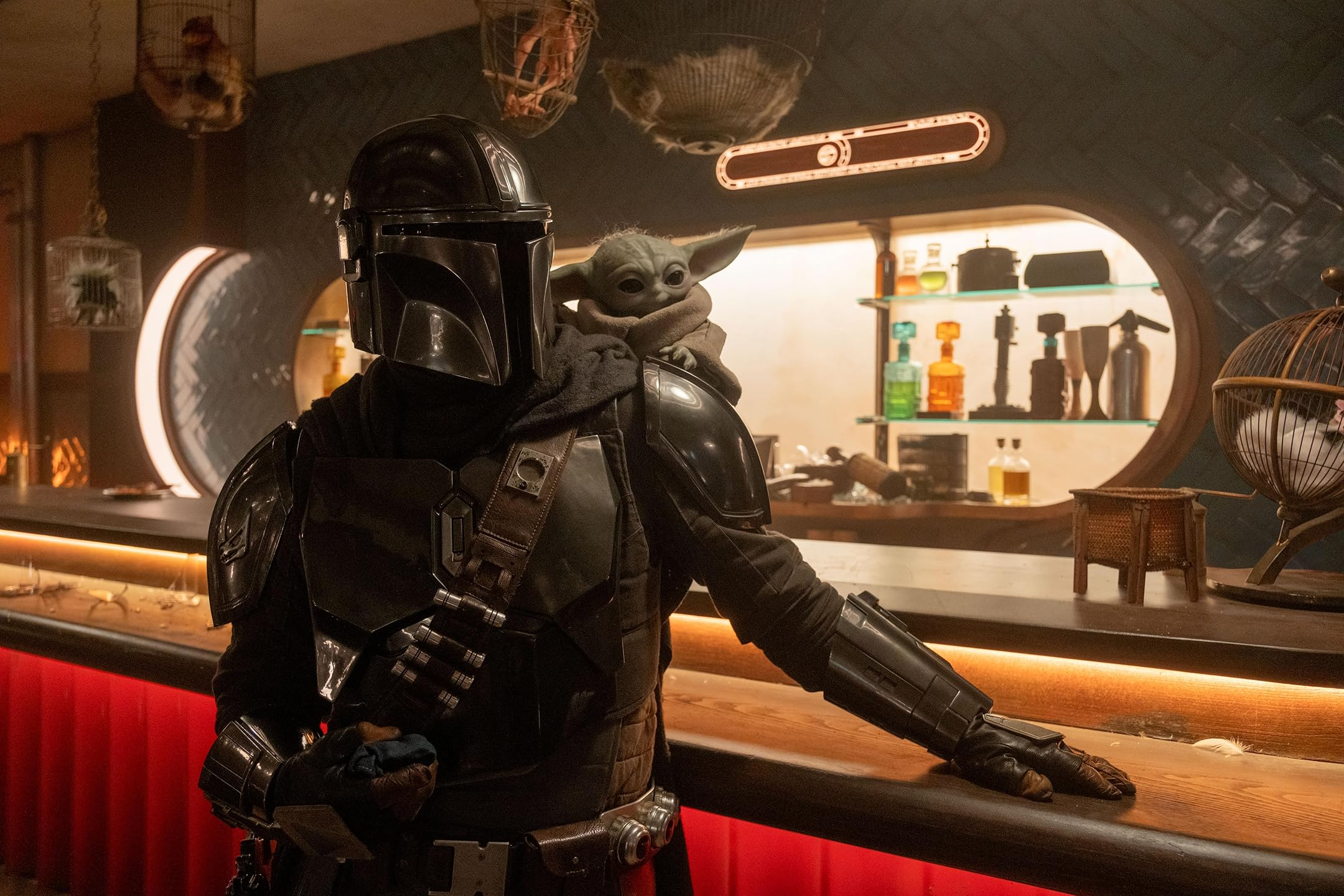
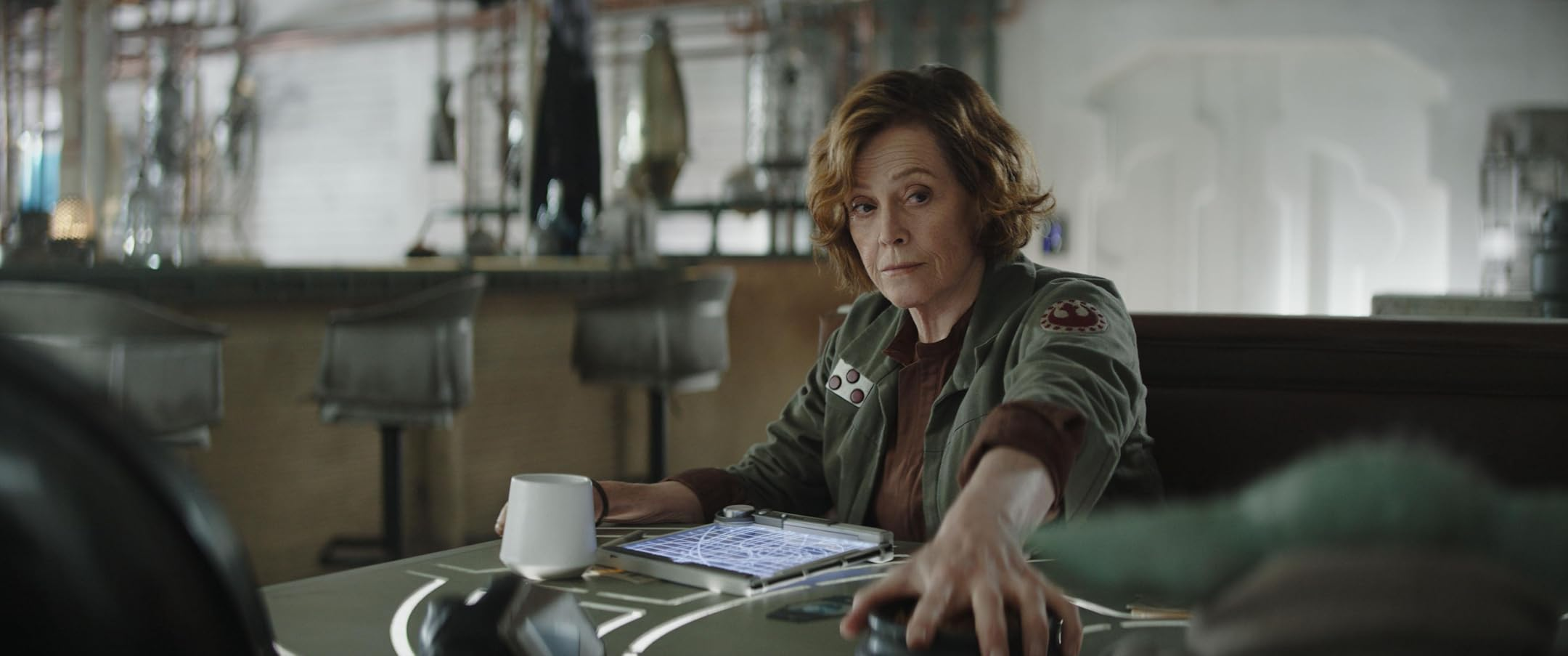
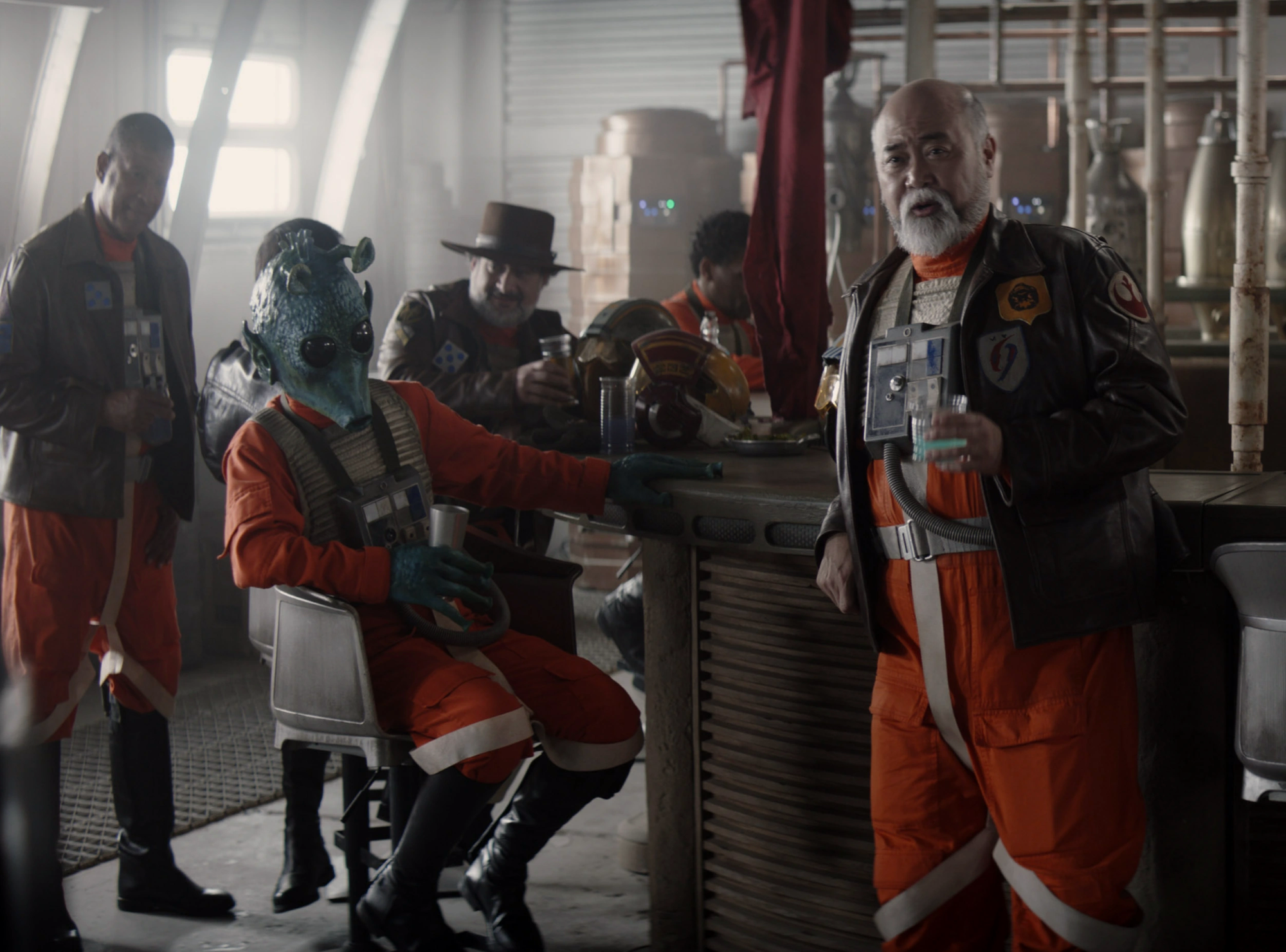
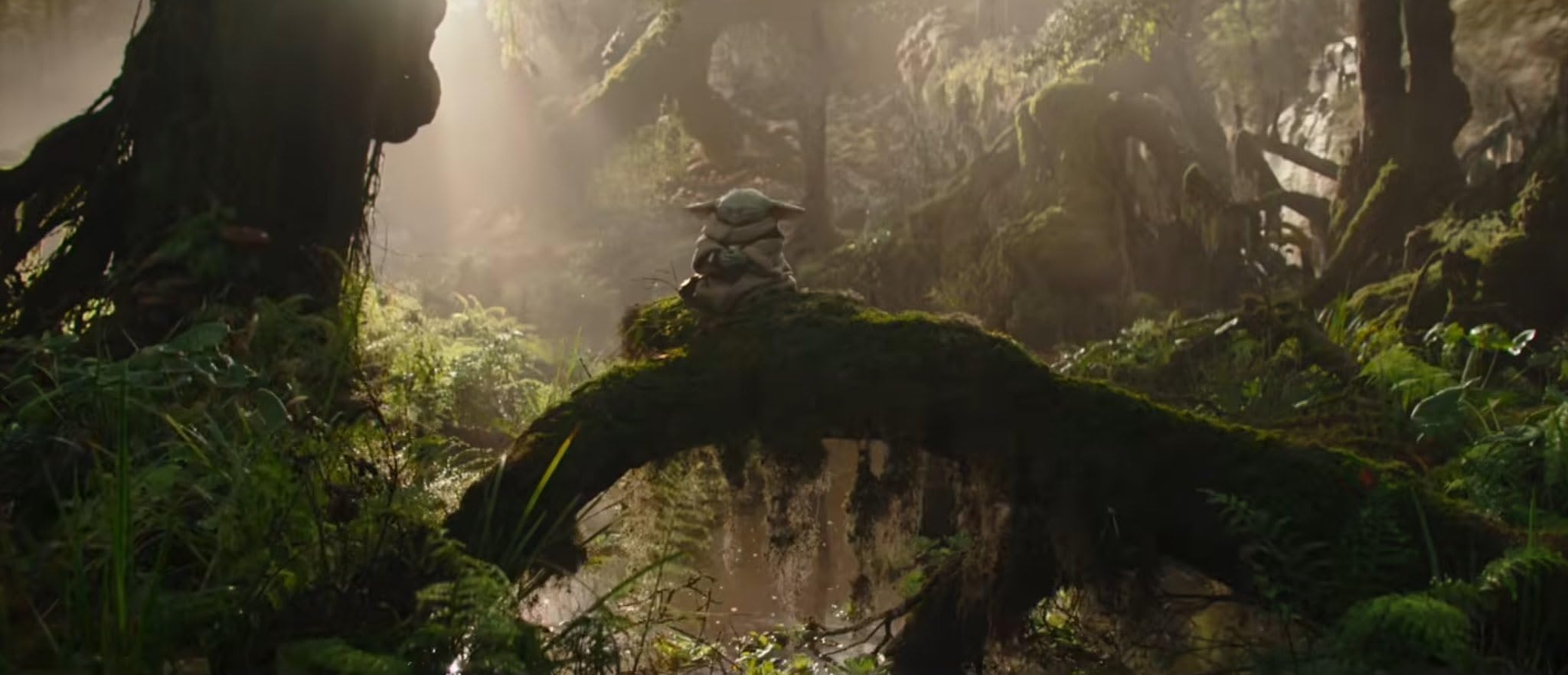
Writer/director Jon Favreau saturates The Mandalorian & Grogu with Star Wars iconography. It's this that defines the film as "Star Wars". It's not just the locking S-foils in attack positions or the squirting sound effect of their laser cannons. Hutts sending Mando out on a mission. AT-AT's trudge along in snow and Stormtroopers get action setpieces. Red dots on Sigourney Weaver's lapel signify her rank. Martin Scorsese plays a food truck alien with four arms. A jacked as fuck Rotta the Hutt fights in a gladitorial arena against real life incarnations of the aliens from the Millennium Falcon's holographic chess board. The small shelter Grogu builds out of mud features a dome that evoke's Yoda's abode on Dagobah. Embo makes the jump from Clone Wars to live action.
These are all accoutrements that define this as Star Wars, and that even include the iconography of Boba Fett armor or "Baby Yoda."
But is this all a Star Wars movie is?
Prior to Rogue One there was a sense of Star Wars films centering on the struggle of fighting tyranny/losing democracy through the prism of someone in the Skywalker bloodline. They featured signifiers like the John Williams score and the three-paragraph expository crawl. Rogue One and Solo both told side stories while maintaining galactic scope, but Solo especially centered less on the Rebel/Imperial struggle.
That galactic struggle is a backdrop to The Mandalorian & Grogu's story about the two titular characters and their relationship. In its portrayal of a father/son dynamic is a healthier echo of the Original Trilogy's Luke/Vader struggle and the Kylo/Han arc in the Sequels. There are also thematic links between Rotta trying to define himself as distinct from his father (Jabba). While The New Republic has a role, most of the movie is instead about Mando and his unwillingness to (or rather to not) get in bed with the Hutt twins on Nal Hutta.
But outside of some lite window dressing, it's not doing anything... new, is it? To now, the relationship between Din Djarin and Grogu has been about the former taking care of the latter. But this movie presents the first time that Grogu carries story and looks after his adopted father when the man falls ill from the poison. It's the best sequence in the movie not because the audience loves watching Baby Yoda, but rather because it's emotionally cathartic for their larger meta arc.
Yet below the surface level's visceral joy, there is a vapidity to this. Favreau has been very open about wanting his first Star Wars movie to stand on its own and not depend on knowledge of the show. Solid. But the reason this story happens now is because it is the time for this story to happen. There's nothing Grogu does to emotionally earn this stepping up to the plate. There's no conflict to him having to get to this point.
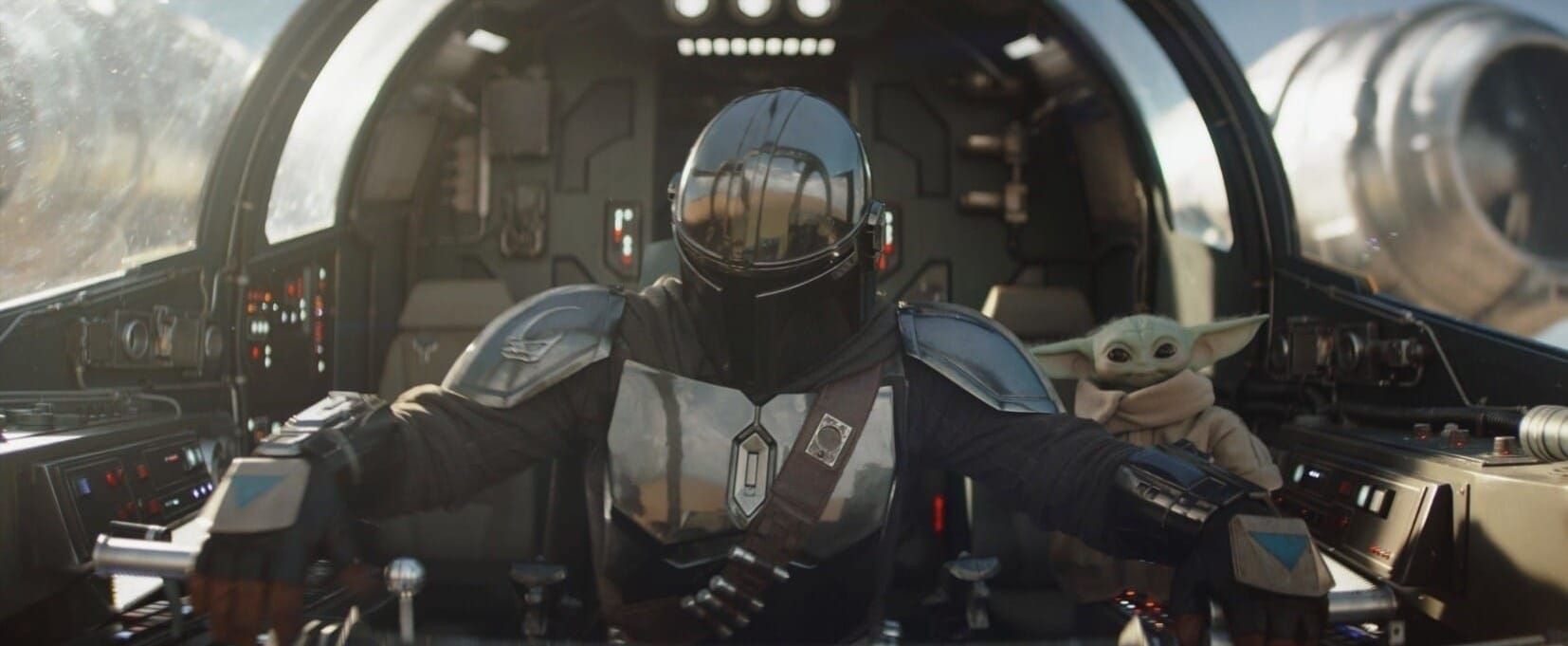
The closest the movie gets to tracking an arc for Grogu is measuring Mando's willingness to let him touch buttons on the Razor Crest. At the beginning of the movie, Grogu presses random buttons and Mando has to buckle him into his seat to get him to stop. During the Coin extraction in the middle, Mando tells him to spin up the engines... which results in Grogu firing off a missile. And then doing it again and again because it's fun. In the final scene, Mando tells him to hit the button that sends them to hyperspace.
But... it's not an emotional arc, nor is it thematic. It's measuring an arbitrary maturity that gauges with Grogu's superficial progress. It does not inform his nonexistent emotional journey.
Simply: at the beginning of the movie, is Grogu any less capable of taking care of Mando than he is when the time comes? Hell, is there a point after their Book of Boba Fett reunion when this isn't conceivable? Grogu's major affirmative choice to date is abandoning his Jedi studies so he can be with the father figure he loves. Since then, has there been any noticeable emotional maturity?
And yes, this is difficult considering that Grogu is a nonverbal puppet who behaves like a capable kindergartener. That's no excuse for not providing an emotional arc to one of the two titular characters, especially when the exciting thing is an extended silent sequence of Grogu surviving and caring for Mando. It's well done, but the joy is that something as cute and vulnerable as Baby Yoda proves itself capable of autonomous action. It's not that this movie has earned this.
If anyone comes away from The Mandalorian & Grogu feeling like they witnessed something small, it's because this arc is not big enough to justify the narrative real estate of a film.
Communion
As a medium, film tells stories of seismic changes in its main subjects. Often, this manifests as an acceptance of destiny (Star Wars, The Matrix, When Harry Met Sally), but it only needs to be a major turning point of some kind (Finding Nemo, Ferris Bueller's Day Off, Titanic). Size doesn't matter. And, yes, Grogu caring for Mando is a major moment, but the physical/emotional journey to get to that moment matters. And this is especially true in a Star Wars movie, where the original 1977 film was a catalyst for Hollywood defaulting to a Campbellian vision of storytelling. What in the movie changes for Grogu that forces him into this position? For that matter, what in the preceding three seasons of television have changed such that this moment had to happen here?
If there was to be only one story of The Mandalorian & Grogu, is this the best and biggest possible story for the audience to experience?
In its original form, The Mandalorian as a television series had much lower stakes. Even though its eight-episode seasons were shorter than the traditional broadcast model of 20+, it's impossible for every episode to feature a major emotional leap. Favreau and co. have to come back week after week for micro-advancements in the emotional journey.
Television has been the default state of Star Wars since 2019. And some of that Star Wars television (including The Mandalorian) has been quite good. But the scale is narratively different from the previous default mode. Andor is not doable in film. The Acolyte is not doable in film. Obi-Wan Kenobi probably should have been a film, but the breadth of its actual production (however drawn out) makes it feel like proper television. Hell, The Mandalorian's first three seasons are not doable in film.
Getting audiences into a theater requires justifying the experience. Because The Mandalorian's production quality codes its episodes as movies-but-at-home, it's easy to look at the show and think it's cinematic quality. But this is a trap. Does The Mandalorian & Grogu justify the cinematic experience? If this had been a standalone movie that had premiered exclusively on Disney+, would it have been appreciably different?
Nothing in this movie is not doable in the show's television form. Mando gets a new Razor Crest to replace the signature ship he lost in season two. Mando and Grogu are still traveling together. They're still running missions, though now they're contracting for the New Republic because Disney needs Mando to be working for the good guys rather than living in the nebulous grey zone of the galaxy's bounty hunters. There's a criticism that The Mandalorian & Grogu doesn't take anything from the show's third (and most recent) season into account even though it aired three years ago, but other than the base premise of the title, there's nothing in this movie that derives from the show. When the two inevitably return, does it seem likely that The Mandalorian & Grogu will be required viewing? Maybe they'll wonder when the little guy got so adept at pressing the buttons, but other than that...?
It's great for Favreau to build a film that's welcoming to new audiences. Unfortunately, it means he made a film that (just like season three) feels disposable.
A New Pope
To step back for a moment: The Mandalorian & Grogu is the final major project with Kathleen Kennedy as the head of LucasFilm. It's a major shift for the company, with a new direction for the first time since its sale to Disney.
Her co-replacement, Dave Filoni, is a George Lucas acolyte. He was a major steward of "canon" after the Prequels, leading the creative vision for animated series like Clone Wars and Rebels. Since the sale to Disney, Filoni has been the standard bearer for Lucas's legacy/vision. He's been a major force in The Mandalorian and has brought a number of his animated creations into live action. It gained the most attention with Ahsoka in season two of The Mandalorian, but also includes (among others) Bo-Katan, Saw Gerrera, Cad Bane, the Grand Inquisitor, and the cast of Star Wars Rebels (those who survived the series, anyways). The Mandalorian & Grogu brings in the bounty hunter Embo (a bounty hunter from the Clone Wars show) and Rotta the Hutt (a major McGuffin in the Clone Wars film).
Filoni's vision of Star Wars will influence the creative in ways that Kennedy didn't. Kennedy's background is as a producer, cultivating projects and fostering artists to make populist entertainment. Hiring J.J. Abrams, Gareth Edwards, Tony Gilroy, Rian Johnson, and even Phil Lord & Christopher Miller are the sort of genius moves that look great on paper and comport with the variety and flavors she was trying to bring to Star Wars. While they might not have gotten off the ground, developing Star Wars projects from James Mangold, Benioff & Weiss, Damon Lindelof, Simon Kinberg, Patty Jenkins, and Taika Waititi (among many others) speak to the breadth of what she was trying to accomplish in diversifying Star Wars's output. She attempted to reliably release quality product in a way that was sustainable.
As a writer/director/showrunner, Filoni's decades in this creative roles inform (and possibly narrow) the sorts of stories his stewardship of Star Wars will tell. Perhaps Star Wars will get more consistent, but it also has the potential to homogenize the overall output.
Heterodoxy
But does Filoni's vision of Star Wars comport with a vision of Star Wars that can be long-term successful?
To be fairer to him, does anyone's?
Star Wars is a galaxy that spans half a century of stories. There's the childhood fans of the Original Trilogy who divide on the Ewoks. There's those who grew up with the Prequels who might not view Anakin Skywalker as Space Hitler. There's those whose Clone Wars cartoons generated a deep love for the Clone Troopers. But there's also those who read the novels of the 90s and loved the science fiction those writers injected into the bloodstream (when Star Wars is way closer to space fantasy). Others lived for video games like Knights of the Old Republic and the promise that big exciting Star Wars can have all the hallmarks while feeling fresh and new. And many look at Andor as not just the creative apex of Star Wars but legitimately one of the great television series of this century.
The fanbase can agree that the Original Trilogy is amazing (though there's plenty who still think Return of the Jedi is a major step down when it's a damn miracle top to bottom). But the Prequels divide. The Sequels divide. Rogue One divides. The Mandalorian divides. Andor divides. The Acolyte divides. There can be general consensus, but it's impossible to avoid disagreement..
Reconciling these viewpoints is impossible, and Disney views its job as appealing to every Star Wars fan. At a best case scenario, they make The Force Awakens. At worst, they make The Rise of Skywalker.
Reconcile those come to Star Wars for the science fiction (and who might complain "that's not how hyperspace works") with those who come for reductive good vs evil storytelling, with those who appreciated Rian Johnson's meager attempt to allow for a little ambiguity within the galaxy's endless war. Fans come for the space magic yet grow itchy if it attempts more than rote telekinesis. They claim ownership of characters, and don't recognize that making Luke Skywalker fallible after decades of experience is a celebration of the man rather than some character assassination to prove a point.
All of this is Star Wars.
And to Kennedy's credit, she tried pushing the ball forward. Hiring Rian Johnson off of Looper is a massive swing for the fences. Lord & Miller directing Solo was a massive swing. Enabling Tony Gilroy to make a deeply political screed about the perils of fascism, giving Leslye Headland a ton of money to make a quasi-Rashomon about the nature of the Force, greenlighting a Goonies-esque TV show... all of these cater to the diverse audiences interests, attempting to expand what Star Wars is capable of by shifting the ratios of its genetic makeup.
More than anything, this is what makes The Mandalorian & Grogu so disappointing. It sets its sights on "Star Wars" fans. Or The Mandalorian fans. And it never attempts to be anything beyond that. There's no ambition here. There's a lot (a lot) of CGI action and hope that fans want to see giant slugs wrestle each other. There's Sigourney Weaver wearing two different Rebel Alliance-specific costumes and a prominent role for Zeb Orrelios (whose defining quality is "exists"). There's a nice section where Grogu takes care of Mando, but the film does not earn it.
In the old adage of "small minds talk about people, average minds talk about events, great minds talk about ideas", The Mandalorian & Grogu can barely make it to average. This is a movie about nothing but being a Star Wars movie using Star Wars aesthetics. And it's great that those who want an entertaining Star Wars movie or movie-tier episode/condensed season of The Mandalorian get something made for them.
But we live in a world where Rogue One changed the way the galaxy looks and feels. We live in a world where Rian Johnson demanded new and better Star Wars stories. We live in a world Tony Gilroy's fascination with bureaucratic apathy resulted in the most terrifying manifestation of the Empire ever committed to film.
Star Wars can be more.
Star Wars should be more.
Star Wars is more.
To get there, it should start by finding those areas of commonality. By creating a church service with something for everyone to enjoy. Give something to the ones who like the singing and another to the people who like the Bible verses and yet still more to those who like the sermon. Hell, there should even be something for the ones excited for the donuts at the end.
But for now, Star Wars is like the Catholic Church, locked up under the purview of a company that's petrified of making the wrong move "again." Of pissing off the church regulars because the music is too contemporary. After seven years away, the best Disney could manage was "movie based on the only Star Wars TV series to make it past season two."
Kennedy steps down after the inevitable full retreat that comes after the initial boldness of "new job" calcifies into caution and stagnation. By the end, there was too much hedging, too much second guessing, not enough of the bold vision and esoteric weirdness that produced Star Wars in the first place. At its best, Star Wars has always remixed inspiration into something shiny and new and also possibly very silly and weird.
Lindelof is right. Star Wars needs a Protestant Reformation. Because while the Reformation did spark centuries of religious wars and divisive conflict, it also strengthened Christianity as a whole. It buttressed the morality that comes with faith's tenets. It strengthened the Catholic Church's dedication to its orthodoxy and helped to quell the greed that had infected it for centuries. The Protestant movement diversified interpretations of eschatology. While pogroms happened, the persecuted relocated to places like The New World. And on and on and on.
None of it will be easy, and maybe Filoni will define a vision that most can agree on. But the longer it takes to integrate that diversity in perspective and opinion into Star Wars, the more these deeper these divides will erode, the greater the chances of another low-ambition movie to just keep it on life support.
Now if only anyone had the time to create 95 Theses about all the ways Star Wars has strayed from the path of righteousness. If only they were to hang them on the gates of LucasFilm.
I pray that day comes soon.