
Television with a Ready-Made Ending - Paradise Season 2

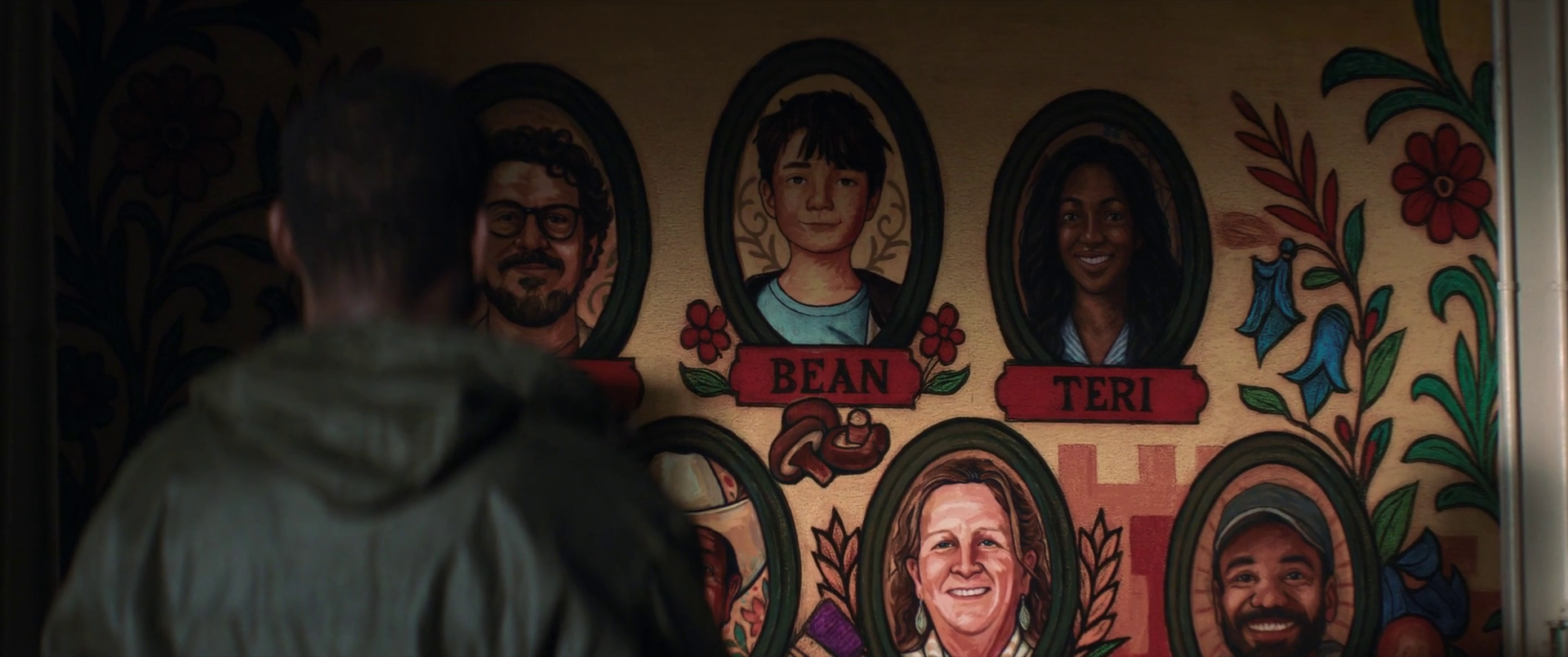
The following contains spoilers for the first two seasons of Paradise
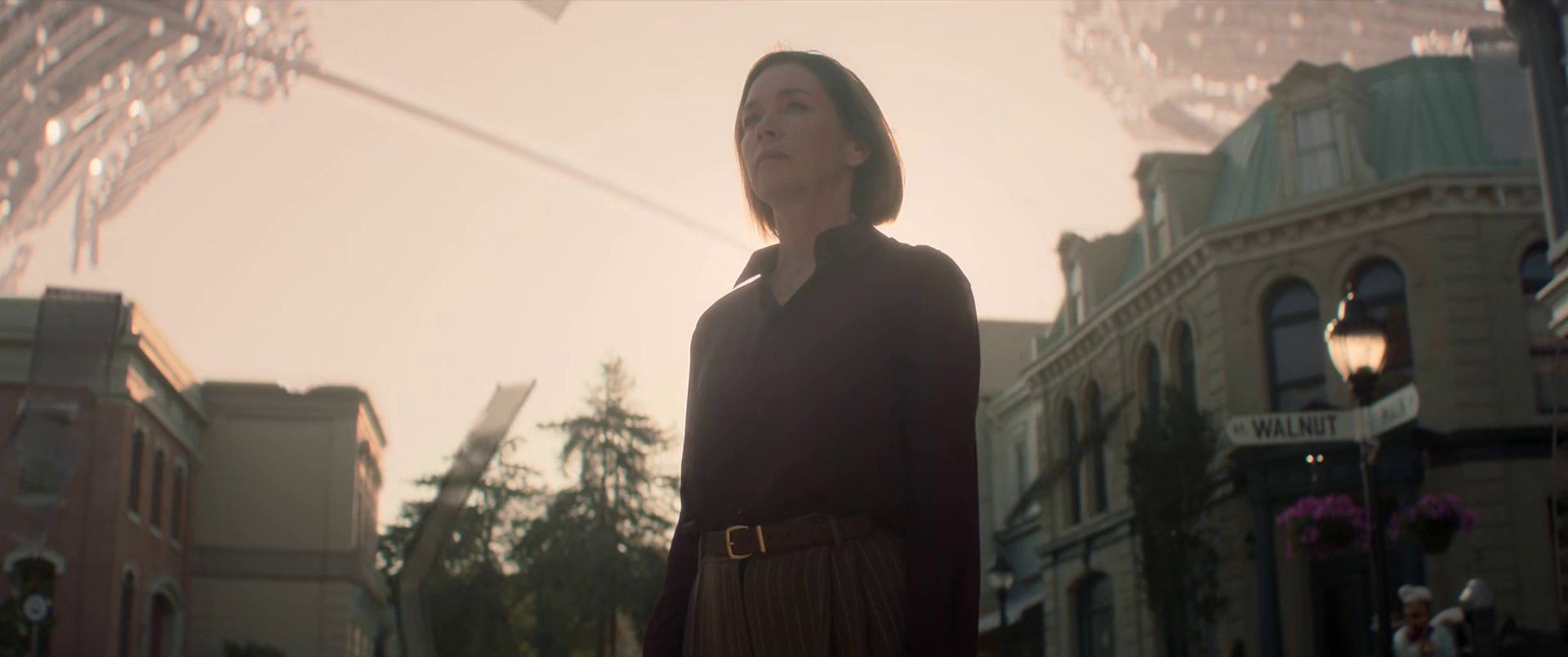
Paradise's opening is immediately good. Main character Secret Service agent Xavier Collins (Sterling K. Brown) finds The President of the United States (James Marsden) dead in his residence. Inherently dramatic, exciting. By the end of that episode, the show reveals that everything we've seen all takes place in a massive, city-sized underground bunker built for surviving some as-yet-undefined post-apocalyptic scenario. It's why the President is there. And why a tech mogul who buil the place (Samantha Redmond, played by Julianne Nicholson) seems to be running the show despite his presence.
The first season is about this mystery of who assassinated the President, something they solve in the finale. But like so many other shows, that death is just an impetus to explore the fragile balance of all these competing interests jockeying for position within Paradise's mini-civilization. There's also flashbacks to these characters from before the societal collapse, and the penultimate episode takes place on the day the world ends, finally revealing the chaos and panic of this global apocalypse.
It's a good show.
But Paradise falls prey to the current stress points of modern prestige television. Its creator, Dan Fogelman (who also created This Is Us) has spoken about his vision for a three-season story. With the second season now complete, Fogelman has revealed what the post-assassination plot status quo looks like and hints at where the final season might go. It's exploring something new, and the machinations of Paradise's political sphere have taken a backseat in the name of something else. The flashbacks persist, (and this is obvious from the previous season) the show's exploration of new narrative territory opens it up to new possibilities, and the scope extends far beyond this isolated mountain community.
And yet, I keep coming back to its built-in ending. The directions this season takes push it far away from what made that first season so mad compelling, and spreading itself as thin as it does does no favors to such a rich premise.
Spoilers ahead, obviously.
Television didn't use to have endings
There is a theory of the case that television at its best when it is a series of novels. LOST is the prime example here. There is a tapestry across its entire series that brings it to a landing at the end of the sixth season. But each other season is a discrete installment with a beginning, middle, and end. Each has a specific focus (be it the Hatch, the Oceanic Six, the Dharma Initiative...), and doing that helped the show to not lose itself in the macro weeds of the Island's sprawling mythology until it became relevant to the endgame.
Others have attempted this as well. Breaking Bad followed on from Vince Gilligan's ideas of where he wanted Walter White to go. The strike-abbreviated first season wasn't clear in this respect, but by the finales of each (even the mini ones), it was clear how that arc of that specific span of episodes fit within the grand meta arc of Walter White's journey. Hell, The Wire is five seasons of meticulously exploring the drug trade's systemic infection of every system in Baltimore, slowly expanding that scope while always keeping those early building blocks present. Meanwhile, other shows like Buffy the Vampire Slayer focused almost exclusively on the beginning-middle-end of the season at hand, and by the final credits of The West Wing, no one in the cast held the job they'd started with (and because because the Bartlett Administration ends before the episode does, that applies to Bartlett as well).
Over the past two decades, the concoction of prestige, long-form narrative television and vocal fanbases have created this notion that creators should have "everything planned out." This is also LOST's fault, where the show's popularity and rabid mass-audience fanbase created echo chambers screaming about what the show was doing wrong. Cultivated theories went far beyond what the show was capable of making and/or the mythology the writers were planning. Television production's loose jazz stylings meant the show meandered towards the season's planned ending, but riffed from week-to-week.
LOST is not the current model, though. The current model is Game of Thrones, an extraordinarily expensive show with a robust and rock solid source material... for the first five seasons, anyways. During that time, Game of Thrones was a bullet train of plot, ramming through its series at a rate of about one season per book, tailoring George R.R. Martin's narrative to fit the adapted medium. Importantly, Martin did have a final plan for where the series would end, a rough idea of what he was building to.
Unfortunately, by the end of season five, showrunners Benioff & Weiss ran dry of the source material. To finish in time, they started blazing through more plot without the early seasons's deliberate scaffolding. Unable to earn the insane swerve of Martin's final twist meant the entire narrative collapsed right at the finish line.
Not only that, but because Game of Thrones had so relentlessly focused on moving the story forward and never stopping to smell roses or experiment with the curse-blessing of "we know where we're going but we also don't know what this next episode is so we need to spin our wheels on something small and personal", the ending really did matter. Blowing it as they did retroactively damaged the series' standing so bad it's still a punching bag almost a decade later. Nevermind that other shows figured out how to do good and satisfying endings despite walking in with the premise of "we're just gonna hang out in a bar" or "here are six Friends".
But this is the world we live in now. Shows walk in with predetermined endings so they won't (as George R.R. Martin so rudely put it) "pull a LOST". Audiences require endings to help the show have a legacy far into the future. Without shows running episodes into the hundreds, this is the alternative to longevity. In the wake of losing syndication, smaller contained narratives have relatively equal lasting value at a much lower volume.
Which brings us back to Paradise...
Its three-season plan is far more aggressive than something as grand and sprawling as Game of Thrones. By the time it's all over there will be 24 episodes of Paradise, and only the first eight concern themselves exclusively with the titular bunker civ. When Xavier hops in a plane to go explore the world and find his wife in the final minutes of that first season, the scope expands from civic to national. And even then that undersells what the show does next.
Annie the Prologue
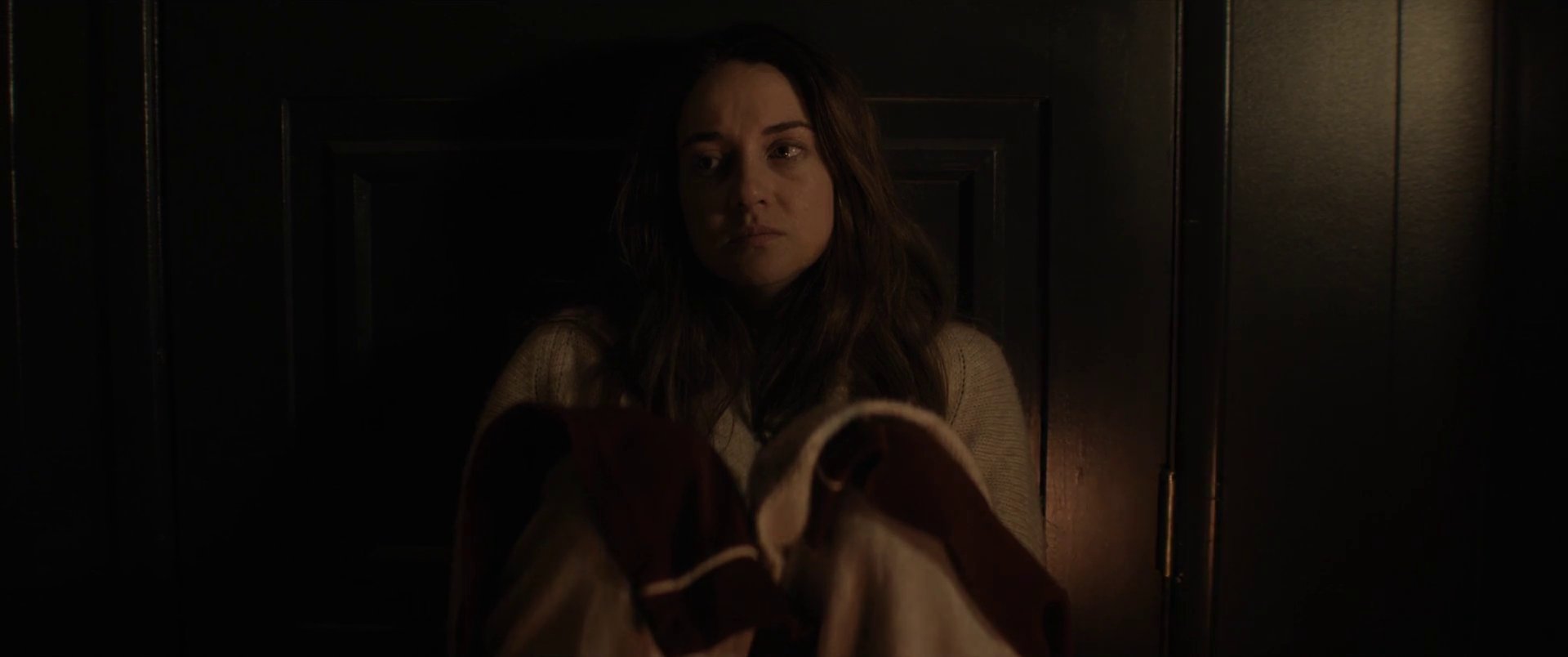
Season two opens with a new character. Before the apocalypse, med school dropout Annie Clay (Shailene Woodley) was a tour guide at Graceland. On the day the world ended, she and her co-worker Gayle grabbed a bunch of food and took shelter in Elvis's former mansion. As the main character for the premiere, it's an opportunity to explore how the rest of the world survived, portray the ingenuity and tenacity it took, and expand the scope of what the show is capable of. One-off episodes like this are a delight and the medium's great strength. Only comic books come close to being able to so effectively utilize the ability for one-off installments amidst a grander, linking narrative.
While one episode sounds perfectly reasonable as a method to tell Annie's story, carving out a full installment for Shailene to Woodley it up, creates a problem in a season like this. If Paradise were a book, her story serves as something between a prologue and a full on "part" before the show can get on with the season's narrative thrust. The move makes sense for the first part of the episode, where we see just what it is the outside world had to survive amidst a full apocalypse, but it's probably the wrong foot. By the time Link and his crew show up, the show is in different territory, creating stakes and danger around this military force threatening to destroy the fragile ecosystem of Paradise's bunker.
By episode's end, Annie (nine months removed from Link and deeply pregnant with his baby) comes across a very messed up Xavier. His arrival finally brings her in tune with the show to this point.
It might not sound like much, but if each season of Paradise were a 500-page book, the introduction of Annie would have been approximately 60 pages right at the start.

Gotta spend an ep catching Collins up to the Prologue
The second episode's focus shifts exclusively to Collins, telling the story of how he crashed his plane, the children who saved him, and how he met up with Annie.
To compare this to, say, LOST: that show treated its season finales as opportunities for narrative collapse. When it cut to black, it was in many ways impossible for the show to keep functioning in the same manner; upon return the series would spend its entire first act moving the disrupted pieces back into place for the new season's status quo. Collins leaving Paradise in search of his wife necessitates an entirely new way of telling Paradise stories.
But... by the time the second episode is over, we're on page 120 or so. The show has squandered a full quarter of its precious eight episodes just setting up new paradigms that won't matter for very long. By the start of episode four, Annie and Collins head out on the road in search of the source of his wife's message. By that episode's end, Annie is dead, Collins has custody of her baby (so he can bring her back to Link when they meet up again at Paradise), the idea of Shailene Woodley and Sterling K. Brown bombing around a post-apocalyptic wasteland exploring what's happened to the world is now past tense, and we, the audience, are now on page 250. Already the show is onto its next idea. And... yeah Shailene Woodley was a huge get as a special guest star, but... apparently two episodes (and the button for episode two) is what they could afford in terms of her screen time. So... bye, I guess.
Meanwhile, back in Paradise...
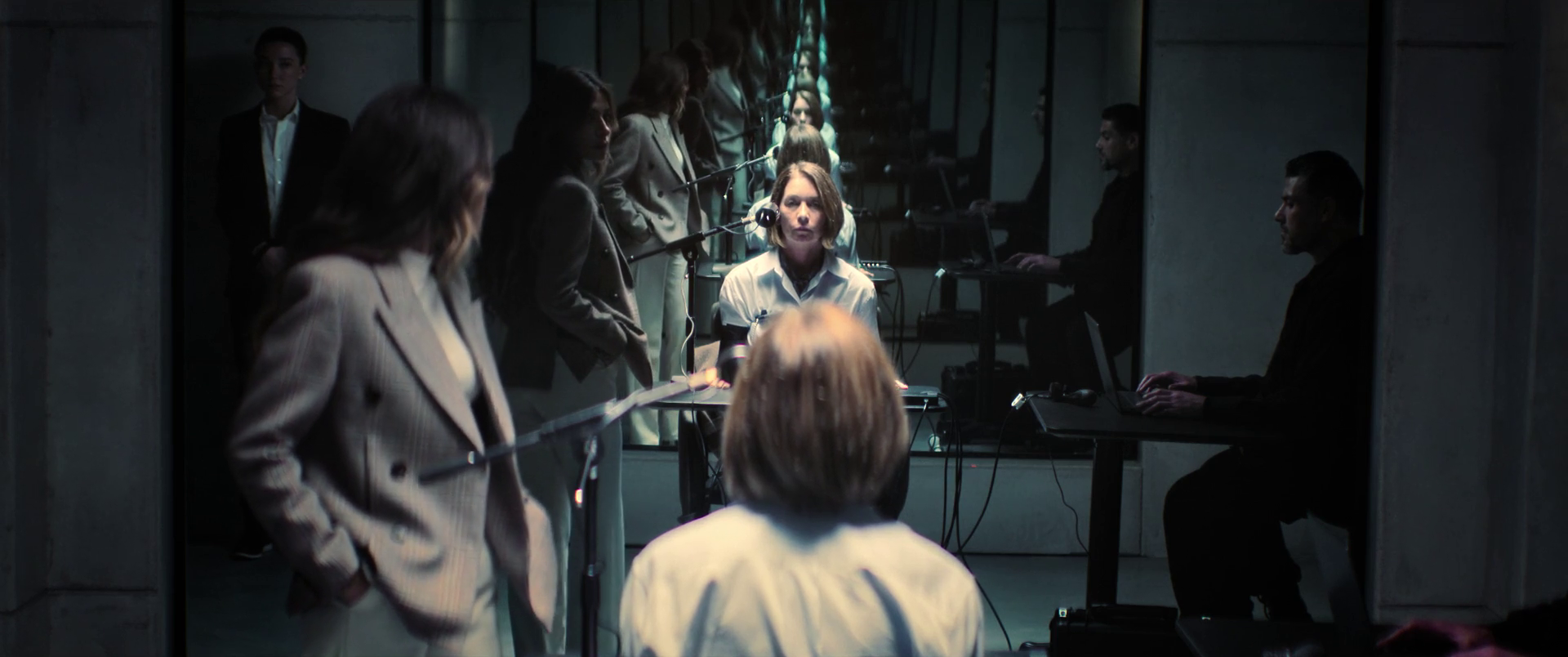
While all this is going on, the show spends the third episode back in Paradise, with the intrigue of Samantha Redmond's survival following the assassination attempt at the end of last season, the new Presidential administration spreading its wings, and a growing rebellion within the town. Driscoll is still a loose cannon on a reckless killing spree. Robinson is still investigating the loose threads from the assassination attempt. Gabriela is still trying to get to the bottom of Redmond and... all the other things.
Again, if the issue of this show is narrative real estate, spending time exploring the fallout from last season would be fine.... if this weren't the only check in with the bunker for the entire first half of this season. While not under any obligation to exclusively cover what's happening there (the first season earned the opportunity to expand the narrative scope by bringing in characters like Annie and metaplots like Link's), it is wild that the show decides to put its home base on the backburner for so long.
Not that that really matters. By the season's end, that home base has pushed its occupants out into the harsh light of day and collapsed due to a nuclear explosion that vaporizes the inside of the mountain.
This destruction of homebase is the sort of development that works after seasons of build up. It says that the show is ending. Of course, we're 16 episodes in, and the seismic shift is far less effective than it would be if we were, say dozens of episodes into a gripping narrative, where just the idea of living without Paradise is unthinkable.
Meanwhile, the show could barely feature Paradise for half of this season. In that, it makes sense that the show would want to jettison one of its great selling points.
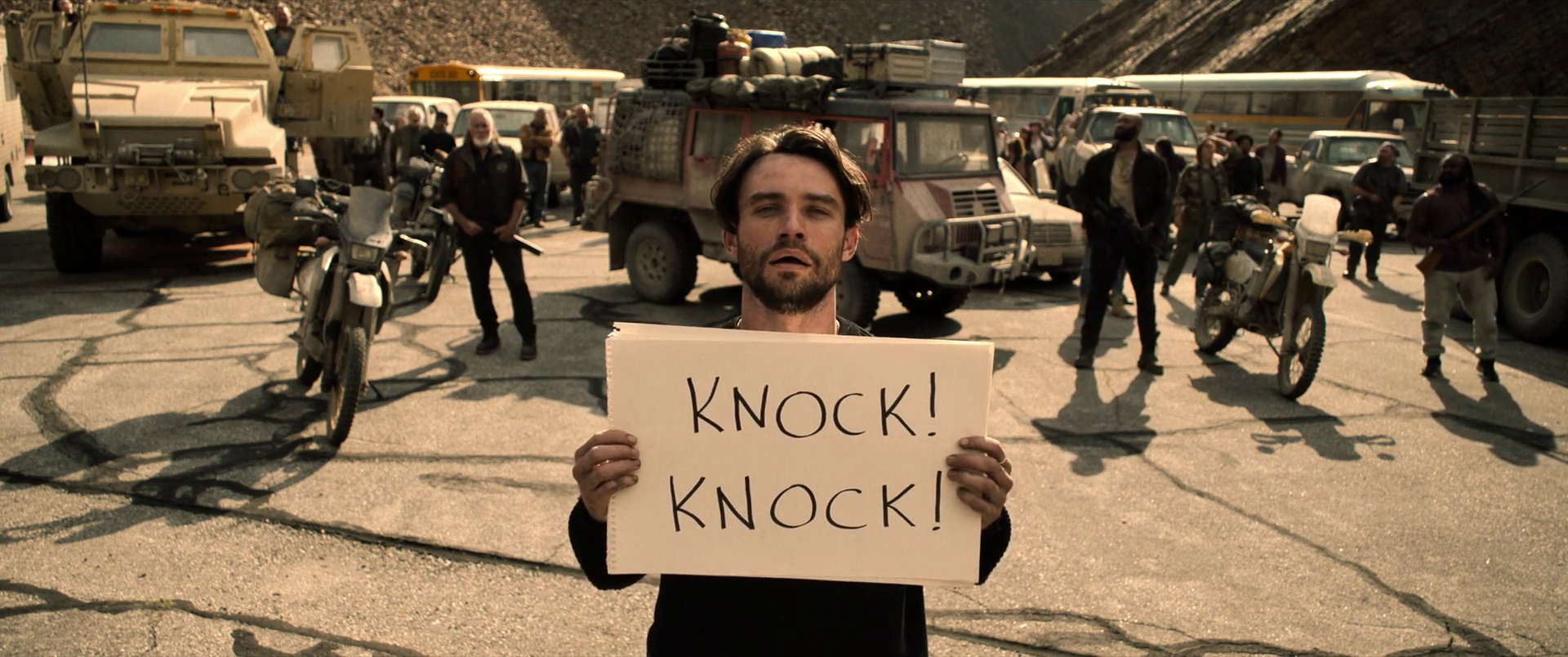
Hell, Paradise doesn't even come back until episode 6. Episode five is about what happened to Collins's wife Teri via the story of a mailman named Gary Jones. It attempts (and succeeds) in capturing the tension of the previous season's apocalypse episode while also showing Annie's journey albeit through a different group. It's hard to see what this is accomplishing that Annie's didn't, or why Annie was strictly necessary if the entire point of her was to die having Link's baby (though it's nice to have an excuse to build a dope reconstruction of Graceland).
Freight Train Plot
Absence might make the heart grow fonder, but the general lack of interest in Paradise itself runs counter to the medium at its best. With an ending in mind, Fogelman and his writers have very little time for cute diversions. More than that, it feels like the show has completely lost interest in what it's like to survive in this particular bunker under these dire circumstances. With the season over, the community's destruction frees the show to follow other interests. It also makes it really difficult to see what else it could have accomplished with more episodes. The show really did leave all of that behind in season one, and it feels like it didn't have the confidence in its characters to sustain the premise long term.
And all for... what, exactly? The big centerpiece of the season is "Alex", Link's attempts to get to Paradise and kill it, Redmond's attempts to protect Alex at all costs, and... what Alex even is.
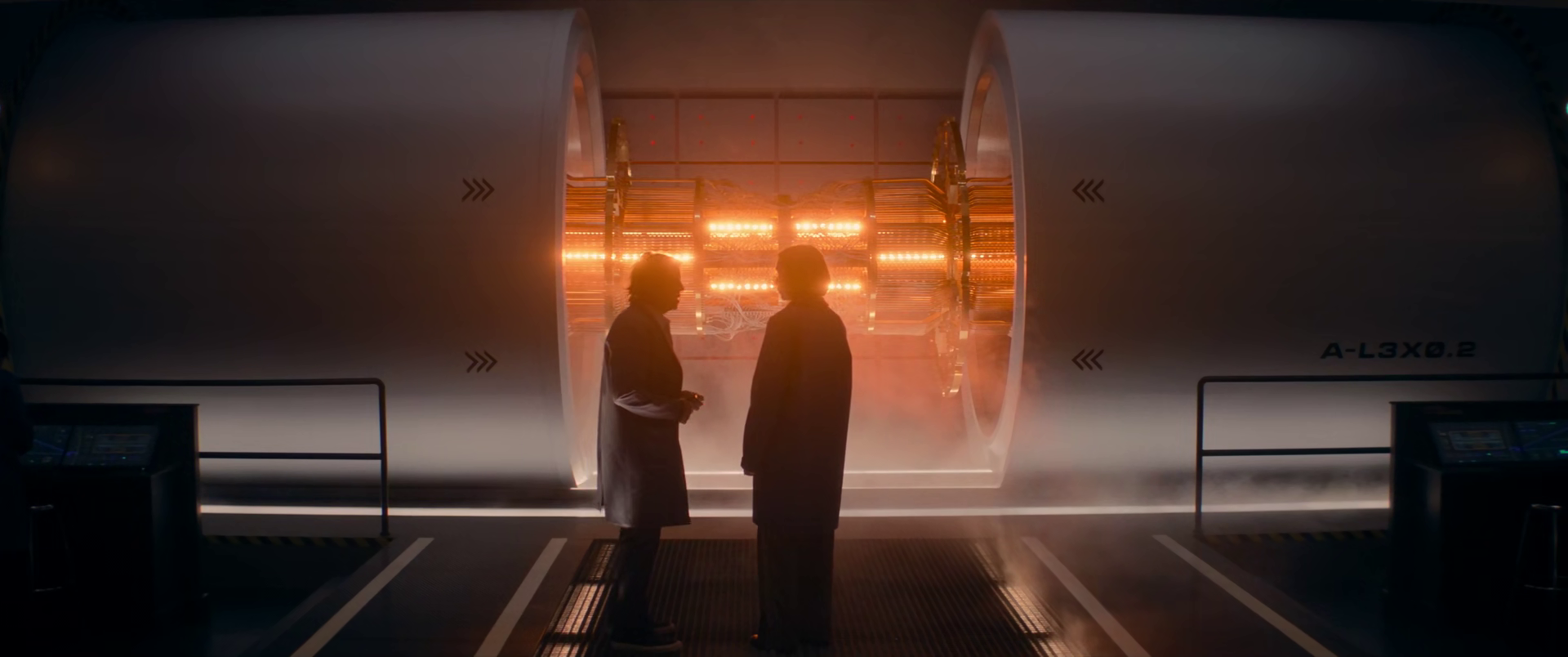
As it turns out, Alex is a gigantic quantum super computer with an artificial intelligence far beyond the capacity of what anyone thought could be possible. Alex predicts the future, only instead of some Foundation-esque calculations involving mathematics that treat the universe as some gestalt moving in a consistent general direction, this super-A.I. literally manipulates time itself. How? Not sure, really. But it explains Collins's strange visions and hints at how Link is somehow Samantha Redmond's dead son.
Now... maybe I have to go back and watch season one again, but was this always the plan? For a show that claims to have a "three season" story, were there any/many hints that this is where the plot was going? It's topical for sure, and the way they're churning out seasons annually (faster than most streaming shows) means there's not a ton of time for the writers to sit down and pontificate about where they might possibly go next. Still, it's wild that the entire finale centers itself around the collapse of the bunker and promises that next season will see Collin and probably Link track it down to... accomplish something.
This laserlike focus on the metaplot means that anything not feeding directly into Alex generates impatience. The lackadaisical Annie episode feels like a long delay for a payoff that needed to be utter dynamite. An extended stretch with the child survivors needs to be more than just... connection to Collins missing his own. Or how hard life is outside of the bunker.
It also means that once Collins, Teri, and Bean get on the train, they arrive back at the bunker almost immediately, just in time for the big climax. Ignore that in the previous episode Teri was in Atlanta having her staredown with Gary the mailman. Or that the finale opens with she and Collins arriving via train to join with Link's brigade. Or that Link's brigade has been outside the bunker since the end of the fourth episode.
Game of Thrones had this problem too, where timelines warped because travel became such a nonissue. While it's good the show isn't wasting time with long stretches of travel, it does diminish the scope they're trying to generate, where distance matters less than "let's get to the point".
And that is anathema to the medium at its best.
Each book of Paradise is eight chapters long
As someone who is always looking for the best episode in the season of any given show, it's really hard to pick one here. The Annie episode seems like an obvious choice, but it was quite long, and Annie's abbreviated stay in the season diminishes the that episode's power. Likewise, the "Collins alone" episode is too myopic to be spectacular. I guess it would be the Gary episode, which is plenty engaging even if it pales in comparison to last season's depiction of armageddon.
My attempts to squeeze this show into my pet project are foolhardy, though. Episodes are not what people will remember about the show. The big totemic plot points are the legacy because those are the moments the writers want the audience to focus on. The character work is good, yes, but the plot is what the show builds towards.
And that's the unfortunate story of Paradise.
People show up for post-apocalyptic shows. They show up for murder mysteries and conspiracies. But by the time this season turns into the Alex show and setting up Alex as the grand big arc of the series, it feels like it's completely lost its way from where it started.
Worse, there's the implication that Alex has seen the future enough to ascribe Collins as some wondrous person who will be important for whatever endgame is coming. That sort of metaplot is par for the course. But it's unclear how all of this is going to add up to some larger story.
Maybe when it's over, this second season will make sense in retrospect. Maybe the capital-T Topic at the center of the narrative (artificial intelligence) will be the thing that pulls together that endpoint and the first episode where Collins finds the President dead.
Moving so fast at the expense of character arcs has tremendous risk, though. And there's a danger that the plot is not good enough to stop it from completely swallowing whole this fragile three-season show.