Sometimes Audiences Know
The fascinating flop that was Joker Folie a Deux
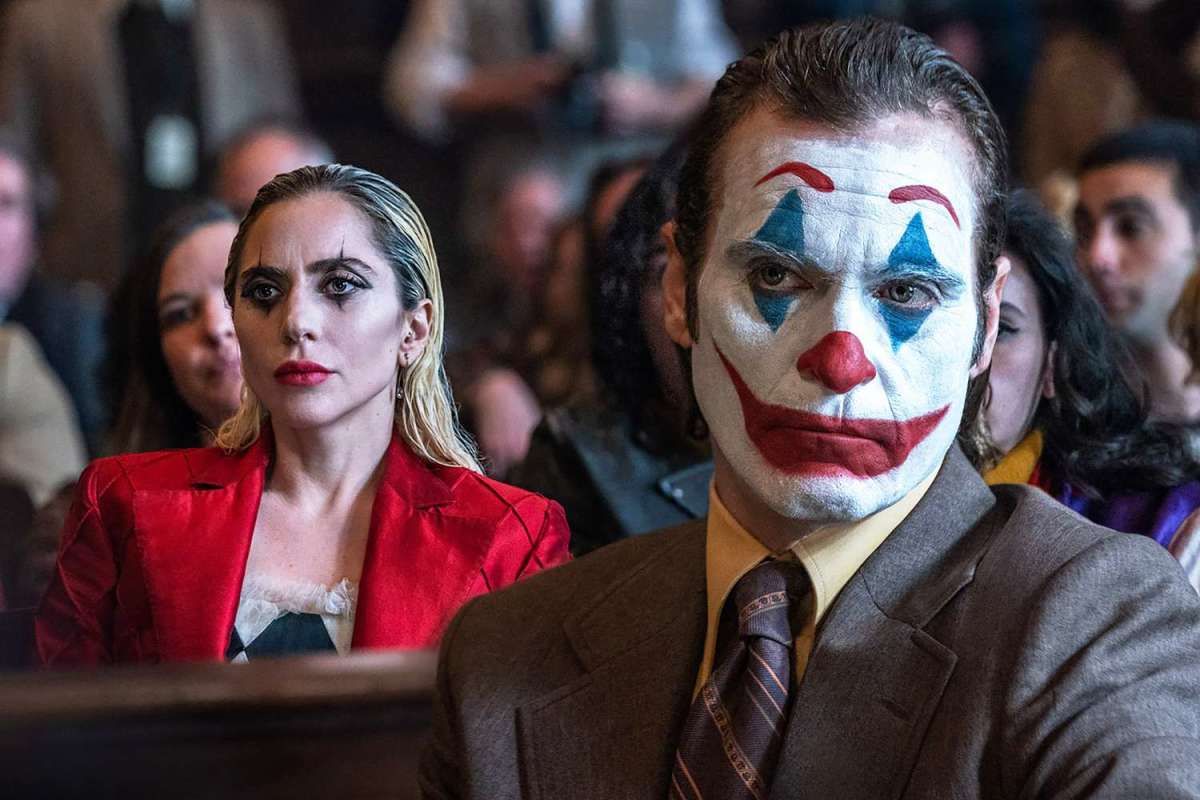
I wasn’t planning to watch Joker Folie a Deux while working, and yet there I was after my other viewing plans fell through. I wasn’t looking forward to that one, so… I decided to not ruin the mood. Headspace already occupied.
Again, here I am talking about a story that’s over half a year old, but Joker represents this weird phenomenon within the studio system. The whole reason the Joker movie happened in the first place was (according to writer/director Todd Phillips) because studios weren’t making the sort of modestly-budgeted, smaller stories that Phillips had grown up on. He cited Taxi Driver as a major influence, ripped off a similar, lesser-known Scorsese film in which De Niro plays a lunatic1 and then smuggled a character-driven psychodrama through the superhero zeitgeist.
It was a smash hit, a genuine win for Warner Bros. Off a budget of $70 million, the film made over a billions dollars worldwide. It garnered 11 Oscar nominations (the most of any film that year), including for Best Adapted Screenplay, Best Director, Best Picture, and half a dozen technical categories. It won two, one for Hildur Guðnadóttir’s score, and the other for Joaquin Phoenix’s lead performance as the titular character. It was the first time anyone had won leading performance Oscar off a being in a “superhero” movie. It also had a non-zero chance of winning Best Picture - Drama2 at the Golden Globe awards and it’s more than likely it came in second behind 19173.
When Phillips announced a sequel, it was a no-brainer. Phoenix would be returning! It would be a musical! They cast Lady Gaga as Harley Quinn! Given the popularity of the original, it was shaping up to be a juggernaut, regardless of the film’s many, many detractors.
That projected success didn’t happen. The sequel barely crossed the $200m mark at the global box office, and whatever soft tracking it had before release collapsed almost immediately overnight. It’s the opposite of what many (including me) expected.
As such, it’s a fascinating case study in why this happened. I quite despise the first film, but it was a raging success. No one liked the sequel and it was a colossal bomb. But how did these happen when both seem obvious in retrospect?
Counterculture revolutionary
When it came out in 2019, Joker broke out as a big, lurid, R-rated explosion of violence and subversion within the ethos of superhero films. It was less than six months after Marvel’s Avengers: Endgame and offered an alternative that went much darker than Zack Snyder’s grim and gritty take on DC’s heroes.
Now, let’s clarify two things.
- The Joker is a far more interesting character as a force of nature than as some deep rich subject for psychological exploration. The Joker’s “why” does not matter”. Hence, barring some incredible take, this movie is a bad idea from the outset.
- The Joker is not a superhero, so when I say “sueprhero” it’s just in the sense of the cultural zeitgeist rather than saying he’s some Punisher-like antihero. Joaquin Phoenix’s Arthur Fleck is an unrepentant psychopath through and through. There aren’t any redeeming qualities to him, much less anything heroic.
The reason Joker succeeded where Snyder failed is because it never pretended to be any of these things. It telegraphed all the ways it wasn’t tied into larger superhero stories while using the basic premise to go much deeper into this character’s sociopathy than Zack Snyder with Superman. In those movies Snyder at least had to vaguely wave at the idea that these super beings would need to save people4. I know my uncle (who, whenever the subject comes up, will proudly tell me how much he despises all comic book movies) saw Joker and liked it in part because of how it it eschewed the genre.
This anti-superhero movie stance plays into the film’s larger themes. Joker is an angry screed against the established order. If one of the major axies of political life is defenders of the establishment versus arsonists who start over from the ashes, Joker firmly ensconces itself into the latter camp. The world has failed Arthur Fleck. His mother was abusive, and the two of them survived physical and sexual abuse at the hand of her boyfriend. Despite her being around him, he is alone. He fantasizes about a relationship with his neighbor down the hall. He stalks Thomas Wayne and harasses the man and his son because he believes himself to be Wayne’s bastard, a potential heir to a massive fortune. Between all this and his general mental illness, Fleck breaks. The system completely failed him. That freedom empowers him to burn it all down.
As he moves through the plot, his actions inspire Gotham’s citizenry. They celebrate the actions of a deranged psychopath and wear clown masks in support. Unrelated to this, one of his failed standup routines goes viral and earns him the attention of late night talk show host Murray Franklin5. When invited on the show, Fleck reveals his identity as the real Joker who’s been terrorizing the city. He then shoots Murray Franklin in the head, murdering him live on national television.
The result is riots in the streets. Citizens in clown makeup. Arthur valorized for actually doing something. Anarchists join, fed up with all the empty rhetoric that begot this weird 70s hellscape.
It is a bitter, pitch black drama, all piss and vinegar. I paint with a broad brush, but this sort of dissatisfaction with the status quo, this seething rage at the system for keeping it there, and the wish for anything to happen that might finally shake up the worldis very Gen-X coded. It’s deeply cynical. And… that makes it an ideal film for the end of the 2010s. America was (and still is) a society that remembers the economic ruin of 2008. It feels like things aren’t getting better, like we’re all less well-off than our parents, and that we as a society can do so much better.
That’s its strongest appeal in the end. People showed up wanting something subversive and got a film about how the system is rigged and sometimes chaos, anarchy, and violence is the solution. It’s the closest that Arthur Fleck comes to being a superhero: after decades of glacial calcification, he represents the sort of violent, extreme change a populace would want.
A slight interlude about the hype machine…
It’s hard to gauge the hype around films. A lot of our perceptions are anecdotal, and that’s hardly a reliable dataset, but there are at least two theatrical experiences I had last year that directly made me think Joker Folie a Deux was going to be another hit.
The first was at an IMAX screening of some other movie. As the trailer for Deux started, the group in the seats next to me shut up and started buzzing, whispering during and after about how excited they were for this next installment. I have heard of others who had similar experiences6.
The second was maybe two weeks before the film’s release. Despite the excitement coming out of Joker’s premiere at the Venice Film Festival in 2019, the buzz emanating about Deax in 2024 was that it was much angrier and less good than its predecessor. Yet that didn’t stop a dad from posing for a picture in front of the giant digital poster screen near the theater entrance. He was beaming, standing in front of the poster like hewas. He was so hyped that he this surely would momentarily manifest on Instagram. But I’ll never forget his ten-year-old son, standing in front of him, big “do I have to” slash “I couldn’t care less” energy. Kid wanted no part in his father’s nonsense.
Sociopathic arsonist
Without getting into nerdy wonky box office talk, Joker Folie a Deux was a massive failure. Was a time that $200m at the worldwide box office would be a raging success, but considering that Warner Bros. had basically doubled the budget of the original film and let Phillips do whatever they want, seeing that number was a four-alarm fire. The previous film had seen little dropoff day-to-day in that first weekend7. Folie a Deux saw its box office collapse more than 40% each day of that weekend. What started as $20m on Friday, had plummetted to $11m Saturday, before crashing out at $6m Sunday. The following weekend, it dropped off 80% weekend-over-weekend. The modern ecosystem has a terrible record for dropoffs. Marvel pop champagne if it’s anywhere near 50%. But 80% is a death knell. Deux was fully out of theaters four weeks later.
Box office is just one metric for a film’s success, but that sort of decline is remarkable. Sequels usually underperform their predecessors, especially when the sequel ends up making a fifth as much as a film that made over a billion dollars. The sequel was coasting off Joaquin Phoenix’s first ever Oscar win. Yet something actively kept audiences away. I’d bet that one dad saw it on opening night, but not sure if I’d bet he’d walk out too pleased.
Essentially, the sequel stumbles around blindly for two hours to justify its existence. That first film was beacon. Anti-establishment fueling its fire. It felt like Phillips was mad at the world, mad at the Hollywood system, mad that it wouldn’t let him make a psychological thriller at the level he wanted unless he dressed it up in superhero drag.
But why on Earth did he think that the next target should be the fans of those who supported him on that first time out? It’s like he never asked why people liked that first film (or worse: judged them for it) and instead blazed a trail to make something he clearly wanted to make.
The result is a film that’s dripping with contempt for its audience. He wanted to make a musical, but if Joker was a superhero film for people who despised superhero films, this movie is a musical for people who hate musicals. Phillips downplays the form, where characters mutter their way through old timey pop hits like “I Got the World on A String”, “Get Happy”, and “What the World Needs Now Is Love”. I don’t know. Superhero musical is not a terrible idea, but I doubt there’s a lot of Venn in the diagram that covers both “Joker fans” and “big bright musical fans”.
Maybe original Joker audiences pitied Arthur Fleck, or at least empathized with his wanting to raze the earth. But this is a movie that’s obsessed with Fleck’s mind without really exploring anything else about him. There’s no character development. It’s a lot of debate about whether or not he has multiple personality disorder (which is extremely tedious when know that he doesn’t and also we really don’t care). It’s a lot of standing in a court room while lawyers litigate the previous film. People even talk openly about how he murdered Murray Franklin on national television, and Phillips decides that the only way to split the hair on this crime is to plead insanity. Like… is this what people wanted? A tediouscourtroom drama? Even Phillips seems bored with the whole premise and he wrote the damn thing.
The biggest shift is in the introduction of Lady Gaga as Harleen Quinzel as his love interest, but nothing in it is interesting. The movie works overtime to sell their relationship while Phoenix and Gaga choose to play a strange fascination between each other rather than actual chemistry. Phoenix, himself, is practically sleepwalking through the movie, trying to find moments. There’s ones like where he laughs-then-stops in the car, but it hardly registers. That’s a tick, not some rich character dive. Gaga, likewise, is an excellent actress but the film gives her nothing to play.
What sucks most is that it’s competently made. The movie certainly feels intentional, but it seems almost angry that the previous film made a billion dollars. Sure, Phillips didn’t have plans for a sequel. He was open about Arthur Fleck not being one of the people who inspires the Joker rather than the Joker himself. When the film reaches its ending and a random inmate shives Arhtur Fleck, it’s almost insulting to watch the “real” Joker slice up his face. The whole thing comes across as a proper hate-fucking for anyone who gets anywhere near this project can’t help. I had no connection or investment to anything that was happening in the sequel, and it was still like watching someone scream in my face for two hours about how nasty and ugly the world is.
Like so many other loud and brash men, he does not offer a solution.
Popular opinion
Most fascinating about all of this is the way the audience turned on the film almost immediately. The relative success of the first night shows how many people said “damn the consequences” and subjected themselves to this despite critics’ warnings. A $20m opening day ins’t so bad.
But watching its rapid decline shows how its rep for toxicity spread. It’s easy to see why. Every conceivable thing people wanted, Phillips denies to his audience. It doesn’t have any scenes of R-rated violence that might have titilated the audience of the first film, and the scene where Fleck has sex with Harley Quinn (so she can get pregnant, I guess) is the most this film really digs into something that’s R-rated (outside of the language).
What’s crazy is that Joker proved that there is an audience for people who hate the zeitgeist but who also wish that the zeitgeist would appeal to them. There was a time when an entire market of accomplished directors could convince someone at DC to give them a modest budget to develop some weird passion project. Smuggling it through a hostile market place made its arrival all the more vainglorious.
Phillips squandering the goodwill he built up is an incredible biting of the hand that fed him. Like… did he even want to make a musical? What musicals even inspired this? Hell, what even does he find interesting about Arthur Fleck? At least in the first film he was exploring a put-upon victim of society’s ambivalence and the madness and violence that results when you push someone too hard in that respect. That first film is leading up to Fleck committing public violence that threatens the system. Generously, it’s a cautionary tale.
In Deux he’s exploring… what it might be like for Fleck to find happiness and freedom? Maybe? Like I watched this and I don’t even really know what the point is. Maybe it’s that despite what he does, there is no escape from this societal prison. The general populace might not support anarchy and chaos, but given investment in Fleck’s story, it makes sense why people find themselves satisfied with that ending. It also makes sense why there’s such a dead end here. There’s no plan. Phillips is just gonna close out his film because he has no interest in Fleck. Even his possible escape route can’t stand him by the end. Harley Quinn still kicks him to the curb because he denies the Joker is a personality of himself, claiming that he’s the only one responsible for his actions. To what end?
Sometimes, audiences can be really smart on things. The problem with this wasn’t the marketing. Warner Bros threw everything into this campaign, hoping they had another billion-dollar grosser on their hands. It might have been the casting. Lady Gaga is a huge star though it’s unclear what the crossover is between “people who hate superhero movies but also love musicals but also love Lady Gaga”/ That can only account for so much, though. The trailers even underplayed its more musical moments, including the fantasy sequences that play in Fleck’s head. The immediate word of mouth also played a role and but it also wasn’t a Cats phenomenon. This wans’t some transcendant disaster; this was something people needed to see for themselves and then judge accordingly.
There’s a lot of movies that fail for reasons I will never understand. Movies can bomb in theaters yet become cult classics later8 or thrive in the moment and get a critical re-eval later in life9. For all that Hollywood tries to hack the system, trying to cultivate perfect hits via test labs and algorithmic spreadsheets, it’s only slightly better than reading tea leaves. Sometimes the producers’ stress testing works. Just ask Marvel. Sometimes they don’t. Just ask Marvel.
Audiences can get it wrong, but they can also get it right. We should take that into account as we form our opinions. The general populace doesn’t have to define our views, but it can inform them and make us smarter, more engaged. It might not make us soothsayers, but it might help us have that finger just slightly closer to the pulse. Seems a worthwhile skill to develop.
The King of Comedy, which is maybe my favorite Scorsese. ↩
Lol ↩
I haven’t seen the final vote totals on how that category went, but I’d be willing to bet significant money on that fact. Don’t ask me how I know. ↩
And god Snyder hated doing that. ↩
Not to defend Arthur, but Murray Franklin mocking him for an open mic night is punching down so hard. What a dick. ↩
A friend of mine had a similar experience. She said that when she went to an IMAX screening at one of the biggest houses in L.A., some small group gave a big clap and cheer after the Folie a Deux trailer. Some people joined in, but almost immediately a significant number of people countered the effort by booing them down. This story still makes me laugh. ↩
Friday to Saturday dropped 24%, Saturday to Sunday drop 17%. Not horrible. ↩
Like Wet Hot American Summer… ↩
American Beauty comes to mind… ↩