
So Many People To Love - The Pitt s02e15

Last season, the Pittfest shooting served as a massive speed bump bridging the two, where once the last Pittfest patient cycled out, the center got back to business as usual. Here, though, there's been this long tail blurring that clean delineation.
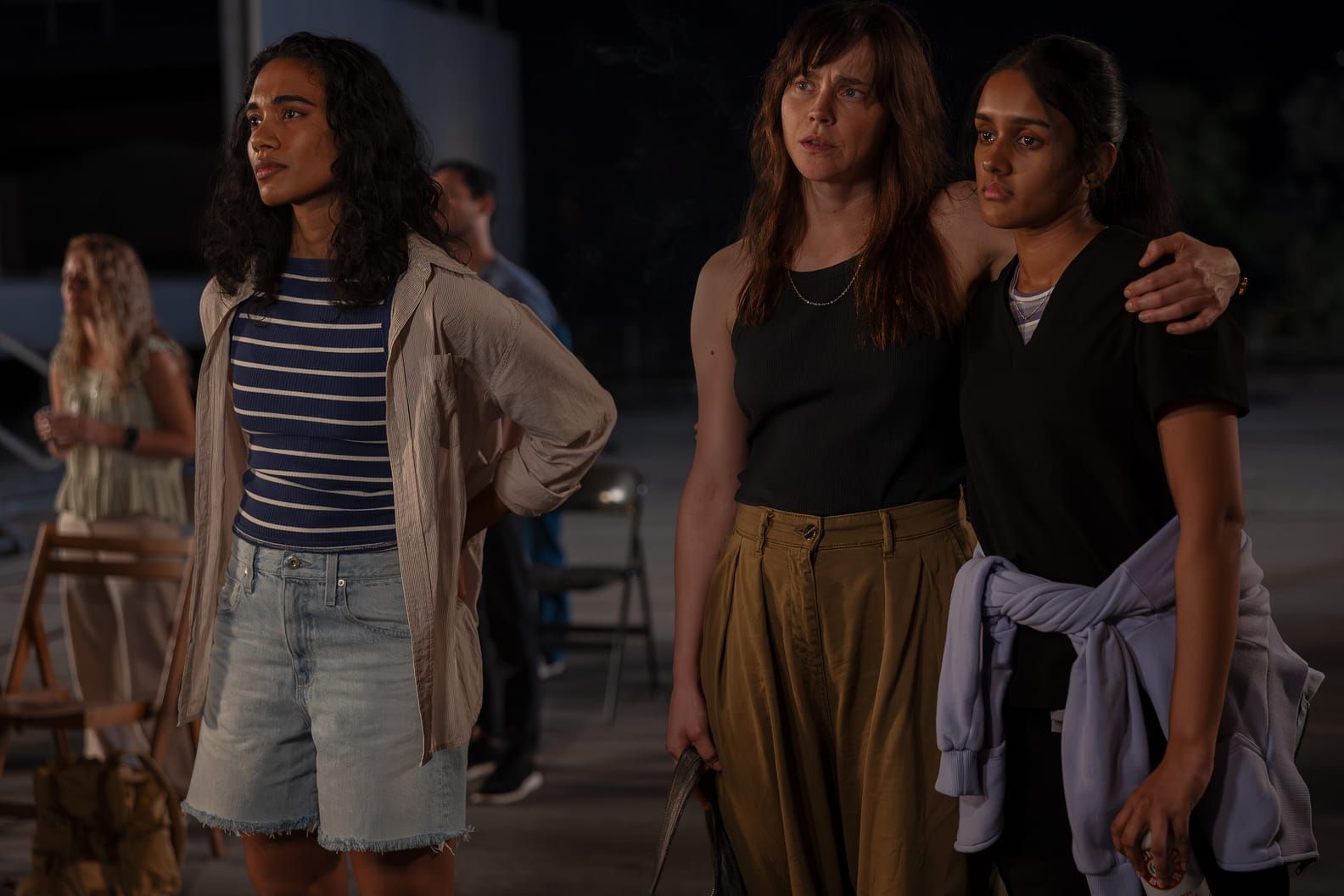
When the team rings the bell in turn (and then Santos tosses it in the trash), there is a sense of relief and celebration. It's the closest thing to a passing of the torch, and slowly everyone changes into their civilian attire (and my partner started yelling about how everyone on the show is so hot!) (which... yeah...). As the cast stands on the roof of the hospital, finally watching the long-awaited fireworks the sense not of completion but of release and relief. People cry. People stare. And it made me realize that so, so much of this cast is not-men. It's basically Robby, Langdon, and Whitaker (with Donnie, Jesse, and Ogilvie supporting). Everyone else (Dana, Santos, Javadi, Cassie, Mel, Mohan, Dr. Al, Joy, and soon to be Ellis, with Princess and Perlah supporting) is all... not.
And that's fantastic.
Still, it's sad to say goodbye to The Pitt for another 30+ weeks. When we check in for season four (the time gap for which the showrunners announced) there is the knowledge that whatever tension vented out over the course of this stretch of time is just going to bubble up in new ways that will explode next season. But if there's one thing to take away, it's this idea that nothing ever ends. Just because this shift is over doesn't mean that there's not another coming up tomorrow or the day after that or the day after that or even that there's a different crew working on this one happening right now.
A carefully constructed house of cards
For all the theorizing about what was going on with Dr. Al this season, the revelation of her mini seizures stemming from childhood viral meningitis feels quaint when compared to the exotic PTSD of living through a suicide bombing at a maternity hospital.
Robby's misgivings and the massive fight he picks speak a lot to his own insecurities and unwillingness to cede the power he wields in the ER. And yet, there is so much humility in what Dr. Al chooses to share with him. This isn't something she seems to have told many people about, but it crystalizes some of the choices of the day. Specifically: her recommendation a few hours ago that the PTMC day shift needs two attendings on staff given the volume and paces of cases coming in.
(Also, the night shift has two attendings with Abbot and Shen, so it's not like there's no precedent...)
While it sucks that this situation is happening, it's hard to think of Dr. Al handling it poorly. Yes, Robby should know, but she's telling him now. She went through the entire day with Robby as lead, and she recognizes that they are stronger as a team than they would be individually. But also? Her neurologist cleared her both to work and to drive. In a world where Robby (especially in this episode) is focusing on the value of doctors and knowledge of medical procedure, he should at least listen to what she has to say and the advice she's gotten from people who know and understand her condition.
That's the issue, though. We'll talk about Robby in a minute, but his insistence on perfection when such a thing isn't possible means excluding someone like Dr. Al-Hashimi who has more than proven herself over the past 15 hours. Were there lapses? Sure. Is it concerning that today she had two seizures after going a year without? Absolutely. But this is also literally her first day in the ER. And she is quick to point out that this is her first time around pediatric cases since being in Afghanistan. Given what she went through, that'd be enough to set anyone off, not the least of whom would be someone with Dr. Al's condition.
With her, though, there's at least one boy who survived today purely because she was there. She took it upon herself to do the slash trach when no one else could. Dr. Al is extraordinarily good at her job, and while there's room for improvement, a lot of that is on-the-job training that can only come from this pressure cooker environment. Robby is undoubtedly better at this than she is, but he also has decades of experience working here. With enough time, who's to say she could not?
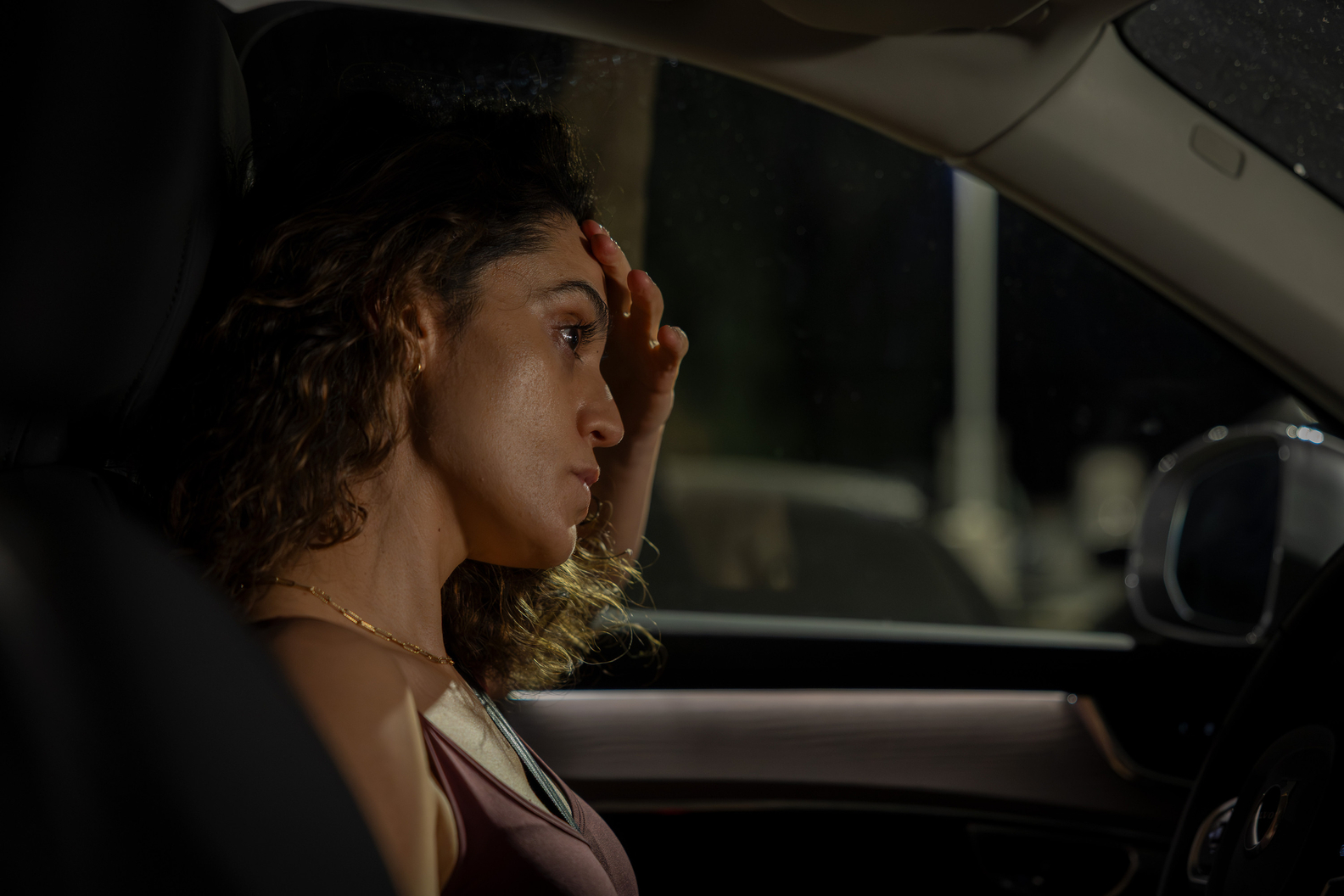
When we leave her, Dr. Al is in her car, sobbing. Sepideh Moafi has been good all season, but the weight of this shift and what it's done to her mental health leaves her as a shell of the person she was at the beginning of the day. Remember when she was brightly explaining to patients that she was using an app to record their conversations? Or the playful flirtations she made with Dr. Robby? It wasn't all stars and rainbows, but I'm not sure if my heart broke in this episode for anyone more than it broke for Dr. Al. I love her so deeply. It's beyond exciting that she's sticking as a part of the series moving forward.
Karaoke Brigade
The brightest spot in this episode comes when we get the once-per-season moment where Santos puts herself out there as a helping hand to a fellow resident. Last season it was Whitaker, offering him a place to stay so he wasn't crashing in an abandoned room in the hospital.
This season, she welcomes Mel.
It's no wonder everything with Becca is hurting Mel so deeply, what with the younger sister going off and having her own life while the older has grown dependent on taking care of her sister in her free time. Langdon can bond with Mel somewhat, but that is only helping her at work, not when she's off the clock.
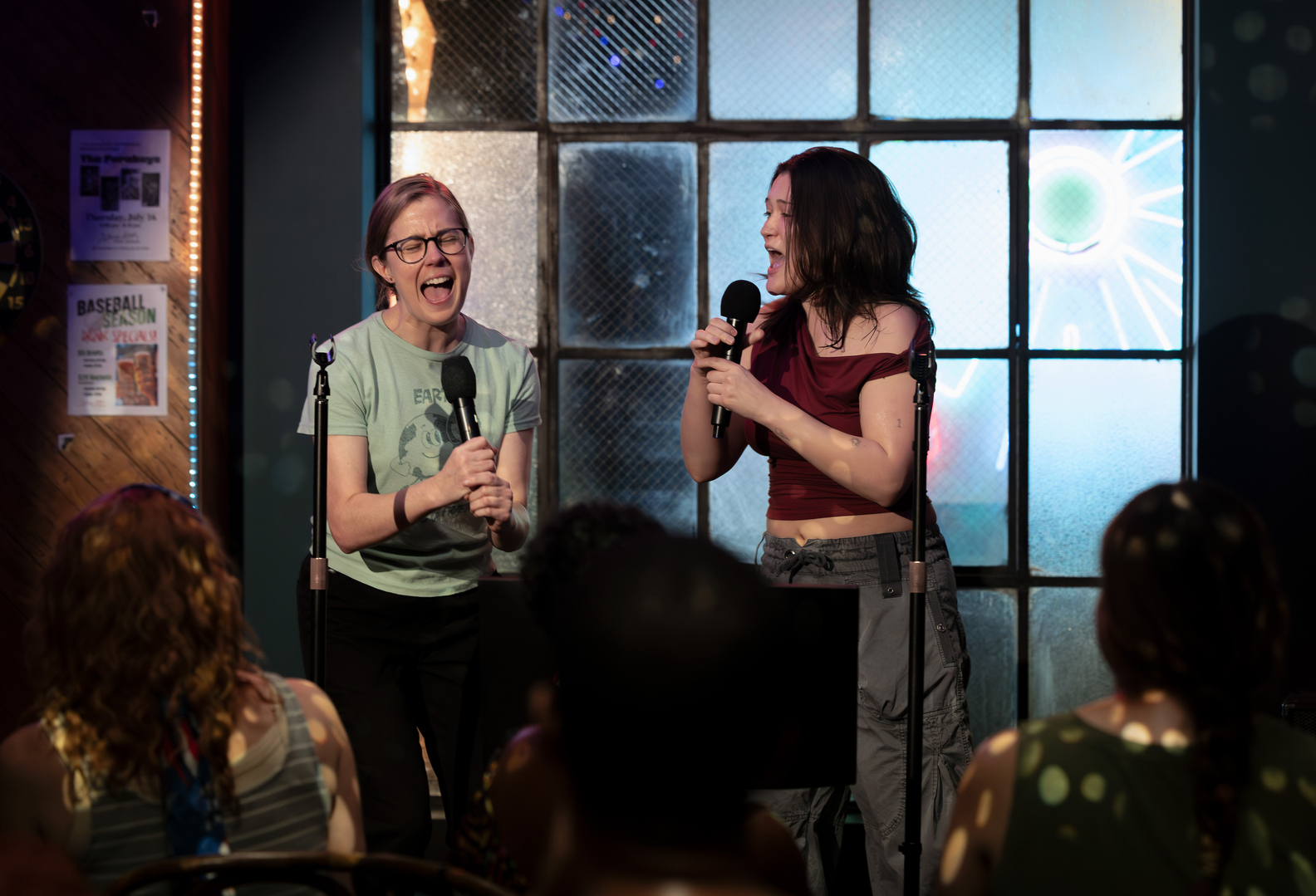
If this season is about learning that life must exist outside of the ER, it's hard to argue that there's a better statement of what is possible than having Mel and Santos rock out to a scream-shout karaoke rendition of Alanis Morissette's "You Oughta Know". It's the moment everyone was talking about, pure uncut joy at seeing the two characters who most need to unwind cut loose and wear their hear down and thrash everything from this interminable shift out of their system.
That's the culmination, though. And yes, the show earned the moment. But the aforementioned ringing of the bell and everyone standing on the roof in street clothes emphasizes that there has to be life outside of the hospital. Whitaker getting into the truck with Amy is surprising because it's a reminder of who Amy is: young, beautiful, with a full life ahead of her. She has a kid. She lets Whitaker drive. And Whitaker even tells Robby that he'll check in on the place tomorrow. The housesitting is not going to be Whitaker's life. It's just going to be a thing he does. What an arc. Just before the end of last season he had nowhere to live. Now he can still live with Santos, spend time with Amy, and crash at Robby's. Opportunity abounds.
In the absence of Whitaker (or even Garcia?) Santos reaching out to Mel just after Becca makes her feel alone in the universe is exactly what both of them need. This job cannot be everything. Nor is it a job to do alone. Thinking about the Whitaker/Santos relationship all season shows just how much cohabitative intimacy can build a rapport between the two. Imagine how good it'll be after months and months of karaoke, especially with someone like Mel who absolutely needs to let her hair down like that.
Not only that, but even the things that seemed to matter so much in the moment (Mel's deposition, Santos's charting) didn't matter at all once the shift came to an end and the work stopped. People can pour themselves into these hours and give it everything they have, but everyonegoes off the clock eventually. As soon as that happens, real life (the reason we're all here) takes precedent. Building that existence is critical to success.
All of that requires building and forging. It means living. Just existing within a job becomes a means of rot and decay. It eats at the soul.
It will be okay
Which brings us to Dr. Robby.
For all that this episode had tremendous pathos and profound statements, nothing got me quite as much as the one at the title of this write-up. It's one thing to think about surrounding oneself with people who love them. To center it instead on "so many people to love ahead of you" is tremendous and profound. Just a few minutes earlier, Robby confides in Mohan that he thought he'd be married with college-aged kids by now. On the one hand, it's a statement of how much Robby is someone who gives freely of himself. He might have a lot of issues to work through, but he's not a selfish person. And there is so much value in sharing without the expectation of anyone returning it. Anyone can receive love. But to love is a glorious gift of empathy.
A lot of conversation surrounding this season in particular comes from the narrative's Robby-centric focus and his emotional wellbeing within the context of doing this high-intensity job. If this were coming at the expense of the ensemble, it would have more weight, but even now at the end of the season I don't feel like anyone didn't get enough moments or I'm wanting for any specific character. There's currently no amount that would be enough.
But even if that were true, and the show's focus on Robby were to the show's detriment, that ignores that so much of The Pitt's strength comes from its verisimilitude and showcasing the healthcare system as it is. There's value in exploring the emotional and psychological toll we as a society put highly proficient specialists through, especially when so much of it is unnecessary. That's doubly true when the context is America's broken healthcare system.
If there's a problem for Robby, it's that he's never dealt with all the lingering traumas of his life. His mother's abandoning him as a child has left a gashy scar across his psyche, but it's a combination of that and his inability to build a life outside of his profession that's done all the damage.
The season-long payoff of the Baby Jane Doe storyline, where Robby cradles her while speaking to himself and whispering that it will be okay is tremendous. A lesser show would end with someone taking her home. Or maybe having a young daughter would change Robby's outlook and give him something to build off of. It would give him someone to love. Or maybe Santos taking her home would help the R2 balance out the tumult of her life outside. There were any number of solutions for The Pitt to take, but in its quest for verisimilitude, none of those were ever going to happen. Just like Robby was never going to apologize to Javadi or Mohan about the disrespect he showed them. The best he can do is call the former by her first name (which, for all his coldness throughout is nevertheless remarkably affecting) or express to the latter about his wish for a family etc.
It's hard to tell where Robby is on his journey towards healing. Between his final monologue and his confrontation with Abbot, he's maybe at the first step of admittance: he has a problem and it goes beyond just running away from his problems. All the dark and the demons require an exorcism that's more than just pretending like some months away won't cause an instant relapse when he comes back. The time away will certainly do something, but if it will help...?
In the post-finale press, creator R. Scott Gemmill talked about Robby's journey, about how undeniable it is that he's in a dark place, and how this might seem like a low point but that next season will see him sink even lower, with no confirmation on if that's going to be his nadir or not. Mad compelling as Robby's psychological distress is, it's hard to imagine how much lower he can go.
This has percolated through his entire day shift. And watching the night shift come in has proven a strong contrast in how they do things versus how Robby does things. Yes, this shift was stressful what with the network outage and the other hospitals shutting down and the general rush of the 4th of July, but Robby's behavior can't possibly have helped. His big team meetings of the day centered around the network outage and making sure its procedures went as smooth as possible... or when everyone was around Louie's bedside to memorialize his death. He is all business or tragedy. That is the community he has festered.
Meanwhile, Abbot runs a different ship. The huddle where he leads his team in a consecration about how they're the weirdest and the wildest is the sort of community building that the day shift lacks. Abbot has handled his shit. He's hardly perfect, but his compartmentalization results in a relatively healthy team under him. Robby's defense that he's "not the one who spends his free time getting shot at" rings hollow in the face of Abbot's even keel and the environment he cultivates.
By making this job his entire existence, Robby has allowed it to define him. Anyone he saves is an adequate execution of his remit. Anyone who dies is a loss and a failure that siphons away wisps of his soul.
Imagine how bad it would have been if the Judith preeclampsia case had gone south, if she had died, if the baby hadn't lived. It probably would have sent Robby over the edge. In saving the two of them, he and Abbot did something truly miraculous and remarkable. They're exactly the dudes who could get her through that experience.
Yet, even if she had died, would that have been Robby & Abbot's fault? Not really. The woman was going for a "free pregnancy". She didn't want medicine or hospital care. She wanted a natural birth in every respect, going so far as to initially deny an ultrasound the team needed to perform. Had she come in earlier or handled her health with care, responsibility, and a solid trust in medical science, this wouldn't have been nearly the issue it was.
Not that that matters to Robby, who can't even recognize the wonderful work in which he partook. Saving her was the only option, and it's why he put so much on the line to hear that baby's first cry. He was fighting to hold onto a piece of his soul.
This isn't sustainable. It hasn't been sustainable for a long time. Watching this episode in a vacuum, the life and death stakes of an eclampsia childbirth are already impossibly high. But to recognize that we've been through fifteen straight hours of stakes like this, and knowing that he does this five(?) days a week? Of course it's destroying him.
No wonder he was so at ease with letting Roxy go.
In the end, there isn't a sense that things will get better immediately. For all that the end of the season is an almost meditative reassurance between Robby and Baby Jane Doe about how things will not only be okay but that they're okay now, the show makes a deliberate choice with this final scene, one that reflects the truth of Robby's journey back to stability.
In the last season, after Robby had a complete mental breakdown and then found himself on the roof at the end of the shift contemplating a jump, the show ensured an ending of Robby escaping, where the final shot is of Robby walking off into the darkness of the park. It wasn't optimistic, but it was a sense of survival. There was trust that he could get home and come back the next day.
Here, the show doesn't do that. Despite the fact that Robby has been saying since hour one about how excited he is to leave, to hit the road, to start his sabbatical, we never actually see him do that. When he leave him, he is still in the makeshift nursery, holding onto the baby and setting it at ease, almost refusing to leave because he is not ready. That is an arc. More, it's a reflection of his mental state. When we return next season, it will likely open with some gorgeous establishing shots of Pittsburgh followed by Robby's entrance into the PTMC for the start of the next shift. But as far as the audience is concerned, he never left. Much like the end of Othello, while Iago might claim his wound is mortal, Shakespeare ushers him off before the audience can relish in that glorious death. We assume he dies. He probably (almost certainly) does. But that's not in the text. He outlives both Othello and Othello.
For all that season two of The Pitt is about Robby trying to get away, to escape, to clear his mind... even after he confesses to Abbot, fights with Dana, screams at Dr. Al, basically chases Mohan out of emergency medicine, and takes the verbal drumming from Langdon reading him for not being on the path to healing... he doesn't leave. He stays. We don't get the reward of seeing him get that grand promised end of riding off into the night. Hell, unlike the entire rest of the day shift, he doesn't change out of his scrubs.
There is still more work to do.
Around the trauma center...
- Biggest reason to not do drugs is to avoid having to do urine tests while a lab tech watches.
- So many great Abbot/Robby moments, but "when people worry about you I think that I should worry about you" is a tremendous sentiment. As a peer, Abbot knows the pressures Robby is under, but that can also blind him to the what others see as an abnormal mental state. Abbot probably thought Robby was just having a bad day. Not so much.
- Also, Abbot is Robby's emergency contact? Bro, you need a life out of this hospital.
- This is two seasons in a row where the show has ended with anti-science, health-skeptic lunatics coming into the ER with high-stakes problems and refusing conventional treatment. Putting them at the end of the season helps to underline just how pigheaded and foolish such views are. Fuck these people. They're so lucky the Hippocratic Oath dates back to the dawn of civilization and their views on what will save their (or their children's) lives are irrelevant.
- "The more time I spend here the more time I realize the importance of mental health." Javadi's status as a medical student means that she has more freedom in her path forward than anyone else working. To bring it back to ER as a rosetta stone, one of the hallmarks of that show is how the different characters all play different roles within the department. Dr. Greene is chief resident, Dr. Lewis is a year-two resident, Carter is an intern... but then there's Dr. Benton as a surgical resident and Dr. Ross has a focus in pediatrics. It allows each character to have a distinct flavor in what they're doing. The Pitt doesn't really have this, where everyone has a general focus and characters like Garcia (as a surgeon) or Caleb (as a psychiatrist) flit around the margins of the narrative. The closest in the main cast is Dana as a Sexual Assault Nurse Examiner. Specializing in emergency psychiatry would be a fantastic way to create more dynamics within the series itself. At the very least it would be helpful with someone having a psychotic episode (like Jackson early this season). More grandly, it means that the show itself is evolving and creating a stronger overall department.
- Dead body in the waiting room is the good stuff. And the "weirdest and the wildest" having to cart him out without freaking out is peak night shift excellence.
- Every bonding opportunity with Mel and Langdon rocks. It's so easy to look at the two and be like "ugh I want them to hook up", but this show does a great job of building genuine friendships and camaraderie between these characters. Santos hooking up with Garcia is more than enough. No need to descend into soap opera.
- The entire eclampsia sequence is awful. Go to the doctor and trust them, kids.
- Poor Mel having to do another deposition. But... girl, just care a little less about this situation. She's in good hands.
- Dana reaming out the cops for not picking up the rape kits. Get 'em, girl.
- Langdon going to check in on Debbie (the necrotizing fasciitis patient) is heartbreaking, but helps to further contrast with Robby. It's technically Langdon's fault that he didn't her infection when she first entered triage, but there was no way of knowing how bad it really was. Even still, they did what they could as fast as they could. She lost her leg, but they saved her life. That matters.
- Buried in the the Robby/Langdon conversation is the latter talking about being sober "186 days". Given that this season takes place 10 months after Robby kicked him out of the ER, that means Langdon had a relapse about half a year ago, some four months into the process. Subtle, but thank god the show is not making some statement about Langdon immediately getting better and acknowledging that his addiction was far more than the minor thing he pretended it was. Recovery is a journey, not a light switch.
- Digby boosting Whitaker's badge is such an incredible payoff to him being around all day.
- Gross-out moment of the week: There's no way this isn't Judith, where every aspect of her birth-while-eclampsia was absolutely harrowing. The show maximizes every second of it. The iodine on the belly, the cuts, the strange, alien-glisten of the light/fluids of the uterus, the pool of amniotic fluid, the stuffing of gauze and bandages into her swollen stomach before they rush her up to surgery. All of it was such an incredible, technical sequence amidst a season full of incredible, technical sequences. It's why we watch the show.
- God I'm going to miss this show so much.