Life After Gatwa?
With a new season of Doctor Who back this weekend, is the current version of the show in need of a full-on regeneration?
Talk to me about television for any amount of time and we’ll quickly arrive at Doctor Who. If this happens, good luck pulling me out of that particular tail spin. It’s long past the point where I can be objective about the show. I would argue it is the Greatest Television Series of All Time (not the best mind you, but definitely the Greatest), a show that is infinitely variable and that will long outlast me or anyone currently alive. For as long as stories exist, so too Doctor Who.
It is also, in a lot of ways, the prism through which I’ve come to view all stories, narratives, and metatext. This has been over a decade in the making, heavily sculpted by El Sandifer’s extensive writing on the series as a metatextual metaphor for society since the moment of its inception. For all that my feelings about her have grown somewhat complicated in the last few years, Sandifer’s perspective on the series is one that I truly value, and hers is usually the first place I’ll go when I want a fresh take on a new episode.
You’re probably not going to meet many bigger Doctor Who fan than me. It’s a show that I’ve come to care about more than just about anything, and yet as the newest season preps to air this coming weekend, I can’t help but wonder if we’re in the twilight of this current iteration. If there’s one thing New Who proved it’s that Doctor Who will never die. It will always come back in some form or another, but that also means that it must eventually die and go into an indeterminately long hibernation.
At the risk of being a doomsayer, I’ve come to believe that the next iteration of the 16-year gap where Doctor Who was not on the air (affectionately called “The Wilderness Years”) is a lot closer now than it isn’t. The show in its current incarnation has been on the air for more than twenty years since it relaunched under showrunner Russell T. Davies and gone on to span nearly 200 episodes across 15 seasons over 20 years, six actors playing seven distinct incarnations of the main character (more if you count the one appearance of John Hurt’s War Doctor or the guest appearances by Jo Martin’s Fugitive Doctor), and three head writers/showrunners. It’s a remarkable acheivement in television, buttressed by this being a continuation of a show that had already been on the air for more than a quarter century before its cancellation in 1989.
The success of the show under this new aegis is stunning. There have been spans where it’s been at the top of the weekly viewing charts in Britain, it’s aired episodes in cinemas around the world, and has percolated the zeitgeist for an entire generation that’s never touched the Classic series. Was a time audiences talked about The Doctor as “that one dude with the scarf”, but these days you’re just as likely to have people reference Matt Smith’s bowtie (or fez) or David Tennant’s signature trenchcoat. The show has also broken new ground in the past decade by casting both a woman (Jodie Whittaker) and a queer actor of color (Ncuti Gatwa) in the role, expanding the possibilities even further of the sorts of stories the it can tell.
But maybe we’re at a point where the show needs to return to that hibernation state that defined it in the 90s and early 00s.
The current state of the show…
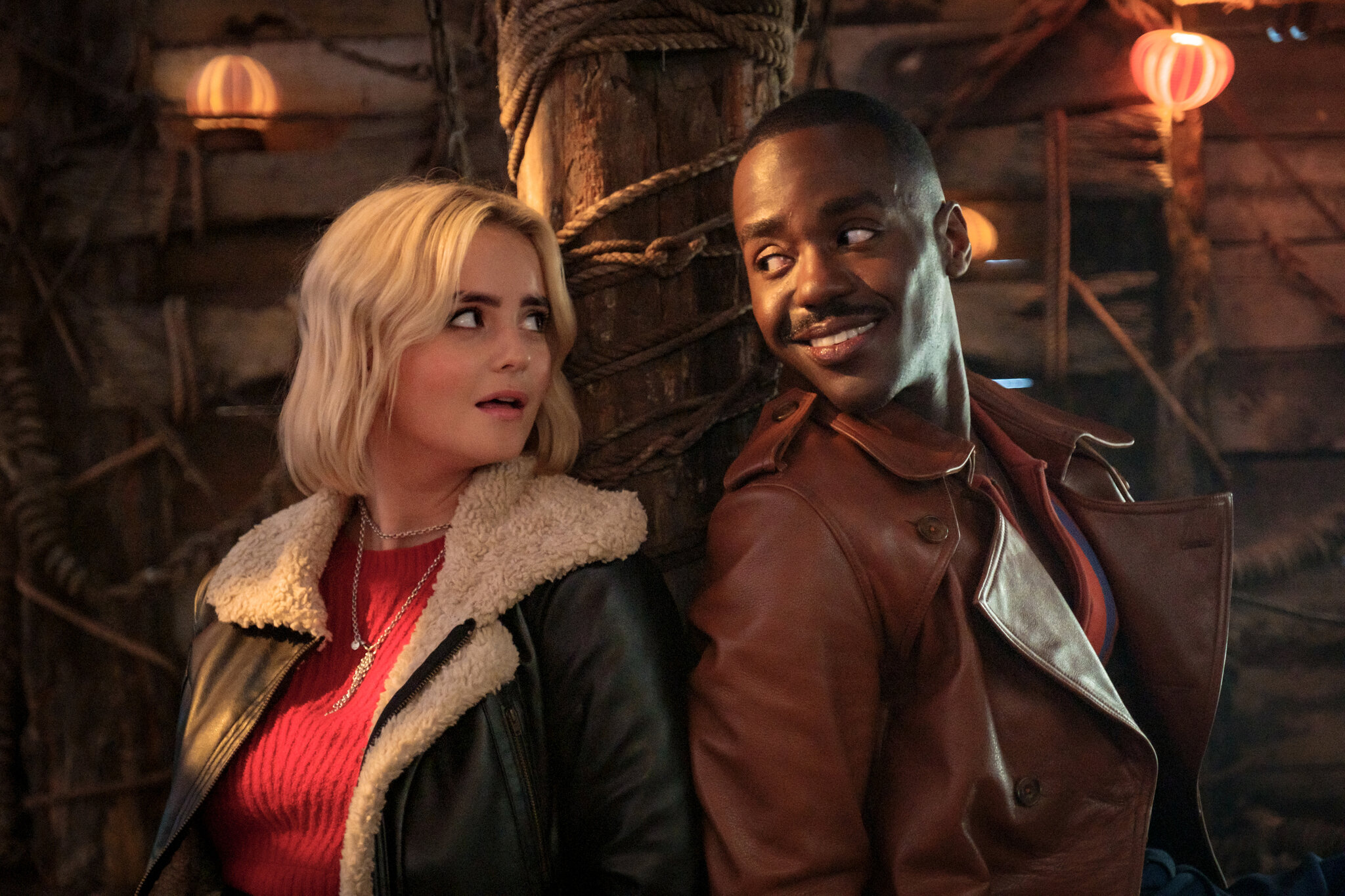
For all the doom and gloom of the now, it’s probably ironic that the show is on a bit of an upswing at the moment. The previous series was the first starring the excellent Ncuti Gatwa as the 15th Doctor. His ten episodes to date have featured some truly terrific installments like “Boom”, “73 Yards”, “Dot & Bubble”, and “Rogue”. Even if his first season finale “Empire of Death” was a bit of a letdown, the preceding setup episode (“The Legend of Ruby Sunday”) was an excellent opening act.
The new season looks terrific, with a smattering of new writers and a new companion for Gatwa to bounce off of (as well as the return of a few old favorites). Every time it pops into my mind that there’s a new batch of Doctor Who coming, my mind starts racing with excitement at the possibilities.
Only… there’s a lot of troubling signs amidst all this.
For starters, there’s behind the scenes drama prior to all of this that the show was on life support circa late 2021. Viewership had cratered pretty hard during the tenure of showrunner Chris Chibnall, and COVID severely crippled production of film/television worldwide. It had nothing to do with Jodie Whittaker (the first female Doctor; she deserved far better than what she got), but the show was not good under Chris Chibnall. The stories were bad, the writing was weak, and despite my insistence that Doctor Who mythology is infinitely flexible, there were developments that ran counter to several key tentpoles that make the show so special. I try to be calculated about my judgments and superlatives, but I’m not sure if the show has ever been straight up worse than it was under Chibnall’s stewardship.
From the outside, it seems like the only reason Doctor Who got saved from cancellation (and Chibnall claims that there was an hour somewhere before the production of his final season where the show was literally cancelled; I believe him) is because the BBC made a co-production agreement with Disney+ to help the series compete with ballooning television budgets in the streaming era and to help it compete in a flooded market, returning the show to its position as one of Britain’s signature cultural exports. To do this, the BBC re-hired RTD. Davies had left the series at the end of 2009, after he’d produced some 60 episodes across four seasons and a handful of specials. Until the announcement, it was insane to think he would ever come back to the show. Indeed, when my partner told me Davies was returning to run the show again I straight up did not believe them for a good ten minutes.
Despite this life line, the Disney+ era has felt… anemic. The show certainly has a bigger budget than it’s ever had before, but its output is far diminished from its first season back in 2005. For those first six seasons they were producing fourteen episodes in a seasonal cycle.
Now we’re down to eight.
This limitation meant the first season didn’t have the time or space to breathe. Davies has explained that a lot of this reduction in quantity is down to getting the production back up and running, practically starting over from scratch. Despite this, the lower episode count means when Davies produces a weak episode (like “Space Babies”), it hits harder than it otherwise would. The season can produce something as weird & wonderful as “Dot & Bubble” or new & clever like “Rogue” or experimental & strange like “73 Yards”, but it’s not enough to dilute those weaker episodes. One of the joys of Doctor Who is the way it produced episodes that appealed to multiple sensibilities (like more traditional episodes in the first half, but more experimental ones in the second). There’s not a single season of the show where I think every episode is at the very least a solid hit (though some come close), but that wobbliness and imperfection is one of the taxes of producing this level of volume. A thing isn’t good because it is perfect. A thing is good because it is good.
(Also, not for nothing, but we’re in an era where a ten-episode season feels like a luxury. I’d happily trade bad episodes for more time to explore characters and worlds. One of television’s greatest strengths is in its ability to tell long-form stories in the quickest possible way. I’m sure I’ll write more about this eventually…)
Because of all of this, we’re still in this weird limbo where this desert makes Doctor Who feel like some run-of-the-mill streaming oasis rather than the rad television event that takes up every Saturday for a quarter of the year at a time. Episodes air and less than two months later it’s all over. At least they’re getting weekly releases. There’s rumors the show is going to get picked up for another season following this run of episodes, but between Disney+’s cancelling of relatively high-rated series like The Acolyte and the ongoing rumors that Gatwa wants out of his contract to go pursue the rest of his career, none of this is a sure bet.
(And Gatwa might still have a third season in him, but you never know with these things… Especially considering the amount of time it’s taking for his episodes to come out.)
The Biggest Problem No One Is Talking About
When RTD was the showrunner from 2005-2009, there was a question (albeit quickly answered) about who the next person to take over Doctor Who could be. By the end of the third season, it was clear that the heir apparent was Steven Moffat, a dude who by that point had written four of the most lauded episodes of the new era. Davies offered Moffat the post during the writing/pre-production of series four, and Moffat would go on to produce six seasons over an eight year span, in that time becoming the person who (to date) has written the most raw minutes of televised Doctor Who.
Despite it all working out, Moffat’s hiring was hardly a no-brainer. It’s easy for viewers to conflate writing skills with producing skills. Moffat could certainly write killer scripts and stories, but there wasn’t any real proof that he could actually do the complicated task of running a show at the scale of Doctor Who. To that point, his only television experience was a smattering of BBC sitcoms. A major factor in Moffat making the series Jekyll in 2007 was to prove he was capable of producing and managing a big budget genre series.
By Moffat’s second season (Series 6) in 2011, it was clear there were issues, though. RTD had produced his four and a half seasons on a grueling schedule, one that worked him and everyone around him to the bone. Moffat, on the other hand, had a style that didn’t lend itself to round-the-clock production and slamming out a draft of an episode in a matter of days after lots of thinking about the story and not even a written outline to prepare. The release schedule for seasons six and seven was bifurcated divided. With months between the airing of both halves of both seasons.
By early 2013, I remember a sense that Moffat would depart after the airing of the 50th Anniversary Special in November. Around this time, something changed. Moffat claimed a big reason he stayed on was because he had the opportunity to cast Peter Capaldi as the Doctor to replace Matt Smith (where Smith’s departure after three seasons had long since been rumored; three seasons is the accepted shelf-life for any Doctor nowadays).
There was also another rumor though. Around this time, I remember a discussion of who the hell would replace Moffat. There were numerous options (at one point I was on team Toby Whithouse. I rapidly grew out of that), but the name that kept coming back was Chris Chibnall, who would eventually take over the show in 2018. Chibnall had the requisite experience, from running Law & Order: UK or the Doctor Who spinoff Torchwood or the hit small-town crime drama Broadchurch. Chibnall’s schedule meant there was a lot of biding time to make sure the handoff was smooth and they didn’t lose the momentum of the previous decade and change. Indeed, Moffat’s final episode was supposed to be the tenth season finale “The Doctor Falls”, but when it was clear that Chibnall wouldn’t get his shit together in time to produce a Christmas Special for the 2018 holiday (one that would introduce his new Doctor), Moffat stepped in to make “Twice Upon A Time”, a lovely story that serves as a final bow for both him and outgoing Doctor Peter Capaldi. Despite this, it also feels like it’s written on the last fumes left in Moffat’s tank.
But… Chibnall? Really? At the time, it made no sense to me. Chibnall’s Doctor Who stories to that point were completely lackluster at best (“Hungry Earth”/“Cold Blood”) and downright terrible at worst (“42”). Why would they want Chibnall? Especially after so many years of Moffat putting out some of the best scripts in the history of the series.
The answer, in retrospect, is obvious. There was no talent available who had the producing chops to make something as complicated as Doctor Who. Davies and Moffat were unicorns. Chibnall might not have had the writing chops, but he certainly seemed to have the production chops. With so much money on the line, it’s easy to see why the BBC thought he was a prudent choice.
This, to me, is the main problem. There is a sense that Davies helped to steer Moffat into accepting the job of showrunner, but nowhere else in the 20 years of New Who has there been a sense that anyone but these three men is in consideration of running the show. There have been writers certainly good enough to do so (Capaldi-era writers Jaimie Matheison, Peter Harness, and Sarah Dollard come to mind), and Toby Whithouse (himself an accomplished producer of shows like Being Human) has always felt like one sliding door away from getting the job. But the problem is that there isn’t really an infrastructure in place to train writers to take on the role of showrunners of big budget shows. At least in the U.S. there used to be a bit of vocational training, where writers would come in at a low level and slowly work their way up through the producer ranks until they got enough clout to lead their own show (though streaming, writ large, has killed this).
But… that’s not how Doctor Who works, is it? Chibnall got the job not because he was a big enough fan, but also because he had enough showrunner experience to justify the gamble. The problem is that Doctor Who lives and dies on the strength of its writing. Chibnall was bad at writing Doctor Who (his views and sensibilities of the show do not play to the show’s strengths). His tenure didn’t work out. At all. It nearly ended the show.
There is a sense now that Davies understands the issue. The primary reason Davies returned is because there simply didn’t seem to be another viable option within the UK’s entertainment ecosystem. I’m hoping Davies won’t be the last of this particular thread of the series, but if and when Davies does decide to step down (if the show isn’t cancelled), it’s still hard to tell who will take over in his place. The show might simply just… end.
That is the downfall of this incarnation of the show. Television has greatly evolved from the division of labor in the Classic series, where there was a Script Editor (really just a head writer) and a Producer (who managed all aspects of production). The job of showrunner (a job I’m going to be talking about a LOT on this substack) is an incredibly specialized and difficult blend of those two skills. It comes with a management role and a prerequisite of how productions work, skills that have nothing to do with crafting a compelling narrative.
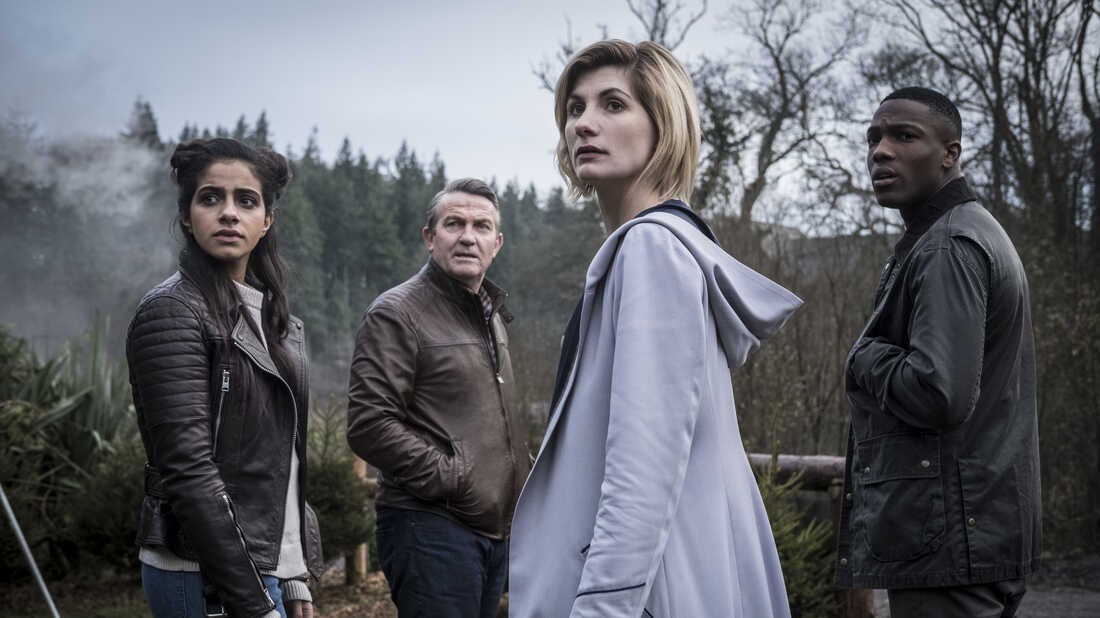
Hell, even Moffat (whose entire run at the helm was quite good) didn’t have a perfect record. I’m convinced a major reason Capaldi’s three seasons are as consistent and solid as they are (it’s one of those three Golden Ages of the series’ history, let’s be real) is because Moffat finally found a perfect producing partner in Brian Minchin. His first three seasons have a series of Executive Producers flitting in and out of the show to varying degrees of quality, bottoming out during his partnership with Caroline Skinner during season seven. But once Minchin came on board, Moffat finally had the pieces that allowed him to smoothly make the series we always knew he was capable of. And it shows.
A Variation on Past Precedent.
In the Classic series, there was a point at which the bottom fell out. Audiences hit a breaking point with the show’s quality and content, walked away, and never looked back. This, unfortunately, was the two seasons during which Colin Baker played the 6th Doctor (and the quality job was not on him at all).
Following Colin Baker’s run, the show brought on Sylvester McCoy to be the 7th Doctor. The producer stayed the same (gosh this is a long story and I’m sparing you so much), but there was a new head writer. The result is one of maybe the three best eras in the history of the show, a true Golden Age. Sure, no one was watching, but it stands the test of time.
In a lot of ways, this feels like an echo of what the show is currently going through. The Chibnall Era was a creative nadir of the show, a point at which viewership declined rapidly, and by the time Jodie Whittaker regenerated in October 2022, it felt like the only people still around were those stubborn enough to never walk away.
All of this feels familiar. A lot of people might be watching Gatwa fresh because Disney+ has given the show the most global reach it’s ever had, but this is hardly the cultural zeitgeist it had around the time of Matt Smith’s departure. Gatwa’s run might not be the black tar heroin that was the McCoy Era, but the potential is there in theory.
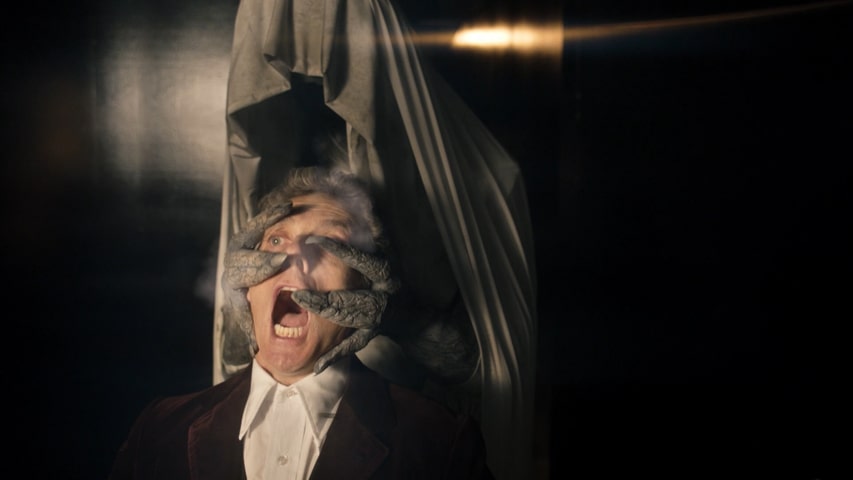
It really won’t be that bad. I say. As someone who didn’t live through The Wilderness Years.
When I think about the show going off the air, I’ve stopped getting angry. Or sad. In a lot of ways, this indifference feels like I’m performing some deep betrayal of a thing that deeply matters to me. There’s no reason to be okay with losing something that’s been a staple of my life since the early days of college, a series that’s directly brought me (among many other things) the person to whom I am married.
But we’ve been through this before. Right now, I’m just delighted to be getting more Doctor Who while we’re getting it, and when this inevitable cancellation arrives, I’m sure it will upset me more than I currently imagine. Yet this is a show that has proven itself resilient, far more than any other in the history of the medium.
It will be back. Yes. It will be back. Until then there will be no regrets, no tears, no anxieties. The show will go forward to be reborn at some unknown date in the future in all its wonderful glory. On that day it will prove to us we are not mistaken in our beliefs of its eternal greatness.
All that said, yes…
I plan to review episodes of the new season here as they air. There isn’t any narrative anything in the world I love more than Doctor Who.
So what about you? If you have a favorite Doctor Who anything (a story, Doctor, Companion, season, or theory), I’d love to hear it.
Allonsy! Geronimo! Brilliant!