
We'll Always Have Paris - Before Sunset
How would you spend your life if you only had 80 minutes left to live it?
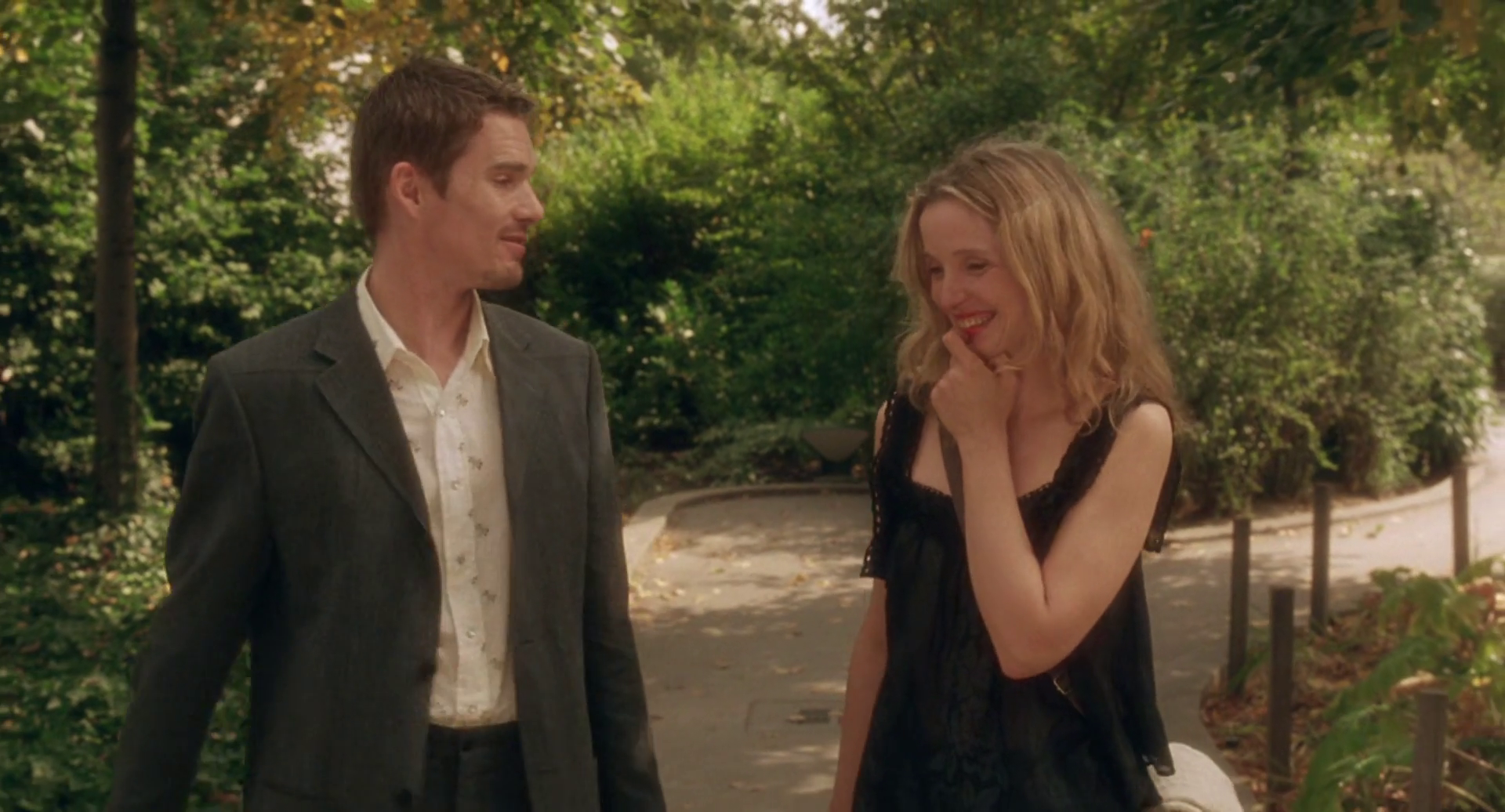
Paris changed my life once.
It was Spring Break, and my parents had arranged for our family to go to London for the week. As part of the trip, we took the train to Paris for an overnight stay. It’s a city you could spend weeks in. 24 hours isn’t enough.
But there I was in the late morning, on some street. There’s no way I would be able to find it if I went back. Aside from my immediate family, no one who was on that street probably remembers that day at all. None of those people will ever read this. There’s no way for me to verify what I saw. We were probably there for five minutes, but thirty seconds of that blip of time tattooed themselves on my soul.
One year earlier, Richard Linklater had followed up his iconic 1995 romance Before Sunrise, picking up the story of Jesse and Celine nine years later. Taking place in real time, their first reunion is a whirlwind 80 minutes in Paris as they recapture the ephemeral, impossible magic of that one, singular night. Like the previous film, the movie is almost entirely just the two of them and the conversations they have, though this time the specter of the past haunts their future. It’s not as easy as discovering backstory. Their profound meeting has subtly defined all their major moments since.
At the end of the movie Jesse has to get back on a plane and return home not just to the United States, but also to the wife and child waiting for him. With limited time, it is a simple film with a simple solution and an obvious ending. But within it is a meditation on the road not taken and embracing a new future by rewriting a past mistake. Living within an 80-minute clock, Linklater, Ethan Hawke, and Julie Delpy portray a flash of a life that reveals infinite possibilities.
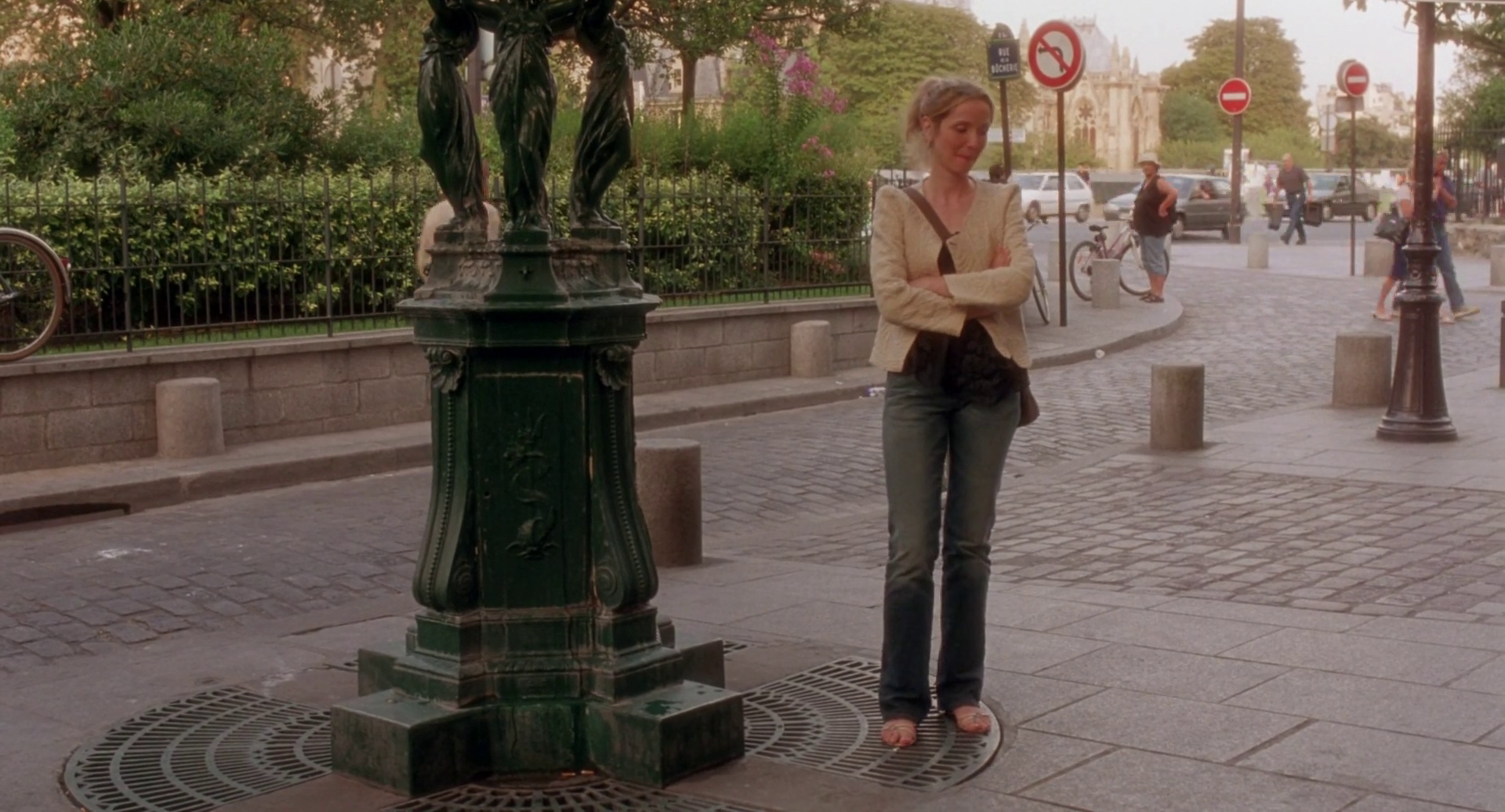
“It definitely wasn’t a slow fade.”
Before Sunset is a delicate dance between Jesse and Celine. Nine years ago, they were carefree with nothing to lose. Now, each with nine years of life built up, the scar tissue of what that night might or might not have meant makes the two keep their cards close. The dance slowly breaks down each other’s defenses until they reveal their raw, wounded centers. There are glimpses at first. Celine nervously fidgets outside of the bookstore and immediately asks if Jesse ended up returning to Vienna six months later. Jesse lies to Celine about it, but also when she asks him what his problems are, he proudly claims he currently has no problems in the world because he’s so happy to be there.
Linklater places Jesse at the emotional center of the film, so he’s easier to understand. He wrote a book about their experience, directly pouring everything that night meant to him onto inked paper. When he sees her for the first time, he tries not to lose himself. His excitement buzzes, but guardedly. He’s always been in love with her, and yet he falls back in love anyway, though even faster this time.
To contrast, Celine is an enigma. She finds herself drawn to him, and seeing him at the bookstore is a deliberate choice she made. So too is her reading his book at all (narcissism is a hell of a drug). Like him, the nostalgia of that night, captures her, but she is far less willing to throw everything away for this possible folly. That doesn’t mean she can’t resist walking off with him. Maybe all she wanted to do was apologize for not returning to Vienna.
But her showing up at all and talking about things this way reveal just how deep and profound her Vienna experience was. Even when she falls into an early tangent about her work and unleashes all her frustrations about environmental injustice, that’s just a distraction from the things really on her brain. It’s one level above small talk: them talking about the world but not reckoning with what they mean to each other.
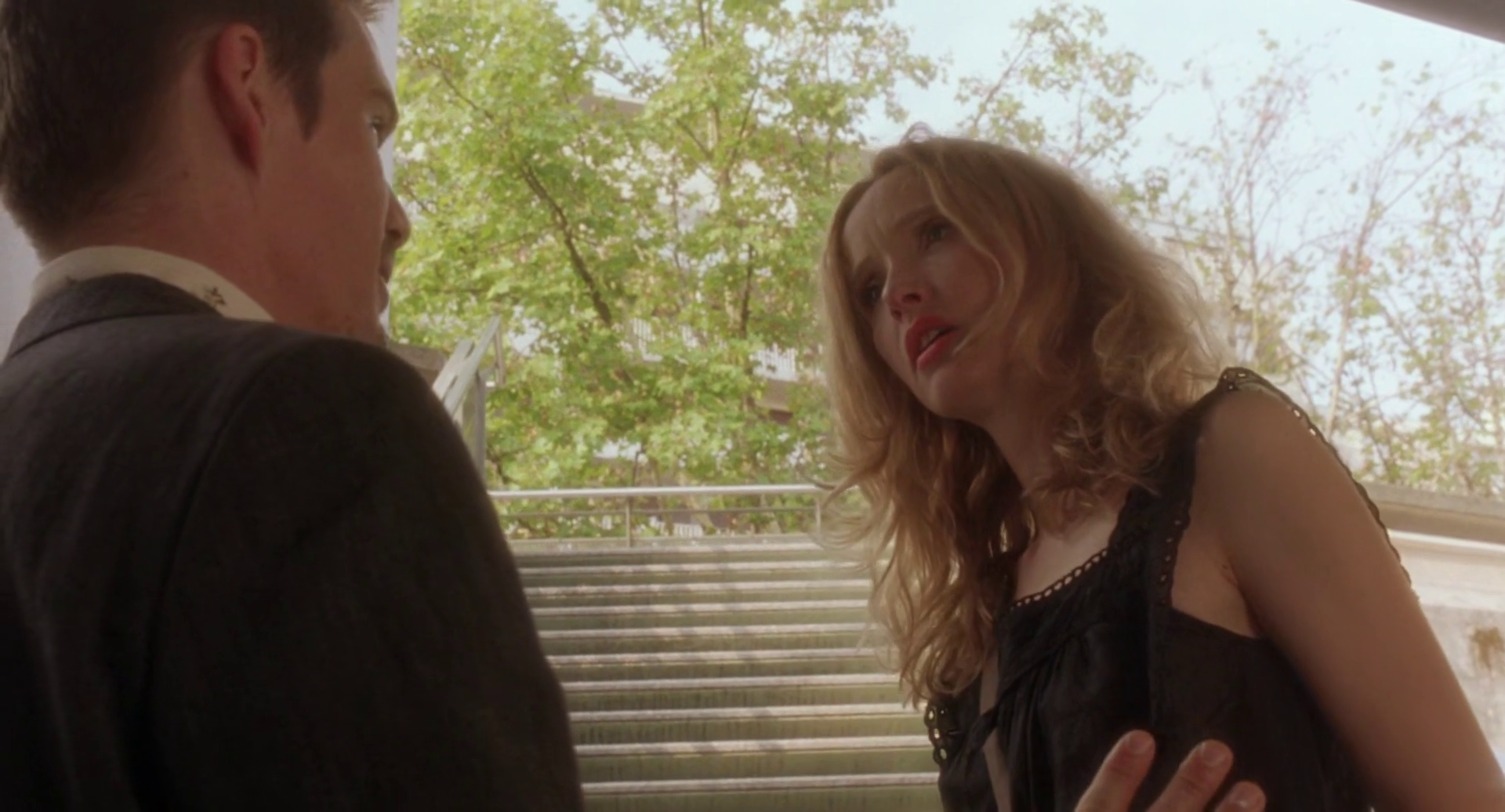
“That’s what I meant about you idealizing that night.”
It’s not shocking when she lies about them having sex in Vienna. After all, she’s given him multiple opportunities to be honest with her about his life. He obviously doesn’t want to talk about it (he’d much rather live in the moment with her), but this push-pull is part of that dance. Obligation is pulling him back to New York, and she’s more than happy to push him back there. It would be so easy to walk away again. She’s done it before. Telling him she doesn’t remember the sex helps keep him at a distance.
On the one hand, this hurts. If the night in Vienna was everything it seemed to be, certainly the two of them would remember consummating their time together. On the other, it’s her taking power in the situation, leaving on the table the idea that this one thing that absolutely should have happened, didn’t. That this all-encompassing event was just a special night rather than the night that defined their lives.
Sex didn’t define Before Sunrise, just like sex doesn’t define Before Sunset. The whole point of doing a movie this talky means the inter-character intimacy transcends physicality. But it’s important that she soon after asks him what he’d want to do if they were to die tonight. He responds almost immediately with sex, and within this game he playfully drags her to a bench to play like maybe they will. This rare, dynamic pan of the camera is one of the most arresting shots in the movie. Linklater defines this film with steadicam and static moments. It stands out. She laughs, but even as she lands on his lap she insists that it’s not going to happen and that they need to be serious.
This is the exact midpoint of the movie.
Jesse is not subtle. He’s telling her over and over and over again that he’s willing throw his whole life for her. They both know he’s married (though it’s about to come up explicitly for the first time). That doesn’t stop him from being extremely open about the affair he actively wants to engage in. He just needs an excuse.
She shuts him down again, though. When they stand up from this moment and move on the first thing she asks him about his wife and child.
And suddenly this isn’t some fanciful, dreamlike romance in the streets of Paris.
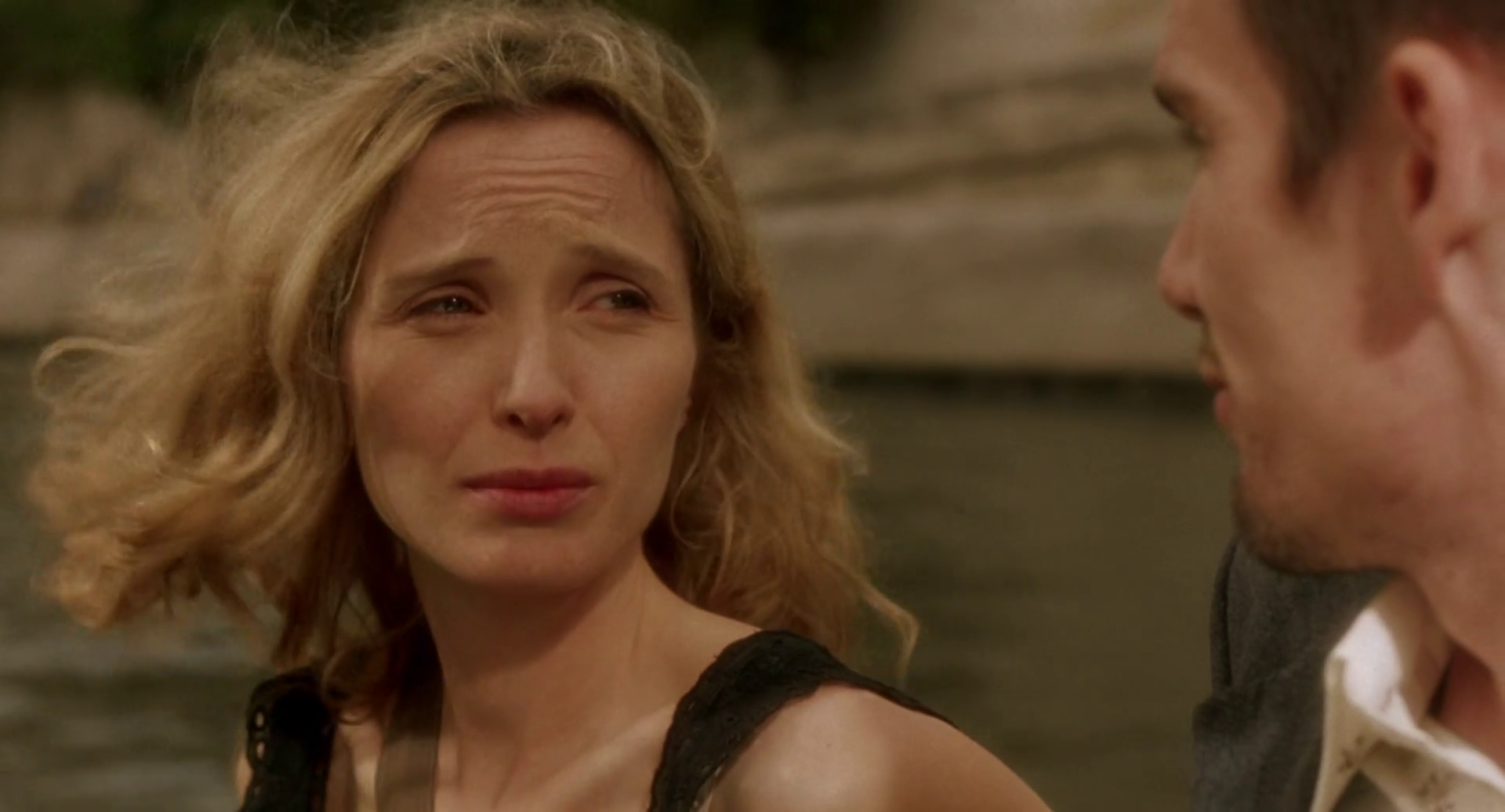
“I lived at 11th and Broadway”
The emotions slow a bit from here. Celine puncturing that particular balloon means Jesse gets more and more honest and open with her. This means he also lashes out more and more forcefully about why she wasn’t in Vienna and why they didn’t do things differently. She constantly deflects back to his wife and child, trying to figure out exactly what it is she’s missed out on while also trying to keep him grounded enough to not throw everything onto her again.
But that’s the problem. With this honesty he reiterates what all of this means to him. Whenever she brings up his life back home he always turns it back to her and the “what if” of it all. It’s most painful when he talks about his wedding day, when he thinks he saw her walk into a deli in NYC as he was on his way to the church.
She says that was two blocks from where she lived in New York at the time.
In an instant, this becomes more than just one brief encounter. Now it’s a missed connnection, an even crazier what if. Had Jesse trusted himself, what if he’d stopped the car and gotten out? Would he have gotten married that day? His son was on the way, but what else could life have been?
Because even if it wasn’t her and it was a random coincidence within the universe, that doesn’t matter. It will never not be her walking into that deli.
She tries to deflect again. But every road leads to his extreme disillusion and the one shining beacon of that one night he could never escape.
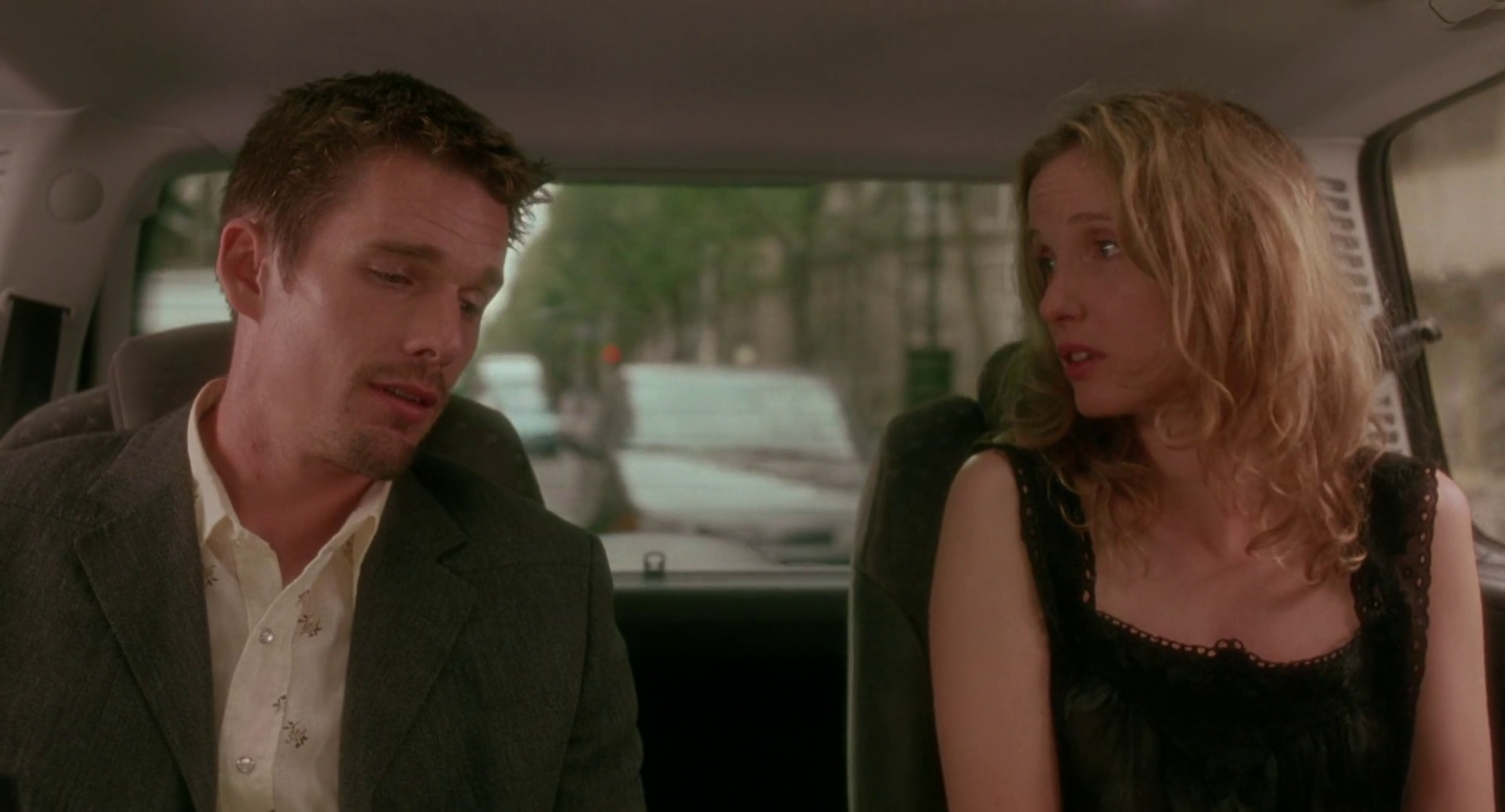
“There’s got to be more to love than commitment.”
So if all Jesse can do is live in the past, what is the way forward? In the best scene in the movie, the two of them get into the car that should take Jesse to the airport and finally let the walls completely come down.
Celine seems to have been able to adjust to life without returning to Vienna too much. She wrote a song about their night together, but other than that Jesse is a faraway dream that’s only subtext to her life. Had the book not dragged it all up, her life would have stayed subtly unfulfilled. But Jesse’s art slammed into her life and made her realized she’d placed all of her romantic existence into that one distinct night and it drained all the future romance from her life. Of course she remembers the sex. They had it twice.
But letting Celine go has haunted Jesse since. It might be subtext for her, but it is text to him. Writing is an act of the broken. People who write find themselves discontent to merely absorb the world and wish instead to push their brains out into it to express themselves and reshape the minds of others.
But here they are. Together. With 80 minutes to see what happens. A taste of the two of them recapturing that defining, seminal moment of their lives. They try not to let it warp them. Well. She does. Jesse only guards himself like he does because she didn’t meet up with him six months later and then didn’t remember the sex. He always assumed it meant more to him than it did to her. It’s only when she starts crying and talking about how much pain and anguish these nine years have brought her that it’s clear he’s not alone. She’s just processed it differently.
There is a huge warning light, though.
Jesse’s life is in such a miserable place that he’s willing to grab onto anything that might bring him somewhere better, some place happier. Yes, he thinks he could be happy with Celine, but anything is preferable to his current situation. Yes, the love he has for his son is endless and there’s nothing he wouldn’t do for him. The love is so deep he is willing to sacrifice his entire life in his child’s name.
But then there’s Celine. She is the spark of what he’s not had in nearly a decade. She is someone he can love. That also means she is enough for him to sacrifice his entire life in the name of capturing what he’s always dreamt of. It’s not very often we get the chance for a do-over. For most of the movie, this is Jesse maximizing every minute he can get with her, going far out of his way to stay with her for as long as humanly possible.
He might not know how this visit between them will end, but there comes a point where he realizes he’s not going to make the same mistake again. That he’s going to blow up his entire life to be with her. That’s not the case for 90% of the movie, though. He truly intends to catch his plane.
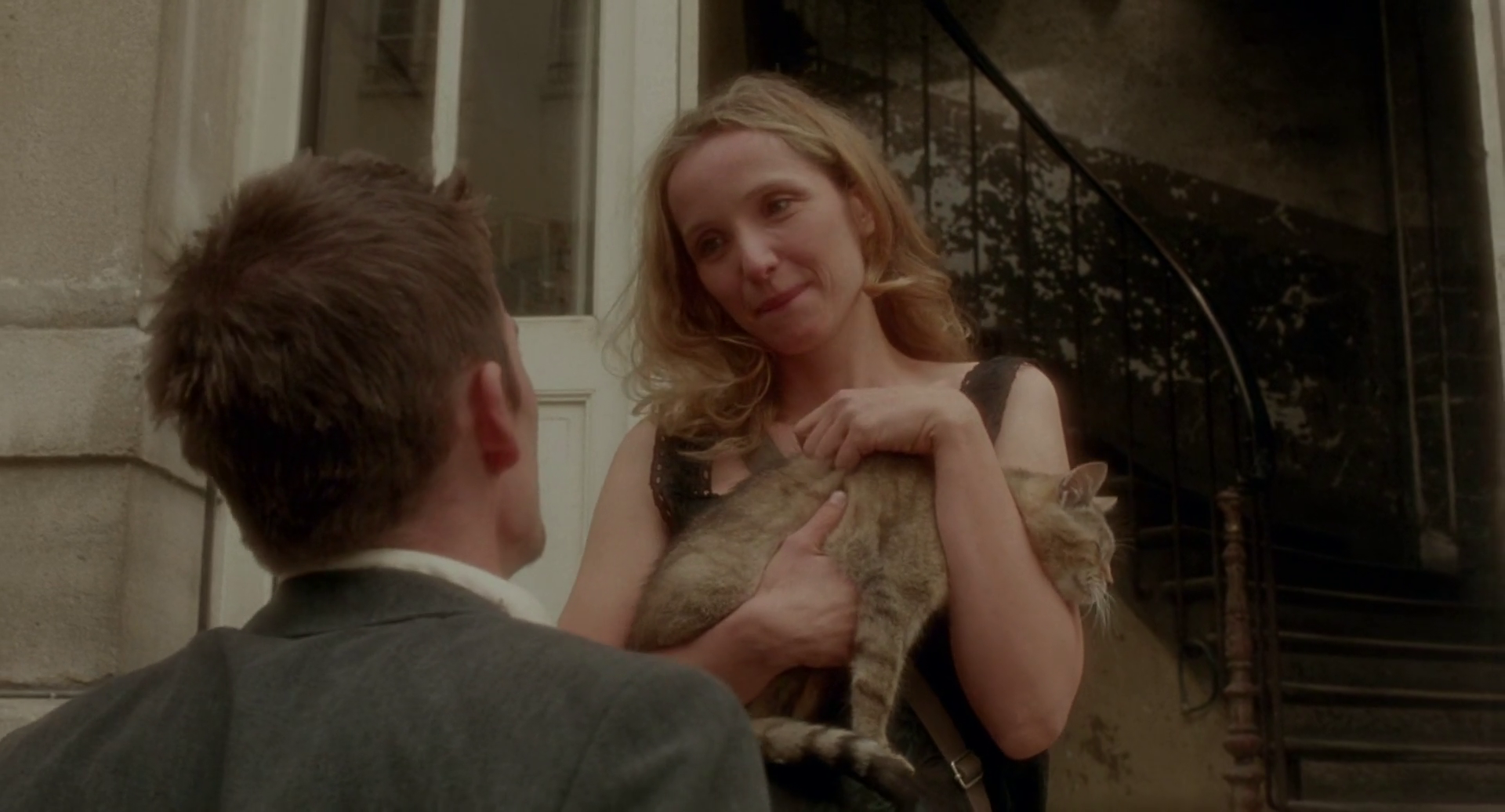
“C'est qui celui la il est mignon. Il mange avec nous.”
As they arrive at Celine’s apartment, things get muddy. The car ride was intense and dramatic, the road they finally take together tearing down all pretense and defense in the name of honesty and pain at the one they didn’t. Jesse doesn’t have to get out of the car when she does, but he does and they hug. He offers to walk her to her door, then he demands to go inside to hear that one song of hers. They climb the stairs. It’s agonizing. This film has been nothing but walking and talking to this point. Yet the ascent is silent, eternal. They keep glancing at each other and Jesse gazes around in wonder, taking in every inch of this space where Celine exists.
By the time he’s in her apartment and takes off his jacket, he knows he’s not going anywhere.
First off, it’s rude of him to expect it’s okay to stay. Thank god she likes him.
But what triggers for him the knowledge that there’s no way he’s going to let Celine slip through his fingers again?
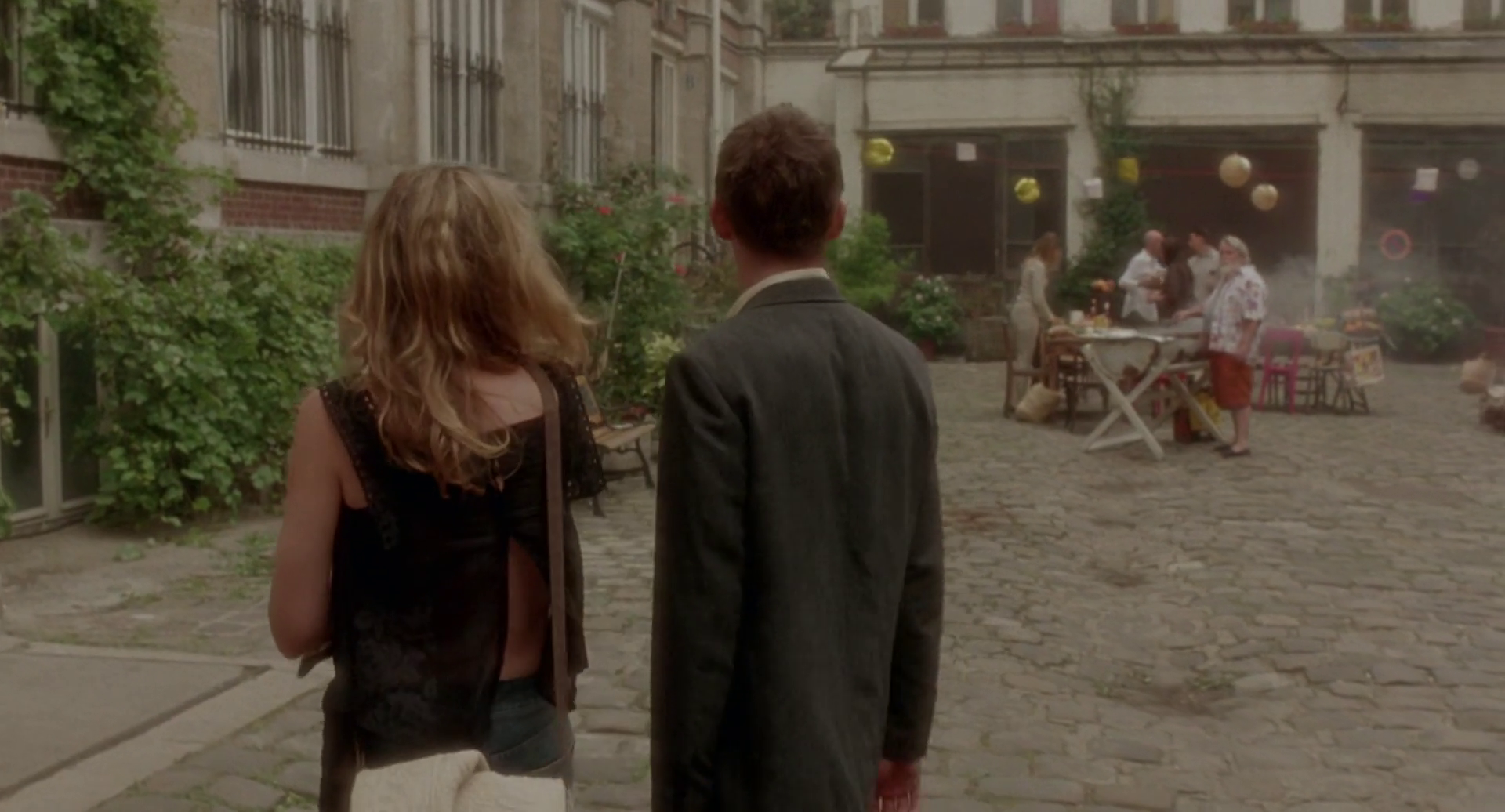
It’s in the courtyard, so fast you’ll miss it.
Baguette
Paris. 2005. Spring Break again. The romance of memory makes me think it’s a cobbled street.
I’m just outside a small, open-air bakery. There’s a middle aged woman behind the counter, doing her work. A man walks up and speaks to her in their native tongue.
I do not speak French.
But I do know jokes and what it’s like when people connect.
He buys a baguette from her. When it is in his hand, they share a quick back and forth. The ease reveals these two know each other. Seconds later he jaunts off down the street. She returns to her work. It feels like he will be here again tomorrow or some day soon.
I won’t.
Within those thirty seconds breathes an entire existence. These two random strangers speak a language I do not understand. She makes bread and sells it. He wears a suit. A businessman perhaps? A banker? A lawyer? They have their own respective lives. And yet they meet each other regularly. They know each other. How many times does he come to her shop? How long has he been coming here? Does she have this relationship with many of her other patrons? Is this guy special? He might not be. It doesn’t matter either way.
It’s impossible to fathom the sheer scope of humanity’s vastness. We only know the lives we live, the people we interact with. Those who cross our path every day, the cars that drive across the perpendicular intersection as we wait for our light, the shopping clerk who rings you up and hands you the receipt when you’re done. They are anonymous bystanders to us, but their own lives are full and vast, rich and constant.
While on that street in Paris, there’s an instant where I want to stay, where I want to sit and watch more, to imagine more of these lives that happen on an entirely different continent, with these people who speak and think in an entirely different language. I would like to learn that language, to assimilate the culture, to think as they do. I could spend the rest of my life on that street.
This is one bakery on one side street. There are so many bakeries, so many side streets in Paris. So many cities in France. So many countries in the world. So many people across the surface. These stories are functionally infinite.
Whenever I think about the world endlessness, I always think of that bakery and those two changing goods for services. I don’t even remember what they looked like. But I do remember how it made me feel.
“I love these kinds of stairways”
Just before they get to her building, there is one brief shot, where Jesse looks from the dinner preparations to the cat to Celine. In that moment, there is nothing that will ever drag Jesse away from her.
That barbecue that will take place in the courtyard of Celine’s apartment is the first time in the entire movie that Linklater focuses anywhere that isn’t Jesse and Celine. He keeps the camera distant, but the allure of the meal makes us want to go over and see all the details. Knowing how the movie ends, knowing that Jesse doesn’t get on the plane, in our minds we’re already thinking about how once the sun goes down Jesse will join for dinner. He and Celine will hold hands maybe above the table but certainly below. They’ll exchange smiles. Smiles of surreal disbelief and giddy excitement. Out in that warm Paris evening, as Jesse joins her community (one neighbor already called him cute) the two of them will be truly happy, together for the second night of their lives.
Meeting someone is not enough. Jesse and Celine can meet on a train and spend the night in Vienna. But that night in Vienna is just one night. They can talk about each other, but that’s not the same as building a life together. Because their life in Vienna is just a brief stop on their larger journeys, the two of them do not allow themselves to think about tomorrow until it is too late. With nine years of wisdom and Jesse in her hometown, it’s the first time he and Celine can actually see what their tomorrow might look like. The promise of a new and different life is just too much for him to say no. It would be too much for anyone in his situation.
They won’t make that mistake twice.
There’s no guarantee that this will work. Hell, it seriously might not. Jesse’s might have put too much into Celine and what she represents. Imprinting that much on her might be a distraction for some insatiable wanderlust. He’s always thinking about being elsewhere. Sure, he loves being with her, but he’s only ever be with her when he knows he shortly won’t be. He speaks about them connecting so well, but he can’t see past the immediate glow of how bright it is to finally be with that one person he never let go of. She stays far, far more guarded. She does want him to stay, but she doesn’t want to be the reason it’s an accident he does. Jesse’s “I know” is powerful because it’s the moment he absolves her of whatever guilt she might be feeling. This is his affirmative choice.
Every single time travel story is about the unknowable consequences of rewriting the past. But time travel is impossible. We make our choices, then we live with them. In our youth, the world is a place of infinite possibility. As age creeps in, it’s easy to see just how limiting reality can be.
It would be so easy to rush things when he gets to her apartment. Celine could throw herself onto the couch and kiss him. Jesse could blurt out he’s in love with her. They could tear each other’s clothes off and fuck on the bed.
Jesse and Celine do none of these things. After 80 minutes of running and gunning every conversation under the sun, with time a limiting factor, the movie ends on a lackadaisical bliss. Jesse’s POV of Celine slowly fades out as she dances like Nina Simone.
After one night, nine years, and 80 minutes they reach a state where time has no more meaning.
The last shot stretches out into infinity.
Bliss descends.
We never see it, but of course they eventually go to that barbecue downstairs.
And finally their life begins.