Toxic Wells of Inspiration
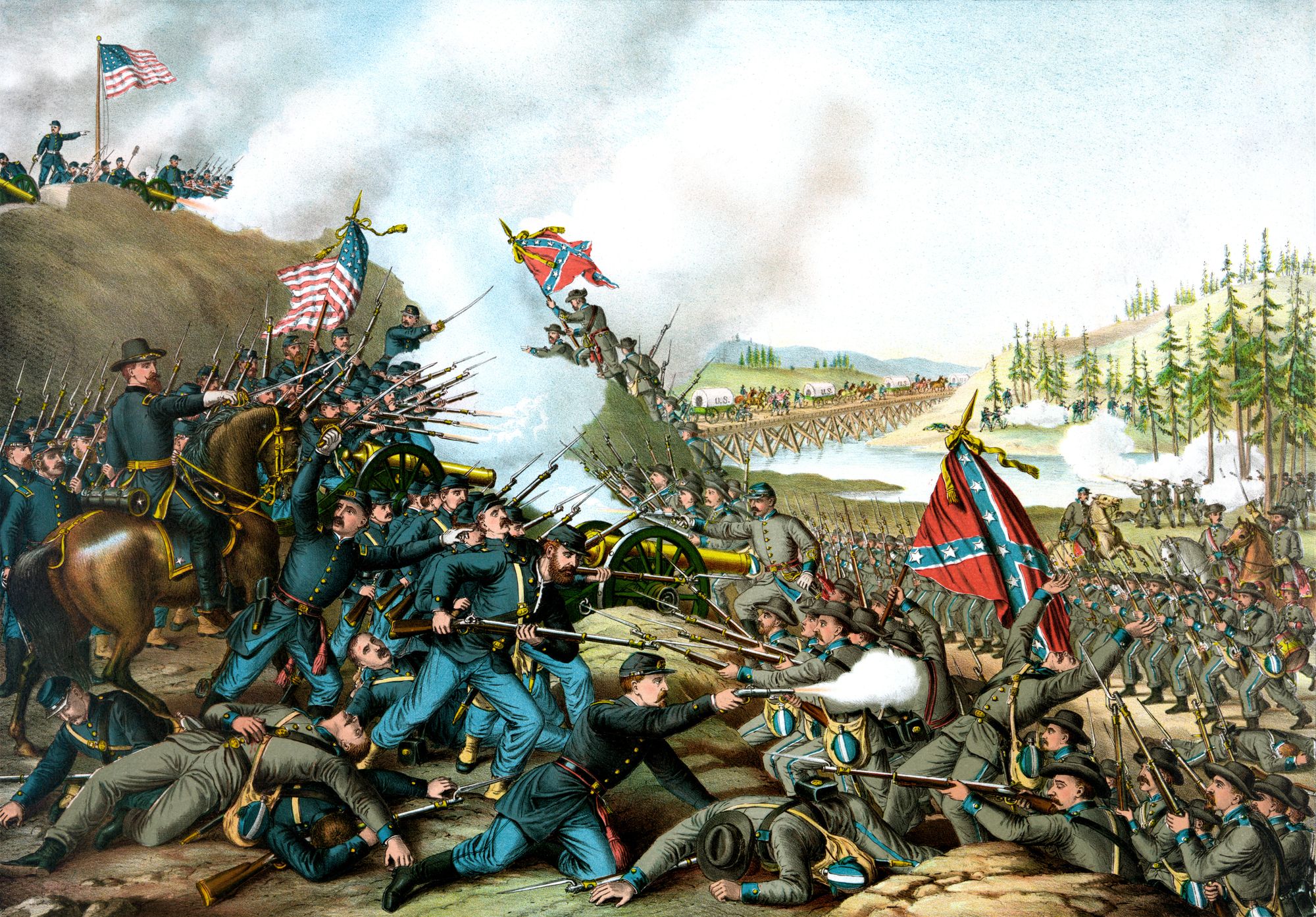
It's been 150 years and still The American Civil War is a hot button issue
As I was working on my Firefly piece last week, there was something that I circled back to from Whedon’s original inspiration. It struck me that the discourse around what he was thinking about is very different from where it was twenty years ago, and it made me think about the various ways inspirational sources reflect upon the inspired.
There’s a throughline here, a topic connecting Firefly all the way back to a hundred years to Buster Keaton’s The General1, and as recently as an aborted HBO project from Benioff & Weiss that the network accouned in the wake of Game of Thrones ending.
Confederate
Right after the premiere of the penultimate season of Game of Thrones, HBO announced that showrunners David Benioff & D.B. Weiss’s big followup to their smash adaptation would be a telelvision series called Confederate. To pull from the brief about the show:
It takes place in an alternate timeline, where the Southern states have successfully seceded from the Union, giving rise to a nation in which slavery remains legal and has evolved into a modern institution. The story follows a broad swath of characters on both sides of the Mason-Dixon Demilitarized Zone – freedom fighters, slave hunters, politicians, abolitionists, journalists, the executives of a slave-holding conglomerate, and the families of people in their thrall.
As someone who was avidly watching Game of the Thrones at the time (and this point in time was right before the show hit its downward spiral), I remember it exciting me somewhat. I love alternate histories that bleed into the present, and the Civil War itself is one of the signature defining pivot points in American history.
Almost immediately, though, everyone had a take.
The dominant groupthink that rose from the cacophony was a distaste (vitriol) for two white dude writers to write a series like this. It was a tinderbox, one asking serious questions about race relations and equality that America was still actively reckoning with. To follow “the executives of a slave-holding conglomerate” is an extremely dicey proposition. To follow any characters is to create a natural empathy and sympathy with people who necessarily have deplorable, dehumanizing views about an entire race of people. To follow “both sides” so is to literally both-sides an issue that we as a society should have settled (or, at least, that we should continue to settle).
This is an extremely valid take. It’s hard to argue that race relations now are at a place where making a show that valorizes slave hunters is a good idea. On the other hand, the show listed Nichelle Tramble Spellman and Malcolm Spellman as executive producers. This wife-husband couple have big name television credits independent of each other. They’re also black, and (while I’m not as familiar with Nichelle’s work) I’ve heard Malcolm speak on enough podcasts to know that he wouldn’t have jumped on Confederate to blindly enable on something as flagrantly white supremacy as the news-consumers made it out to be.
Don’t worry. As soon as the press reported their involvement, it seems like inquiring minds everywhere turned to the Spellmans to demand an explanation as to this nonsense.
The General
Flashback a hundred years. Buster Keaton is adapting an 1863 memoir into a big blockbuster involving stolen locomotives during the Civil War. The original memoir came from a Union soldier, but worrying his audience would not accept the South as antagonists, Keaton flipped sides in his adaptation. His protagonist would be a Southern solider trying to foil the North’s evil plans.
Jamelle Bouie talked about this on an episode of Blank Check, and the details about why Keaton made this choice are fascinating. A lot of it is whitewashing the history, trying to give dignity to a large swath of the country that experienced a humiliating defeat. People who saw The General in theaters might have lived through Reconstruction (or, hell, even fought in the war if they were old enough). And… it sucks to know that you and your ancestors were on the wrong side of history.
And yet, pretending like the South was some noble cause is absolutely perverting what the war was all about, glazing over the need to maintain a monstrous institution in the name of wealth and security.
Firefly
Whedon has said a main inspiration for Firefly was a book he read about Reconstruction. It wasn’t about the war per se, but rather about the solders who returned home from the war in defeat to find the world had changed. Their way of life, obliterated, they needed to find a new way.
This is the story of Malcolm Reynolds. In the allegory, sure, Mal fought for the Confederacy against an evil, all-powerful state. He wraps himself in words about freedom and the difficult job he has but that it’s better than living under the Alliance thumb. As discourse, this was different in 2002 than it was in 2019, but in the years following Firefly’s cancellation, this “it glamorizes the South is a refain that came multiple times from multiple sources. It always felt odd. Were there connections to the American Civil War? Absolutely. This the show warrant them? Hardly.
And yet……….. was it right for Whedon to tackle a series in this manner? Especially because he was such a lefty and feminist?
The promise of a premise
There’s a distinction between these three.
For Keaton, the choice is obviously the wrong move. It’s caring too much about the appearance of something rather than the moral clarity of the situation itself. The South was wrong. Slavery was an abomination. America is still dealing with the scores more than a century and a half later. Thank god society has come back around somewhat to accepting that the Confederacy was a force of sedition and rebellion against their country in the name of people being able to own other people.
For Benioff & Weiss, it’s a bad explanation for a fascinating thought experiment. Given that it comes from HBO, the whole point is to explain the ways that Confederate would be a serious and adult drama, tackling real issues with the prestigey weight that comes with the brand. In doing so, it casts the show in a potential light that doesn’t fully capture the nuance of the situation. Without having read the script or seen the details beyond that premise, it’s difficult to say what would have been the heroes and villains of the peace. The slave-holding conglomerate might have been a truly revolting institution, the kind that the series points at as some abomination. There might have been no redeeming qualities to the institution. It still is hard to imagine such a series without the inherent depiction of black people in bondage and dehumanization. Films like 12 Years a Slave and shows like The Underground Railroad are horrible enough without adding the veneer of modern technology to the enterprise.
And yet for Whedon, the focus on soldiers coming home and finding themselves as strangers in a strange land is not glamorizing something as wretched as slavery. Would it be so different than a South Vietnamese soldier returning home after the end of the Vietnam War and finding themselves unsure how to live in country that they feel like they’ve lost?
Therein lies the difference. Whedon used the basic thematic rumblings as a springboard to explore an emotional truth that could trace its DNA to the Civil War, but that also went on to be about Westerns and science fiction and mega-corporations and also a psychic girl and a marriage and all these other things. From that he created a universe and a mythology and while the Alliance is undoubtedly a wretched empire that committed atrocities in their own right. It was hardly the sort of exploitation that Confederate might have had. They could have avoided it, but that premise would be challenging for even the best producers. Benioff & Weiss had a seasons-long issue with their depiction of sexual violence (but that’s a different conversation for a different time).
All three of these stories come from the same basic thread of inspiration, but there can be nuance within the topic itself. Sometimes, ephiphanies can come from the craziest of places. It can be as bright as a ray of light or the darkest most depraved gutters of our minds. But it’s important that artists and creators keep in mind the pressure points of the world around them. On paper, Confederate is an incredible thought experiment, but that’s coming from me, a white dude who doesn’t have a lineage I could trace back to the Antebellum South. Once Benioff & Weiss started to deal with the reality of what they were playing with, it’s hard to imagine the premise’s potency didn’t rear its ugly head.
It’s not just the Civil War, either. It’s anything that involves human suffering, especially on a mass scale. It’s entirely valid to criticize such an inspiration. Plenty of stories throughout history come from morally questionable premises or times of intense trauma. The human condition requires humanity to look deep within itself and to interrogate moral and societal underpinnings of cataclysmic events, especially when it comes to injustice, progress, and malicious behavior/systems. Those to whom that does harm have a right to make their concerns known.
But even within all of that, Benioff & Weiss have the right and even perhaps the obligation to follow their bliss to related themes, topics, and logical conclusions. It doesn’t mean that those topics should make it to the world in their most unrefined forms. But there should always be the freedom for artists to find inspiration wherever they can, listen to it, intellectualize it, and follow it down its labyrinthine paths.
Once that’s done, it’s the artists’ jobs to present the final product as responsibly and as thoroughly as they can. It won’t always work, but allowing the freedom to derive inspiration from everywhere is far preferable to shutting things down immediately in the name of some press release.
Terrific film. You should watch it. It’s in the public domain, too. So it’s literally streaming everywhere. You have no excuse. ↩