
The Oscars Got It Wrong - Titanic
James Cameron was robbed.
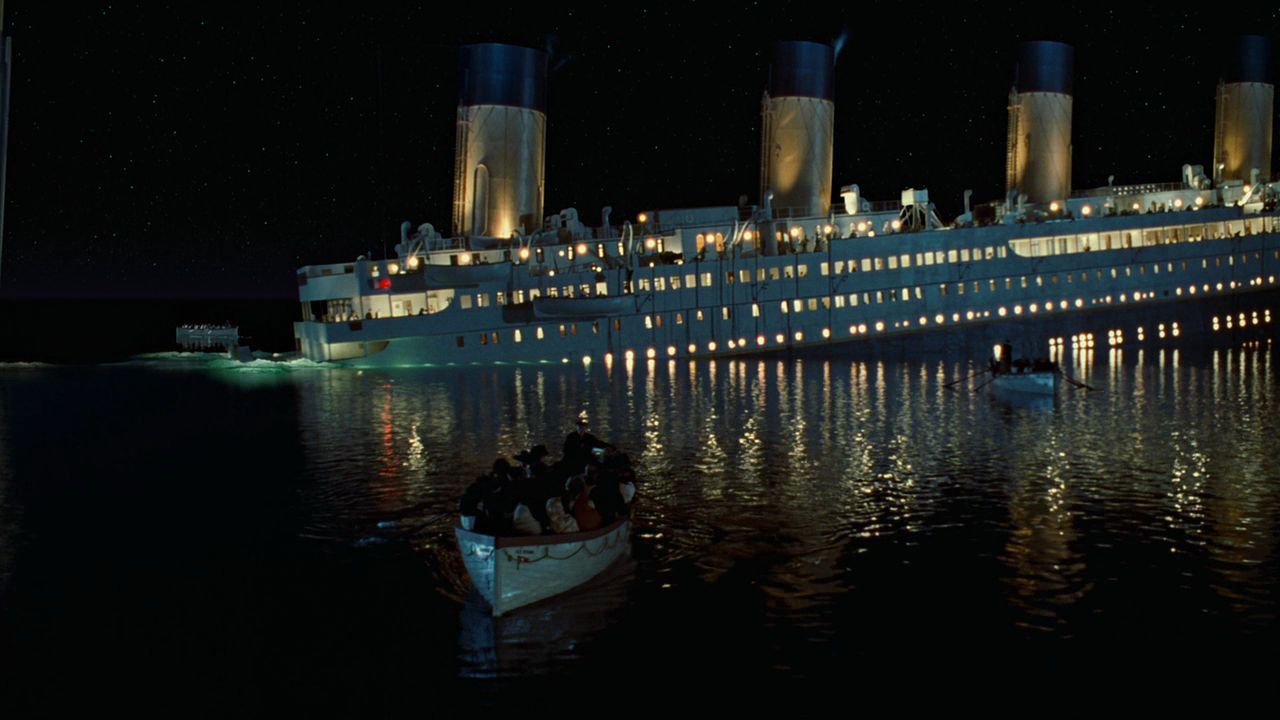
Here’s all the nominations that Titanic received at the 70th Academy Awards1:
- Best Picture
- Best Director
- Best Actress*
- Best Supporting Actress*
- Best Art Direction
- Best Cinematography
- Best Costume Design
- Best Film Editing
- Best Makeup*
- Best Original Dramatic Score
- Best Original Song
- Best Sound
- Best Sound Effects Editing
- Best Visual Effects
With 11 wins off 14 nominations, Titanic’s was an incredible haul. It tied Ben-Hur’s record, the only film to have done so in the 40 years since that sword-and-sandal epic’s release. A few years later, The Lord of the Rings: Return of the King would also tie the record, itself a celebration of Jackson’s trilogy coming to a close.
Titanic absolutely deserved all of those Oscars. James Cameron’s peers recognized his film’s excellence, and that coupled with Titanic’s position as the highest grossing film of all time2 added to the monument of its cinematic achievement.
But Cameron’s masterpiece absolutely should have received a 15th nomination. Assuming it never would have converted the three noms that didn’t win, it still should have won a 12th Oscar for that unreceived nomination.
On that night, Ben Affleck & Matt Damon won for Best Original Screenplay for Good Will Hunting. Other nominees in the category included As Good As It Gets, Boogie Nights, Deconstructing Harry, and The Full Monty. Titanic didn’t make the cut.
There are those who will say that Titanic is a good movie but almost none of that is because of the script. They will argue that the writing is functional at best. The argument might go that what Cameron (who most think isn’t much of a writer) wrote a script that exists purely to justify recreating the Titanic and its sinking in all its glory. To make it not a technical exercise, he throws in a perfunctory love story because that’s what people want. He uses that to keep the plot moving so we’re not just watching a tedious, dry history lesson.
Or maybe the argument is that the script is bad because the dialogue lacks panache. That one technician says Titanic has a “big ass”. Cal says “you like lamb, don’t you sweet pea?” Rose says “I’ll never let go” before kissing Jack’s hands as she lets his frozen corpse sink to the bottom of the Atlantic.
This, however, is utter nonsense. Star Wars has some truly atrocious dialogue and people don’t ever seem to complain about that. On the flipside, Aaron Sorkin writes killer dialogue and Being the Ricardos is an awful script. Dialogue is merely one tool in a screenwriter’s toolbox. It’s certainly their flashiest, and it’s why people will gravitate towards Sorkin or the Coen Bros or Tarantino or even Kevin Smith as examples of truly great screenwriters3.
But judging a writer by dialogue is like judging a director purely off visal composition. There is so much more to directing than how to frame a shot. If that was the most important thing, Tarsem would be a household name.
Good writing is far, far more than good dialogue. Going through Cameron’s work, his dialogue doesn’t have a sparkle like Sorkin. It’s usually fairly functional and playing in within the classic form of whatever genre he’s working in. Part of why Titanic feels like it comes out of nowhere is that excepting one film, all of his previous works have been science fiction action/adventure (and the one that wasn’t was an action comedy). But he’s still the same artist, and with Titanic he shifted his focus from science fiction to historical fiction, soaking his writing in these specific genre tropes to tell this particular story.
I’ll go further than that, though. Titanic isn’t just a good script. James Cameron’s script for Titanic is one of the best screenplays ever written, the sort of script that they should teach in film school to show people why character development and structure is far, far more important than the pithy sounds that come from quick-witted brains dreaming up mouth chatter.
No shade on Good Will Hunting, but Cameron absolutely should have won this Oscar.
Geographically speaking
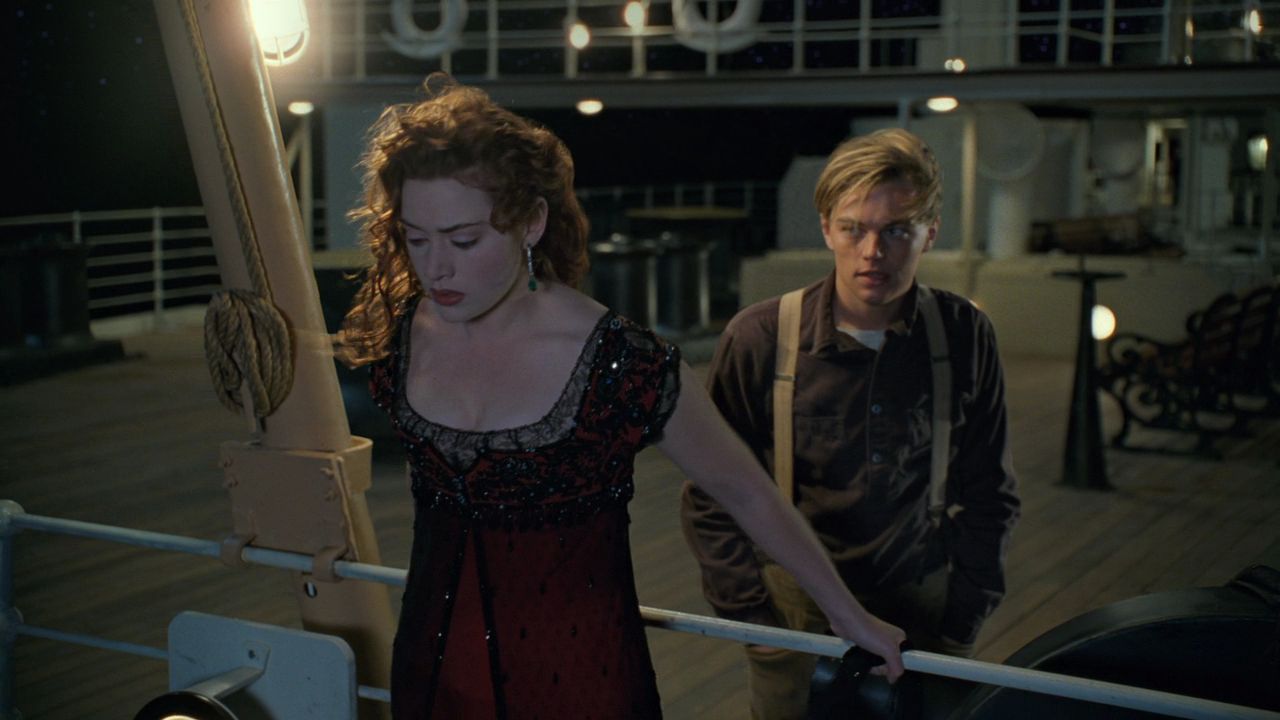
There’s a lot of different ways to quickly sum up Titanic’s story. The best is that it’s a film that’s about going from the back of the boat to the front of the boat to the back of the boat. Jack & Rose meet at the back. They make their way to the front as they fall in love. It culminates with their iconic kiss. And as the ship sinks they make their way to the back, the ship literally sinking an apocalyptic metaphor for Rose’s world collapsing around her. At the end of this, they find themselves literally on the Titanic’s stern, with Rose even remarking “This is where we first met”. And then the only home their relationship will ever know sinks into the watery depths of the north Atlantic.
And… sure. That’s a nice clean structure. People look at Titanic and they see the tragic love story. And that’s enough. When I saw it in a theater at age eight, watching Jack sink to the ocean’s depths had me crying inconsolably in ways that felt embarrassing at the time but speaks instead to the rich emotional resonance James Cameron carefully builds to get to that moment.
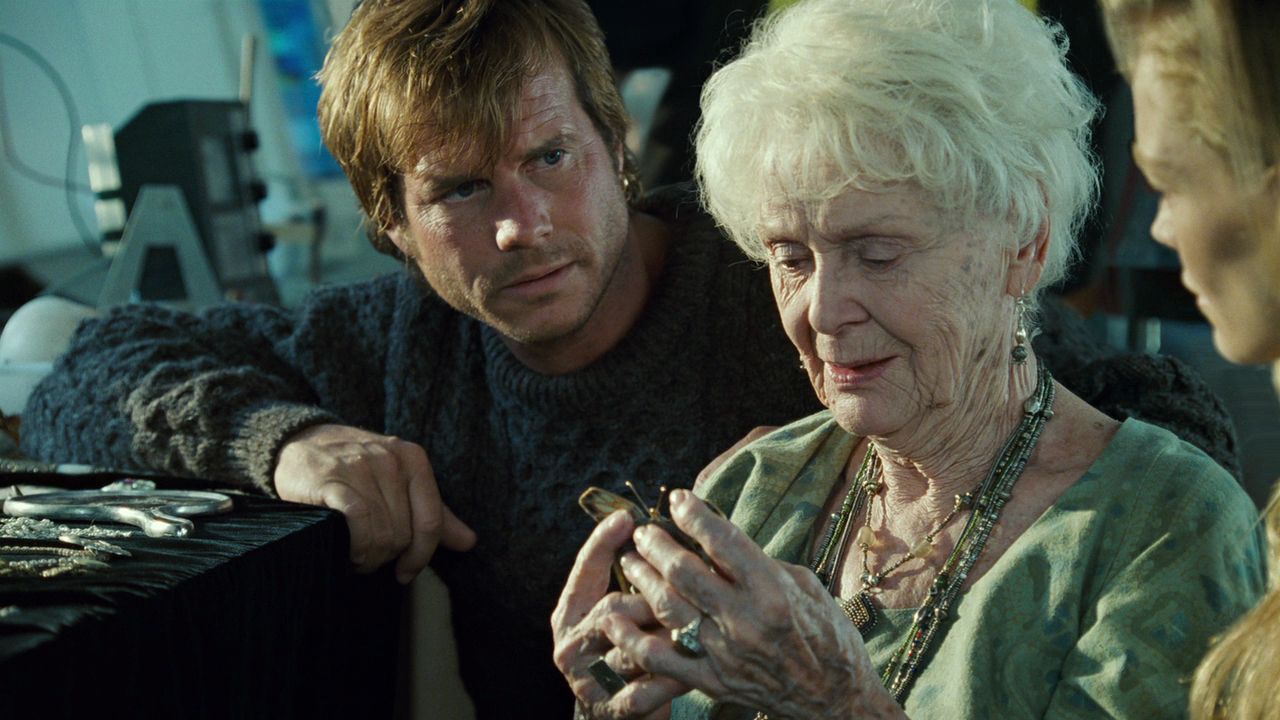
The back-front-back structure also ignores the framing device of Bill Paxton and his search for the Heart of the Ocean. Paxton’s character is himself a stand-in for James Cameron, where it’s easy for the Titanic and its story to capture the imagination, but understanding the human tragedy and misery of the event matters far more than one of the most famous man-made disasters of all time.
All of this is reductive. None of it captures the full scope of Cameron and what he’s doing with this particular story. The story of Titanic is one that audiences can easily understand, but it’s far more complex than people give it credit for. And simplifying that complexity to the point where most don’t even notice is surprisingly rare. James Cameron is not just a genius, but an artist who puts thousands of hours of care and thought into his stories and the way he tells them. Taken in a vacuum, it’s crazy to think that out of nowhere the Academy spontaneously recognizes Cameron’s talent and his ability to make one of the greatest films of all time.
But to believe that something this good is a result of a Cameron’s “limited talents” and minimizing his weaknesses?
Rose’s turn
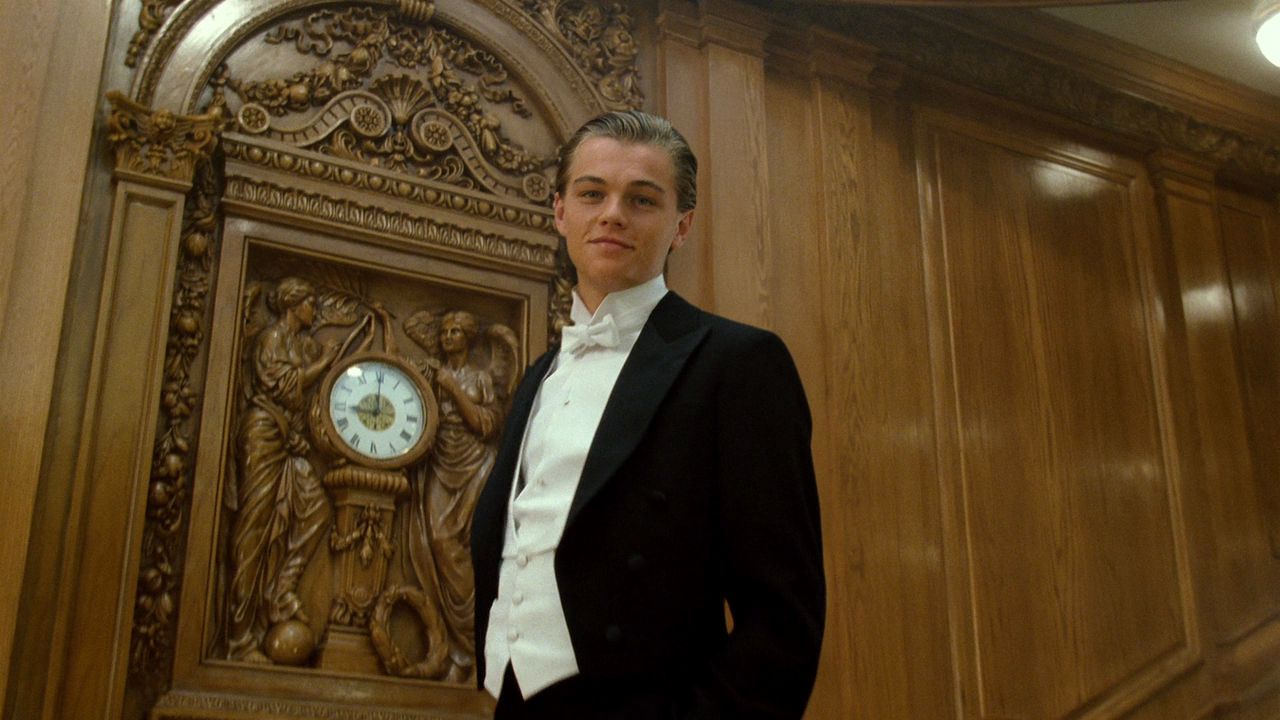
Like The Terminator before it, Titanic is a love story. Both center on women who need to build better lives for themselves. They end in tragedy, where their lives go on to something bigger and grander after their male love interest dies. But while Sarah Connor’s story is about trying to blaze her own way into a future she can believe in, Rose’s story focuses on liberation from a life she cannot stand to live. At the beginning of the film, she equates the Titanic to a “slave ship”, something that feels tasteless, but speaks to her immaturity and youth. Within one scene, Cameron paints the picture of a girl who feels trapped by her station. She can have the iconic hat shot, one of the most beautiful character reveals in cinema and she is still miserable. All the status and wealth in the world cannot buy her happiness.
Enter Jack Dawson.
Leonardo DiCaprio had a few roles before landing the role of Jack, but Titanic was something new. Cameron has spoken about how he had to explain that the actor didn’t need a limp or a scar or an ailment to buttress his performance. Unlike DiCaprio (who was very young at the time, Cameron understood that Jack only works best as an idealized form. He’s hot headed and brash but only seeing him through Rose’s memory & eyes turns him into the platonic ideal of young love. Heartthrob without obfuscation.
But it’s not enough that Jack & Rose’s relationship exist. Love stories have to grow and do something to their characters. The second Jack hops onto the boat as a third class passenger, statistically he will never set foot on dry land again. Like Kyle Reese before him, Jack dies in the end. But Rose and her arc are directly responsible for his death. Maybe there’s a world where the two of them would have worked out, but Jack’s wisdom comes from his joie de vivre. He falls in love with Rose not just because she’s beautiful or because he pities her. He sees the beautiful soul she is and how crushed she feels under the weight of her miserable existence. He wants more for her. And this is the journey he sets her upon.
Falling in love
Rose first meets Jack in a moment of desperation. With no way out of her marriage to Cal, she threatens suicide, climbing over the stern’s railing and preparing to jump into the icy water below. Jack manages to pull her back from the edge, and so begins their relationship. In doing so, he is the first person in the entire movie to give her a reason to live.
Between Jack the character and DiCaprio the actor, Rose doesn’t stand a chance. He’s too charismatic, too magnetic, too entrancing. She finds herself drawn to him, loving the way he subverts and pushes against high society’s trappings. Even when her mother forbids her from seeing him again, Rose defies her mother and goes to him.
To this point, Rose has been… fairly deferential. She might not like that she’s marrying Cal, but she’s not actually fighting it. Her cushy life is all she knows. She sees no alternative.
But Jack becomes her alternative. Jack is someone who has seen the world, who despite his young age has left home and moved to France and seen naked women and drawn many sketches and had sex. He is enough to stop her from knowing what her life will be and instead hope at what it could be. She might try to push away from him at times, but the two of them are young and rapidly falling in love. She can’t escape, nor does she want to.
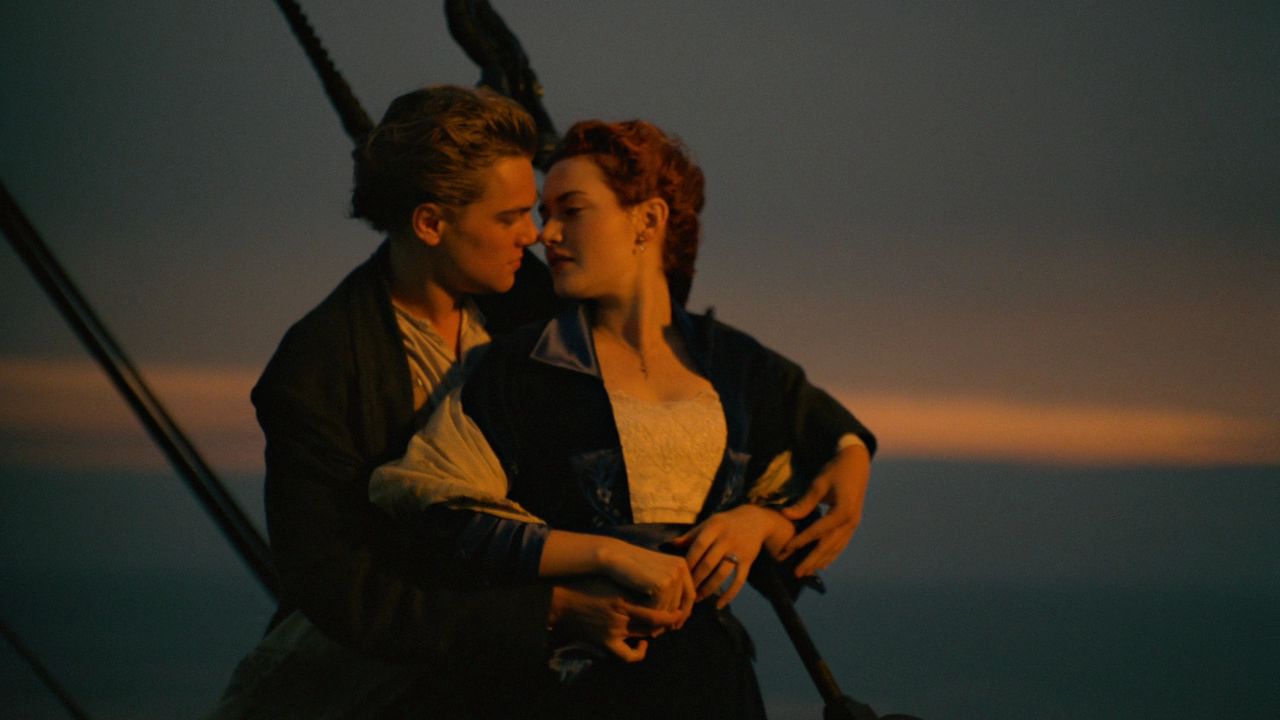
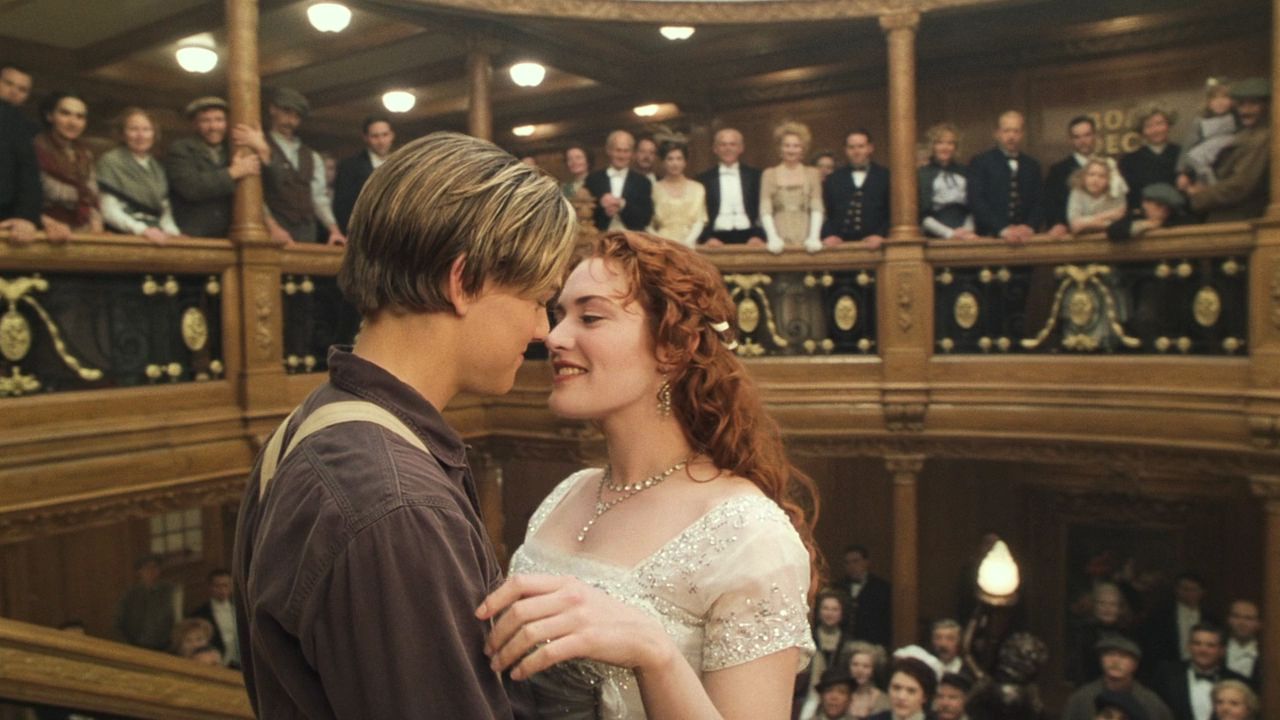
That’s why them kissing at the front of the boat is such an intimate moment. It’s why it happens at Titanic’s last sunset. It is the moment for Rose where the sun literally sets on her life as it was. She can’t go back. It is the moment where she chooses to throw her old life away and fall completely in love with Jack. After that she wears the Heart of the Ocean and poses nude and asks Jack to sketch her (liberation!). They run through the bowels of the ship and have sex in a car. For their relationship, the Titanic is a grand metaphor. It is their home, and they are rulers over their domain.
And then… once she’s gotten what she wants (Jack) and has become a woman (because sex), the ship hits the iceberg and for the next 80 minutes James Cameron will test just how much she values the dream of what her life might be.
After this Cal frames Jack for theft. Rose has to journey into the bowels of the now-sinking ship to save him. When they manage to make it back to the deck, Jack & Cal get her to a lifeboat. As she lowers into the ocean, James Cameron frames Leo in a beautiful shot as he looks down on her, a spectacular firework exploding in the background. It’s one of the most corny, romantic shots in the movie, but it exists to convey one thing: he has saved her.
And she throws it away.
There and back again
When events repeat themselves, it can feel like a storyteller doesn’t know what they’re doing. Recursive structure flies in the face of classical storytelling, in which protagonists leave the safety of their homes to go on some adventure, have an experience that changes them, then they return home a new person. Often times, this physical journey doesn’t result in a literal return, but the ending point serves as some place of new safety.
Sometimes, though, stories have characters return home early. Movies like Encanto or Brave feel strange because their heroines leave the house to undergo some change… and then go right back home… only to go back out again… and maybe even return etc etc. Having a home base like that warps the physical manifestation of a hero’s journey, like the story keeps stalling or running place as they return to the starting place midstream.
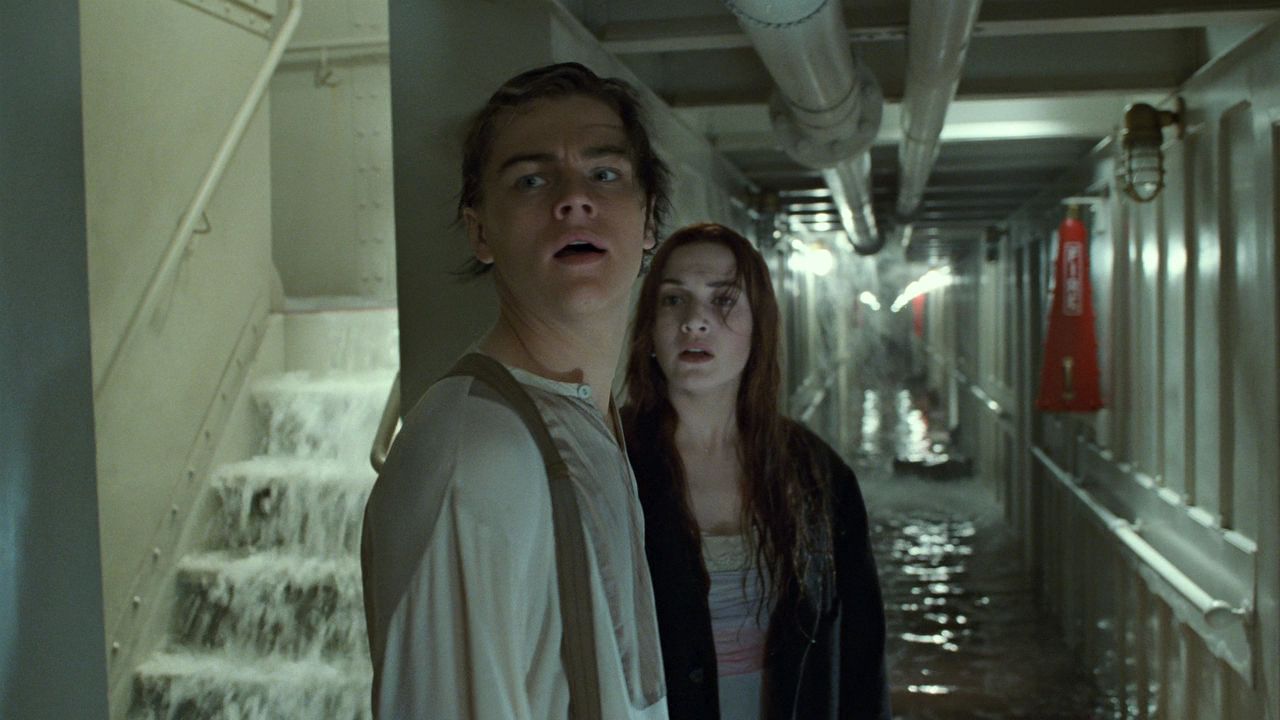
This happens in Titanic. After Rose rescues Jack from the handcuffs, the two have an arduous task as they make their way back to the main deck. Their reward is getting Rose to a lifeboat. But she jumps back onboard, and then Cal chases them back down into the lower decks, which have flooded even more. Back where they were just a few minutes ago, it feels like Cameron is doing a runaround. Another round of the same adventure. The first time they had to work with the other third class passengers to battering ram down one of the accordion gates locking them in. The second time they find themselves alone behind a different one of those gates again. This time a porter drops a key for them to unlock themselves. It’s repetitive. And by the time they re-emerge to the top deck everything has gone completely to shit.
Why did Cameron do this twice? Just so he could get the Heart of the Ocean into her pocket? Why is it so important that he repeats himself in a movie that is already over three hours long? He could have cut it, right? Tighten up that script, James. Get that Oscar nom. Get that win.
But if you cut it, you lose the most critical moment of Rose’s entire arc.
Because Rose is the reason Jack dies.
Rebirth
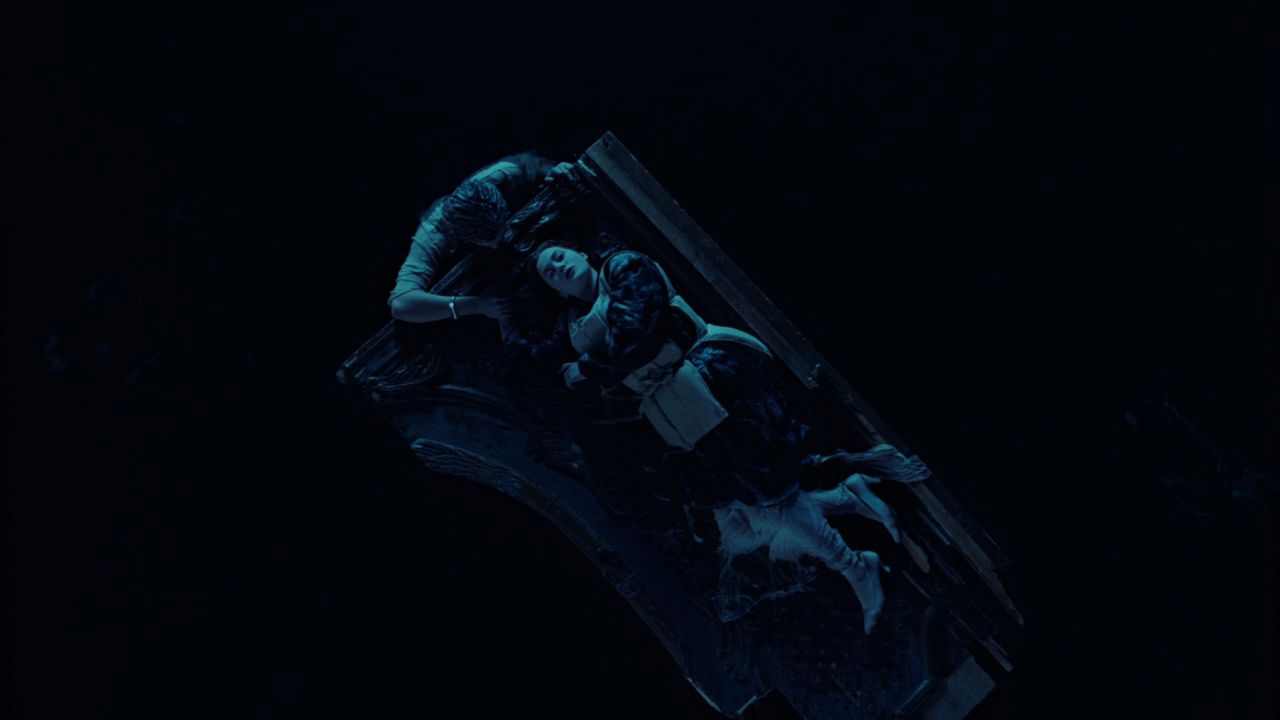
Fast forward to after the ship sinks. Rose gets on the infamous door and Jack can’t join her lest they both dip too far into the water. A million memes. Ha ha ha.
But what if Rose wasn’t there?
If Rose stays on that lifeboat, Jack still probably doesn’t get to one, but he was smart enough to get to the back of the boat. From there, he was in a good position to find the door himself. If Rose isn’t there, Jack gets on the door. It’s probably pretty cold and maybe he freezes to death anyways, but if he’s like Rose he survives long enough to get to the whistle when the time comes. He swims for it. Blows the whistle. Reunites with Rose. They live happily ever after. The end.
But Rose wasn’t ready to let him go. All she could see-- all she wanted was a life with him. This despite Jack literally giving her life by getting her off the ship after telling her that all he wants is her to live her richest fullest life regardless of whether or not they’re together.
It’s not enough to go to the front of the boat and fall in love. For Rose to learn the lesson, they have to travel to the back.
Rose’s arc is about seizing control of her life. Cameron constructs it in two stages: the trip to the front is about learning that life with Jack can be a life worth living. To use an image, it’s about her spinning herself onto him so they become one thing. But that’s an imperfect version of the lesson. She only sees life with him. It’s why she wades through that water and gets the axe, but it’s also why she sacrifices her safety. They’re a team and they’re together. And to her, life is him. Together, they will be her life.
And to his credit, that is enough to keep her alive long enough to get on the door. She clings to his hands, staring up at the stars just like Jack did on the bench just before they first met. But she’s not going anywhere.
A lifeboat approaches. She threw it away last time, but here comes another chance at salvation. There will not be another one. The first thing she does is try to rouse Jack to let him know that they will be saved. But he’s dead without her noticing. Her life with him ended and she didn’t even notice.
In this moment Rose’s arc crystalizes. She could die on that door. But… then what? Dying in the name of Jack is no different than living in the name of her mother and their family’s reputation. The most important thing Rose can live for is herself.
It’s why it matters that she lets go of him. As she cries about how she’ll never let go, she isn’t talking about literally never letting go of his hands; she’s promising to never let go of what he taught her, the one she didn’t learn until it was too late. It’s why it matters that she lets herself slide off the door, leaving the one final vestige of safety that Jack gave her. That door was the only thing keeping her alive. It’s why the arduous yards she swims to that frozen whistle feel like utter agony. It’s why she’s in the water at all. As Rose blows deep on the whistle with all her remaining strength, the great, mythological symbol of rebirth actuates. The sound pierces into the air like the screams of a newborn babe.
And so Rose Dawson births herself.
Everything in the movie leads to this moment. It’s why I cry while watching it. It’s why I’m crying while typing this. Titanic tells the story of an unbelievable man-made catastrophe. And within this event is the story of a young woman finally accepting a life worth living and an existence where she can do all the things she ever dreamed of doing.
That’s not dry, technical plot. That’s rich, emotional narrative culminating in its ultimate conclusion. This is what the best stories are.
My heart will go on
As the movie ends, there’s a debate about what happens to Rose. Based on the long tracking shot showing all the pictures of the great things she did in her life, many view the ending as her dying. The final scene is of Young Rose as she climbs the Titanic’s grand staircase, passes by all the people who died in the tragedy, and finally reunites with Jack. The camera pans up and fades to white. And then Celine Dion plays.
It’s easy to see it as her final subconscious thought before she passes into the great beyond. It’s a fine reading. Can’t really argue.
But the point of the movie and Rose’s entire arc is that she doesn’t die. She lives. It’s why Celine Dion’s Oscar-winning musical number begins “every night in my dreams I see you, I hear you. That is how I know you go on.” Rose dreams, for so long as she stays alive, so too Jack lives within her memory.
She might die one day, but we don’t see it. Her dying on the night she finally tells the story of Jack for the first time in her life makes it sound like her life revolved entirely around Jack. But it didn’t. She got married, had kids, has a granddaughter. She lived a life and kept him with her, but she never jumped off a lifeboat again.
Why else would she drop the Heart of the Ocean? She’s literally letting go of the last vestige of the experience that defined her entire life. She can now move into this last stage of her life free of that burden.
Of course she lives.
Credit where it’s due
THere’s a critique about films that feel emotionally manipulative, but what they’re really complaining about are movies that wantonly go for the emotional jugular when they haven’t earned it. It’s a major complaint about Up, where the movie uses the fast-forward life of Carl and Ellie to rip your heart out because Ellie’s dead by the 12-minute mark. Yes it’s economical, but death by illness is always sad. Pixar is trying to rip your heart out to make you understand why (and also not not care that) Carl is a grumpy dick for the majority of the movie.
Yeah, it takes Cameron a while to get to the point, but when he reaches his ending it’s utterly, utterly devastating and impossibly life-affirming. Within this horrible tragedy, Cameron finds something beautiful and puts the main character through hell to earn it. When Rose sees the Statue of Liberty, it’s the final symbol of her liberation. It’s where she assumes a new name (Jack’s) and starts her new life of infinite possiblities.
Titanic not winning the Oscar for Best Original Screenplay doesn’t hurt its reputation. The Oscars only measure a specific snapshot of a moment in time. Plenty of great movies never received nominations, let alone accolades.
But while many people focus on Cameron as a great director, not nearly enough emphasize his incredible writing. Without good writing, a movie doesn’t become the biggest box office hit of all time. Without a good story, audiences wouldn’t show up again and again. The entire sequence of the Titanic’s final few minutes is practically misery porn. It’s watching 1500 people die horrific deaths of agony. Screaming, freezing, pleading… Even DiCaprio’s hotness can only bring an audience back so many times.
But people went to see Titanic over and over and over again. They still do.
According to a quick search there are only four times James Cameron has received a consideration for Best Screenplay from a major awards organization: The Golden Globe Awards, the Satellite Awards, and the Writers Guild gave him a nom for Titanic, while the WGA also gave him a nom later for Avatar. And that’s it. One of the great storytellers of our age and his peers barely recognize the sheer level of craft he utilizes to make something so difficult look so simple.
Writing and storytelling are so much more than pithy dialogue. It’s structure, pace, theme, character arcs… All of Cameron’s movies have that, and Titanic is maybe his best screenplay. He can’t hide behind the sci-fi trappings and so builds a film around characters and their arcs, where the sinking of the Titanic is the spectacular backdrop for a deeply emotional story about a girl going through the most harrowing experience of her life.
But if Titanic is a bad screenplay because of its dialogue or some other nonsense, maybe people should concede that Star Wars is a poorly written film as well.
Categories denoted with a * did not go on to win. ↩
That record seemed like it might last forever… until James Cameron returned some 12 years later and blew past it with Avatar. More on that next week, obviously. ↩
And they’re all great. But reducing them to their dialogue does a disservice to all the other backbreaking that is writing a narrative. ↩