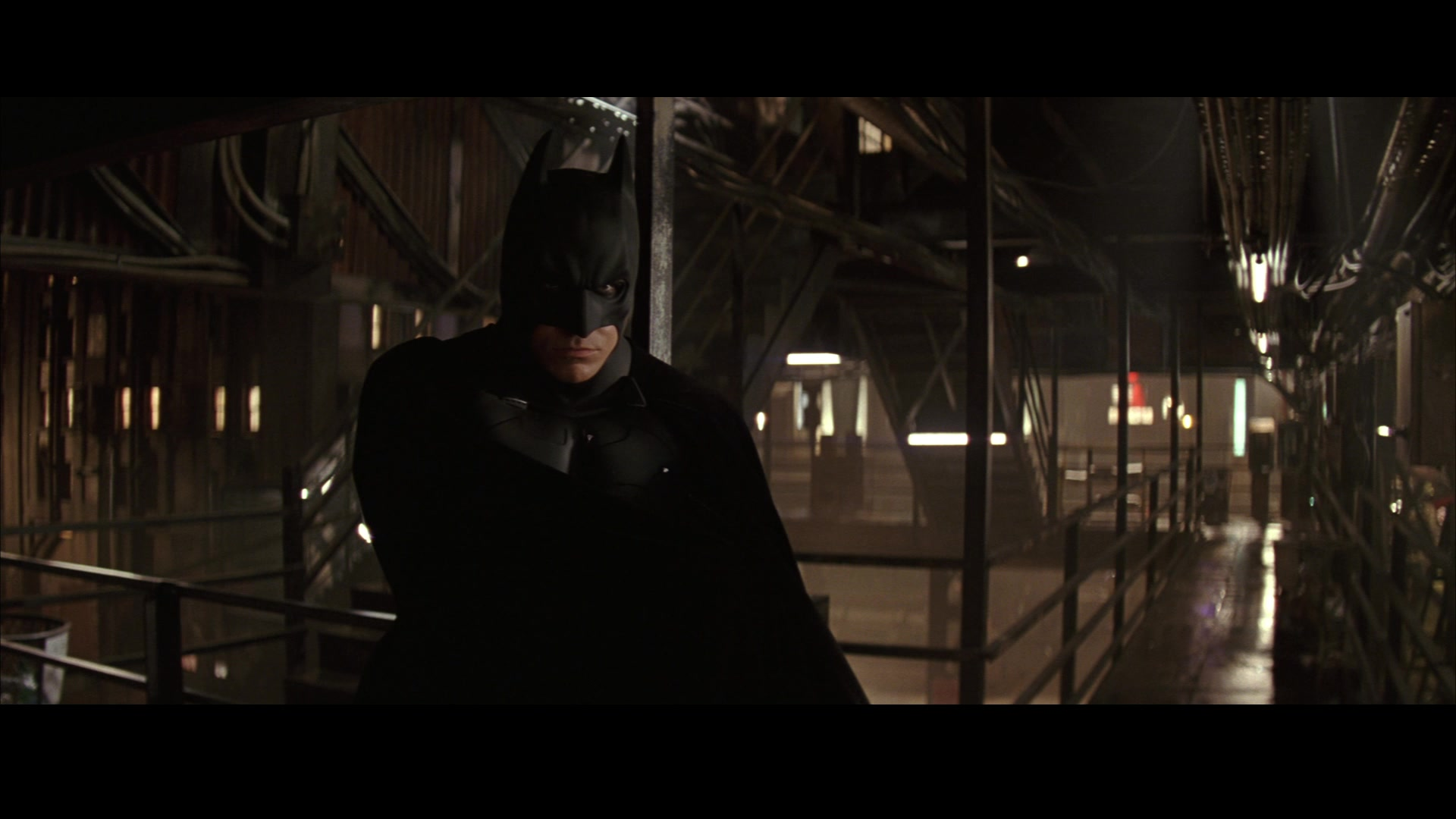
The Dawn of Something New - Batman Begins

So I haven't seen Supergirl yet. Weak buzz (especially from voices I trust) has harshed my urgency, and it's fallen a bit in my priorities. It's a shame, too. I'm certainly not immune from feeling the pull of seeing one of my favorite female superheroes on a big screen, but I also recognize that Supergirl represents the point at which it's very much clear this particular party (as it had previously existed) really isn't the happening genre it's been for the first two decades of this century.
Much of the superhero conversation orbits Marvel Studio's cultural dominance, where every year they put out multiple, mega-budget movies, all of which earned high yield returns. Between 2012 and 2019, every single movie they released made more than half a billion dollars at the worldwide box office, and from 2012-2024, they put out 11 films that each crossed the billion dollar mark.
Running parallel to Marvel's success is DC's many flounderings in trying to turn their properties into cash machines. Last year's Superman was a solid success both critcally and commercially, with a lion's share of the credit going to James Gunn and his particular vision for the character and new DC Universe he's cultivating. Supergirl, unfortunately betrays that by revealing that Gunn's magic touch doesn't extend to his producing credits. If there is a lesson, it should be that studio-driven filmmaking that is drafting/capitalizing off of genre ubiquity will always be diminishing returns. At their most successful, these films come from artists with their own perspective. It's why people are still talking about Guardians of the Galaxy and Black Panther. I might not be a fan, but Zack Snyder's Man of Steel is a particular flavor that connected with a non-zero number of enthusiasts.
Before all of this, though, came the most successful, undeniably-singular vision superhero films have ever seen. And... yeah. That's 2008's The Dark Knight. But (like with Marvel Studios), that film is only possible because it had a movie that came first, one that provided a foundation not just to its sequel, but also on the road to Christopher Nolan's imminent explosion at the end of the decade.
And it's a way weirder movie than people give it credit for.
Humble beginnings...
I was at exactly the right moment when Batman Begins came out. I was 16, still in my first year of going to the store every week to pick up new comic books, and coming off a childhood that had featured quite a bit of Batman. Not just Tim Burton's Batman '89, but also Batman Forever, and Bruce Timm's vision of the DC Animated Universe. I was fairly active on a fan forum that was all about superheroes, and I remember when they announced that there would be a new Batman movie from a director I'd never heard of. I remember flipping through a magazine some months before the film came out. A behind-the-scenes featurette showcased a freeze frame the massive explosion of Ra's Al Ghul's mountaintop fortress, promising a level of spectacle and "this is real" that felt unbelievable at the time.
I was in my local theater on opening night. Me, my dad, and a couple of friends. One brought his older sister, who was beyond excited mostly because of Christian Bale as Bruce Wayne. Before the lights went down, she talked about how different this was from his turn in The Machinist, a film for which Bale had dropped his weight to 120 lbs before seriously beefing up for this one.
And also we were like... the only ones in the theater. Like... it was my group of maybe (maybe) eight, and another pairing a few rows up. On opening night. It was like the movie didn't exist. Three years later, I'd be in the audience for The Dark Knight on a Sunday afternoon and it would be completely sold out.
For me, though, Batman Begins was a freaking revelation. I couldn't believe what I was witnessing. While The Prestige was the moment where I realized Nolan was doing something really special, this was my introduction to him. From the opening in the prison to the hard cuts that lead Bruce to that aforementioned mountain-top fortress. I'd never seen anything like it. The imagery. The rhythm. The dense information without it ever feeling overwhelming. The sense that I was finally, finally seeing a Batman that came close to my understanding of the character.
In the following days, I became an evangelist. It blew my mind that no one was talking about it and I kept trying to get people to understand that the world had shifted. Crazier still because this was post-Spider-man 2 world, where these movies had started to make that cultural impact that would be undeniable just a few years later.
This was more than Batman, though. I didn't have the language for it, but this was me reckoning with a new voice in an era just before I really started paying attention to directors as authorial voices to follow.
No the microwave emitter doesn't work
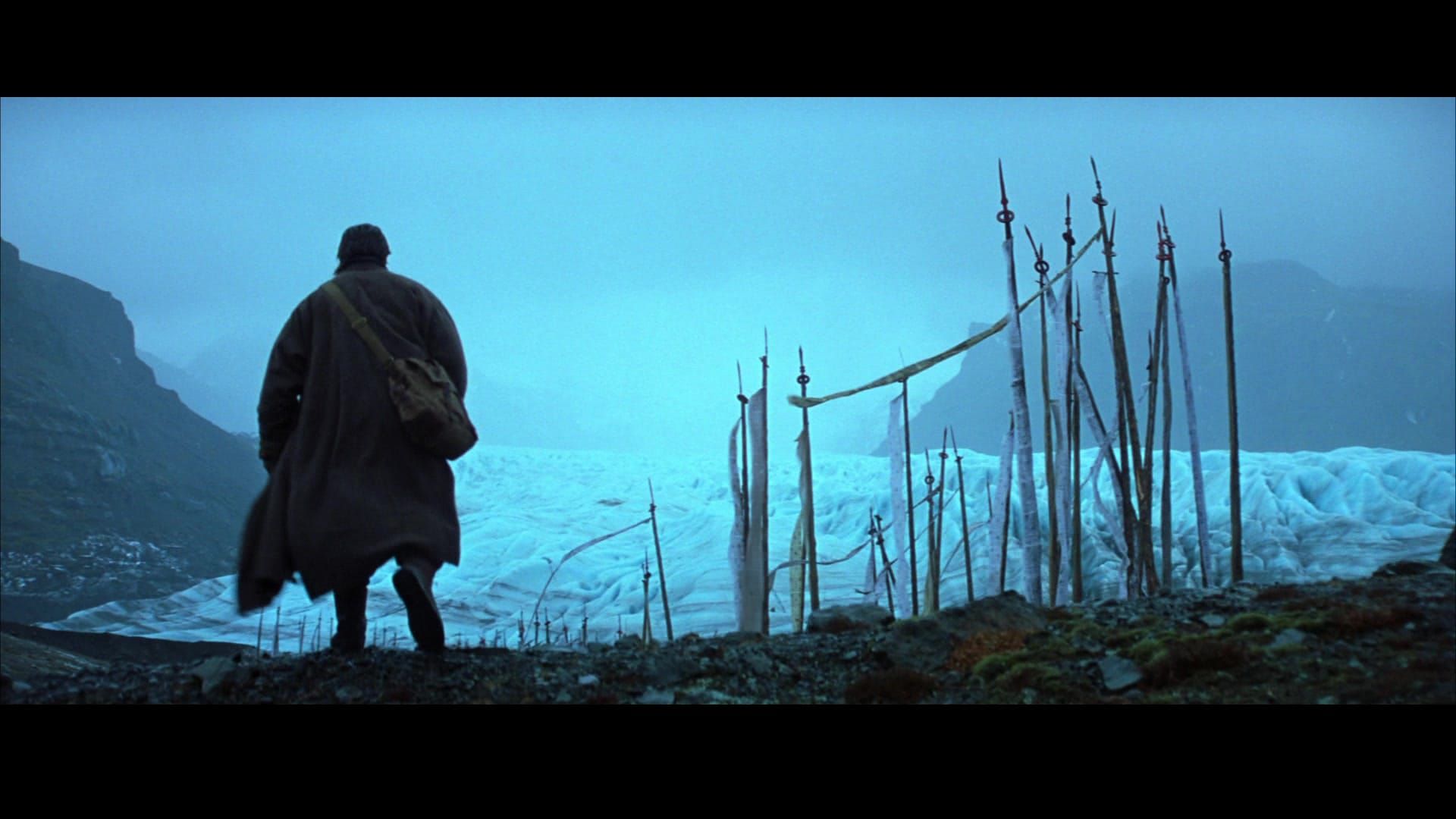
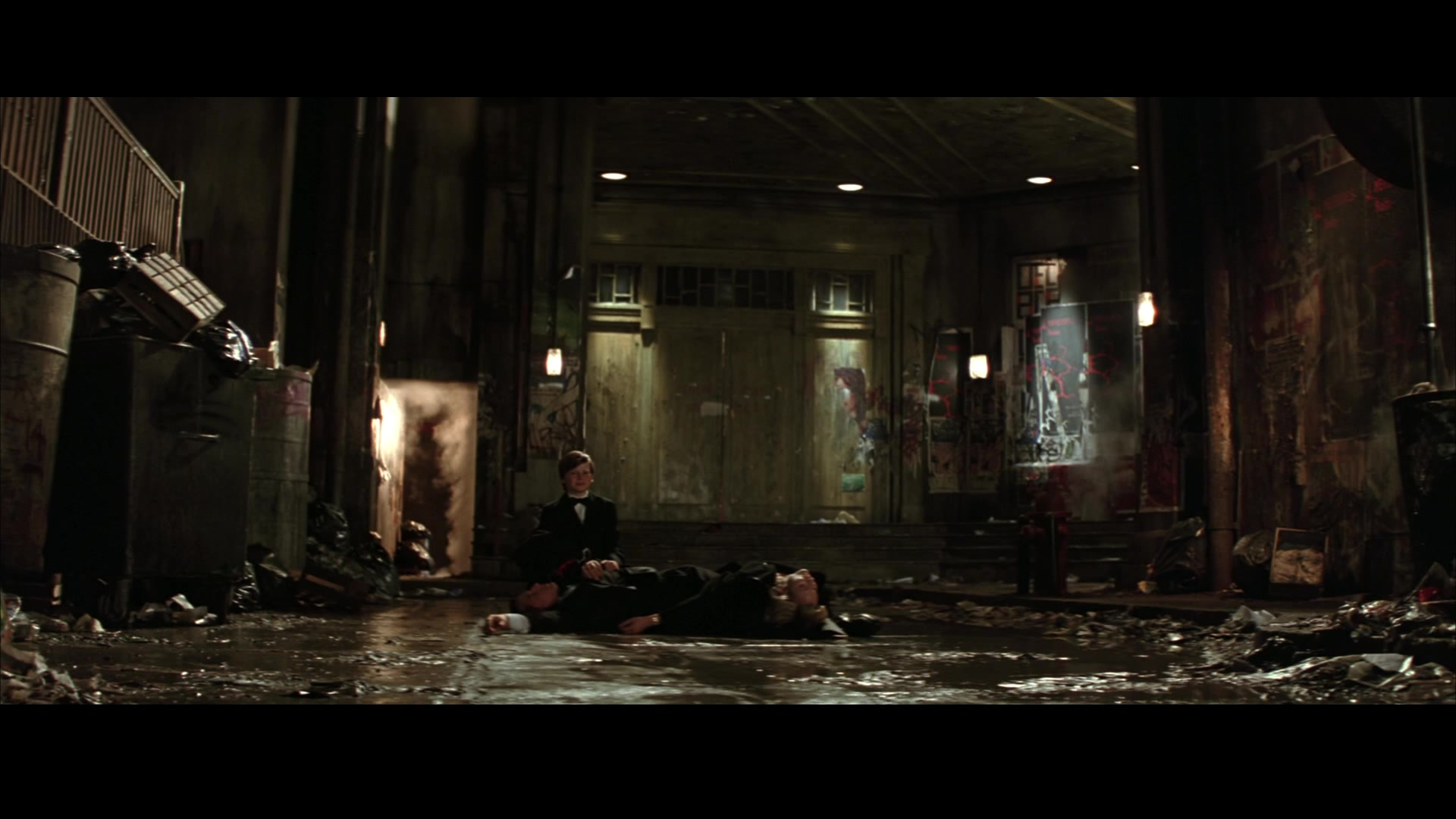
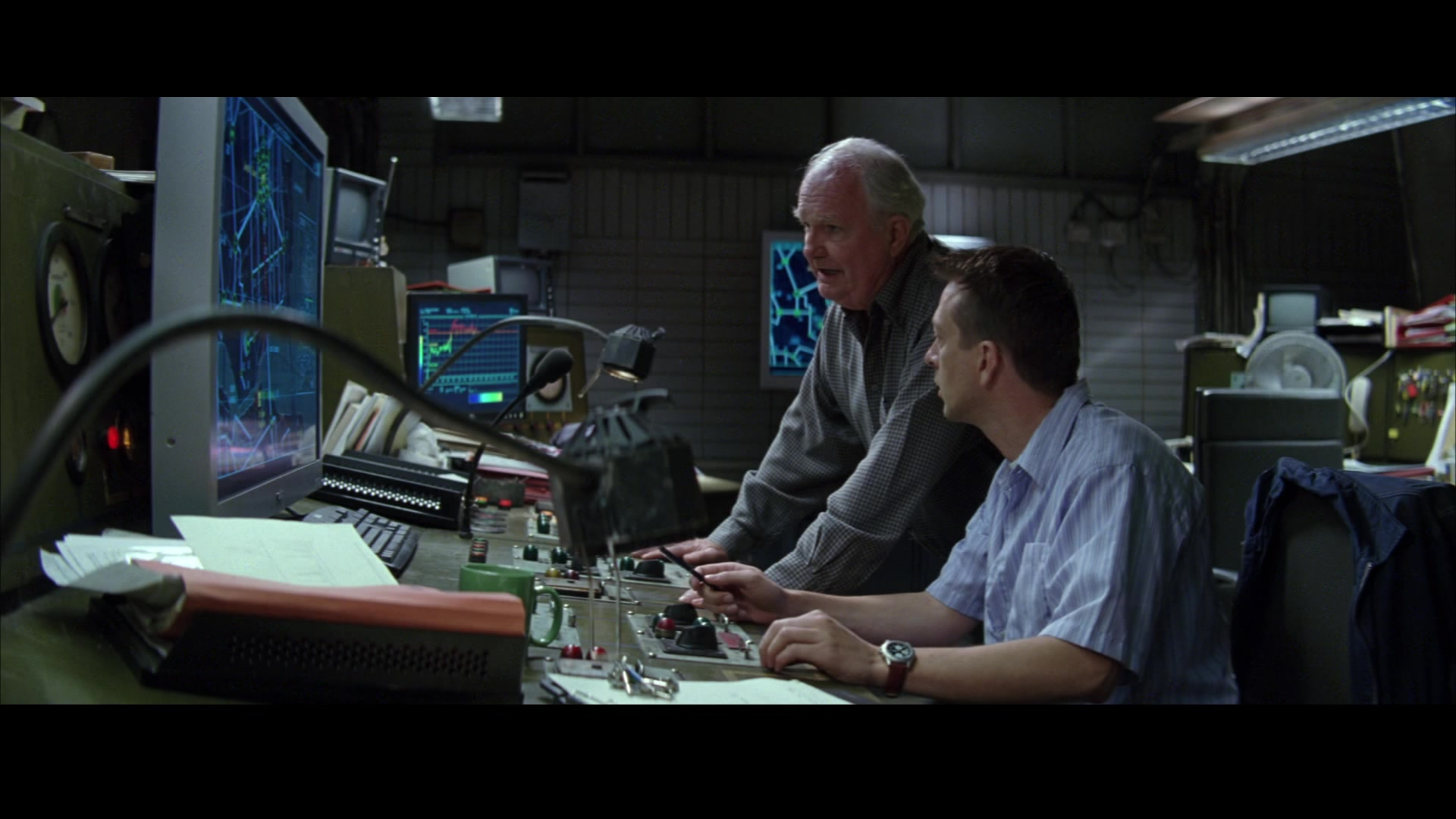
If there's a critique of Batman Begins, it almost always comes down to the microwave emitter, a super comic booky plot device built on pseudo-science and inducing mass panic. It stands in stark contrast to the flapping banners as Bruce embarks up the mountain and the unassuming alley in which Joe Chill murders his parents. There's also the extremely silly final set piece, in which Ra's Al Ghul loads the emitter onto an elevated train and drives it towards Wayne Tower. It vaporizes all the water it passes over, shooting manhole covers into the air as it goes. It doesn't help that Shane Rimmer keeps shouting that the emitter hitting Wayne Tower will cause Gotham's entire water system to explode city-wide. It's insanely clunky exposition, and it's in there like three times to make sure everyone understands the stakes.
A lot of this feels like it doesn't really come from Chris Nolan. The Dark Knight also has some admittedly wacky ideas, but they don't come from this sort of high-concept nonsense. My assumption has always been that this is comes from Nolan's co-writer David S. Goyer, as it's the sort of idea that would come from a comics fan and writer of this sort of story in the age where studios are still trying to wrap their head around the genre.
That's why it stands out so much, though. Doc Ock in Spider-man 2 wants to create a massive fusion reactor that's basically a mini-sun. X2 features a rewiring of Cerebro that will kill every human on the planet. It works for those movies because those movies work on comic book logic.
Nolan's approach, though, focuses on key details. It's one thing for Batman's mythology to feature Bruce traveling the world on some sort of vague quest to get better. It's something else to set aside time to talk about his turning to thievery and also show him giving stolen food to a hungry child. Nolan spends time on Gotham's justice system, showing court proceedings and Dr. Crane's corruption of the mental health system to keep allied criminals out of gen pop. And there's also the incredible amounts of time spent on the practical applications of Batman's various gadgets: how the cape can become rigid, how Bruce personally sharpens the batarangs into his particular look, and how he spelunked into the Batcave for the first time. There's even discussions of how he's able to accrue all of these materials (he's buying in bulk and routing through shell companies) and a focus on the weak graphite that makes his first attempts at a cowl brittle, breakable, and unusable.
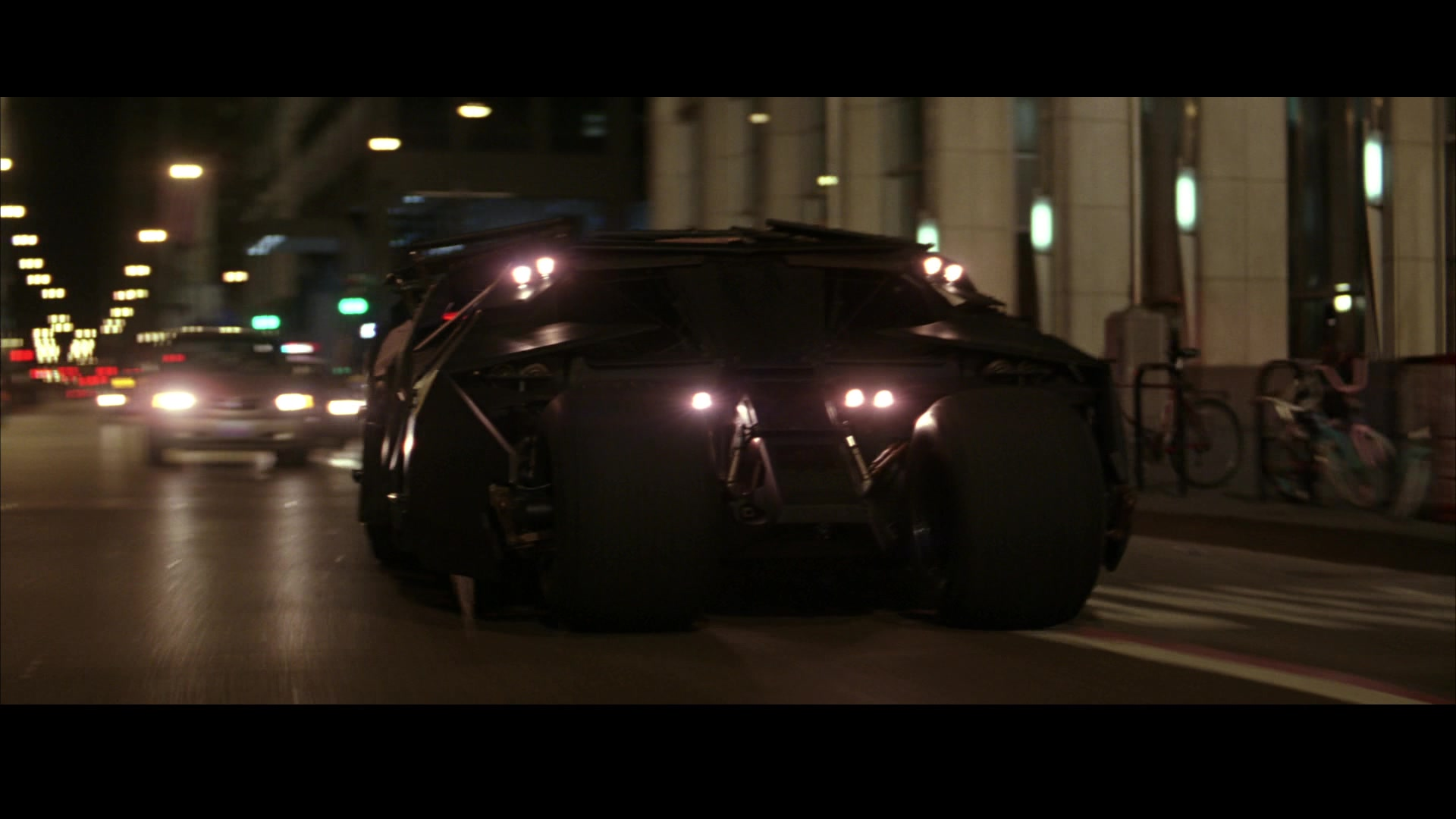
And the Batmobile isn't a custom car. It's a modified tank from military R&D with the ability to jump rivers because of its applications as a mobile bridger.
All of these details are painstaking, and build to the mythos of seeing Batman in person. Burton and Schumacher never did this. Raimi did a little of this in Spider-man, but never on this level of attention to detail. Nolan wasn't interested in creating a superhero universe, he was interested in creating a Batman that could exist in the real (albeit heightened) world.
And if there's a problem here, it's that the 2005 zeitgeist (superhero movies designed to bring the comics to life) doesn't harmonize with Nolan's emphasis on a slightly futuristic world in which superheroes are real.
Becoming the blockbuster guy
More than that, though, this is a speed bump in Nolan's career amidst a meteoric rise. Batman Begins levels Nolan up because it's the next logical step that is leading him to be the biggest director on the planet. Insomnia proved that he could work with A-list talent and pull out insane performances despite his age and inexperience. Batman Begins proved that he could navigate the treacherous waters of studio oversight.
Said oversight might not have been so bad in 2005 when compared to today, but Warner Bros. must have been breathing down his neck constantly during the filming of this. This was a high-value property and something they'd been trying to get off the ground for almost a decade. And Nolan is making it at a budgeting level where every major choice must have gotten studio and incessant questioning. At a high enough budget, directors of these blockbusters act as traffic cops, keeping the production's many facets moving while the script slowly materializes on celluloid. Concers about the actual artistry are secondary.
But all of the best blockbusters come from directors who prove they can operate within the confines of the scale while also putting their personal stamp on the final product. Even today Nolan's first Batman movie is undeniably in his ethos, far beyond what he'd even done so far (and those three movies were each impressive in their own way) and only laying the track towards him making movies the way he wants to.
It's not like Nolan is alone in trying to put his personal stamp on these movies. He's just the most successful example. Just one year later Bryan Singer makes Superman Returns, but suffers from a serious identity crisis as it tries to be a Richard Donner film rather than a Bryan Singer film. Raimi's Spider-man 3 crashes and burns for a number of reasons, but the director's eclectic taste is a non-zero percentage of that.
Which leads to a diversion in how to approach these movies...
On one side, there's the Marvel Studios way, which is promoting its own products and putting those above the director in terms of importance. This can work for a time, and if the producer at the top is as good as Kevin Feige it can help keep the quality floor at an exceptionally high level. This also means that the ceiling is relatively low compared to pure originality. At a best case scenario you're getting any of the Russo's films; at worst you're getting Ant-Man & The Wasp. Too much of this churn can leave the work feeling soulless after a time or like there's no central identity. It's not so different from iteration, where subsequent facsimilies are always just a little more sanded down than their predecessors. Eventually, there will be nothing left.
On the other there's artist supremacy, the idea that a director as a key artistic voice in the project has weight and merit and is also going to turn in a sick as fuck Batman movie. The problem here, of course, is that it removes the bumpers preventing a gutter ball. Sometimes artists get it insanely wrong and what they make doesn't connect. But it also means that there is no upper bound of what is possible. No Marvel movie is ever going to be better than The Dark Knight, and only a handful of MCU films have been nearly as cinematic and bubbling with life as Batman Begins.
In the grand scheme of things, artist supremacy is always more valuable than the commercial concerns of nervous bureaucrats. Ideally, creativity should win out.
This is why Batman Begins's legacy is Nolan propelling himself closer to destiny rather than as some beacon of what the superhero movie could be. No one is looking at Batman Begins and thinking that it's the sort of thing anyone else could replicate. The best they could get would be something equally creative/specific yet populist.
As for Nolan, he's proven he can tell a great story on no budget. He can work with A-List, potentially prickly talent. And now he can handle a mega-budget and turn out a final product that's not just coherent, but also deeply esoteric within that limited framework. Sure, it's not like like Batman Begins was some mega-success in the grand scheme of things. It made $375m at the global box office, and ended the year at #9 overall, nestled between Tim Burton's Charlie and the Chocolate Factory and Hitch. And there's still clunkiness with things like the flashbacks themselves, where the flashback to Bruce as a young adult is not exactly clear right away. Bale having that haircut isn't quite enough.
All of that, though, Hollywood could work with. And if Nolan isn't a perfect filmmaker yet, it just means that in less than a decade after Following he's putting out freaking Batman Begins. Warners recognized the potential here, knew that the movie itself worked, and agreed that a sequel was a no-brainer. Nolan will get to that soon, but for now, only one film stands in between him and becoming the most world-famous director since Steven Spielberg.
And it's a small intimate story about dueling magicians.