Retro Format In the Streaming Era - Star Trek: Strange New Worlds s3
"Through the Lens of Time" quintessentially represents the series' most recent season
Star Trek has basically never thrived in a serial storytelling context.
Because of this, Trek’s return in the streaming era has been a bit of a stutter step. Their first attempt (Star Trek: Discovery) tried to be primarily serialized with episodic adventures to support that serialization. The real winner of the era, though, is Star Trek: Strange New Worlds, which finished airing its third season last week, and will end after two more seasons1. By the end of season two, it had emerged as not just the best Trek of the now, but also one of the best Trek series of all time.
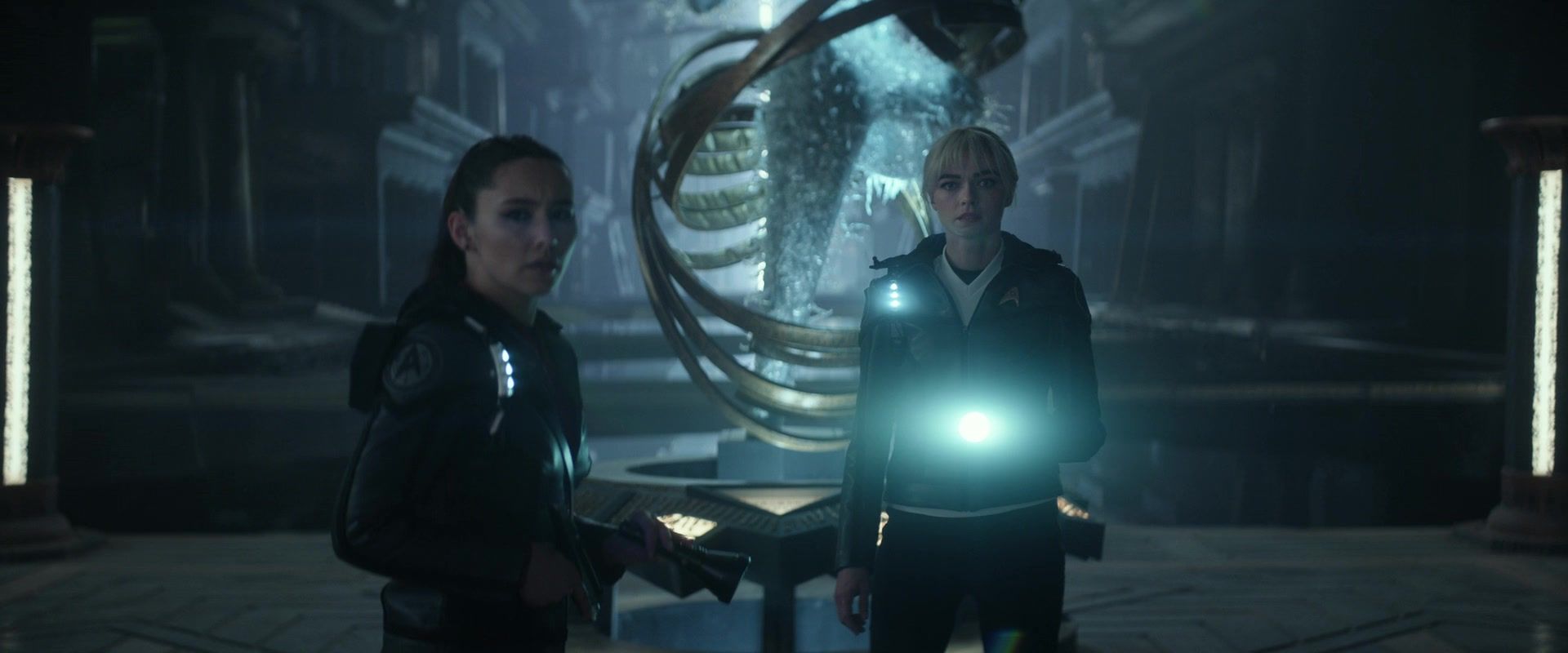
At its halfway point, the fifth episode of the third season ("Through the Lens of Time”) sends an away team on an archaeological expedition into a creepy tomb (that turns out to be a prison), progresses the ongoing intrigue with Captain Batel, and introduces a strange malicious alien parasite called the Vezda. With the hindsight of the finale, however, it proves a pivot point. Despite being one of the weakest episodes of the season, it best represents the overall contour of the show, for good and ill.
Context
Strange New Worlds’s biggest strength is entrenching Trek’s old format to dig out just how wild and varied the episodes were week-to-week. Because of how varied the show feels, it’s almost like the writers spend their first few days in the room just pitching all the episodes they MIGHT do if they had a 26 episode season. With all of those laid out, they then pick the 10 most exciting/with the most potential/they want to do.
That’s why this season can do…
An experimental documentary episode (“What Is Starfleet?”)
A holodeck caper detective story/comic meta send-up of TOS (“A Space Adventure Hour”)
Their annual hilarious Vulcan farce (“Four-and-a-Half Vulcans”)
A Zombie action thriller (“Shuttle to Kenfori”)
A big fanwankery farce (“Wedding Bell Blues”)
The structural fanwank exercise (“The Sehlat Who Ate Its Tail”2)
A seasonal bleak thematic message episode (“Terrarium”)
This variety is how every season of Strange New Worlds works, and every single episode feels like it adds up to a whole. Most of that is the character work, where the premise centers on some member (or more) of the crew and takes them on some journey of some sort.
So… if the joy of Strange New Worlds is its variety, why “Through the Lens of Time”?
To spoil the season finale, “Through the Lens of Time” ends up being a prologue to what happens there. In a world where finales bring together the emotional catharsis of all the season’s developments, the episodes that feed into the meta arc ring louder than the ones that don’t. “A Quality of Mercy” is the best SNW finale to date precisely because all of its spectacular catharsis is about the inevitability of “The Menagerie” and the audacious fangasm of “What if ‘Balance of Terror’ but with Pike?”
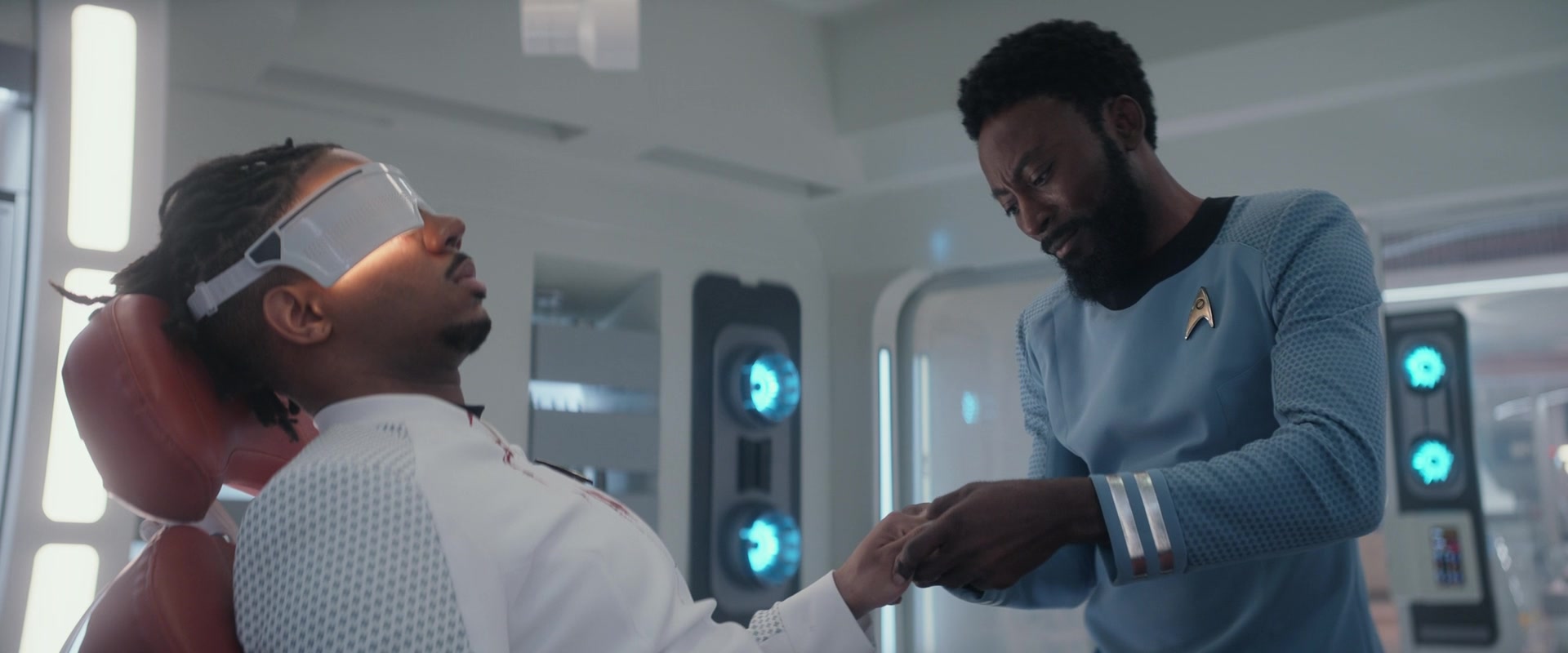
Without the context, though, this is the creepy haunted house/possession episode of the season. It piggybacks off Babs Olusanmokun’s endless well of empathy. M’Benga having to deal with a Vezda puppeting Gamble’s corpse is upsetting and harrowing, adding to the episode’s momentum while it crosscuts with those trapped in the prison/tomb. It’s plenty exciting and the show deftly builds the drama around characters reacting to the problem of the week.
Ending strong
But if there’s an issue with the show, it comes within the confines of its one-and-done plots. While just last week I did an entire post where plot shouldn’t be a primary issue when it comes to storytelling, SNW has a problem that other episodic genre shows have. When every episode is about learning new rules, plugging characters into solutions takes a lot of focus and care. Without it, you get a lot of the weaknesses of Star Trek: Voyager, where the strength of any given episode derives from its premise, rather than cultivating its characters and growing them. More than any other Trek, this is Strange New Worlds’s Achilles heel.
The end of “Through the Lens of Time” reflects this, where M’Benga’s choice at the end (in which he won’t kill even a clearly-possessed Gamble) doesn’t change or develop his character beyond the guilt he will soon feel. Honestly, Pelia doing the shooting felt most impactful. Likewise, the “Batel’s Gorn DNA” subplot is more intriguing than it is actual development of her character. It reminds us of her situation so we can keep tracking it for her through the rest of the season. Yes, there’s a good Pike/Batel scene (which is especially nice given the tragedy of the finale), but it doesn’t connect to the larger puzzle of the week.
There’s also lots of character progress, as the show continues to show Pike/Batel (which will culminate in the finale) and develops further the complications of Spock’s love life (where his relationship with La’an is starting to feel less and less clandestine). Strange New Worlds is practically a soap opera at times, with those elements of the show a fabulous runner that never completely subsume what the show is doing.
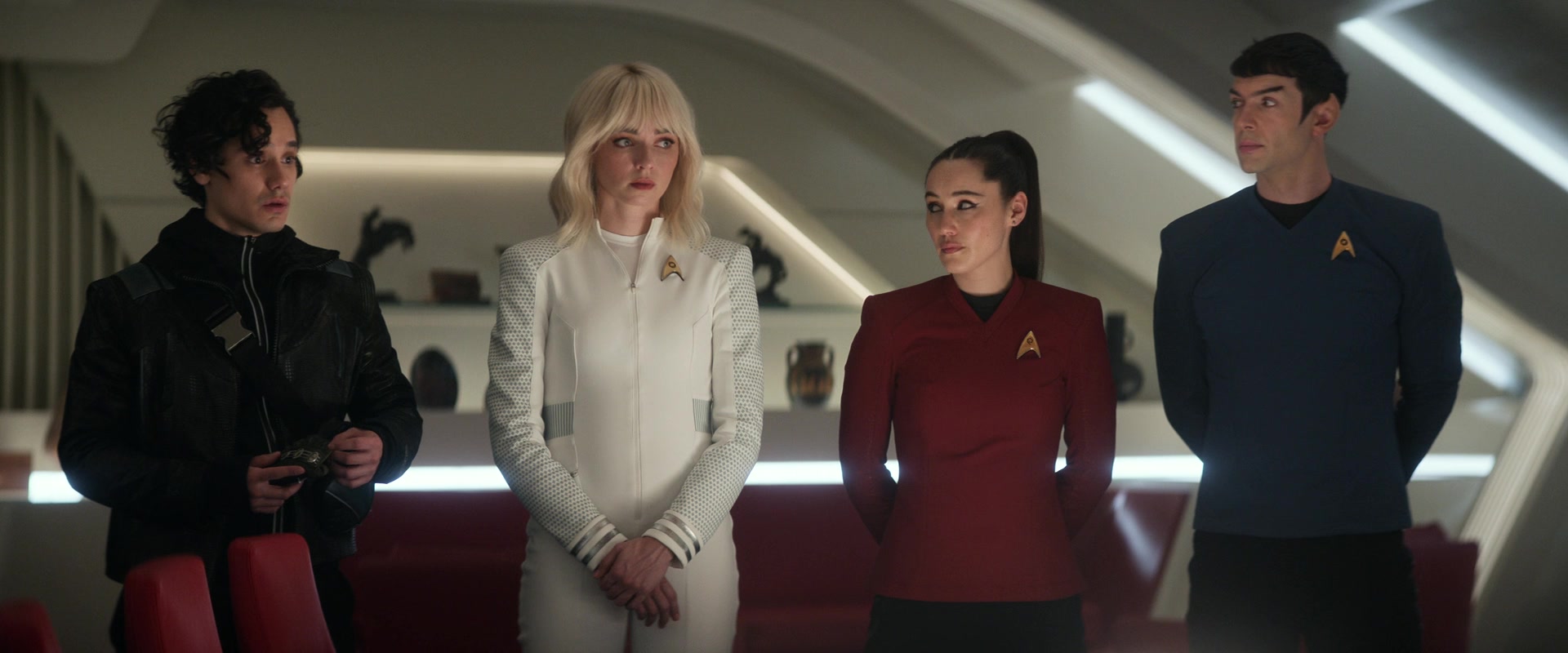
But the big problem is the prison itself, which exists in the space of sci-fi puzzle box. The show does solid character work here (Uhura chilling out Ortegas’s brother being the prime example), but whenever a solution to a given problem arises, it happens because… that’s how the rules work. Even with the final step of walking off the platform into potential oblivion and trusting that the bridge is there is the equivalent of developing an interesting answer to this particular conundrum.
Sure, the show couches the resolution within the context of a fractured trust between Spock & Chapel (and Korby), but that feels disconnected from the grander scheme of their relationship. It’s progressing their relationship at the most surface level.
Meanwhile, the puzzle’s unraveling falls into the usual trap of such things. It’s interesting in that a Dungeon Master designed something like this for a D&D game. At the end of the day, the character work can only go so far. The unraveling feels like the star.
This same “how do we end it” issue comes up throughout the season “Four-and-a-Half Vulcans” ends with Spock reconnecting the katras and convincing all the new-Vulcans to change back. “Shuttle to Kenfori” ends once Pike & M’Benga have run out the clock long enough for the Enterprise to rescue them. These are good developments, but there’s always a sense that by the end the premise had basically run its course. That done… it’s time to roll credits.
If this is a nitpick, it’s because this show is so good at just about everything else it does. It’s gorgeous and exciting. There’s plenty of action and excellent character work. But it’s far more usual for a SNW episode to have its big excitement in everything that isn’t the ending rather than one that utterly nails the ending3. And… sure. Plenty of Trek has whiffed its ending and still wound up legendary. “The Best of Both Worlds” always ends up in every list of Top 10 Trek episodes ever. It doesn’t change the fact that the second part really fizzles once they get Locutus off the Borg Cube. “Paradise Lost” ends because Sisko has a very serious talking to to the raving lunatic fascist admiral who’s trying to declare Martial Law and take control of all Starfleet. Greatness can fall prey to this.
What’s frustrating is those episodes lived in a world where any given Trek series was airing enough episodes that it was on every other week for years. Strange New Worlds only has 10 episodes. When so much of the show works so good, it’s a letdown that this keeps happening to them.
Fix that in future episodes and these last two seasons might make this a damn perfect Star Trek series.
They’ve already finished filming season four and season five goes into production soon. ↩
Leaving the SNW exclusives (Pike, La’an, Ortegas, etc.) on the Enterprise while Kirk leads the Farragut with the crew he will eventually lead (Spock, Chapel, Uhura, and Scotty). ↩
Exceptions include giving Una the big moment at the end of her trial in “Ad Aspera Per Aspera” or the big showstopping musical number in “Subspace Rhapsody” or the emotional wallop of M’Benga’s daughter in “The Elysian Kingdom”. ↩