
Out Into The Stars - Interstellar

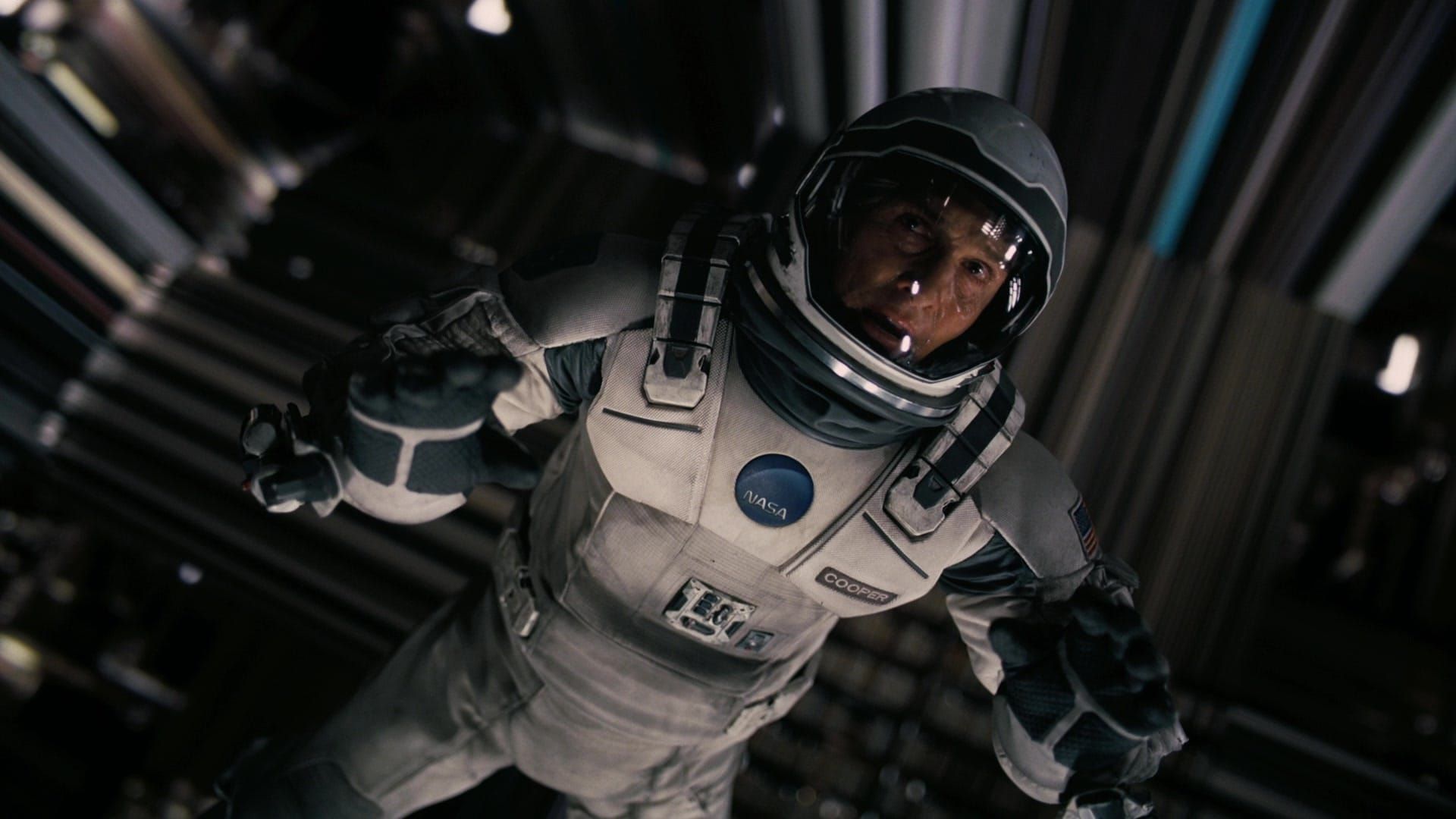
There were two things about seeing Interstellar opening night.
My friends and I went to the TCL Chinese theater in the heart of Hollywood. Its largest screen qualifies as IMAX, can seat almost a thousand people, and opening nights (or special screenings) produce big, big reactions from crowd-pleasers. There was a viral clip from 2019 of the sold-out crowd losing their fucking minds at Cap picking up Thor's hammer in Avengers: Endgame, and their multiple screenings of RRR have been absolutely thunderous.
Interstellar was a massive moment in 2014. Despite muted response to The Dark Knight Rises, the one-two punch of The Dark Knight and Inception cast a shadow of anticipation for original Nolan storytelling now that Batman was in the rearview. We were all impossibly excited.
One of the qualities of Nolan's films (especially in the wake of Inception) trailers create a quality of "what the hell even is this"? Strong visuals and dynamic action can make his images feel almost abstract and obtuse. Interstellar continued that trend, and there was a question of what crazy shit Nolan was going to put everyone through now that he was going to space.
As the lights finally dimmed and the stars shot past the top of the frame and encircled the upside-down Paramount mountain. Directors playing fun games with logos is not terribly unusual, but Nolan going that hard immediately? And then the image from the movie came in upside down? The dust falling upwards onto the toy/model space shuttle? Even the title card came in upside down?? Shit Nolan is really breaking all the rules already...
Nope. Turns out it was a projector issue. But the entire audience did the Inception groan when the screen went black. It's rare for a director to have an audience of hundreds of people so immediately eating out of the palm of their hand, but this was the good will Nolan had built based on his first decade. The movie was upside down and everyone was completely on board.
Once it started over, though the film didn't fall apart immediately. But it did stumble.
When the lights came up, it became clear that I was the only person in my group who had even liked the movie. One friend was spitting their usual contemptuous fire. Another was pissed that it wasn't the pulpy space adventure he wanted. Another clearly didn't buy into the narrative Nolan was selling. The closest to me was a friend who thought it was okay but had some serious problems.
They're hardly the only ones. Interstellar didn't get the ecstatic boost that came with The Dark Knight or Inception, and instead left a lot of people scratching their heads. Good visuals, sure. But the bit about Anne Hathaway's Dr. Brand sitting on a spaceship crying amidst a monologue about love and Matthew McConaughey's Cooper falling into a black hole and surviving stretched the bounds of what audiences would accept.
It's crazy to even write that.
While I loved Interstellar at the time, the movie has only grown in status. I've been open about the way Nolan's filmmaking style, his rhythm, his tone, his dialect is something that feels like he tailored just for me. But this is a massive leap forward. Some of that is the deeply, richly emotional story he co-wrote with his borther Jonathan, and inheriting the project from Steven Spielberg. At its corse is a nougaty, nakedly emotional core transferred to a guy who (to this point) most describe as a cold and technical filmmaker.
This is god-tier filmmaking, and it is the crown jewel of Christopher Nolan's career.
Clear as crystal
The biggest challenge with Inception was the muddy emotional arc for Cobb reconciling with his guilt over what he did to Mal. Nolan worked hard to sell it, but it never quite gelled in the way he wanted it to, and it means a lot of the emotional heft of that film comes across in subtext and at a remove. It wasn't there for active audience engagement.
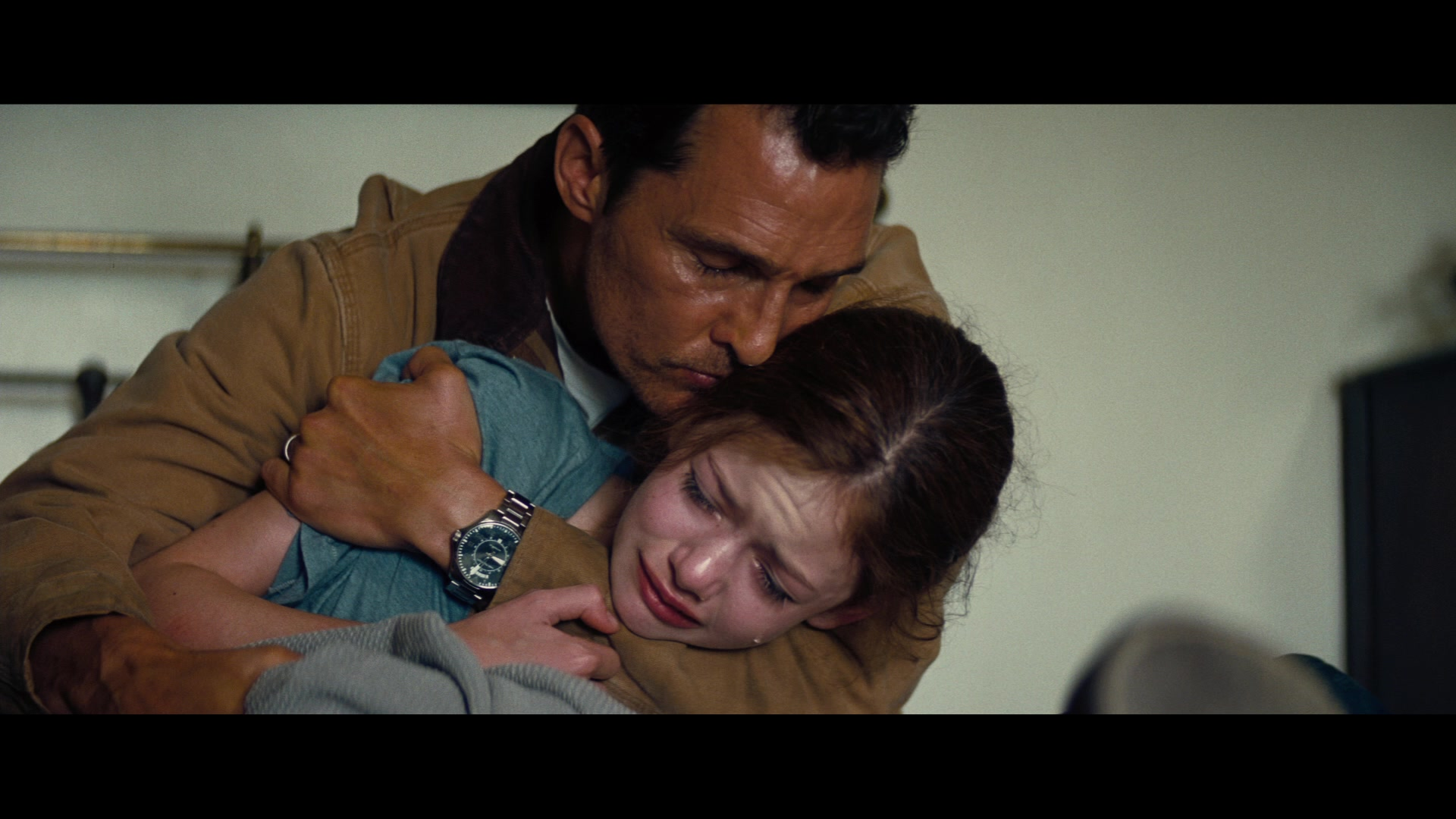
Just four years later, Interstellar wraps its way around multiple themes, with most the obvious about the relationship between parents and children. It might be the right call, but Cooper possibly never seeing his children again in order to save the human race is one that Nolan finds difficult to square. The only way to even come close to justifying it is for Cooper and Murph to work together to literally save the entire species from extinction. To tie it into his own meta-narrative, Nolan's job as filmmaker takes him away from his family for long stretches of time, so that by the time he returns home when his work is complete, his children have grown a bit older and he's lost precious time with them.
Lotta pressure on him.
But there's also an arrogance running through Cooper's story, where (for as difficult as it is to say goodbye to his kids) there is the air of "they need me" and "wouldn't it be cool to go to the stars?" It mirrors Professor Brand's (Michael Caine) pride in not telling NASA that he can't solve the problem of gravity. He lies to Cooper's face before he leaves and spends decades doing the same to Murph before admitting the truth on his death bed. And then there's Dr. Mann (Matt Damon) as an arrogant bastard of a man, obsessed with his own self-importance and too cowardly to do anything that will cement his legacy. Or Cooper's son Tom (Casey Affleck), who loses his mind after the loss of his child and becomes a right embittered bastard simply because the world is pain.
These men might have good intentions, but their ends are inherently self-serving. An inability to get over themselves creates worlds of problems for everyone around them.
The redemption of Cooper, though, comes in his sacrifice to send Dr. Brand to Edmunds' planet. Since leaving Earth, Cooper has existed to return and get back to his children. But going into the Black Hole (while also self-interested because how cool is it to be the first person to go into a black hole??) gives her the boost to get closure on the person she loves. In that moment Cooper isn't thinking about his family. He's let them go.
And his reward for this is the Tesseract. That moment of true, noble sacrifice is the thing that enables the salvation of the entire human race.
It's in the Tesseract that Nolan's space film transcends from amazing sci-fi blockbuster to impossible masterpiece. Nolan's concerns with time go beyond describing him as a "nonlinear" storyteller. Yes, his films are nonlinear in the strictest sense, but more than anything they dilate and distort time. Effect can precede cause in Memento. The Angier/Borden narrative of The Prestige is a nesting doll as he scopes in from the present to the past to the deeper past.
Inception, though, doesn't play with time like that. Not really. Inception is a film where memory bleeds into dreams, and the layers of the dream that Cobb and his team descend into expand time such that temporal movement moves on different tracks. It's the van falling slowly to the water while the entire snow sequence happens. Time, for Nolan, is not linear but a continuous, all-encompassing experience. Interstellar has moments like the one where Murphy finally appears in a video message to Cooper, and when she clicks it off we find ourselves back on Earth with her, suddenly creating a massive agency for the character at the exact halfway point of the film.
The apotheosis of this trans-temporal storytelling is when Cooper is in the Tesseract trying to communicate with Murph. Only... Murph doesn't walk into her bedroom when Cooper arrives there. She's been there since before Dr. Mann betrayed Cooper and left him for dead.
Crosscutting across time and space like this creates an equivalency, where Cooper has adventures, experiences the explosion on the Endurance, and plots the entire journey that will send Brand to Edmunds' Planet all while Murph is doing a brief visit to her childhood home in the wake of Professor Brand's death. It's film telling one continuous story where time has no meaning. The only thing that matters is the connection between this father/daughter duo. Cinema transcending time and space in the same way the Wachowski's construct Cloud Atlas.
No one out there could make this work as well as Nolan, who has an inherent understanding of how to combine images and momentum to link discrete moments of spacetime despite very little relation between them.
Having it all
All of this adds to the tremendously emotional, quite sentimental, borderline saccharine story. It is an almost unlocking, like Nolan figures out how to do the biggest, craziest sci-fi space movie this side of 2001 and infect it with absolutely devastating pathos. There is a quality to movies (especially big studio work) where creatives typically have to sacrifice one quality for another. They can be big and broad and actiony but that typically means a broader, weaker story ("take your brain out" to be crass). On the other hand, it can be esoteric and risky and fabulous, but that usually scares execs into spending less money, worried as they are about the broad appeal necessary to justify such an expenditure. And so the scope suffers.
Every so often, though, artists come around with a great idea on a enough budget to fully execute. Somehow they earn the money with which people trust them. The best example of this (though it was a ridiculously cheap movie) is Godzilla Minus One, a tremendous movie about guilt and loss and forgiveness while also having some jaw-dropping kaiju action and glorious, epic destruction worth of the title. The big takeaway from that movie is "we can have it all". The only reason we choose between scope and intimacy is a cowardice and lack of conviction that something esoteric will translate to a broader populace even though esoteric just means specific
Interstellar is the rare movie that fits into that category, and it's incredible that Nolan pushed through a movie this rich in themes and emotion while also providing not just the massive scope and visuals of multiple planets and incredible model work and visionary design, but also a story buttressed by physics and relativity.
Like James Cameron, Nolan gets a lot of credit for his craft and skill in crafting image and tone through his cinematic dialect, but it's easy to lose just how incredible a writer he really is. Sure, there's missteps within Inception, but the movie more than acquits itself of conveying a ton of information in ways that are interesting and engaging while getting in enough emotional impact that viewers return to it again and again.
With Interstellar, that goes even harder. It's one thing for Nolan to make up his own rules about the subconscious and dreams, but it's another thing entirely for him to digest complex concepts like relativistic physics and churn them back out in ways the audience understands. A lot of this is his skill as a director, where he uses colors and simple shapes to aid in comprehension. For Tenet it's the red/blue dynamic, where red is shorthand for elements moving forward in time while blue is for what's inverted. In Inception it's distinguishing the grays and rain of the van layer, the browns and soft lighting of the middle/hotel layer, and the stark whites of the snow in the lower/ski base layer.
Here, it's the white board Cooper uses to explain how they're going to approach Miller's planet. He flips the high tech screen with all the readouts and numbers and data to convey with markers only what the audience needs to know. It's a tremendously complex conversation, giving the audience rules about time slippage due to gravity, but contextualizing it by defining time as a resource "like food or fuel". All because Nolan has Cooper flip a screen over.
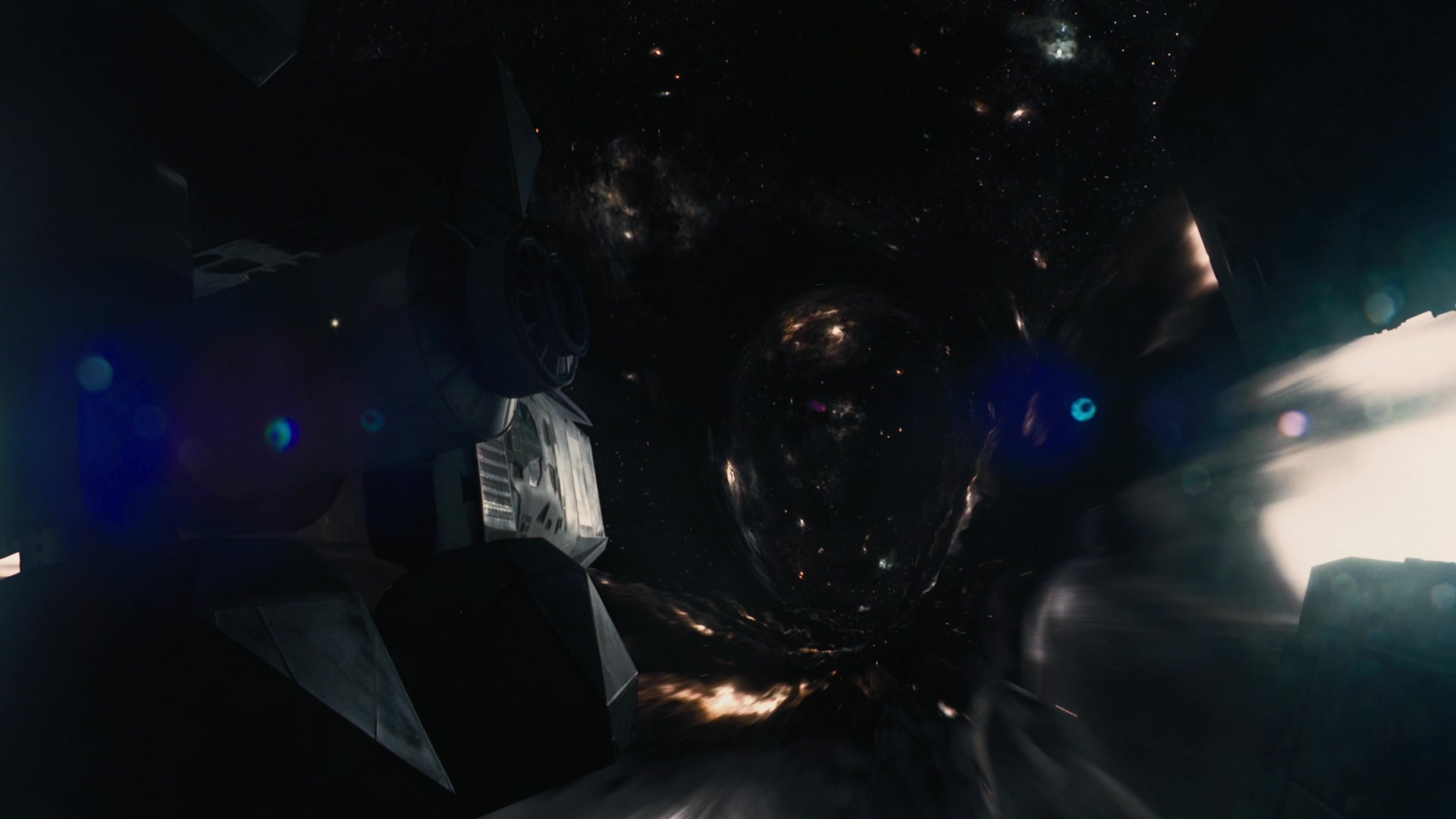
Most famously it's Romilly explaining to Cooper the nature of the wormhole using the pen and the folded piece of paper. It helps makes sense of the staggering visuals Nolan employs to capture something we can't quite comprehend and make sense of it for the purpose of their journey through. This applies to the later Tesseract sequence, where the apparition of Murph's infinite bedroom defies physics and dimensionality because it's beyond human comprehension. Nolan spends the whole film prepping his audience for that moment.
Changing of the guard
Interstellar is an absolute triumph. One of the best films of its decade, this century, and Nolan's astonishing career. It's a love letter to space and human ingenuity and the drive for our species to not just survive but thrive.
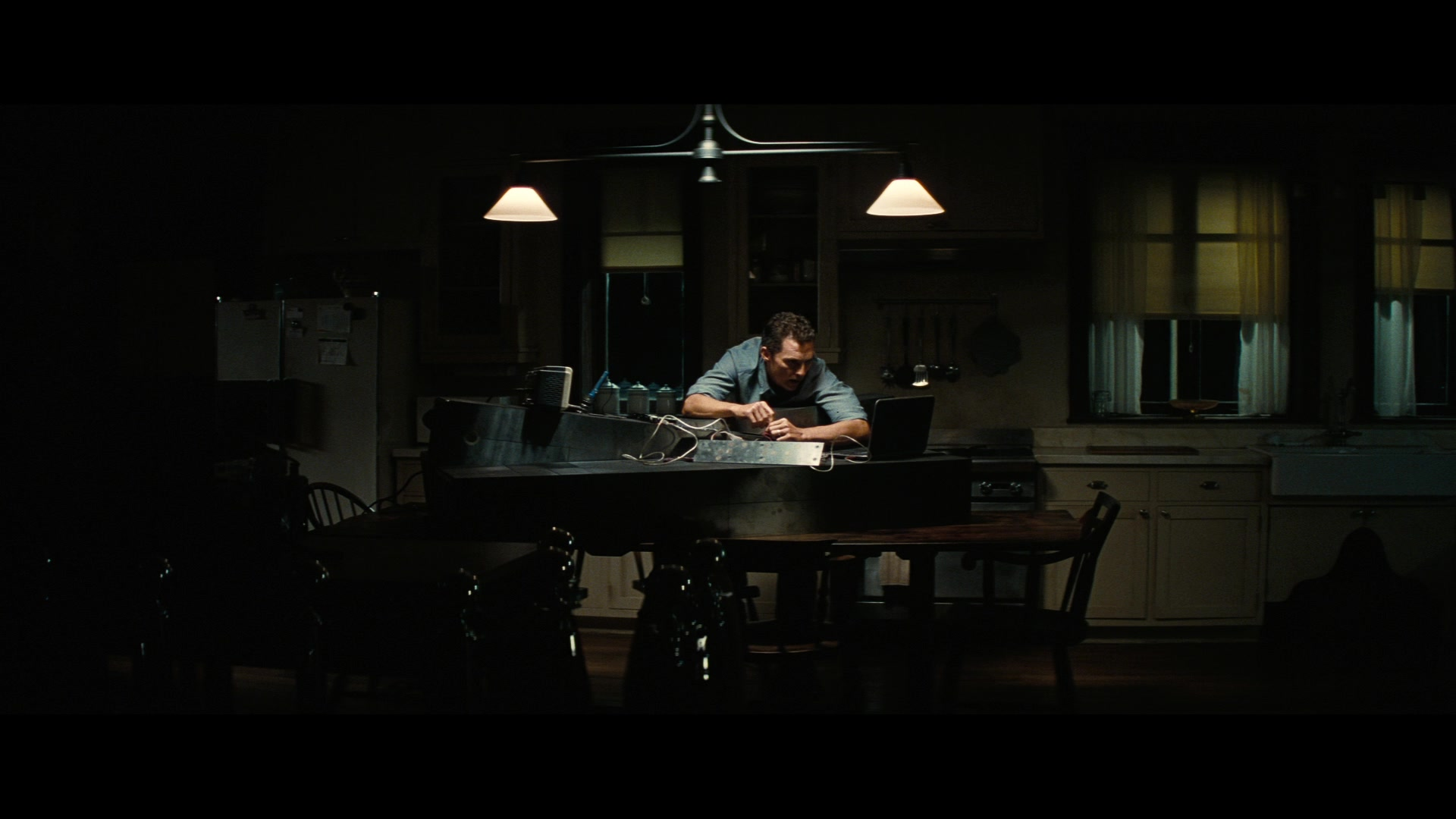
That said, it is something of an transitionary point for Nolan and his production team. Following The Dark Knight Rises, director of photography Wally Pfister stepped away from cinematography to be a film director. Nolan replaced him with Hoyte Van Hoytema. It's a marked difference, where Pfister usually operates deep shadows and warmer colors, Van Hoytema has a more washed out, natural look. The whites and grays of the Endurance (and the space equipment in general) feel very different than they would in Pfister's hands. Nolan seems pleased. He's worked with Van Hoytema ever since.
The other turnover that happens is a shift in both editor and composer following his next film (Dunkirk). Outside of The Prestige, Hans Zimmer had scored every Nolan flick since Batman Begins. While Inception (especially that final scene) gets a lot of attention, Zimmer's Interstellar score is maybe his career best work. The way he modulates from plinky and intimate to organy and epic is breathtaking, and it's hard to imagine this film being as effective with anyone else in the aural seat.
Then again, Nolan's done his three most recent movies with Ludwig Gorranson and at least two of those scores are absolute bangers (and one was Oscar-worthy).
Meanwhile, editor Lee Smith has also been working with since Batman Begins and also parts ways following Dunkirk. Smith is almost certainly one of the major components of bringing's Nolan's vision to the big screen. Nolan's signature pacing and movement comes in large part due to his editing, and there's moment in Interstellar that he shapes into terrific sequences. The escape from Miller's planet, the tension as Dr. Mann attempts to redock with the Endurance... even the hard cut from Murph screaming in Cooper's truck to it rolling slowly across the bridge into NASA. Smith's work has always been critical to Nolan's vision.
That said, it's remarkable how these changes make small differences in the way that Nolan's films work. I'm sure Interstellar would have been just as good with Nolan's other creative partners. But changing things up and working with other talent helps Nolan refine and adapt his style in new and interesting ways. As a dude who focuses intently on evolving cinema, it only makes sense for him to change things up as he continues to grow.
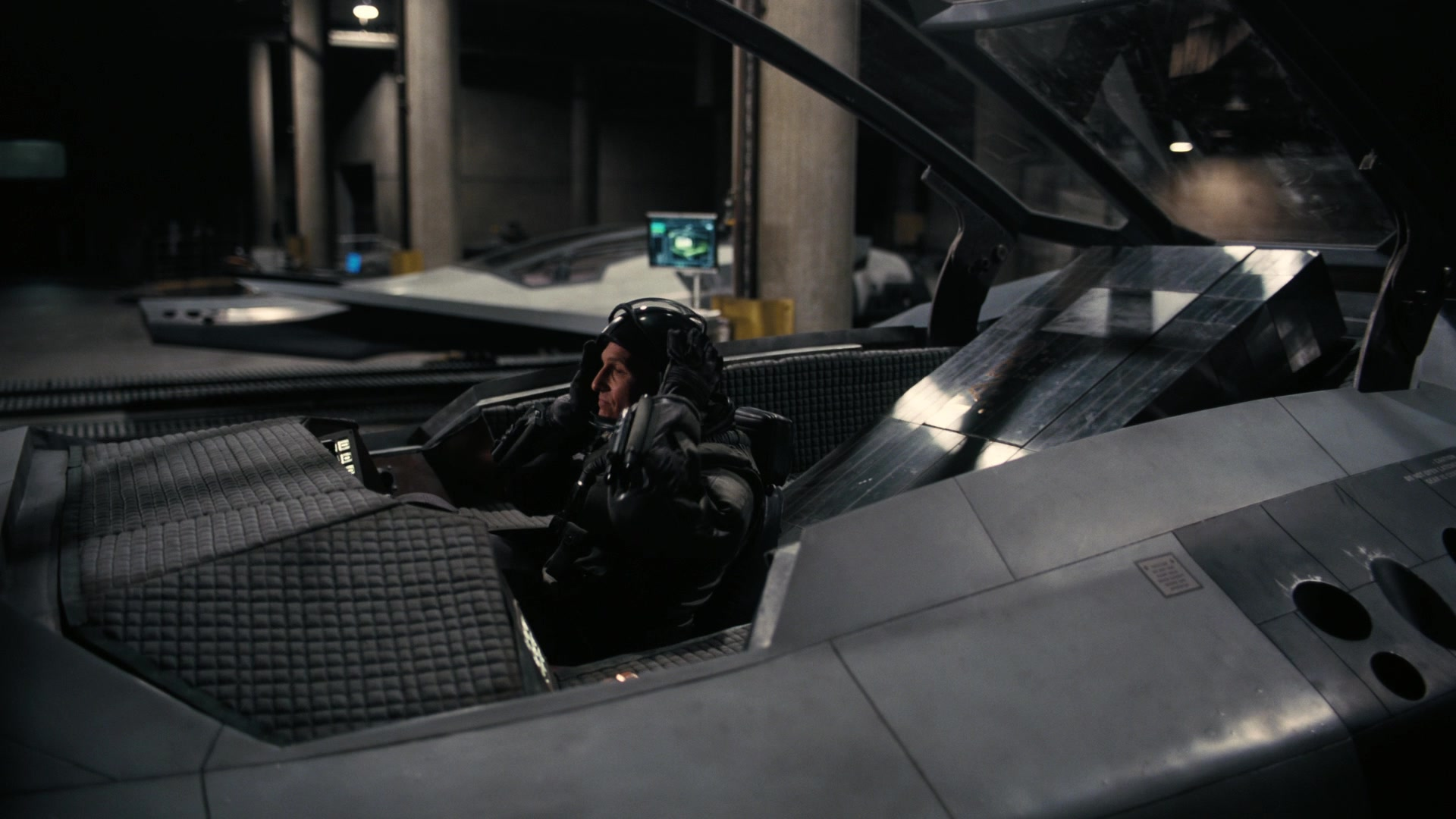
Our world is cold, stark, but undeniably beautiful
In 2014, Interstellar might have seemed like Nolan had lost the juice following The Dark Knight Rises. It's a less visceral film than Inception, but that doesn't make it weaker. There's a misperception about stories that they live as one and dones. Any story where the first experience is the best is not one I put much stock into . The best are the ones that feel infinitely rewarding, where watching the first time is just to figure out what the hell is going on. Films like Fargo and The Grand Budapest Hotel can be good on first viewing, but every time I watch them they get better and richer in my estimation. To treat art as though it is static and not in conversation with larger context is a disservice to its living, breathing qualities.
Every visit back to Interstellar is a leap forward in appreciation for what Nolan accomplished here. This is a movie that is very interested in physics and technology and just how boring space travel can be. Months, years of waiting to travel from one point to another should feel interminable. But Nolan keeps it engaging and interesting. Sure, it doesn't have the pulp adventure qualities of Star Wars, but the quality of a movie is not how well it does something it's not trying to be. It's how well it works here. There's good action and adventure, but all in the service of a story about a dad and his relationship with his daughter and how the two of them save an entire species.
It's this more than anything that is the legacy of Interstellar. While Inception can be the more visceral thrill, it pales in comparison to Nolan's grand blockbuster masterpiece. Since this, he's alternated somewhat, where Dunkirk and Oppenheimer are more traditionally prestigey (Oscary) pieces and Tenet operates as more of a blockbuster like Interstellar or Inception. But (as above), there's no reason to think that this was any less deserving than any other above the line nominees in 2014. It's the best performance of Matthew McConaughey's career, and that most of this film's Academy Award nominations were technical awards rather than Best Picture, Director, Screenplay, Actor, Editing... The Oscars aren't a measure of larger cultural relevance so much as a snapshot of what the Academy values at any given moment.
This is the problem with Hollywood and its holding up certain pieces of art as more worthy than others. In 2014, Nolan was still "the Batman guy" or a dude who made spectacular (if "cold") blockbusters. He got a Best Picture and Best Screenplay nom for Inception. It would take Dunkirk for the Academy to recognize him with a nomination for Best Director. And that's only because Dunkirk is a movie about World War II and the sort of human misery/suffering requisite to awards-worthy drama. (And it's obviously good enough to justify the nom...)
12 years on, though, Interstellar's legacy is assured. Several of those people I first saw it with have come to acknowledge it for the masterpiece that it is. For me, I'm eternally grateful to have a movie this transcendent, that is so endlessly watchable and wonderful and wholly singular as a work of science fiction cinema.
Emotional storytelling, as Christopher Nolan knows, will always win out over the vapid and empty. Cynical cashgrabs are hollow victories that reflect the short term thinking of Hollywood. But investing in someone like him and giving him the latitude to do something this remarkable? If Hollywood would learn the lesson that movies even half as good as Interstellar could be tremendous successes, cinema would be in a much, much better place.
As the space station doors open in the final sequence, revealing the vast starfield into which Cooper will finally depart, it is as though Nolan is opening up his own future to the possibility of what might come next. For Cooper and humanity, whatever comes next is both unknowable yet infinite. If a father can go into a black hole and survive, if his love for his daughter can transcend time and space, if an artist can build a film that a decade later can make a sold out IMAX theater sob at the beauty of what he's created, what else is he capable of?
And what else might he treat us to in the many decades of his years to come?