Life Is a Performance - The Prestige

The following contains spoilers for The Prestige
One of the hottest (and most boring) takes on Inception is that the film itself is a metaphor for the filmmaking process. Dom (the director) puts together a grand heist (project), where Ariadne is a writer and Eames is an actor and Arthur is a producer and Saito is the studio and on and on. There's Googleable Reddit posts if you're interested. A case of viewers/audience applying a reading that tries to grapple with the final product, this sort of vapid allegory misses what Nolan is actually talking about. It engages with the text on a surface level rather than an excavatory one. If there's parallels to Nolan's chosen profession, it's because he himself is writing what he knows and constructing in the way he knows how to build some grand production.
Meanwhile, they'll yada-yada over Cobb's relationship with Moll (even though it's the crux of the movie) and look at The Prestige as the one that's about Nolan's pet thematic obsession. It's extremely explicit here and undeniable relative to his later work. In Inception the horrible thing has already happened. In The Prestige we witness it. Twice.
This theme (that the worst thing that can happen to a man is to lose the love of his life and the only rational response is a descent into mania) has been central to Nolan's career dating back to Following, though it was a raison d'etre for Memento. There, Nolan used noir and amnesia to convey Leonard's complete insanity over the death of his wife. It wasn't present in either Insomnia or Batman Begins (though it sort of is if Bruce's parents act as a stand-in for romantic partnership), but with those two projects as work-for-hire vehicles it's not surprising he didn't code this RNA into their conceptions.
In 2006, though, Nolan makes The Prestige. He swaps out modern neo-noir for dueling Victorian magicians. There's a lot to love about The Prestige (hell, it's the dark horse candidate for Nolan's best film). Partner loss is certainly the spine at issue, and the idea of revenge is recursive towards both men as opposed to Memento's one-way (albeit backwards) direction.
But The Prestige is a film that's far more interesting as allegory for filmmaking and making art. What it takes. What it costs. At its heart is the central struggle of populist artists (which Nolan undoubtedly is). On one side is the total dedication to the craft and moving it forward at the expense of a rich, full life. On the other is the vapid lust for showmanship and how little that quality has in common with the actual act of creation itself.
It's not really a twist
In the days after seeing The Prestige, it felt necessary to talk about the film at length. Like Memento there is a central twist at the end, but so much of that film's twist revolves around the nature of the character and who he reveals himself to be. Meanwhile, The Prestige features two protagonists, which allows Nolan to have two big reveals at the end. Their power rests in the thematic implications of what these men have done.
The first is the one the movie is hardly subtle about: that Robert Angier (Hugh Jackman) did manage to get Nikola Tesla (David Bowie) to make him a giant machine that can clone him, thus making "The Transported Man" trick doable. The first shot of the film is of all the many hats, and once it's clear the machine actually works, it's not really a surprise that Angier is using the machine to make copies of himself. It also makes sense of his shocking survival (even though we saw him die) well before the film actually confirms what the audience already knows.
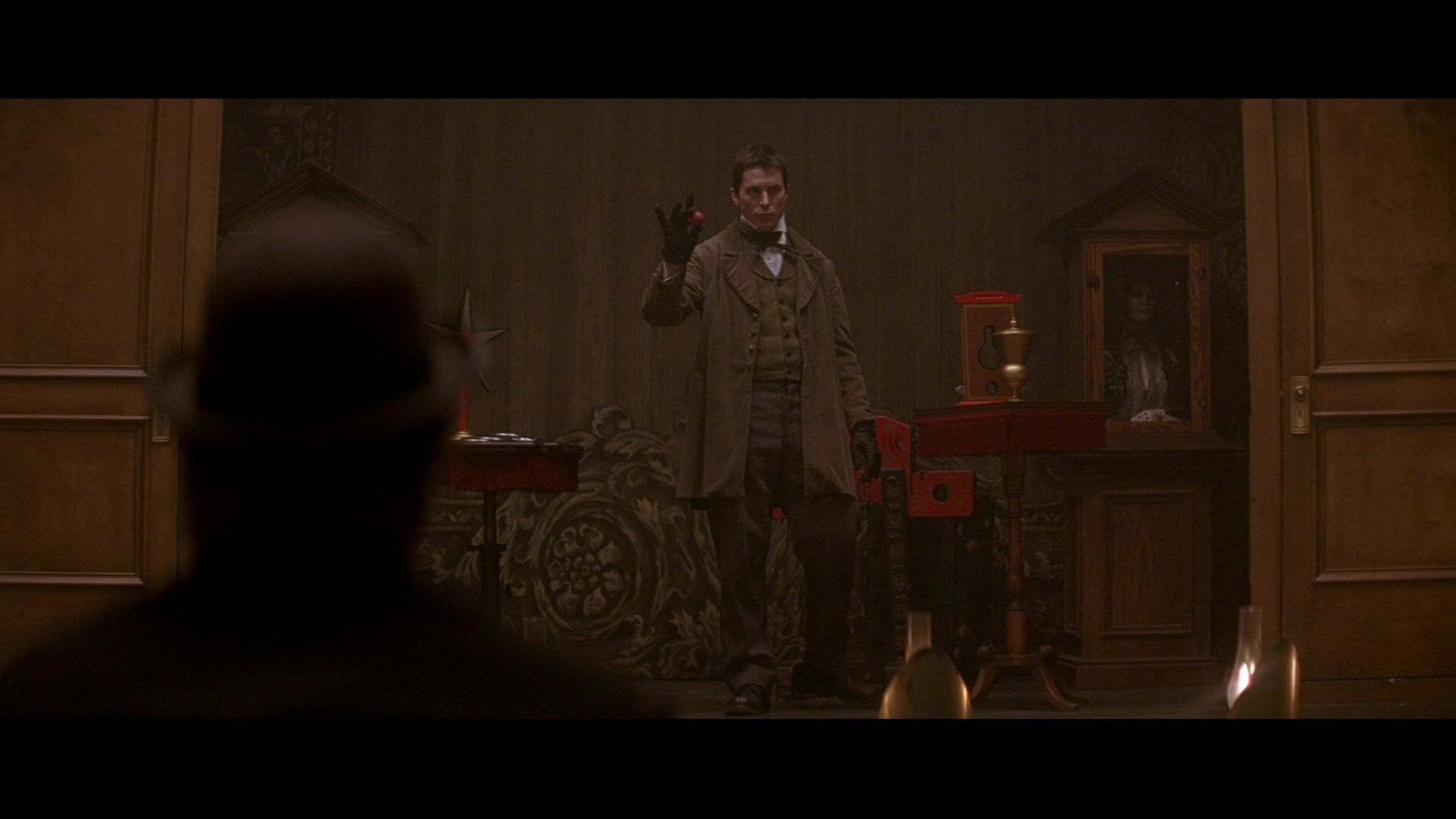
The second is the one that's more subtle: specifically that Alfred Borden (Christian Bale) has an identical twin (named Frederick), and the two share a single life in the name of the perfect magic trick. This bifurcation means the men share the identity of both Borden and his companion (a man named "Fallon"), taking turns and swapping out to make sure they get equal time in the driver's seat. John Cutter (Michael Caine) sets this up early by talking about "total dedication to the craft", and for Alfred it ended up being total. He gets to walk away; his twin brother Frederick does not.
Now, it's not that Nolan hides that Bale is also playing Fallon, but he uses lots of tricks, cutaways, and careful framings to make the audience think that they're seeing someone who isn't Christian Bale. Then again, Fallon's role is to be invisible, and it's possible in watching to completely fail to track the character at all. He doesn't have a story or an arc. He exists entirely in the background.
The funny thing about this film, though, is that Nolan doesn't rely on the twists to make them work. Oh, sure, they definitely make it a screamer to watch the final scene as the Borden-Angier feud finally comes to a conclusion. But what makes the movie sing is watching it again and seeing just how full the script is of material that backs up those two tensions. No. This is very much a movie that is better on subsequent viewings, where it becomes clear just how much this entire situation is actively destroying the life of not just Borden but those in his orbit. There's a way to watch this movie that focuses entirely on which Borden Bale is playing in any given scene. For all that the twins do try to have a seamless existence, there is also subtlety in the performance and the writing that delineates the two:
Alfred is the more connected and skilled illusionist, obsessed with the craft and developing new tricks. This is the man who is in love with Sarah, has the stronger relationship with his daughter (Jess) and walks away from the dying Angier in the film's final scene. He's the one whose life they share.
Frederick is the more embittered one. He falls in love with Scarlett Johansson, witnesses the death of Angier under the stage, and feels more prone to anger than his brother. His story is ultimately tragic and his hanging in the end comes because of his own foolishness at inspecting Angier's Transported Man when his brother told him explicitly not to.
But even if you're paying attention to the makeup effects enough to realize that Christian Bale is there constantly, there's no way to fully appreciate the gravity of the situation. It's impossible to appreciate the dedication the brothers have to each other (and really, what Frederick has for Alfred in giving up so much of himself). It's bits like Borden only seems to love his wife on half the days and the schizophrenia of Borden's journal as he constantly writes back and forth to himself.
It's why The Prestige is better with every further viewing, where the layers upon layers that Nolan has baked into this masterpiece peel away a bit more every time.
Deranged sacrifice
Angier, though, is a wholly different problem.
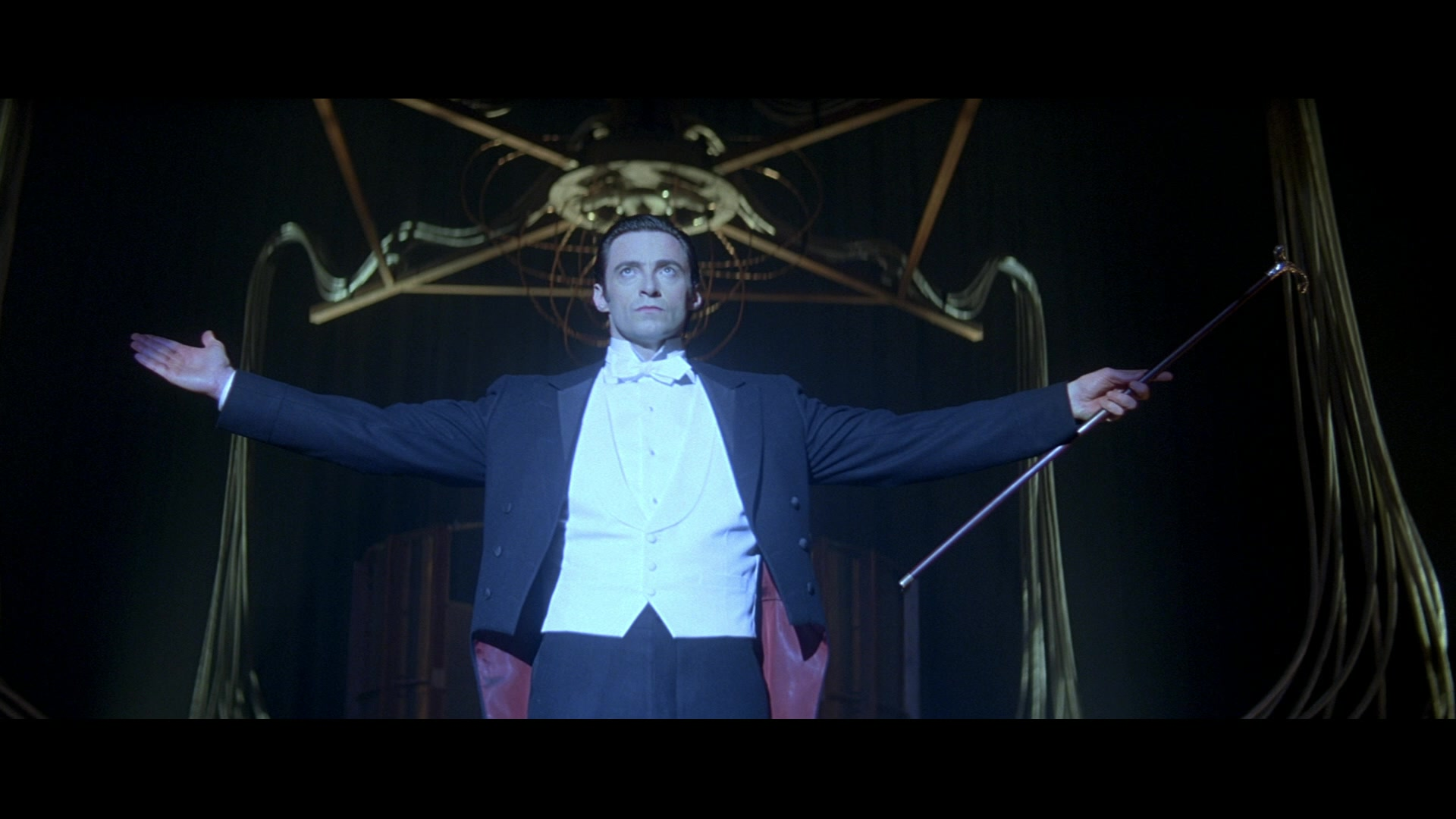
While Borden is undeniably the better craftsman, it's Angier who is the better showman. He's always thinking about how he looks and the theatricality of his shows. Borden throws the ball, but it's too fast and the audience doesn't appreciate the impact of what they've just witnessed. Angier throws his top hat dramatically for his double to catch at the trick's climax.
Buried in here, though, is arrogance. He tries to barter to make sure he gets the applause at the end but still only winds up under the stage. He refuses to treat his double to the lavish lifestyle that will keep him in line. It's easy for him to claim all the credit, but there's an entire infrastructure in place to make sure his shows work as well as they do. And that arrogance creates a weakness for Borden to exploit when he tracks down the double and weaponizes him to embarrass Angier on stage. That's maybe the worst thing Borden could do (short of being responsible for his wife's death), and the limp that Angier walks with for the rest of his life reflects is a living reminder of the night his rival got the best of him.
What's fascinating, though, is that Angier is the one who discovers real magic. Sure, it's science from the mind of Nikola Tesla, but it is something that is wholly unexplainable. And... no. It's not a twist. The top hats in the first shot and the cat clone give away that Tesla's machine creates copies of whatever it zaps. Nolan plays the big reveal moment (Angier meeting the copy of himself) as a reveal, but anyone paying half attention could guess that it's something like that.
This, though, isn't enough. I remember when this first came out that the reveal itself was... good but less impressive because it was so guessable/telegraphed.
Me of 20 years ago, though, missed the point.
There is a string through Nolan where people criticize his movies for being too puzzle boxy. Memento, Inception, Tenet... they all can function as giant puzzle boxes to solve. The structures they play with are all intricate and twisty, and there's always some discourse out there that Nolan makes the sort of movies that dumb people watch to feel smart for comprehending.
This, though, is reductive. Christopher Nolan's movies utilize complex structures to make a larger point. Memento is about a man who lies to himself to feel better about the most traumatic thing imaginable. Inception features layers within layers because each one is forcing Cobb to be honest about the horrible thing he did to his wife. And Tenet... well... doesn't every day in a horrible relationship feel like you're always going living and reliving the same pains over and over, trapped in the same lack of growth etc?
The reason Angier's actions are so devastating is because it forces Angier to sacrifice for his art. Worse, choosing to drown himself every night in a locked glass case just like his wife did is the ultimate (twisted) sacrifice and masochistic dedication. Borden might have traded his art for a half-life that cost him both his wife and his brother, but Angier gives up his life every night and refuses to trust himself to not demand the glory in surviving.
And there's something interesting here that supports Angier's terror at going through the machine every night.
When he tries the machine the first time, the Angier who uses the machine leaves a loaded gun next to him. He uses it to execute the copy immediately, meaning that the "original" knows what it's like to go through the machine and to see the copy come to life.
The Angier who dies in the final scene is the final copy, a man who retains all the memories of going through the machine and surviving every single time. He is the luckiest version of Angier to exist because he never drowns.
Only... that Angier did go through the machine once and he did stay the original that first time to kill the copy. So every time he performs his "Transported Man" he knows what it's like to both live through the machine and to die after its use. And it means that every night he's not so much a "Transported Man" as a "Schrodinger's Man". One who both lives and dies, knowing that he will be both of them simultaneously (though not for long).
Becoming so obsessed with revenge that he literally gives his whole life away every night is far beyond what Borden's half-life sacrifice. And it comes from a level of obsession and vindictiveness that even Borden at his bleakest wouldn't stoop to.
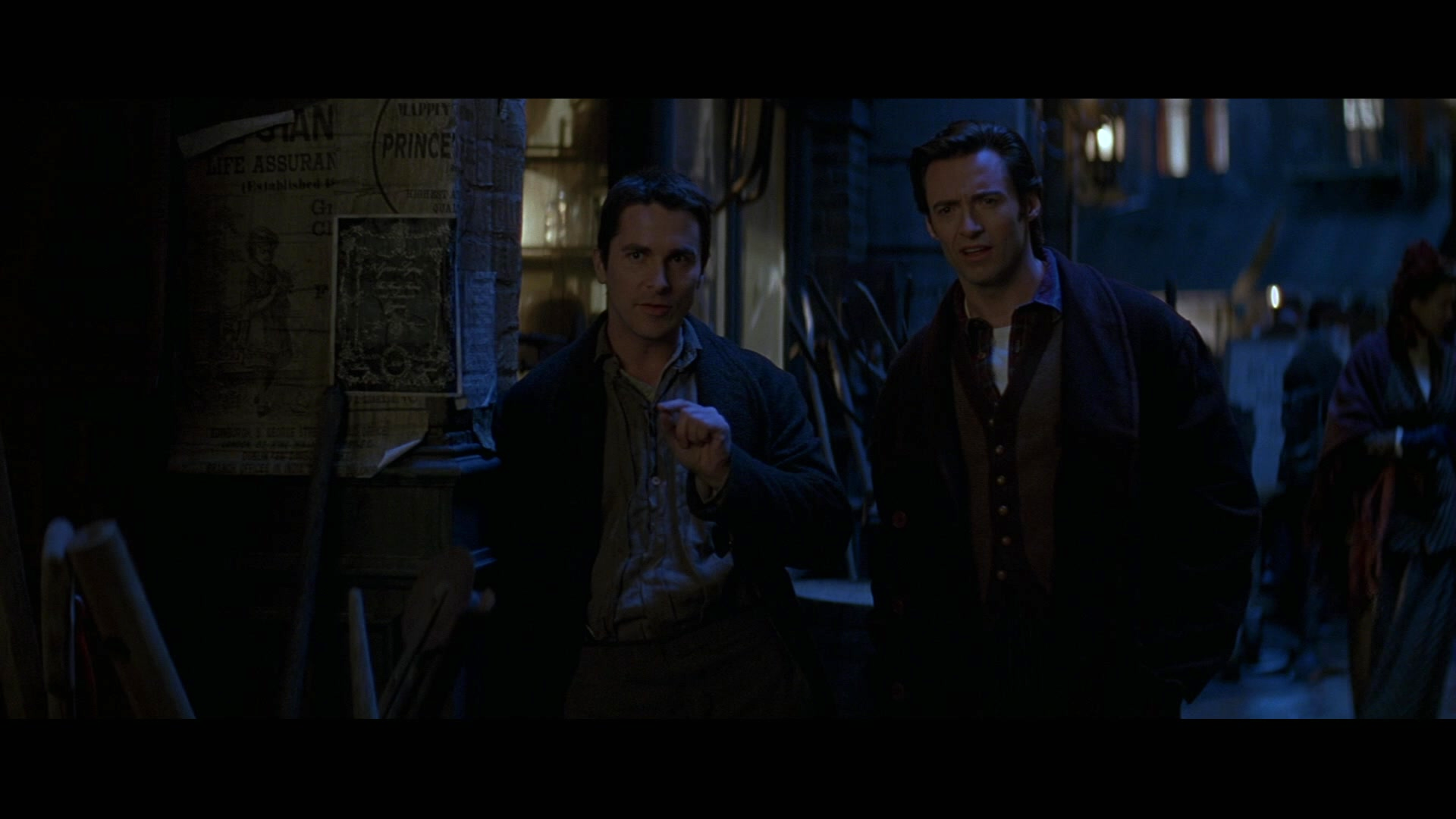
The promised rewards
While making good art and being exceptional at the craft requires a dedication akin to madness, it is also possible to go too far. Such a thing is its own reward, and acting against another out of petty revenge and in the name of proving something will in the end mean absolutely nothing.
Watching this after Nolan's big wins for Oppenheimer carries a different context. Nolan winning was absolutely a thing he deserved, yet that small statuette is in no way the great prize. There are more movies to make, more stories to tell. Glory is not the destination. The prize itself is the work.
In the end, Algier throws everything he can into this feud and dies amongst dozens of drowned cadavers of himself. Borden, meanwhile, walks away having gotten his revenge for the death of his brother and recognizing that this feud ended up ruining both of them and cost everyone involved everything. He doesn't acknowledge Angier's sacrifice because giving Angier the satisfaction of recognition means giving him the one thing he craves. It is the final insult.
There is the implication that there will be no more magic from the survivng magician, but it's because his brother's death has given him the permission to live a full life the way he wants to. The first thing he does is not go out for more magic. It's to get the same reward as Cobb: his child. If Nolan is such an emotionally clumsy filmmaker and he only cared about the puzzle box, why end his story on that beat?
This is Nolan reflecting on his own life. It's not his most clean execution of parental sacrifice. Nor is it the best journey to earn that almost saccharine final beat.
But it is Nolan meditating on the nature of art, its intersection with commerce, and the dedication to become a true master. Ironically, while this isn't the one that most would point to as his signature masterpiece, it is the first true masterpiece of his career. Everything up to this point is enabling him to make a work of art this indescribably transcendent. Now, finally, he has exorcised the thematic demons of wife-loss mania and obsession with metaphorical craft for long enough to go make something less esoteric and more wildly populist. Returning to Batman will be different this time, though. Last time he was just starting to come into his own. With The Prestige he's seriously leveled up.
And with the pieces in place it's time for Christopher Nolan's to step out onto the stage, only this time to his biggest audience yet and a thunderous applause....