
Feed People Hope to Poison Their Souls - The Dark Knight Rises


A sequel to The Dark Knight was asking diminishing returns. Heath Ledger's singular posthumous performance alone was enough reason to think maybe they shouldn't even attempt it.
But that's not how Hollywood works. Are there any blockbusters that are willing to stop at just one sequel? Especially when the second one was so much bigger than the first? Surely there exists a third installment the filmmakers carefully planned. Surely. Beginning, middle, and end. It writes itself.
At a best case scenario, trilogies occur unintentionally. Back to the Future and The Matrix existed as standalone films where the creative teams constructed an ex post facto story arc for their sequels, incorporating the main story from the originals while utilizing small retcons amidst expanded scope to justify returning to what was already complete. They also shot the two sequels back-to-back as a way of keeping the big picture consistent. At the extremes are trilogies that come ready-made (Lord of the Rings) or first installments that presume grander plans with subsequent productions (John Carter, Fantastic Beasts and Where to Find Them). The latter has no guarantee that more will follow, much less that the end of the story will happen. If the goal is to make movies that perpetually just print money, and sequels tend to make more money than the originals, it makes sense to take gambles on things early that will "pay off later".
This, though, is anathema to film at its best. The best quality of film is its "whole story" in one go approach. The best movies feel like a solid beginning, middle, and end. Despite being part of a grander arc, even The Matrix Reloaded and Back to the Future Part II both have wholly contained narratives that are in and of themselves satisfying regardless of cliffhanger. Even The Empire Strikes Back, which leaves massive plotlines unresolved brings with it a sense of catharsis and completion as it ends on gnawing questions of what will happen next.
As a scholar of the medium, Nolan builds his films very traditionally in this respect. While the mere title Batman Begins inherently invites follow-up where Batman has previously begun, it works as an origin story with its own self-contained beginning-middle-end. And... sure it ends with the Joker card, but Nolan and his co-writer David S. Goyer didn't really have plans for the next installment beyond "maybe it'll feature the Joker!" Hell, Nolan didn't even sign on for the sequel until after Batman Begins came out. And yet, when he does The Dark Knight, Nolan builds a movie that doesn't require Batman Begins at all. The context helps maybe, but no one watching it is lost because they missed key aspects of Bruce's previous story arc or the mythology of what's going on in Gotham. It focuses entirely on itself and its present.
Ending a trilogy, though, necessitates reflection and backward looking. It matters where the story started and how it gets to where it lands.
All of this, plus the fact that Nolan has just cemented himself as the most popular and well-known director on the planet and it's easy to see how this film rapidly became something of a nightmare brief, smothered under previous sky high expectations.
Nolan deploys all his familiar tricks and style because he can't turn off being a wildly entertaining storyteller, but there is the sense that his heart isn't in it. Not like last time, anyway. The whole movie is a lot of shrugging, mugging, saying "I guess we can do that, sure", and letting the more comic-booky aspects of Batman Begins seep into the DNA.
Taken together, The Dark Knight Rises is an insanely watchable trainwreck.
Backward looking
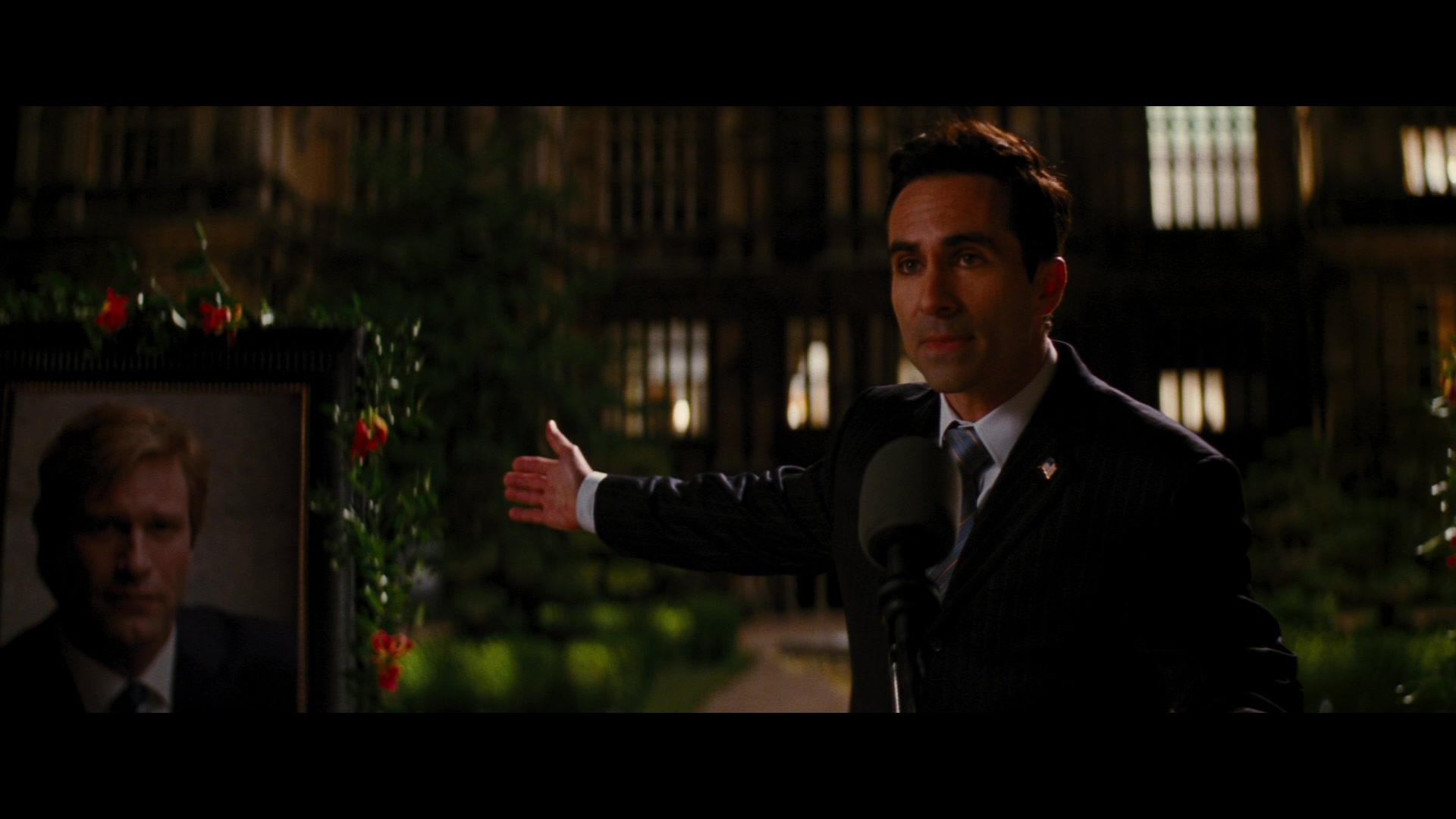
According to The Dark Knight Rises, The Dark Knight's great legacy is the coverup Batman and Gordon perpetuated in laundering Harvey Dent's reputation. There's mention of The Joker's attempts to collapse Gotham into anarchy but no mention of what happened to him or where he went in the intervening eight years. Ledger's death is obviously the major factor at play in that choice, but it's also the right move. The Dark Knight is the story of Harvey Dent's fall from grace, and it makes sense to build out of that legacy. It's not the movie's fault Ledger's performance is so good it sucked all the oxygen out of the room.
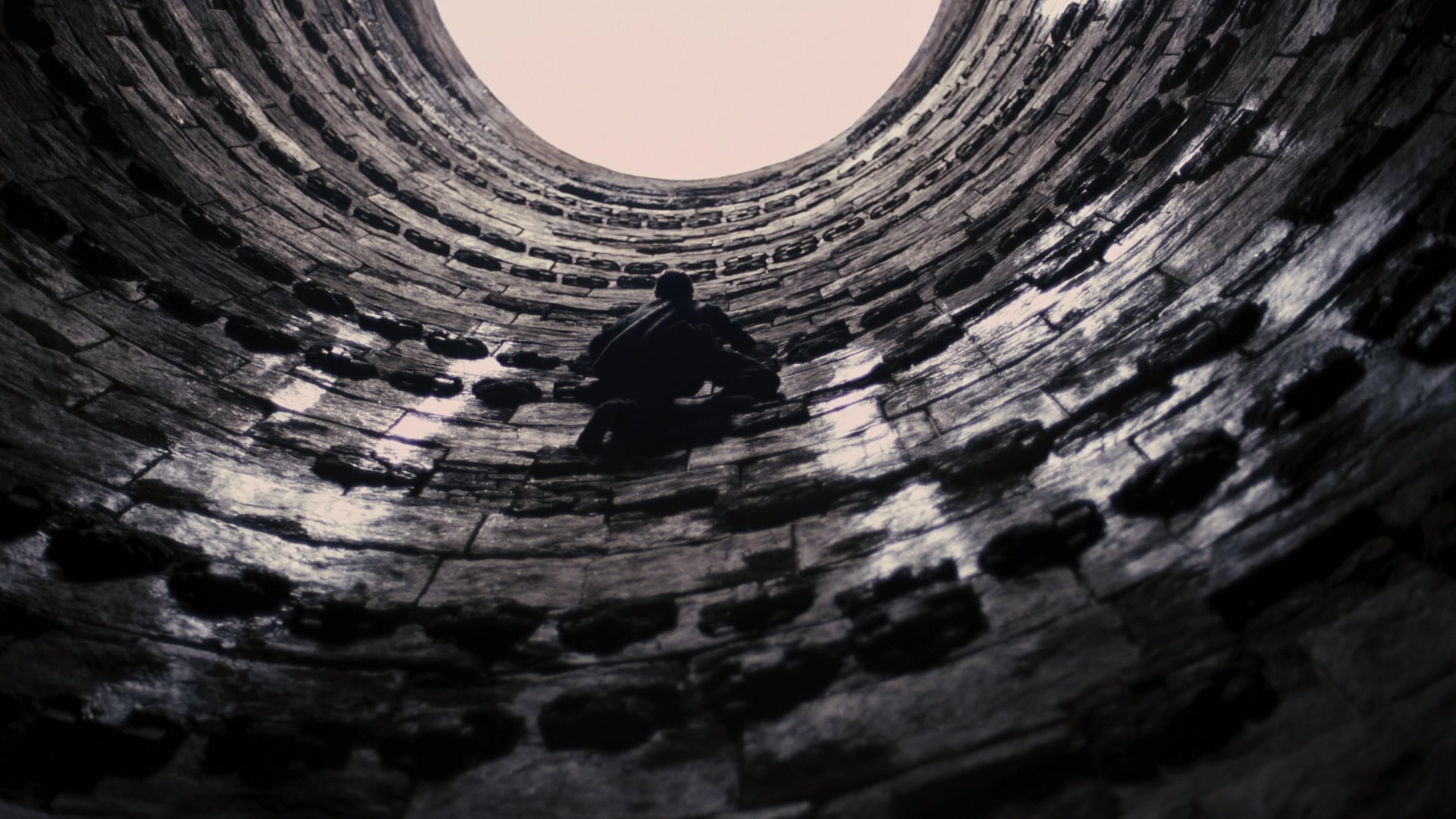
But this has to look further backward. Rises also has to payoff Batman Begins, and to do that there's a pivot back to the League of Shadows. Bane (Tom Hardy) is a former operative of theirs back to finish the job they started decades before. And it turns out that Miranda Tate (Marion Cotillard) is Ra's Al Ghul's daughter Talia. She's here to topple Gotham for revenge. There's also a cameo from Liam Neeson's Ra's Al Ghul as an apparition appearing to Bruce when he's trapped in that epic pit. A rebuilt Wayne Manor exists, serving as a residence for Bruce after a film in which he lived in a penthouse. It's great to see the Manor again, but... because Ra's Al Ghul wrecked it and Nolan wanted to use continuity to provide a sense of reality, the Manor wasn't in the previous film. Like at all.
So it's easy to feel like Rises is minimizing The Dark Knight somewhat.
This is... not a totally bad thing. But it's weird Batman Begins gets so much affection while The Dark Knight gets so relatively little. No Joker, sure. No one is mad he's not here. But not even an apparition of Harvey Dent alongside Ra's?
And it's especially weird considering that the centerpiece of this trilogy is not Batman Begins but The Dark Knight. The title alone reflects that shift in direction between the two previous installments.
Building the film like this, the Nolans (Christopher & Jonathan) and David S. Goyer write a movie that does a decent job creating a big operatic threat to Gotham. But The Dark Knight Rises feels more like Batman Begins 3 in a world where no one actually made Batman Begins 2.
They called it "The Bat"
Of course, Nolan knows better than to make a film that is purely navel-gazey. The Dark Knight Rises introduces new characters like Talia and Bane and Catwoman (Anne Hathaway). Bringing existing Rogues Gallery characters to life is par for the course of a Batman movie.
But there's also the John Blake (Joseph Gordon-Levitt) storyline. Yes, the final minutes swerve it into the oft-laughed-at "my name is Robin" promise of carrying the legacy into the future. But that silliness eclipses Blake's more interesting role. As a detective he provides a ground-level view of Gotham's streets and adds both doubt as to the wisdom of the Harvey Dent cover-up and belief in both the power of goodness and Gotham itself. In a better movie, the film really establishes that Blake's future is as some amalgamation of Batman and Harvey Dent: a face that the city can believe in with the capacity to be the effective hero Gotham deserves.
So... they beef that a bit.
Talia is a struggle, with her arc not really making sense even though everyone and their mother figured out Cotillard was playing Talia the second they announced her casting. She plays the character like a cypher for the first half only to suddenly turn evil when the time calls for it. I guess Talia's a really good actress and knew that it was important for her to sleep with Bruce to get what she wanted? Weird character.
And then Bane... To say Tom Hardy's take is a better Bane than Batman & Robin is wildly understating what's happening here. The voice is instantly iconic, but it's also a fabulous rendition of the character. He's a tank in an absolutely believable (and attainable) way before Marvel Studios completely warped audience's expectations of how the human body should look. Also, he pulls off that big ass bomber coat when he takes over Gotham. If there's a problem, it's that Nolan wanted a physical match to Batman rather than a psychological (Joker) or mental (Ra's Al Ghul) one. Physicality can get vapid pretty fast and that makes it hard to sink into the emotion of the character.
Selena Kyle is the big winner here. It helps that Anne Hathaway is having a great time playing a femme fatale and that they manage to make the cat ears a feature of her thief goggles. But she's the best thing about the first thirty minutes of the movie. Her stealing the pearls is a great sequence, but her ingenuity during the police raid on the restaurant? That scream to make her appear as a bystander is fabulous hyper competence that sells her as the best new character in the movie.
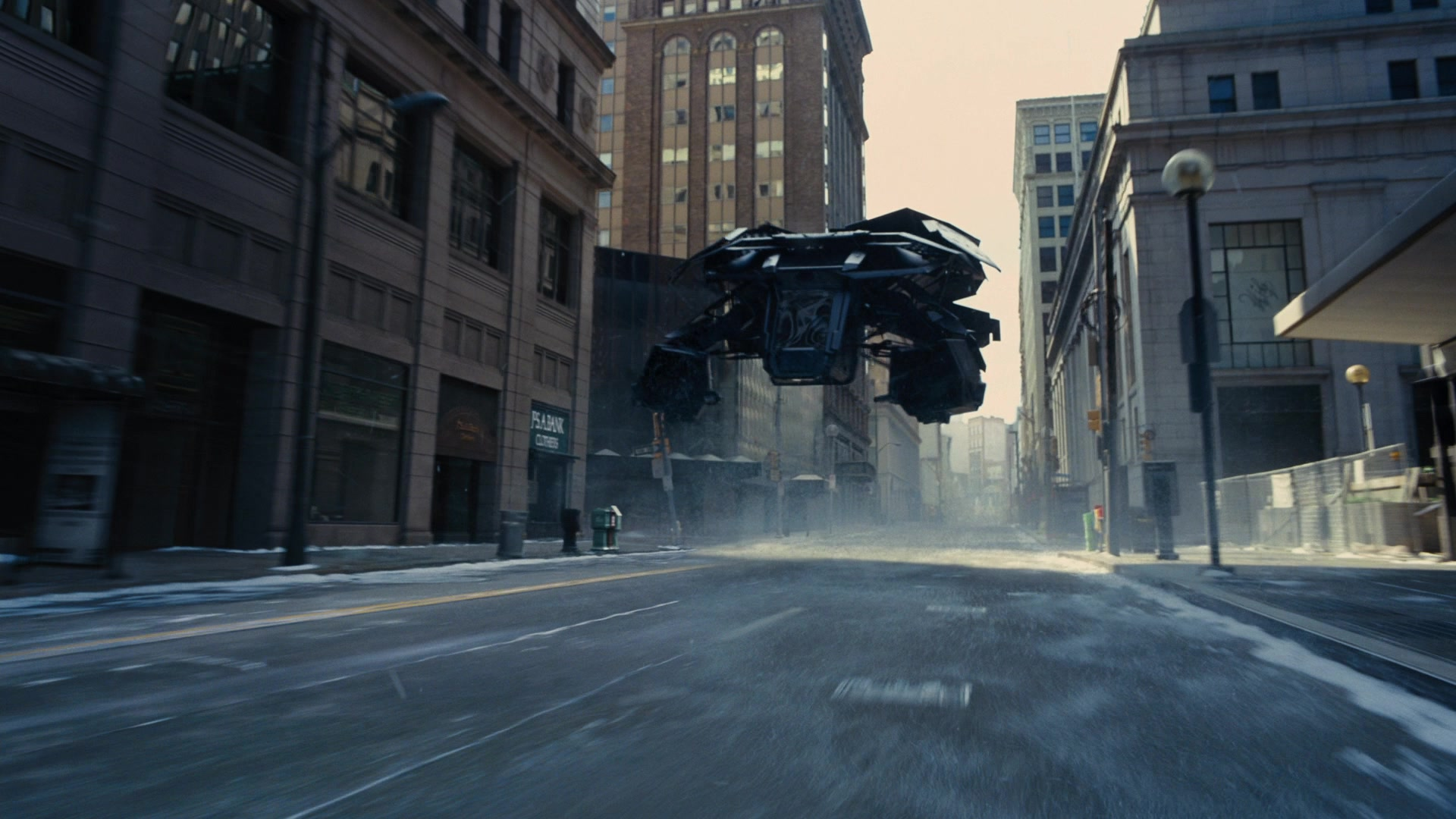
And Nolan even figured out how to do a Bat-plane in a way that isn't complete cheese. It stretches believability far more than anything else to date. But it's also so cool, that it sells itself just fine.
All of this talks around the unspoken reasons why this movie is... kind of a shit show.
Go big or you're not gonna be able to go big again
With The Dark Knight setting the spectacle bar so high and Inception confirming that Nolan is gonna be playing with house money for the forseeable, it's not that surprising that The Dark Knight Rises has an outrageous budget. The featurettes emphasize this, showing just how complicated and expensive this movie was to shoot. They built a massive set for the Pit, complete with suspended wires from which to drop stunt people doing crazy acrobatics during a big fight sequence. The environments are all lush and beautiful. And the opening sequence where Bane's crew hijacks that jet? Incredible.
This is a problem, though.
I'll never turn off The Dark Knight Rises, but there is a quality to it where the movie unravels the more it goes on. Break the movie into equal segments of time (hours, 30 minute chunks, 15 minute sections, etc.) and every subsequent chunk is at least a little bit weaker than the one before. By the time Gotham falls under Bane's control it's like "wait we're really off the rails here".
A lot of this is the script, which is aiming for suitably epic and worthy of a trilogy this bombastic. And it goes hard. I never ever thought we'd get the famous year-long Batman arc "No Man's Land" on screen, and yet the movie almost pulls it off. It just takes a ton of weird narrative pretzeling to get there.
As an example: Bane's men luring 99% of the GCPD into the sewers and then trapping them down there for months on end. For one, it's beyond overkill. And two... everyone's watching the cops just... flood into the underground like they're some army. Seems like a major liability leaving Gotham with not enough people left to do basic law enforcement. And... yeah okay the central argument of the Dent Act is that crime is way down but... city still needs cops, no?
But... Nolan got all those extras on camera and in uniform to convincingly walk into the sewers. Genuinely Nolan's deployment of massive casts of extras is so impressive.
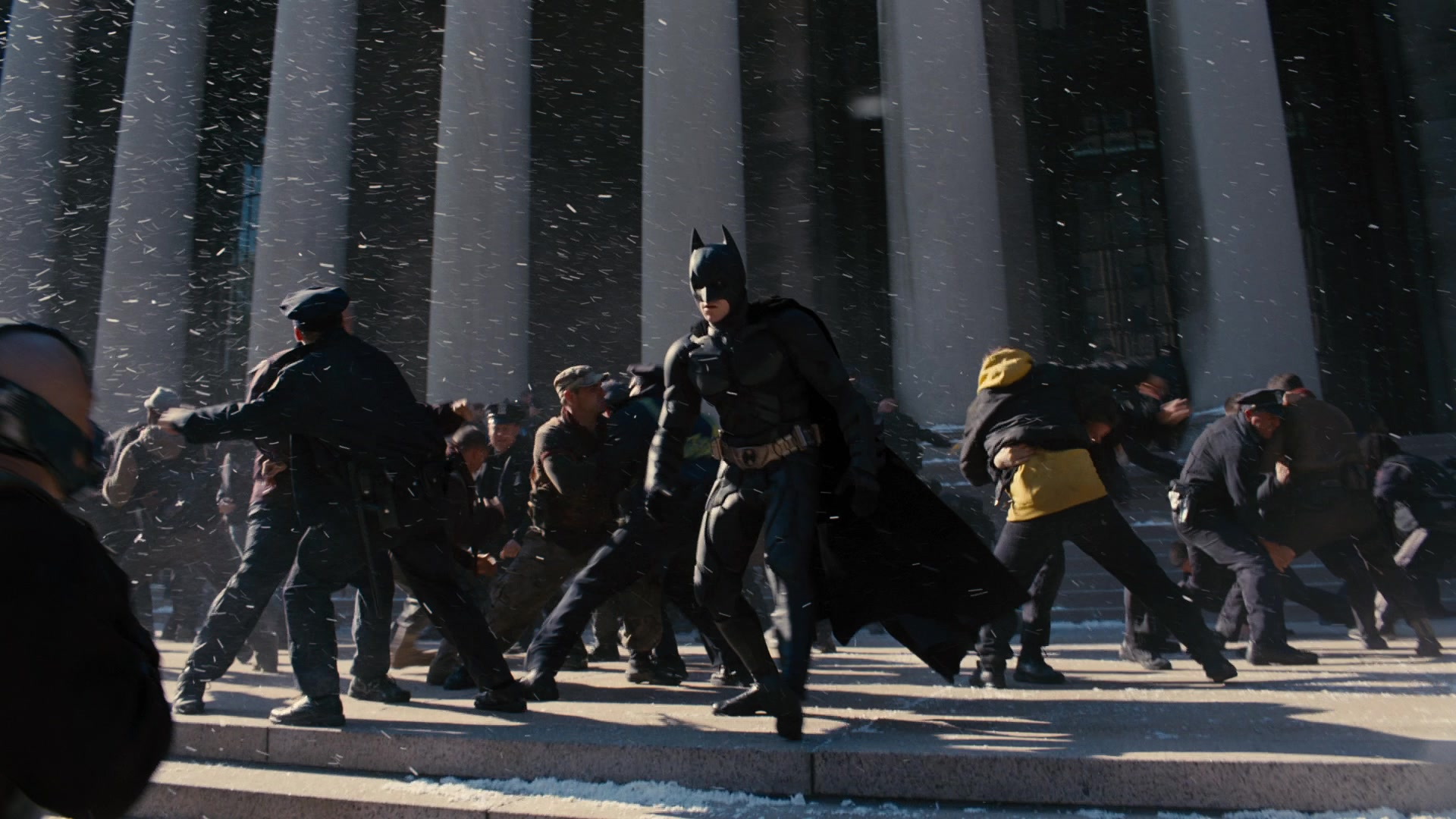
Whenever this movie starts to go off the rails, Nolan etc. throw bigness at the problem to paper it over. Need a big opening to rival the last film's bank heist? Let's lift a giant learjet into the air and do a big aerobatic stunt sequence and then rip the wings off that bad boy. Need a big climax? Let's get tons and tons and tons of extras to run at each other like it's the Battle of Helms Deep. Cops vs criminals. Isn't so many extras so impressive? Need to make the chase scenes impressive? Let's strap dudes to the back of motorcycles and have Batman's big return be chasing them through a massive, darkening underpass.
It's almost as if Nolan and co. know that they're basically not going to get any no's on this movie. And if the script sucks as much as it does (and it does), why not be wildly self-indulgent with what amounts to an infinite budget? To Nolan's credit, that money is all on screen. The movie looks big and bold and gorgeous. But that's cotton candy filmmaking. It's not the secret to making a movie that's good. That's just bobs and whistles on an extremely mediocre toy.
Stretching the bounds of believability
But if the script is bad and I'm always harping about the importance of good writing, why is it that I never turn this movie off? It's hard to say. Maybe it's because I really like Nolan making something that feels like a Batman movie. Or maybe it's because I like a trainwreck. Or maybe I like snow. Or maybe Nolan is just that good at conveying an incredible sense of scope via his esoteric style. Whatever it is, there's more than enough even in the rough parts for it to be consistently engaging.
But this is far from a ringing endorsement.
Visually, the fight between Batman and Bane is stunning. Part of that is because of Nolan's use of water. The way it bleeds and slicks the surface of Batman's outfit makes it glisten in ways the matted finish shouldn't. Almost glossy. Bale gives a tremendous physical performance too, showing the physical toll of exerting his body this hard over something so undoable. Nolan even uses clever dollies and pans for moments like the smokey flashbangs, added theatricality to Batman's desperate attempts to make the win happen.
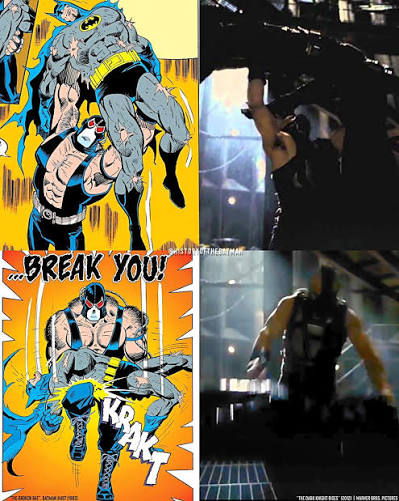
The actual sequence, though, pales in comparison to the same moment in the comics. The moment Bane breaks Batman's back is electric visual storytelling and comes at the end of an eleven issue Batman books crossover that pushes the hero to his literal physical breaking point. In a way, Bane using all the villains of Gotham to exhaust Batman is a cheap trick. Of course he wins. That not even a contest. On the other hand, Bane's brilliant strategy is not breaking any rules. Who cares if he can't win in a straight up fight? Batman's superheroics is as much mental prowess as it is physical strengths. Bane at his beest is fighting with smarts.
The moment itself, though, illustrates a critical difference between media. The comic image of Bane snapping Batman's spine over his knee is not just a splash of ecstatic red color. Its wholly static nature forces the reader to look at and absorb the gravity of the moment. The way the back contorts is one of the most indelible image in all of superhero comics. Real bodies don't operate like that.
In The Dark Knight Rises, it's a pale imitation. There is a gauntlet of baddies Batman and Catwoman have to fight to get to the big showdown, but the onslaught is not progressively tiring him out. Likewise, when the big back breaking comes, Nolan uses wires (which is fine) to drop Christian Bale onto Tom Hardy's knee. But because Nolan makes these films as realistically as possible (and doesn't resort to cheap tricks like slo-mo), it's difficult to even grasp what's happened as it does. It's blink-and-you-miss-it fast because that's how it would be in real life. And this... coming after everyone who knew the comics knew this moment was coming. People expected it. And it's easy to look at the moment and be like "... that's it?"
Rises is full of moments like this, where spectacle and maximalism take precedence over the intimate emotional arcs of The Dark Knight because they're not as good. The movie somehow manages to justify "No Man's Land" (an iconic late 90s yearlong Batman comics crossover that isolated Gotham City into an anarchist dystopia where super villains divided the city into sectors of control and the Bat-Family had to work together to reclaim their home block by block) but at the cost of stretching credulity. It works really, really hard to get to a place where the United States government would abide abandoning a major population center. These include:
- A truck patrols the streets, threatening to detonate the nuclear weapon inside if anyone enters or exits Gotham unauthorized.
- There are two additional trucks to make it so no one can tell which truck is holding the nuke.
- A random Gothamite citizen holds the detonator and could blow up the city at any time.
- Bane's crew blow up all the bridges (fine).
- There is one bridge that's open but it's only so that food can get in and out and there's some baroque system to ensure that no one is abusing this gentle kindness. This goes on for monhs on end.
- Bane's men trap Gotham's entire police force in the underground sewer system to ensure there's no central law enforcement mechanism to threaten his anarchy.
- Bane executes municipal leadership to make sure that there's nowhere for the populace to turn to.
- And probably a bunch of other things that happen.
Meanwhile, here's how the comics work:
- There is a massive earthquake that devastates Gotham, killing civilians and wrecking infrastructure, buildings, etc.
- The government throws up its hands and is like "yeah no this isn't worth it"/"too expensive" so they just declare the city a No Man's Land and turn it into a similar situation to Escape From New York.
The latter is easier, but also requires more buy-in from an audience that can also accept any number of crazy implausible things. Rises on the other hand has to make this situation believable. And it... will never be believable.
Also the "we're gonna let all the cops out and then there's gonna be a massive street fight on the streets of Gotham between all the cops and all the anarchist criminals" is outrageously silly for a film that follows up on The Dark Knight. It's operatic because the nature of "this is the end of a trilogy" necessitates the "war" that Batman growls upon returning to Gotham.
Sprinkle on that Nolan magic...
That all said, I can't deny Rises's ability to sweep me into the reality of seeing something I never thought I'd see. The action sequences are massive and incredible, from the police chase when Batman returns to the above-mentioned street fight to the assassins dropping from the ceiling into the pit to the climactic sequence where they have to stop the bomb from finally detonating. After Inception, Nolan can do this sort of bombast in his sleep, and it's almost like he realizes he has to bring that aspect of his vision to this or the entire movie won't work in any capacity.
Even as Talia lays dying, where Batman, Catwoman, and Gordon stand around watching her monologue with less than two minutes to detonation, it comes at the end of some fantastic spectacle that's far beyond just about anything Marvel's attempted in the last decade and a half. The Bat flying through the Gotham skyline to avoid the missiles. The giant truck crashing down to the streets' lower levels. Tumblers chasing people down and turning Batman's own weapons against his city.
And then there's little moments. The return of Jonathan Crane in a great cameo as a judge overseeing Gotham's improvised kangaroo courts. Selena Kyle twisting that dude's hands in the prison bars. Blake's race to get to Gordon after Bane's plan starts going into effect... There's enough to hold onto that the film isn't a total bust when it's all said and done.
Like... not good. But not a bust.
It is, though, leagues better than what happens when other great directors fumble the ball. This is miles better than Spielberg's 1941 and I'd rather watch it than any Marvel Studios movie this decade. These are low bars to clear, but it doesn't change the fact that even when he's this emotionally checked out of such a ridiculous story and so clearly aware that this has all the hallmarks of a textbook disaster, Nolan still gives it everything he has (by going on incredible autopilot) to snatch a stalemate from the jaws of defeat. This doesn't diminish The Dark Knight's legacy, and it doesn't fuck up the ending so bad it poisons the whole trilogy like The Rise of Skywalker.
Instead The Dark Knight Rises is a tremendous letdown that is nevertheless insanely watchable. It's batshit crazy in places. How did Bruce get from the pit back to Gotham so fast? How long did it take him to get that line of fuel just right so that he could make the flaming bat signal on the bridge? A major plot point of this is faking Bruce Wayne's banking information so that he can go completely bankrupt on a couple of clearly falsified stock trades but also they're letting him keep the Manor. For now. And also the copaganda of the final war hasn't aged well. And would Bruce really straight up quit being Batman after all this? And does he just go to that restaurant every day waiting for Alfred to show up? Of all the restaurants in all the world... but that adds to the charm of the thing.
And really, it's this movie more than any other that reveals that Nolan's batting average is absolutely insane for a dude who puts out movies like clockwork. Other artists like Tarantino and Paul Thomas Anderson put out movies when they're ready, but to this point (and then for the followup) Nolan is slamming out a movie every two years. After Interstellar it shifts to every three, but it's still insane how he's able to make movies this big and this consistent and even when he completely fucks up the final product is still insanely fucking watchable.
Nolan at his absolute worst is still mostly passable. The momentum from Inception and The Dark Knight (and The Prestige and Memento before) means that this is a slight stumble rather than some epic faceplant that requires a major bounce back. Other directors have hit a nadir like this. The best ones bounce back by churning out a masterpiece to prove they still have it. Universally great stuff. Movies like Raiders of the Lost Ark, Blue Velvet, No Country For Old Men, Terminator 2i or Sinners are all-time bangers.
With that pattern, it's a mark of how nadir-y Dark Knight Rises is that his follow-up is Interstellar.