
Dream Closure - Inception

Rick & Morty's second episode is an A-story that exists to take the piss out of Inception. Co-creator Dan Harmon raged about the film online and hated it so much he burnt a precious half-hour of his new show lampooning a movie he thought was incredible garbage. He kept coming back the film's endless exposition, where characters spend almost the entire movie explaining what's going on rather than developing characters with emotional arcs. And then got pissed that all these rules made no sense in practice. As though dream logic needed to have logic. It also didn't help that the film didn't follow his precious Campbellian structure.
He's hardly the only one.
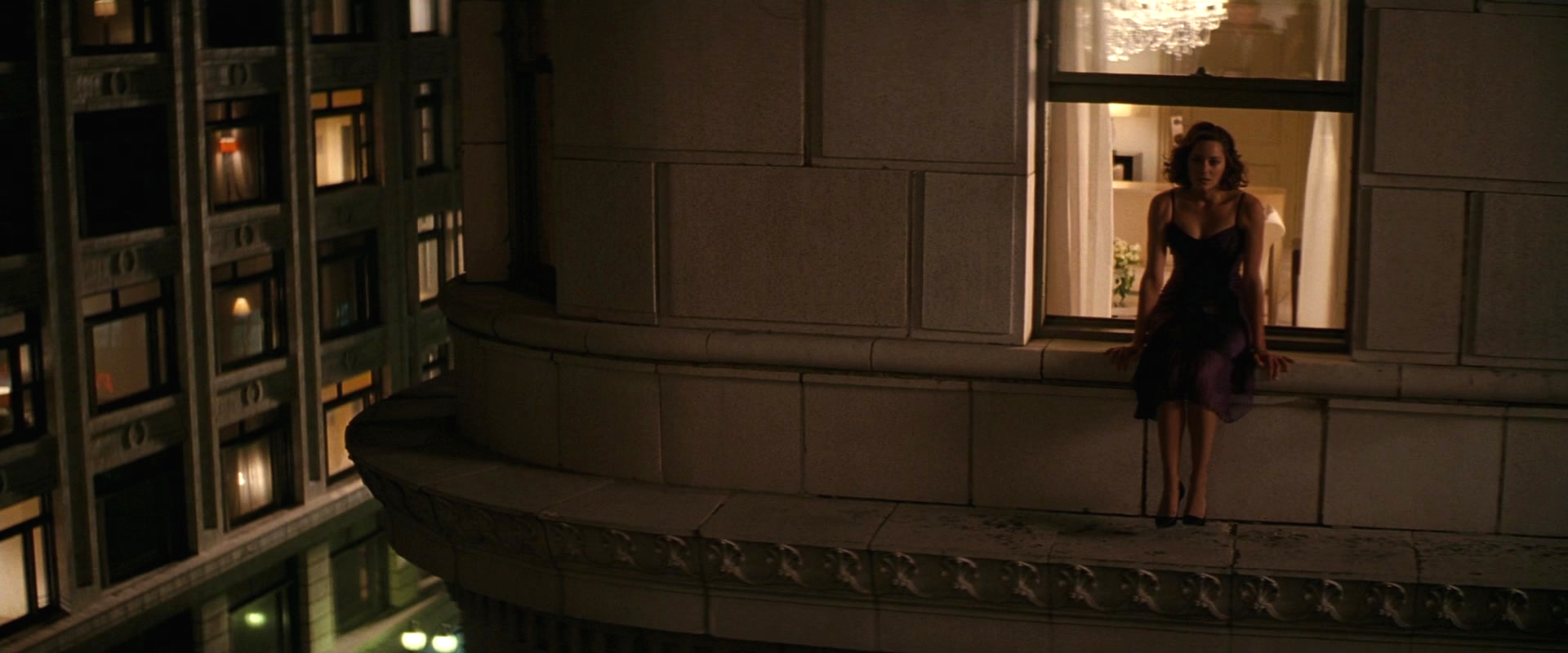
While a massive hit, the backlash to Inception has been fierce since 2010. It's usually the first film that haters go to as an example of everything Nolan does wrong. It's a massive puzzle box built on insane set pieces, massive action, and imagery. The film is almost entirely men in sharp suits. The one woman in the movie (Cobb's wife Mal) is a borderline one-dimensional shrieking maniac, defined by her own insanity. And Harmon is right that it is a lot of explaining things. A supercut of every Elliot Page line features every question his character asks in the movie (it's a lot). And it's big and sensationalist, taking the nesting doll structure of The Prestige and cranking it into high gear in the back half, where storylines play out in parallel (and distorted) time. To top it all off, the film ends on a massive screamer of an ambiguous ending, the most iconic and memorable final shot of this century surely.
It's that last one that's burned itself in my mind more vividly than probably anything in the movie. On the weekend it came out I was moving apartments in the summer before my final year in college. That Saturday, I was exhausted. Wiped out. And while I was also over the moon excited for Inception (and the entire discourse of "what even is this movie?"), I wasn't sure if going was the right idea given my fatigue. But I pulled myself up and went to the next screening at my favorite theater.
It was basically sold out.
Lord was it energizing, though. I'd never seen anything like it.
Everyone in that darkened room was likewise on board. As the final scene played out and Cobb ran to his children, Nolan did that iconic pan over to Mal's top as it spins. Between Hans Zimmer's light piano notes, you could hear a pin drop. And then there's that slight wobble, and Nolan cuts to black before it can fall.
The groan of every member of the audience as the film abruptly ended is still something I can hear as clearly today as a decade and a half ago. That sort of reaction is only possible if Nolan has everyone in his hand at that moment. There's no way mine was the only screening that did that.
And yet, with a movie that so perfectly seems to capture everything that Nolan does well, it's added to this idea that Nolan's movies are not emotional and there's an austereness to any story he tells.
That's incorrect.
And now a word from Ed Brubaker
A major inspiration for writing this series about Nolan's films (besides The Odyssey's imminent release) comes from writer Ed Brubaker in an the Unspooled podcast during a tangent of his major defense of Inception:
I think Nolan's movies are intensely emotional. And I do not think it's understood completely. I mean, The Prestige is a heartbreaking movie. Memento is a heartbreaking movie that is also very, very clever and I think probably still his best movie... But Inception, to me, is the culmination of his own obsession and everything he's made since... like, okay. I've explored this theme and the theme is a main character who is terrified about what their life would be without their wife. And I do not know Christopher Nolan... But I think his theme is the fear of the loss of this person that is everything to the main chaacter and, I mean, look at Christopher Nolan's wife. I think he got married in film school, his wife produces all of his movies. Everybody I know who knows either of them just say she's the greatest person they've ever met. Everybody loves her.
He goes into more detail about his really gonzo theory about Inception (that the film is "a dream that a man is having the night before he has to tell his children that their mother is dead") but brings it back to this idea that Nolan is a deeply romantic and emotional person who loves his wife and would never, ever want anything to happen to her. He finishes by saying....
I believe that the whole movie is a work of art that is someone expressing their love for their wife, and someone expressing the worst thing that could possibly happen is having to wake up and tell your children that their mother is gone, because what would your life ever be after that? And I think, to me, it's the most moving thing.
It's the sort of reading that I've never been able to shake. And... yeah I'm shamelessly springboarding off his reading to cover the first half of Nolan's career. But Inception is the undeniable inflection point of his professional life. There's the Nolan films before Inception and then there's the ones after. Inception is the first film that sells itself primarily as "from the mind of Christopher Nolan". He's riding off The Dark Knight for sure, but it's still remarkable that the big takeaway from that movie was something akin to Spielberg making Jaws. There's a direct line from that Inception trailer to people hushing an entire theater because the Syncopy logo just appeared as one of the trailers before a movie.
There's more, though. Brubaker's read is strong enough that it can go farther. This isn't just Nolan culminating this theme into one movie. It's him actively exorcising the idea from his mind so he can be a better and grander filmmaker who does more than endlessly obsess over a pet concern. In Interstellar the mother of Cooper's children is dead yet (despite the bleakness of humanity's situation) the household is still chugging along okay. Tenet's Kat (Elizabeth Debicki) must escape an abusive marriage to a violent psychopath who refuses to let her go. And Kitty in Oppenheimer (Emily Blunt) struggles with alcoholism and her husband's infidelity and raising their children while he builds something that will destroy the world, but there is a sense that for all their struggles the marriage will hold.
It's undeniable that Nolan's narratives revolve around the men at their center. But the shift Inception represents is equally undeniable.
Losing the story for the plot
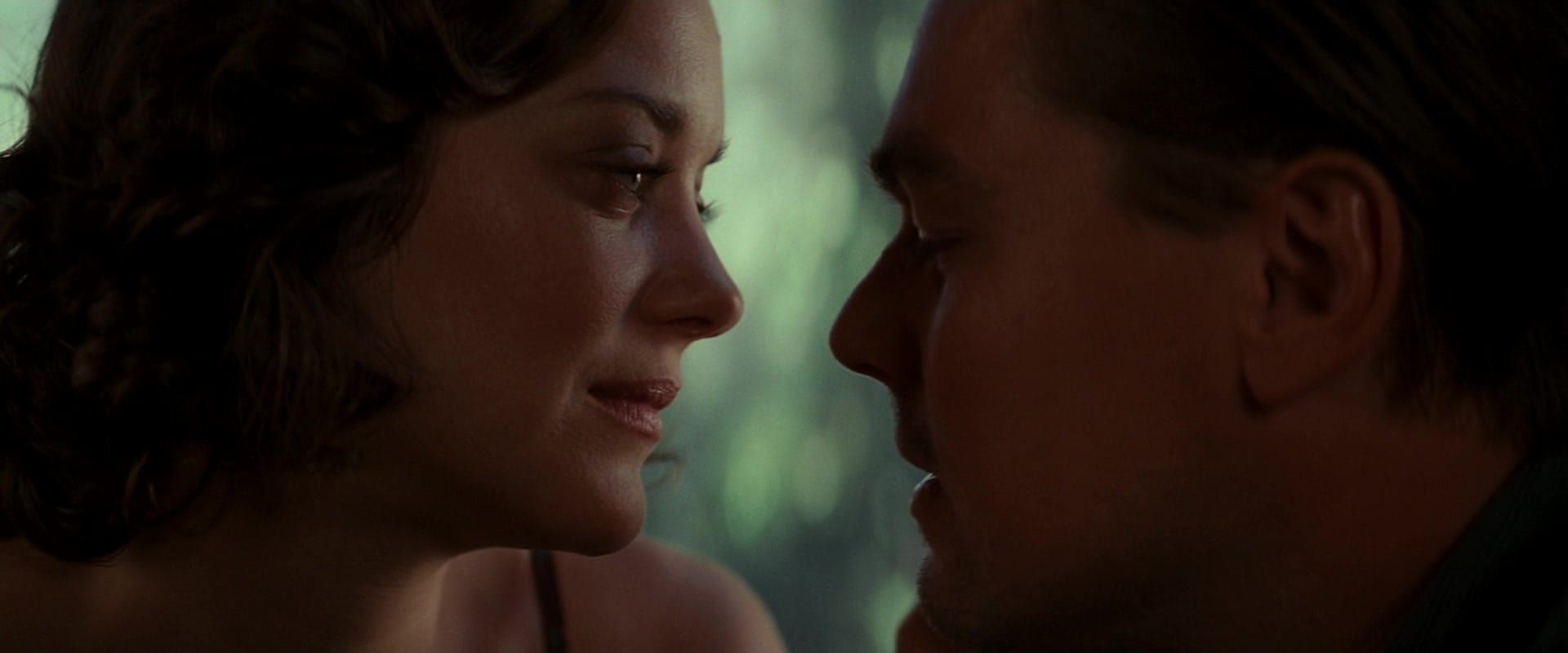
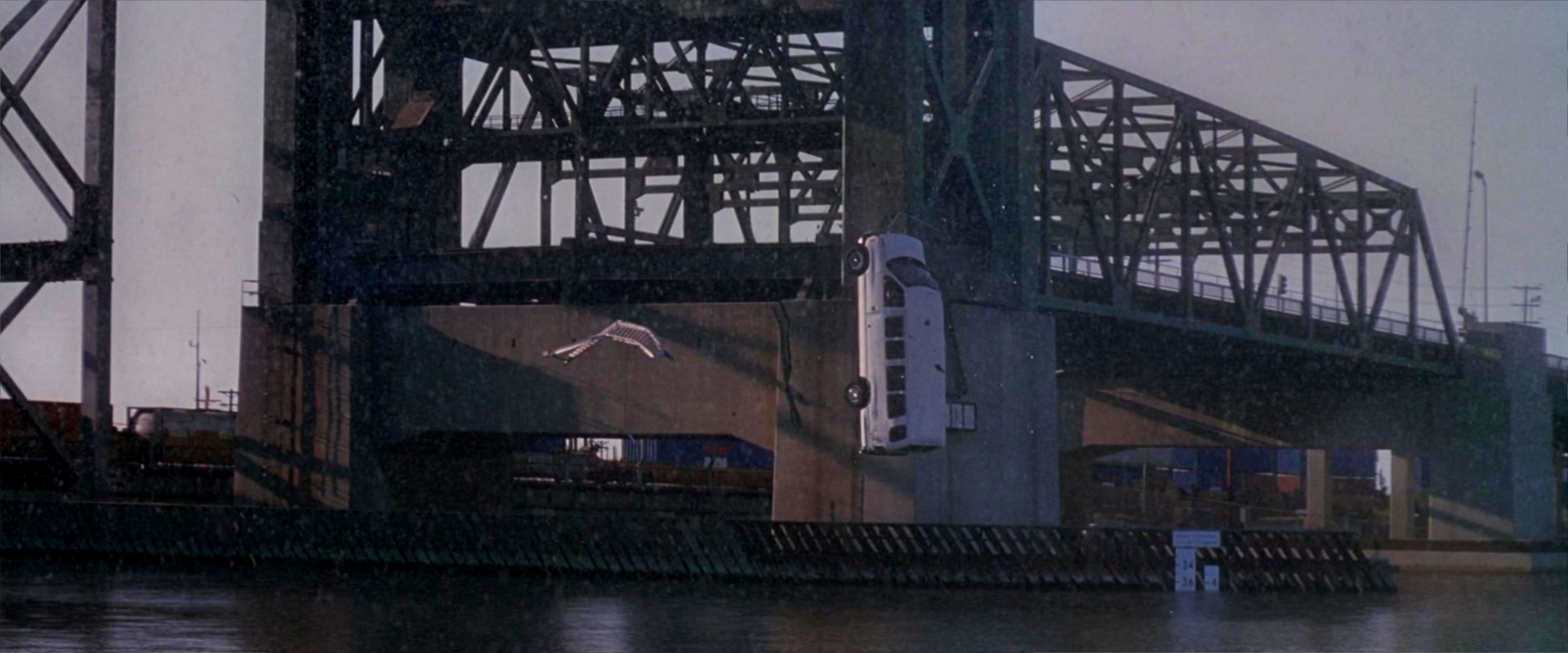
If Inception is so central to Nolan's emotional growth, how is it possible that most people in the world ignore its core thematic thust? It's not like he's subtle about it. In the middle of the climax, with everything going to absolute shit, the van almost touching the water, Arthur detonating the explosives that will propel the elevator forward into an improvised kick, the James Bond snow base blowing to shit, and limbo devolving into chaos, Nolan stops the narrative cold to make the big climactic confrontation... and it's not a grand action set piece. It's the conversation in which Cobb confesses to Mal his role in her death. It's when he makes peace with the fact that the version of her that's been in the movie is a manifestation of his guilt at his role in what happened to her. It's the moment he lets her go so he can finally return to their children.
Just a few minutes earlier he was pushing back against Ariadne insistence that she wasn't real.
Is that the move of a guy who only cares about big loud explosions and endless spectacle?
Even if there's the argument that Nolan crowbars the scene in there as some perfunctory excuse to make his movies have literally something that isn't cotton candy/noise, it doesn't change the fact that DiCaprio plays Cobb as a man crippled by guilt and remorse, perpetually compromised, always guarded and always trying to avoid the truth about what he did. He dreams of Mal as a coping mechanism. It's the denial that she is well and truly gone. Meanwhile, she is entirely central to his arc and thus the entire movie. Not that you'd want to pull Marion Cotillard out of anything, but remove her from the movie and this is a vapid crime thriller about some people who pull a heist that will break up an international conglomerate. Spectacle can only get audiences so far.
But audiences did respond. And they did show up. And to an original film no less. It's still one of the great box office success stories in a century that includes two Avatar movies, the return of Star Wars, and the entire Marvel Cinematic Universe.
That success, though, has its drawbacks.
A lightning rod of discourse
There's a quality to Christopher Nolan's films that make them a victim of his own success. Nolan is a popular artist with broad cross-cultural appeal. He's also extremely smart while being very good at breaking down insanely complex ideas into easily digestible concepts.
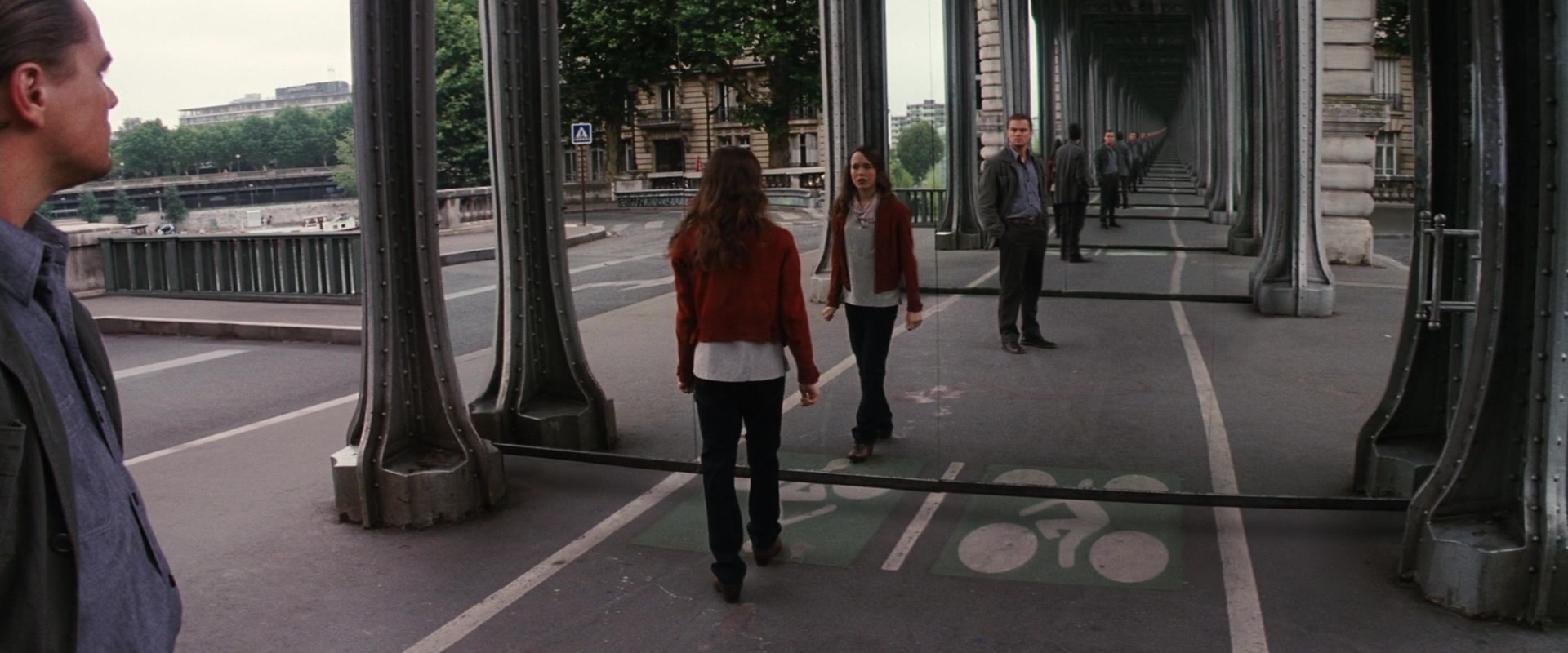
For Inception this flocked obsessives from all across the internet to break down one of the most exciting blockbusters in years. It wasn't long before think pieces came out describing the heist crew as analogous to a film crew. Or pointing out that Inception was a dream the whole time (the faces of his children keep changing!) and look at how Nolan put all of these weird dream elements into "reality" (like when Cobb gets wedged between the walls of a narrowing alley). Or Cobb is definitely still dreaming at the end because of this one shot or he's definitely not because of that blink-and-you-miss-it moment. It was still the early days of YouTube and Inception (especially because of its mass appeal) was chum in the water for an entire subset of film internet. Everyone could solve the movie. Add in that it's Nolan making tactile what is so regularly abstract and the film didn't stand a chance of avoiding all this.
These conversations buried the film under strata of discourse and unmoored its emotional hook from the discussion. It's way easier to argue about the surface level facts of the movie than it is to grapple with the themes Nolan explores. Why do that when we could argue about why a freight train is rumbling down the middle of a downtown street.
As for Dan Harmon, his argument about it being primarily exposition is accurate. But there's also points where Nolan's fun and games within the dream world are just so compelling and entertaining it's difficult to care. As soon as they get Fisher to the warehouse the film basically devolves into a scene where all the characters shout at each other what's going on. Nolan deploys storytelling tricks to obfuscate this. Cobb could explain that their level of sedation means that if they die in the dream they'll drop into limbo, but it's much more dramatic, engaging, and stakes-raising for him to stop Eames from pulling a gun on Saito as he lies there bleeding out. Great exposition delivery system.
There's never been a point in watching Inception where I've wanted to turn it off. Nolan's films go down so smooth, and his penchant for fast cuts and rapid momentum hits a level here that becomes the standard operating procedure for his films moving forward. Is there anything better of the euphoria of the climax? Where everyone (but especially Ariadne) rides the kick all the way to the top layer of the dream?
Only Nolan could do that.
A shaky foundation
Unfortunately, all of this does diminish the film somewhat. The discourse can be whatever, but Nolan's first attempt to do a big massive genre blockbuster with an emotional core doesn't quite stick its landing. The main heist at the center of the plot is so compelling that it's doesn't harmonize with Cobb's emotional journey. Incepting Fisher's mind should parallel the emotional journey Cobb takes to earn getting back to his kids. It means admitting his role in his wife's suicide. Meanwhile, Fisher's own emotional journey of accepting the incepted idea (that his father wants him to be his own man) doesn't map to Cobb's quest for self-forgiveness. The only thematic link between the two men is the idea of moving on without the person who's haunted their life and defined their existence to this point.
Even that feels like a stretch.
This slight misstep is a blippy setback to his greater career. Inception is the first film that comes wholly from Nolan's brain since Following. It's not a Batman movie or from another writer (Insomnia) or adapted from an existing work (Memento, The Prestige). This is Nolan baring his soul for the world to see and not quite sticking the emotional landing in a way that fully moved audiences. The scene where Cobb confesses to Mal what he did to her should be impossibly distressing, but it comes across as the solution to the mystery of what happened rather than a moment of ultimate remorse. It should bring audiences to tears. It's difficult to imagine that it ever has.
As phenomenal as it is, these cracks in the foundation make it difficult to place in the top half of Nolan's filmography. For me it barely squeaks in there (ahead of Memento & Dunkirk, both of which are better films). But its strengths keep it insanely watchable and the rosetta stone for his entire body of work both before and after. When introducing someone to Christopher Nolan for the first time, is there another better option to start with? The only one that comes close is The Dark Knight. While that is a better movie, its nature as adaptation pales in comparison to the raw potency of Nolan finally showcasing what he's capable of. The man thrives when pursuing his interests as opposed to being a work-for-hire director.
Luckily, that is the story of Nolan after Inception. He earned an unheard of level of freedom and scale for the rest of his career, the sort of Blank Check Hollywood hadn't really given out since James Cameron.
More remarkably, this all basically ignores the one time he went back to do gun-for-hire work. Before he could journey into the great unknown, he had to come back to do one more Batman movie as a victory lap for this era of his career.
And it meant that even Christopher Nolan had to drop the ball and prove that he wasn't completely infallible.