Cynicisometer - Disclosure Day

The following contains spoilers for Disclosure Day...
Everyone knows Steven Spielberg.
No one's name is more synonymous with the job of directing (and it's not clear what it would take for someone to usurp that mantle), and (as L.A. Times film critic Amy Nicholson once pointed out on an episode of Unspooled) his influence on the way Hollywood tells stories and the sorts of themes and genres that interest studios (etc) has warped basically everything that's come after.
Three dozen films. A career spanning half a century.
Everyone should know Steven Spielberg.
With Disclosure Day out last weekend, Spielberg returns to home terrain of blockbuster filmmaking for the first time since Ready Player One (2018) and aliens for the first time since War of the Worlds (2005). While it features several stars like Emily Blunt, Josh O'Conner, Colman Domingo, and Colin Firth, but the marketing of the film relies heavily on "Spielberg is back, baby! And he's bringing aliens with him!" And... that push was enough to make Disclosure Day Spielberg's fifth best opening weekend of all time.
For all that, there's still a substantial level of backlash (including several people I know on Letterboxd) reacting to Spielberg's latest with varying degrees of disdain. That's fine. People can dislike things. But there's this subtextual undercurrent to it that Spielberg is himself out of touch or washed up or long past the point where he can make a good movie. And... I can even concede that Spielberg's boundless optimism and humanism clashes with the current zeitgeist of cynicism and negativity, especially in a world so shitty all the time. It can seem out of touch and decidedly retro, but there's an appeal within the film itself that cries out for a better world.
In making a film like Disclosure Day, Spielberg has made something that actively measures (and defies) his audience's cynicism. And it is, more than anything, the sort of movie the world needs right now.
A movie ass movie
In 2005's War of the Worlds, there is a sequence where a mob attacks a minivan, and the situation has grown so dire that a man tries to rip open the busted windshield with his bare hands. This comes not long after Tom Cruise manages to drive away from the wreckage of his neighborhood town in said van, carefully weaving in and out of a winding, but surprisingly clear path, remarkable considering the crashed 747 nearby, lying sideways in the middle of the street nearby.
These are images that retain power, but they work not because they make sense in some realistic way, but because they exist within the framework of the director's vision. Spielberg has the capacity to convey images with verisimilitude (the D-Day sequence in Saving Private Ryan being the most obvious example), but the dude's cinematic language of "cinema" derives from a dialect that views the medium as one of entertainment. For him, it's something he cannot turn off even when portraying the Holocaust in Schindler's List, making a movie that The Atlantic's David Sims calls "liquid entertainment".
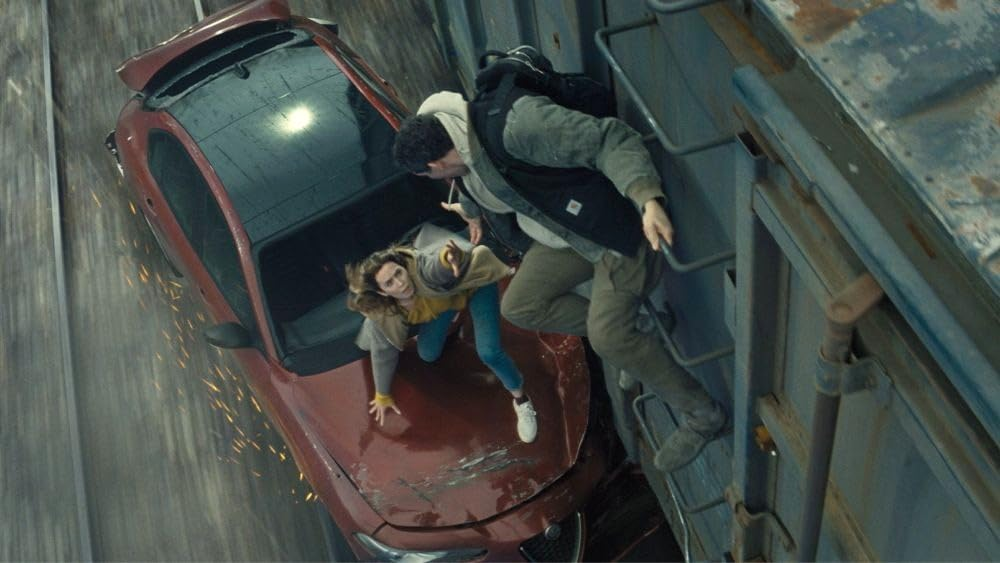
In the middle of Disclosure Day, Daniel Kelner (Josh O'Conner) attempts to sneak back to the farmhouse across an open field, around an open fence with little cover, and into the driver seat of a Wardex security car (which he steals) all without more than a dozen agents noticing despite the fact that they are all actively searching for him. Realistically, it makes little sense.
This, though, is the logic of movies. Sure, the security folk could find him. And yes they could haul him in and the movie could end right there. But allowing for plot convenience means getting the chase scene that comes after. Spielberg leans on the conventions of the genre to help make something thrilling and entertaining. It's that same permission that permits Daniel to brake the car perfectly in time before careening off that cliff. Or that allows Daniel and Jane to escape security at all after that. It's also the same permission that allows Margaret Fairchild (Emily Blunt) to escape a hospital despite security keeping an intent eye on her because (to their contractor) she's the most important person on the planet.
There are ways that this is new, but this is... literally how Spielberg operates. No one complains that the Well of Souls happens to have a convenient outlet right to a Nazi airfield (nevermind that a core conceit of that sequence is "jk make sure you make the post a few feet shorter than we just said". Maybe they could have just entered the Well that way. Is anyone complaining about that? And no one complains that no one finds Roy et al as they climb up to Devil's Tower even though they're the only non-military folk for many, many miles.
Now, that works because Spielberg builds movies around refrigerator logic such that audiences shouldn't notice. Unfortunately, we live in a world of Honest Trailers and other YouTube criticism that exists to pick films apart rather than meeting them on their terms. If Spielberg's magic has ceased to work on a segment of the population, it's because we live in a world that doesn't believe in magic anymore.
Measuring cynicism
It's a very, very dark time in America (and the world). Cynicism is everywhere. We're long past believing that the end of Watchmen is going to somehow create this wondrous, post-nation utopia where we all cast aside threats of World War III so we can work together against some extraterrestrial threat. Following in that vein, Disclosure Day makes many references (especially in the background) about how unstable the world is on every level. People raid convenience stores and hoard gas. Armed conflict exists throughout the world. And so on. Spielberg is acknowledging that this world is not some plucky brightness.
The end of the movie itself (as others have pointed out) is one that Spielberg codes with an almost Boomer mentality. As though a live news broadcast would go viral so quickly in this day and age. As though society could stop for just that one moment. As though people would blindly accept evidence in a world where 40% of the new music going onto Spotify every day comes from artificial intelligence.
Spielberg, though, could give a shit.
This is not a dude who needs to win more Oscars and make more colossal hits. This is a dude who's going to spend the rest of his career victory lapping with pet projects that compel him. This is a dude who wants to do a story about the day humanity learns about aliens, what it would take to catalyze the release of that information, and the herculean effort of doing the right thing in the face of impossible odds. And to Spielberg, finding out we're not alone in the universe would (or at least should) be one of the most seismic, stunning moments in our species' history. Regardless of the reaction, it would be a massive deal. To think otherwise is to minimize something even more seminal than the moon landing.
More interestingly, Spielberg's implementation of aliens only comes from a present day perspective (Crystal Skull nonsense notwithstanding). Close Encounters, E.T., and War of the Worlds all take place in contemporary society, and he never deploys aliens in either the histories or futures he chooses as settings.
This is a topic Spielberg wants his audiences to relate to. To think about. To engage with in the world as it exists at the moment. For the 70s paranoia of Close Encounters, it was to learn that this particular alien conspiracy could be benevolent (rather than nefarious) despite the cloak and dagger precautions to allow that first contact. The post-9/11 terror made War of the Worlds a movie about malevolent, unstoppable titans, the questions about why this was happening reflecting Spielberg's own lack of faith his shattered world view.
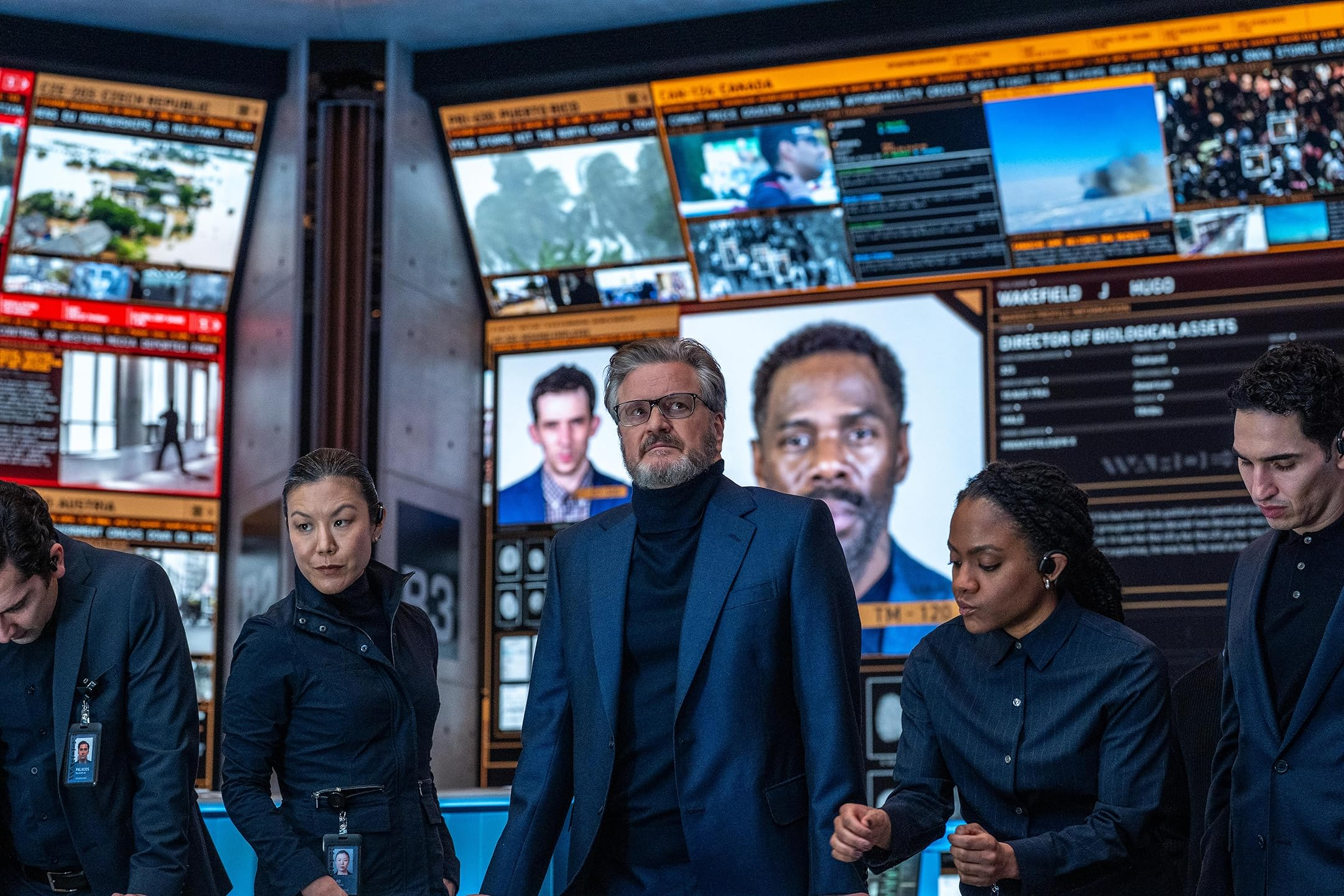
Disclosure Day has social media and smart phones and mass surveillance. It features GPS and FaceTime. Noah Scanlon (Colin Firth) is a business executive/oligarch who cares only about his own wealth and power, exploiting anything that gets in his way, and defending his actions as "for the betterment of mankind".
Spielberg has no illusions about the world as it exists, and the global turmoil in the background feels not far off from the daily existential crisis of waking up every day with a white supremacist fascist buffoon in the White House.
So when people react poorly to this plot about aliens, when I have friends publicly yelling at their followers to not see the movie (as though they get to decide what people do or do not get to see/have an opinion about) or saying "I fucking hated it", the only thing I can think about is peoples' negative reactions to Spielberg's portrayal of the world. A portrayal, by the way, glossed in all of Spielberg's usual tricks and cinematic language. Janusz Kaminski lighting. A John Wiliams score. His signature oners and compositions and blockings. The sense of wonder and naivete and optimism. All of these things are signature Spielberg, and in terms of its genre and dynamic the movie itself feels not far off from Minority Report (another paranoid thriller).
But what Disclosure Day has that Minority Report does not is that boundless optimism that comes from staring oblivion in the face. Minority Report, War of the Worlds, Munich... Spielberg's output in the early 00's was of a man trying to grapple with a country that could fall prey to a terrorist attack like 9/11.
Now, Spielberg is making movies in a world of Donald Trump, where Spielberg literally churned The Post out in like nine months because he thought it important to mount a full-throated defense of the fourth estate amidst all the attacks on the free press. But now is so much worse than last time. Last time there could be excuses that America didn't know what it was doing or that there were people out there who didn't want what the orange man was selling. The first Trump era built itself on faith with minimal proof to back it up. The second Trump era exists on faith that America can be better despite all evidence to the contrary.
The arms of Wardex are a faceless, anonymous gestalt. Whenever they are present, it feels like they are unstoppable and that there's no point in resisting. But Spielberg builds a movie about those not in power, who face these insurmountable odds and don't give a shit about their own wellbeing because it's the right thing to do.
And what do they have to fear from a guy like Scanlon? Guns, sure, and his access to alien technology that defies comprehension. But Scanlon built his empire on exploitation, not innovation. All he can think to do with fabulous alien tech is reverse engineer it for incremental technological progress. As for its personal use, he likes to dive on people. But (as Margaret points out), what he's holding can be so much more if he just had the curiosity (or capacity) to use it well...
Disclosure Day is a far more fascinating Spielberg than the one whose most cynical work came in the aftermath of 9/11. With two decades of experience, he recognizes having been in the dark place and knowing that he could fall into the hole and let it dictate his art... or he can be a beacon of optimism for the future. He has enough juice that (through film) he can literally manifest the world as he would like it to exist.
And it is a better world.

A girl walks into her childhood home...
If nothing else, Disclosure Day isn't a declaration of relevance or loud screaming into the void. It's simply Spielberg making something with all the wisdom of his Late Era, staying true to his beliefs and morals, and not giving a shit what people think about his presentation of the world.
Because there are things in the movie that are... breathtakingly emotional. The security footage Daniel shows Jane that made him go rogue is powerful, but it hinges on the alien in the chair swatting away the implements that will soon bring it pain. It's a remarkable moment, despite its existence as one so Wardex can kick the proverbial dog and show how truly evil they are.
But... it was also unlike any other alien movie I've ever seen. The response to mistreatment comes not with the rage of a screaming and feral alien but with the weary fatigue of that comes from both sentience and helplessness. Within that one shot Spielberg tells a story of who this alien is and what it's been through, the suffering it's endured, and the strength it can barely muster.
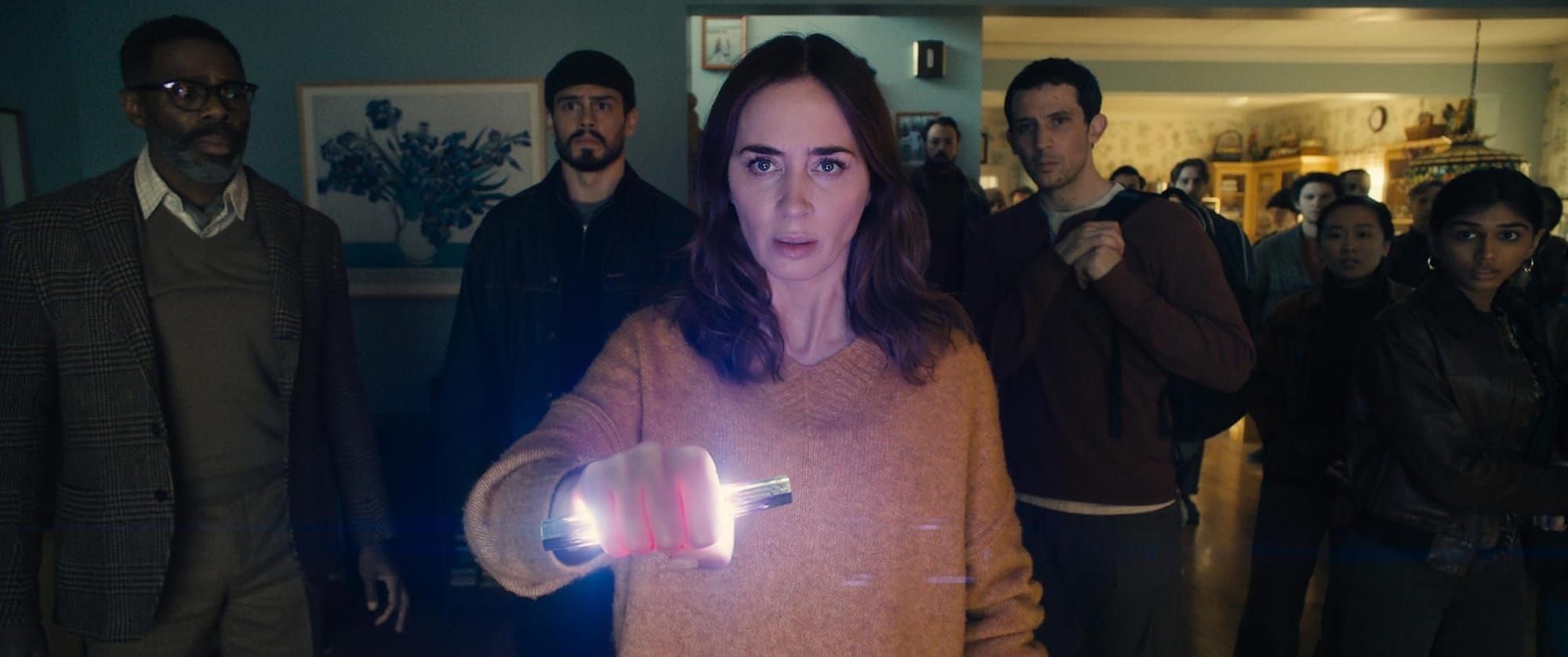
More emotional is the scene where Margaret walks into the recreation of her childhood home. It was the sort of moment that come from the endless well of empathy that Spielberg can engender. As she walked through it and started to reconnect with her past, I started sobbing uncontrollably. I was writhing so bad I thought I'd have a panic attack. Like the best of experiences, it's not one I can really describe or explain. It was just... a torrent of emotion. And it has been a long, long time since I've had that response to a new film.
But this is only possible because I gave myself over to Spielberg. That I didn't really care about the plot holes or the verisimilitude of what wouldn't happen in a movie. As with the best art, the emotional logic buttressed the movie more than brain logic. Going to a theater again, slipping into a world created by one of the great visionary directors ever, and surrendering to his vision of a bright optimistic future (however quixotic) was as wondrous as any of his best films.
Disclosure Day represents more than just "great filmmaker makes great movie." It comes at a time when the box office is not behaving like it has for the last two decades. There's a seismic shift in cinema culture. Spielberg might not be the bright upstart of Curry Barker or Kane Parsons, and he certainly didn't come out of the YouTube generation. But what he did is not so terribly different from them. He cranked out a wholly original film at a decent blockbuster budget and did so on the strength of his idea, his name, and his skill as an artist. This isn't the leaning on IP that has so defined blockbusters' two decades (or even a film as recent as this month's Masters of the Universe). This movie is what everyone has been saying they want the medium to get back to.
And yes, it comes from a dude as totemic as Steven Spielberg. But that makes us lucky that he is still fighting for this industry, for this medium, and for humanity to live up to its grandest ideals. He's still got it, and if people have outgrown Spielberg, that says more about them than it does about him. He didn't let the world get him down. He didn't let circumstance take away the core brightness of life's infinite possibilities.
All he asked for is people to listen.
Those who do almost certainly have that brighter, more optimistic outlook. And they also have a kick-ass, incredible Steven Spielberg movie that they can enjoy for the rest of their lives.
Sometimes, the future really can look bright.