A Very Personal List of Top 250 Films - Part 5: #50-1
A list in which there aren't any films that are better than these...
Happy New Year!
I desperately wanted this to be out before the end of 2025, but instead it’s the start of 2026. This is what happens when I write 12,000 words in 24 hours and then have to edit all of that to bring this post up to 15,000 words and also most of that span was New Year’s Eve. C’est la.
Anyways, these are the top 50 movies of my Top 250 Films. In writing about them, I realize there are a lot of things to say about each, but at the risks of overusing the word, every single one of these movies are unqualified masterpieces. I could put any of these on right now and be drunk with the happiness of the thing.
There’s also a recurring sentiment that feels weird, but makes sense in my head. Whenever discussing any of these films (or many others on the full list), I’ll say that there’s nothing better. And that can be true… across the board. There might be things that are as good in their own way and compare in a 1:1, but it’s not like Citizen Kane is better than The Wizard of Oz or vice versa. There’s nothing better than Citizen Kane, and there’s nothing better than The Wizard of Oz. Is Citizen Kane as good as The Wizard of Oz? Absolutely, in its own way. Weird how that works. We judge films on a relative scale, not on one with a measuring stick. That’s for objective aggregation to decide. As for these films… man. There’s nothing better.
Please to enjoy:
50. Eyes Wide Shut (1999)
Directed by: Stanley Kubrick
Written by: Stanley Kubrick, Frederic Rphael, Arthur Schnitzler (original novella)
Previous Ranking: N/A
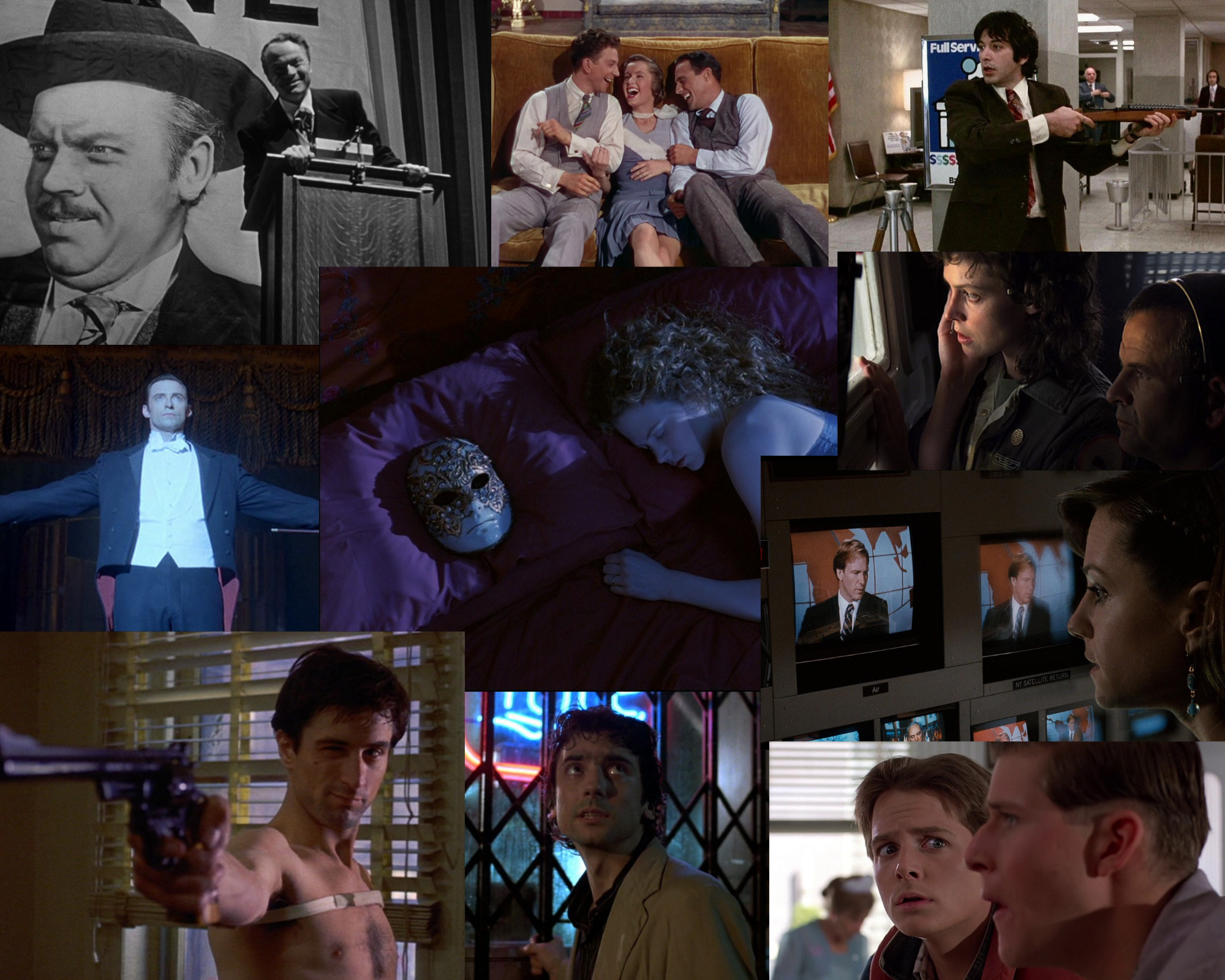
I never ever thought I would find Eyes Wide Shut interesting, let alone one of my very favorite films. To the larger public, the final entry in Kubrick’s filmography came with a sense of mystery, a sense that Kubrick was doing something really sexy and wild and insane. From the outside, the “Tom Cruise goes on a nighttime stroll and winds up at an orgy” movie sounds like it would be sensationalist, salacious, and in poor taste. Boobs everywhere. Lots of sex parties. Maybe softcore pornography. But this is so much more than that. It’s the haunted dream of a man (Tom Cruise) who feels a lack of security in his marriage and the sexual relationship he has with his wife (Nicole Kidman; Cruise’s real wife at the time). He goes on what amounts to a vision quest through the streets of London New York. What happens is bizarre. He feels so so… possessed. So out of control of his life and desperately trying to take back literally any bit he can. And that’s why it’s my favorite Kubrick movie. Without the “I’m doing a genre movie and it needs to be a best in class” that had so defined his career (2001, The Shining, Full Metal Jacket) dating back three and a half decades. Kubrick has to stand alone, relying on the characters, the actors, and his ability to turn a densely populated, well-known city like London New York into a place that feels foreign, like a dream. Just an absolutely phenomenal film and worthy of the re-evaluation it’s taken years to finally receive. Though he died just a few days after turning in his final cut, Kubrick went out on a high note. Few directors are so lucky.
49. Taxi Driver (1976)
Directed by: Martin Scorsese
Written by: Paul Schrader
Previous Ranking: N/A
Not sure how anyone in the 70s prepared themselves for a movie like Taxi Driver. Following a lonely young man named Travis Bickle, Martin Scorsese adds on of the most totemic entries to his exploration of toxic masculinity. So much of it has aged uncomfortably well, and the only thing that distinguishes Travis Bickle from the alt-right bros online of today is the internet itself. Otherwise, this guy is textbook. Textbook. For all that the subject matter is unpleasant, though, Scorsese has that Spielbergesque quality of making anything entertaining and engaging. Even though the subject matter is absolutely brutal, this is a movie I found myself watching multiple times as I wrote about it earlier this year. To say I came around on Taxi Driver is an understatement. I hadn’t understood the film before… and now, in all its wretched glory, I do.
48. Citizen Kane (1941)
Directed by: Orson Welles
Written by: Orson Welles (Story/Screenplay), Herman J. Mankiewicz (Screenplay)
Previous Ranking: #91
Orson Welles’s directorial debut changed the face of cinema forever. William Randolph Hearst might have worked his ass off to prevent the film from taking hold, but even money can’t suppress an object of this much sheer quality and talent. Welles paints a full picture of the miserable life of media mogul Charles Foster Kane, showing key moments where he possibly might feel something that can fills the abyss within him and the collapse that comes when the feeling immediately evaporates. Welles tells the story in flashback, where Kane dies in the opening minute and a journalist seeks out to discover the meaning of his dying word. He talks to the people who knew him or crossed his path and they share intimate details of the man they knew they didn’t know. One of the many powers of cinema is conveying tremendous amounts of information quickly, and the more economic that information download gets, the more it’s possible to convey. Walking into Citizen Kane you know nothing about the man. Walking out, Welles has given a detailed schematic of his character, summing up decades of life in less than two hours. And he does it with some of the most stunning, beautiful, visual storytelling in the history of the medium. All on his directorial debut. NBD.
47. Dog Day Afternoon (1975)
Directed by: Sidney Lumet
Written by: Frank Pierson (Screenplay), Thomas Moore (Story), P.F. Kluge (original article)
Previous Ranking: #72
If you walk into Dog Day Afternoon thinking it’s just about Al Pacino teaming up with John (The Godfather, The Conversation, The Godfather Part II, The Deer Hunter) Cazale to pull a bank heist, the movie will be only impress you as it goes. Having seen it, it’s one of the great films of the 70s, with Sidney Lumet again doing fabulous yeoman like work to tell the best possible version of this story. It’s not like this is a major plotty movie, where the writers are trying to get all the meat off a hostage crisis movie bone and there’s a ton of setpieces. There’s a shocking lack of incident. The biggest development is Pacino bouncing up and down the street screaming “Attica!” and the phone call with Chris Sarandon. That leaves the focus entirely on a slow peeling back of the various layers of onion at the center of this bank heist turned hostage crisis. The tension is always high yet the static situation never feels so. Instead, it slowly builds to the incredible moment when the audience learns the real reason why Al Pacino has to rob a bank at this time. As my uncle put it when talking about Conclave, he compared it to “the ending of Dog Day Afternoon, where the viewer is forced to square something that they were not planning to deal with. I love it. We need more movies like this.” Couldn’t agree more.
46. After Hours (1985)
Directed by: Martin Scorsese
Written by: Joseph Minion
Previous Ranking: #60
The ultimate one-night movie. Griffin Dunne stars as a man who goes out on the town only to find himself bouncing around, unable to get back home. This premise is impossible today, where smart phones and credit cards and Apple Pay make it so being moneyless while out and about is very difficult to do. And yet, After Hours is a movie that starts strange and only gets stranger. It’s like Scorsese took at the more bizarre moments of Taxi Driver and pushed up the insanity without increasing the madness. If this film has a legacy for me, it’s as the Scorsese movie I watched just after college that made me want to watch his entire filmography As he zoomed the camera through the office cubicles in the opening credits, it felt like he was operating on a level far beyond what I’d imagined, like the film he made had so, so much more to say about the monotony of the working world and the magic of NYC at night. It was so different from Goodfellas or The Departed or Gangs of New York or even (seemingly) Taxi Driver. This was Scorsese going for black comedy surrealism and absolutely nailing it. If he could make something like this this good, who knew what else I would find tucked in there?
45. Broadcast News (1987)
Directed by: James L. Brooks
Written by: James L. Brooks
Previous Ranking: N/A
There are two major broadcast sequences in Broadcast News. The first is when Tom (William Hurt) steps in as main anchor during a breaking news event, and director James L. Brooks perfectly illustrates the complexity of live television and just how expert Tom is at navigating it. Watching the show’s executive producer Jane (Holly Hunter) receive information from the jealous Aaron (Albert Brooks) and pass it along to Tom via earpiece while the talented anchor retranslates it and packages it to the viewing public at home in real time. It’s an incredible example of process porn, sausage making at its finest. The other is when Aaron (who is also trying for the anchor job and is jealous of Tom’s success) gets an opportunity to anchor a low-stakes weekend hour. It all goes to absolute hell. Compared to Tom, Aaron is nothing, but even Brooks hadn’t shown the best case scenario of a broadcast, Aaron’s still would always have been an unmitigated disaster. He’s stiff. He sweats uncontrollably, It’s hilarious. Broadcast News is about this tension between a very good journalist with no on-camera talent, an incredibly smooth on-air talent who (we find out) has some questionable ethical standards, and the executive producer torn between these two qualities in a world where half of what’s important about a piece of information is how the audience receives it. In my head, Broadcast News always pairs with Network, but while the Lumet/Chaefsky collab is more of a big satire about the underlying corruption within the media ecosystem and the incentives to keep it that way, Broadcast News is about the beginnings of that system crumbling by virtue of few people being capable of managing the technical aspects of the job and the meat and potatoes of deriving information the public needs to know. There are no easy answers because people themselves are not easy. Brooks himself manages to create a perfect balance of savory versus unsavory skills and leaves it to the audience to judge where the ethical lines are. Jane might draw a line, but James L. Brooks is good enough he can still leave it open to the audience’s discretion. He isn’t doing journalism, he’s making art and entertainment.
44. Back to the Future (1985)
Directed by: Robert Zemeckis
Written by: Bob Gale, Robert Zemeckis
Previous Ranking: #74
Everything about Back to the Future is a miracle. The sequence of events that lead to Michael J. Fox’s casting. The way that Zemeckis managed to dull his more broad comedy sensibilities under the light veneer of genre is part of the reason this succeeds. The fact that they wrapped production less than ten weeks before its wide release, There’s a world where this is like Zemeckis’s earlier, very comedy work. No way this movie survives if it does that. Back to the Future is certainly a comedy, but it’s doing so much more than just that. It’s god damn perfect. The most ringing endorsement I can give it is that if there was a machine that allowed me to erase any single movie from my head it would be this one. The thought of going to a theater today with no spoilers, no expectations, no idea what this movie is even about… I can’t imagine what it would be like to have all the intentional surprises hit. Not recognizing the dozens of elements Zemeckis sets up in the first act, the moments he meets and interacts with his parents, the entire Christopher Lloyd performance... the thrilling final set piece. Imagine not even knowing there’s time travel. Someone build a flux capacitor for this so I can have that experience.
43. The Prestige (2006)
Directed by: Christopher Nolan
Written by: Christopher Nolan (Screenplay), Jonathan Nolan (Screenplay), Christopher Priest (original novel)
Previous Ranking: #43
Christopher Nolan’s adaptation of Christopher Priest’s book about dueling magicians is the end of a particular mode of Nolan’s career. After this it’s The Dark Knight and he becomes the new king of the blockbuster. But during The Prestige he’s still establishing himself. With a budget of $40m, this is Nolan doing a smaller tale about the endless cycles of revenge. The obsessions of these two magicians lead them to their own respective bitter endings, and it’s worth rewatching the film to see how specifically Nolan layers in those details about their magic tricks within the plot itself. It’s a labyrinthine plot, the first time Nolan really experiments with nesting parallel narrative threads. It’s amazing to have Borden (Christian Bale), locked up in prison for the death of Angier (Hugh Jackman), read his rival’s diary. Without explaining it, Nolan then relays what Borden is reading: Angier’s recounting about his excursion to America to seek out Nikola Tesla. While traveling, Angier reads Borden’s journal, an account of their early days that tells their origin story. And so Nolan shows those early days of practicing their tradecraft. He doesn’t do any tricks with it; there’s no color filters like in Traffic or whatever. The most he’ll give is a hard cut to an establishing shot, but he uses his own cinematic dialect to bounce from story to story, telescoping the time dilation while remaining perfectly understandable. It sounds so complicated, but seeing this in theaters in 2006 was a revelation, a sense that there was a director whose very rhythms harmonized with my sensibilities. It was the thing that turned me into a Nolan fan for life, and I can’t describe how much his transitions across space and time burned into my brain.
42. Singin’ in the Rain (1952)
Directed by: Gene Kelly, Stanley Donen
Written by: Betty Comden, Adolph Green
Previous Ranking: #54
Even three-quarters of a century later, it’s hard to find a more delightful movie musical. It’s great. Gene Kelly plays a singing, dancing mad man and the movie itself celebrates the relatively recent history of Hollywood as the industry shifted from silent movies to the talkies. But the thing that I keep thinking about with this one is the cost to produce a piece of art as good as Singin’ in the Rain. The idea that Donald O’Connor (as a multiple-packs-a-day smoker) practically killed himself doing “Make ‘em Laugh” or Debbie Reynolds danced “Good Mornin’” in heels so many times that her feet started bleeding… Then again, Gene Kelly’s a dude who did the iconic “Singin’ in the Rain” dance splashed through those puddles while running a 103º fever. That’s a dude who demanded absolute perfection under any circumstances and used his own personal sacrifice justify the unnecessary suffering of others in the name of his art. This far away from it, it’s easy to forgive. It’s been more than 70 years and it absolutely paid off because Kelly & his co-director Stanley Donen made a gobsmackingly good film, but… hey. Maybe this sort of abuse has always been a problem and we should continue to take it seriously. This should not be the model.
41. Alien (1979)
Directed by: Ridley Scott
Written by: Dan O’Bannon (Story/Screenplay), Ronald Shusett (Story)
Previous Ranking: #38
For years after Alien Dan O’Bannon joked that he wrote a sci-fi/spaceship horror movie so good no major studio would even attempt to make another one for decades. He’s… not wrong. Hell, Alien as a series didn’t attempt something that was purely a return to horror (over action) like this until 2024’s Alien: Romulus, building instead off the “much easier” (and more explicitly crowd pleasing) action movie template James Cameron laid out in Aliens. Then again, maybe Aliens sequels themselves quivered in the face of Ridley Scott’s incredible masterpiece. It will always be indescribably iconic, one of the best science fiction films ever made. It will also always have the reputation of being super scary (because of how audiences reacted in 1979), though it really has aged into (or at least we’ve grown desensitized to) something incredibly watchable for most modern audiences. To illustrate: the chestburster scene is still absolutely shocking. Harrowing. One of the great horror scenes in cinema history. But imagine what that must have been like in 1979. Without any sort of warning that that this little studio sci-fi film, drafting off the plucky adventures of Star Wars and Close Encounters of the Third Kind, was capable of this level of gruesome violence? I can’t imagine. Bro people freaked out at the hybrid reveal in the third act of Alien: Romulus and they knew something like that was coming. Imagine the screams of the unsuspecting audience as the alien emerged for that very first time. You can’t beat that.
40. Spirited Away (2001
Directed by: Hayao Miyazaki
Written by: Hayao Miyazaki
Previous Ranking: N/A
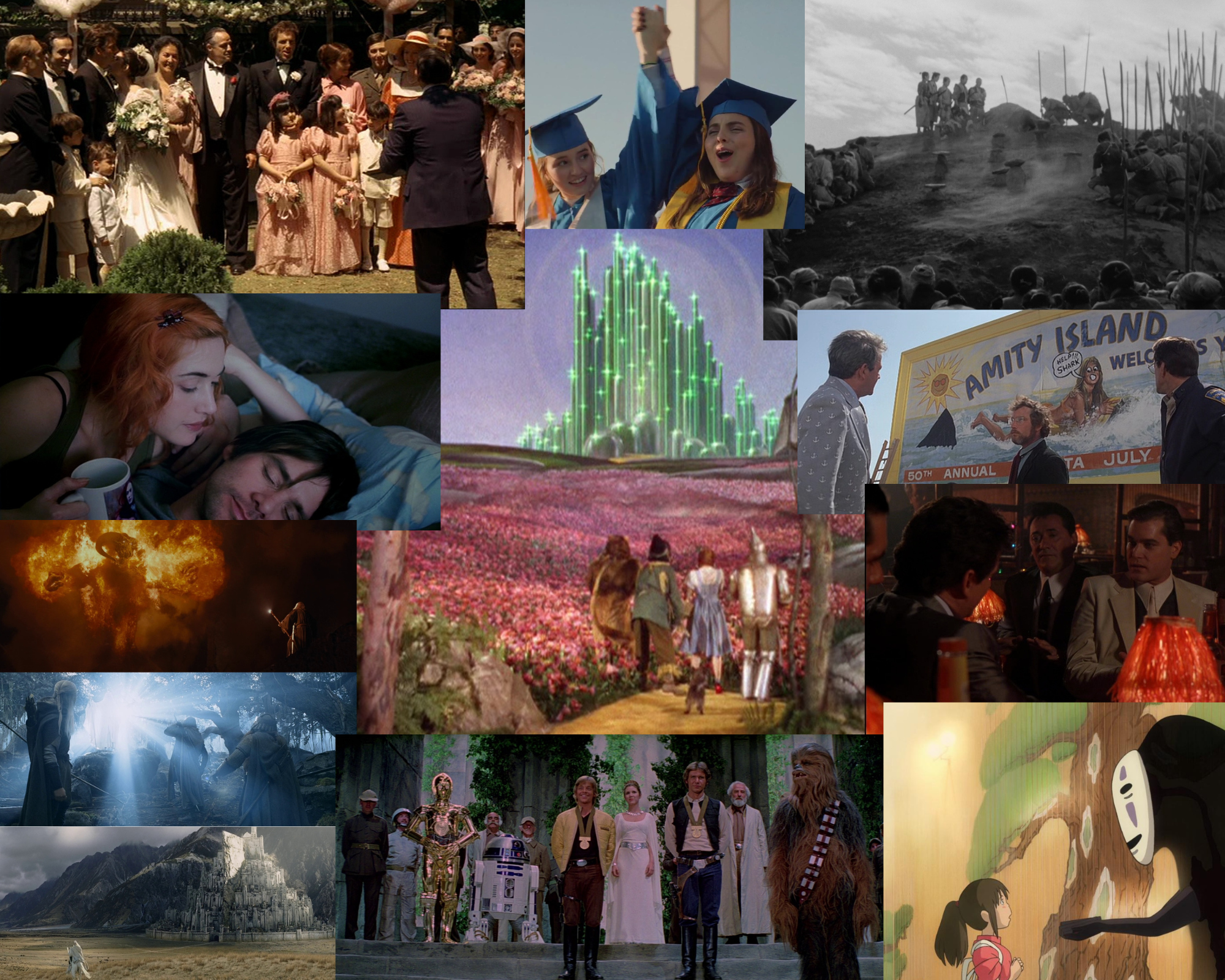
Breathtaking. Miyazaki’s greatest masterpiece is an absolutely stunning work of tremendous beauty, with an incredible heroine in Chihiro and a fabulous cast of characters in the bathhouse. Watching Spirited Away in a theater on first release at the age of 12 was an incredible experience, but for all that its beauty and wonder and world was unlike anything I’d ever seen, there was real horror. Chihiro’s parents turning into pigs is nightmarish. Everything with No-Face’s gluttony is disturbing and upsetting, the sort of child’s horror that feels so hard to do but Miyazaki makes looks easy. Perhaps it’s because this sense that though the world can be dark and full of terrors, there’s always a sense of capacity to handle it. The world is complicated, it might not even be a thing we can understand, but an inherent sense of right and wrong can provide a moral clarity. A foundation from which comprehension (without understanding) is possible. Like with all of his movies, the great master Miyazaki layers this complex idea over a fantastical world and makes it look so simple because it is. We just have to realize it.
39. The Wizard of Oz (1932)
Directed by: Victor Fleming
Written by: Noel Langly (Screenplay/Adaptation), Florence Ryerson (Screenplay), Edgar Allan Woolf (Screenplay), L. Frank Baum (original novel)
Previous Ranking: #70
The most culturally significant film of all time. Is there any other with such ubiquity? The flying monkeys, the ruby slippers, the yellow brick road, “I’ve a feeling we’re not in Kansas anymore”, “Lions and tigers and bears, oh my!”, “I’ll get you my pretty”, “pay no attention to the man behind the curtain”, “Somewhere Over the Rainbow”, “there’s no place like home”, the Wicked Witch, “I’m melting!”, “I had the strangest dream, and you were there and you were there and you were there...”… And that doesn’t even mention the still-just-unreal shift when Dorothy shifts from sepia into color as she opens the door and steps into Oz. Almost 100 years later and it’s still a breathtaking moment, one of the maybe Top 10 moments in cinema history. There’s a reason The Wizard of Oz is still a movie people are referencing and watching and showing their children. It will outlive us all.
38. Seven Samurai (1954)
Directed by: Akira Kurosawa
Written by: Akira Kurosawa, Shinobu Hashimoto, Hideo Oguni
Previous Ranking: N/A
Akira Kurosawa’s signature samurai epic. So many films have ripped off Seven Samurai’s basic idea of “small folksy population under threat from evil outside forces hires seven outsiders to help; a fight ensues .” From The Magnificent Seven, to Zack Snyder’s Rebel Moon (not like he was hiding the influence) to even A Bug’s Life and Galaxy Quest. It’s a genius premise, but none of them hold a candle to the original, which itself is a staggering masterpiece. With more than a three hour run time Seven Samurai moves, building out the vast ensemble of not just samurai hires but also members of the village itself. It’s a long run to the enemy force finally attacking, but when they do… god. It lives up to every single good thing anyone has ever said about it.
37. Booksmart (2019)
Directed by: Olivia Wilde
Written by: Emily Halpern, Sarah Haskins, Susanna Fogel, Katie Silberman
Previous Ranking: #7
Olivia Wilde’s directorial debut follows high school seniors Molly (Beanie Feldstein, in a phenomenal performance) and Amy (Kaitlyn Dever, always incredible), who realize that, despite their focusing on academics at the expense of the rest of their high school experience, all the washouts and stoners and slackers and losers they’ve looked down on for four years also got into schools just as prestigious as they did. For their last night before graduation they go out on the town to attend their first big high school party, trying to get four years of high school experiences done in one big night. All of their episodic adventures are funny, with an ensemble of peers all are incredible to a person (with special shout out to Molly “Triple A” Gordon and Billie “I’m fucking spent, Jared” Lourd). But what works so well is Wilde bringing her perspective to the incredible, all-female-penned script. There are like a hundred needle drops, all of them good and perfect for however brief they might play. The jokes are fabulous: “Is that Cardi B?”, “did you fuck Ms. Fine?”, “you’re at a 10, I’m gonna need you at a 2”, “asian-huasca”, and “do you want pancakes?” are all still in regular quote rotation for me and my partner (I’m sure there are more, but that’s just the top of my head). But it’s Wilde’s incredible moments of flair and style that feel so unique and unlike any other high school movie I know. It’s Amy stripping, jumping into the pool, and swimming to the sound of “Slip Away” by Perfume Genius, one of the great expressions of female freedom and rebirth I’ve ever seen in a film, let alone a high school teen comedy. It’s the dialogue dropping out after Amy and Molly call each other “a bad friend”, finally exploding into their absolutely awful fight, cell phone lights slowly coming on in the background. It’s Jared sitting with Molly and talking about who he really is and Molly’s dream dance with Nick when they finally arrive at the party. While it’s a bit shaggy in places (the Amy’s coda with Hope is necessary but coming as it does after the graduation climax, feels oddly placed) and Wilde falls into first-time director traps (there’s a couple of times where it’s clear she doesn’t quite have the coverage for a few moments/jokes)… but it’s really one of the great high school comedies, and certainly one of the best this century. I can’t wait for Olivia Wilde to make something approaching how good this is. In the meantime, I think I’ll just go watch it again or something.
36. The Godfather (1972)
Directed by: Francis Ford Coppola
Written by: Mario Puzo (Screenplay/original novel), Francis Ford Coppola (Screenplay)
Previous Ranking: #34
The lights go down. The horn of Nino Rota’s iconic theme starts. And there’s that small beat when it’s quiet before Bonasera says that he believes in America. In that moment, it’s like a waiter putting my favorite meal in front of me. Like… what can I even say about The Godfather that others haven’t already spent the last half-century saying? It is undoubtedly one of the greatest films ever made, a sprawling epic about the slow road to hell and the way children, despite their best efforts, can’t help but be the legacy of their parents. Every single minute of it is good, from the thirty minute wedding opening sequence to the horse head to the assassination in the Italian restaurant to the walking around Sicily to the operatic final baptism as Michael accepts his destiny. And the deaths. Oh just all the deaths. Francis Ford Coppola might be one hell of a loopy mad man who broke his brain in the name of making Apocalypse Now, but he is also an incredible filmmaker who got it more right with this movie than just about any director ever. Not even the rest of his post Apocalypse Now career can take awayone of the greatest films of all time.
35. Eternal Sunshine of the Spotless Mind (2004)
Directed by: Michel Gondry
Written by: Charlie Kaufman (Story/Screenplay), Michel Gondry (Story), (Pierre Bismuth (Story)
Previous Ranking: #20
In 2010, I took screenwriting at the end of my junior year of college. The best writer in the class and the professor (himself a Hollywood screenwriter) both independently said Eternal Sunshine of the Spotless Mind was their favorite movie. It was the sweet spot, some six years after the film’s release. Old enough that perspective was possible but new enough that it was a fresh pull. Watching it today… it really hasn’t aged, has it? Charlie Kaufman’s script about trying to bleach a bad breakup out of his brain mixed with Michael Gondry’s taste for the tactile fantastic is a singular experience. Heart-wrenching and beautiful, it’s an incredible use of Jim Carrey, who plays Joel’s as a melancholic guy who doesn’t want to be, and features a great Kate Winslet as the quintessential manic pixie dream girl who nevertheless brings a level of emotional depth to the character so many others in that trope do not. Kirsten Dunst adds to the film by adding to her 00s filmography, carving up cinemas with great performance after great performance, providing a devastating emotional reveal late in the second act. It is bittersweet at times, and yet ends with a sense of progress moving forward now that intentional backstepping is impossible.
34. The Lord of the Rings Trilogy: The Fellowship of the Ring (2001), The Two Towers (2002),The Return of the King (2003)
Directed by: Peter Jackson
Written by: Peter Jackson, Barrie M. Osborne, Fran Walsh, Tim Sanders (Screenplay, The Two Towers), J.R.R. Tolkien (original novel)
Previous Ranking: #77 (The Fellowship of the Ring), #93 (The Two Towers), #81 (Return of the King)
Peter Jackson made all three of these films as one single entity. Sure, there were reshoots and pickups between annual releases, but he made this 10+ hour epic for less than $300m in 1999. Though they all came out after the turn of the century, The Lord of the Rings film trilogy triumphs because of how it bridges the previous century’s need for building tactile reality and the new century’s ability to create anything inside a computer. Crowd replication technology made the Battles of Helm’s Deep and Pelennor Fields possible without blowing the budget on a million extras, but tangibility makes the orc armies terrifying. All of those actors and extras got not only makeup but the armor, weapons, and accoutrement necessary to play a convincing medieval fantasy fighting force. And there were a lot of orcs. Lotta humans too. They needed the costumes and props as well. And the sets. Glorious sets built of wood and paint and scaffolding. Miniatures mixed with digital/optical elements allowed for incredible establishing shots of Helm’s Deep and Minas Tirith and Rivendell. To make the Hobbits look small or the non-Hobbits look big, Jackson used in-camera forced perspective techniques. A quarter century later and Jackson’s bringing Middle Earth to life is still at a level of verisimilitude almost no movie/series outside of maybe the Avatar films has come close to accomplishing.
33. Jaws (1977)
Directed by: Steven Spielberg
Written by: Peter Benchley (Screenplay/original novel), Carl Gottlieb (Screenplay)
Previous Ranking: #27
It’s a testament to Spielberg that he survived a shoot this chaotic (due in no small part to his insistence of shooting on open water) and turned out a movie this unbelievable. Jaws is a movie that, 50 years later, holds up perfectly. The first half is the rare time Spielberg does straight up horror while the second half is a high adventure on the open seas. Iconic, with some still-best-of cinematic examples that other directors have yet to top (like the dolly-zoom), and Robert Shaw’s Indianapolis monologue is my vote for greatest monologue in the history of cinema. It’s been half a century. People are still obsessed. Rightly so.
32. Star Wars Episode IV: A New Hope (1977)
Directed by: George Lucas
Written by: George Lucas
Previous Ranking: #64
I’ll admit Disney’s oversaturation of Star Wars has muted the love somewhat. Was a time Star Wars was just nine movies. Before that it was just six. Before that it was a trilogy. And then before that… it was a dopey sci-fi movie from 1977 that set the world on fire. George Lucas’s original Star Wars is the most important film of the last 50 years, changing not only the way Hollywood approached storytelling and structures (so many hero’s journeys), but also genre filmmaking, blockbusters, and special effects. None of this is possible, though, without Lucas’s adaptation of fantasy tropes into a science fiction setting and doing dozens and dozens of drafts to turn his arch cliche-fest into something that felt riffy yet unique and new. Luke is hardly different from the standard fantasy “farmboy who dreams of adventure in the big wide universe” and Lucas’s depiction of good vs. evil has a classical simplicity reflective of children’s stories. While he has long since contended that Star Wars is “a film/series for children”, this misunderstands the broad appeal of those (like Lucas himself) who tap into the nostalgia and purity of their childhood long after they’ve grown up. Sure, the special editions are annoying, but it’s not like Lucas made this or the movie unwatchable. Just extremely annoying in places. Star Wars will always be good, but maybe someday there’ll be that perfect cut with a 4k remaster so we can all celebrate a “best version” together.
31. Goodfellas (1990)
Directed by: Martin Scorsese
Written by: Nicholas Pileggi (Screenplay/original book), Martin Scorsese (Screenplay)
Previous Ranking: #19
From the opening scene of Goodfellas there’s a sense of not just danger and menace but peril… and lethal stakes. Starting in the 50s, moving into the glory of the 60s, the disruption of the 70s, and finally the downfall of the 80s, director Martin Scorsese engages a survey of mid 20th Century America through the transgressive life of real-life gangster Henry Hill. But it’s all those little decisions that make this transcendent. The reason he employs voiceover, the famous tracking shot, Karen getting voiceover when she does, or even the cacophony of music during Henry Hill’s last cocaine bender. This was good in 1990, but losing the Oscar to Dances With Wolves for both Best Picture and Best Director has only supercharged Goodfellas’ rep. It’s one of the greatest crime films ever made and Scorsese’s unflinching approach to violence and language is probably never better than it is here.
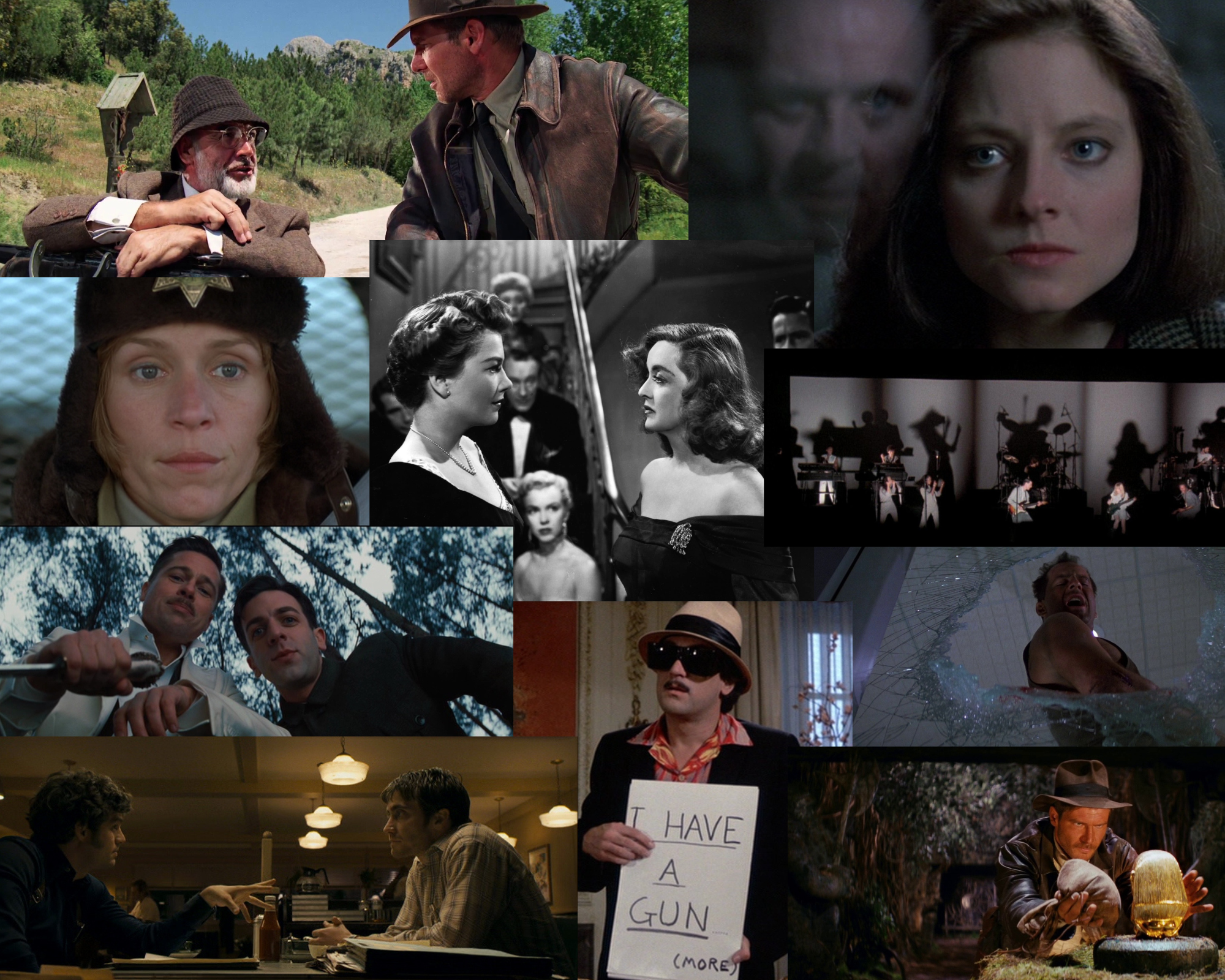
30. Die Hard (1988)
Directed by: John McTiernan
Written by: Jeb Stuart, Steven E. de Souza, Roderick Thorp (original novel)
Previous Ranking: #15
Was a time this was in my top 10. So it’s fallen a bit, but I can’t imagine Die Hard would ever fall out of the Top 50. It’s just too good. A Christmas action movie about a man trying to save his marriage. Bruce Willis proving he has the ability to be a major action star (which fueled literally the rest of his career) while retaining his everyman quality. Alan Rickman giving the second best film performance, turning Hans Gruber into one of the greatest cinematic villains of all time. The stunts, the spectacular explosions, the grizzly violence that is intense but not grotesque or over the top. The witty banter (“Now I have a machine gun, Ho Ho Ho”; “welcome to the party, pal”), the emotional moments (John McClane pulling glass out of his feet), the spectacular hero’s arc (starting with the fear of flying and ending with him literally jumping off an exploding skyscraper)… There’s… nothing bad about Die Hard. Sorry.
29. Stop Making Sense
Directed by: Jonathan Demme
Written by: Talking Heads, Jonathan Demme
Previous Ranking: N/A
It should feel weird that a concert movie is in my Top 30. But… if you’ve seen it you know why it’s here. The Talking Heads are a great band, and Stop Making Sense is their opportunity to play ninety minutes of straight hits. But it’s how director Jonathan Demme (and the Talking Heads too, to be fair) approaches the entire concert like it’s a film with its own emotional arc. Following David Byrne from the awkward buttoned up geek of “Psycho Killer” to the sprinting mad man of “Life During Wartime” to his wild cackles during “What A Day That Was” to the surrealist hilarity of his iconic giant suit in “Girlfriend Is Better” and even his exiting the stage before “Crosseyed and Painless” has even finished, giving everyone who isn’t him (including the audience) the last beat is an insane emotional journey. But all the pieces between have their own distinct visual language, look, and style. Every song exists in this performance for the camera, and watching it over and over again (I watched it for the first time in late 2023 and according to Letterboxd it’s been a dozen times total since then; seems low, to be honest) shows all sorts of small details that it’s easy to miss. The film looks like it’s a glorious public jam session where the whole band is just riffing, but nothing about it is. They rehearsed this choreography to within an inch of its life. Byrne’s lamp tricks in “This Must Be the Place” are too precise. The lighting guy wandering around the stage, happening to be in exactly the right place to sing “Stop making sense!” into the microphone when David Byrne “spontaneously” puts it in front of his face in “Girlfriend is Better”… the dude barely acknowledges the moment, giving just the slightest incline of his head to hit the lyric perfectly. Jerry Harrison joining the backup singers and “randomly” bopping his head in time with them during “Found a Job”. There’s even a moment where, during the jog of “Life During Wartime”, backup singers Edna Holt and Lynn Mabry glance briefly at Byrne’s legs as they fall into line, making sure their proper leg has synced with his. None of these moments are accidents. All of them are intentional. Stop Making Sense isn’t just the best concert film of all time, it’s one of the straight up greatest films ever made.
28. Zodiac (2007)
Directed by: David Fincher
Written by: James Vanderbilt, Robert Graysmith (original books)
Previous Ranking: #50
Fincher’s unquestioned masterpiece follows the search for the Zodiac killer. It’s a movie that benefits from Fincher’s infamous, exacting perfection, so good, too that it’s easy to miss that everything the killer ever did is done by the one hour mark. The rest of Zodiac is living in that mystery of a case that remains unsolved, and the tension of such a world with no answers not making sense. It drives those involved to obsession and continues to follow them despite (basically) no new developments. Because of all this it might seem like the movie shouldn’t work or that it travels in unending spirals, but there’s always a sense of propulsive momentum and drive bringing it to… wherever it’s going. Fincher has made some incredible films, but this is what it looks like when he’s at the absolute top of his game. It’s unlike anything and it’s only going to age better.
27. Fargo (1965)
Directed by: Joel Coen, Ethan Coen (uncredited)
Written by: Joel Coen, Ethan Coen
Previous Ranking:
There are half a dozen movies in contention for the title of the Coens’ ultimate masterpiece. Fargo, though? I mean, it’s Fargo, come on. Only the Coens would tell this story this way, starting with Jerry and then passing it along to Carl and Grimsrud for the actual criminal plot… before finally landing on the main character 40 minutes in, delaying the entrance of Marge Gunderson (top-billed Frances McDormand) until after the half-hour mark. It’s a series of choices that are confounding yet undeniably effective. Even something like the Mike Yanagita scene (where the movies screeches to a halt so Marge can meet an old friend from high school) is absolutely perplexing but all the more interesting because of what it does (or doesn’t) reveal about her. It’s infinitely rewatchable, so lived in, and basically nothing but incredible scenes. Incredible violence, electric dialogue, Fargo is everything the Coens do best and it’s somehow in a package that’s less than 100 minutes. Unbelievable.
26. Indiana Jones and the Last Crusade (1989)
Directed by: Steven Spielberg
Written by: Jeffrey Boam (Screenplay), George Lucas (Story/Characters), Menno Meyjes (Story), Philip Kaufman (Characters)
Previous Ranking: #31
Alongside The Mummy this is one of those four “consensus movies” from 2002. Why wouldn’t it be? Steven Spielberg’s third Indiana Jones movie is two hours of pure adventure, from its opening (which, despite being a bit too cute in its conception as an origin story is nevertheless thrilling) through its globe trotting sequences to Venice, Austria, and Berlin, to the tank sequence in the desert of Hatay to the final Grail tests and that old ass Knight to the iconic riding off into the sunset of the final shot. There’s not a wasted minute, not a wasted scene. Sean Connery is astounding as Indy’s dad with tons of great jokes (“she talks in her sleep”), and a quest for the Holy Grail feels just as powerful as the hunt for the Ark in Raiders. It’s also got tons of laughs that are perfectly in line with the tone… one of the stealth appeals it has, though, is its budget. Raiders (while being a better movie) cost less than half of this, feeling more run-and-gun and gonzo and pulpy. This, though, is glossy and rich and Hollywood with the confidence that this third Indiana Jones movie is going to make a metric assload of money and they shouldn’t worry about it. Never underestimate peoples’ desire to see something this robust and gorgeous, and never underestimate Spielberg’s ability to put every penny up on screen.
25. All About Eve (1950)
Directed by: Joseph L. Mankiewicz
Written by: Joseph L. Mankiewicz, Mary Orr (original story)
Previous Ranking: N/A
This was one of my earliest watches when I started all of this movie watching in early 2023, part of both Unspooled’s coverage of the AFI Top 100 and my first attempt at the Criterion Challenge. Before I’d even finished it, I knew All About Eve would be on one of my favorite movies and thus on this list. At the time I probably said “instant top 20” and… well, I wasn’t far off. This is an undeniable triumph of post-war cinema and one of the greatest movies of all time. This story of an aging actress (Bette Davis) and the a young ambitious ingenue (Anne Baxter) who slowly replaces her as the object of people’s (and the industry’s) attention isn’t nearly as twisty or thrillery as it would be nowadays. But it’s just so well done, from the script to the direction to the performances to the use of George “Shere Khan in The Jungle Book” Sanders as the voiceover guy. It’s lived rent free in my head since I first saw it and is, more than any other movie, the reason I wanted to do a fresh movie ranking. Anytime I mentioned what movies on the 2022 ranking, it felt willfully inaccurate, knowing All About Eve belonged somewhere in there, but not having an answer of where. And now, three years later, it ends up in the top 25? Finally, it feels like I can breathe again.
24. Raiders of the Lost Ark (1980)
Directed by: Steven Spielberg
Written by: Lawrence Kasdan (Screenplay), George Lucas (Story), Philip Kaufman (Story)
Previous Ranking: #21
Coming off of 1941, it’s not surprising that the young, hungry Spielberg of Jaws turned around and made something as low-budget and gritty as Raiders of the Lost Ark. Harrison Ford was always going to be a movie star, but this supercharged the dude who’d already played Han Solo twice. And the use of treasure hunting, Nazis, and the 1930s makes for a fabulous period adventure. Best of all is the oft cited trivia that a lot of what Spielberg contributed here came from the Broccolis not letting him make a James Bond movie. Like Tenet almost 40 years later, watching this… why do Bond when Indy is right here? This is so much better than any 007 film could ever be. Let the lesson be creating that great original fare can come from fabulous sources. Stories that capture the platonic ideal of a tone or aesthetic can feel wholly new and even surpass the original inspiration by virtue of intentionally trying to reach something specific. There really is nothing like Raiders of the Lost Ark, and even movies like The Mummy (a consensus pick alongside Last Crusade as opposed to Raiders, which was not) can perfectly capture that feeling if they know what they’re reaching for and have the adequate capacity to deliver. Still, Raiders is the best-of example of this type of movie. Throwbacky, nostalgic, but unquestionably bold and new.
23. The King of Comedy (1982)
Directed by: Martin Scorsese
Written by: Paul D. Zimmerman
Previous Ranking: N/A
Even at #23, my favorite Scorsese feels a bit low on this list. But… all of these are a game of inches at this point. The King of Comedy was an absolute flop at the time, and given its box office crashout, had Scorsese made this before Raging Bull he probably would have quit movies. Or, at least, his career would have looked very different. This, though, a movie Todd Phillips ripped off wholesale for Joker, is an incredible portrait of psychosis. Rupert Pupkin (Robert De Niro) is a total lunatic. But he is also not untalented. He just has… unorthodox methods in his quest to be a famous comedian. Opposite him is Jerry Lewis as Jerry Langford, a late night comedy host and the object of Pupkin’s obsession. This movie doesn’t operate in exactly the way you’d imagine. It’s not as violent as other Scorseses, but it is still the work of a man in the middle of the decade that started with Ragin Bull, ended in Goodfellas, and had After Hours, The Color of Money, and The Last Temptation of Christ in between. If audiences didn’t realize how good this was at the time, that’s their problem. 40 years later, we know the truth, and the truth is that King of Comedy is a freaking masterpiece.
22. The Silence of the Lambs (1991)
Directed by: Jonathan Demme
Written by: Ted Tally, Thomas Harris (original novel)
Previous Ranking: N/A
Jonathan Demme’s lone crime thriller is an adaptation of Thomas Harris’s novel of the same name. And it’s… freaking perfect. Michael Mann had already made Manhunter in 1986, which was technically the first film featuring Hannibal Lecter (played there by Brian Cox before Anthony Hopkins blew the doors of the place here), but Demme’s style of closeups and characters who look straight into the camera as they stare into Clarice Starling’s (Jodie Foster) eyes and soul make Lecter in particular into an utterly terrifying individual. The Silence of the Lambs’ subject matter is certainly lurid, and there was a possibility of it being so transphobic as to be unwatchable, but Demme’s capacity for empathy makes Buffalo Bill’s trans-adjacent existence separate from his own terrifying psychosis. It’s a shame the director didn’t make another movie like this again, as it really is the only crime thriller in Demme’s entire filmography. Then again, when you nail this as hard as Stanley Kubrick nailed horror movies with The Shining, what else would he even have had to contribute? And if this film’s existence means it’s the only one like it, I’ll not trade it for any number of lesser installments.
21. Inglourious Basterds (2009)
Directed by: Quentin Tarantino
Written by: Quentin Tarantino
Previous Ranking: #44
Only a man as arrogant and self-confident as Quentin Tarantino would make a movie so good he knows he can pull off a final shot where Brad Pitt looks down the barrel of the camera and says [to the audience], “You know, this might just be my masterpiece”… and be right. Inglourious Basterds is undeniably the writer/director’s masterpiece and finest achievement. But it’s good not just because he’s an amazing director. It’s good because he’s an incredible writer, one of the best of his generation, and Inglourious Basterds runs like a play in cinematic form. For all that the climax is a massive explosion of cathartic violence and the wholesale slaughter of a theater full of Nazis… this entire movie is just a series of characters in rooms talking. The basement sequence is good not because it has guns, but because the commandant (August Diehl) might discover the truth about Hilcox (Michael Fassbender) and Bridget von Hammersmark’s (Diane Kruger) relationship. The opening scene in the farmer’s house is amazing because the greatest weapon is a glass of milk and Christoph Waltz’s smile. And on and on and on. If Django is amazing because it’s Tarantino brewing up a new genre from established ones, Basterds is amazing because he uses genres like war movies and Sergio Leone westerns as background flavor to support his masterwork ensemble World War II movie. And… yeah. Quentin Tarantino (through the visage of Brad Pitt) is right.
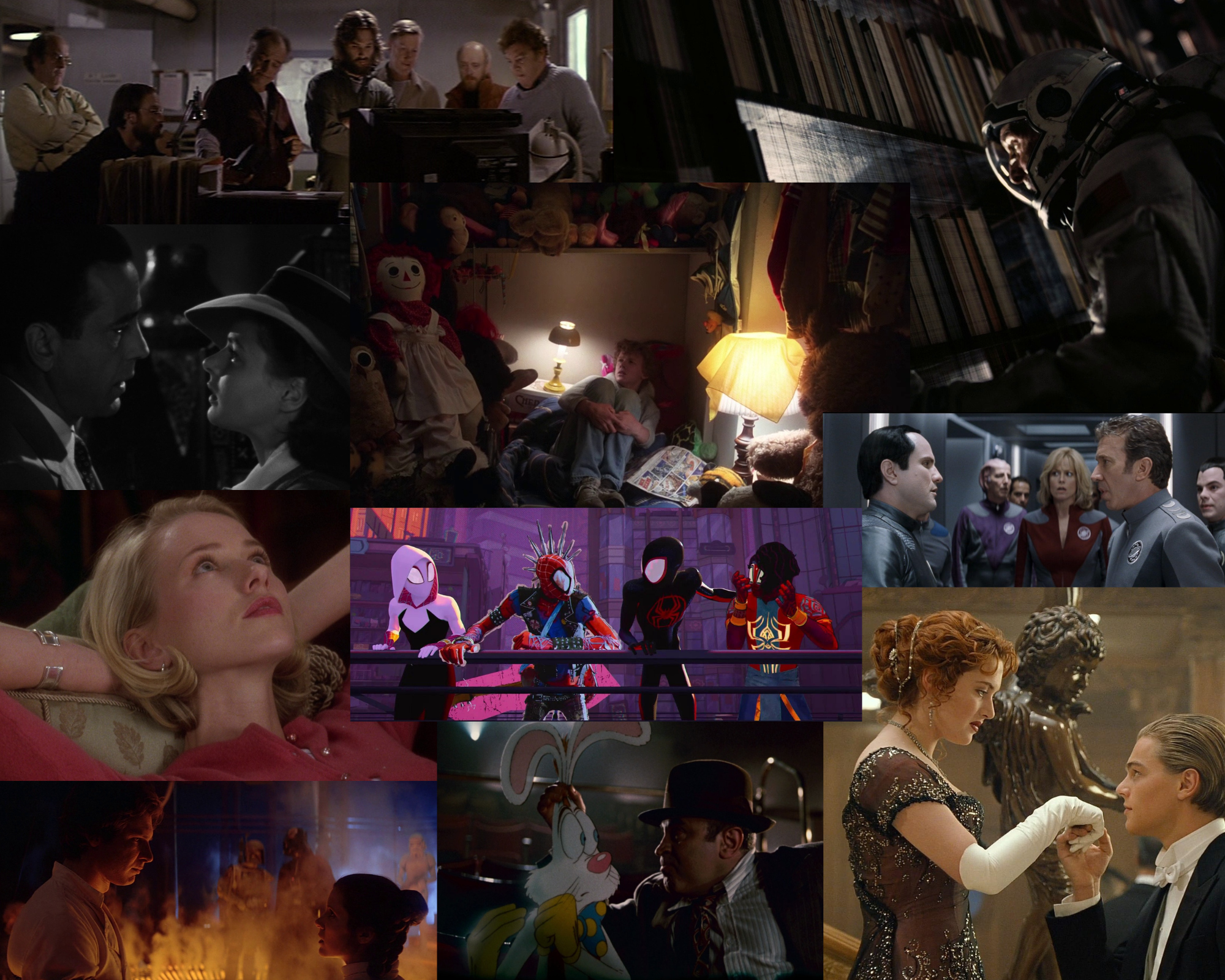
20. E.T.: The Extra-Terrestrial (1982)
Directed by: Steven Spielberg
Written by: Melissa Mathison
Previous Ranking: N/A
Spielberg’s masterpiece (word’s coming up a lot now). My argument for E.T. is that it’s very kid-friendly and children can enjoy it, but this movie is really for adults to wistfully look back and reflect on growing up. What they loved, what they never appreciated, what they lost. Spielberg captures childhood as only he can mixing his sense of wonder with a sense of profound loneliness and also the capacity of finding true companionship in someone as foreign as the eponymous alien. It’s one of John Williams’ best, with the entire final act of the film is practically its own silent art piece set to some of the greatest film scores ever. But my favorite shot in the movie (and possibly all of Spielberg) comes when Elliot’s brother Michael retreats to that closet and sits down amidst all of the plushies surrounding him. It’s a perfect encapsulation of what this movie is doing. The loneliness, the fear, the not understanding, the warmth, the sense that this is just a moment but that the eternity of infinite time will always be like this. Spielberg has never, ever been more in the pocket, and for all the major hits of his career, the Jaws’s and Indiana Jones and Schindler’s Lists and Lincolns, this will be the defining legacy of his career. As this kicks off the top 20, all of these films are undeniably best-of examples. There might be movies that are as good, but nothing is better than any of them. And there is certainly nothing in the history of cinema that is better than E.T.
19. Casablanca (1942)
Directed by: Michael Curtiz
Written by: Julius J. Epstein, Philip G. Epstein, Howard CKoch, Murray Burnett (original play), Joan Alison (original play)
Previous Ranking: #32
An indescribable romance. Looking at it through modern eyes it might feel like what’s the big deal (and I have friends who have expressed that). But Casablanca is one of those “best of” movies that really changed the way movies work. The relationship between Rick and Ilsa is one of raw, potent, fully-expressed emotion. This movie bleeds the ecstasy of their brief love affair, the anguish of their parting, and the pain of their reconnection. While it’s doing this naked display before basically every other film, it’s also so perfectly executing on its contemporary world. It feels odd to compare this movie to Glass Onion or One Battle After Another, but Casablanca’s ability to portray life as it exists in this relatively neutral zone in the heart of World War II, commenting and reflecting the zeitgeist in more or less real time is absolutely remarkable. The defeat of the Nazis is not some fait accompli. By the time of this film’s release, it had been barely a year since the United States had declared war on Germany and the country was still 18 months away from the invasion of Normandy, to say nothing of V-E Day a year after that. As Ilsa takes off in that plane at the end, the future is deeply uncertain and there’s no guarantee of anything. And yet, it’s a story of boundless hope and ends with the sense that… things might not be ideal, but they will be okay. Someday. Michael Curtiz’s film executes on all this and doesn’t make any missteps. There’s nothing more to ask for.
18. Who Framed Roger Rabbit (1988)
Directed by: Robert Zemeckis
Written by: Jeffrey Price, Peter S. Seaman, Gary K. Wolf (original novel)
Previous Ranking: #23
The best films are the ones that sweep people away. Sometimes that can be somewhere close to home, others it can be deep in the past or far in the future or even an animated reality where anything is possible. Who Framed Roger Rabbit is one of those movies, mixing as it does some best-of live action filmmaking with best-of hand drawn animation to create a world where cartoons live just on the other side of a nearby tunnel or just over that hill there. The attention Robert Zemeckis put into making it possible to integrate animation into his 1988 masterpiece mixed with a team of animators literally animating the movie frame by frame is second only to maybe James Cameron’s meticulous perfection in the visual effects of his Avatar movies. Animated beings contort and shift to match eyelines by actors who played their takes to nothing, tiny details that bring with them an impossible-to-describe level of verisimilitude. All of this in service of a Chinatown-esque plot about 1947 Hollywood and how stupid freeways are? Come on. It’s just so good. The original characters (Roger, Jessica, Baby Herman, Benny the Cab) are all animated characters who have grabbed me more than even most Looney Tunes (and I love the Looney Tunes). I would probably do a dangerous amount of crime if it meant getting a followup Roger Rabbit movie that is anywhere near as good as the original. No other movie grabs me like this. It’s probable nothing ever will.
17. Titanic (1997)
Directed by: James Cameron
Written by: James Cameron
Previous Ranking: #14
Idk man just read my review about Cameron’s masterpiece it’s like the best movie ever made and shoulda won more Oscars than it already record-breakingly did. Whatever.
16. Interstellar (2015)
Directed by:
Written by:
Previous Ranking: #92
My time seeing Interstellar opening weekend contains one of my favorite movie theater experiences ever, but it ends with everyone (literally everyone of like the dozen people) I saw it with dismissing it either as “it was fine I guess” at the positive end or “it was a dumpster fire” at the other. One friend in particular thought the film betrayed what he wanted, which was a plucky space adventure. Christopher Nolan’s Star Wars. His loss. I’ve loved Interstellar from that first time until now, and it’s only gotten better with age. Nolan’s sci-fi masterpiece is a love letter to great space movies like 2001 and The Right Stuff. He concerns himself with space travel as it would actually happen, gravity and relativity as they exist in physics. It can seem very technical to the audience, especially coming from a guy whose Inception behaved like a giant puzzle box with endless rules and exposition. But at its core is a deeply emotional narrative about a father and his daughter and the agonies of separation by time in space, missing each others’ lives; how children grow up and old and into themselves, inspired by and/or in spite of their parents. . When it came out in December 2024 for a big 20th anniversary IMAX re-release, it sold insanely well. But the legacy I keep thinking of is my partner who (having previously thought the movie was just fine) ending the film a complete emotional wreck. Go to the bathroom afterwards to compose herself, she reported back that inside every single stall was someone doing the same thing, crying inconsolably at the power of what they’d just witnessed. Interstellar is the best proof I have that there’s the Nolan people assume (a technical savant who makes incredible puzzle boxes with weak characters and lots of plot) and the Nolan who actually exists: a deeply emotional filmmaker who cares most about the emotional journey and story of his characters, and buttresses them via fantastical experiences. Interstellar is and will be his legacy, and it makes sense that it started in the wake his Batman trilogy. As the space dock doors open in one of the films final shots, Cooper prepares to journey out into the great unknown, towards adventure and love and life and whatever the future holds. With the vast, infinite expanse of space before him, he, like Christopher Nolan, gazes out into the limitless possibility before him. And it is indescribably liberating.
15. The Thing (1982)
Directed by: John Carpenter
Written by: Bill Lancaster, John W. Campbell Jr. (original novella)
Previous Ranking: #16
The Thing still is my go to example of movie that scared me the most. That first viewing after college, in my childhood bedroom on my very small TV with almost no spoilers was an absolutely harrowing experience. I remember screaming. Multiple times. The creature effects were (and still are) the most terrifying, viscerally upsetting visual effects work I’ve ever seen. John Carpenter’s masterpiece, though, is so much more than this. It’s a deeply nihilistic film about self-preservation at all costs. Setting it on an Antarctic research base adds to that sense of isolation, and only abets the paranoia that sets in as the men within quickly realize they don’t know who (or what) they can trust. Not only that, Carpenter constructs it in such a way that no one is totally clean. There are times where we don’t know where a character is and who (or what) they interacted with. Even MacReady (Kurt Russell) has a stretch of time during which no one can account for him. Carpenter builds the entire story on a foundation of shifting sand, and to this day people are still trying to solve the puzzle of who turns when and how… even though Carpenter built it such that there is no solution. It sucks that the public dismissed this at the time (It’s E.T.’s fault) and it flopped as hard as it did. There’s a world where this springboards Carpenter into another strata of success and capacity. As it stands, he went and continued his run of churning out incredible, elevated B-movies, so it all worked out. But if that ethos of his is what made him so legendary, then of course The Thing is his best film and the one that most represents what made him such an incredible filmmaker. I’ll never get tired of it.
14. Galaxy Quest (1999)
Directed by: Dean Parisot
Written by: David Howard (Story/Screenplay), Robert Gordon (Screenplay)
Previous Ranking: #10
People make a joke that it’s the best Star Trek film (which… yeah, it is), but that feels reductive to what is a love letter to science fiction television shows like Trek and the fandoms that keep their memory alive long after their endings. Galaxy Quest is its own thing. A career best for Tim Allen and Alan Rickman and one of the best for Sigourney Weaver, (a very young) Sam Rockwell, Enrico Colantoni, Tony Shaloub, and so many others. It’s riotously funny, a loving tribute to this sub-genre without ever once punching down. If anyone within the film looks down on the fandom of it all, the film itself makes it clear that the character is being an asshole and needs to get over their haughty pretentious bullshit. If I have complaint, it’s that they should restore the cut that make this not PG. All of the ADR’d swearing can stay out (the movie doesn’t need it), but for god’s sake restore Sigourney blurting out “fuck that!” because it’s one of the funniest lines she’s ever delivered. There’s been talk of continuing this as a show, which will look very different after the death of Alan Rickman… but it’s one of those things that (like Roger Rabbit before it) retains its power because it’s an incredible movie that exists entirely on its own in a glorious vacuum. They’ve never diluted it with followups. That’s not how these things work nowadays, but in 19-“best film year ever”-99, this can hit as it did and remain astoundingly, eternally perfect. Totally fine if it stays that way.
13. Star Wars Episode V: The Empire Strikes Back (1980)
Directed by: Irvin Kershner
Written by: Leigh Brackett (Screenplay), Lawrence Kasdan (Screenplay), George Lucas (Story)
Previous Ranking: #61
It’s insane that the Imperial March wasn’t in original Star Wars, but Williams introduces it here with all the confidence and swagger of knowing it’s going to be one of the most iconic themes of all time. The Empire Strikes Back is one of the greatest sequels ever made (4th best, by my reckoning), taking everything people loved about Star Wars and expanding it far beyond its already impressive scope. The best sequels do this, taking what audiences know and building upon them such that it’s impossible to imagine or even conceive of the original movie without its more recent context. No matter where the movie turns, from the icy landscapes of Hoth to the halls of a Star Destroyer to the beauty of a city in the clouds to the dank ass studio that they redressed so it could look like a swamp where a puppet lives, Empire creates fully realized environments and builds out the story of this galaxy, the Imperial order that controls it, and the Rebellion who fights them. Many consider it the best Star Wars movie. It probably is. But to me the legacy of this movie is the utter audacity of having a movie with this high of stakes do this kind of cliffhanger. After many years of not revisiting, I rewatched all the Star Wars movies with my college friends, and the last thirty minutes are like watching a nightmare slowly unfold. Knowing he’s going to make another one, Lucas lets the bad guys basically win, with the hero’s one dim victory being that everyone (except Han) escapes. “Surely they’ll arrive in time to stop Boba Fett” but by the time the doors open, Slave I is already in the air. “Surely Luke will get through this okay” but Vader cuts off his hand and shatters his world with that iconic revelation. I’ve seen complaints in this century that Empire is amazing but fails to function “as a movie” because of its lack of narrative resolution. Sure. It leaves the story unresolved. No one would argue that. But that also functions with a narrow vision of “what is acceptable.” Does the audience leave satisfied? Do they feel like the film cheated them? These are far more important questions than “is there resolution”. Hell, I live in a world where I love The Last Jedi and unlike Empire I’m basically never getting resolution to what is what was on its way to being my favorite Star Wars trilogy. After the nonstop beatdown of Empire’s plot, the final shot, music swell, credits roll moment is an incredible exhalation of relief. It ended. We survived. We can fight again tomorrow. The rest is forthcoming. That’s an incredible sentiment, and an undeniable yet unique sensation for the audience to end on. That’s why Empire has the rep it does and why, to so many people, it’s better than A New Hope. The first movie is remixing and rehashing a bunch of old things into something new. Empire is taking all of those old things and blazing the trail to build something wholly unique. That is invaluable.
12. Mulholland Drive (2001)
Directed by: David Lynch
Written by: David Lynch
Previous Ranking: N/A
Another year or so, a couple more watches (one of them which should be a theatrical experience if I’m honest), and this consensus David Lynch masterpiece will probably crack into my Top Ten. The movie itself is confounding, starting off dreamy but eventually descending into the chaos of a narrative that makes next to no rational sense. Like his other work, Lynch doesn’t build answers into his films. He operates on instinct, mood, sensation, feeling. It can feel unlike anything else. Mulholland Drive operates in a world that doesn’t tell the rational mind to go fuck itself so much as not give an apathetic whit about its existence. Get on board or who cares. David Lynch builds a film with an infinite number of readings, all of them correct. More than any of his other films, Mulholland Drive is the one that can most suck the audience into his way of thinking, a slow invitation of the audience to watch a movie only to find themselves sucked into a nightmarish, bleak, but ultimately staggeringly beautiful and impactful experience. For as long as I can remember, I was terrified of watching this movie. I worried it would be too weird, too offputting. Finally getting to it, though, Mulholland Drive is the one movie I’ve watched over the last three years that I’m most delighted to enjoy for the rest of my life. It’s the beginning of a long conversation where my concern isn’t understanding the person, but rather meeting it like a friend of infinite complexity and whom I can deeply, intimately comprehend. And that friend will make me think and care about things in a way no one else can. That quality is simply irreplaceable.
11. Spider-man: Across the Spiderverse (2023)
Directed by: Joaquim Dos Santos, Kemp Powers, Justin K. Thompson
Written by: Phil Lord, Christopher Miller, Dave Callaham
Previous Ranking: N/A
I’m extraordinarily proud of my Letterboxd review for Spider-man: Across the Spider-verse. It still holds true. In the world of reboots, remakes, prequels, and sequels, another Spider-man movie should be whatever. But, because recycling old product only makes things stale, directors Joaquim Dos Santos, Kemp Powers, and Justin K. Thompson decided to evolve animation into something far more than it’s ever been. There’s nothing like watching a Spider-verse moviewhere so many different animation styles not only exist, but intersect. This is a movie where the walls of Gwen Stacy’s bedroom dissolve and blur during emotional moments, defying rational reality and reflecting her own emotional state, so intense the very walls are weeping behind her. The Vulture flies through her world surrounded in scribbles like he’s a Da Vinci sketch, with lines all over him, shifting randomly by the second based on where the pencil was. And Spider-punk… I mean, go read how they did Spider-punk because that alone is one of the craziest things in any animated film ever. As a technical object, it stands in the rarified company of films like The Wizard of Oz, Star Wars, Toy Story, and Avatar. But what all these and Across the Spider-verse have in common is a powerful story with characters and emotional arcs and plots. In Across the Spider-verse’s case, that story invokes an even more meta experience, where the film puts itself in conversation with larger meta ideas of how superhero movies live on narrative tropes, that suffering makes people better and people shouldn’t just embrace unnecessary, but enable it happening to others. That they might learn. It’s a reality that Miles rejects, and while this movie does end on a cliffhanger that even now is 18 moths away from resolution, this will always be one of the greatest animated films of all time and an example of how to make a truly perfect superhero movie.
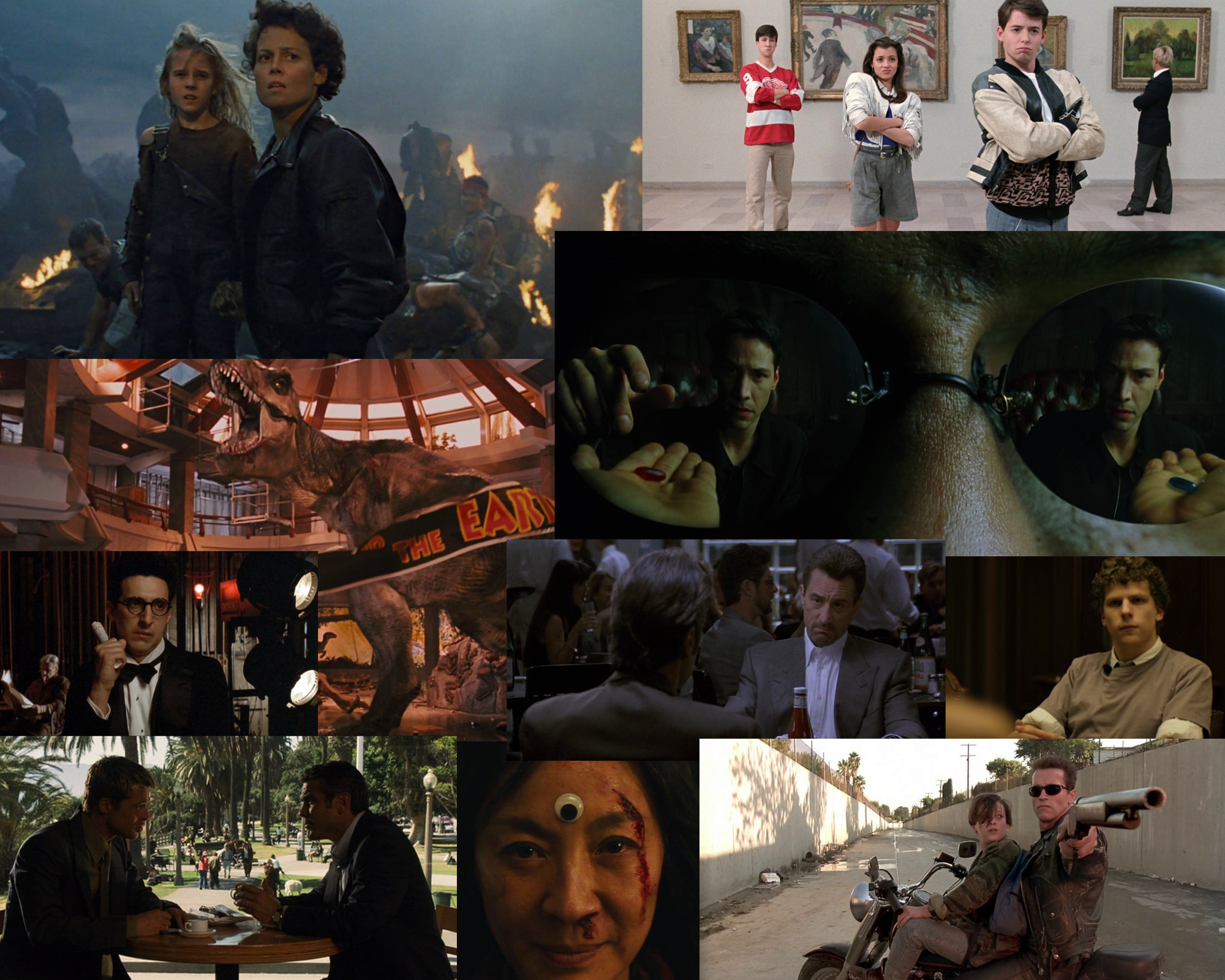
10. Jurassic Park (1993)
Directed by: Steven Spielberg
Written by: Michael Chricton (Screenplay/original novel), David Koepp (Screenplay)
Previous Ranking: #9
Spielberg’s spiritual sequel to Jaws is the third of the “consensus films” from the 2022 lists. For my generation, Jurassic Park is one of the defining blockbusters and film experiences. Some of that is the dinosaurs, of course. And the dinosaurs are amazing, a combination of puppetry and digital effects that changed the industry forever. And those digital effects hold up. It’s easy to forget the CG in this movie because Spielberg so perfectly blends it into the background to cover up the seams. But what makes Jurassic Park timeless is Spielberg (and screenwriter David Koepp) always centering the film around parenthood and the acceptance of stepping into that role as the thematic driver of the story. It’s all over the movie, and if it’s not something you’ve ever noticed, recognize that Alan Grant explaining the dinosaur skeleton at the beginning is literally an ultrasound. For me, the thing I’ve really come to appreciate in the last few years is its existence as a present (or near present) film. After E.T., Spielberg rarely did “modern day” movies, and after The War of the Worlds, he basically stopped. But Jurassic Park feels so lived in because of its depiction of the world as it exists in the 90s. The fashion, the technology, the hairstyles, the aesthetics. Being such a perfect time capsule of the early 90s makes it timeless. If there’s a thing I’m most excited about with his upcoming movie Disclosure Day (for which Koepp is writing a screenplay based on a story by Spielberg) it’s less about Spielberg doing another alien movie (his first since War of The Worlds, which is terriblly exciting on its own) than the prospect of seeing him do another contemporary movie. It’s been too long, and when great directors make films set in modern times… there’s nothing like it.
9. Heat (1995)
Directed by: Michael Mann
Written by: Michael Mann
Previous Ranking: N/A
In making The Dark Knight’s opening heist, Christopher Nolan shamelessly ripped of the one in Michael Mann’s Heat. The use of masks alone… But that superhero crime epic would go on to feature twin narratives of criminals running amok on one side and the good guys trying to stop them on the other. But while The Dark Knight is its own thing (and building off of the 1995 crime epic rather than straight up copying it), there’s nothing in the world better than Heat. It’s three hours of perfection. The characters all feel like they have full, rich lives even though we’re only privy to a couple weeks of their life. It feels like we miss some life between scenes, though Mann does show all the important moments that happen outside the context of his crimey plot’s spine. Pacino? Never better. De Niro? Never better. Great Danny Trejo, Tom Sizemore, Val Kilmer, Mykelti Williamson, Ashely Judd, and even a very young Natalie Portman. And the action moments are spectacular. The opening heist is a hell of an opening (and the shot where the back windshields all shatter is fucking insane), and the big bank heist that pissed off literally every person in downtown Los Angeles (because of the noise) is incredible. The character scenes, though… the diner scene at the center with Pacino & De Niro, obviously. But small moments like Dennis Haysbert choosing to join De Niro in the heist (heartbreaking in retrospect), or the death of Trejo’s character, or the moment De Niro decides to throw out his #1 rule in the name of revenge. Epic yet intimate, few movies at this run time are meals this full and rich.
8. Terminator 2: Judgment Day (1991)
Directed by: James Cameron
Written by: James Cameron, William Wisher
Previous Ranking: #12
A perfect sequel, building on what’s come before, creating something wholly new, and functionally changing nothing under the hood. There are so many stories of kids who were too young for Terminator 2: Judgement Day watching it at way too young of an age. And… yeah, it’s very violent, but it’s Cameron doing blockbuster action filmmaking in a way that only he can. It’s the perfect pre-teen R-rated film and the sort of movie I’m always in the mood for. And… sure. Schwarzenegger, Edward Furlong, Robert Patrick… but Linda Hamilton. Jesus Christ Linda Hamilton is so good in this and it’s insane that Hollywood didn’t maker her an insanely massive action star after this. Fuck. And it even justifies Arnie going out by giving that thumbs up? What a good movie. Fuck.
7. Barton Fink (1991)
Directed by: Joel Coen, Ethan Coen (uncredited)
Written by: Joel Coen, Ethan Coen
Previous Ranking: #10
The Coens writing this while having writer’s block is too perfect. And I acknowledge my love for Barton Fink comes from a deep love of tortured writers and Hollywood studio system bullshit. It’s a love letter to the industry in the most damning of ways. The studio execs are completely insane. A wife ghostwrites her non-functioning alcoholic husband’s script. And John Goodman playing Charlie Meadows is the second best performance of his career. But it’s Barton Fink who’s the star here. The first shot of the movie reveals him, standing just offstage, biting his nails and watching a performance of a play he’s written. Best thing about this shot is where it starts, coming down from the ropes and pulleys that control the curtains, panning across bored stage hands going about their job. By the time the camera finds Fink, there’s a man in the background sitting around reading a paper and smoking a cigarette. Later in the movie, Fink pops off about the common man and working folk. But… he could give a shit about these stage hands. When Charlie Meadows bursts in and starts talking Fink’s ear off, Fink just wants him to fuck off but is too terrified of his gregarious wild energy to say so. He has very little patience for this man who (in a traditional screenplay) should become his best friend. In the end, Charlie proves himself fascinating beyond belief racing down a hallway, screaming “I’ll show you the life of the mind!” and shooting a Federal agent in the head after muttering “heil Hitler”. Fink’s pig-headedness keeps him from seeing it. This inherent contradiction, between Fink as he claims to be and Fink as he really exists is one of those things at which the Coens excel and it’s what makes the movie so utterly wonderful on top of everything else it’s doing.
6. The Social Network (2010)
Directed by: David Fincher
Written by: Aaron Sorkin, Ben Mezrich (original book)
Previous Ranking: #6
There is a tension between what Aaron Sorkin views within the story he’s writing and how David Fincher interprets it in directing. Sorkin, long fascinated by the great men of history, views Mark Zuckerberg as a lonely dick who built something truly awe-inspiring to make him feel less lonely and sad about a breakup. Fincher views Zuckerberg as a sociopath who nevertheless made something technically impressive but truly terrifying in how it changed the way people not only treat social relationships, but also business and venture capital. This tension, though, is a harmony. The Social Network is a slick character drama about one of the most seismic creations in the history of the internet and the petty lunatics who made it. It’s a movie that I could watch over and over and over again, be it for Andrew Garfield’s incredible portrayal of Eduardo Saverin, Justin Timberlake’s schizo-in-tech-bro-clothes Sean Parker, or Jesse Eisenberg’s probably-on-the-spectrum douchebag genius Mark Zuckerberg. The structure of parallel depositions helps to frame the story, playing into Sorkin’s strengths writing legal drama. The pulsing techno thriller is 100% Fincher. But on top of that there’s this score by Trent Reznor & Atticus Ross? Their first such collaboration? It’s a top five film score for me and I can listen to it literally anytime (and have a lot in writing these posts). Perfect for the film and also a tremendous piece opus of instrumental music. It’s insane I have five movies higher than this one.
5. Ocean’s Eleven (2001)
Directed by: Steven Soderbergh
Written by: Ted Griffin, Harry Brown (original film), Charles Lederer (original film), George Layton Johnson (original film), Jack Golden Russell (original film)
Previous Ranking: #4
The fourth and final of the “consensus films” from 2022, Ocean’s Eleven is a total crowd pleaser from Steven Soderbergh, remaking (but really, completely reinventing) the Rat Pack movie about Danny Ocean and his crew of crooks who rob a series of Vegas casinos. It’s a zippy crime comedy with excellent, memorable characters and an incredible David Holmes score. It is still the gold standard of the modern heist movie, with zippy explanations playing in voice over as events happen on screen and deliberate obfuscation that plays better on rewatch. Over a decade into his career, Soderbergh is such a master of the stories he’s telling that he recognizes that he can send off 9 of the 11 main characters by playing Claire de Lune over one long shot of them, panning across the overlook at the Bellagio fountain. The cast themselves are uniformly excellent, ranging from great character actors (Elliot Gould, Bernie Mac) to seasoned Hollywood pros (B-Rad Pitt, Julia Roberts) to rising talent (Matt Damon). But George Clooney is the breakout star. Though Batman & Robin set him back, he smoked the lead role in Out of Sight for Soderberg a few years earlier and found a niche as new quasi-regular Coen dingus in O Brother Where Art Thou. Pitt might have been the initial draw, but Clooney is just so good, charming, badass. Even though the emotional story of “Danny Ocean tries to win back his wife” isn’t the subject of every scene, Clooney making the character work means the movie makes it work. And the heist itself is just… I know the Rififi heist is good, but Jesus Christ watching these crazy kids pull this whole thing off is a revelation. You almost believe it’s possible to rob a Vegas casino. Almost.
4. Everything Everywhere All At Once (2022)
Directed by: Daniel Kwan, Daniel Scheinert
Written by: Daniel Kwan, Daniel Scheinert
Previous Ranking: #5
Halfway through the first time I saw Everything Everywhere All At Once I turned to my partner and whispered “this is a top ten movie for me”. As the credits finally started to roll, I turned and amended my statement: “Top five.” This movie has everything I want: wildly inventive action, rich emotional drama, gut-busting humor, two incredible female leads with incredible emotional arcs, a diverse cast portraying a universal story, and parallel universes. Lots of parallel universes. An infinite number of parallel universes. And the movie doesn’t run from it. Those parallel universes become a grand metaphor for all the choices lived and unlived. There’s parts that are profound (“In another life I would have really liked just doing laundry and taxes with you”), outrageously silly (the buttplug trophy), emotional (“I will cherish these few specks of time”), or utterly ridiculous (the pinatas, rocks with googly eyes, the hot dog fingers). The Daniels made one of the best movies ever, encompassing the entirety of the human experience better than anything I’ve ever seen. Them coming up with not just the idea of a black everything bagel that threatens to swallow the whole of existence, but the idea that the googly eye is the exact inverse of that image and becomes the symbol of Evelyn’s awakening? I laughed, I cried, I sat there slack-jawed, and I still can’t entirely believe they made something this good that’s also real and that won like… a bunch of Oscars. Including Best Picture, Best Director, Best Original Screenplay... and three acting awards, tying Network and A Streetcar Named Desire’s record (and neither of those movies won Best Picture). It might be a small movie (and looking at it, they really did shoot almost the entire thing in either a laundromat or an abandoned office building) but it proves that even in this day and age, a budget is nowhere near as important a script, a vision, and a wise execution that alchemizes every penny to look like a dime. It is truly, literally everything to me, and I love it as much as any piece of media I’ve ever known.
3. Aliens (1986)
Directed by: James Cameron
Written by:
Previous Ranking: #3
Best sequel of all time. James Cameron’s perfect sequel to a perfect sci-fi horror movie. Bringing Ripley back and making an action movie around her is smart enough, but Cameron going one step further and making an anti-corporatist, anti-military screed? This thematic thread has run through Cameron from the beginning, and it’s not his fault if people miss the point that… these Space Marines? They suck. They exist so Cameron can systematically slaughter all but one of them. And the one who survives isn’t the woman/most badass one. It’s the cool, calm, soft-spoken, slightly delicate one, because Michael Biehn is hardly anyone’s idea of a gritted teeth hardcore badass no matter how much he might try to play otherwise. Really, though, it’s Ripley’s maternal relationship with Newt that anchors the film to something real and powerful. Cameron stops the film dead multiple times to bash viewers over the head with the idea that this is a movie about motherhood and how nothing can stand in its way. And making the final villain an Alien Queen is not just inspired, but the production’s realization of that insane, complicated puppet is one of the craziest special effects ever on screen (and the fight with the mechloader is still unbelievable). Carrie Henn (in her only acting role) magnificently plays Newt as a little girl who is smart but not precocious, sassy but not haughty, meek but extremely capable. But Sigourney Weaver. Man. Sigourney. It’s not that Sigourney should have won the Oscar for this (Marlee Matlin in Children of a Lesser God is seminal). It’s a testament to her performance that they nominated her (the star of a science fiction action blockbuster about shooting aliens) at all. There are testimonials that Ripley in Aliens helped trauma victims feel seen. Everything about this movie, even the bit where Cameron in the writing literally lifted the entire plot of Alien, shifted the genre, and dropped it right back into place… everything is just the best.
2. Ferris Bueller’s Day Off (1986)
Directed by: John Hughes
Written by: John Hughes
Previous Ranking: #2
As I’ve grown up I’ve found John Hughes’s work has appealed less and less to me. I’ve never been a huge Breakfast Club fan and Planes, Trains, and Automobile is good in the same “it’s always as good” damning with faint praise way Mission: Impossible - Ghost Protocol is. Sixteen Candles… fuck, man. That was just so upsetting. And I haven’t even touched Weird Science yet but… doesn’t sound like it would be any better. Ferris Bueller’s Day Off, though. What don’t I love about Ferris Bueller? For starters, it’s the idea that this is really Cameron’s movie, even though we never do actually watch Cameron stand up to his father. The film is so hopeful in that final shot of Alan Ruck that it makes the audience believe that… hey. Maybe one conversation is enough to fix nearly two decades of suppresive nightmare. But… mostly… it’s that John Hughes wrote an absolute asshole for a main character. Ferris is a sociopath who does all sorts of horrible things and has very little remorse for them. He hardly apologizes and seems to not recognize his best friend really is that close to a suicidal mental break. He lies to his parents and skips school and is responsible for trashing one of the coolest cars ever put on screen. And he stole Abe Froman’s reservation! Maybe Abe Froman needed that. Whatever. Ferris got to eat pancreas so it’s fine. The only reason the movie works and transcends the rest of Hughes’s career is Matthew Broderick. The man brings maybe the most charisma ever to Ferris. Go read the first draft of this movie and tell me you’re a fan of this guy. He sucks ass. But Broderick’s confidence and swagger and charm is so powerful it doesn’t just make this entire movie work, it basically defines Broderick’s entire career. Underneath Ferris’s arrogant exterior must be a dude who probably does peak in high school and who goes on to live a miserable life. And… Matthew Broderick built his entire career around people who live miserable lives. Every character Matthew Broderick has ever played feels like it’s in conversation with Ferris Bueller. And that conversation is like “oh how sad this is to see my childhood hero be the pathetic teacher from Election” or “Ferris somehow stumbled into lizard research and now he’s some science schmuck in Godzilla” or “anxious little accountant turned producer in The Producers”. That patheticness is part of the character’s very DNA. That’s how good the Ferris Bueller performance is and that’s how lucky John Hughes got in directing Broderick this well. That, and it’s easy to forget that this is a high school movie, where Jeannie has her own amazing arc, Ed Rooney also sucks shit, and there are certain conversations (like the one Sloan and Cameron have during the parade) that are the sort of anxiety and hope teens have for the future. It’s a staple of the genre, something the Booksmart writers gave to Jared when he’s doing that big “we should make original Broadway musicals” monologue to Molly because he’s in love with her. Funny, heartfelt, and way more complex than The Breakfast Club, Ferris Bueller’s Day Off will always be this eternal monument to all of these things and I have no idea what in the rest of my life could possibly make it drop out of my Top 2.
1. The Matrix (1999)
Directed by: The Wachowskis
Written by: The Wachowskis
Previous Ranking: #1
If you know me, this is hardly a surprise. The Matrix is my favorite film of all time. It’s been here for a while and took the position after Serenity’s drop. Before then, it was #10 in my 1st Top Ten list in 2013 and for the longest time I referred to it as the “Gatekeeper”, holding that spot and never losing it because the roots of this movie are so deep I could never deny it’s importance enough for it to lose a top 10 spot. But that’s true love, and my love The Matrix has only intensified as I’ve looked more and more at it and read more and more discussions about its trans allegory and how the Wachowskis made a wholly unique action movie that reflected exactly who they are even if they weren’t fully cognizant of it at the time. This movie is a massive action blockbuster made by women. Full stop. It’s action packed and follows the hero’s journey… but it’s also living in a world of crashing the system, existing outside the bounds of society at large, destroying capitalism… It’s a world of androgynous clothing & haircuts and living off the grid and characters like Stitch (the coolest character in the movie; nothing hurts like her death) living in that nebulous zone that defies the gender binary. When I first got this movie on DVD I watched it over and over and over again, dozens and dozens of times. I couldn’t get enough of it, from the dilapidated aesthetic of residential buildings to the glass and marble of corporate buildings like the one where the Agents hold Morpheus. The pipes and cables of the Nebuchadnezzar and the clicking claws on the underbellies of the sentinels. It’s so weird and so, so cool. It’s literate and smart and exciting and the sort of elevated blockbuster that perfectly represents a movie like 1999. Not only that, but it has the Ferris Bueller effect in triplicate. For the rest of their career, Keanu Reeves, Carrie-Anne Moss, and Laurence Fishburne will forever be Neo, Trinity, and Morpheus respectively. Every subsequent role is in some way in conversation with their impossible-to-sever connection to The Matrix. John Wick is the obvious one here, exacerbated by Fishburne’s role in John Wick Chapter Two. But it’s Moss in Jessica Jones and Star Wars: The Acolyte, Fishburne in Mission: Impossible III and Predators and Man of Steel, and Keanu anytime he’s anywhere near a stunt double. The Matrix is a great film, one that’s embedded itself in the heart of culture and society. It’s wicked cool and always even better than you remember. I will forever chase the high of what this movie has always brought me and I hope to god one day I love a movie as much as I do this one, because…. that’s just gonna feel better than anything else.
Insert Porky Pig wave here
That’s a lot of movies and far, far too many words about like 300 movies. Thank you so, so much for reading even if it was just one or two of these and I hope it gives you ideas about things to either revisit or watch for the first time. There are so, so many movies out there and while I don’t have confidence in doing a Top 500 movies at the moment… hey. Life goals.
If you would like to see all the movies in one convenient place (and I’ve done a bunch of reviews on a lot of these and other movies), I made one big list on Letterboxd. See? Aren’t you glad you read to the end?
Until next time. And, as always, thanks again.