A Very Personal List of Top 250 Films - Part 3: #150-101
A bunch of black and whites, a few with the word "sun", and a previous #1...
However you slice it, whether you count the Honorable Mentions or not, this is the halfway point and it’s all goodness from here.
As I go through this list and do the writings, I try not to look ahead at what’s coming, and sometimes when I scroll to the next one it’s a delightful surprise. At least once I got so excited I started typing immediately (#110). For another, as soon as I started writing about it, I wanted to put on the movie for background noise as I kept writing (#105). That happens a lot with these, actually, and as I’ve been writing in silence it makes me long for the time to just watch all of these movies right now.
We are well past the point where these are movies I cherish and into the movies I deeply love adore. Basically everything in this block of 50 is Top 100 material that (when I tried to swap out for anything higher) I couldn’t justify even a little bit.
(And I originally wrote something more conventional for #116, but it was mostly repeating my Letterboxd review so… had to do something different. If you want something more straight forward, go read that.)
Onward!
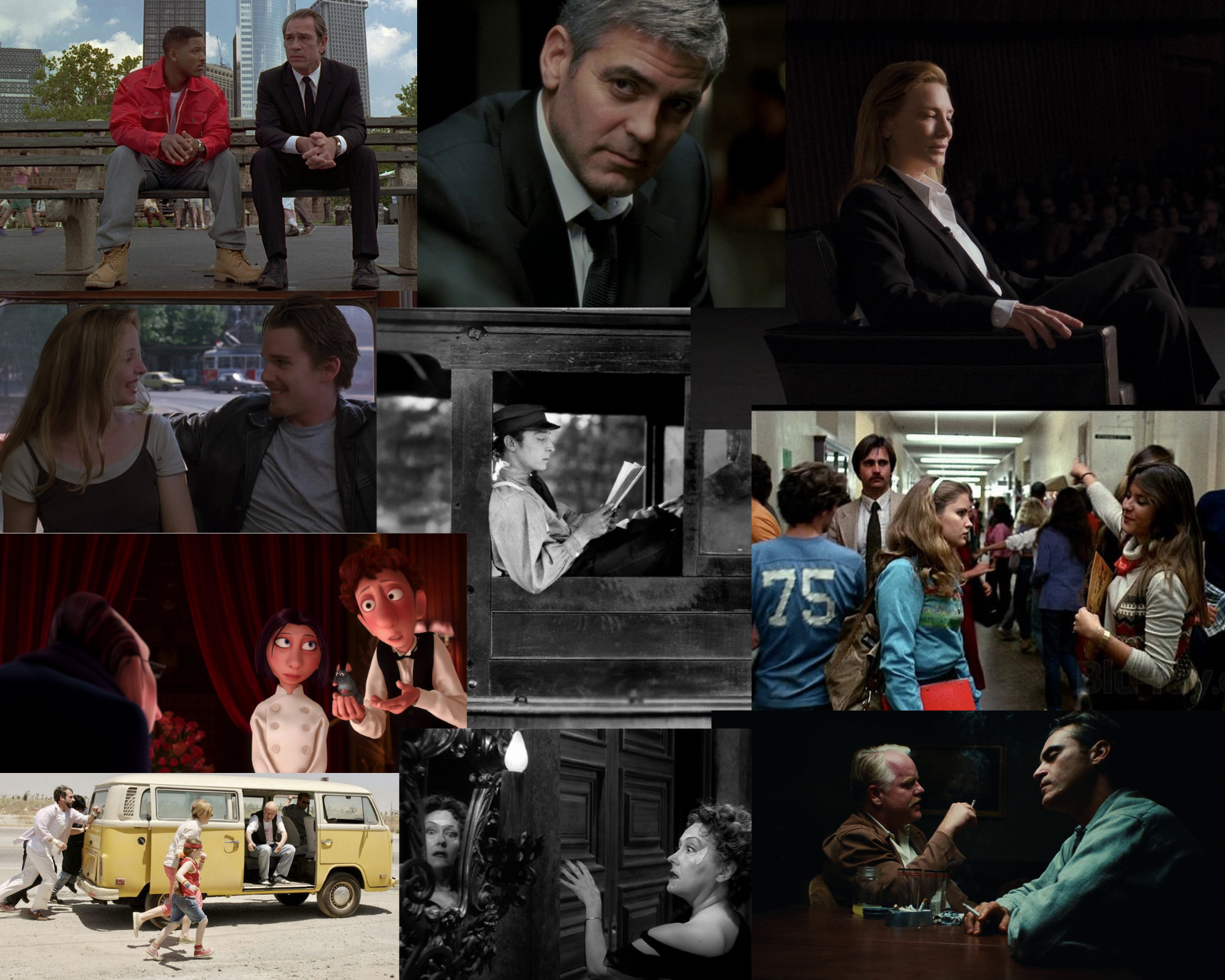
150. Before Sunrise (2004)
Directed by: Richard Linklater
Written by: Richard Linklater, Kim Krizan
Previous Ranking: N/A
It’s intoxicating watching two free spirits fall in love and deny the serious, true feelings they’re slowly coming to acknowledge. Had Jesse & Celine’s story ended here, this would be a quaint little yarn about having one incredible night that lives only in memory. It didn’t, of course, and the two sequels vastly complicate the whole situation between the two of them. Some of that is the process of getting older, but another, quite significant portion is the mythic status of this one night together. It’s a legend they have for each other… and it sucks that they’re right about it. At their beginning is youth’s foolishness. In retrospect, how much simpler things would have been if they had thrown caution to the wind and not separated in the morning.
149. Tár (2022)
Directed by: Todd Field
Written by: Todd Field
Previous Ranking: N/A
The first time through Tár is a plenty rich experience. It’s intriguing to watch the eponymous chief conductor of the Berlin orchestra go through all of the various intricacies of her life as it slowly unravels. But then there’s every subsequent watch, where knowing the truth of the character is an entirely different experience. It’s such a specific tackling of the #MeToo movement, of charlatans, and how easy it is to mistake confidence for genius. “I am time” is such an incredible introduction to a character like Lydia Tár. Years later and my friends and I are still laughing about it.
148. The Master (2012)
Directed by: Paul Thomas Anderson
Written by: Paul Thomas Anderson
Previous Ranking: N/A
Billed as a thinly veiled take down of Scientology, writer/director Paul Thomas Anderson certainly takes a lot of inspiration from L. Ron Hubbard, his Dienetics, and his followers. Luckily, he also makes a film that is so much more than that. The lasting legacy of The Master is its thematic interests, questions about the dynamics of power and the relationship between those with the arrogant compulsion to lead and those with the innate desire to follow. Anderson’s work is always dense with ideas and specificity, but The Master feels like a major leap forward for him. The best thing about it, though is PTA gracing us with one of Phillip Seymour Hoffman’s last great leading performances. It’s unfair to reduce a film this sweeping and meticulous to one or two performances, but even if the entire film had sucked, it would be worth it just for Hoffman’s riff on Hubbard.
147. Fast Times At Ridgemont High (19826)
Directed by: Amy Heckerling
Written by: Cameron Crowe
Previous Ranking: N/A
Amy Heckerling’s directorial debut follows a group of teens over a calendar high school year. Written by Cameron Crowe, all the characters of this ensemble feel so lived in and not like the caricatures/archetypes that so frequently appear in movies like this. Even Sean Penn’s instantly iconic Spicoli comes with a weird naturalism that makes him far less extreme than what the audience will warp their memory into. Heckerling & Crowe’s focus on the emotional truth and universal struggles of these well-rounded teens ensures that Fast Times at Ridgemont High’s legacy will always be as one of the great high school movies of all time.
146. The General (1926)
Directed by: Buster Keaton, Clyde Bruckman
Written by: Al Boasberg, Clyde Bruckman, Buster Keaton, Charles Smith, William Pittenger (original memoir)
Previous Ranking: N/A
Once upon a time in the Silent Era, a producer named Joseph Schenck gave Buster Keaton a metric fuck load of money to buy some real life locomotives and use them for a Civil War action film about Union soldiers who steal a Confederate train and the insane Confederate train conductor who doggedly pursues it. Thank god. Most of Keaton’s films hold up (as long as they don’t have blackface), and The General is one of his most accessible (even though there’s a weirdness that he made a film so sympathetic to the Confederacy). His plucky demeanor and deadpan stare only adds to the truly death defying stunts he performs across the entire runtime. Yes he really blew up a bridge while a train was on it. Yes that really sank a real train into a river. Yes he really climbed onto a moving train’s cowcatcher and removing loose railroad ties from the tracks in real time. Yes, that really was him sitting on a train’s coupling rod as it goes up and down. The dude was completely insane, but he left us with an incredible body of work.
145. Ratatouille (2007)
Directed by: Brad Bird
Written by: Brad Bird (Story/Screenplay), Jan Pinkava (Story), Jim Capobianco (Story)
Previous Ranking: N/A
I dismissed this movie for a decade and a half, but when I finally circled back to it a couple years ago, it blew me away. It’s easy to look at The Incredibles and think it’s Brad Bird’s best Pixar film. That movie has superheroes, action, adventure, family, and a big genre hook. But Ratatouille is stranger, more esoteric, more personal. Everyone (rightly) remembers the moment when grumpy film critic Anton Ego eats the titular stew, but getting there means going through a fabulous examination on the uneasy balance of unbridled art & creativity and the necessity of business and commerce to fund it. And also? A rat controlling a dude by his hair and using him to become a great chef? How in the world did they come up with that? That’s brilliant stuff.
144. Men In Black (1997)
Directed by: Barry Sonnenfeld
Written by: Ed Solomon, Lowell Cunningham (original comic)
Previous Ranking: N/A
It seems silly for a movie like this to be here, but Barry Sonnenfeld’s late 90s sci-fi action comedy has all the right components at the exact right time. Coming off Bad Boys and Independence Day, Men in Black completes Will Smith’s rapid ascent to movie stardom. After this, he’s an A-list star forever. More importantly, though, is Tommy Lee Jones as the grumpy straight man, playing a stoic seriousness and milking it for huge laughs. The CGI is just good enough to pull some of the aliens off while puppets convincingly take care of the rest. And it’s also got a once in a generation, perfectly bizarre performance by Vincent D’Onofrio as Edgar the Giant Alien Cockroach. For almost 30 years, I’ve never been able to say “sugar water” without that weird vocal affect.
143. Sunset Boulevard (1955)
Directed by: Billy Wilder
Written by: Billy Wilder, Charles Brackett, D.M. Marshman Jr.
Previous Ranking: N/A
Billy Wilder’s noir about a washed up writer who falls into a creative relationship with a faded and psychotic silent film actress remains a defining vision of Hollywood. It feels classic and modern, contrasting washed up old talent like Norma Desmond with the bright eyed wonder and excitement of Betty Schaefer and her incoming generation. Best of all, it recognizes that while Los Angeles might not have had much of a history in 1950, what little it had was culturally significant enough that anyone and everyone would do just about anything to remain a part of it.
142. Little Miss Sunshine (2006)
Directed by: Jonathan Dayton, Valerie Faris
Written by: Michael Arndt
Previous Ranking: #42
Exactly the sort of comedy I love. All the jokes come from this wildly dysfunctional family bouncing off each other, with every actor perfectly cast to match their role. Wildly funny, deeply emotional, Little Miss Sunshine is a movie with extremely modular sensibilities, where the humor can go from slapstick to dark to absurdist at the drop of a hat. That modulation also means scenes like the one at the hospital can turn from a overwhelming grief one second into an ecstatic corpse heist the next.
141. Michael Clayton (2007)
Directed by: Tony Gilroy
Written by: Tony Gilroy
Previous Ranking: N/A
Tony Gilroy’s legal thriller operates much like his scripts for the Jason Bourne movies or his eventual work in Star Wars. His directorial debut Michael Clayton is a film about scared people with tremendous power, the depths they will descend to to ensure success, and the tangential bystandards who pay for it. As the titular fixer, George Clooney cleans up all these mini legal scandals. But when it becomes clear his position is not secure because one of the higher ups feels like he knows too much, he works to secure his future. The last scene and final shot are both absolute corkers. God. Put out a movie like this every year.
140. Blue Velvet (1986)
Directed by: David Lynch
Written by: David Lynch
Previous Ranking: N/A
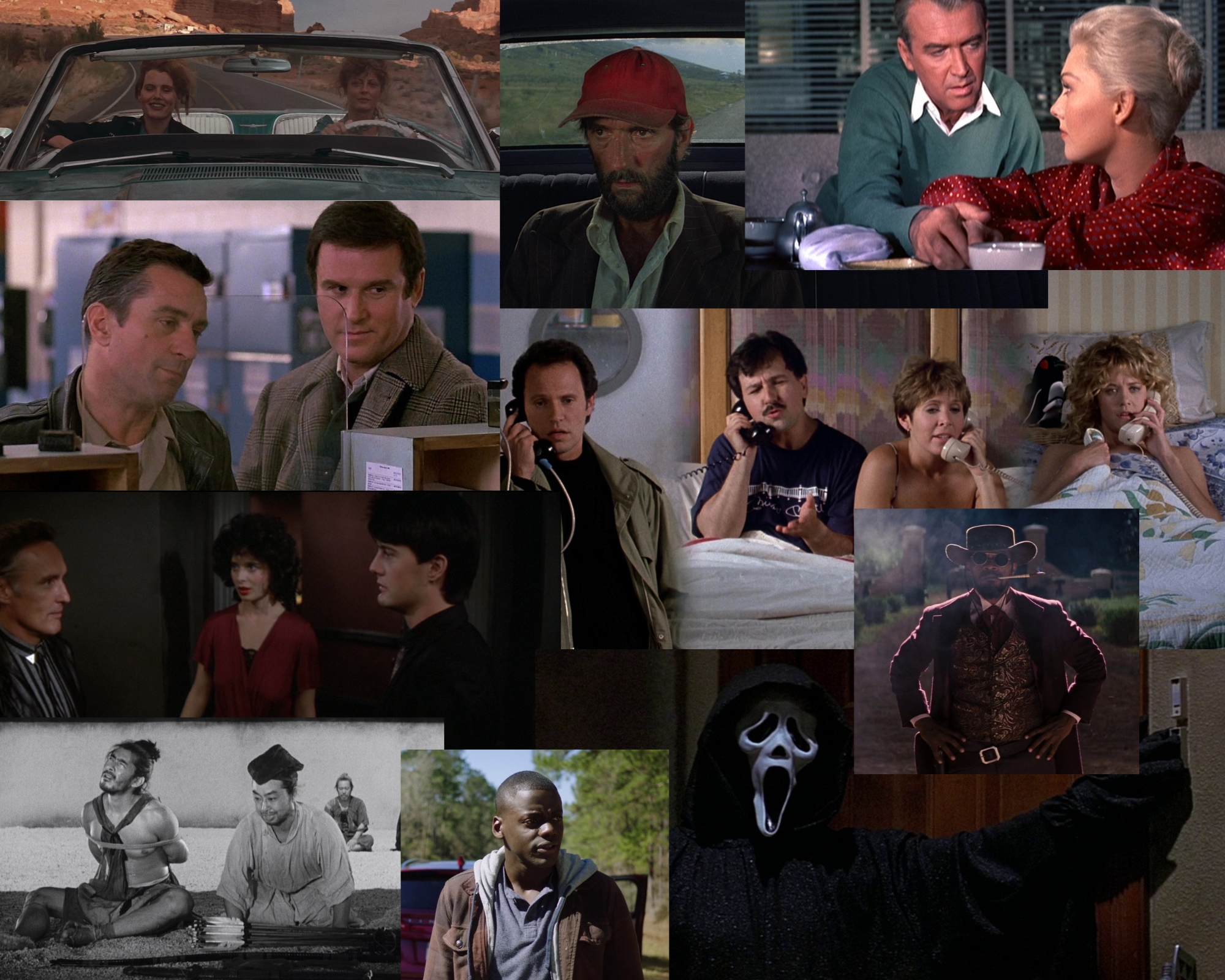
David Lynch’s return to form after the unpleasantness of Dune became his signature calling card until Mulholland Drive. Blue Velvet follows a very basic noir plot, but what enhances it is the Lynchian flair throughout. It’s full of idyllic 50s suburban Americana and strange, disturbing dreamlike incidents. It’s incredibly violent and transgressive but (like the rest of Lynch) never in the name of sadism of cynicism. Much of what he does here serves as an ur-text to his later work, with Twin Peaks in particular feeling like a slower (if more extreme) extension of the evil that casually infects seemingly pristine societies.
139. Rashomon (1950)
Directed by: Akira Kurosawa
Written by: Akira Kurosawa, Shinobu Hashimoto, Ryūnosuke Akutagawa (original text)
Previous Ranking: N/A
Every post-Rashomon story featuring an event told from multiple successive perspectives can trace its origins back to Akira Kurosawa’s samurai tale about conflicting testimonies during a criminal trial. Most imitators start from the premise of “here’s what really happened” and then work backwards to layer unique details of events through each unique perspective. That’s always engaging, but misses the point that Kurosawa built his narrative in such a way that it’s impossible to know the truth from these three testimonies (one of which is the gonzo testimony of the murdered man via a medium as intermediary). The three versions of events don’t just not align in certain places but not others, they actively contradict each other on basic fundamentals basically across the board. Rashomon isn’t a film for viewers to solve, it’s one to experience, contemplate, and ponder for the rest of their lives.
138. Get Out (2017)
Directed by: Jordan Peele
Written by: Jordan Peele
Previous Ranking: #57
Racism doesn’t have to be loud and obvious to be pernicious. Jordan Peele’s directorial debut burst out of nowhere to terrorize audiences with its horror-thriller premise and pure dread. Get Out is slow to reveal its true nature, but every moment feels progressively more… wrong. Star Daniel Kaluuya captures the discomfort of all these minor alarm bells incessantly ringing. The movie lives between twin poles of survival instinct’s “I’m in danger” and the social contract of “I’m overreacting to this situation that’s different than my usual.” By the time everything goes bad, Peele has warned Kaluuya and the audience that it’s not going to end well. That doesn’t make it any easier to witness, but by that point, we gotta see how it ends.
137. Thelma & Louise (1991)
Directed by: Ridley Scott
Written by: Callie Khouri
Previous Ranking: N/A
Ridley Scott’s cynicism about humanity’s bureaucracies leads him to a film about two women trying to escape legal accountability for an act of self-defense that the law reads as a capital crime. If it’s not depressing it’s because of the old school feminism stars Susan Sarandon and Geena Davis embody. They apply that spirit to the great symbol of American freedom: the open road. Even as the walls close in around them and things get more dire, the final moment feels somehow uplifting despite the bleak reality of it. That final image (one of the most iconic in cinema history) captures the last glorious moment of the two titular characters, where even in the end the story finishes on their terms and without any compromises. Even though we all know what happens next, that’s not where Ridley Scott leaves us, and so it finishes on a perfect moment of mythic immortality.
136. Paris, Texas (1984)
Directed by: Wim Wenders
Written by: Sam Shepard
Previous Ranking: N/A
Prepare yourself for maybe the slowest slow burn in cinema history. From its opening moments, Paris, Texas demands its audience’s attention and the faith that it’s going somewhere. At almost two and a half hours, it’s a long, long road (nearly two hours) to the promised payoff. Once it arrives, though, basically nothing else in the world matters. The last act of this movie is one of the best in all of cinema. It more than justifies every second of wondering what the fuck is going on or where the fuck it’s going. Jaw-dropping, breathless, and indescribably powerful, this is the ultimate delayed gratification movie. Just know that it’s a long walk to that champagne.
135. Django Unchained (2012)
Directed by: Quentin Tarantino
Written by: Quentin Tarantino
Previous Ranking: #75
Tarantino has been mashing up genres since his earliest films. No genre mashup, though, is more successful than Django Unchained. Somehow, Tarantino mixes equal parts western and blaxploitation movie to create what he calls a “Southern”. The four main performances are great. Samuel L. Jackson is always fabulous in Tarantino’s hands, and Jamie Foxx slays as the titular slave turned bounty hunter. DiCaprio’s commitment to the malicious and sadistic plantation owner Calvin Candie takes full advantage of his best deployment (as a character actor). But the person having the most fun in the movie is Christopher Waltz as bounty Hunter Dr. King Schultz. Waltz is consistently great, but there’s a manic, mischievous glee he plays whenever he’s in Tarantino’s hands. No one else seems able to capture it. If Tarantino ever does get around to a tenth (“and final”) film, it should include Waltz in some capacity simply so we can have one more sublime collaboration.
134. Scream (1996)
Directed by: Wes Craven
Written by: Kevin Williamson
Previous Ranking: #22
Textbook gateway horror, Scream is a post modern take on the slasher subgenre. Part parody, part sendup, part legitimate entry, Kevin Williamson pens an extremely meta and self-aware story featuring a town full of characters (both serial killer and victims) who know the tropes of slasher movies. It’s got great jump scares, great characters, and establishes the series’ recurring whodunnit feature. I’ll never tire of it.
133. When Harry Met Sally (1989)
Directed by: Rob Reiner
Written by: Nora Ephron
Previous Ranking: N/A
I’ve been too hard on Rob Reiner over the years. Not a director with a specific authorial voice, Reiner’s strength comes from a steady hand at bringing a great script to the big screen. With When Harry Met Sally he buys into screenwriter Nora Ephron’s skepticism about the script’s underlying question of whether or not men and women can be friends if they sleep together and also the romantic comedy in general. That cynicism makes the movie work, as it reflects the characters’ own philosophies and how they evolve from there to match what they are both feeling for each other. That (among many other reasons) is what makes this one of the best romcoms ever.
132. Midnight Run (1988)
Directed by: Martin Breest
Written by: George Gallo
Previous Ranking: N/A
On a first watch through, Midnight Run is a fun movie with a great premise, fun characters, and fabulous actors. With subsequent rewatches, however, the insane craft and skill of director Martin Brest and the airtight script by George Gallo shines through. This is one of the great films of the 80s and one of the best buddy road trip movies of all time. Hilarious, exciting, big action… there’s nothing not to love about it.
131. Vertigo (1957)
Directed by: Alfred Hitchcock
Written by: Alex Coppel, Samuel Taylor, Pierre Boileau (original text), Thomas Narcejac (original text)
Previous Ranking: N/A
Hitchcock’s twisty portrayal of obsession regularly comes up as not just his best film, but one of the best of all time in any context. It might require multiple viewings (and the added context of Hitchcock himself to appreciate how personal this is), but this is absolutely his masterpiece. Even if it’s not my favorite Hitchcock and there’s 130 films I’ve ranked above it, there’s no denying its earned every one of its seemingly endless accolades.
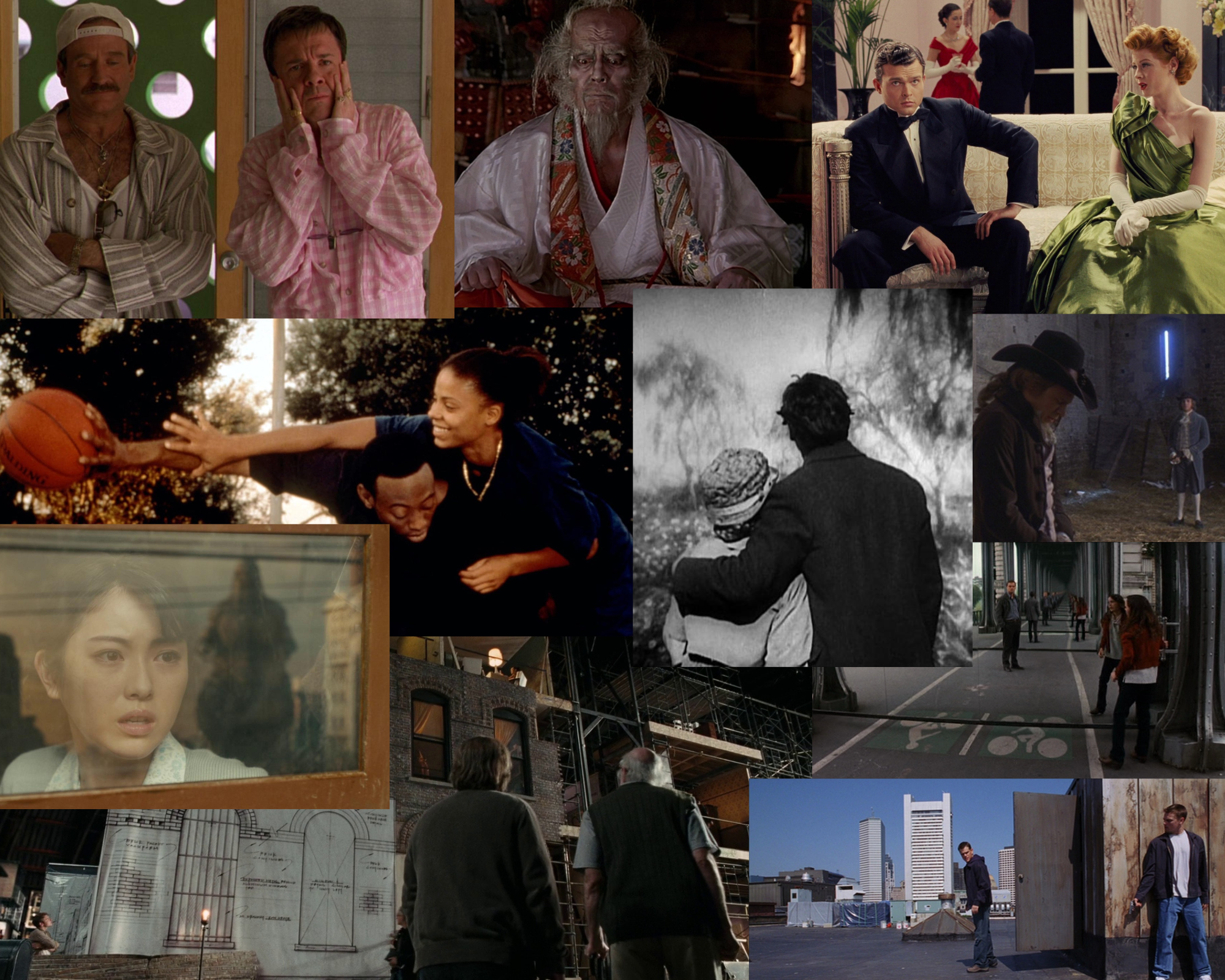
130. The Birdcage (1996)
Directed by: Mike Nichols
Written by: Elaine May, Jean Poiret (original text)
Previous Ranking: N/A
Elaine May and Mike Nichols’ late career collab adopted the French film La Cage Aux Folles in which the daughter (Calista Flockhart) of a deeply conservative politician (Gene Hackman) gets engaged to the son (Dan Fetterman) of Miami drag club owner Armand Goldman (Robin Williams) and his husband, Albert (Nathan Lane), the club’s leading headliner. The Birdcage takes quite a bit of time to get to the main event culture clash, but it doesn’t waste a second of it. It builds these characters with tremendous care and empathy, pointing at their foolishness as well as thier virtues and never judging them for it. Most importantly, depite never punching down at any of these characters it still manages to find the bountiful comedy in all of them.
129. Barry Lyndon (197)
Directed by: Stanley Kubrick
Written by: Stanley Kubrick, William Makepeace Thackeray
Previous Ranking: N/A
While unmistakably a Kubrick film, this doesn’t have the iconic reputation of his post-Lolita work. That’s a shame. Barry Lyndon, which follows the eponymous huckster, cad, and schmuck. is one of his best films. It’s a period piece, but it’s mostly a careful character study of who this man is, how he cons his way into wealth and status, and the wretched life he lives that sees him lose all of it. He’s a pathetic man who carries himself with all the dignity of arrogant landed gentry. But no amount of behavior or peacocking could hide a pustule this wretched.
128. Synecdoche, New York (2008)
Directed by: Charlie Kaufman
Written by: Charlie Kaufman
Previous Ranking: N/A
Impressionistic, abstract films allow stories to be more than plot. More than that, films as a rare medium where viewers can have the entire story experience “in one go” means that any weirdness or strangeness or internal logic is easier to follow because it (at least in theory) flows naturally as the story plays. Charlie Kaufman had written strange movies before, but for his first time directing he made a movie that pushes that idea to the extreme. Nothing in Synecdoche, New York makes sense from a rational, linear point of view. The entire film is extended metaphors and meta commentary. Anything on screen only really makes sense as a small piece of something much larger. It’s absolutely arresting and maybe the best possible example of this sort of emotional logic storytelling. There’s no way it’s for everyone, but to those who would enjoy it, there’s nothing better.
127. Ran (1985)
Directed by: Akira Kurosawa
Written by: Akira Kurosawa, Hideo Oguni, Masalo Ide, William Shakespeare (source text)
Previous Ranking: N/A
When I was a kid, my dad had a VHS tape of Ran. The cover was blue with three faceless samurai riding on horseback. Above them, three bold red letters spelled out the title, and under that, the title in Japanese (or at least, that’s what I’ve always assumed). That simple cover art, Kurosawa’s use of color (this is one of only two non-black-and-white samurai films), and its plot being an adaptation of my favorite Shakespeare play meant this had a lot to live up to. Luckily, it surpassed even my wildest expectations. Ran is an incredible epic, sprawling and gorgeous. The battles are unbelievable and the use of color is punchy without being comical, almost like this is the luxury samurai product worthy of the victory lap it is. After this, Kurosawa’s career is basically over, and his last three films are small, intimate passion projects. Ran being his final statement on this sort of film is an astonishing way to go out on top. Kurosawa converts a Shakespeare masterpiece into his own unique work, gives a scale and scope that simply wasn’t possible on his budgets of his heyday, and proves once and for all that he is without question one of the greatest directors to ever live.
126. Sunrise: A Song of Two Humans (1927)
Directed by: F.W. Murnau
Written by: Carl Mayer, Hermann Sudermann (original text)
Previous Ranking: N/A
No amount of explanation can quite capture what it’s like to watch a movie like Sunrise and imagine what it must have been like to see a Hollywood motion picture do this in 1927. Its central sequence where the husband and wife go into town and fall in love is so romantic and wonderful and enthralling, but on either side of that is a precarious sense of danger and peril. Director F.W. Murnau was one of the most significant figures in German expressionism and brought that style to Hollywood, making a movie that is one part “Cabinet of Dr. Caligari” unsettling and another part an iconic love. This is another of those movies I’ve never been able to stop thinking about since watching. It should be required viewing for any cinephile.
125. The Departed (2008)
Directed by: Martin Scorsese
Written by: William Monahan, Alan Mak (original source), Felix Chong (original source)
Previous Ranking: N/A
The Departed finally won Scorsese his Best Director Oscar, even if everyone admits that it’s hardly his best work. But that makes it sound like The Departed is somehow a less good movie. It’s not. The Departed absolutely rules, adapting an iconic Hong Kong cop thriller for an American audience. The twin narratives is an amazing conceit, where a good man goes undercover into the mob while the mob boss’s adopted becomes a double agent plant within the police department. The thing that elevates it the most is Jack Nicholson as the mob boss Frank Costello. It’s one of Nicholson’s last (to date) performances and he’s as good as ever, fully embracing the part of his on-camera persona that’s inherently sinister. If anything, people acknowledging this as not Scorsese’s best is more of a massive compliment to his body of work than some damning indictment of this film.
124. Inception (2010)
Directed by: Christopher Nolan
Written by: Christopher Nolan
Previous Ranking: #25
It’s the film that really turned Nolan into the #1 director on the planet. Coming of The Dark Knight’s raging success, Inception was a massive hit, and from the first trailer to final release the excitement of seeing something like it was too palpable for it not to be the most high profile release of 2010. While the early response was overwhelmingly positive, it didn’t take long for critics like Dan Harmon to complain that the movie is just people explaining how the world works for the entire run time. It’s a fair critique, but it misses the forest for the trees. When a movie is this good, this captivating, this fabulous, it doesn’t have to conform to the conceived wisdom of how things “should” work if it’s otherwise working just fine. Nevertheless, this percolated into the consciousness and made people sound smart by thinking Nolan was really good at making “puzzles” or “rides” and not good at crafting narratives or stories. Watching it again now, it’s an understandable sentiment, though Nolan works hard to make the film into something emotionally potent. If he falls short, it’s only because this is his first time really attempting something this personal at this massive of a scale. By the time he rolled around to Interstellar four years later, he basically fixed this disconnect. He’s only gotten better at it since then.
123. Godzilla Minus One (2023)
Directed by: Takashi Yamazaki
Written by: Takashi Yamazaki
Previous Ranking: N/A
I’ve seen this twice, once in color, once in black and white. Both times have been practically euphoric experiences that both made me want to go home and immediatley watch every Godzilla movie ever made. Godzilla Minus One is the sort of movie that’ll make you a believer. Made on what amounts to a small indie budget by today’s standards, Takashi Yamazaki and his team somehow pulled off a massive Godzilla movie with all of the insane Godzilla action the genre requires while also making a deeply emotional, thematically rich story that gets to the heart of not just the Godzilla concept, but also real characters going through real post-World War II traumas. It doesn’t sacrifice its intimate storytelling for the spine-powdering action or vice-versa; to the contrary, they complement each other. This is a movie that proves stories can have it all and there’s no excuse for giant blockbusters to be the nonsense assembly line cookie cutter factory product that they so often are.
122. Hail, Caesar! (2016)
Directed by: Joel Coen, Ethan Coen
Written by: Joel Coen, Ethan Coen
Previous Ranking: N/A
Marketed as a bright, comedic Busby Berkeley musical, Hail, Caesar! didn’t really go over well with the viewing public when they finally got to experience the movie. This is par for the course with the Coens, where people really respond (at least initially) to their darker crime work and generally disregard their screwball comedies only to have public sentiment uncurdle as time goes on. Hail, Caesar! is a blast, celebrating the golden age of Hollywood via Josh Brolin, who plays the head of production for a major studio. It’s understandable for audiences to not connect with a film so concerned with major issues of early 50s Hollywood, as there’s even a major plot line involving blacklisted Communist screenwriters. But for the ones who eat up every Coens with a spoon, this is one I could watch over and over and over again.
121. Love & Basketball (2000)
Directed by: Gina Prince-Bythewood
Written by: Gina Prince-Bythewood
Previous Ranking: N/A
Earlier this year, I picked up a friend from the airport. When I asked her what she did on the plane, she told me she randomly chose to watch Love & Basketball without knowing anything about it. What followed was an entire drive home talking about Gina Prince-Bythewood’s exquisite sports romance about childhood friends who become sweeethearts in high school, and then fall apart in college only to reconnect years later after the male half of their pairing gets engaged to someone else. Through all of this, it uses basketball as both a metaphor for what’s happening with this pair and it provides commentary about the black experience, specifically as a gateway to success and wealth. It’s hot as hell, especially in the climactic, all-stakes, one-on-one game where every shot oozes with sexual tension. Love & Basketball is not the sort of film that comes up immediately when thinking of recommendations, but it is the sort of hidden gem that is a total treat when it does come up.
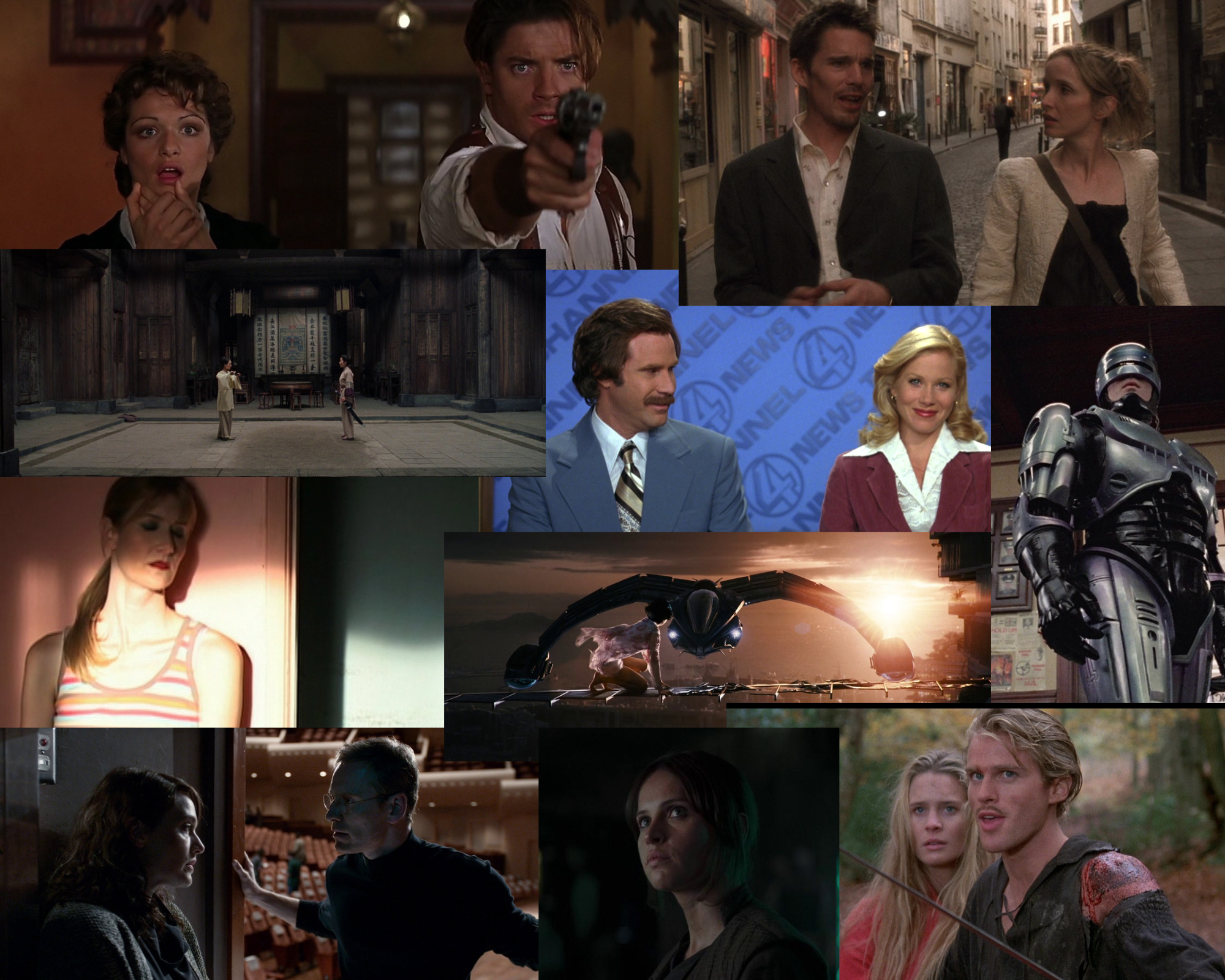
120. Before Sunset (2004)
Directed by: Richard Linklater
Written by: Richard Linklater (Story/Screenplay/Characters), Julie Delpy (Screenplay), Ethan Hawke (Screenplay), Kim Krizan (Story/Characters)
Previous Ranking: N/A
There’s a number of great ideas baked into the DNA of Before Sunset: picking up on the story of the couple from Before Sunrise nine years later, setting the entire 80 minute film in roughly real time, and using that almost-a-decade span to complicate their lives in simple ways. Seeing Ethan Hawke and Julie Delpy nine years older is jarring, but helps to convey all their lost time. With these clocks ticking, it raises the stakes of their relationship. While Jesse is basically ready to throw away everything to be with Celine (though it takes most of the runtime to muster the conviction to do it), for her, it’s an admission of what she wants but giving him every opportunity and reason to get off. It’s a sweet spot between Before Sunrise’s youthful optimism and Before Midnight’s bleak reality of adulthood. It’s both beautiful and heartbreaking, contrasting with Before Sunrise to give a true happy ending. “This time it all works out” makes for an even more romantic movie. In the first movie, their mythic story took roughly twelve hours. In the second, the mythic exclamation point to it takes only 80 minutes. And that’s why Before Sunset is the best of this trilogy.
119. Rogue One: A Star Wars Story (2016)
Directed by: Gareth Edwards
Written by: Chris Weitz (Screenplay), Tony Gilroy (Screenplay), John Knoll (Story), Gary Whitta (Story), George Lucas (Characters)
Previous Ranking: #58
Rogue One has always been an awesome Star Wars movie. Gareth Edwards creates all the environments with an eye towards life beyond the scope of camera setups and movie run time. The script by Chris Weitz (who did everything up until the start of production) and Tony Gilroy (who did all the writing once production started) crackles with an energy and excitement. The characters might seem thin, but by the end of it there’s a clear sense of who they are and what they died for. Diego Luna’s portrayal of Cassian Andor alone is so effective that it generates one of the best corners of Star Wars ever. But mostly, for all its adventure and hopeful final minute (because we know what happens both next and ultimately), it remains a shockingly cynical text. The idea that they built an entire movie around the women and people of color no one ever heard about who had to die so that fanboys could have their precious, [almost-]all-white men, daddy issues saga is damning as hell. If only Kathleen Kennedy hadn’t questioned her confidence in making this movie, maybe Star Wars’s return would have had a stronger foundation and that could withstand the wake caused by The Rise of Skywalker’s odiousness.
118. Anchorman: The Legend of Ron Burgundy (2004)
Directed by: Adam McKay
Written by: Will Ferrell, Adam McKay
Previous Ranking: #59
The cast is amazing. It’s insanely quotable. It’s Will Ferrell and Adam McKay hungrily trying to make one of the defining comedies of the decade. And god it’s just so funny. Anchorman is a movie that’s helped define the generation that grew up around it, and gave producer Judd Apatow the space to change comedy for a generation when he followed this up with The 40-Year Old Virgin and Knocked Up in the following years. I’ve spent the last two decades quoting just about every line in this movie, and I’m sure I’ll spend the rest of my decades not changing that at all.
117. Steve Jobs (2015)
Directed by: Danny Boyle
Written by: Aaron Sorkin, Walter Isaacson (original biography)
Previous Ranking: #86
I miss the days where great directors made Aaron Sorkin’s scripts. Since Molly’s Game, Sorkin’s own cinematic work usually fomes with as basically only directed his own work, but Steve Jobs is one of two great examples of why it’s best when there’s a collaborator helping bring Sorkin’s words to life. Following a fictional version of the real time minutes prior to three different product launches in the titular character’s life, it manages to get across all of what made the Apple founder/CEO both such an asshole and also one of the most important visionaries in the computer age. It’s exciting, fast-paced, and the sort of movie that’s endlessly rewatchable. Man, we need more Sorkin movies. Just… let’s pair him with great directors, yeah?
116. Inland Empire (2006)
Directed by: David Lynch
Written by: David Lynch
Previous Ranking: N/A
The beginning of David Lynch’s web series Rabbits. A Polish woman warns Laura Dern that the role she’s about to land is in a haunted movie. Jeremy Irons plays the film’s director and Justin Theroux plays her co-lead. There’s a strange sound on their first day of rehearsal, maybe from a ghost in the back of the soundstage on their first day of rehearsal. A battered Laura Dern gives a lengthy monologue to a cop about her fucked up past. A woman discovers she has been stabbed in the stomach with a screwdriver. A man squirts ketchup onto his white shirt. Laura Dern holds up a sheet with a burn hole and travels into a room full of prostitutes who all dance to “The Locomotion”. Laura Dern has an affair with her co-star… or is that her character having an affair with the Justin Theroux character’s character because that’s what happens in the movie? A man clenches a lightbulb between his teeth. A woman stabs Laura Dern with a screwdriver. Laura Dern collapses and dies on Hollywood Boulevard, next to a woman who speaks broken English and tells strange stories. Another woman holds a lighter up to Laura Dern’s face to prove she died. This is all a movie. The malicious haunting force appears in a hallway and when Laura Dern shoots it dead, it creates a creepypasta simulacrum of her face. After Laura Dern finds the lost girl in a hotel room, they hug. A bunch of prostitutes dance to Nina Simone’s “Sinnerman”. Off to the side, a man silently saws a log. Laura Dern watches. Serene.
115. Crouching Tiger, Hidden Dragon (2000)
Directed by: Ang Lee
Written by: Wang Hui-ling, James Schmaus, Tsai Kuo-jung, Wang Dulu (original novel)
Previous Ranking: N/A
Crouching Tiger, Hidden Dragon was a seismic movie at the time, making hundreds of millions of dollars and a huge cultural splash. In the time after, people remembered it for it’s seemingly silly wirework of these sword-bearing badasses floating on air and running across the tops of trees. It has brain meltingly cool action and sword fighting between Michelle Yeoh and Zhang Ziyi. But the reason it succeeded was because of its incredible love story. It’s all longing and pining, leaving things unsaid until it’s too late. Self-denial and honor and duty above self-indulgence and hedonism. It’s so much better than you remember.
114. Cloud Atlas (2012)
Directed by: The Wachowskis, Tom Tykwer
Written by: The Wachowskis, Tom Tykwer, David Mitchell (original novel)
Previous Ranking: N/A
Totally not a movie for everyone, but the breadth and scope of this ambitious adaptation of David Mitchell’s Cloud Atlas is one of the most audacious films of all time. It’s not for everyone, but locking into these six stories and their settings (both temporal and physical) makes for a one-of-a-kind experience. The novel separates out the stories in parts, where the outer pages of the book are the farthest in the past and the innermosts are the farthest in the future. The Wachowskis and Tom Tykwer don’t do that, instead going for an absolutely insane cross-cutting, where the main actors all play different roles in each of the myriad timelines and moments rhyme and echo across time and space. It gives the film an epic scope, a breathtaking use of the medium unlike anything I’ve ever seen. And that it does all this by making minor, almost Easter egg connections across the stories and without coming anywhere close to an Avengers style team up in the final few minutes? This is an impossible film. And yet it exists.
113. RoboCop (1987)
Directed by: Paul Verhoeven
Written by: Edward Neumeier, Michael Miner
Previous Ranking: N/A
An experimental weapons project violently murders and eviscerates an innocent company employee right in front of the board of directors. It’s one of the most upsetting, violent, and gruesome moments I’ve ever witnessed in a film (this is doubly true for the unrated director’s cut). In the immediate aftermath, the company’s CEO turns to the slightly humbled project lead and says “I’m very disappointed in you.” My god. There’s a dead co-worker lying on a slab not fifteen feet away after one of the most horrific scenes of violence ever turned the man into swiss cheese… and all he can express is disappointment? RoboCop is one of the most R-rated movies ever, a vicious satire of the American action blockbuster and corporatocracy, and also… a Christ allegory? Peter Weller is amazing. The dystopic vision of near-future Detroit is on point… really, RoboCop is to the scifi action movie what Scream is to slashers. In making something that that so lovingly sends up a genre, it can’t help but add to the canon of it.
112. The Princess Bride (1987)
Directed by: Rob Reiner
Written by: William Goldman
Previous Ranking: #84
There was a period of time where I dismissed this as a cheap, foofy fantasy movie that’s a little too cute and also very cheap looking and a bit too “80s storybook”. I’m not above admitting that sort of pig-headed arrogance. The Princess Bride is a phenomenal movie, something that all ages can appreciate with its humor, meta commentary, and not even the slightly bit of irony. It wears its heart on its sleeve and is unabashedly romantic, emotional, and honest. The cheap fantasy of it all is part of its charm, and director Rob Reiner delivers the perfect interpretation of William Goldman’s perfect script. The story was most important. Total mensch.
111. The Mummy (1999)
Directed by: Stephen Sommers
Written by: Stephen Sommers (Story/Screenplay), Lloyd Fonvielle (Story), Kevin Jarre (Story), Nina Wilcox Putnam (original film), Richard Schayer (original film), John L. Balderston (original film)
Previous Ranking: #29
In 2022, when I made a list of Top 100 movies with a bunch of my same-aged friends, there were only four movies that had universal (only one person left it off their list) acclaim. The Mummy is the only one of these to fall out of my Top 100. It’s just so good, though. It’s a total movie star turn for Brendan Fraser, though pivoting him away from character actor and into leading man territory was a bad move in the long run. Rachel Weisz is almost too good to be the love interest, but she brings a confidence and swagger to Egyptologist Evelyn (Evie) and never acts like she’s above what’s essentially a big budget blockbuster B-movie. Why can’t more movies be as fun as this?
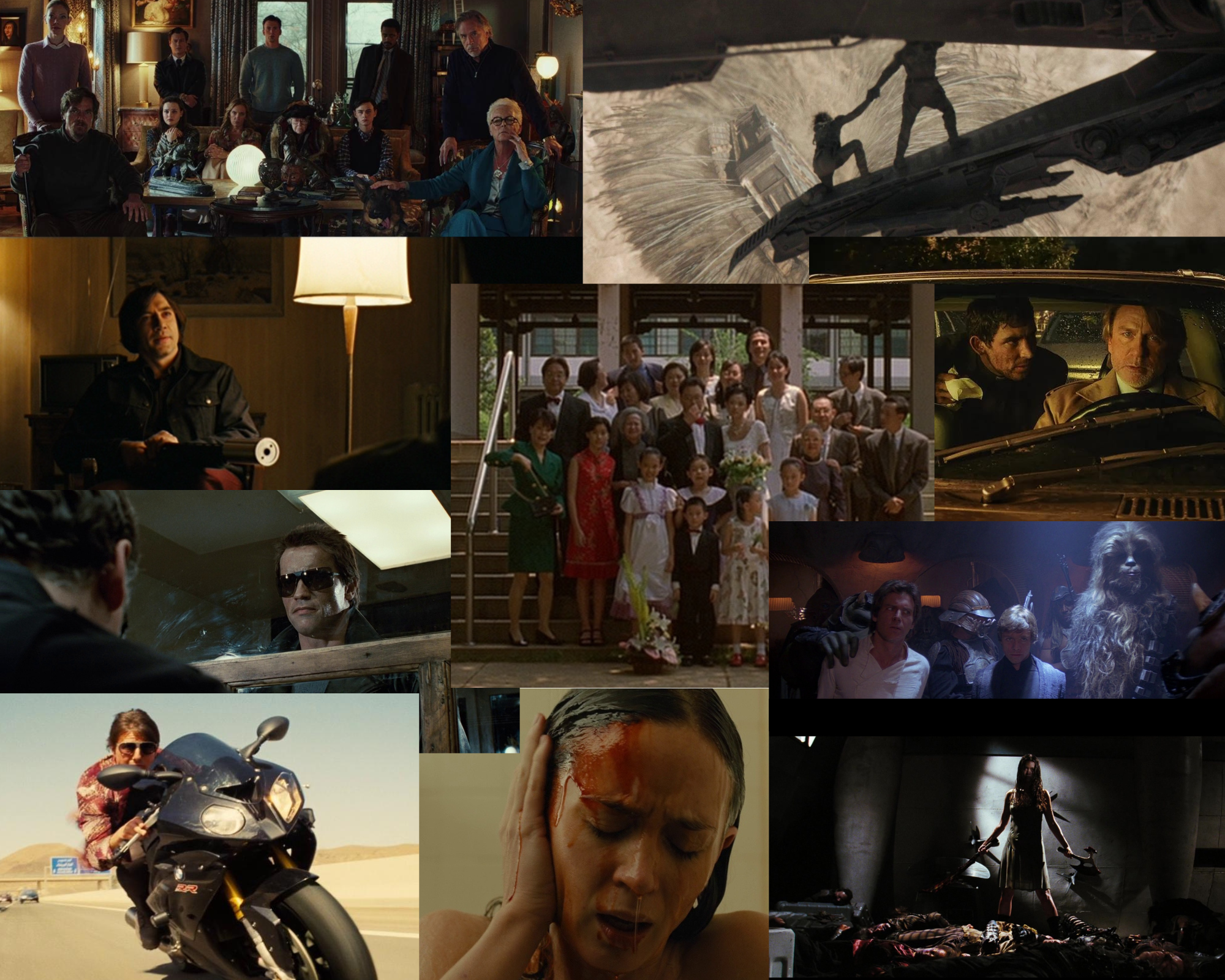
110. The Terminator (1984)
Directed by: James Cameron
Written by: James Cameron, Gale Anne Hurd
Previous Ranking: #53
This gnarly, nasty little indie b-movie blew open the doors in 1984. Like so many other filmmakers, James Cameron’s youth comes with a level of piss and vinegar that seems unfathomable in a world where he’s fallen down the Avatar rabbit hole. And yet, that bite makes The Terminator edgy and cool without feeling fake. Cameron portrays Los Angeles as a living, breathing organism with its own unique ecosystems and fauna. And he figures out how to give his audience the bare minimum of information without bogging the whole thing down in exposition. A stunning achievement of visual and practical effects on a ludicrously shoestring budget. Man. Can you imagine if your calling card was The freaking Terminator?
109. Serenity (2005)
Directed by: Joss Whedon
Written by: Joss Whedon
Previous Ranking: #17
There was a long period of time where Serenity was my favorite movie. It was only in the wake of the allegations about Joss Whedon’s general assholery that I turned on it enough to knock it down to #17 on my 2022 list, though that had nothing to do with the movie and everything to do with the guy behind it. Revisiting Whedon earlier this year was illuminating, as was traveling back into the ‘verse of Firefly for the first time in more than a decade. It probably says bad things about me that I connect so deeply with Whedon’s aesthetics and interests, his style and his narrative vernacular, but given his influence on my formative years, this is one of those things that I’ll be reckoning with for the rest of my life. While I do so, though, it’s nice to know that I can still enjoy a movie like Serenity and that for all the noxious traits that came out about Whedon in the wake of Justice League, he is at least (in some small way) in conversation with them. This is the rare movie that I can see placing higher in future rankings. Maybe not to where it once was, but what’s important is recognizing and accepting that this movie will always be a part of my life. With that in mind, I’m lucky that I like it as much as I do and that this is still a movie I can watch over and over and over again and that I can do so outside of the still-thorny orbit of Joss Whedon.
108. Knives Out (2019)
Directed by: Rian Johnson
Written by: Rian Johnson
Previous Ranking: #73
By happenstance, I rewatched this over the holiday break. Daniel Craig is great, but there’s still a sense of him figuring the character. Johnson is making this movie with the confidence and aplomb of someone who knows exactly what sort of Agatha Christie movie he wants to make for this new generation. While not as good as Glass Onion and Wake Up Dead Man. It’s still a cracking mystery with an incredible cast playing fabulous characters. I’ve said it before and I’ll probably say it when I write about the other two Benoit Blanc mysteries, but Johnson cashing his fat Last Jedi blank check to make something this fun and exciting and replayable is one of the great gifts of the IP-driven era. Much as I love all of Johnson’s movies and want him to keep producing original ideas, if he did nothing but make Benoit Blanc mysteries for the rest of his life, I really would be okay with it.
107. No Country For Old Men (2007)
Directed by: Joel Coen, Ethan Coen
Written by: Joel Coen, Ethan Coen, Cormac McCarthy (original novel)
Previous Ranking: #41
If the Coen Bros’ movies are varying proportions of comedy and serious drama, No Country for Old Men is perhaps their most serious, joyless movie. That’s not a damning indictment. No matter the comedy/serious ratio, the Coens always know how to make a lethal concoction of “great film”. Their adaptation of this Cormac McCarthy novel is one of their best films, one that has intense cat-and-mouse action sequences and an unconventional structure w/r/t Sheriff Ed Tom Bell (Tommy Lee Jones), who anchors the outer edges of the film while all the chaos and madness happens in the middle. Javier Bardem’s Anton Chigurh is an unbelievable performance that basically cements his career as a thing to follow for… ever, really. This finally won the Coens their Oscar and they absolutely deserved it. If it’s not my favorite of theirs, it’s only because there are others that more perfectly modulate to my sensibilities. Considering how close this one does, it’s insane to know that there are multiple Coens above it.
106. Yi Yi (2000)
Directed by: Edward Yang
Written by: Edward Yang
Previous Ranking: N/A
This is one of those movies that suffers from me only having seen it once. It ranks extremely high on Letterboxd’s top movies and on rewatch it’ll probably go even higher on this list. That said, the best way to describe this is as an American Beauty that is going to last longer. There is a sense of discontentment and ennui permeating every minute of this. It’s an exquisite piece of art and one I can’t wait to revisit for the many years to come.
105. Sicario (2015)
Directed by: Denis Villeneuve
Written by: Taylor Sheridan
Previous Ranking: #49
Near as I can tell, Sicario’s sequel (Sicario: Day of the Soldado) is a nasty piece of racism and border politics paranoia. Screenwriter Taylor Sheridan seems obsessed with the right wing fever dream of dangerous Mexican drug cartels that dig underground tunnel networks to travel freely across our pourous border and bury dozens of bodies in the walls of drug dens and have inside informants getting bank security camera footage if any fed comes snooping around. His avant-garde movie solution to this is a CIA task force that bends the laws to fight the fight where it can in the name of protecting this country, even if that means hiring a former Mexican prosecutor with an axe to grind and turning him into an expert assassin. Sheridan weaves all of that into the DNA of Sicario, but director Denis Villeneuve finds himself much more interested in the plight of FBI Special Agent Kate Macer (Emily Blunt), an unwitting patsy who finds herself embroiled in a problem far beyond her understanding and capacity. It’s Villeneuve who keeps this from being right wing agitprop, and making it a film about a broken system Kate feels powerless to change. This is far preferable (and even actually enjoyable) to the version that valorizes weaponizing that powerlessness and grabbing unilateral power in the self-righteous name of security.
104. Star Wars Episode VI: Return of the Jedi (1983)
Directed by: Richard Marquand (and also George Lucas a bit, uncredited)
Written by: George Lucas (Story/Screenplay), Richard Lawrence Kasdan (Screenplay)
Previous Ranking: #81
Return of the Jedi gets a bum rap. Sure, it closes a trilogy and endings are hard. Yes it has Ewoks and they help take down the Empire. Yes it ends abruptly with all the pieces slotting into place quickly and easily to make sure there’s no more movies. But where Empire is a serious, excellent installment of space opera, Return of the Jedi is a bright, poppy, injection of fun. It’s remarkable just what the movie is able to accomplish in 132 minutes, especially since the first 40 of that is just resolving the Han Solo cliffhanger on Tatooine. The following 90 minutes resolves the war between the Empire and the Rebellion. It’s a marvelously economic work, bringing Luke to the fore and having him embrace his destiny, resolve the conflict with his father, and create that one moment of weakness, just enough to throw the keystone of entire fascist regime down an abyssal shaft. The final act is breathtaking, cutting between Luke’s fight with Vader in the Emperor’s Throne Room, the Han/Leia/Chewie/Ewoks/droids valiant efforts to take down the shield generator, and Lando and the Rebellion’s dog fight in the space above as they try to blow up another Death Star. No amount of tiny cracks can take away the joy of a Star Wars movie this good.
103. Mission: Impossible - Rogue Nation (2015)
Directed by: Christopher McQuarrie
Written by: Christopher McQuarrie (Story/Screenplay), Drew Pearce (Story)
Previous Ranking: N/A
The first post Ghost Protocol Mission: Impossible movie cribs heavily from the plucky spectacle/adventure tone Brad Bird established there. And yet, the comparison I’ve fallen back on is that Ghost Protocol is a movie that remains as good as it was that first watch. Rogue Nation, on the other hand, only seems to get better every time. Some of this is the introduction of Rebecca Ferguson as superspy Ilsa Faust. She’s enigmatic and much of the movie is trying to determine her loyalties and angles as she works with (and sometimes against) Ethan Hunt. Some of it is Sean Harris’s Solomon Lane, a right bastard who uses his glower and presence and raspy voice to project an air of menace and evil. Really, though, this is the moment where Mission: Impossible proves that Ghost Protocol is not just a replicable format, it’s toppable. While nothing here tops the Dubai sequence, this makes up for that quality sheer quantity: Tom Cruise dangling from the side of a plane as it takes off. Tom Cruise holding his breath for ten minutes in a sustained one-take underwater shot. Tom Cruise stunt driving the chase scene through the streets of Casablanca. The two best things about it aren’t major stunts at all. The Vienna Opera House sequence is absolute dynamite, maybe the best use of opera in an action film ever. The other is the final action sequence. The final setpieces of Ghost Protocol, Fallout, and The Final Reckoning all function in basically the same way: the team works individually/in squads to stop a nuclear launch while Ethan tracks down the bad guy for a big final showdown/confrontation. Those are all thrilling and the films each pair so each closing act gets a massive, awe-inspiring set piece. But McQuarrie chooses to resolve this loud and bombastic movie with an intimate foot chase through the streets of London as Ethan lures Solomon Lane into his final trap. It echoes The Matrix in showing that even though there’s a big budget movie that needs to show off all the money it’s spent, sometimes what the narrative needs is small, intimate work where the stakes can feel like the end of the world even if that’s not the case. Rogue Nation is the start of McQuarrie’s insane four-film run. It is also his most underrated.
102. Wake Up Dead Man (2025)
Directed by: Rian Johnson
Written by: Rian Johnson
Previous Ranking: N/A
While not my favorite of the Benoit Blanc mystery films, this is the most thematically rich of them so far. In focusing on faith, Rian Johnson tackles the topic by wrestling with two should-be-diametrically-opposed forces: a religious preacher who believes in the spiritual power of the church and Benoit Blanc, who is not a believer at all. The strength of these movies is not in Benoit Blanc (he really is just an excellent seasoning more than anything), but rather the central character (in this case Josh O’Connor as Jud Duplenticy) and all of the various suspects surrounding them. Johnson never seems to have a problem getting all-star casts for these movies, and with characters this universally good it’s easy to see why. Everyone sinks their teeth into their respective parts, and even those with less (Kerry Washington, Andrew Scott, Cailee Spaeny) manage to make the most of their screen time and leave indelible impressions. In making new characters, Johnson, too, modulates the story and structure to match the tale he’s telling. The big flashback where Grace trashes the church is pure horror movie and feels not just unlike the previous movies, but also something that the other movies simply couldn’t have sustained. These movies are all different, and as long as he keeps things fresh (which he takes as a challenge) and writes great characters (which he’s always done better than just about any major writer/director working today), I’ll never ever get tired of them.
101. Dune Part One (2021)
Directed by: Denis Villeneuve
Written by: Jon Spaihts, Denis Villeneuve, Eric Roth, Frank Herbert (original novel)
Previous Ranking: N/A
There is a point at the midpoint of Dune, when the Harkonnens finally launch the night time sneak attack against the Atreides-held city of Arakeen. It’s like watching director Denis Villeneuve’s childhood imagination come to life with all the maturity and skill of a master filmmaker. It’s not just the massive explosions and slow bombs that can pass through shields; it’s the anti-aerial cannons rising, turning, and firing, the way the balloon ships decelerate by skidding in the air, the way the Sarduakar descend from the heavens in silence… but if it were just the big sci-fi ideas and aesthetics Dune would be just an average science fiction film. What it does is take all of the core ideas and themes of Frank Herbert’s novel and emphasize them here in the way only a movie would. Dune is a triumph of adaptation, a movie version of a difficult-to-film book by telling a great story via fabulous screenplay, awe-inspiring production design (including costuming, makeup, props, sets, spaceships), a top-tier cast (who is the weak link? Stephen McKinley Henderson? Are you serious?), and a director who was born to make this movie. Let me live on this barren desert world, and if I can’t, let it transport me there in the way that only the magic of the movies can.
Coming Soon…
Another 50. Because… there’s still 100 more to go.
Thanks for reading!
See you tomrorow.