We Were Both Young When I First Saw You - The Terminator
It's a love story, baby, just say yes
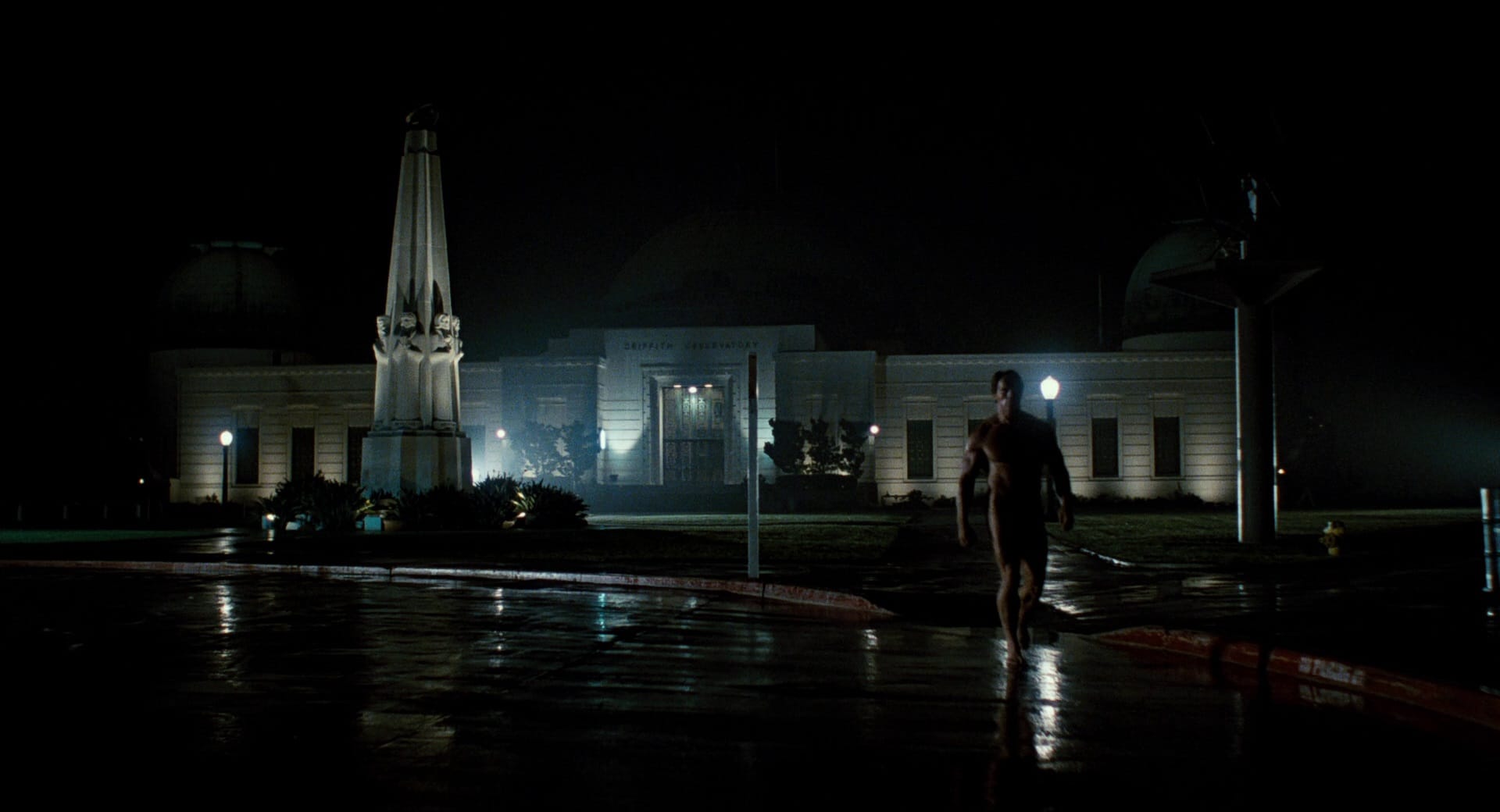
My dad still refuses to go to the Griffith Observatory at night.
This is something that’s been in my head since before I saw The Terminator, adding to the lore of a movie that’s been an obsession of mine going back to elementary school. My parents were the sort who cared and kept me mostly away from R-rated movies until I was older, but whenever I’m anywhere near Griffith, I remember just how much that opening scene seared into his brain. I was very young, but I recall my mother pushing back on it. He retorted that he didn’t want to go where there’d be biker dudes up there breaking beer bottles.
“And then a killer robot would show up and kill us all?” she asked.
“Exactly,” he replied.
I can only imagine what it must have been like to see this movie when it came out in 1984. No one had really seen James Cameron’s first movie, and for all intents and purposes this is really the first time he would have come across anyone’s radar. What a debut, though. The Terminator is immediately iconic, and a lot of that is Cameron’s sense of dialing into the zeitgeist of the year and the era1. As a native Angeleno, it’s still thrilling to hear Lt. Traxler refer to TechNoir as “on Pico”.
There’s a lot of things Cameron does well, but the run and gun stylings of Roger Corman helped him and producer/co-writer Gale Ann Hurd create a sense of space with an extremely limited budget. Los Angeles feels like a living, breathing place. Few other films capture it nearly as well as this one does. That makes it all the more terrifying and real, the sort of place that would still make my dad, decades later wary of going to a particular filming location at a particular time. Doesn’t matter that the film bases itself in a world with time travel and an unstoppable killer robot from the future. It still made him nervous.
But the power of The Terminator extends far beyond Cameron’s ability to paint a location in vivid, neo-noir detail.
Genre exercise
How is it that Cameron, on a $6.4m budget, managed to make Los Angeles work so well?
For starters, Gale Anne Hurd has spoken openly about coming out of the Roger Corman school of getting the film done no matter what. The Terminator is fully in that indie film ethos. In an interview during press for Dark Fate, Arnold talked about how when they needed the shot of the Terminator punching out the window of a car, the production didn’t actually own the car he ended up punching. Cameron just needed the shot. So they did it.
True enough, from the start, Cameron soaks the film in iconography that’s deeply of the time. It’s not just the shot of Los Angeles splayed out as the naked Terminator looks down on it. It’s the streets they use for the car chases and the department store Kyle ducks into when he’s hiding from the cops. But there’s also little things. The way the trees crunch under the big rig right before it explodes or the way the glass shatters when the Terminator is kicking the shit out of Matt. Hell, it’s the one Nike sneaker dipping down into frame below the changing room curtain or the woman behind the grate shouting “four fifty!” above the dine of that raging nightclub on Pico. Cameron has an eye for the stark reality of the world as it exists. His films feel tactile, lived in, visceral.
This especially works within the horror framework off which this drafts. He’s said that the vision for the movie’s most iconic images came to him in a dream, a nightmare where a metallic skeleton was chasing him and trying to kill him. Sure enough, this is the terror of the film’s final act, when the final girl in Sarah Connor has to finally kill the big bad villain.
To take it to a Cabin in the Woods place, the film’s characters all work within the tropes that define the genre. Sarah is the final girl and her “virginity” comes from the sense that she has no relationships with men (more on this in a moment). Her roommate Ginger is a bit in that “whore” trope (where her view on sex is casual and flippant and also she needs that damn sandwich) while Matt is a “jock” (“don’t make me bust you up, man!”). Both have to die because we’re watching a movie to see a killer robot from the future kill people. That’s why we go to horror movies.
For all of his bravado, Reese plays more into the “scholar” type, educating Sarah about the future and the rules of this world. Michael Biehn plays a big tough guy, but despite the chin and grit there is an aspect to his face that is very pretty, and his voice is in a nice tenor range. It gives him an air of femininity, one that has to be obvious considering he’s the counterpoint to perfect leading man Arnold Schwarzenegger.
Given that this is low-budget horror, it’s no wonder Cameron’s able to show of a mastery of tone and pacing and suspense like he does here.
But Piranha 2 was a horror movie, not so far from this film’s B-movie, indie trappings. That film is a bit more schlocky, sure. And yet… Piranha 2 is a movie that truly no one would remember if Cameron’s name wasn’t on it while The Terminator is a definitive piece of science fiction, action, and even the larger film canons. It’s a must-see. Why?
But you already know the answer to that question.
Love Story
Someone once told me that between Cameron’s two Terminator films, The Terminator was the superior product to T2. It’s the love story, y’see. It makes for a far more clean story than whatever morass Cameron was doing with the sequel. He’s wrong, of course, T2 is superior in every way, but… hey. He was wrong a lot, so.
Watching this recently with a friend who’d never seen it, there was a point where she’d started to fall asleep a bit. It was right at the moment where Sarah dresses Kyle’s wound and he starts to talk about the future, going into the flashback of what his life was like in the squalid tunnels of the resistance. Funny enough, for all the mockery, she had a point. The first 40 minutes or so are an absolute bullet train, with moments to breathe that Cameron deploys with ruthless economy. Sarah is a waitress for exactly two scenes in the movie, but via those brief glimpses into her life we fully understand who she is. When Sarah leaves her apartment, Cameron jacks up the paranoia thriller angle of a woman terrified of some unseen stalker. After Sarah & Kyle get away from TechNoir, the film slows down just enough for Kyle to explain the horrible world of the future, but then they’re off and running again mere moments later. As they recuperate at the police station (and we get some more explanations from Kyle), the Terminator performs grotesque surgery on its arm and cuts out its own eyeball.
After they escape the police station, though, their car (like the movie) literally runs out of gas. That slowdown, though, is so important. In that slowdown, we get the big moment: the reveal of Kyle having the picture of Sarah. If it wasn’t clear before, the film immediately becomes the love story of a man out of time in love with a woman from the past. It’s just about waiting for Sarah to figure out how in love she is with him and that the care he freely gives her is a value she’s been missing all her life.
Living in a world where The Terminator is a love story between Kyle Reese and Sarah Conner is one I’ve always lived in. I can’t imagine the revelation this must have been in the moment, the palpable relief as we realize that Kyle’s passion is not just about saving the future, it’s about saving the woman he’s in love with.
She figures it out too. Romantically. Over the making of a dozen plastiques with which they’ll hopefully kill the Terminator. It happens basically off screen.
When they finally consummate their relationship, it’s the moment where Sarah self-actualizes. Everything after that moment is the slow wane of Kyle: The Terminator shoots him, Sarah has to literally drag him along, he survives the truck explosion by diving into a dumpster, he can barely toggle switches in the factory and Sarah has to scream at him to get him to his feet… All of these aspects feel like in creating Sarah Conner (and John by extension) Kyle gave too much of himself. He manages to split the Terminator in half with his little plastique, but long before that it’s clear that Kyle’s not going to make it through this.
It’s at that point that Sarah has to be the strong person she’s always been. She vanquishes the Terminator, gets the quippy line at the end, but all of this badassery has been a process of slow growth as Sarah learns to fight for herself, as Kyle gives her something to live for. Sure, she’s fighting for a future, but it matters because John is their son.
Without this love story, The Terminator is just a well-made, schlocky B-movie. With it, it’s one of the great action films of the 1980s.
If there’s a failing in here it’s that… well… the movie does drag a bit while Cameron buckles down to cover all of the emotional ground that he needs to make the movie work. The movie’s relentless pace mortgages a soggy middle where the emotional plot needs to grow and blossom incredibly fast. It’s no accident that them falling in love is the stretch of movie where the Terminator does not know where the two of them are. Without that ticking clock, the movie feels like it’s wandering through the wilderness a bit.
What I’m saying is I don’t blame my friend for falling asleep. Within me is a deep, unshakeable love for this movie, but this is skill of balancing action with emotional pathos is one that Cameron gets better at as time goes on.
Real life
To be honest, I don’t really want to go to the Griffith Observatory at night either. Thinking that there’s random drunk street toughs bombing around and smashing beer bottles is one thing, but then extrapolating to the terror of a naked Arnold Schwarzenegger stalking across the parking lot and demanding my clothes is the stuff of rampant imagination.
The power in the story lies in the believability in what we’re watching. Cameron works very hard to make Los Angeles a living, breathing place full of dank alleys and bold but mostly useless streetlights. More importantly, he takes a gripping, grizzly thriller and infuses it with a rich core of emotional pathos. Whether they want to admit it or not, this is the thing that connects audiences to whatever story they’re experiencing. It’s what makes them go back to the theater over and over again.
James Cameron (better than maybe any other filmmaker out there) understands that emotional arcs, rich character growth, and real human experience are all the fundamental building blocks to making populist entertainment. There’s a direct line from Kyle staring at the picture of Sarah to Newt saying “Mommy!” to Bud watching Lindsey drown to the T-800 saying “I see now why you cry” to Rose telling Jack “this is where we met” to the destruction of Home Tree and even, yes, to Neytiri holding a knife to Spider’s throat. More than the technology and spectacle and excitement, these are the building blocks to James Cameron’s success.
Potent, emotional pathos makes his movies feel real and lived in. Emotional experience (more than even the visceral thrills) is the reward of multiple viewings. We rewatch movies to experience that journey over and over and over again. There’s basically no2 James Cameron movie that I can’t watch and rewatch endlessly.
I mean… how else am I supposed to visit the Griffith Observatory at night?
This is a wild anecdote, but it won’t fit into the T2 essay in a few weeks so I’ll put it here. The dude who filmed the infamous video that sparked the Rodney King riots (where the cops beat the shit out of Rodney King) also captured bootleg behind the scenes footage of Terminator 2 filming Arnold walking out of the bar at the beginning of the movie. Both segments of footage were on the same tape and that bar was at the same intersection as the one from the beating. Nevermind that the villain of T2 dresses himself like an LAPD officer. Cameron has always locked himself into culture’s pulse. ↩
At this point I’ll just admit that Piranha II does not count. ↩