
This Is America - Taxi Driver
One Travis Bickle was enough in 1976. How many are around today?
There is a school of thought that the ending of Taxi Driver is a dream.
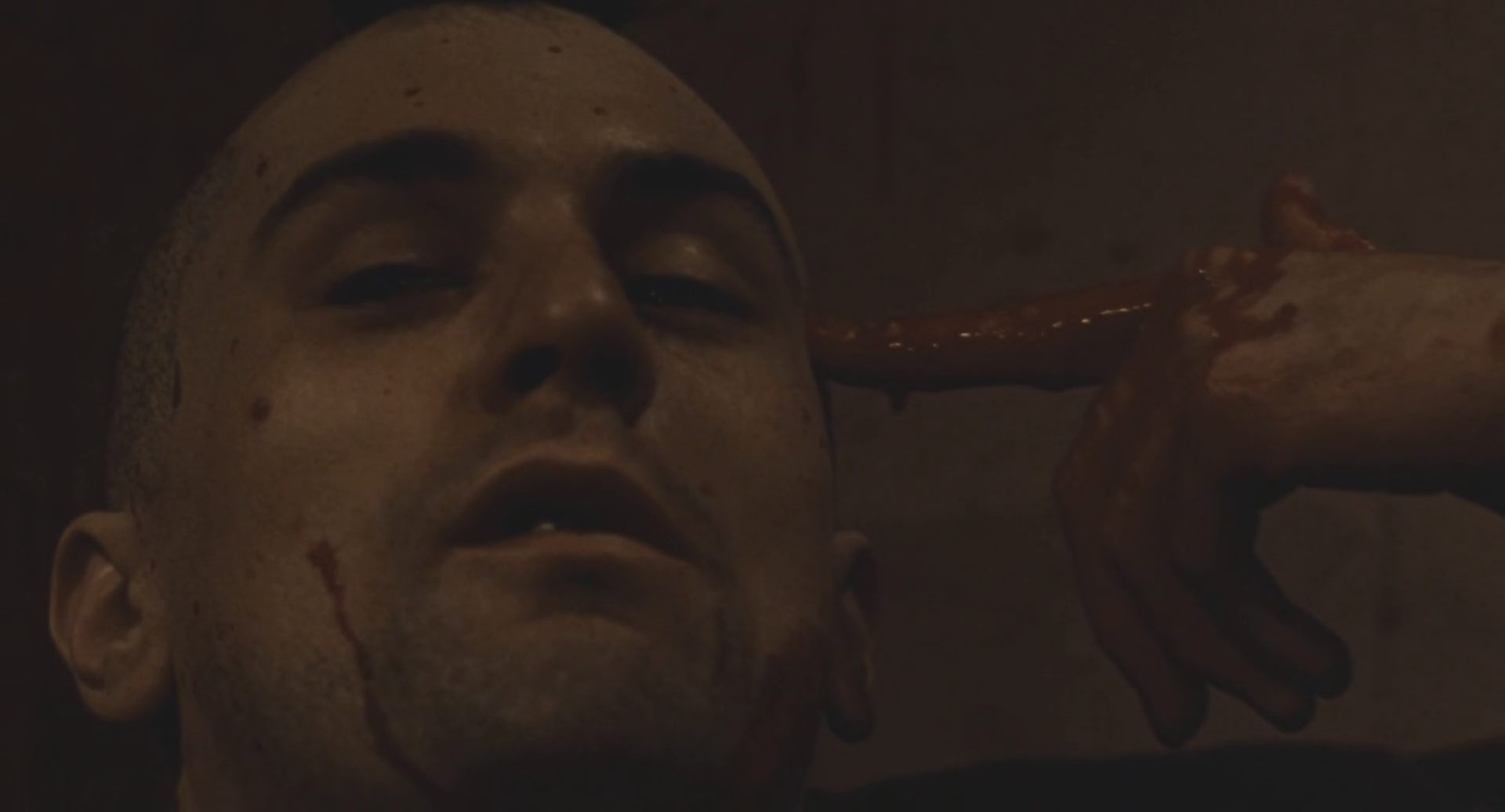
As the camera slowly pans over the carnage that Travis Bickle has wrought upon this den of child sex trafficking/prostitution, it’s almost as if we’re getting his POV as his soul leaves his body. Over the pools of blood and splayed out corpses, past the cops with their guns drawn, across the shattered glass and the fingers that are lying around there somewhere… we finally reach the street. The police holds back the gathered crowd from the active crime scene. The camera doesn’t linger on any of this as the crane shot pulls out and up, as though Travis is ascending to heaven.
This is, of course, nonsense.
Part of the reason this theory/reading exists is because Taxi Driver is one of the big movies of all time. It’s the movie that put Scorsese on the map and routinely winds up in best-of lists. In 2022, for Sight & Sound’s decennial poll, it ranked at #29 on the critics’ list and #12 on the directors’. Any movie this popular is going to have crazy analyses and write-ups and theories about what all the various pieces mean.
But a dream? People love making grand statements about what is or is not real in any given movie. There’s always some theory about the plot descending into the main character’s mindscape or that characters were dead for all or at least part of the narrative and what we’re witnessing is [idea not supported by the text].
Taxi Driver doesn’t need such a reading. Doing one robs Scorsese’s almost saccharine, redemptive ending of its grotesque power. If it’s all a dream, we can debate that rather than Travis’s valorization by people who didn’t witness what we did. Fifty years later it might seem like this tale of a disillusioned Vietnam vet wouldn’t have resonance today, but America as it currently exists runs on the toxic masculinity that drives Travis Bickle into the bleak madness that has disturbed viewers for half a century and counting.
Whole lotta Travis Bickles in the world these days. Only now, they live on the internet.
Incel
One thing that colored this viewing of Taxi Driver came from Max Fisher’s review on Letterboxd. Fisher is a journalist who’s worked for entitites like the New York Times and has spent a lot of time in the world of internet culture and exploring what technology is doing to our brains. Here’s what he wrote:
A terrifying portrait of the explosive violence lurking within lost young men estranged from a society they don't understand. It's an archetype that 50 years ago was emerging as a threat on the edge of post-materialist American life, and today has drifted to its political center as the median youth swing voter. An entire world of lifestyle podcasts, YouTubers, and GOP primary campaigns catering to the Travis Bickles who are still just as dangerous and fragile and delusional, but who now, rather than floating alone in cabs through midtown, collectively control the full levers of American power.
He’s right.
Scorsese has always made films about the perils of toxic masculinity. Throw a dart and you’ll hit one: King of Comedy, Goodfellas, Wolf of Wall Street, The Aviator, Casino, Shutter Island, and Raging Bull… But Taxi Driver’s potency outstrips them all.
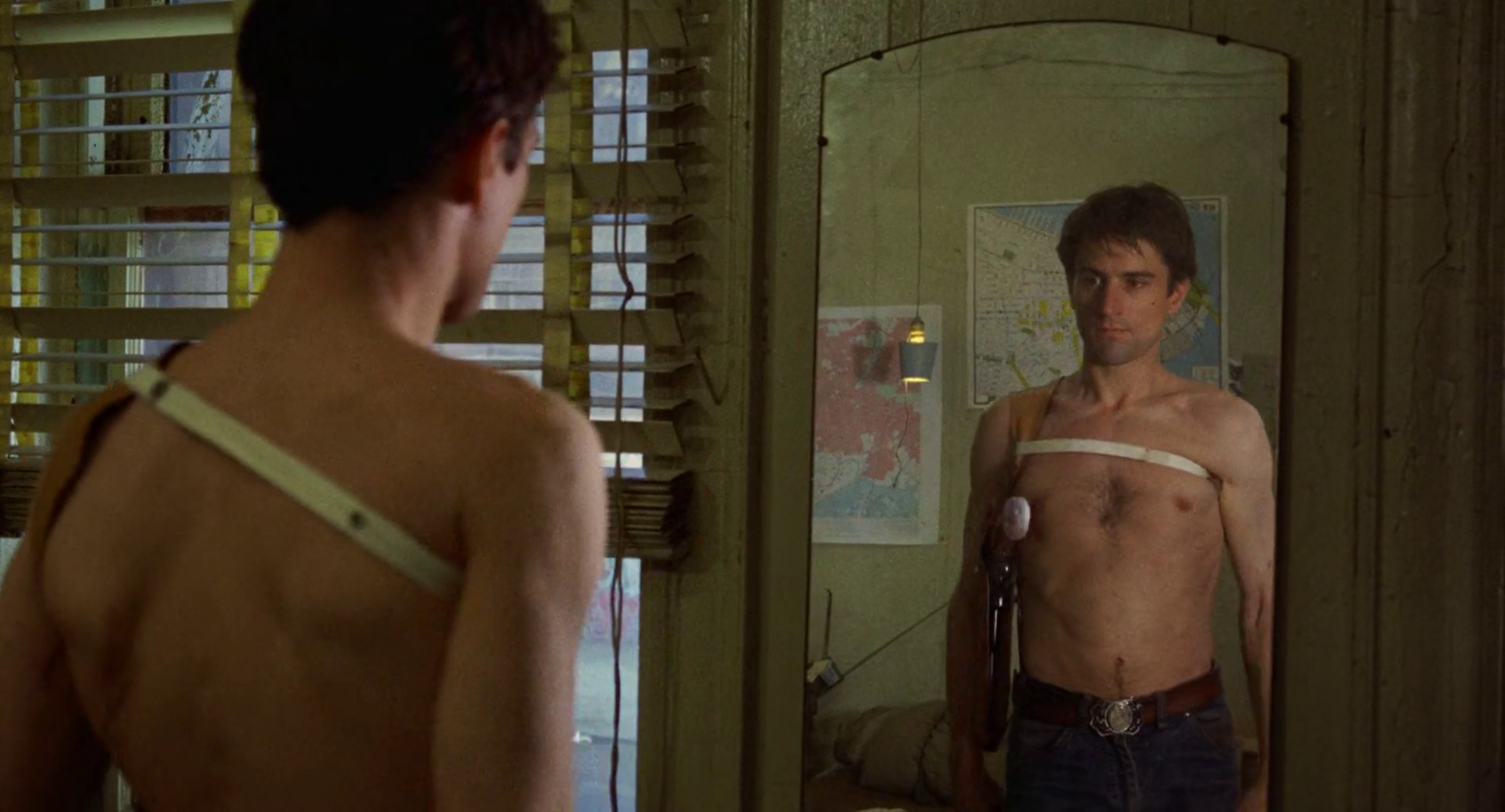
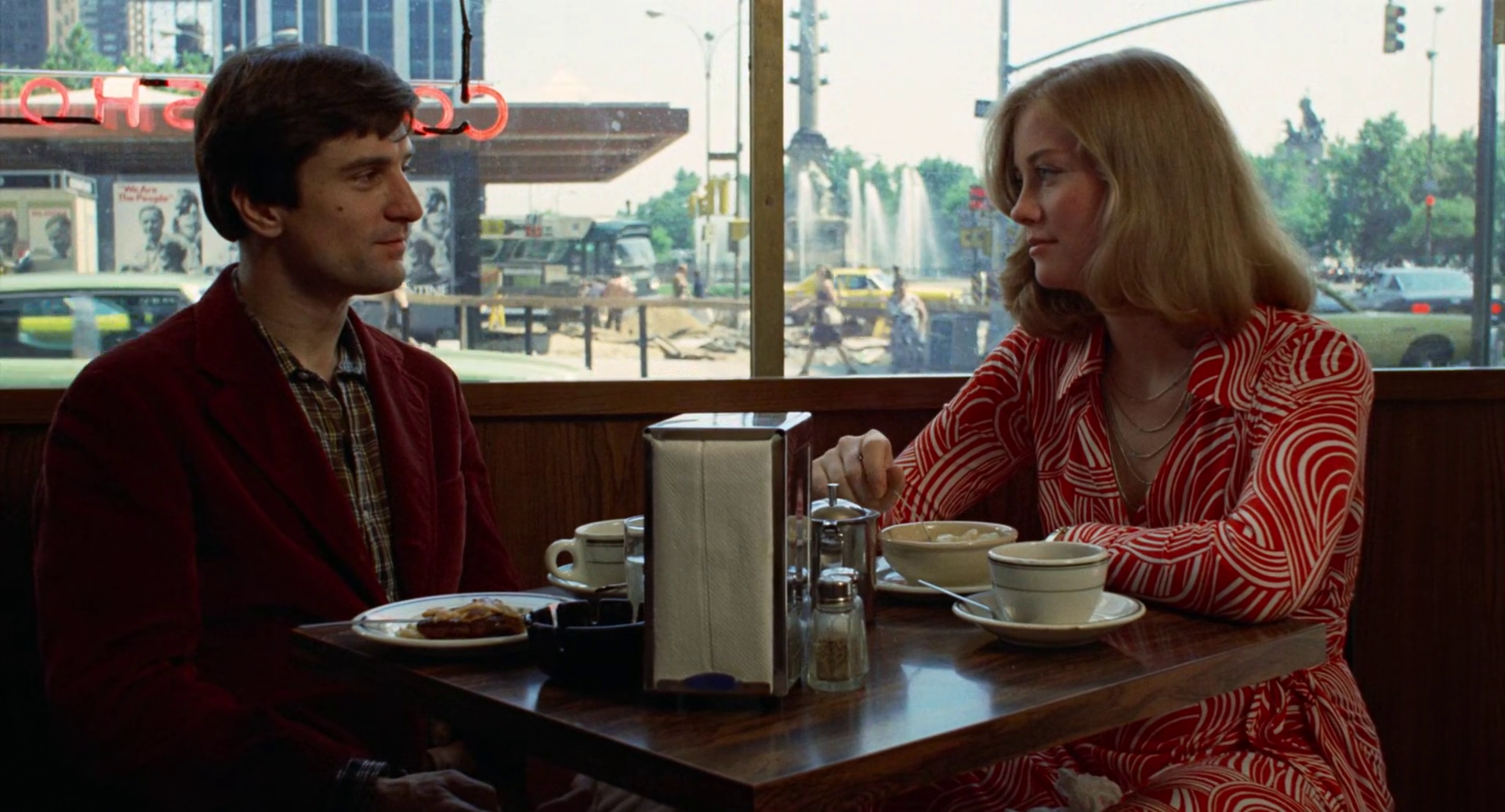
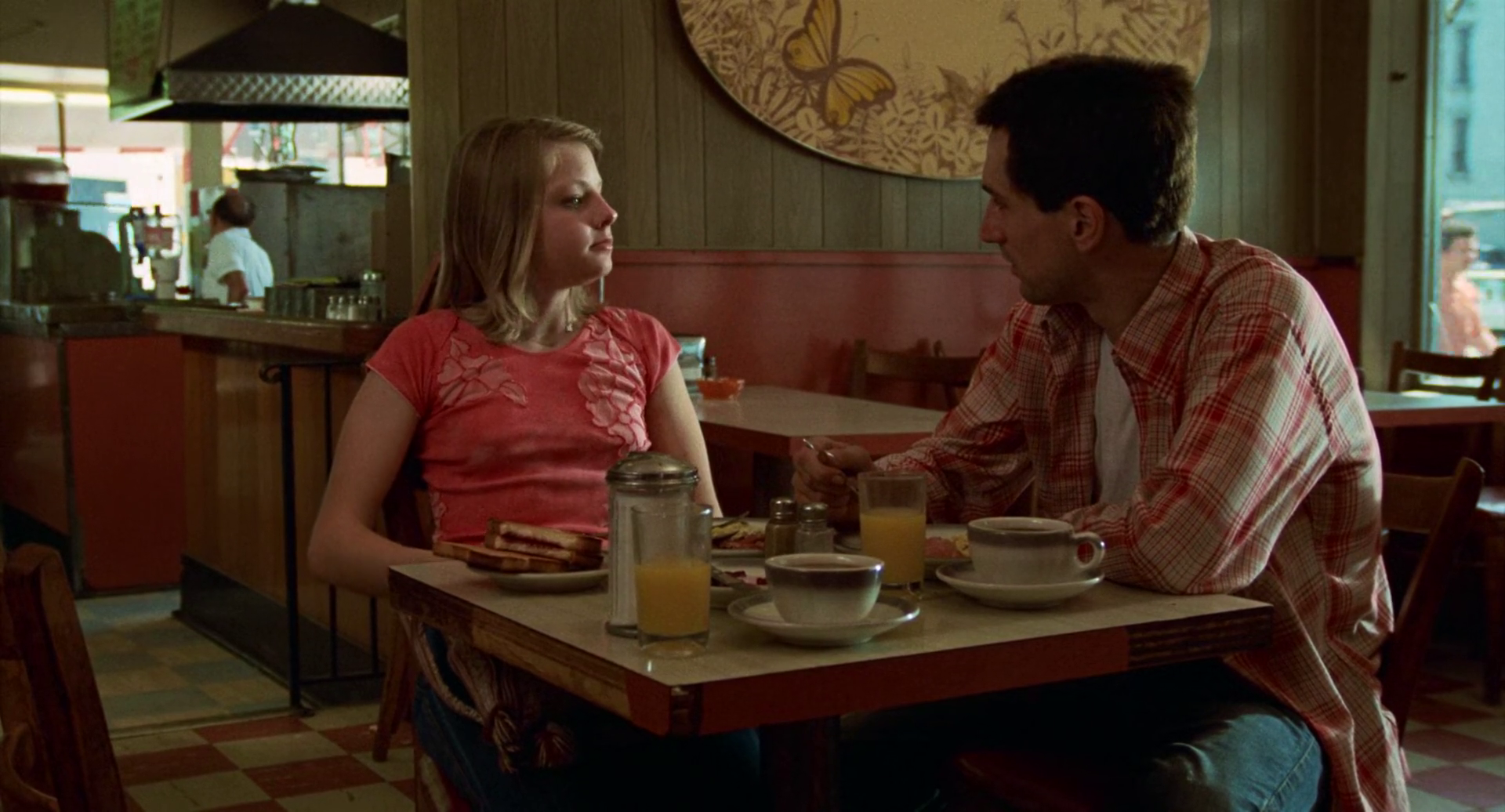
Part of that is the subject matter. This is a movie where Travis Bickle goes to porn theaters, even bringing Betsy (Cybill Shepherd) to one on his second date with her. It also features Jodie Foster as a 13 year-old prostitute named Iris. Throughout the movie Travis hones his body and mind in an attempt to assassinate Senator Charles Palantine. And, of course, Scorsese does the New York City of 1976 absolutely no favors; it’s a rotted cesspit of crime and filth and moral depravity. We spend loads of time in Travis’s apartment, where he does pushups and create gizmos for his various weapons to help him be an effective killer when the time comes. He looks at himself in the mirror and also sits watching TV, occasionally pointing his gun at the people on it as though it’s part of his training.
Nowadays, Travis Bickle wouldn’t just sit around watching TV all day.
Instead, he would be chronically online. Maybe he could be minorly productive and the fan of some Twitch streamers or even doing harmless posts on Facebook or X. But really, we all know where he would be: in the darkest corners. He would be active in right wing trolldom and speaking openly about political violence and how fucked the world is. All because he feels like he has no god damn control of his life.
At the beginning of the film, Travis is a seemingly normal Vietnam vet who gets a job as a cab driver. Sure he’s leering outside of Palantine’s offices because he thinks campaign staffer Betsy (Cybill Shepherd) is beautiful, but when he goes into the porn theater it’s because he doesn’t really seem to know anywhere else to go. Like with so many contemporaneous movies, his experiences in ‘nam have left him socially outcast and awkward. Re-assimilating into society is proving difficult.
He does manage to get a date with Betsy. It seems to go okay. Sure there’s a weird moment where he talks about how the thing he feels between them “gave him the right to talk to her”. But he screw up the second date (because he takes her to the porn theater) and she ghosts him. He tries to call her and apologize. She won’t explain it beyond “I don’t like those kinds of movies”. Eventually he storms into the Palantine offices to demand answers before Tom (whom Albert Brooks plays as a weenie) manages to chuck him out and threaten him with the law. After that, he goes off the deep end.
Doesn’t that sound… familiar?
This lack of empathy and understanding about women and an inability to connect with them is classic incel 101. He doesn’t understand why she ghosts him. In his head he’s doing all the right things that will get him what he feels society has entitled him to: her in his bed.
At this point, the plot switches and he starts to despise Senator Palantine, almost immediately plotting to assassinate a man who’s running for President. The film gives no reason for this except that Travis views the city as “an open sewer… full of filth and scum.”
But… Palantine? Why Palantine of all people?
To Travis, Palantine is just an exstension of Betsy. In their brief time together, he gets wrapped up in all of the talk around Palantine and his quest for the presidency. Soon after, the Senator winds up in Travis’s cab and they exchange words about the world and wanting to change it. What Palantine represents excites Travis. For him, Palantine is the man who will clean up the city and put things right. As he drops his passenger off, Travis enthusiastically proclaims that he’s gonna vote for him and all his friends are too.
An hour later Travis is actively plotting to assassinate the man. So… what goes wrong there?
The problem is that Palantine was Travis’s way to get to Betsy. He gets her attention by saying he wants to work for Palantine and to volunteer, when really all he wants is to fuck her because she’s pretty. There’s no political/intellectual curiosity there. Travis might even politically agree with him, but as Betsy excises him from her life so too Travis amputates Palantine from his. At this point Scorsese (who was happy to show Palantine when he was in Travis’s cab) keeps Palantine’s face deliberately out of frame when he appears in real life. We hear him talk, but only like he’s one of the adults in Peanuts.
For the middle of the movie, assassinating Palantine becomes an obsession. He is an outlet into which Travis can push out all of his frustration and anger at the world (which really stems almost entirely from Betsy rejecting him).
So Travis goes to a dude who sells him guns. It’s clandestine, suitcases in a hotel room but perfectly nonchalant as the gun trafficker sells him enough artillery to be a one-man militia. He soon practices drawing his guns and pointing them, looking at himself in the mirror to make sure the effect is badass. He builds a slide on his forearm so a pistol can emerge from his sleeve. He learns how to strap a knife to his lower leg and teaches himself the best way to draw it should he need to.
In all of this he is, perpetually, alone.
The joy of the internet is that people from all walks of life can find their tribe. Passions fuel tribes. It’s sharing cookie recipes and bonding over Magic: The Gathering. But sometimes that passion can emanate in negative ways. In the case of the manosphere, that passion can manifest as hatred and rage. The only thing that Travis is missing in this movie is a tribe of his own. He has to do all of this by himself. One of Travis’s internal monologues even speaks about how lonely he is and has always felt. Now he would have a whole cadre of people calling him by his internet handle alter ego. They’d recommend weapons and bitch about the state of the world. The only people he interacts with are other cabbies when they meet at the diner (and Travis always feels separate from them) or the passengers in the back of his cab, all of whom live either in his rear view mirror, on the other side of a plexiglass partition.
No wonder Iris’s appearance is so shocking. From the second she bursts in, Travis can tell something is wrong.
Iris
The defense of children is an unquestionable necessity within culture. That responsibility falls not just to parents and their role in raising children to be productive members of society, but also on government, which has a duty of care to ensure that its constituents don’t exploit the defenseless. Governments create laws to support this universal moral belief.
It’s easy for children to be a cudgel for political entities. These days, a subset of the Right has determined that the Left is a pit of rampant pedophilia and child sex trafficking. If such a thing were true, everyone would step up to put a stop to this mass criminal enterprise. To do nothing is unconscionable1.
By the same token, the Left uses the reporting on the suffering of the children of Gaza as a reason to advocate for Israel’s halting the atrocities it’s enacting against the Palestinians. The difference between the two is there is daily footage coming out of Gaza, images of children starving and dismembered by bombs. What the Right fears is rampant conspiracy theories with little to no proof.
What Travis knows to be true gives him tremendous moral clarity and total righteousness in his violent crime spree to slaughter a crime ring of pederasts. Of course these men deserve to die. The cops aren’t doing anything to prevent this consistent flow of crime and exploitation. The world has completely failed Iris and there’s no telling how long this would have gone on for were it not for Travis’s intervention.
Palantine certainly doesn’t seem to be doing anything to help her. No one does.
That child sex trafficking is the topic that spurs Travis to action strikes home in the year 2025. This is a major cudgel in the alt-right’s demands for justice. Travis commits violence to stop this moral abomination, fulfilling the fantasy of an entire subset of the population. That said, the causes carries more resonance today than it did half a century ago.
Goodwin: A Return To Greatness
Early in the movie, when Travis is sharing his first meal/hangout with the other cabbies (including a delightful Peter Boyle), hanging up in the window of the diner is a poster for (presumably) Palantine’s opponent Goodwin. Scorsese is careful to compose his shots with Travis directly underneath one of them, which reads “A Return to Greatness”.
It’s wild to see this in a movie four years before Reagan ran on making America Great Again and some 40 years before Trump re-appropriated the slogan for his own movement. Nostalgia has power. It’s easy to prey upon people’s current frustrations and to tell them that things used to be much better than are now. This promise of going back is powerful, far more appealing to Travis than Palantine’s “We are the people.”
Because Palantine’s people. That’s… who, exactly? The black men in Harlem2 who throw refuse at his cab or Betsy who dumps him for making an honest mistake? The well-dressed man who plots to kill his wife? These people will save Iris? They don’t even know she exists.
Travis views New York as a stain that the government should just flush down the toilet. It persisting in this state (or getting worse) leads Travis to madness. He’s constantly looking to the future as a possibility for a past that never existed.
But what… is the solution here? Is there a point where the movie goes wrong? Is there a point where it’s like… oh if Travis had turned right instead of left maybe he wouldn’t have gotten here. And it’s like… no. Travis is just a disturbed individual who fell through society’s chasms. This sort of psychotic break is one that requires a support network and serious mental rehabilitation.
Maybe if he actually cared about Palantine and what he did and what he stood for and what he was planning. But his interest in politics is only superficial. There’s no sense that he thinks anyone like Palantine is capable of… anything. But every day Travis sees the world and it continues to decay and nothing ever seems to get any better. The end result of that disaffection? Why would he believe in democracy or the people who want to fix things when no one seems to be urgently addressing the problems he’s seeing every day?
Of course he turns to the violence. Nowadays he would have live streamed the entire massacre to Instagram and left some manifesto for people to find. Maybe someone else would have committed some other act of violence and he would have commented on their live video before he ran his. But at a certain point he was always going to pop.
His is not like other random acts of violence, though. There’s no sense that Travis walks into the viper’s nest wanting to die. Even when he mimes pulling the trigger on himself it feels like the end of some sick joke rather than the sort of remorse and “this is it” that comes with mass shooters who end their lives rather than allow the police to arrest them (or kill them, let’s be real). For all of his mental disturbance, Travis is doing a societal good. He knows it. The movie rewards him for it.
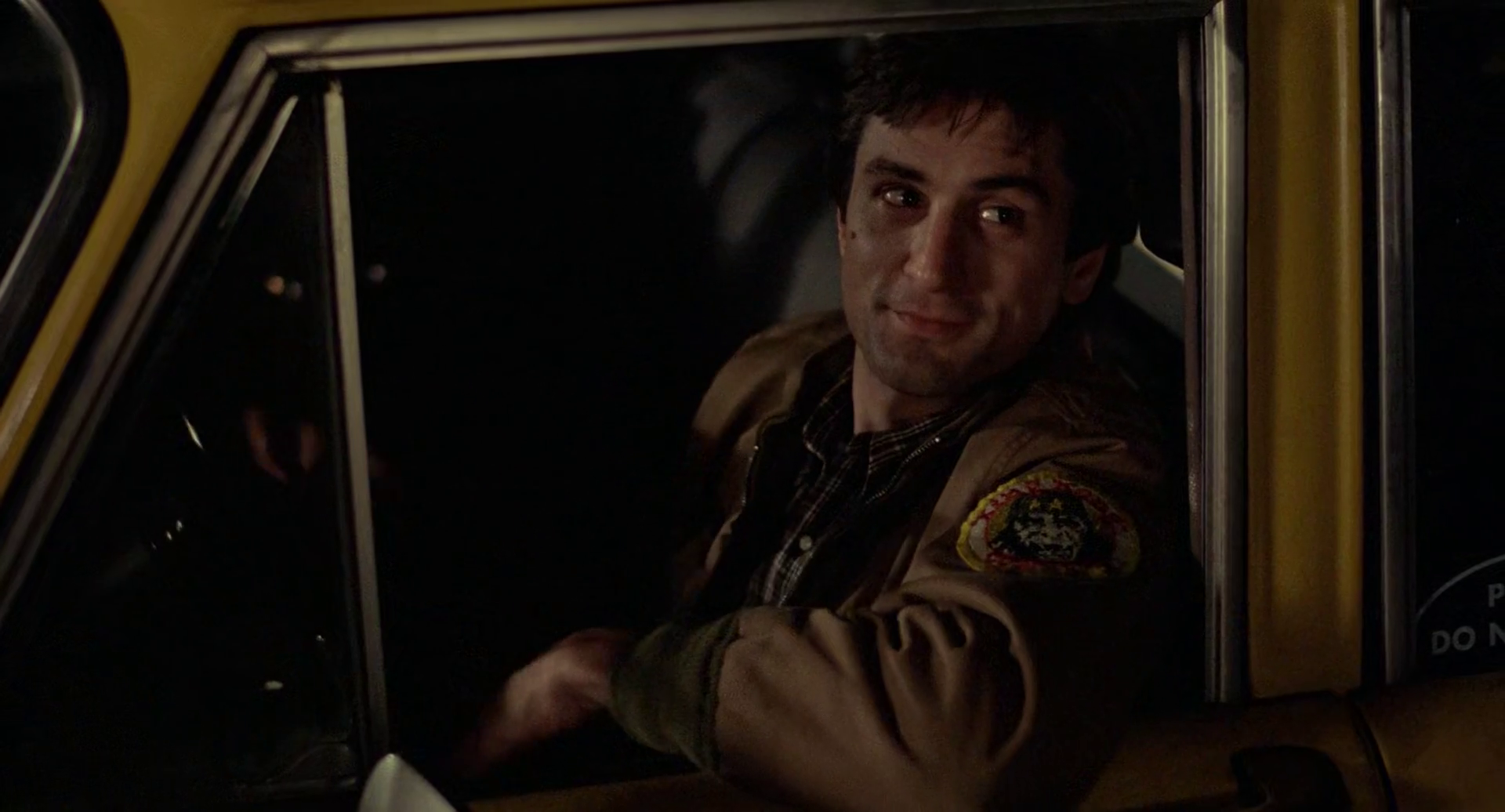
Because in the end, he is a hero. For all that the rotted city he lives in twists his brain into knots, he does get recognition and the knowledge that he did a good deed. When he drives away from Betsy at the end, comping her short ride in his cab it comes from a place of confidence and swagger. To see DeNiro give that soft smirk is a far cry from how he looked just a few minutes previous, with so much blood on his finger gun it’s dripping off the barrel.
Loneliness epidemic
If anything, the end of Taxi Driver is a best case scenario, a fantasy that something good can come out of this haunting experience. Most cannot accept that someone like Travis Bickle is capable of redemption. But what if he is? Travis Bickle is not some bastion of societal virtue. But given what he does and recognizing that he had a psychotic break and maybe he got better, doesn’t he deserve a second chance? Or is prison the answer?
It’s uncomfortable to think about, but society welcoming back those who have fallen out of it is the right solution. Adding them to this weird gestalt is far preferable than casting more and more exiles to look for some other competitor.
In America, we celebrate our differences3. That means opening arms and listening to people when they come back. It’s addressing concerns and figuring out the common ground that everyone can live with. It’s explaining that Betsy is just one woman but there are plenty of others. It’s acknowledging that Palantine can do somet but that doesn’t make us powerless. Curing this loneliness epidemic won’t get better without the concerted work of all of us.
Doing so would decrease the number of Travis Bickles in the world. That would be a poisitive thing, because half a century later, we seem to produce more and more every day.
Nevermind that the current president was a close personal friend of the most notorious child sex trafficker in American history or that he wrote the man a special birthday message that’s completely fucked up OR that his Justice Department appears to have given a sweetheart deal to Epstein’s convicted co-conspirator and sex offender Ghislane Maxwell. At least this seems to be something they care about. Mostly. ↩
There’s a runner in this movie that involves the way Travis interacts with black people. That is to say, Travis never explicitly says anything about it, but Scorsese clocks every time Travis’s inherent racism rears its ugly head. It’s also no accident that the one person Travis kills outside of the masssacre (during the bodega robbery) is black. ↩
Or we should anyway… ↩