
They Found More Doctor Who

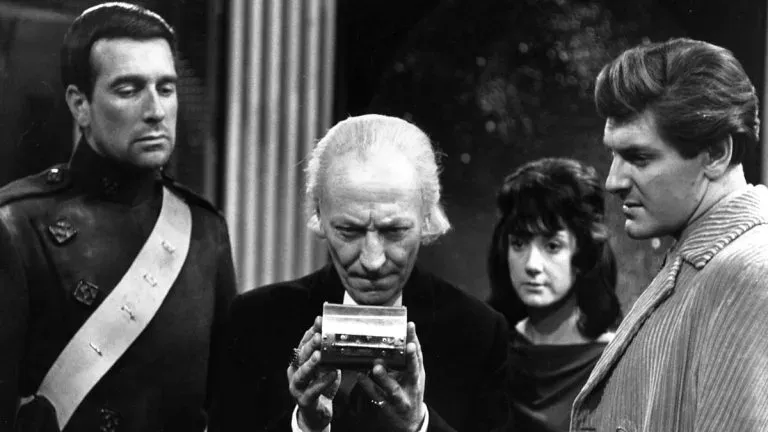
On the night the BBC released their news, the only thing I could thing about was how an organization called Film Is Fabulous finding two episodes of Doctor Who.
Sounds like a silly thing to get excited about, but without the proper context it's difficult to convey just how huge a deal this is. It's not like A.I discovered some new miracle cure for cancer or some Napoleonic soldiers unearthed the Rosetta Stone. But in the world of TV preservation, Doctor Who is the biggest and most dramatic ongoing saga of trying to recover what everyone thought destroyed.
The two episodes in question ("The Nightmare Begins" and "Devil's Planet") first aired in 1965. This weekend, the BBC released those two installments, making them available to the show's worldwide audience for free so everyone could experience them. I watched them, and it's a surreal experience seeing something that aired sixty years ago. Even more mindblowing to think that basically no one has really seen them since and most fans as of a month and a half ago would have assumed they would never be able to watch them.
All of this got me back on my train of obsessing over Classic Doctor Who and its various intricacies. These aren't the first missing episodes found since I became a fan, but when these lost orphans find their way into a preserved state (as they so very rarely do) it becomes a unique experience unlike anything I could really imagine.
Analog
Dating back to around the end of World War II, television is still a relatively new medium. The first narrative television came soon thereafter with shows like I Love Lucy in 1951 or a litany of soap operas. But back then there wasn't anything like a home video market. The only way for people to watch things not on broadcast required a projector and film reels. Television's breadth and volume made it nigh impossible for home consumption. The first analog media storage (VHS) initially cost up to a hundred dollars per tape on the commercial market. Each tape could only hold a few hours of content at most. A single season alone would cost hundreds of dollars.
Such storage was barely viable for the organizations that owned large libraries. American television studios could use what they owned, recouping the cost by selling series into syndication and reruns.
To an entity like the BBC, that wasn't quite as viable. Like PBS, the BBC is a government-owned entity and doesn't operate on profits for owners and shareholders. They would license their library to other markets in an effort to help fund other BBC initiatives. This is how Doctor Who became such a phenomenon in America in the late 70s, when PBS got the licensing rights to Tom Baker's incarnation as The Doctor.
In the 50s and 60s, though, most considered television as an ephemeral medium. There was no point in keeping master recordings of these television series if there was no future use for them.
Because tapes were so expensive, throughout the 60s and 70s, the BBC would recycle master recordings of old television programs, erasing archive content in the name of making new. It was a great way to save money, but it also means that there's entire shows that we've just lost to time. The police series Z-Cars aired 801 episodes in its 12-season run, but more than half of them are missing. Almost the entire first season of the spy series The Avengers has vanished into nonexistence. In a modern world where streamers thirst for endless libraries that bring value to subscribers, it's crazy to think about art as bountiful as television not existing. More than that, it's part of the argument in support of internet piracy. Modern day collectors amass vast digital archives in the name of ensuring survival.
It's bad enough we've lost the plays of Aeschylus and Philip Marlowe. Classic art like that is centuries, even millennia old. But losing material created during the lifetimes of artists who are still living? Heartbreaking.
Doctor Who, though, is quite lucky.
The many forms of missing Doctor Who
When I first started paying attention to Doctor Who fandom circa 2008, there were 108 missing episodes. The BBC had managed to recover quality recordings of everything dating back to the 1970s, meaning everything from the color era (season seven forward) existed. The 60s were much patchier, having to contend with more time at the mercy of the Beeb's junking policy. They'd found quite a lot since the dawn of the recovery effort, but looking at the first six seasons and seeing the many gaps was impossibly dispiriting.
There was a silver lining, though. Doctor Who's general popularity as a BBC staple meant that enough nerds/children had held tape recorders up to their TVs during episodes' initial airings that it was possible to recreate an accurate audio soundtrack for every episode to ever air (smaller shows like Z-Cars were not so lucky). If nothing else, that's a tremendous boon to people trying to reconstruct what the episodes were like. In the 90s, a small British amateur video production company called Loose Cannon pieced together these audio soundtracks with production stills and screengrabs[1] with a scrolling caption to help explain the dialogueless stretches of audio. Sometimes, they would get access to extant footage recovered from overseas censors, who cut out intense or dramatic moments from episodes before airing. Because these clippings weren't attached to the licensed product itself, a lot of incredible footage managed to survive what purges the BBC ordered (it was easier for them to tell licensors to destroy what they had rather than go through the complex effort of returning that material).
But the gaps where they existed felt dispiriting. Nine episodes were missing from the first season, and the second had only lost two. Season six also wasn't so bad. Only seven episodes were missing, and two of those were from a story for which the BBC had commissioned cheap, flash-like animation to plug the holes in its eight-episode story. As far as I'm concerned, that story ("The Invasion") has always fully existed in its home video release form.
But those other three seasons were dire. Massive chasms spanned the missing episodes. The third season had 22 episodes missing out of the first 25 alone. Only 11 of season four's 43 episodes survived. And season five might have had seven stories, but only one of them survived fully intact. Hell, of the first 50 stories in the series' run, 11 were missing in their entirety.
Bleak stuff.
For the screengrabs, television productions would hire an individual to sit at home during an episode's airing and take a picture of the screen with a camera every 30 seconds or so. Those surviving photographs served as one of the main records of an episode's existence. ↩︎
Eureka moments
In 2011, two episodes turned up: "Galaxy 4" episode 3 (titled "Air Lock") and "The Underwater Menace" episode 2. These were the first discoveries since 2004 and represented episodes that... were not on anyone's priority list.
"Galaxy 4" opened season three and is a strange transitional 1st Doctor story that serves as a cap to Verity Lambert's time as the show's producer. Its main value is in being the only record of that particular story, shedding light on how production accomplished the effects for the main aliens of the story (the Rill).
Meanwhile, part two of "The Underwater Menace" replaces part three to become the earliest surviving episode from the 2nd Doctor. "The Underwater Menace" is four episodes of pure, high camp madness. With episode three, viewers got all of the insane tone with neither the requisite build up to justify it nor the payoff to it working out. If anything, the discovery of its antecedent helped audiences appreciate the full scope of the story's vision, easing them in and aiding the context for what was difficult to understand in a vacuum.
In 2013, a man named Philip Morris used a paper trail to track down two full serials that had been wasting away in Nigeria.
On paper, the biggest find was "The Web of Fear", an iconic thriller about robotic Yeti terrorizing the London Underground. The surviving first episode teased out the moody darkness from director Douglas Camfield, but without the ability to see it all, it existed entirely in audience imagination. Morris claimed he found all the episodes, but one of the episodes (the third) went missing "en route". Of all the episodes to miss out on, this hurt the worst, considering it was the first appearance of the iconic Doctor Who character Alastair Gordon Lethbridge-Stewart. Regardless, it was an impossibly exciting discovery.
While less high profile, the return of "The Enemy of the World" has caused an incredible re-evaluation of that story. Significant for its double-casting 2nd Doctor actor Patrick Troughton as the villain, seeing the story in its full glory revealed a complex and thrilling tale of intrigue and narrative complexity. It was always good, but now that everyone can see it and appreciate it, it's helped to create a new appreciation for Troughton and his era that goes beyond the traditional love of his "standard mode" of formulaic bases under siege.
Taken together, it dropped the missing episode count from 106 to 97 and Morris became a mini-celebrity within the section of fandom actively invested in the discovery of missing episodes. Unfortunately, for all the rumors that loads of episodes still existed in the hands of private collectors, that's all supposition until they wind up back in the hands of the BBC.
But the two episodes they found? Massive finds.
Dalek Epic
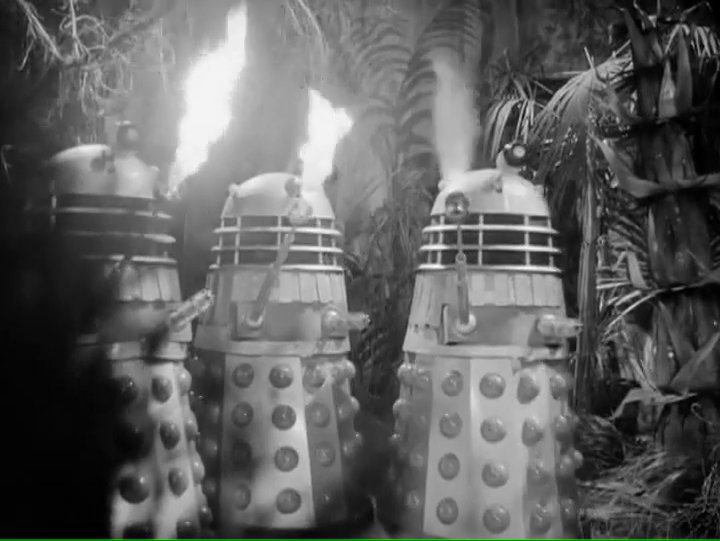
Within the mythology of Doctor Who, nothing is more iconic than his fearsome adversaries the Daleks. Over the course of the first three seasons, Dalekmania seized the nation. The Doctor fought and defeated them no less than four times, with each story growing grander and more epic.
For season three, the production team wanted to capitalize on their popularity with an epic story befitting the moment. They hired the Daleks' creator (Terry Nation) to work on a 12-part story that would blanket the airwaves in Daleks for three full months. To help with the workload, production also brought in former Doctor Who script editor Dennis Spooner to write the back half of the story.
With that scope and the inherent mythicness of the Daleks themselves, Master Plan has long been on the short list of stories the fandom craves. Not only is it twelve parts long, but it also features the deaths of not one but two canonical companions. The final episode alone is utterly devastating and serves as the second of three consecutive, awful story endings for The Doctor.
Until very recently, only episodes 2, 5, and 10 of the entire epic existed. Episode 2 ("Day of Armageddon") is good as it is still the story's early setup. Episode 5 ("Counter Plot") is strange in that it starts with Daleks bombing around a facility murdering lab mice (though it is the proper introduction of companion Sara Kingdom). And Episode 10 ("Escape Switch") comes at the tail end of a period of silly diversion, wrapping up the story's excursion to Ancient Egypt and also the TARDIS team's encounter with The Meddling Monk. Taken as a whole, it's barely 25% of the story. Individually, it's hard to get a good picture of what the story must have felt like (even though each episode represents a distinct leg that gives a pretty decent idea).
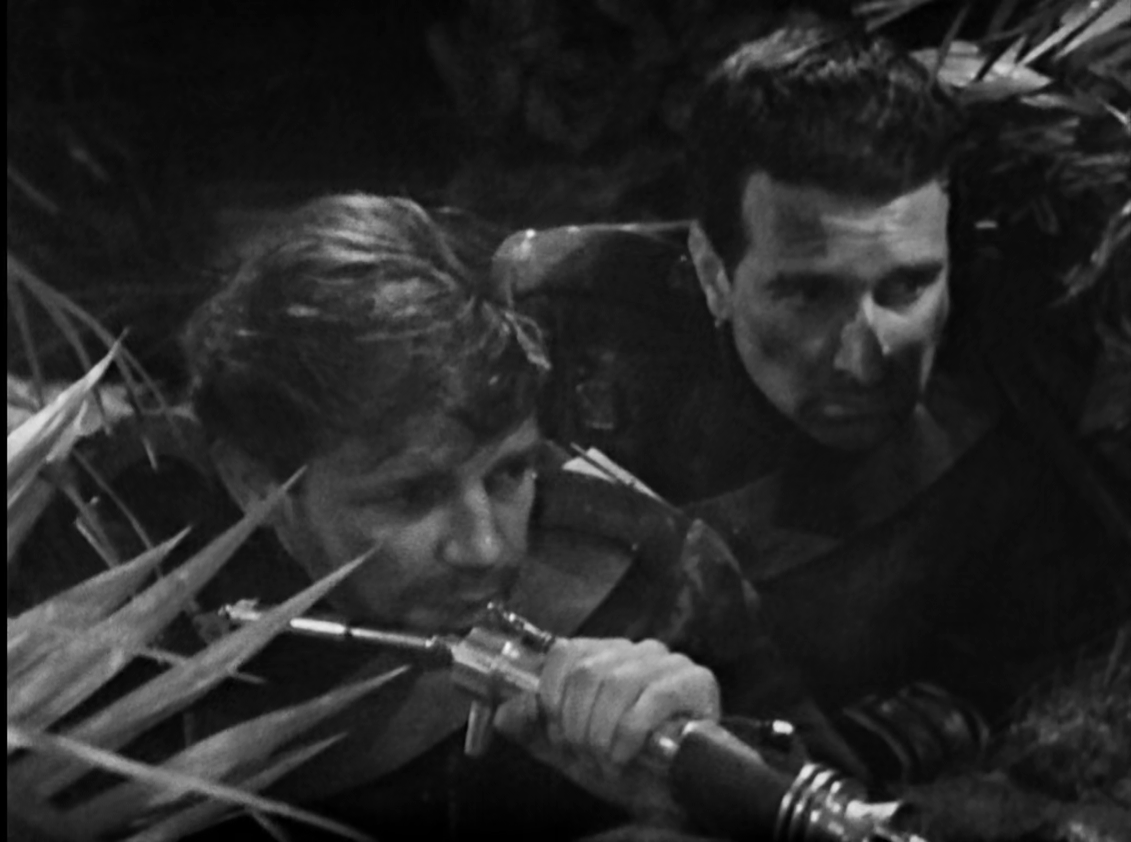
The newly recovered episodes are the first ("The Nightmare Begins") and third ("The Devil's Planet"). Adding to episode two, it means there's a good solid look at the story's opening act, and features both the first Doctor Who appearance of Nicholas Courtney (who would go on to play the Brigadier in just a few years) and triples the number of episodes that exist featuring short-term companion Katarina. The Doctor Who subreddit was alight with fans of the classic series for whom this is one of the most coveted missing stories. To live in the world where recovering missing episodes matters, it's wild to finally hear that stories are returning to the fold, especially one so long-desired.
I... wouldn't go that far.
Slow Burn
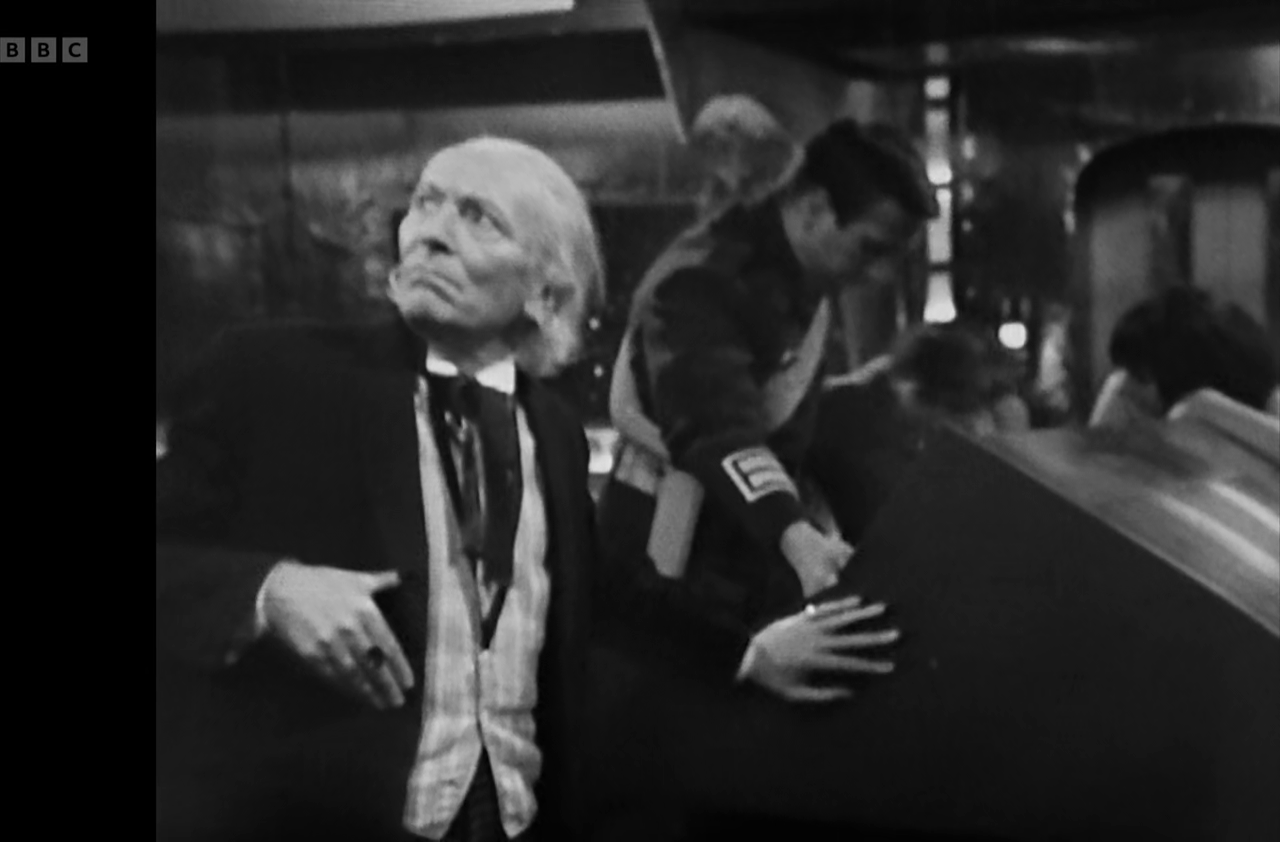
By my recollection, the lure of "The Daleks' Master Plan" was such that in my early Classic Series watching I couldn't help but indulge in it. I got the narrated audio soundtrack and listened to it to get the full experience. It must have been the first missing story I did this for, and there are moments more burned into my psyche than other stories that I much prefer.
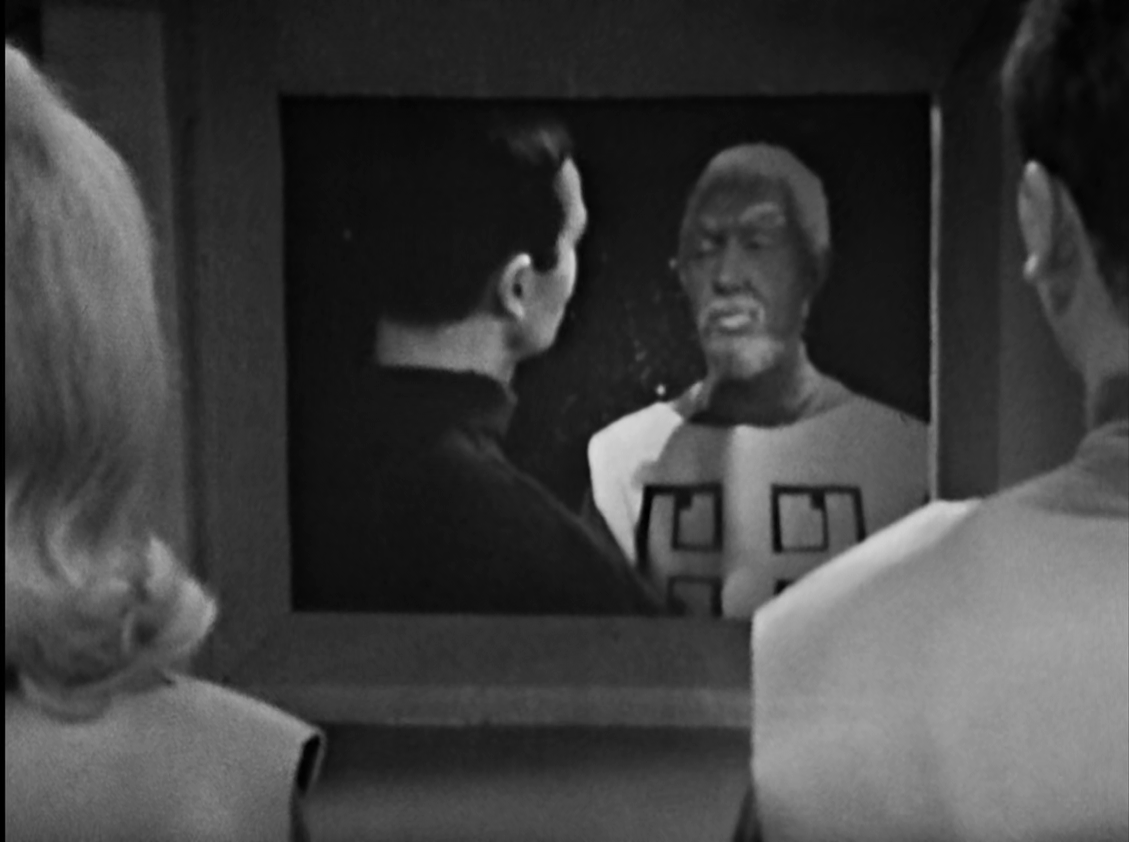
It's surreal to finally see what I'd always only imagined. The introduction of Mavic Chen as the Guardian of the Solar System was even better than it was in my mind's eye. Bret Vyon tied up to the magnetic chair is about the same, though it falls into the Terry Nation staple of weird one-off objects in the TARDIS that never return.
There's nothing like it, though. When absorbing reconstructions, listening to the audio of something that originally paired with visuals creates the illusion of completion. If only we could just... reach out and pluck these visuals from the ether. It would be so easy to just... exist. Witnessing any once-missing episode's re-appearance is... transcendent.
What it also does, though, is reinforce how slow the story is. Black and white Who is an infamously drawn-out affair. The languid pacing aids its efforts to save money and run out the clock. Under good writers with a clear vision, the flow can work. But here, under the pen of Terry Nation the first three episodes feel impossibly slow. The first episode is just The Doctor loosely exploring Kembel while Steven recovers. It gets by on the momentum of doing something new. But by the third episode, The Doctor, Steven, Katarina, and Bret Vyon all escape via spaceship and... spend the entire episode on that spaceship. Eventually they force a landing on a prison planet, but... by episode's end they've taken off again. It's all just marking time until an eventual ending that's more than six episodes away.
And still, even with ho-hum episodes, the world is so much richer for this returning to the existence.
Wish list
Now for the bratty part...
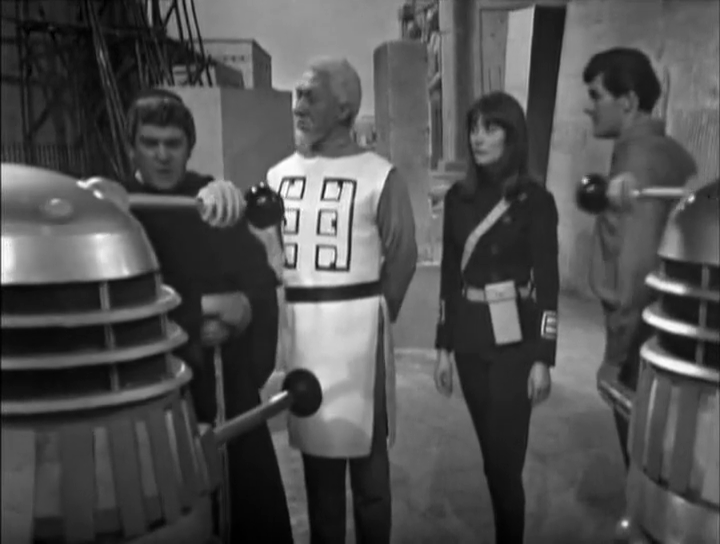
Within Doctor Who "The Daleks' Master Plan" is hardly high on my wish list of recovered episodes. Hell, "The Nightmare Begins" and "Devil's Planet" are not even in the top three of what I'd most want from "Master Plan". Those would be...
- Episode 12 is probably the biggest wish, considering its massive climax where the activation of the Daleks' super weapon (a Time Destructor) ages the entire planet of Kembel (including new companion Sara Kingdom) to dust. Steven and The Doctor manage to escape to the safety of the TARDIS, but in the aftermath of such destruction, the story ends on a bleak moment of awful victory as they stare out on the planet's now-barren landscape. They managed to survive. That's about it. What a thing that would be to see.
- Episode 4 would also be incredible to witness. It would also be great as the first appearance of Sara Kingdom. Mostly, though, it's significant as the episode that features the death of Katarina, one of only three companion deaths in the entire Classic Series (alongside Sara Kingdom in Episode 12 and then another in the Fifth Doctor's first season some sixteen years later).
- Episode 7, though... mostly I want it because it's the episode that is statistically "most missing". It never broadcast more than the one time it aired on Christmas Day, the BBC never licensed it out to another entity (because it's a completely farcical Christmas Day romp), and it is the first episode experts consider to be "fully lost". If that episode still exists, it means there's a ton of other episodes that also do. It's just a matter of finding them.
But even outside of "The Daleks' Master Plan" there's lots I'd rather have. Its prologue "Mission to the Unknown", is an episode in which The Doctor is completely absent as the Daleks begin to put their scheme into motion. The designs of all the aliens in the Daleks' council are legendary, and it's the final episode under the production purview of Verity Lambert.
Currently, the most wished-for episode is probably "The Tenth Planet" Episode 4, the final episode to feature William Hartnell as The Doctor. That story's other three episodes exist, and while a clip survives of the first regeneration, seeing the full episode in context would be an incredible find, especially considering Hartnell's declining health prevented his presence in episode three, meaning his final, full on-camera appearance is two episodes before he collapses onto the TARDIS floor.
But outside of that, I'd love for the return of "The Power of the Daleks". Patrick Troughton was tremendous as the 2nd Doctor, and that story is not just his first appearance in the role, it's probably the best Dalek story ever made. Episode 1 alone would be amazing (with The Doctor waking up from his "renewal") but Episode 4 (with the revelation of the Dalek assembly line) would be a mindjob to watch too.
There's also "The Massacre", in which William Hartnell plays not just The Doctor but also the Abbot of Amboise, the story's villain. Aurally, his performance feels entirely different, but seeing him in a role so sinister would amplify his signature performance by contrast.
Or the 2nd Doctor epic "The Evil of the Daleks" with its big time travel story and the final two episodes on Skaro.
Or any episode of "The Myth Makers" or "Marco Polo" or "Fury From the Deep". None of those stories exist, so we don't have a great context for how those stories created their environs.
Or Episode 1 of "The Macra Terror" for the hilarity of The Doctor hopping into and out of the rough and tumble machine (which the animated adaptation excised for some reason). Or any episode of "The Highlanders" where the show has no idea what to do with the still-new Patrick Troughton, so he just keeps wearing a bunch of hats and donning random disguises.
What I'm saying is that with 95 episodes still missing, there's a lot of options and maybe one day I'll get insanely lucky and something I'm dying for will come back.
Making up for past sins
Doctor Who's entire history has value. The BBC has made every classic episode free available for streaming worldwide. What remains incomplete is something they're slowly reconstructing with the original audio and cheap but seviceable animation. I take issue with the fact that a lot of these animations also come in color variety even though they were all produced in black and white, but as long as the black and white continues to exist I can't be mad at the BBC for trying to make these stories more commercial.
There's a time in the not so distant future where all of these stories will be complete. It'll be possible to watch the entire show beginning to end and not have to work terribly hard at trying to figure out what's happening. It won't require narration or a scroll at the bottom of the screen. Animation is hardly some great burden.
But there is one thing about this.
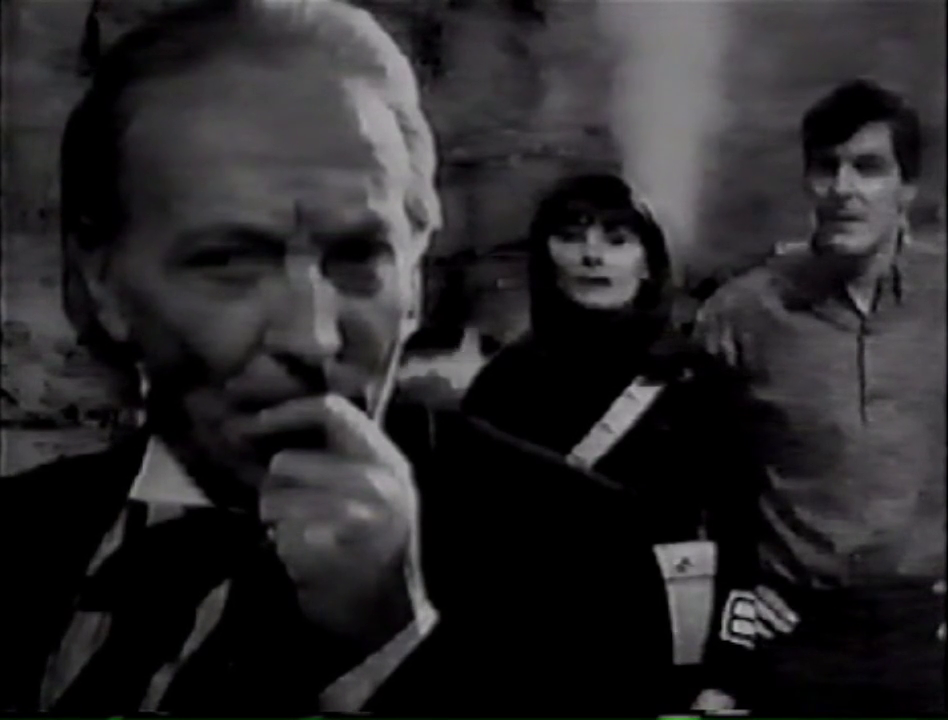
People are still alive who watched Doctor Who from the beginning. Showrunners Russell T. Davies and Steven Moffat (and others) claim that they saw everything and never missed an episode. Assuming that to be true, that means there are people who have seen everything, even if they don't remember it. They are the ones who have managed to see over sixty years of Doctor Who history and watched as the show has evolved, died, come back, and more. They are currently completionists.
One day, though, all of those people will be dead. And Doctor Who will still be around. If there's one thing that came out of the 1989 cancellation, it's that the show itself will never die. It will always come back, die, regenerate, do something new. It's the greatest television series of all time because the only limits on the show is the imagination of the creators who work on it, and each individual comes with a perspective and a take on the character and the sort of stories to tell. Those Day-One folk will not live to see all of Doctor Who because that show itself will never end.
But for so long as at least one episode remains missing (which is almost certain; no way are we shooting the moon another 95 times), that means it will be impossible to ever see all of Doctor Who as it was. There will never be anyone who fits that profile.
In that incomplete state, it means every viewer will always have at least some gap. Much as I love the show and hope to keep watching it until the day I die, there is a point where the show will outlive me. I will never, ever be able to watch all of it either.
If there is a lesson, it's that the joy of a thing is being able to witness it. To live at the same time and experience what we can. We treasure these moments and these stories and the fact that we get to be part of something grand that is so much bigger than any single person. There's nothing like it, and while it's too bad that it took the BBC far too long to realize the series' eternal value, that injustice has become a blessing for those who wish to be a part of it.
Doctor Who belongs to time itself. We are so lucky to live in a reality where it will always exist.