
There Must Be More To Life Than This - True Lies
James Cameron's blind alley/mid-life crisis film.

Be they from dreams (The Terminator), or nerdy fandom (Aliens), or anxieties about divorce (The Abyss), James Cameron branded his early films with potent emotional overtones. Terminator 2 worked because it felt like a movie by a dude who always wanted a robot best friend and also a found family he could call his own. Nevermind that it’s Cameron actually, finally working on a scope that matched his grand ambitions for populist blockbusters. It’s his big mainstream coming out party. Most expensive film of all time? And it’s an R-rated sequel to an indie sci-fi slasher? Well, it’s also the top grossing film of 1991. It finally cements him in the popular consciousness like none of his previous films had.
Skip ahead, though. In March of 1998, Cameron takes the stage and declares himself “king of the world” because of one of the most insane success stories in the history of the medium. Spielberg might have been a box office juggernaut over the previous two decades, but his biggest smash (even to today) is Jurassic Park, and that didn’t manage to cross the $1b line at the worldwide box office until its 2011 re-release. Titanic blew it out of the water and enshrined Cameron as an undeniable all-time great, the first person to dominate the box office like that since Spielberg himself.
Between these two monster successes, though, there’s the weird experience of True Lies.
Released in 1994, Cameron’s weakest film is not a bad movie. It has insane highs but feels baffling within the context of his overall career. Sure, part of that is the cringy use of Middle Eastern terrorists as the central antagonists. That hasn’t aged well even without a quarter century of 9/11’s long shadow excusing Islamophobia as a short hand for “other” and “wants America destroyed”.
More than that, though, True Lies feels like Cameron trying to fit into a particular shoe and realizing in real time that this wasn’t the shit he wanted to spend the rest of his life doing. He knows he’s capable of more, and it’s no wonder that after this he immediately runs off to make the one of the best films of all time.
But before that, he needs to go down the one blind alley of his career.

Arnold
Coming off the success of T2, another team-up with Schwarzenegger both makes logical sense and adds to the feeling of Cameron in a rut. As a director who knows how and when to harness star power, putting Arnold at the center of a big action spy thriller is going to add tremendous value. Given their relationship and stature, working together to make something new is a no-brainer.
In retrospect, True Lies is the last major Arnold action vehicle of this type, functionally ending a run that started with Conan the Barbarian (1982). By 1994, Schwarzenegger’s Junior, Kindergarten Cop, and Jingle All the Way era had started. His action movies stem from more comedic premises that would allow the big guy to flex these muscles. In just a few years, he’d be “staying cool” in Batman & Robin. Even though Arnold’s role as Harry Tasker in True Lies is primarily an action one, the comedy throughout this film only underlines this behind-the-scenes tonal career shift.
Still, it’s impossible for Cameron to not fully utilize Arnold even within the context of this evolution. There’s big action1, but he couches the film’s emotional story in the family friendly era of Arnold. His dad status is far from perfect. His daughter is stealing money from him and his wife is starting to emotionally wander, wishing for a bigger, more exciting life for herself. These emotional stakes provide the backbone of a dude trying to keep his family together while terrorists try to shatter America (and thusly the world/his world; this is the 90s).
But… nothing with Arnold in this is as special as when Cameron uses him as the Terminator. Those roles pushed him harder, demanded more of him. This might be a quintessential performance, but the warm blanket of it all feels… a bit too comfortable.
Remake
Cameron’s obsession with genre extends to every film he’s ever made, and he uses it as shorthand to help tell his stories. Even Titanic follows the pattern of disaster films and historical costume dramas.
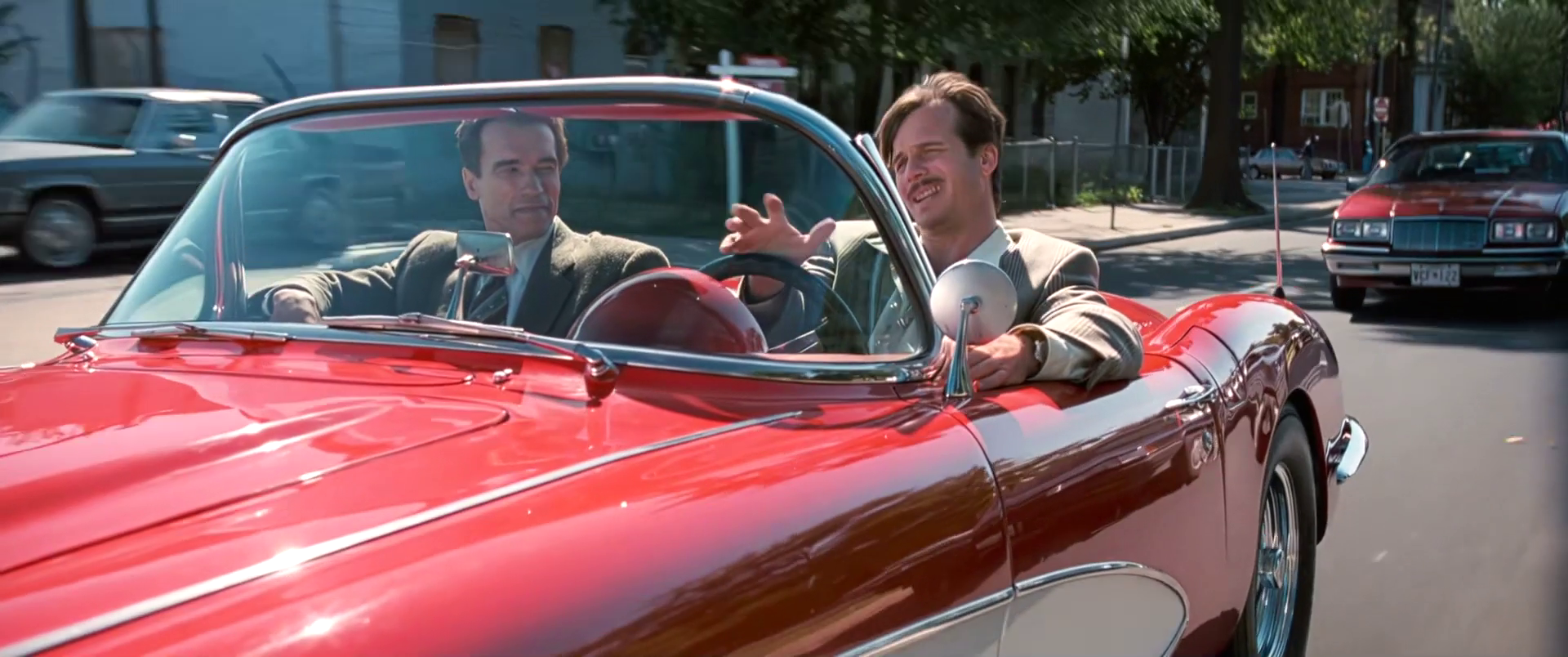
True Lies, though, isn’t just an action comedy film. It’s also one that remakes La Totale!, a 1991 French film. That makes this unique within Cameron’s canon. While he’s borrowed from other sources for the rest of his filmography, him actually remaking someone else’s movie is necessarily quite different. The beats are mostly the same, though the joke there is that the lead is an unassuming guy who you’d expect to be a solid dad but never a spy. That completely falls apart when Cameron casts Arnold Schwarzenegger in the role. Sure. He’s a top salesman. Right.
Despite this remake context, it feels like a total Cameron movie all the way down… but him directly riffing on someone else’s work feels… strange. The budget feels consistent with T2. The level of spectacle befits his previous output. Even the emotional core of this family man feels like Cameron… but it doesn’t feel like his story. Despite having not seen La Totale!, this feels almost like a work-for-hire job.
And that… is not what Cameron does. Aliens is essentially Cameron pitching Fox on his idea for an Alien sequel, but that movie feels like it’s one he developed from the ground up2 without other influences defining it. Yes, he cribs from other sources when telling his stories, but all of his films feel like something he really made his own. Outside of the spectacle, this… doesn’t.
Fun
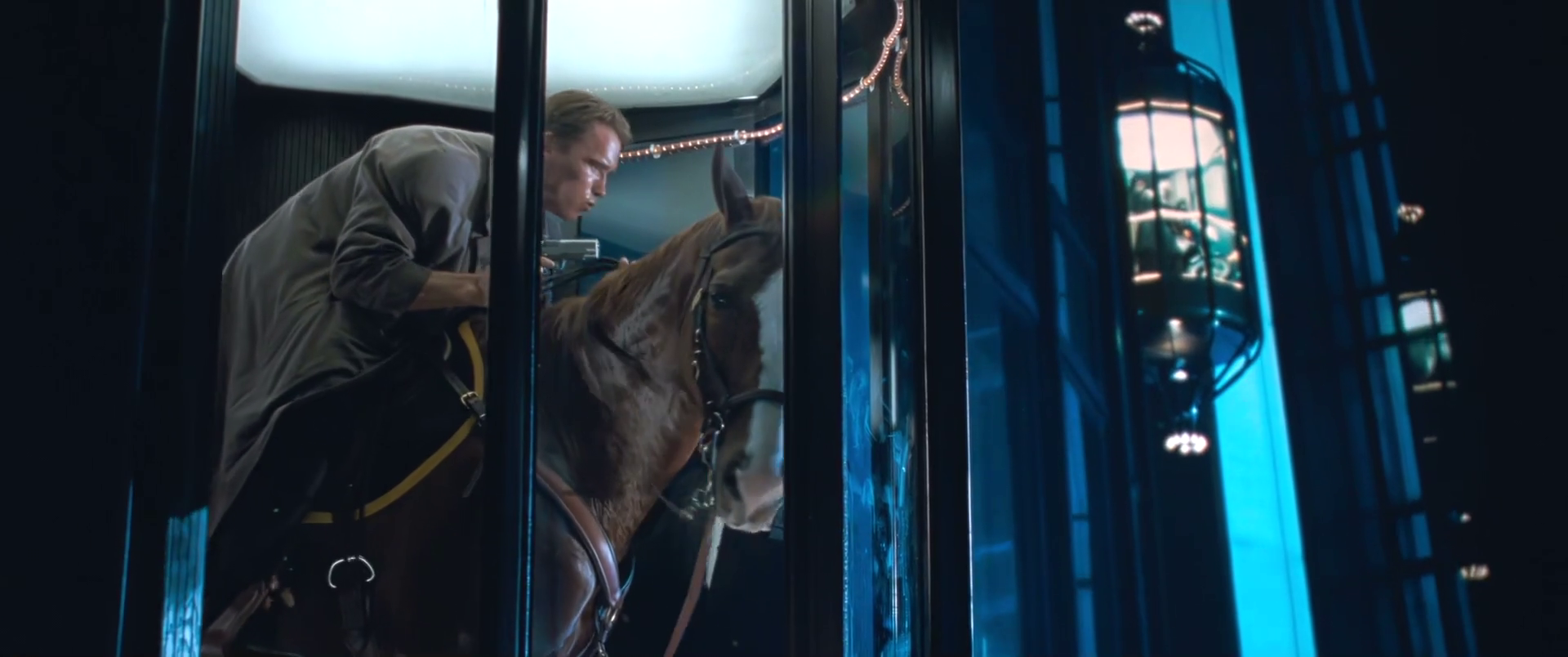
That said, this is also the most fun film in James Cameron’s filmography. It’s got good lines and great characters. The action setpieces are massive. The jokes are hilarious3. This movie contains everything from Arnold griding an elevator while riding a horse to a dropped Uzi spinning down a flight of stairs and firing off shots such that it kills everyone in the room despite no one touching the gun or aiming it at all. The bridge sequence is absolutely incredible and sensational (and funny! “The bridge is out!”), and the final “you’re fired” quip is slick (though nothing like the hilarity of Arnold speaking in Spanish before bullet-shattering the T-1000 into a million pieces).
Everyone clearly had a great time making it. Jamie Lee Curtis siphoning water out of a vase to slick back her hair feels delightful and lived in. Needing to lose the nerdy ass paralegal look she has in real life helps to showcase her character’s ingenuity. Bill Paxton goes full ham and suffers no less than two jokes about him peeing himself. The sex farce of his entire storyline (where he’s pretending to be a secret agent so he can sleep with as many gullible women as possible) adds levity to the first half.
It also feels… not enough.
Sure we’re having fun. And emotionally, it’s about a family with secrets and Harry’s attempts to try to hold things together. The goal of most movies should be “fun + emotional journey”… but clearly it feels like not enough for James Cameron.
Momentum
Plenty of other major directors have done diversions to keep their careers’ momentum going. Martin Scorsese took the time to make Alice Doesn’t Live Here Anymore. Spielberg did 1941. The Coen Brothers made Intolerable Cruelty. John Carpenter took up Christine.
By this point, Cameron’s been churning out movies at a fairly regular clip: 1984, 1986, 1989, 1991, 1994. He’ll followup with Titanic in 1997, and then there’s a massive 12-year gap before Avatar in 2009.
Why?
Cameron easily could have made another movie4 after Titanic. Fox would have greenlit anything.
There’s a world where Cameron just keeps working. He moves along at a clip, putting a new movie out every three years or so. A lot will be good. Some will be masterpieces. But every so often something will come along like True Lies and it’s clear that his heart wasn’t fully, passionately in it. Those movies will be… less.
Compare this to his previous passion project. The difference between The Abyss and True Lies is that while the latter makes more money and has more financial success, it lacks the personal, emotional touch of the former. True Lies demands very little from its audience. It’s not a challenging movie. It has less warts than the ungainly imperfections of The Abyss.
But which does Cameron prefer? Which has survived the tests of time better?

Crossover appeal
Knowing Cameron’s thought process helps here. He might be a storyteller, but he’s also an extremely savvy filmmaker. More than any other, his secret superpower is an innate ability to tap into populist sentiments. The Terminator might have been an indie sci-fi slasher, but the love story helps ground it within a milieu that would appeal to more than just nerds who want to see a story about a killer robot. So, too, Aliens centers around a theme of motherhood, which helps add to the possible audience base Cameron is working with. The Abyss, though, suffers from being too insular and esoteric even though the emotional core of that movie is rich and deep and quite universal.
The lesson of The Abyss is that universal appeal helps Cameron justify a big enough budget to accomplish his vision. If Cameron wants lots of people to like his movies, he has to make movies that appeal to lots and lots of people the world over. This is why his Avatar films are so undeniably successful (and will continue to be). It’s why no one questioned Titanic after its release, even though Fox (and probably everyone except James Cameron) fully expected it to sink the entire studio.
True Lies? It’s a remake of a French film from a couple years before, but it relies entirely on James Cameron spectacle and Arnold Schwarzenegger star power.
If he wants to make a raging success, the movie has to narratively work better and appeal to more than just an American audience.
This mentality has defined Disney for not just the past few decades, but all throughout its entire operating history. Disney has a reputation for family friendly fare because that’s the sort of film they want to produce. The more people who might want to see the movie, the better the chances for that movie to make a lot of money. But Disney’s four-quadrant appeal comes from focus testing and market research. This has a flattening effect, squeezing out the esotera of a particular voice in the name of a larger overall brand. They can make money because they have broad appeal, but broad appeal does not always translate to broad investment.
Cameron, though, is a visionary. His films drip with specificity and a sense of individual voice. He knows how to trust his unparalleled instincts. True Lies has plenty of esoteric voice in it, and while it might appeal broadly, everything from its R-rating to its America-centric spy plot cuts off its more universal possibilities.

Responsibility
Universality is one of the key cornerstones to track over Cameron’s filmography. It’s easy to experience how breezy and simple his films seem and think there’s not a lot beyond the core emotional driver. The Terminator is a love story. Aliens is about motherhood. The Abyss is about a divorce. Etc.
But until he wins an Oscar, one of the major motifs in Cameron’s filmography is the threat of nuclear annihilation. It’s the premise of his Terminator films and nuclear warheads are the driving force behind the plot in The Abyss. Even the ticking clock in the third act of Aliens is about a thermonuclear reactor exploding. The same is true with True Lies, where the terrorist plot involves acquiring a nuclear weapon and detonating it in the United States.
But… what else is there for Cameron to say about nuclear annihilation at this point5? All of those other films try to grapple with the prospects of experiencing such a terrible event. And here the point is… what exactly? The nuclear flash and mushroom cloud is literally a backdrop for the big kiss between Arnold and Jamie Lee Curtis, the big reward after the film’s biggest and most exciting action sequence.
Unlike Aliens or The Abyss, this isn’t Cameron shivving military meatheads. This isn’t the anti-police subtext in both Terminator films. True Lies has Arnold happily working for a super secret government organization. The biggest critique about that institution is the way he spends government money and resources to shore up the weaknesses in his marriage. He stalks and destroys Bill Paxton’s con job. He uses a government facility to put his wife through an interrogation about her possible infidelity. He books them a luxury suite at a fancy hotel so she can give him a striptease.
All of this on the taxpayers’ dime. Nice job if you can get it.
This, though, is not enough. If True Lies has a legacy, it’s that being a vapid blockbuster filmmaker simply isn’t the person James Cameron wants to be. He could have done it if he wanted to. He could have been a thinking man’s Michael Bay. He could have been a bigger and brasher Spielberg. He could have sat back and just churned out movies like this for… decades. Great yarns with lots of spectacle that made corporations lots of money.
But… he didn’t. He used Titanic to fund undersea expeditions to the wreck. And from that wreck he made a movie about the moral bankruptcy of unchecked business. The Avatar movies are technical marvels that greatly advanced motion capture technology and 3D as a tool to make films more immersive. They’re also a canvas for promoting environmentalism while condemning unchecked capitalism, colonialism, and industrialization.
If anything, his future movies became vehicles for his grand themes about the world and how it works. They’re all PG-13. They’re all about something universal. And their broad appeal enables them to travel around the world.
There’s basically no one else who’s been able to do it like he has. But being one of the most populist blockbuster filmmakers of all time is not enough for him. If he’d wanted to make more movies like this, nothing would have stopped him. This movie awakens in him a moral imperative to use his innate talent for universality to make the world a better place through film.
True Lies is his most functionally populist blockbuster. It should be a rousing success, but Cameron has spent three decades making sure it’s a footnote of his career. It’s his forgotten movie. It’s his most skippable. No matter how damn good it is, this came out, he looked around, and he realized that blockbusters could be so much more.
That’s why he never made another movie like True Lies.
And the world is better for it.
Though it’s distractingly obvious when Schwarzenegger’s stunt double is doing a lot of the stunts, especially in the first half during the snowmobile sequence and then a bit later during the horse chase. ↩
Especially when compared to the discordant chaos of Alien 3. ↩
The terrorist cameraman filming the lead terrorist’s big manifesto and then awkwardly not knowing what to do as the camera battery starts to die is an all-timer. Just fabulous. ↩
He made two documentaries, but they’re very different from his narrative/blockbuster work, obvi. ↩
Especially after Sarah’s dream of obliteration in T2. ↩