
The Seven Ethans Hunt - Canon Conundrum
When your main character is never quite the same person...

In the modern ecosystem of intellectual properties, sequels, and remakes, there isn’t a better series out there than Mission: Impossible. Based on a TV series that aired from 1966-1973 and then revived for 2 seasons in the late 80s, it’s now best known as a vehicle for Tom Cruise to be a stunt-crazy lunatic. But that success is something Tom Cruise and his then-producing partner Paula Wagner baked into the original vision of the first film when they made it in 1996, and it’s a model that has helped it survive and even thrive.
Their solution? To let the voices behind the camera mold the series to their particular vision, and through that, allow Tom Cruise and the cast the space to make it coherent.
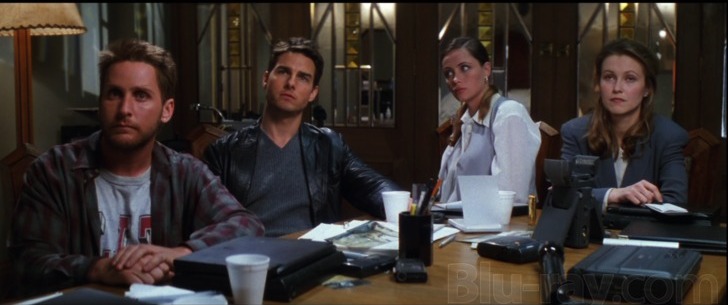
The man who lost his friends
Mission: Impossible (1996)
When Cruise/Wagner developed the Mission: Impossible series as a blockbuster vehicle for Cruise to regularly star in, they hired Brian De Palma to direct the first film. De Palma was a known-name, someone who came out of the same ethos that birthed Coppola, Scorsese, and Spielberg. Given his reputation as a dude obsessed with Hitchcock and the theme of voyeurism, it made sense he’d be the director of a spy thriller.
In this film, Ethan goes on the run, disavowed by the agency and setup to take the fall for a mole within the agency. This leads to a paranoid spy thriller more than an action film. There are terrific sequences (the infiltration of the CIA is still absolutely astonishing), but really this is the story of a dude who goes from being just a member of the team to being an actual team leader1.
I should note that there’s a grand theory that springs here. The first time I heard it was when Griffin Newman did the Mission: Impossible commentary series on the podcast Blank Check2, where he contends that the original film’s inciting incident, in which someone scuttles their op at the Embassy and slaughters his entire team informs Ethan Hunt for the rest of the films moving forward. From here, Ethan will do everything he can to make sure he doesn’t lose a teammate again.
The film also, somewhat strangely, utilizes Ethan’s mother and uncle as stakes within the film. Once Ethan goes rogue, the governmental agencies are quick to arrest his parents under false pretenses in an effort to gain some sort of leverage over him. Ethan’s family never gets another mention again. It’s weird.
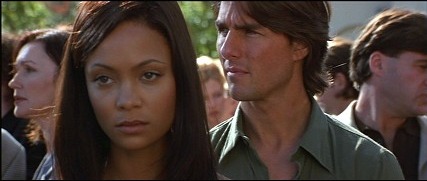
The man who falls in love
Mission: Impossible II (2000)
For the second outing, Cruise/Wagner brought in director John Woo. Woo himself is a wild, esoteric force within action filmmaking, having cut his teeth on Hong Kong action cinema like Bullet to the Head, A Better Tomorrow, and Hard Boiled. He was coming off of two massive blockbusters: Broken Arrow and Face/Off, the latter of which is a batshit insane film that everyone should watch3.
In this series, the general consensus is that this is the weakest installment. And… sure. It is. It’s got a horrific thread of misogyny as every man in the film objectifies Nyah. There’s a sense that the film in its early stages has an interest in interrogating this objectification and exploitation of women, but all of that interesting thematic material is not present in the final film. That said, it’s still plenty watchable, and the last chunk of it (basically from the point Ethan breaks into Biocyte to the end) is the kickass movie we all wanted.
Most interestingly, though, for all that there’s a II in the title, this has absolutely nothing to do with the original film. There’s no mention of anyone previously save for the return of Ving Rhames as Luther Stickwell. There’s no other recurring characters. We’re not even picking up on Ethan’s emotional state post-betrayal. It works in that respect. Cruise and Wagner designed this as its own discrete installment and it’s absolutely watchable without seeing the first film4.
Ethan’s emotional state here is as the lead of a love story. Ethan falls in love with Nyah almost immediately and having to put Nyah through the events of the film eats at him. By the film’s end, he goes full big action to save her. Even his “I won’t let anything happen to you” ethos grow from his romantic feelings for her rather than some sense of operational duty to not lose a team member. That’s probably how they wrote it, to be honest, and even within the context of the Ethan-won’t-let-anyone-on-the-team-die retcon it’s practically impossible to divorce it entirely from the romantic aspect of this particular plotline.
Despite her and Ethan walking into the sunset together at the end of the movie, Nyah never gets mentioned again. The entire movie hinges on this relationship, though it’s a bit of a damp squib. For all that Tom Cruise is excellent, being some sort of libido-laden sex-focused dude is not his best use. This is the closest Ethan ever feels like James Bond. It was inevitable that someone would do this, but unlike James Bond, this film proves that Ethan Hunt has the runway to be something more.
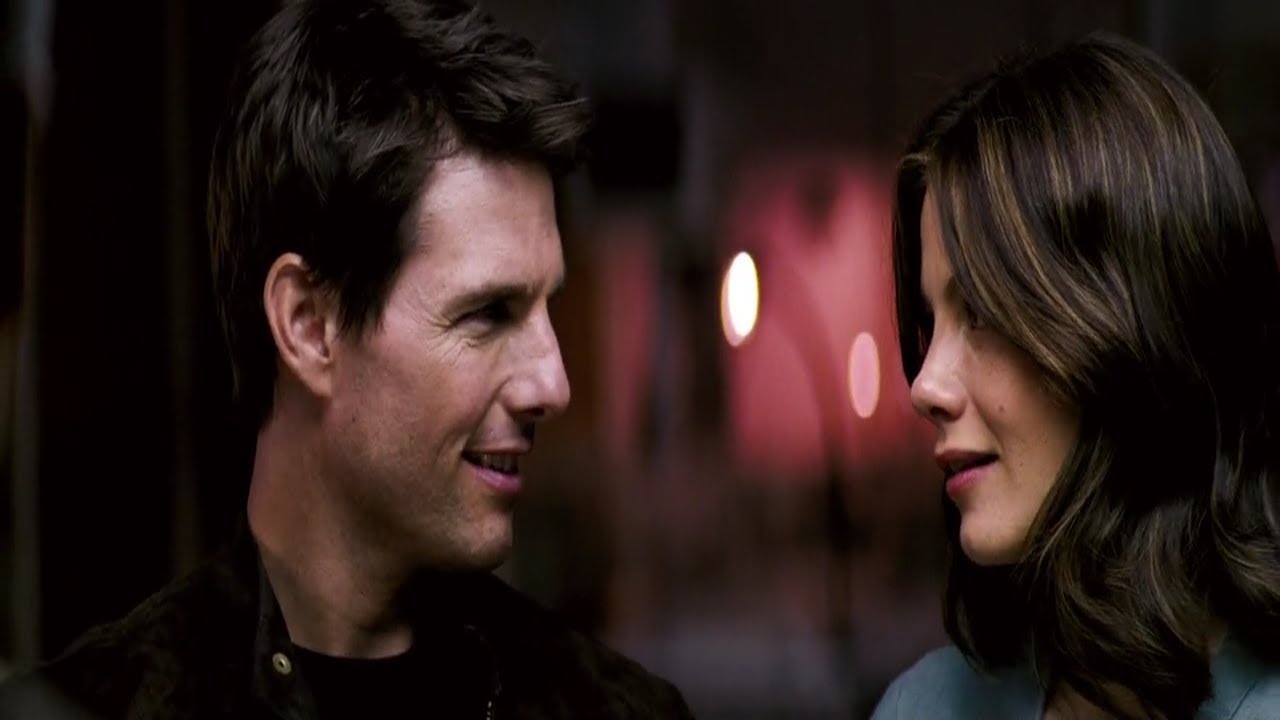
The man who husbands
Mission: Impossible III (2006)
Apparently, the biggest reason Tom Cruise hired JJ Abrams to direct the third film was because, after other directors like David Fincher and Joe Carnahan had fallen through, he had just gone on a bender of watching the first two seasons of Alias. Hilarious, honestly.
The issue with the third film is that… it’s just Alias. It doesn’t help that the stunts aren’t up to par with anything after, and nothing in the film is as thrilling as the final setpiece of II. The movie has an incredible cold open and the sequence at the Vatican is a fabulous infiltration sequence… but the rest of the movie feels very much just like an average summer blockbuster of this kind. The team (comprised of Ving Rhames, Maggie Q, and Jonathan Rhys-Meyers) is rather forgettable and don’t bring much to the table, and the helicopter chase through the windmills and later the fulcrum stunt lacks the panache we’ll see in every movie after this.
(None of this I want to lay at the feet of JJ Abrams, who was a TV director shifting into film. It’s hard to design sequences that fully showcase the difficulty of the stunts at hand. It just suffers, especially compared with every other film in the series.…)
Ethan in this one lives the double-life an Alias bingewatch and love of Sydney Bristow would inspire. There’s no mention of Nyah, but in the six years since he’s met a woman named Julia (Michelle Monaghan) and gets married early in the film. Because it’s relatively sexless, this is far more palatable than the weirdness of the previous film. It also provides solid stakes for Ethan and helps drive him in the back half of the movie once Davian (played by the always excellent Phillip Seymour Hoffman) uses her as incentive.
Why didn’t Abrams just make Ethan married to Nyah, though? Besides Thandie Newton not wanting to return, this film wouldn’t be true to its Alias roots if his wife knew about his secret life. Creating a brand new character who can serve this role maximizes the dramatic tension.
Three movies in and there’s really very little connection between these three Ethans. True to the original intent, each film functions in its own way and plays to the strengths of their individual directors. Cruise, himself, is slightly modulating his performance (even down to the haircut) to nestle Ethan into the necessary role each director needs him to fill.
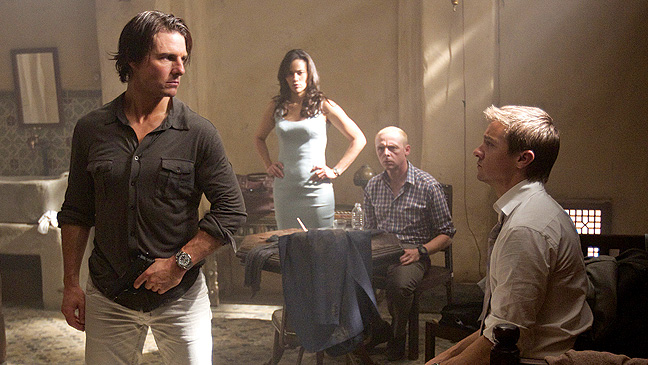
The man who sees his wife from afar
Mission: Impossible - Ghost Protocol (2011)
It’s not often you can watch an entire film series shift before your eyes. Yet there is that shot in this film, right at the one-hour mark, where a goggled-Ethan Hunt steps out of the open window in the Burj Khalifa and the camera follows him out to the side of the building as he begins to climb. Right there, amidst the vertigo, you can feel the moment the entire perception of what is possible in this series shifts as Tom Cruise scales the world’s tallet building, seemingly without any sort of safety equipment.
Sure, we might all show up for the spectacle of this film, and Brad Bird directs the ever loving shit out of every second. Yes, we might remember the entire Abu Dhabi sequence in epic detail, but it’s the characters and emotional journeys therein that keep us coming back to these movies over and over again. Bird, as ever, is focused on stories about exceptional individuals performing at a heightened level beyond what most people are capable of.
Yet again, we have another shift in Ethan. His emotional journey in this movie is rather opaque, and untangling the role of Julia in this film is needlessly complicated. In the end, it turns out that he sacrificed his marriage to Julia in the name of keeping her safe and saving the world. In order for Ethan to operate at the Brad Bird scale, he has to sacrifice what might be holding him back.
If Brad Bird had kept Michelle Monaghan, this would not be the story he wanted to tell. Rather than weigh itself down with the baggage of having to add another ancillary character and drama that would pull us away from the Mission at hand, the writers wrote around her, bringing her in as a final grace note alongside the requisite appearance by Ving Rhames.
And………… this movie is all the better for it. While my biggest struggle with Ghost Protocol is that it doesn’t really have an arc beyond “Ethan will do anything to save the world and thusly his wife” (and even then it feels tacked on). But with a movie this fun, this rollicking, it hardly matters. This Julia-free vision of “what next” for Mission: Impossible ends up being the most successful vision of the series to-date and a template moving forward.
The man who has only platonic relationships
Mission: Impossible - Rogue Nation (2015)
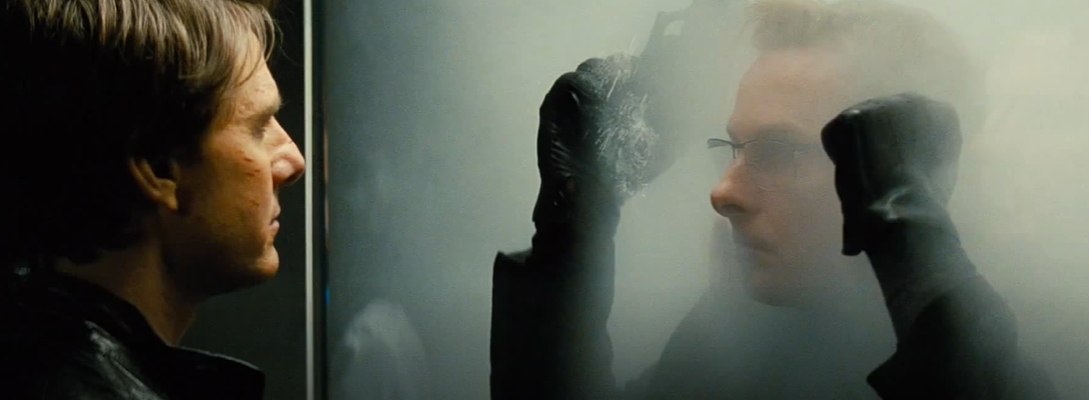
When Ethan Hunt finally gets the best of Solomon Lane, he does so by trapping him in a giant glass case. As Lane realizes he’s cornered, the four members of Ethan’s IMF team stand around his new prison, staring him down. Every previous film gives Ethan a team to varying degrees of success, but this is one where that team really, truly gels.
Just before this final sequence, Ethan puts his life on the line to save Benji, playing a dangerous game of chicken and willing to risk his own life to keep Benji safe. It’s a new wrinkle, the first time where Ethan finds himself in this particular, non-romantic situation.
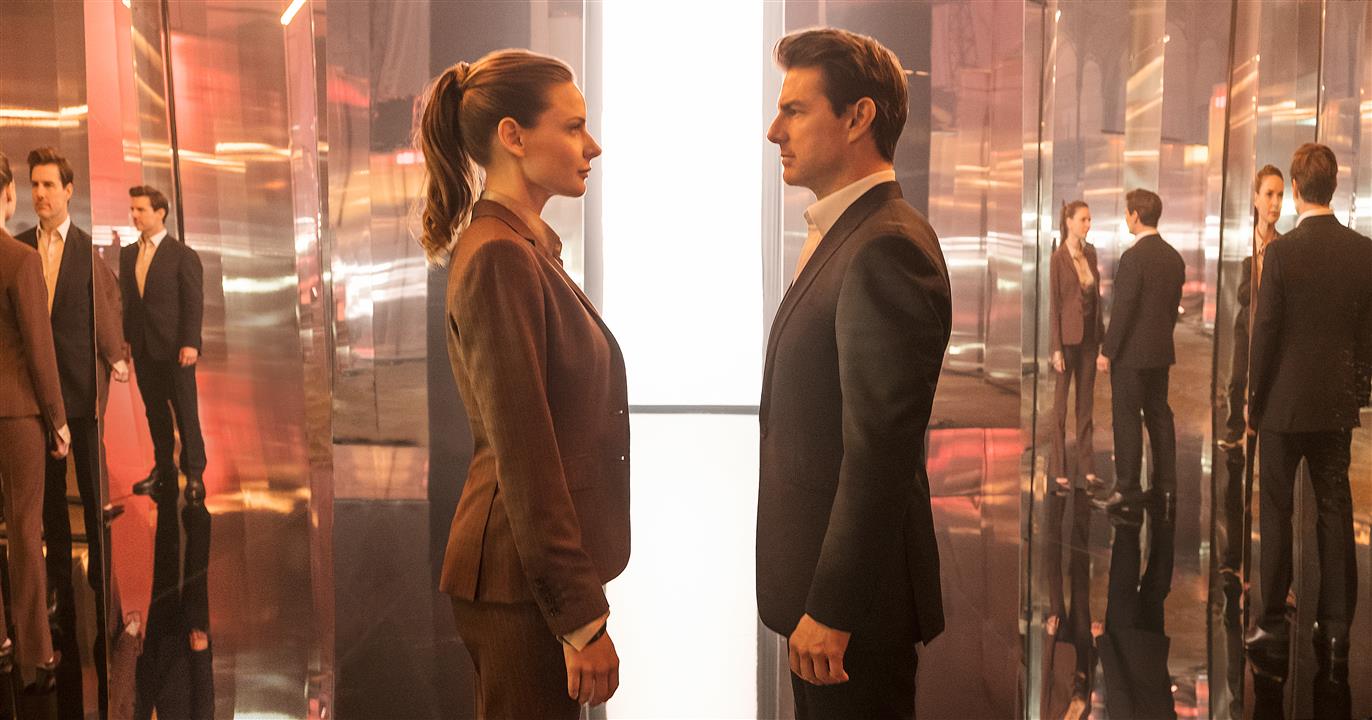
Adding to the cast is the excellent Rebecca Ferguson as Ilsa Faust. Her character explicitly mirrors Ethan (deep cover, functionally disavowed, totally awesome) and proves herself more than capable of matching him in key moments. There’s a world where she provides a romantic foil, especially considering there’s not even a mention of Julia anywhere. Indeed, a lot of what feels like it might be there is down to Rebecca Ferguson herself being a gorgeous woman whose inherent charisma is itself intoxicating.
But that’s not what’s going on here at all. At no point in the film, not when Ethan is shirtless and meets her for the first time, nor when she’s at the opera wearing that leg-slitted yellow dress, nor when they cling to each other as he rappels down a building, nor when she’s bursting out of the pool in that Moroccan villa is there even a hint of romantic tension or flirtation. Her relationship with everyone is extremely professional. Given that every previous film has seen Ethan deal with some sort of even mild flirtation, to see that nonexistent here is remarkable.
The man who will not sacrifice
Mission: Impossible - Fallout (2018)
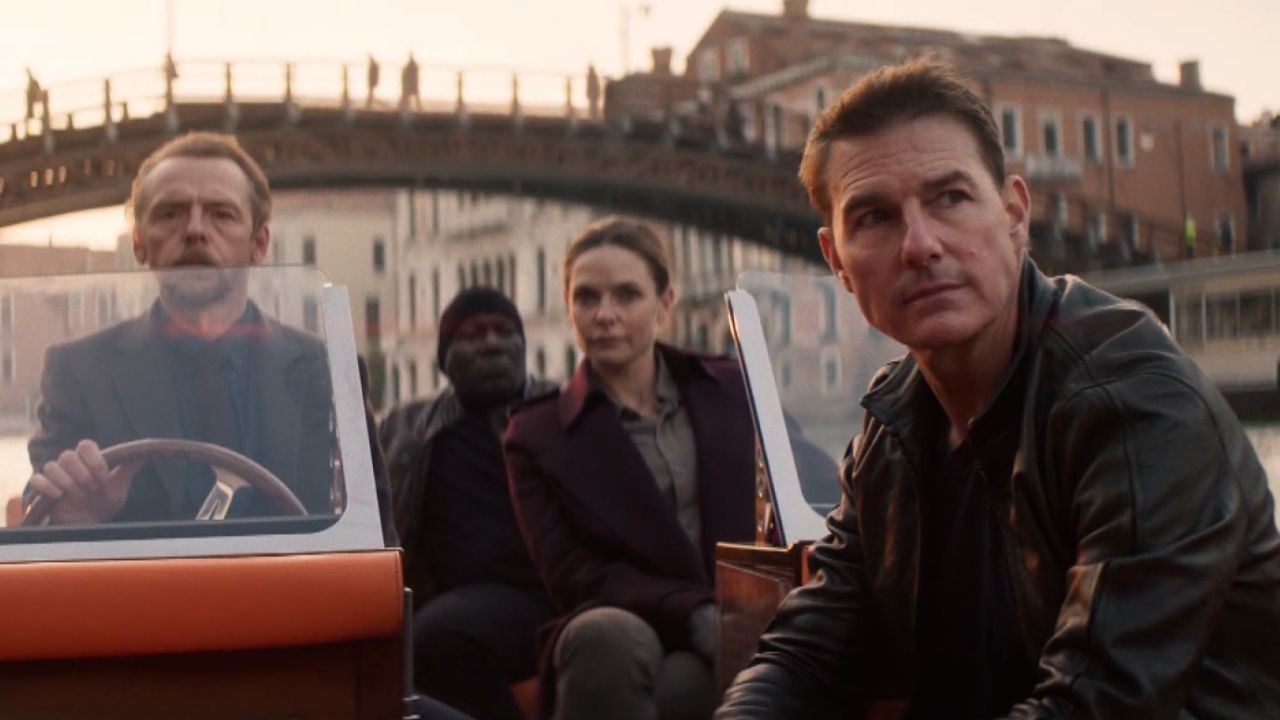
The inciting incident of the best Mission: Impossible film is simple: Ethan has the opportunity to prevent the movie from happening. To do this, however, he would have to sacrifice Luther in the name of the greater good5. It’s a reckless move, one that harkens back to that inciting incident some two decades previous where his entire team perished at the hands of Jim Phelps’s betrayal.
The final moment of the best Mission: Impossible film is likewise simple: Ethan, now free of his lingering guilt about keeping Julia safe, can pursue a relationship with Ilsa Faust. This is all but explicit. The entire movie builds Ilsa ingto being an acceptable romantic companion for Ethan without ever sacrificing anything that makes her awesome. They are a perfect match not because they are in love, but because she is his equal, someone he does not have to worry about protecting and who can be at his side helping to save the world when the time inevitably comes.
Think about the path to that moment. When they reconnect in the bathroom it’s a gasp-worthy moment, played like two might-have-beens reconnecting after far too long. When Ethan tries to get Solomon Lane thru the streets of Paris, Ilsa hunting him feels like a lovers’ spat a la Mr. & Mrs. Smith. When Ethan meets again with Ilsa after this moment, it is in a gorgeous copse at the Palais-Royale in the most romantic city in the world, a taut plea between two people unable to set aside their professional obligations in the name of their shared history. When Julia shows up, Ilsa is visibly stricken. When she meets again at Ethan’s bedside, the two are truly joyful at the prospect of the future.
Of course, none of this is text, but this is hardly the same relationship the two had in Rogue Nation. That’s all the more remarkable considering that this is the same writer-director as that movie, the first time that had happened. McQuarrie has been extremely open about how seriously he took this change to how things are done. In fact, it feels obvious that someone would try an Ilsa/Ethan pairing, and it’s a mark of the performances from Cruise and Ferguson that it works, despite it being incongruous with what came before. It’s absolutely insane that McQuarrie goes contrary to what he’d previously done and we don’t even bat an eye.
The other thing McQuarrie does here is emphasize Ethan’s heroism. There’s an entire sequence that we see from Ethan’s perspective, one where he imagines the horrors of working with terrorists and the innocents he’ll have to murder to complete the mission. It’s not like Ethan has been a reckless individual who doesn’t mind the body count in his wake, but the movie takes time to have Ethan save a police officer’s life after she’s in the wrong place at the wrong time. This expands what is possible, showing that Ethan both thinks about the big picture and never forgets that the larger mission is about saving people like her. For all that Ethan’s reckless actions leave him scrambling for the rest of the movie, he puts everything on the line to save everyone he possibly can.
He is, in this movie, perhaps his most heroic. No wonder it ends on a romantic note.
The man who made the choice
Mission: Impossible - Dead Reckoning Part 1 (2023)
All of this is prelude to the most narratively audacious Mission: Impossible to date, a film so bold McQuarrie refused to even attempt to contain it to one film. If this film has a reputation of being a step down from the previous installments, it’s only because the preceding three are astonishingly good. Measured against most other films out there, there’s no comparison.
Here, the changes McQuarrie makes are radical. For one, he goes for something stylistically different, diving into flashbacks like the one that intimates Ethan’s origin to involve a criminal background, some unnamed woman, and her death at the hands of new arch-nemesis Gabriel. For another, McQuarrie, further retcons the nature of the relationship between Ilsa and Ethan. While the last film ended with the promise of romantic bliss, this one picks up in a totally different place, where Ilsa is perpetually on the run and the intimacy between the two is more than friends, but hardly the new dawn of Fallout. It splits the difference between their relationship.
There’s also the new introduction of “the choice”, an offer to those with nothing to lose that allows them to sign up for the IMF, dedicating their lives the mission itself and their fellow teammates who have also chosen to accept. After six films where the line “your mission should you choose to accept it” comes up constantly, it’s here that McQuarrie makes that mantra a key hingepoint for Hayley Atwell’s character Grace and her actions at the end of the film.
When Ilsa dies in Dead Reckoning, it’s a major turning point for the series. Sure, Alan Hunley (Alec Baldwin) goes down in Fallout, but it’s hardly the same. Lindsey Farris might have died a horrific date, but we barely knew her. No one wanted Ilsa to die. She’s the single best character in the series outside of Ethan Hunt himself. Of course it hurts. McQuarrie orchestrates her death to give the film stakes and provide a real cost to an adventure that will take two films to resolve. And, if someone had to die what was the alternative? Benji? Luther? For all their field agent status, those characters don’t play that role in these films. It wouldn’t have worked within the established narrative.
The man who ?????????
Mission: Impossible - The Final Reckoning (2025)
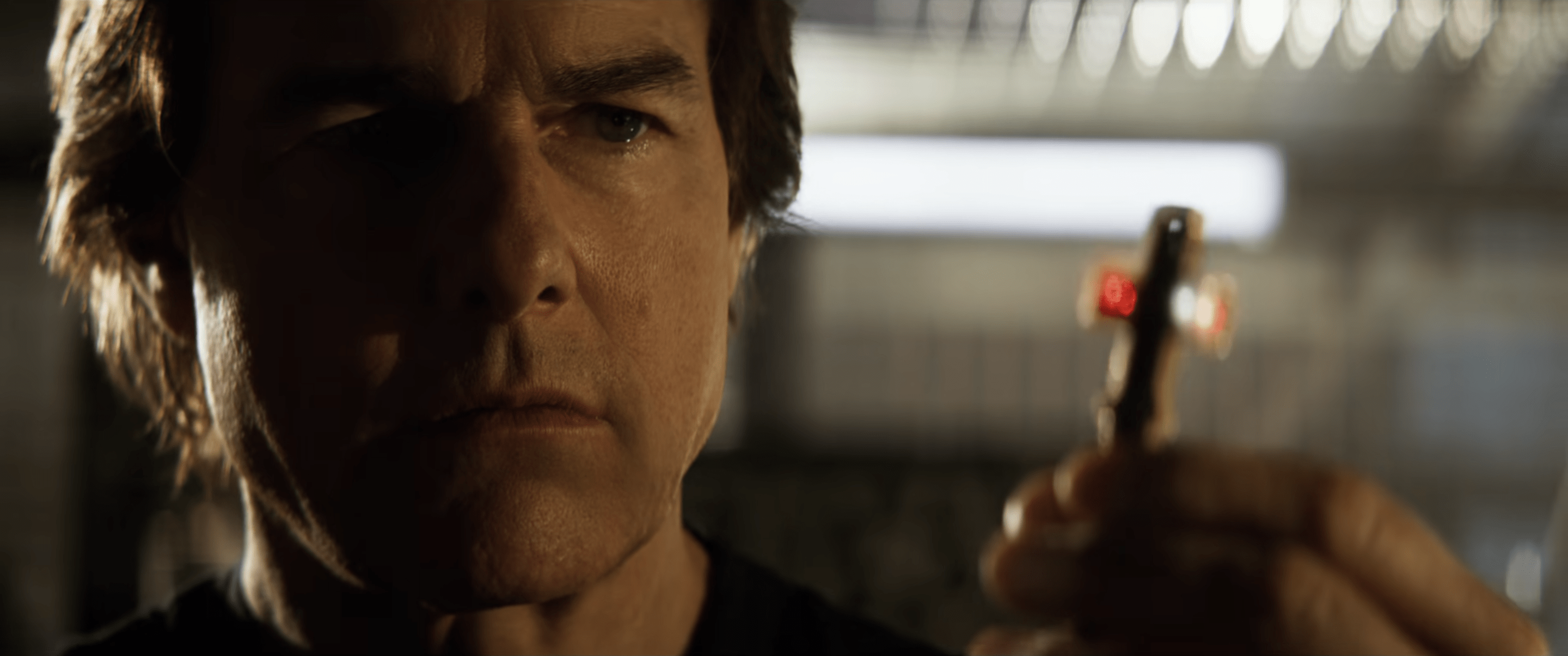
And now, finally, we’re at the point where it all comes full circle. The trailers for The Final Reckoning make connections to previous Mission: Impossible films, threatening to connect all of them in some grand apotheosis. Of course, Dead Recknoning is the movie where Ethan loses someone close and dear to him in a way that’s meaningful to the audience. For the first time, the man who lost his entire team one cold night in Prague thirty years ago is back in that same headspace.
What’s crazy is that while all of this is text, it also does require audience effort to connect all of these issues. Plenty of people can walk into a Mission: Impossible and not know these marginal contradictions or small yet pivotal shifts. Yes, the characters are consistent and continuity is built upon a “yes and”, but they also don’t let existing continuity get in the way of the story they’re telling. Narratives might be delicate, but they can also survive slight nudges in the name of making the a story the best it can be.
It’s this constant willingness to blow up the series that keeps it fresh. Tom Cruise has been playing Ethan Hunt for almost 30 years and is a good enough actor to be able to keep these different visions in check. McQuarrie is now on his fourth at-bat (five if you count the uncredited re-writes he did on Ghost Protocol) and still interrogating the characters who choose this insane, crazy life.
Chris McQuarrie (and every other great storyteller) knows that as audiences walk into a theater, open a book, or press play on the streaming service of their choice, they can’t assume any baseline. Maybe there’d be loose connections to previous work, but every first experience needs to stand on its own. Just having Tom Cruise hang onto the side of an airplane or do a HALO jump or ride a motorcycle off a cliff is enough to ensure an audience leaves the theaters satisfied. The emotional core must exist, regardless of brash action setpieces.
Sometimes the answer to the canon conundrum is to not worry about what happened before. By all means, embrace canon. Treat it like a springboard to whatever is at issue. Navigating the happy medium between destroying previously established dogma and genuflecting to some revered progenitor.
I wouldn’t put it past McQuarrie to contradict (however slightly) his own Part 1. Not only might that not be the end of the world, it might just make for an even better story than would otherwise be possible.
Hilariously, the big twist of the film, that Jon Voight’s Jim Phelps is the mole/traitor who framed Ethan made this somewhat controversial at the time. In the original series, Phelps was a stalwart main character and eventually led the IMF in the 80s sequel series. Sure, it might have turned people off the series, but the original film is just so good that like… who cares? It’s a great story. ↩
On a recent rewatch of the series, my partner also said this theory before I had a chance to tell them about it. Not only great minds, but it is dialed into something here. ↩
It’s also got doves. ↩
Outside of a few clips, I, personally didn’t see the first film until several years after I watched II multiple times in theaters. ↩
That is, keeping a nuclear weapon out of the hands of known terrorists. A pretty big greater good if you ask me. ↩