
The Madness of Friendship - The Treasure of the Sierra Madre
When life imitates art...
“It’s one of my favorites.”
It was the summer of 2017. I was having a discussion with a new, yet very close friend of mine (I’ll call him Al) about things we liked in stories. Somehow, we’d landed on depictions of descents into madness. The go-to for this is usually Shakespeare, where the Bard used madness in writing the arcs for Ophelia, the Macbeths, and King Lear amongst others. Watching individuals lose all sense of rationality is always compelling, an easy yet effective way of tearing a character down to its basest elements.
Nowadays, we have a fuller picture of the human mind. If there is a descent into madness, it’s rarely with the operatic order of Shakespearean drama.
But Al referenced The Treasure of the Sierra Madre as his favorite film depiction of such an experience. As luck would have it a local theater chain was screening it soon thereafter. I bought tickets for me and my partner, and we went to see it, knowing not much besides the promise that we would watch someone lose his mind over the two hour runtime.
Beyond that premise, though, The Treasure of the Sierra Madre is a rare film that has percolated through the culture enough that most people would know the film’s most famous line (“Badges? We ain’t got no badges. We don’t need no badges. I don’t have to show you any stinking badges!”). It’s a stone cold classic, one of the great films of the 1940s1 and probably a career best performance from star Humphrey Bogart. I’m so glad that Al told me what it was and that I should see it. I’m eternally grateful he put it on my radar and that he encouraged me to see it in a theater. That experience is still one of my great, first-time theater watches.
Less than a year later, Al and I weren’t friends anymore.
Humble beginnings
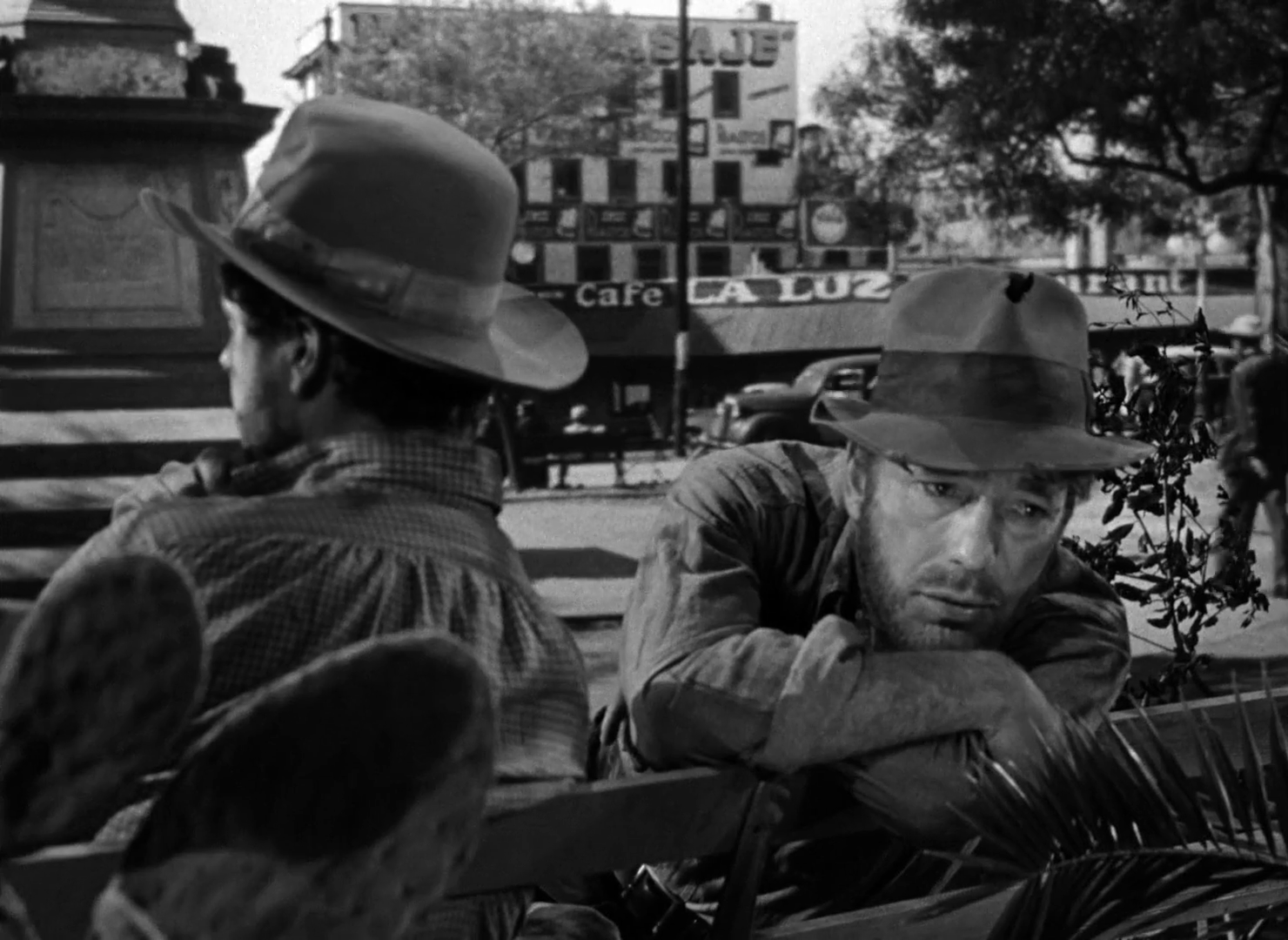
Without knowing what The Treasure of the Sierra Madre is about, the beginning is… quite strange. Perhaps strangest of all is seeing Dobbs as drifter in a Mexican town. Because the cultural memory of Humphrey Bogart is as smooth talking, tux wearing, romantic Rick Blaine in Casablanca, it’s easy to look at the man as some dashing, almost Cary Grant-esque vision of handsomeness. And if it’s not Casablanca it’s probably The Big Sleep or The Maltese Falcon, where he’s some movie star private investigator. Or maybe it’s his Oscar winning turn in The African Queen, where he’s got a perpetual beard as he plays a skipper, taking Katherine Hepburn down an African river by boat.
But seeing him in Sierra Madre is so unusual. He’s a vagrant, a beggar. At one point early he cleans up at a barbershop, but no sooner has he combed his hair than he’s begging a rich dude for the third time that day. Eventually, he finds work (and a friend in Curtin) doing day labor on an oil derrick, but the rich overseer scams him out of money and runs away, leaving him again broke and scrambling for cash.
It’s a deeply unflattering portrait of the man, but it’s not like Dobbs really gets better as the film goes on. He is, after all, the one who properly descends into madness, where the greed of possibly having what he starts the movie without overwhelms his rationality and results in some unhinged behavior. Bogart is utterly riveting, and seeing him in this mold underlines just how… strange his face is. It’s very long, with high cheekbones and sunken eyes. He is handsome, yes, but it’s a very rugged, unconventional handsome. He can play the tortured romantic of Casablanca, but he can also be the shady, untrustworthy individual he is here.
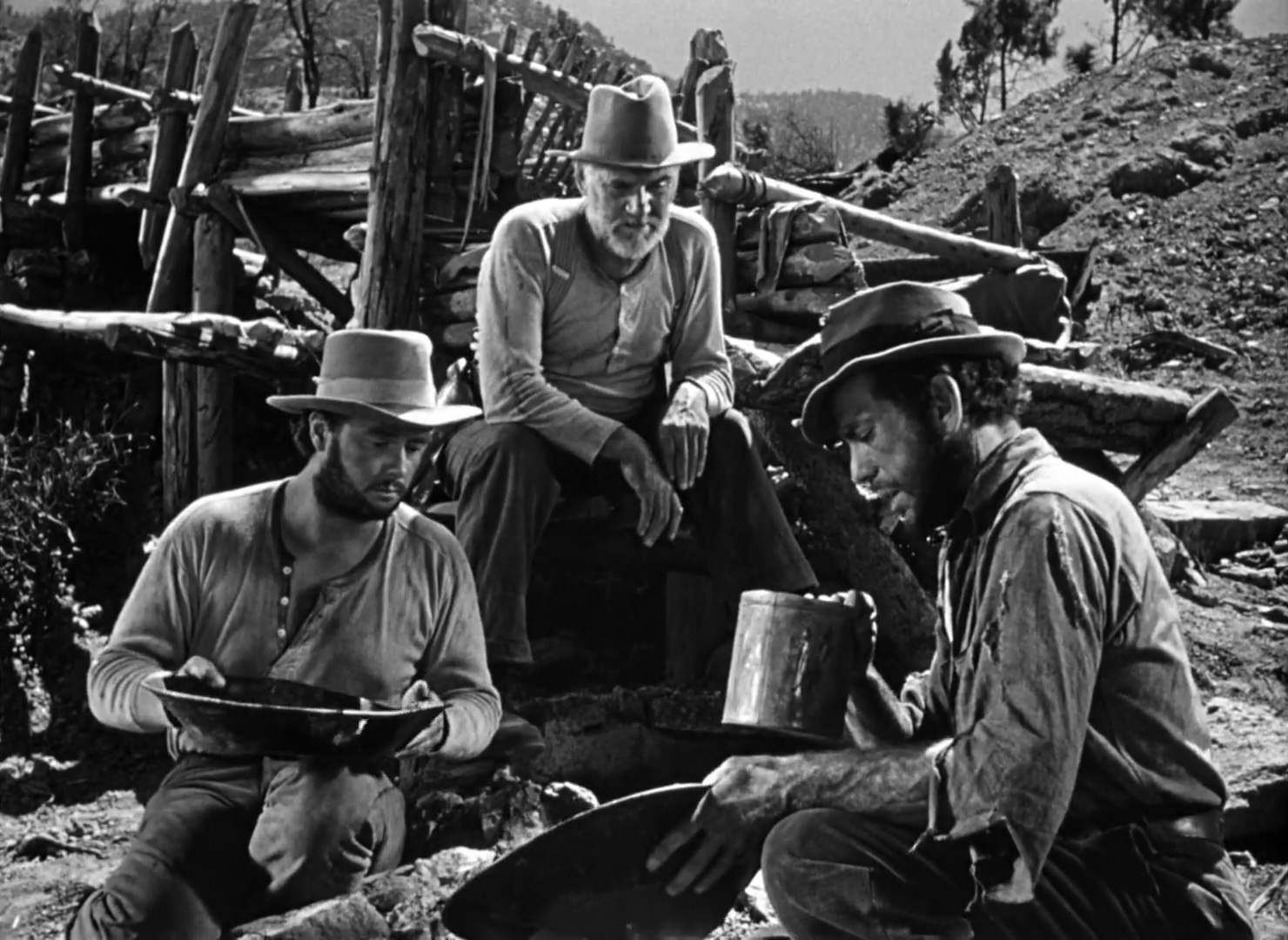
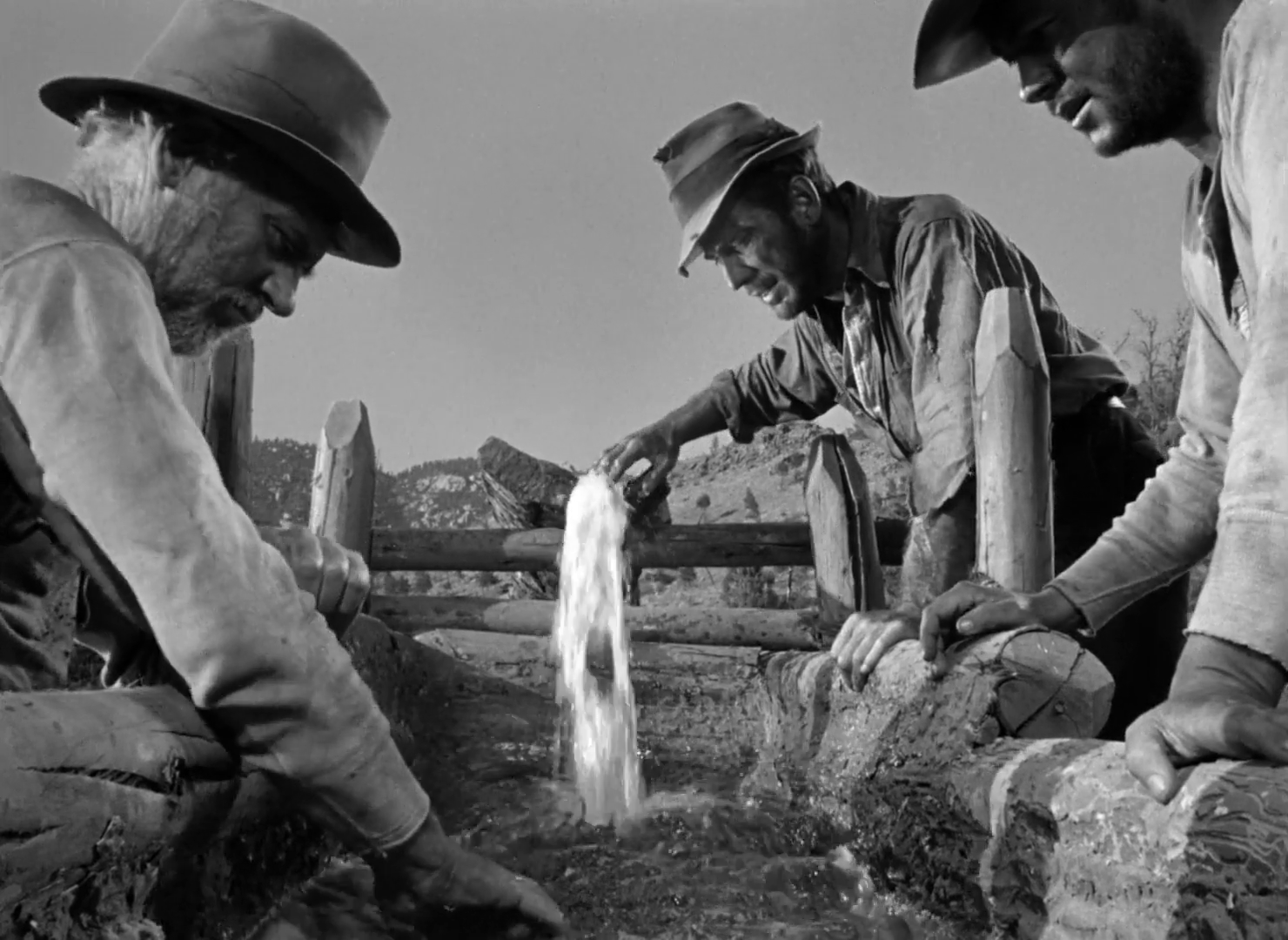
Shortly after recouping the money from the overseer who skipped out on them, Dobbs and Curtin team up with an old man McCormick (Walter Huston) who talks about how lucrative (if dangerous) a career in gold mining could be. Using a surprise windfall Dobbs wins from a local lottery, they strike out into the mountains to see if they can make it big.
Meanwhile, I met Al through my partner.
He threw a pool party for his podcast at the end of summer 2016. She went as a guest of one of our friends (who I’ll call Turtle), and within the next few months we were both at their house for some other party. That was the first time I met Al. We hit it off basically immediately. We loved movies, and that was right around the time I was starting to be a rabid James Cameron defender. There was disagreement on Avatar, but we agreed on the rest of his filmography, and he had a good knowledge base and seemed to understand what I was saying.
As someone who only has one younger brother, I’ve always found it easy (perhaps too easy) to gravitate towards older brother figures who flit in and out of my life. I look up to them easily and it’s not difficult to start listening to them and take their wisdom as somewhat gospel. Given the shared interests, he fit perfectly into that mold.
Digging for gold
It wasn’t long before that intimacy brought us closer. As someone always looking for people to play board games with, he and his daughter started coming over for weekly game nights. Eventually, we dove into a campaign game, one that took nearly a dozen sessions played over many months. We went to Disneyland with their family. We spent the 4th of July together. We exchanged Christmas gifts2. We went to his best friend’s apartment to watch the big boxing match between Mayweather and McGregor, something I never would have exposed myself to had we not been so close.
Shared interests breeds such intimacy. We’d found a rich vein worth mining, so mine it we did.
But while things were going well, in retrospect others weren’t.
In Treasure, after they set up their station, things start to get a little screwy. McCormick wasn’t kidding about it being dangerous. While mining in a tunnel, Dobbs experiences a cave-in that almost kills him. Curtin is there, though, and risks his life to pull Dobbs from the rubble.
This is only around the film’s one-third mark, but already Dobbs has already started to let the paranoia set in. Yet were his fears of the rational sort he’d recognize that Curtin absolutely could have and would have left him to die in that mine. It would have been so easy. And… well… Dobbs himself probably would have left Curtin to rot if it meant a better share.
All the clues in retrospect
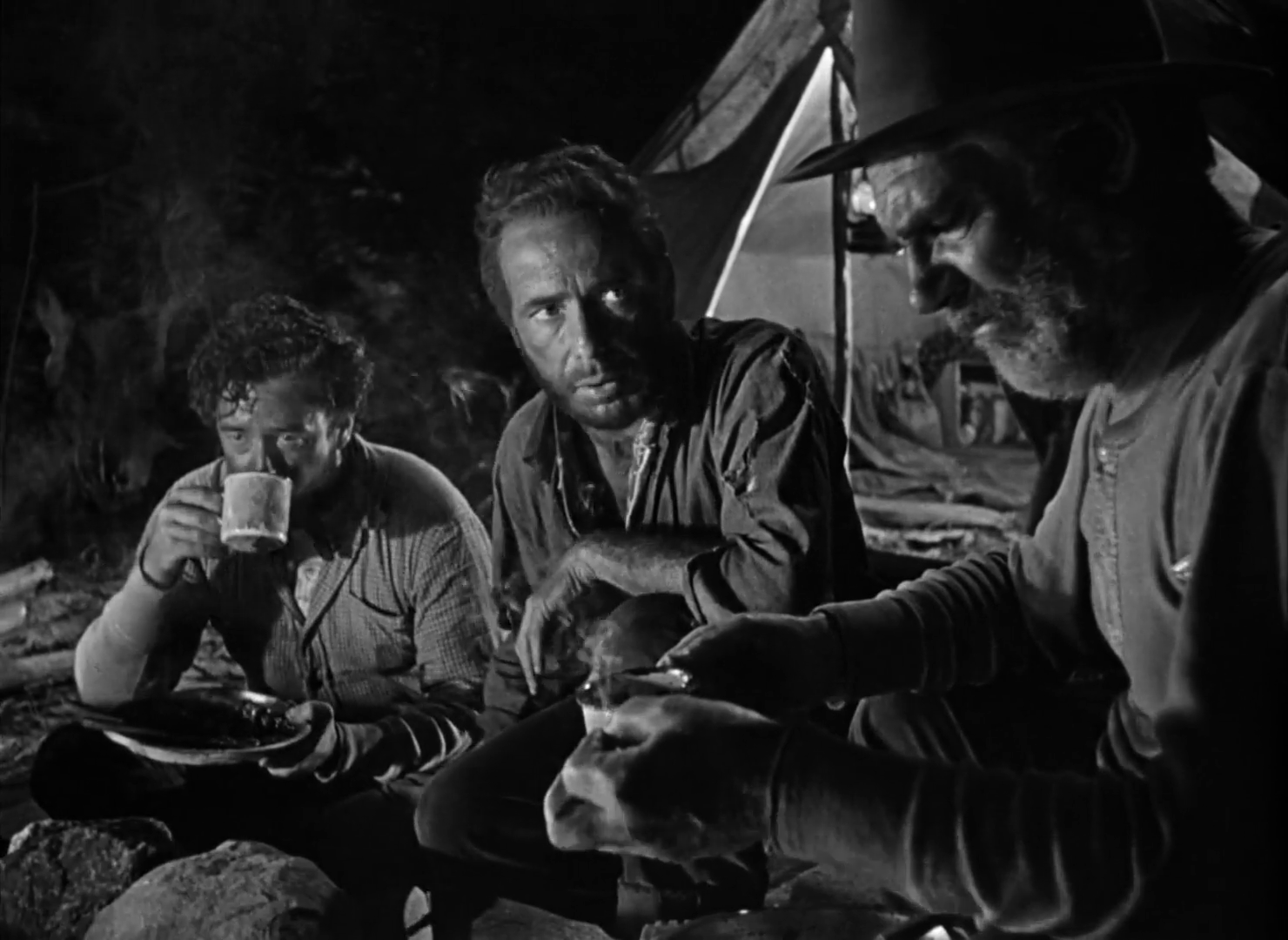
Looking back, all the little details add up to something that really was toxic at its core. Dobbs’s vagrancy created a massive imbalance in his existence and helps hide his own inherent money problems. When he got money at the beginning of the movie it’s not like he went and tried to invest that money to make more money. He immediately blows it on food and a haircut, intimating there’s no amount that he won’t burn through immediately. And… people have a right to dignity. Dobbs should eat, he should be able to feel clean and well-kept. He has the right to drink and play the lottery. At a certain point, though, this pattern is irresponsible, doing more to maintain his vagabond lifestyle without doing anything that might pull him out of it. Couple this cyclical begging with Dobbs’s single-minded obsession for wealth and it’s clear that he’s not exactly psychologically capable of managing that kind of prestige. I mean, hell, he doesn’t even realize he’s begged from the same individual three times in one day. That’s not the sort of guy who is thinking rationally about what he’s doing.
Early in their mining operation, McCormick notes they should aim to pull out $25,000 a share from their operation. That’s not enough for Dobbs. He wants twice that, ideally three times. But McCormick recognizes that there’s probably not enough for them to do that. His avarice knows no end. Hell, in the same scene Curtin talks about wanting to use the money to be a fruit farmer and capture that nostalgia of his youth. All Dobbs can think about is the trappings of the world: fine clothes and gluttonous splurges at cafes. It’s so deeply unimaginative, so impersonal, so narrow-minded.
The cupidity of what-might-be goes on to define him all throughout the middle of the movie, where many of the incidents that occur come about to directly challenge Dobbs’s mental state. While the bandit attack is terrifically loud and Cody’s arrival provides a ton of intrigue, the gila monster scene is perhaps the best. Dobbs can’t seem to comprehend Curtin’s truth-telling because he, himself, knows he will lie to anyone to get ahead. His behavior mirrors his own trustworthiness. As his hand reaches towards the hole, every inch closer reflects just how untrustworthy he feels Curtin is (and, by extension, how untrustworthy everyone should treat him). It almost ends so bad for him.
Narcissism is one of the key metrics by which we understand the world. Because the only mind we know is our own, it makes sense that we find ourselves drawn to like-minded individuals. With Al, I saw a shared love of pop culture, games, and philosophy. An obsession with Stephen King. Recognizing that one of the characters on his podcast sprang from a terrific performance from a somewhat niche movie, the sort only someone like the two of us would recognize. While I caught it almost immediately, he told me that no one else had ever caught the reference in the years since it had aired.
But that overlap can blinding us to the moments when the crack start to form.
Right in the middle of this time, there was another podcast creative whom I knew by proxy (let’s call her Rose). Turtle was starting to grow a deep and abiding friendship that (from afar) seemed… odd. Both Al and Rose were finding success in the narrative podcast space at around the same time, but while Rose was content to do her own thing, Al would take every opportunity to joke about how Rose was his rival. That “joke” rapidly turned to an insidious poison dripped into my ear. Without knowing Hellie, it tarred my ability to see her for the rad person she was, when really all of my views came from the twisted prism of how he saw the world. It quickly became clear that this rivalry was one he took seriously. He detested her, forming a parasocial relationship despite them never once meeting.
Meanwhile, eight years later I had an absolutely lovely hour-long FaceTime catching up with Rose just this week. She’s become one of my dearest friends and my life is far richer with her in it.
Not that Al would ever understand that.
See, as Al started to share his worldview, there were parts that felt super anathema to how I operated my life. He’d had bad relationships with people before, and the fallings out became legendary. At a certain point he talked about his bad relationship with his father. There’s no need to cast judgment on this. People have bad relationships with their parents all the time and how they handle that is their business. But while I don’t remember the specifics of all the ins and outs of that particular relationship, there is something to the way he ended that tale:
“And so I put him in a box and I put that box behind me.”
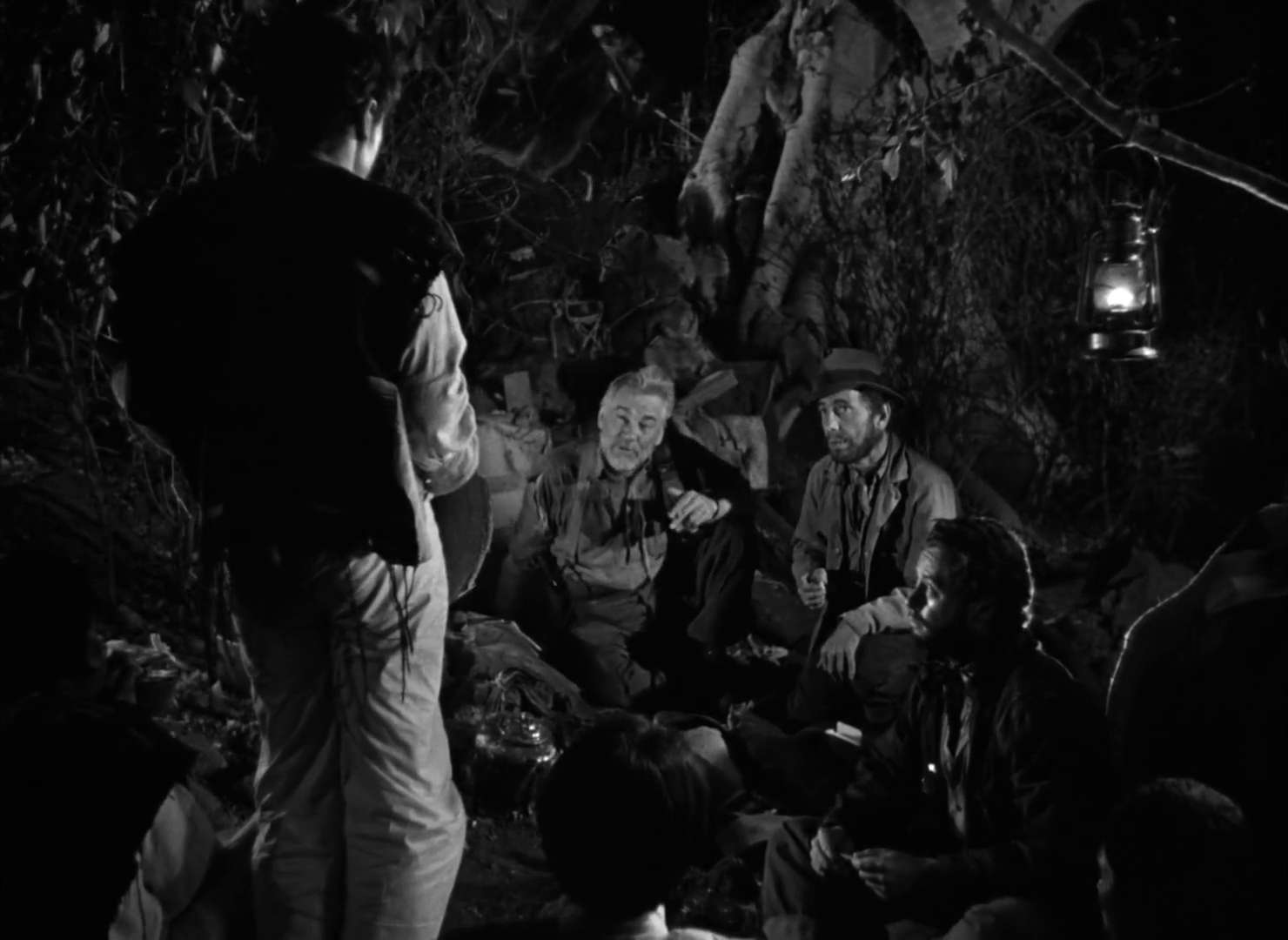
I’ve known many people who live their lives by treating their pasts as a thing about which they can go cold turkey. But while compartmentalization can be healthy, at a certain point this can become amputation. Al seemed to be very much doing the latter.
Thinking outside of oneself
Without going into the specific politics of how our falling out occurred, by the end of the year (when everyone is insanely busy), a break between Al and Turtle (for valid slights, I must say) resulted in our estrangement. Al thought I was choosing sides when I did nothing of the sort. A rift grew and I wasn’t sure what to do about it.
This happened around Thanksgiving, during my busiest time of the year. My job back then was kicking my ass on the daily and my time for managing melodrama dropped to basically zero. Near as I can tell, Al seemed to understand that my relationship with Turtle (which had gone back more than a decade at that point) was valuable. He told me he didn’t question that, but an undercurrent of inferiority complex tinged all of this messaging. How could he, a friend of less than 12 months compete with someone whom I considered family?
Near as I could figure, it still hurt him that this situation happened and that I didn’t support him in their break. He’d already put Turtle in the box and he had put that box behind him. And that had a drag-on effect to our relationship, where his not knowing where I stood became an all-consuming question. Eventually the two of us sat down with him and I explained that there was no reason anyone else had anything to do with who we were3. This was enough to keep things going for a little longer, though this weird behavior triggered alarm bells that this wasn’t going to end well.
At a certain point even actions aren’t enough to stave off this sort of madness. McCormick leaves Dobbs and Curtin for a short time to help a sick child in a nearby village. After he returns, the villagers demand he stay with them for a week as a means of repaying him for his services. John Huston takes time to emphasize just how valuable and important McCormick’s delicate medical practices are in the face of saving that little boy. For McCormick, this is liberating, so much so that he decides to stay in the village following the film’s conclusion.
This concept of repaying debts and cosmic karma is everything for McCormick, who is old and wise and understands what is important in life. He and Curtin make clear that before they start divvying up the spoils of their excursion, they intend to repay Dobbs his initial investment. Before they leave the mountain, McCormick insists they take a few days to put the mountain back in order so their work doesn’t mar its face. He thanks the mountain for what it has given them.
Dobbs, however, doesn’t seem to understand trying to make good karma. He’s so small minded he doesn’t realize that helping people is its own reward, more valuable than precious rocks from the ground. McCormick’s actions feed his soul and leave him more whole than months and months of arduous work that will make them materially rich. By the end of the film, he chooses to return to that village because it represents an easier, more peaceful life than the stressful vagrancy of living in the world.
The madness prevails
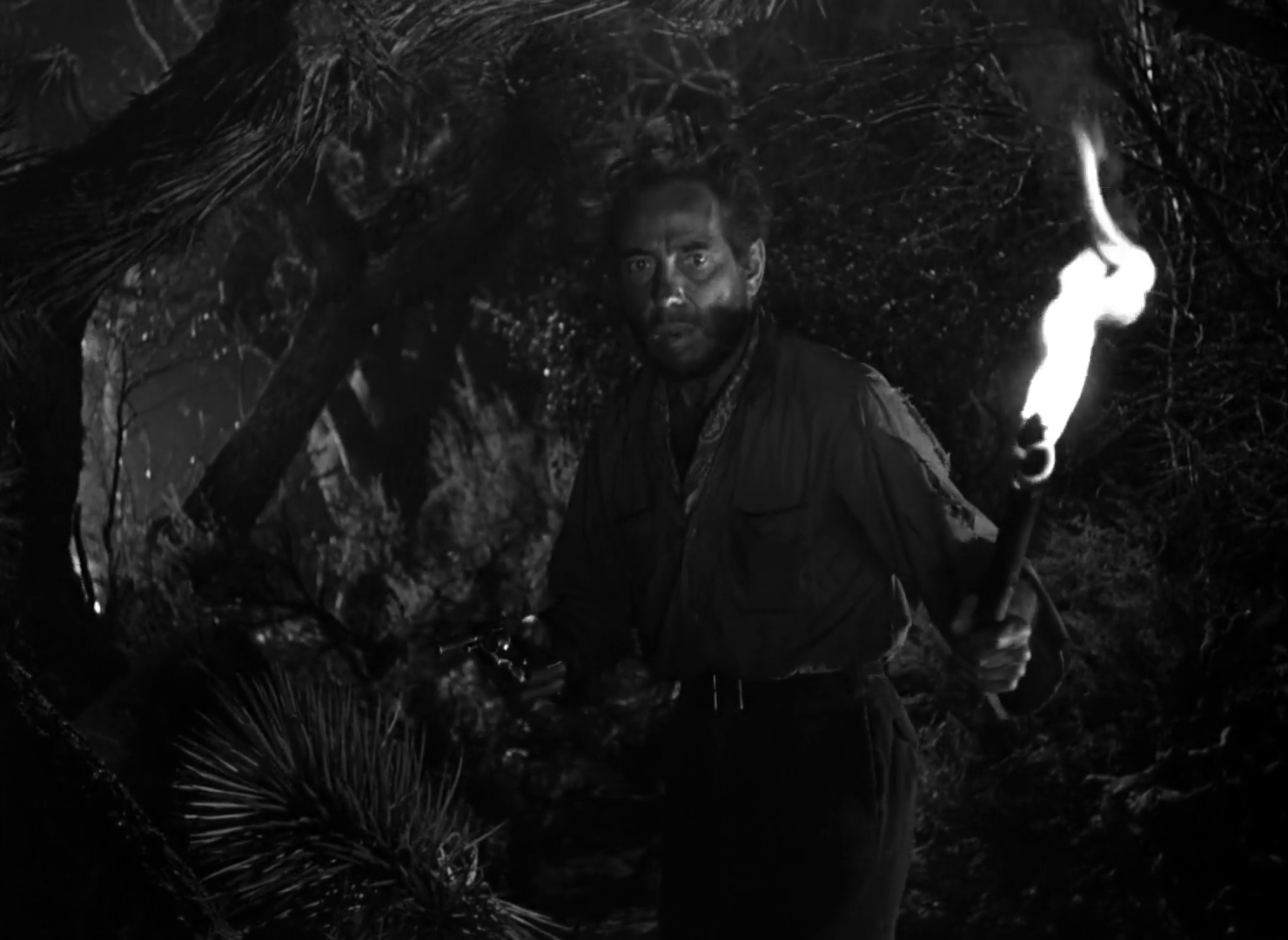
With McCormick waylaid, Dobbs and Curtin begin their return to the civilization so they can trade in the gold for a clean profit. By now, though, Dobbs has completely lost it. Untethered from reality he challenges Curtin and eventually guns him down in cold blood. His avarice has so fully addled his brain that when Curtin’s body disappears (because the wound was not fatal) he assumes some tiger took it away. Whatever he needs to tell himself to keep moving and satiate his greed.
Despite my best efforts, Al’s insecurity hit a breaking point. More than once he said I thought of him as a “fake friend” compared to the “real” I had with Turtle. It was a lot of projecting, this idea that our intense closeness and intimacy meant nothing in the face of others. For me, the two relationships were wholly distinct. He wanted Turtle nowhere near him and I respected that, so I didn’t bring her up again and tried to downplay the relationship. The Turtle/Al business was theirs. It had nothing to do with us.
The last time I talked to him was something of a hail mary pass. With the drama reaching a fever pitch, he sent a long text message unleashing his feelings and talking about all the ways our friendship had gone wrong. I drafted a long message in response and ran it by my partner. At this point, I knew there was probably little chance of saving it, so I put in everything I wanted to say, including that I didn’t want this but if he had already put me in the box and was ready to put the box behind him, that was something that was his choice, not mine.
I sent it and started warming up for a run, but before I’d even finished stretching, he called me.
In the 14 months of us talking he had never once called me before.
No way did I pick up the phone. I sent it to voicemail and then texted him after my run was over. Apologizing for missing his call, I asked if there was something he wanted to say. His reply?
“Nothing. Truly doesn’t matter at all.”
That’s why Al called for the first and only time. To say nothing. Sure, buddy.
Regardless, that was the last thing he ever said to me. Contact ceased. While I stayed loose friends with one of the mutuals in that space, a few years later his and Al’s relationship crumbled too and that modest podcast success they’d been building over years functionally collapsed.
This is the purview of small men who live in small worlds. The madness that Dobbs experiences is intense and driven around money, but no one can escape it if the pressure comes from the right place at the right time. Maybe if Curtin and McCormick had tried to head it off early they could have assuaged his paranoia, but based on how things goes and just how bad he loses it, they would have only delayed the inevitable.
Retethering to reality
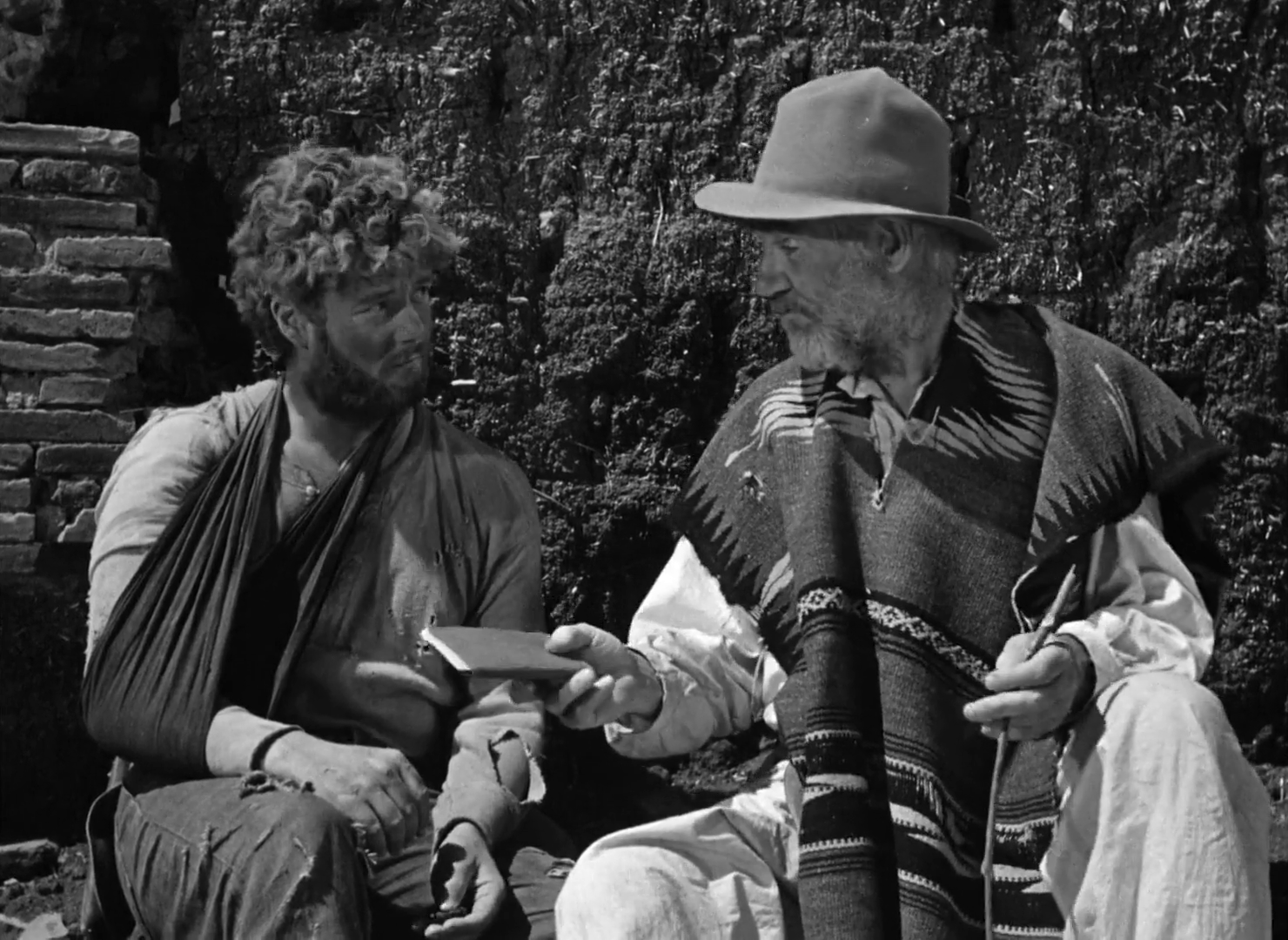
Dobbs and Al are not so different. Separated by 70 years, both men had a vision for how the world worked and believed it despite evidence to the contrary all around them. Living in hermetic bubbles divorced from reality pickled their brains. A sense of self-importance festered into far grander delusions. When others tried to build intimacy and provide a common anchor weighing them to the ground, they rejected it in the conviction of a narcissistic world view.
Despite all the evidence to the contrary (specifically that many of Al’s other, even closer, longer-lasting relationships collapsed shortly after ours), there’s always the hope that the dude is not beyond saving himself. The wistful fondness for the year I spent with him and the companionship therein has persisted even if the circumstances around this breakup have cast a fine shade over the entire experience. Life without that level of toxicity has left me in a better place, yet there is a hope that people can be far more than their baser instincts. But if untreated, underlying character flaws can morph and mutate ordinary people into unrecognizable monstrosities. Societal norms mean such people can be fully functional in a casual, day-to-day environment. It’s intimacy that tears down those barriers and reveals the inner soul.
Escaping the atrophy that can wrap around a person’s heart and psyche is a blessing. I’m hardly perfect (no one is), but introspection and constantly questioning myself has helped maintain a level head despite adversity. Self-reflection and a willingness to look at one’s own shortcomings might be anguishing, but it can shore up the weaknesses that might lead to the sort of breaks in reality that result in living in another. Obsession with gold and wealth is universal, but it’s not so different from a desire for societal acceptance and wanting others to validate inherent narcissisms and raging egos.
These, though, are fleeting. Such behavior is cashing and spending checks immediately when an investment in the capital of others and community will reap its own rewards down the line. Without building up those foundational supports, it won’t take much for that unrefined gold to spill out into the desert. Mistaken for sand, it will pour from ripped bags and float away on the wind, cast out without the holder ever appreciating its pricelessness.
Which is a decade that includes (amongst others) Citizen Kane, Casablanca, Double Indemnity, It’s a Wonderful Life, and The Best Years of Our Lives. ↩
I asked for and he got me Avatar on blu-ray, a purchase I’d never been able to justify. Still makes me laugh. ↩
Now that I think of it, I think my partner posted a picture involving me, her, Turtle, and Rose (and others). This almost certainly sent Al through the fucking roof. Oops? ↩