Quirks of Video Game Narratives - The Legend of Zelda: Tears of the Kingdom

The following contains spoilers for The Legend of Zelda: Breath of the Wild and Tears of the Kingdom as well as Red Dead Redemption 2…
A few years ago, my partner and I were playing Mario Tennis at a friend’s house. Despite never having played on the new Nintendo Switch version, my partner was kicking ass. It perplexed one of the people we were playing with. “How are you so good?” he exclaimed. “Are you sure you haven’t played this before?”
The joke is that my partner… had played it before. As a kid. Earlier in life. Mario Tennis hasn’t changed in decades, and every new generation of game console gets the same skeleton with some slightly updated clothing and maybe a few accoutrements. The same is true for Super Smash Bros, Mario Kart, Pokémon...
While I’m somewhat digging on them for that, there’s tremendous value in creating something comforting. It’s great that adults can pick up new versions of decades-old games and not having to learn from scratch. I even have a friend who plays every single Pokémon game that comes out because he finds them comforting. He’ll acknowledge that outside of the explosion of different species and locations, it’s that same gameplay that keeps him coming back. Having played almost a dozen Assassin’s Creed games in my life… I get it.
But when a company's M.O. is endlessly iterating on their innovations, it limits their capacity to expand the medium.
Based on this mentality, Nintendo released The Legend of Zelda: Tears of the Kingdom in 2023. A sequel to 2017’s blockbuster Breath of the Wild, it doesn’t even pretend like it’s giving its audience anything more than an updated version of a game they almost certainly loved. Hell, most of the main area of the map is (with very few changes) just a copy-paste of its predecessor.
As I started playing it, the sounds and colors and interactions brought me back to my hundreds of hours with Breath of the Wild. It helps that the designers of the original built the most aesthetically pleasing sensory experience possible (and if it ain't broke...). Before too long, I was as in love with this new version as I was with the old, while also waxing nostalgic with every interaction.
For all its similarities, there are a few major differences that make Tears of the Kingdom more than just a remake of one of Nintendo’s greatest successes since the turn of the century. Some of that is the mechanics and the major updates to the physics. The integrations of new powers mean functionally infinite creativity in interactions with the world, covering everything from puzzle solutions to hilarious (if (in)efficient) ways of slaughtering monsters.
But the big takeaway from those who finished was praise for its story. I’ve heard people say it was astonishing, emotional, one of the best endings to any Zelda game ever. Given any new game canvas, writing is the main opportunity to showcase change. But this was a minor problem with the original game: with a design such that any player could go anywhere, do anything, and even end the game at their own discretion, how can designers build stories that are satisfying for every player? Whether it's a mainliner who crashes the main campaign in 20 hours or the completionist who spends 200+ hours trying to see every nook and cranny, collect every item, and help every side character before embracing destiny”, everyone needs to have the same basic experience.
This is the major test of the open world game. And Tears of the Kingdom accomplished it, while surpassing its predecessor and other games of its ilk.
How?
Video games can do anything
Many years before the Mario Tennis night, I went to a friend’s house. He knew I didn't have a system and so wanted to watch me play some video games. At the time, I had limited experience with current titles. I mostly stuck to adaptations of things I liked (Spider-man, Star Trek...) or series I'd grown to love (Grand Theft Auto Prince of Persia, Halo...), but the two he showed me fully scratched the inside of my brain in ways I hadn’t been anticipating.
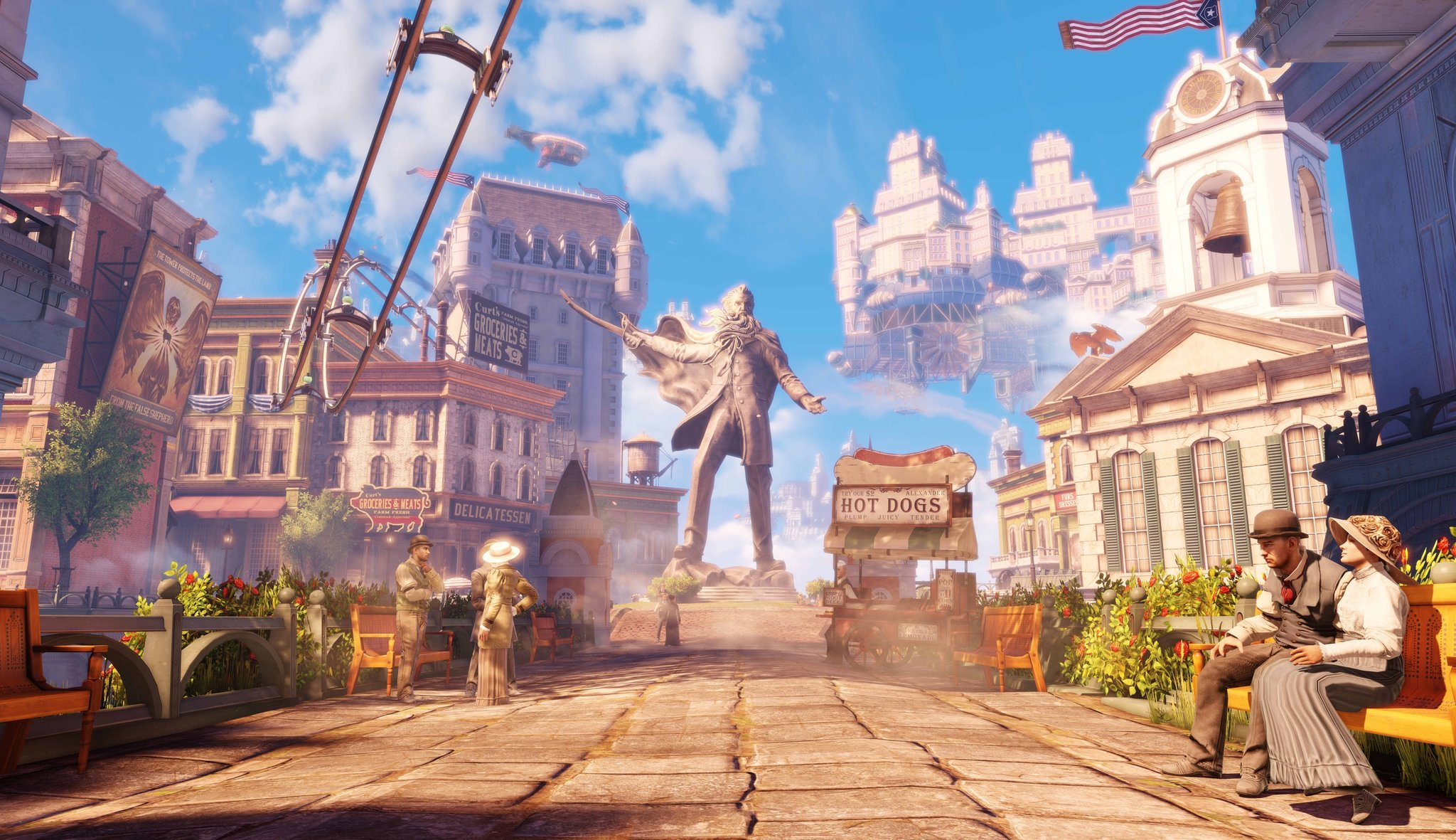
Bioshock Infinite came first. The third game in the Bioshock series, the installment put players in the fictional city-state of Columbia, an early 20th Century Americana community who live on skyships in the air. The format of the game itself (first person shooter or FPS) puts players in the eyes of the central character, giving the opportunity to shoot guns and fire magic powers. I've always loved those. FPS's are incredibly immersive, and in just the first two hours the vastness of city-state Columbia felt absolutely incredible. But… Bioshock Infinite itself (like so many other campaign-based FPS) is not a terribly long game. Designers build levels as labyrinths. There are set start and end points, with players often moving circuitously to hit various objectives amidst enemy encounters. Such campaigns rarely takes more than 20 hours to complete. Nowadays, single-player modes are window dressing to online multiplayer experiences, where playing with other players creates infinite variety and excitement. Without that feature, these games exist entirely on rails, with walls and locked doors at just about every turn. Levels exist to push the players forward.
I didn’t know it at the time, but Bioshock Infinite is one of the greatest video game narratives of all time, an absolutely haunting meditation on choice and fate in infinite parallel universes. The tight FPS format allowed the dev team to lay on the story's emotional gravitas like a sledgehammer. It's impossible to get to the credits rolling without some emotional reaction to the completed journey.
The other I played was Red Dead Redemption.
I'd played open world games before, games where you land in the middle of the map and it leaves you to your own devices to play as you like. There was Ultimate Spider-man or any installment in the Grand Theft Auto series. But Red Dead Redemption started with a story that grabbed me immediately. Even though I’ve only played four hours of it (and have been meaning to go back when I manage to set aside the time), the world of Rockstar’s old west felt vast and infinite. NPCs were waiting to give out missions, and there were vast swaths of map to explore.
Put together, this one-two punch fundamentally rewired my understanding of what was possible within the medium. Video games can create entire worlds in which characters (and thusly players) reside. There’s rarely movies with the vision of Bioshock Infinite, and when they happen it’s not often they have the story to match the concept. Let alone the scope.
There is a trade off, though. Three hours of Bioshock Infinite completes about 30% of the game whereas five hours of Red Dead Redemption doesn't even really get into the story at all.
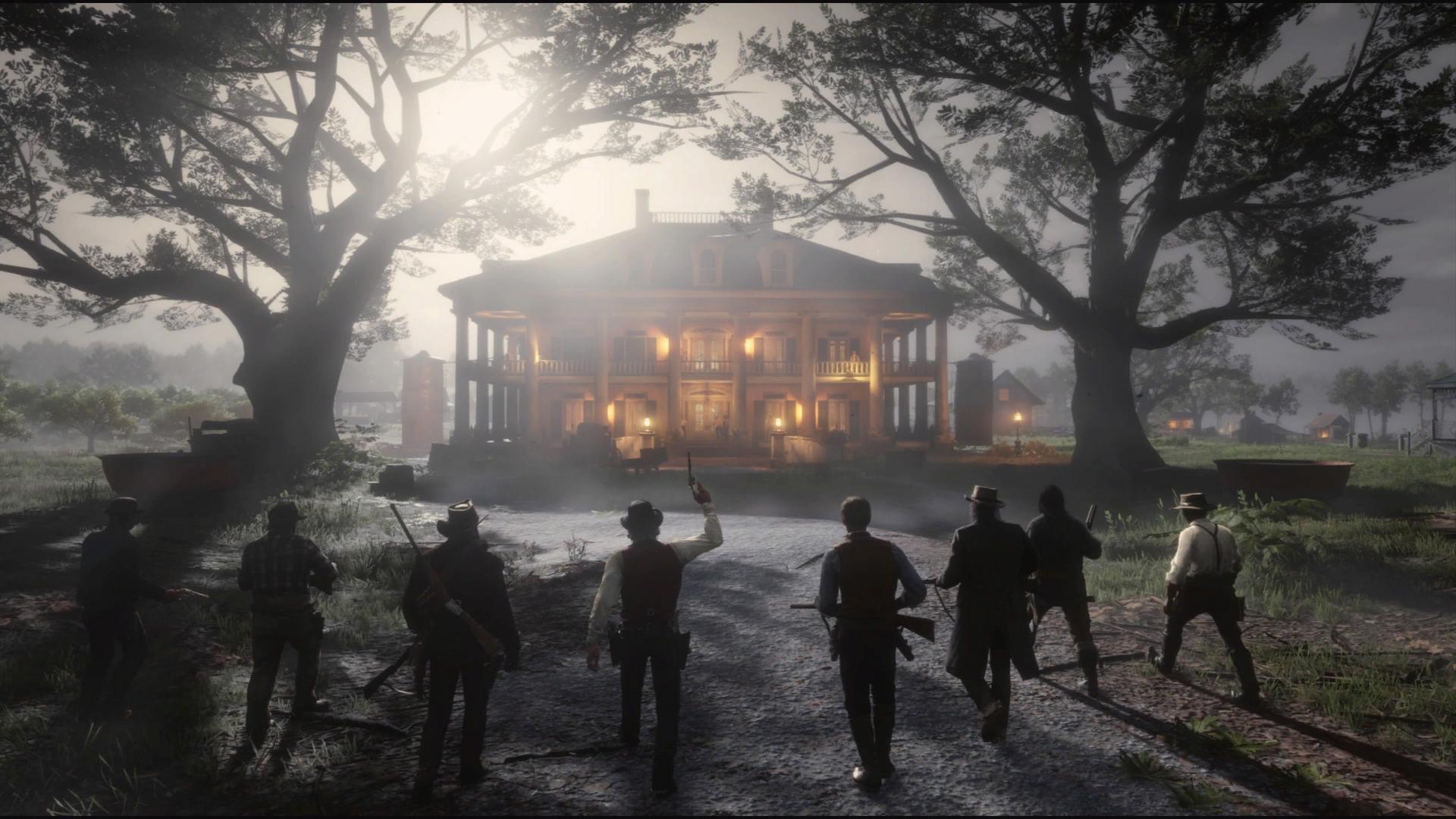
The endless horizon of Red Dead Redemption 2
Fast forward to 2018 and Rockstar's release of Red Dead Redemption 2.
I'd played more than a dozen open world games since my short stint with Red Dead Redemption, but its sequel was something bigger. Vaster. Before it, most games (like the Assassin's Creed series) treated these settings as time sucks. They populated these worlds with not just side missions, but also hundreds of collectibles to track down all over the map. This might have helped to make these games feel worth the expense, but they also emphasize how bereft of ideas these games can be. It takes nothing to drop dozens of these item drops into any game. And it exists to exploit gamers' OCD tendencies.
Red Dead 2 was the new way of looking at the format, emphasizing exploration and discovery. The sprawl was such that it was easy to get lost in the world Rockstar created. Just a few days into playing, I felt lost, overwhelmed. When I asked a friend what I should do, he told me “get on your horse and ride”. There was so much to discover, so much to explore. It never took long to find something interesting. There was always some random encounter to experience, a random townsfolk who needed a problem to solve, another legendary animal to hunt.
Within that lies the biggest hurdle to narrative storytelling: open world games give players the freedom to enjoy at their leisure. The plot advances whenever they're ready, and that could be in five minutes or five months.
All that time away can mean that it’s easy to lose the thread of what’s happening. When players advance the main story, the games reward them with fancy cut scenes, unique visuals, and their best mechanics. These are the moments players must remember so the story makes sense. While reaping the rewards of tangible progress, they have to lock in.
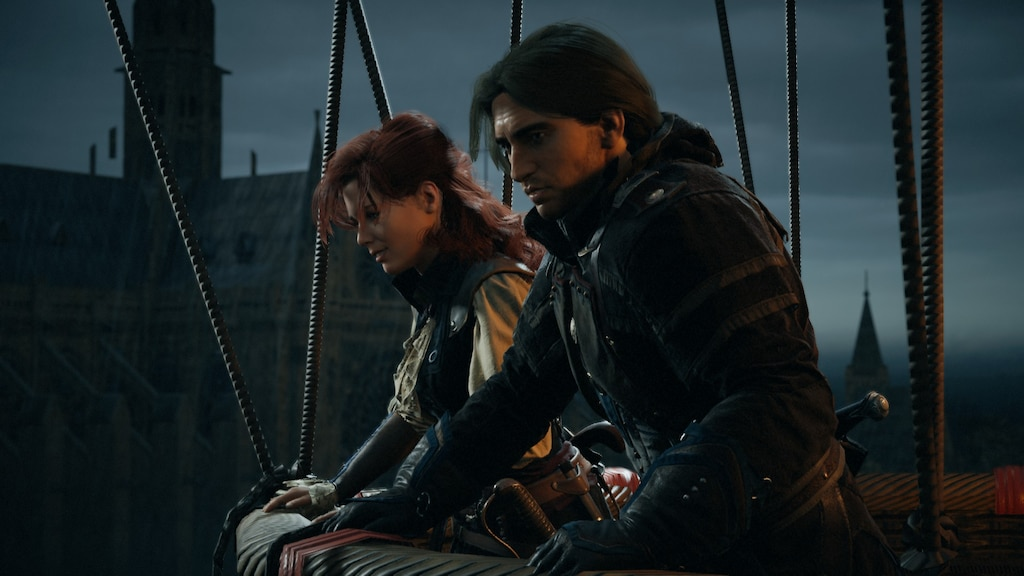
A brief detour to the French Revolution
For an example of how difficult this is to pull off, look no further than a game like Assassin's Creed: Unity, which follows a story about an Assassin named Arno and his attempts to foil a Templar plot within the French Revolution. Complicating the sworn enemy Assassins/Templars dynamic that defines the series is Arno's childhood friend and love of his life, Élise. She is herself a lifelong Templar, and the game's climax features the two teaming up to defeat the villain.
Élise dies in the battle.
Because there's so much to do in Revolutionary France, it's easy to miss all the various machinations of who Arno is hunting and how all of the plot fits together. While Élise's death is traumatic and awful, it comes at the end of a meandering narrative that only crystalizes with that event. Because it's so hard to follow, the emotional impact is such that it's sad because Arno liked her, and... death is sad.
Beyond that?
Where Red Dead Redemption 2 succeeds is in a story that slowly unravels as the players progress the plot. The big moments burn themselves into players' brains because they're the big epic moments: Dutch's gang riding to Braithwaite Manor, nine bandits wide with torches aloft. Or when Keiran's horse approaches the gang's decrepit mansion hideout, Keiran himself in the saddle with his decapitated head in his hands. Or the the diagnosis of Arthur's illness. Or the time he sits at a train station after a taxing mission, thinking about the life he's lived and whether or not redemption is in the cards for him.
Players could go hours, days, weeks, even months between these moments, and the designers recognized that a visceral image combined with an almost reptilian emotion can brand players' memories with moments they will care about. Despite not having played the game in almost a decade, the only thing in that paragraph I had to look up was Keiran's name and the name over the Manor's masthead. That's the sort of emotional impact that makes for a riveting story.
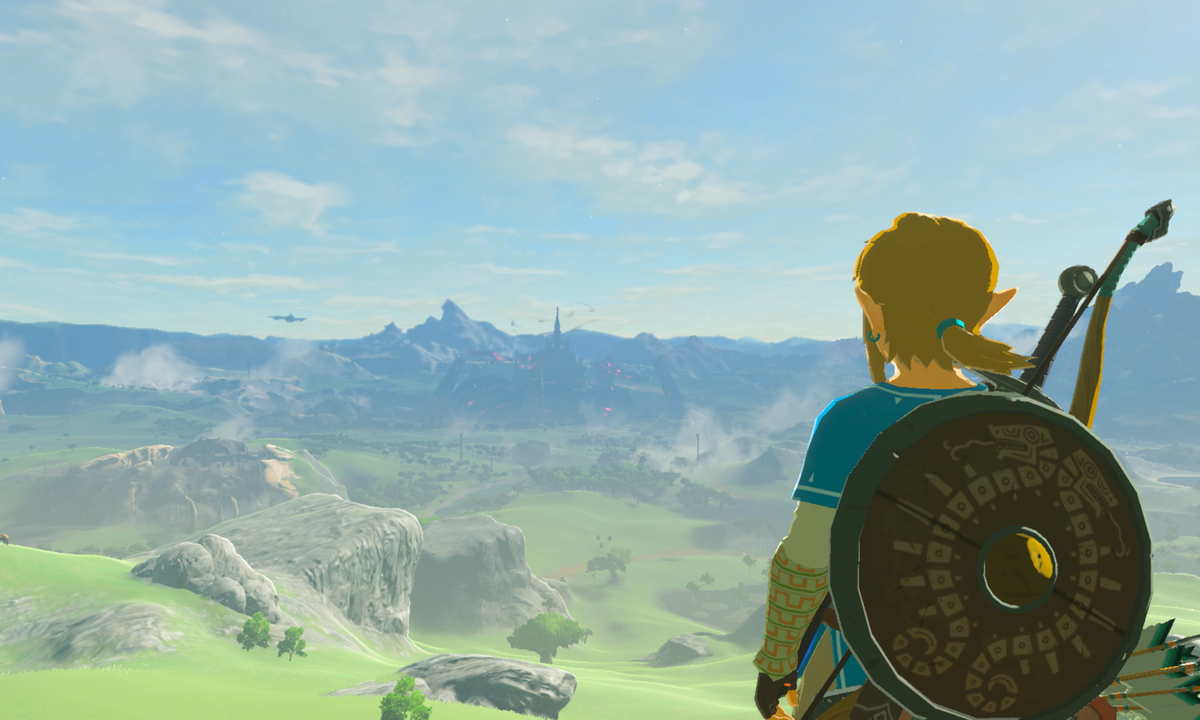
The innovations of Breath of the Wild
Just before Red Dead Redemption 2, Nintendo released The Legend of Zelda: Breath of the Wild. It lived by the same philosophy, though through the bright colors and cel-shading of Nintendo’s family friendly aesthetic. The vast world of Hyrule spanned various climates and a massive open world into which the dev team placed easter eggs, collectibles, puzzles, and interactions. So much to discover. The story alone was 50 hours long. The side quests ballooned tha to 100 hours, and finding every single thing took it past the 200 hour mark (on the short side). Not only that but the design was gorgeous, with an ancient futurism aesthetic infecting Hyrule's fantasy world and soothing sounds/music that never, ever got old. The narrative quality of Rockstar's games but with the imagination of Bioshock Infinite.
It was a massive success for Nintendo, and they followed it up in 2023 with Tears of the Kingdom. , which xeroxed Breath of the Wild's map, layered an overworld (Sky Islands) and an underworld (the Depths), created new powers for link, and put a little more time and energy into the overall story.
I loved Breath of the Wild, and while there are things the original does better than its sequel (a lot of that is its design and aesthetics), walking away from the sequel I find it an even richer and more satisfying experience.
Most of that is the story.
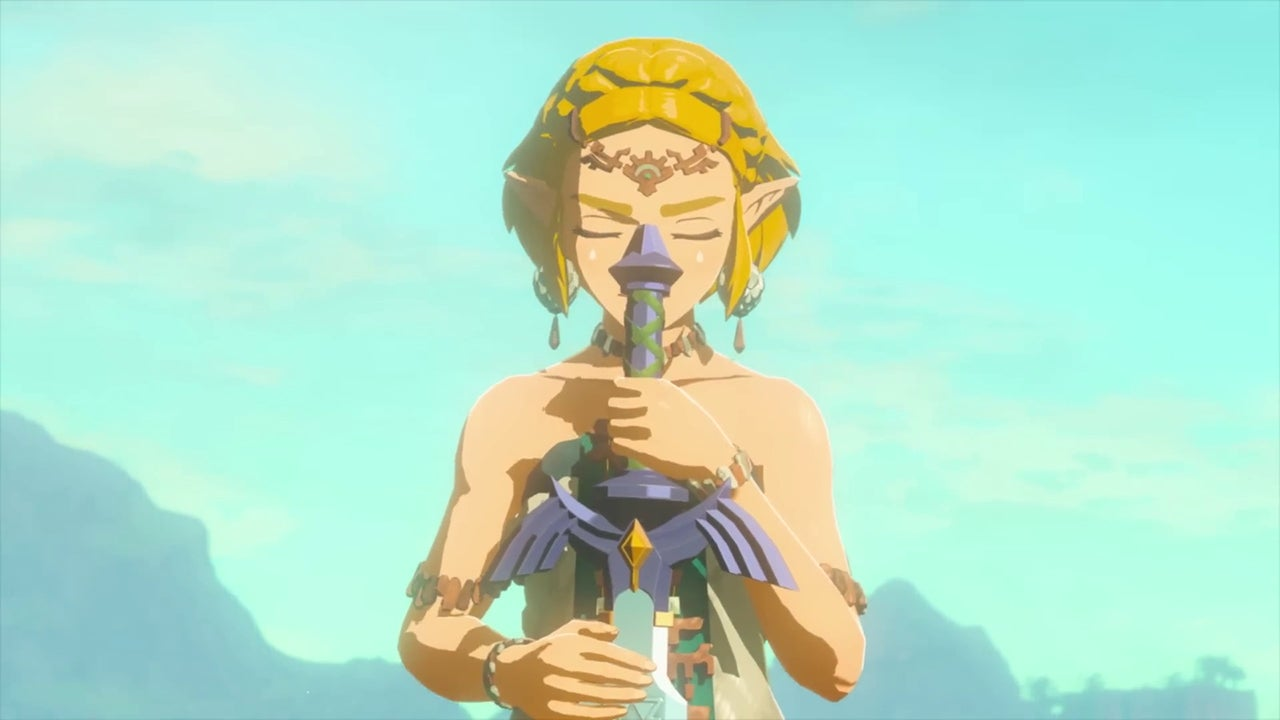
The melancholy of an empty Hyrule
The premise of Breath of the Wild is simple enough. Link wakes up one hundred years after Ganon (the series' main villain) attacked Hyrule in his bid to destroy everything. Princess Zelda has taken it upon herself to hold him at bay for the intervening century, and the story follows Link's quest to defeat Ganon once and for all. He has to recover memories of his life as a Champion and cleanse/reactivate large mech creatures that will weaken Ganon and make him easier to kill. This narrative follows in the grand speculative fiction motif of a long-ago battle, the echoes of which still linger into generations who might not have even been alive at the time. Sauron from Lord of the Rings is probably the most famous example of this, but it's also the Cylon war from Battlestar Galactica and Voldemort's first reign of terror in Harry Potter (and while I'm here: fuck J.K. Rowling)
It's a good story, though most of the joy in the game is the melancholy that comes from Link having been asleep for a hundred years. One of the most indelible memories in the game involve Link running across the grassy expanse of Hyrule Field. Off in the distance, the purple smoke of Calamity Ganon encircles Hyrule Castle. The plink of a piano comes in, and it instills this intense grief at all the time lost that Link (and the player), Zelda, the world, and its inhabitants can never get back. He can't be where he wasn't, but he can strive to utilize the time Zelda bought him. And that can help him save the world. She left him all the pieces, and it's Link's (and the player's) moment to step up.
That final fight against Ganon, though, is... fairly perfunctory. Zelda's sudden arrival to help is great, but there's not much else to it. After dozens, possibly hundreds of hours of playing it can feel... anticlimactic.
Tears of the Kingdom tries to fix that. The sequel opens in the aftermath of that ending: following Ganon's defeat, Link and Zelda take the opportunity to explore the newly exposed depths of Hyrule Castle. There, they come across the Demon King (yet another form of Ganon), who destroys the Master Sword, lifts Hyrule Castle into the sky, and then creates massive sinkholes in the ground all over the map that serve as access points to The Depths (an inverted underground version of the map on the world above). Amidst all of this, Zelda vanishes, and a large part of the narrative is discovering what happened to her.
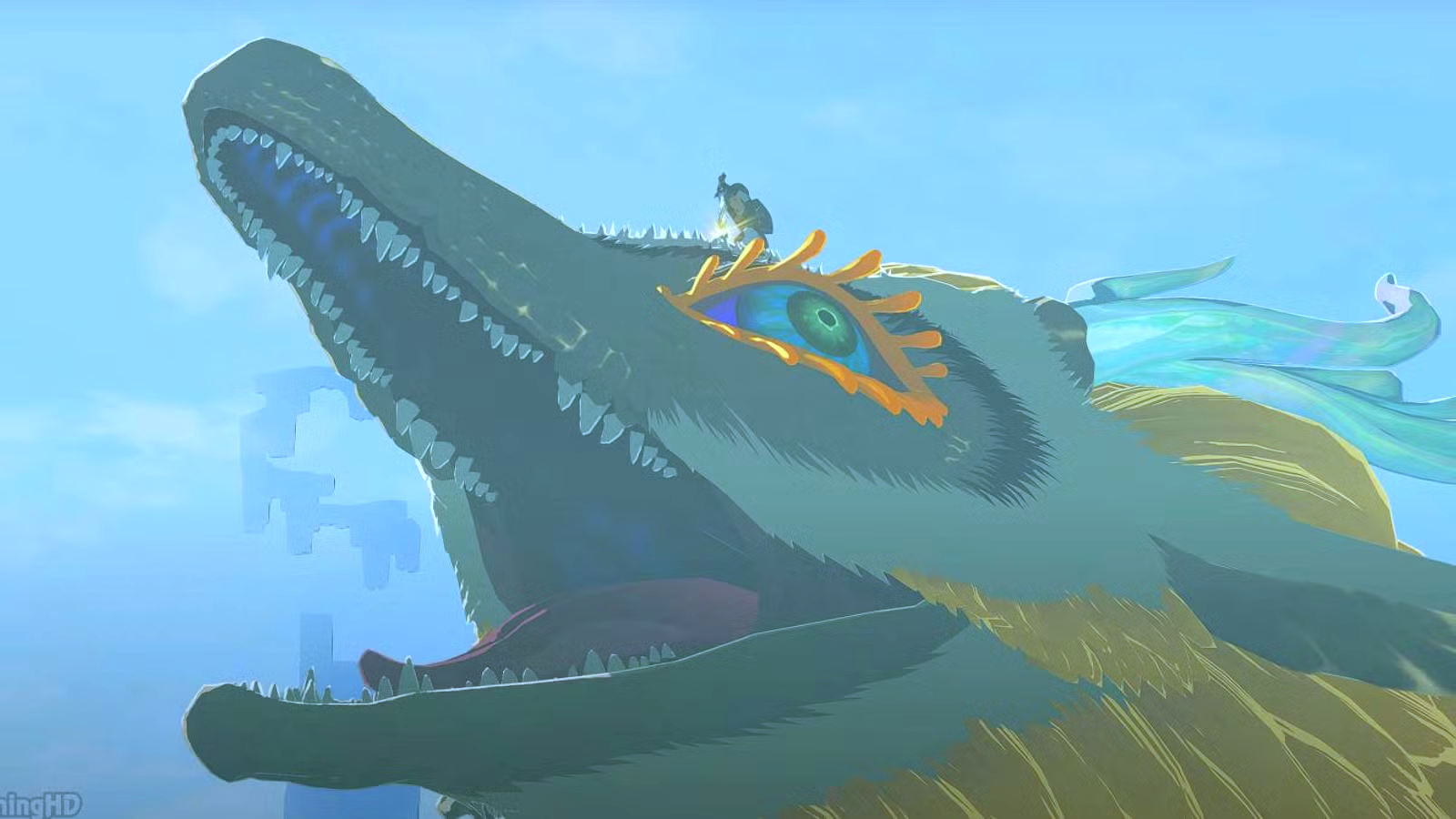
Some of this is the same: the learning process and exploration functions like the first game, and the game designers lock Link on an isolated tutorial location that will teach players the basic powers and how they work. Where it's different: Link isn't amnesiac as he was before, but the mystery he unravels leads to a shocking realization: Zelda didn't vanish. She transported into the distant past. There, she witnessed the original rise of the Demon King and the resulting war. She also worked with champions of incredible power to chain him beneath the castle. But armed with the knowledge that he will rise again, Zelda takes on an impossible burden: she takes the form of a Light Dragon. Barely sentient, she circles Hyrule for thousands of years, trapped in a dragon form whose magic repairs the Master Sword. The only hint of this are her tears, which land all over Hyrule as clues for Link to discover. Each tear contains a memory, and collecting each adds up to a full picture of what happened to Zelda in the past.
At the end of this story thread, Link gets to the Light Dragon, and pulls the Master Sword from her skull. While this is a major story beat, it still leaves Zelda endlessly circling Hyrule, with absolutely no hint how to free her.
Breath of the Wild has a similar "collect the memories" mechanic. The memories there tell of all of the obstacles in the way of Zelda's plan to prevent Ganon's calamitous apocalypse. As my partner said as I found the last memory: "I feel so bad for Zelda." It's emotional, certainly. Caring about Zelda and how capable she is makes it easy to empathize with her plight and how much she struggles. But that psychological state is complex to understand. Even if the players were getting it in one solid go (which, to be fair, they could do via the game's ability to replay cutscenes whenever), there's no guarantee they'll understand all these disparate threads they find in any order. And it can be dozens and dozens of hours between such discoveries.
Meanwhile, players can replay the Light Dragon's tears, but there's also a sequence to them. Once players have collected them all, the game drops a final one at a remote location. This tear is the one that reveals Zelda's transformation into the Light Dragon and that it's Zelda's tears that the players have been experiencing. Even without the dialogue, it's a powerful series of images that conveys the enormity of the situation. Once the final memory finishes and the mission completes, the camera centers Link's POV on the departing Light Dragon, bringing the whole story to a close and hammering home Zelda's incarcerated state.
This is not so different from how Red Dead Redemption 2 operates. Both games frame moments that move the story forward as major accomplishments that reward emotional payoffs. They burn these moments into players' minds. Zelda's struggles in Breath of the Wild might break her, but is there anything more devastating than Zelda sacrificing herself on the chance that she can repair the Master Sword? And as she circles the skies of Hyrule for thousands of years, her only lingering sentience manifesting as the tears she cries, endlessly replaying her tragic story over and over in her mind?
Paying it all off
As it approaches the ending, the game pulls all the story threads together. It starts with a descent into the depths below Hyrule Castle. Going into the Depths is nothing new, but the abyss feels endless. What follows is a descent against fiercer and fiercer enemies, down down down. On arrival at the Demon King's lair, the game throws waves of monsters at Link and his allies (any Sages Link has aided and collected). A banner reads "War in the Depths of High Rule" with a health bar for "The Demon King's Army". Epic.
Surprising no longtime Zelda fan, Ganon takes multiple forms for Link to defeat. The final is a massive aerial fight, with a Demon Dragon as the final form. It's epic, but so is the arrival of the Light Dragon to aid Link in this final fight, Zelda scraping together just enough sentience to join. Together, Zelda and Link fight and defeat Ganon.
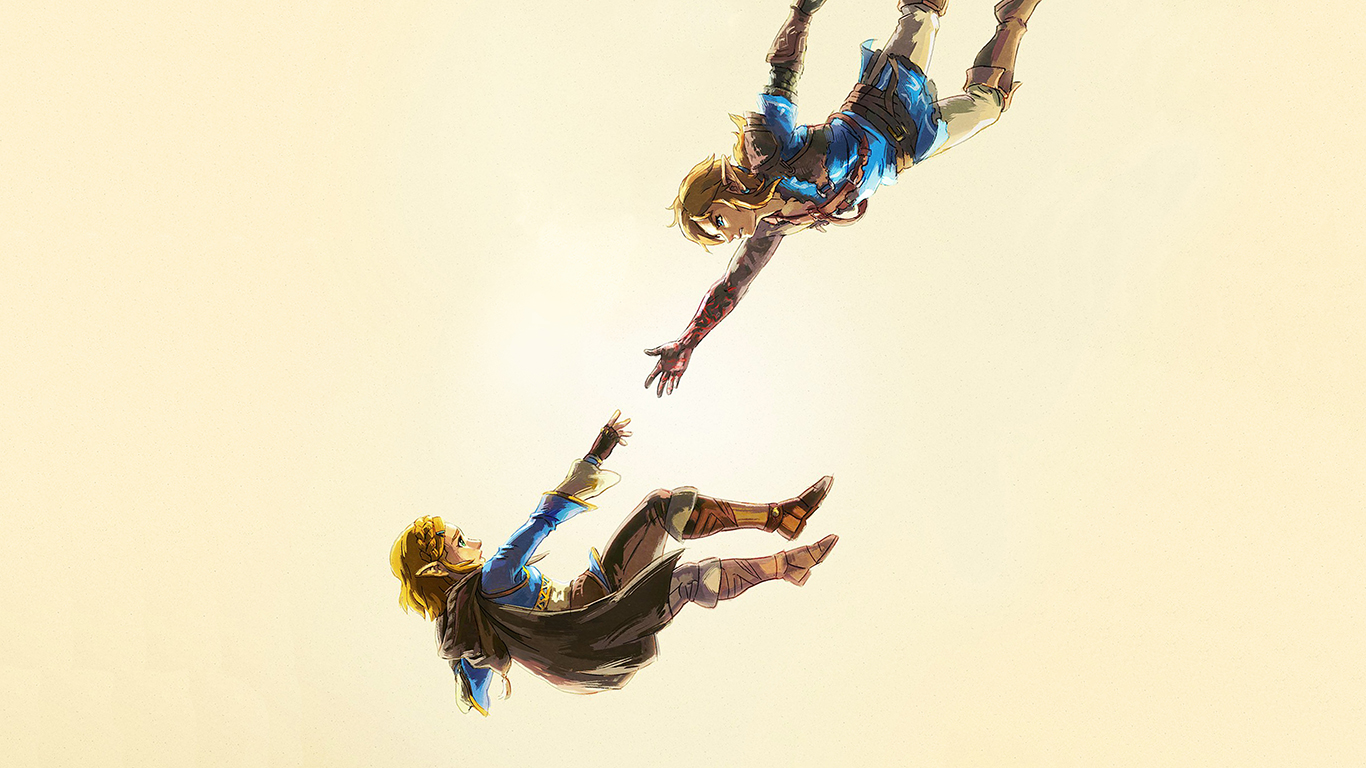
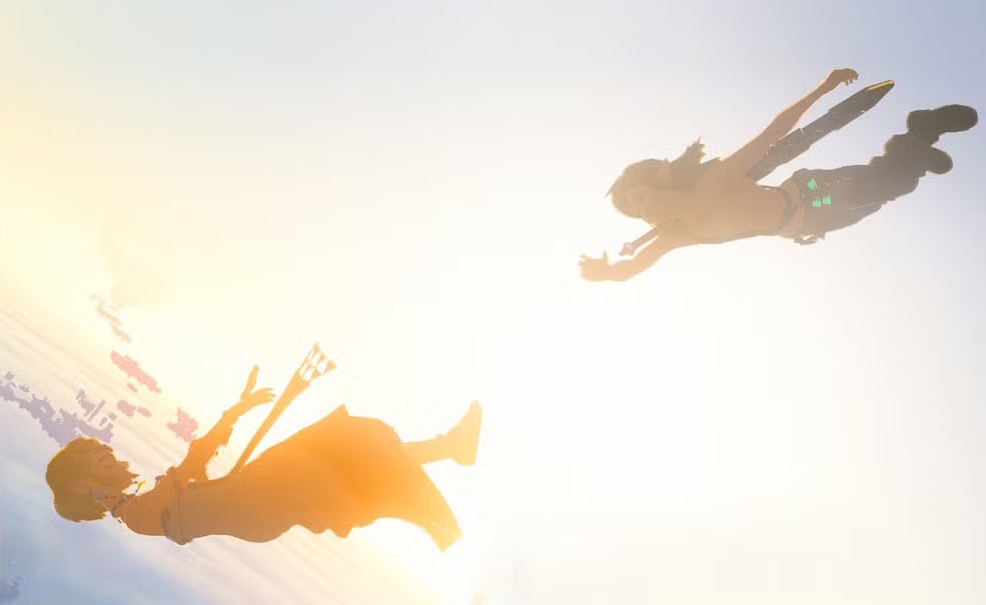
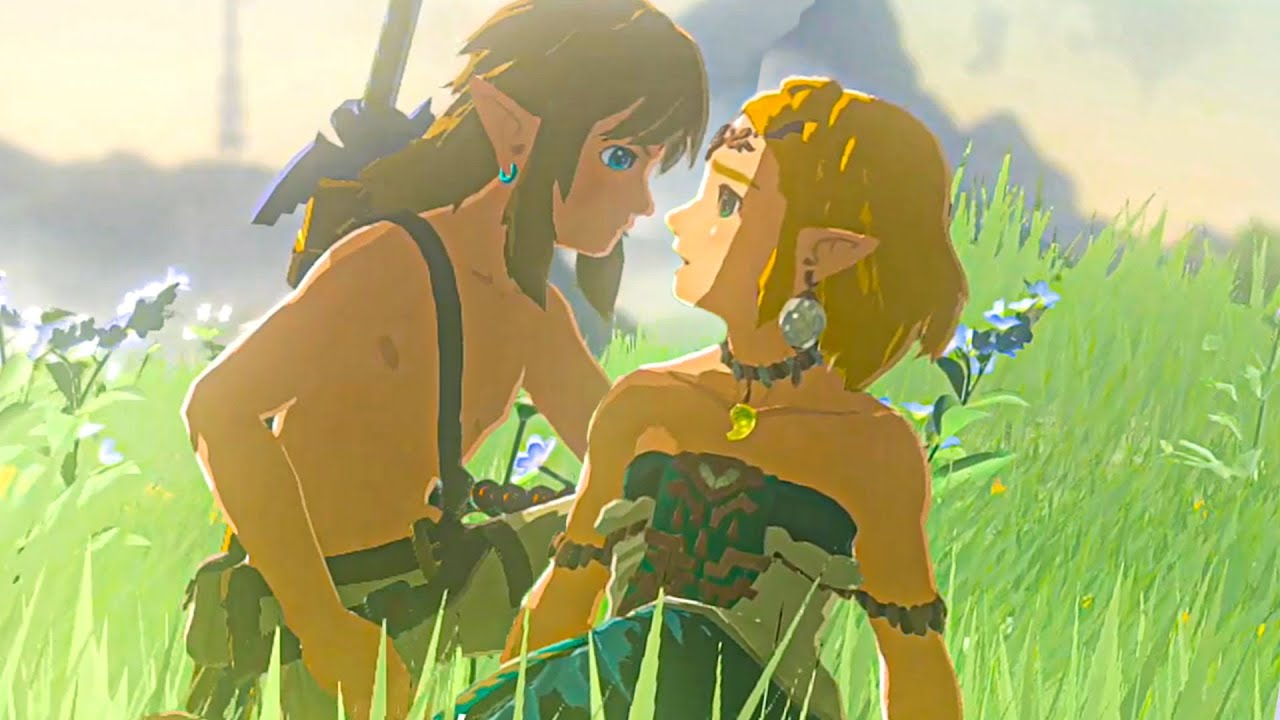
Upon his defeat, lingering magic turns Zelda from a dragon back into herself. In an epic moment of heroism, Link catches her in the sky. It echoes the moment Zelda disappeared, where Link's failure to grab her wrist resulted in her traveling back in time. This wrong righted, she awakens safely on the ground. Zelda realizes all that has happened and that her plan to save Hyrule worked.
Very simply, she says "I'm home."
Emotional narrative can only exist on rails
It's tremendously cathartic. But the simplicity of it is what makes it work. Players can understand Zelda's sacrifice and also what it cost her to come back. Thousands and thousands of years of mindless suffering all worth it for a two-word phrase that can bring comfort to anyone. There's so much going into it, but conveying this whole range of emotions so simply is the sort of potency that Pixar weaponizes at its best.
Playing games out of order or experiencing narratives over variable spans of time requires this sort of emotional clarity to keep track of what is happening. Intricate plot can't support something that is scattershot by design. Instead, narrative beats are emotional tentpoles propping up the overall experience. It emphasizes small, potent moments for maximum impact.
Players can create their own individual instances of badassery. Dope camera angles, slick fight moves... but players in games cannot create emotional journeys. This is still a purview of writing. And so long as games keep attempting narratives (as opposed to functioning like, say, Tetris) the skill of telling stories through video games will keep evolving and changing. Open world games might feel like they're not on rails, but choices are the foundation of all writing. What characters do, how they act... even if the game gives players a choice within a game, both choices have a logical endpoint some writer has already figured out. Paths come pre-written. Experience is just walking that path.
And Tears of the Kingdom is just one of hundreds examples of this sort of storytelling. There's a whole world out there to experience and explore.