The Highest Fidelity - Zack Snyder's Watchmen
Adaptation is more than just building a simulacrum
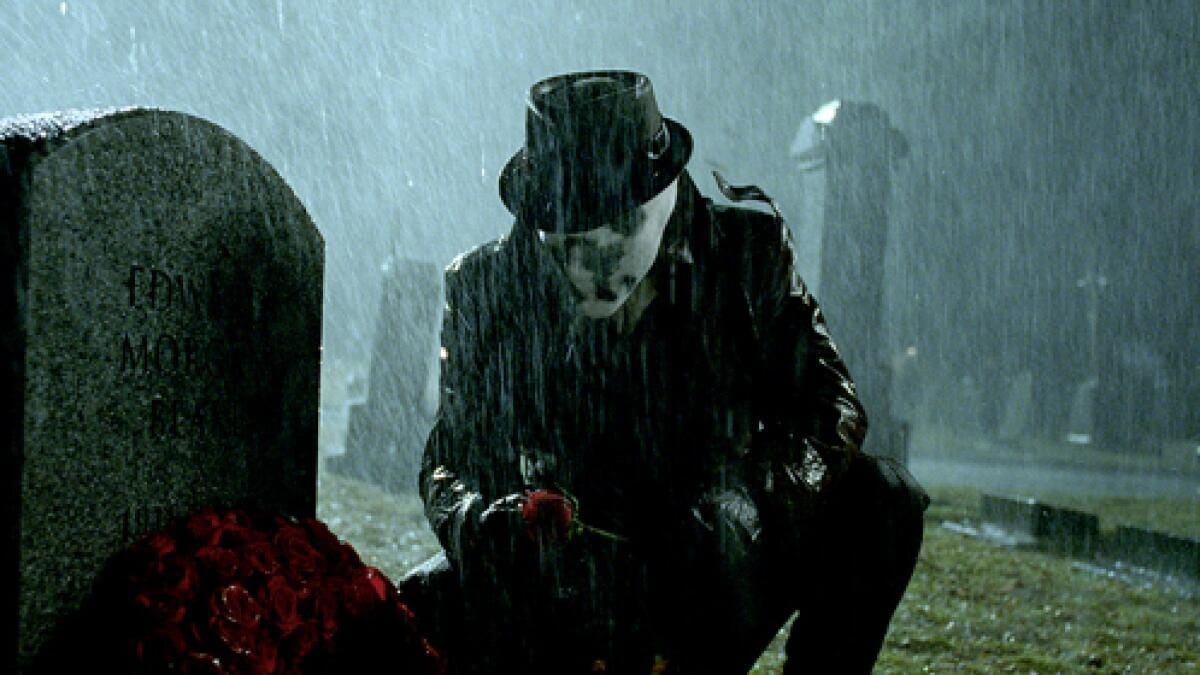
Re-reading Watchmen a few weeks ago resulted in a watch of Zack Snyder’s 2009 film adaptation. It’s not like there’s been some great about-face on Snyder, nor has the latest Superman movie rehabilitated anything of his in the DCEU. But… sometimes you read a thing and want to go watch that thing re-created in real life. With Watchmen, it’s that first trailer, the one set to Smashing Pumpkin’s “The Beginning Is the End Is the Beginning”. Unsure about you, but I’ve watched that trailer like… a hundred times.
And then once I started watching the trailer, I played it probably a dozen or so times over the next week.
Watch the trailer enough and it’s easy to leap from that to “should probably just watch the dang movie.” And then HBO Max had the “Ultimate Cut” with the intercut Tales of the Black Freighter and all the extended stuff that didn’t make the theatrical.
So that’s what I did. Watching the movie for the first time in over a decade really crystalized a lot of the weird issues dating back to that first theatrical experience. At the time Watchmen felt like an overly faithful, inherently flawed, but noble-in-its-failure experiment. Nowadays it still has its defenders, but it’s really fallen into the annals of history as a weird curio, doomed to fail because Watchmen is unadaptable.
But at three-and-a-half hours, including all of the ancillary book stuff, with Snyder painstakingly trying to capture as much of the book as possible and convert it to cinematic form… why does it fall short? Because it’s certainly not the fault of one of the great comic series of all time.
No, the problem is in the nature of adaptation, and how the quantity of its fidelity is wholly separate from its quality.
Doing it right
It’s a strange experience to go from reading Watchmen to viewing Watchmen. Snyder applies the same skills that adapted 300 to adapting Alan Moore & Dave Gibbons. If you’ve read the book, you know that trailer is made entirely for like-minded individuals. As the film got closer to release, the trailers tried to give more for those who didn’t know. But… Snyder’s style lends itself to movie trailers. Striking imagery, great song selection… tone…
At the time there was a sense that the film was going to “do it right”. Snyder pulled shots straight from the comic. Those that didn’t felt like they came from the dreamlike subconscious of the audience’s relationship with the book itself. If it didn’t directly come from the source material, it still felt like Watchmen. And yet the entire film feels like simulacrum more than some work in its own right.
So without reviewing the a film that’s older than Iron Man 2, where does Watchmen go wrong?
The beat I always come back to is the moment where the police capture and arrest Rorschach. At this point in the story, Rorschach returns to Moloch’s apartment only to find that someone has killed the former supervillain. It’s a trap, one orchestrated by the one who’s orchestrating the conspiracy that killed The Comedian. ran Dr. Manhattan off-planet, and attempted to assassinate Ozymandias. Rorschach tries to fight his way out, but it doesn’t last long before the fuzz gets the better of him.
In the comic, the reason Rorschach doesn’t get away from police is because he botches his jump out of Moloch’s second-story apartment’s window. Without a viable exit, he lands awkwardly on some trash (though in my head he always rolls his ankle or something; he mentions that he refuses to feel whatever pain he’s feeling) and the police simply… scoop him up before he can get to his feet.
In the film, Rorschach heroically jumps out of Moloch’s second-story apartment building, lands on the street, and starts beating up cops with some pretty solid kung fu moves. He takes down at least six this way before a dogpile of enough officers subdues him long enough for them to rip off his mask.
Back in a theater in 2009, Snyder’s vision always felt weird, like my brain bifurcated at the prospect of Rorschach kicking cop ass.
Sure. It was cool as hell to see Rorschach kicking ass. The fight might have felt short and abbreviated, but even today there’s a visceral thrill to the way Snyder shoots action. It’s kinetic and violent and fast. And it’s Watchmen. Finally we’re getting to see these characters do the requisite superhero violence Moore denied us.
On the other hand, it felt off. Rorschach was about to get captured. It is written. Maybe for a second it added to the tension of what the book-readers already knew: maybe the cops wouldn’t get him. Maybe he’d get away. Given the film’s deep fealty to the source material, adding a “Rorschach kicks ass before going down” scene felt like a notable addition. It’s taken me 15 years to figure out why this scene is so bizarre, but watching again now, thinking about all the various themes and deconstructions Watchmen does, it’s clear as day:
Snyder’s thesis is that a character as dope and hard edge as Rorschach ain’t going down like no bitch. Meanwhile the whole point of Rorschach’s capture is that the cops grab him the second they get close enough to touch him. He’s just been extremely lucky/savvy for years.
Inherent tension
All of this brings the question of… what is Snyder adapting exactly? Setting aside the necessary changes (Ozymandias frames Dr. Manhattan as the force that obliterates NYC as opposed to building and weaponizing a giant gross mutant alien creature), certain cinematic moments come straight from the book. The book’s second chapter, in which the series’ central characters all flash back to their interactions with The Comedian over the years comes directly across in the film. It makes sense. That chapter has actual transitions, from zooming into a photograph only to see the moment the photograph was taken to matching cuts for the various heroes at the Comedian’s graveside. Snyder also adapts the book’s most famous chapter almost verbatim. Dr. Manhattan remembers his time as Jon Osterman, bouncing across time and space in the same way that Snyder easily can via the power of cinema. They even use the same voiceover and everything.
For those lucky enough to read Watchmen on initial release, the month-break helped to reset the reading audience for whatever serialized installment came next. In its collected form there is the big black page with the clock and the wall of blood slowly dripping down as the reader approaches the end. And there’s the big cover image. It clearly delineates the book’s various narrative gambits. Snyder doesn’t even bother with brief, simple title cards. It’s all hard cuts, sudden music shifts. Like “it’s time for this now” without given his audience the opportunity to do the soft reset necessary to go into this weird formal exercise. Fans of the comic know what he’s doing. General civilians will be holding on for dear life.
Really, though, what is the story of Watchmen? What is the point? Part of the reason for Watchmen‘s “unadaptable” rep is because of all the different levels on which it’s working. It’s a grand deconstruction of the superhero genre. It plays with the form of the medium, covering everything from its constraints of the 9-panel grid to its symmetrical Chapter 5. It plays with large themes about the Cold War and the balance of power between states with unfathomably powerful weapons. It’s an alternate-present where Dr. Manhattan has made technological advances far beyond what we possess even today.
But truly none of that matters without the plot and the story itself.
At its heart, Watchmen is a grand murder mystery, where the death of The Comedian sets off a chain of events. These result in Rorschach’s death, Dr. Manhattan’s exile, Dan’s re-donning of the Nite-Owl mantle, Laurie’s revelations about her true parentage, and Veidt’s extensive acts to avert of global thermonuclear armageddon. It’s a book that features a subplot around the proprietor of a newspaper man and his relationship with the kid who’s reading a pirate comic without buying it. That comic itself is a story-within-a-story about a marooned pirate captain. There’s also a runner about missing scientists and artists who have unknowingly sacrificed their lives in the name of world peace. And also the threat of the aforementioned thermonuclear war.
All of the things on top of that? They’re only possible because the underlying story works as a vehicle to sneak in all of these grand moves. It’s like how The Wire is the greatest television show ever because it makes grand statements about America. The institutions have failed and the various tiers of society represent their own individual fiefs, where decaying infrastructure has resulted in cataclysmic levels of ruin. But also? The Wire is a great story about life in the city of Baltimore from the cops who hunt the drug dealers to the politics of City Hall to the students in the schools.
There’s no easy solution
The problem with Snyder’s Watchmen is that Synder is a superficial director and he’s adapting one of the densest, deepest, richest texts imaginable. He’s written some of his own films, but his interests in putting Watchmen on the big screen is an emphasis on its cosmetic features while disregarding its very soul. He wants to do the same sort of deconstruction of the superhero genre that Moore did. That’s why Ozymandias has nipples on the outfit. That’s just straight Schumacher. Only when adapting Watchmen there’s never the sense that he understands how it is that the series is accomplishing all it does. Also, not for nothing, but the superhero movie genre is far too nascent for such an intense deconstruction/commentary. Moore’s Watchmen came out almost three decades before the start of the Silver Age. Snyder’s Watchmen comes out a year after Iron Man and The Dark Knight
Snyder can re-create iconic moments from the books. He can do the prison break from Chapter 8 and a beat-for-beat re-creation of Chapter 1. But just mimicking the work of Moore & Gibbons creates an uncanny valley. Moore portrayed his superheroes as flawed individuals, capable of tremendous evil in the name of arbitrary good. Snyder’s superheroes might be flawed, but they’re all, to a person, cool. What is the point of Snyder’s film except to say Watchmen is cool? It’s a film about nothing but itself.
Adaptation is about more than just regurgitating a source text. It’s about understanding that Rorschach is all talk and little bite. The man is entirely his reputation and has nothing else going for him. He (just like the rest of the main characters) is a mentally disturbed loser. It’s easy to have affection for him, but pretending like he’s anything other than a paranoid child misses the entire point of what Moore was trying to say with the character. Misunderstanding that is why the movie is an incredible failure.
There is soul within art, broken fragments of the artists who chisel off a piece in the name of creating life. It can be very hard to understand it, as difficult as understanding the complexities of anyone else. To capture its various component pieces and try to transfer them wholesale to another medium is the art of transmutation. It often doesn’t work. But it requires more than someone just wanting to make something because it has potential in a visual medium. Adaptation requires deep narrative empathy and a calculating mind capable of close textual reading, a robust analysis, and a surprising dash of being Dr. Frankenstein.
To do anything less is to create something soulless. And there are more than enough examples of that for it to still be happening.