
Space Marines & Space Mothers - Aliens
James Cameron's sequel to Ridley Scott's sci-fi horror classic flips to an entirely new genre... but most people misunderstand why it works like it does
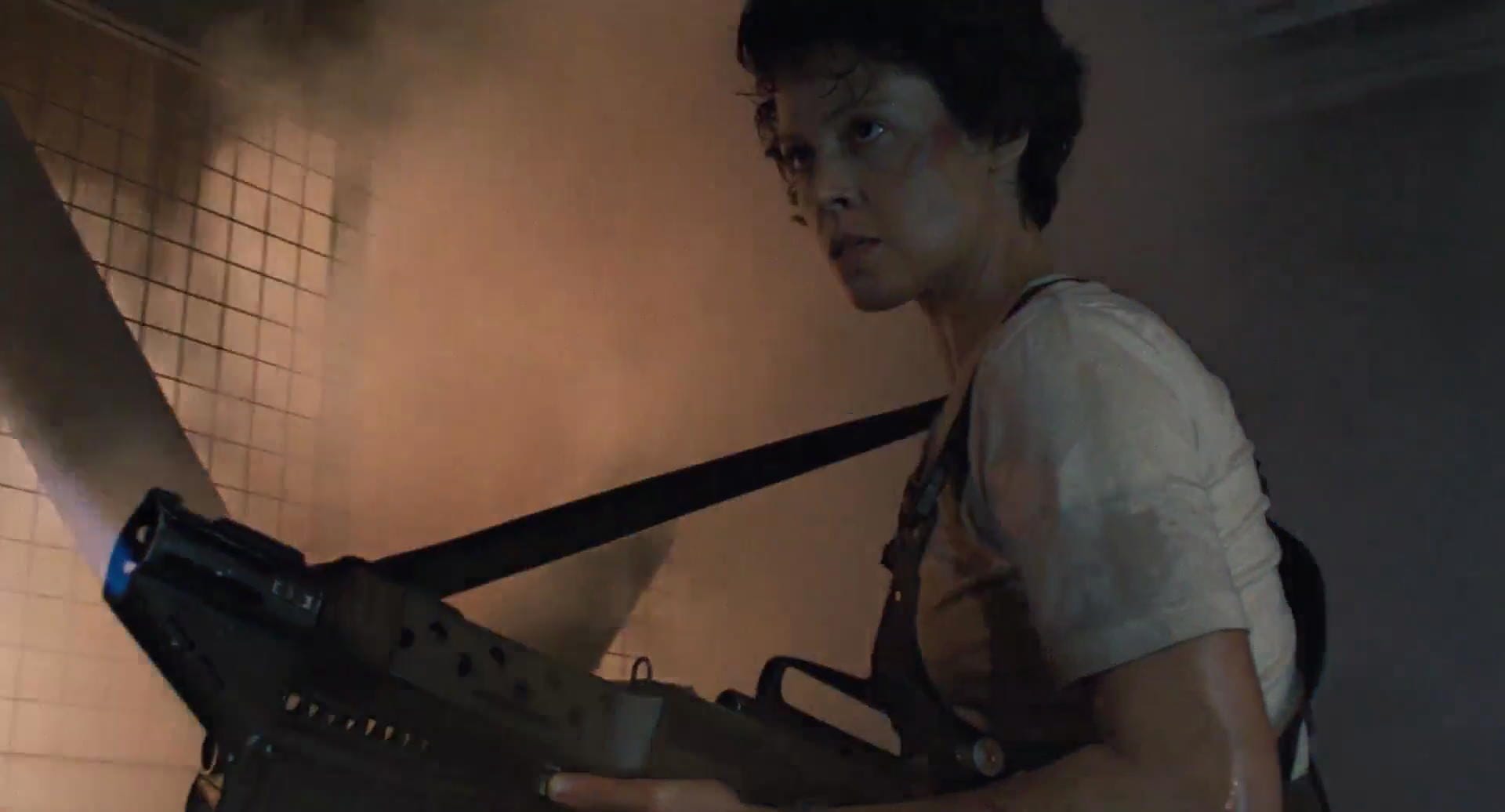
James Cameron’s populism can feel like an achilles heel. His films can feel like sledgehammers, where all of the emotional resonance is crystal clear and rarely subtle. Heart is always on sleeve. This is a feature, one that means that no one is walking away from a movie like The Terminator not knowing about the love story between Sarah Conner and Kyle Reese.
For Aliens, it’s a movie about motherhood. And Cameron isn’t exactly subtle.
But there’s another “problem” with Aliens, the sort of bad faith reading that comes around every time someone sees this movie and finds themselves put off by sci-fi military violence. It doesn’t take a lot of reviews before someone qualifies their praise (or opts for outright hostility) as “despite” hoo-rah military men having lots of guns shooting lots of xenomorphs. It can feel distasteful. Hell, the first time I heard the critique was in college, where a dude (whose views I respected) talked about how uncomfortable all of the pro-military messaging of the movie is. At the time, I didn’t really have a comeback.
(Setting aside that it’s a logical extension of countering Ridley Scott’s original sci-fi horror masterpiece. Last time we were helpless; this time we fight back.)
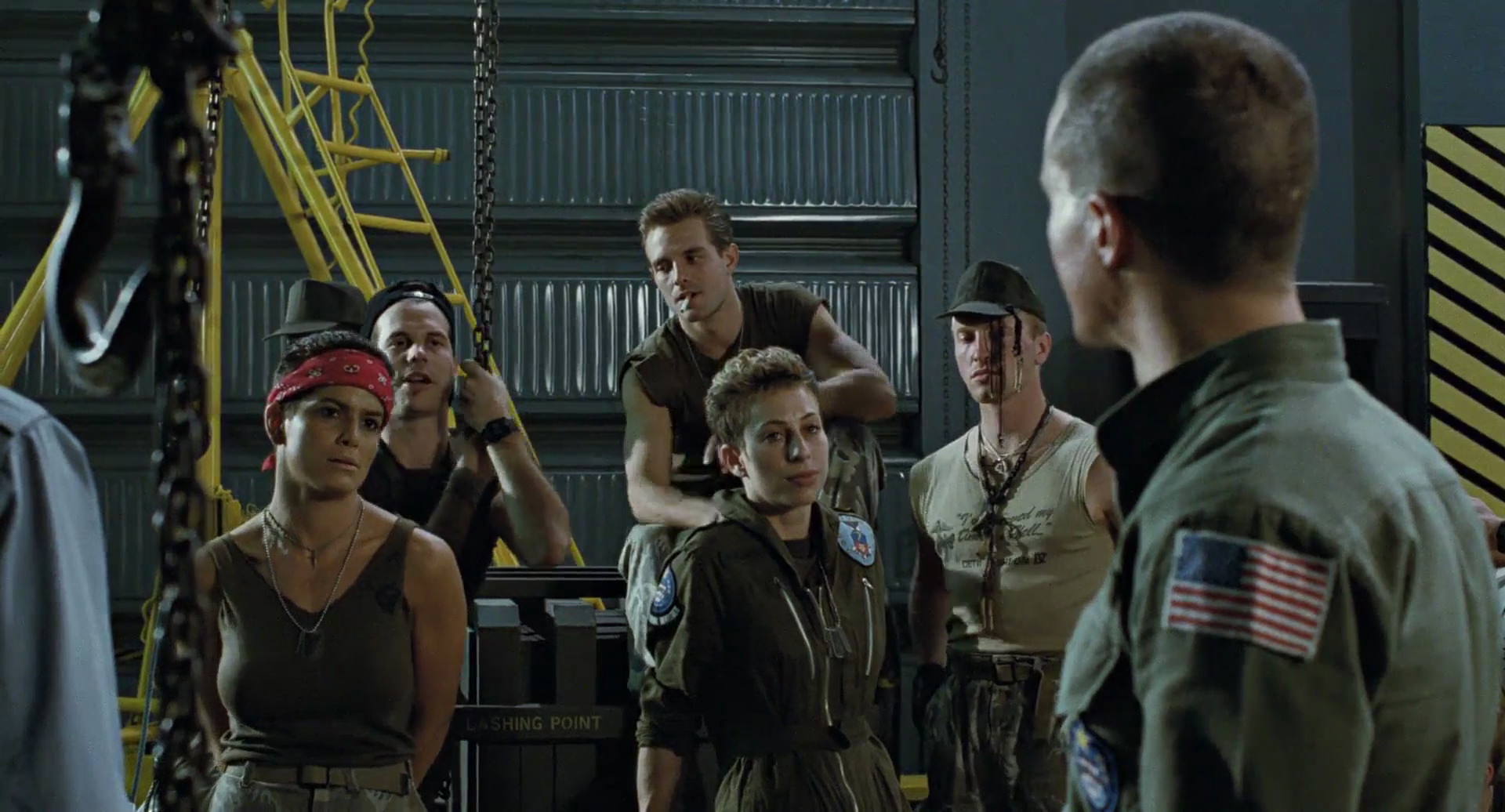
With Cameron, it can feel liket portrayal is also endorsement. Just as motherhood is the battery that powers this particular engine, the presence of the military is undeniable. It’s especially palpable in the first half, where Cameron takes his time to introduce all the characters, highlighting Hicks and Hudson and Vasquez and Gorman specifically, but also making the audience care about Apone, Drake, Farro, Spunkmeier, etc. Y’know. Before he slaughters that half of the cast at the halfway mark.
That obviousness cuts both ways, though. It seems like what Cameron does is simple, but it never is. Or at least, the work he puts in to make his films crystal clear can leave room for arrogant audience members to take his ideas at face value and leave them there, rather than following them to their logical conclusions.
Cameron’s success is in making films that are emotionally crystal clear. This means they can feel superficial and basic when really they’re works of impeccable, meticulous craft. Crack them open and they’re hardly the simple work they seem.
Hoo-rah
Ripley: “How many drops is this for you, Lieutenant?
Gorman: “Thirty eight… simulated.”
Vasquez: “How many combat drops?”
Gorman: “Uh, two. Including this one.”
This becomes obvious by the time Avatar came out, but James Cameron is a hippy. Born in 1954, his political awakening would have been in the tumult of the mid-to-late 60s, and he was in college when the Watergate scandal went down. All of this feeds into his distrust of governments and corporations, be it Cyberdyne/Skynet or the White Star Line.
So it’s weird that people will watch Aliens and think that Cameron is somehow, atypically, pro-military.
To put on glasses that make me relatively blind, I can kinda see it. Every single marine (except one) talks a big game, feels above it all, and has an inflated sense of ego. Some of this (like Hudson talking up his prowess to Ripley when they’re on the dropship) is in the special edition, but both versions have the bit where the marines suit up and load out. Apone runs them like a regimented unit, barking orders and making them jog in formation even though they’re on the Sulaco and nothing is happening. Ain’t no xenomorphs here. For anyone with an allergy to watching the military they associate with Full Metal Jacket, I can see how this might trigger.
But… who is this for, exactly? Every time I watch it I laugh at Apone because I think it’s ridiculous. It feels like a glorified show for Ripley to prove how competent all of these marines really are. They work in a sterile environment. When they arrive at Hadley’s Hope, this sort of tactical focus makes sense. They’re walking into an unknown, unsecured location and there’s procedures to maintain. Same is true when the squad infiltrates the processing plan.
Perhaps the reading is because audiences scapegoat military incompetence entirely on Gorman. No one is walking away from Aliens thinking Gorman is some great military leader or righteous powerhouse fighter. Gorman doesn’t know the difference between Hudson and Hicks (devastating for an officer in command who wants to lead) and has never been in a real life drop scenario. He commands using the squad’s high tech camera system, watching the movie version of being on the ground, safe in his little chair. This is fine in theory. He should know the big picture. But it also removes him from the action, keeping him from having real experience in the shit.
Meanwhile, his troops don’t respect him. When he doesn’t give an explanation for why the marines can’t use live ammunition next to a thermonuclear reactor, everyone on the spectrum from Vasquez to Hicks disobeys him. This leads to the ammo bag itself exploding (causing more chaos and confusion) and live fire in the area anyways. Had he treated his soldiers with respect and open communication maybe things would be different, but he treated them like children and they all reap the consequences. When things go bad and the xenomorphs attack he goes catatonic, completely out of his depth. He doesn’t even wake up until Ripley commanders the tank. Given a civillian woman has taken command, this is an immediate, tangible problem he can solve via rage.
And, of course, his big injury is a concussion. I don’t mean to minimize brain trauma (it is a serious issue), but forty years ago the concussion was hardly the ass kicking of all the marines who died by coccoon or a spray of molecular acid. Gorman though? He bumped his little head. Poor baby.
So it’s easy to look at Gorman and say “well he’s a loser.”
To put all of that incompetence on Gorman, though, ignores the truth of what Cameron is really doing here.
These marines suck.
Or at the very least they’re extremely out of their depth.
And I don’t just mean when they enter the processing center. I mean like when Hudson freaks out because Bishop is gonna do the knife game on his hand. Or when Drake opens fire on Newt because she startles him. Chickenshit big man with the biggest gun can’t even hold for long enough to see that there’s no threat.
... But really it’s all about the processing center.
This entire sequence is an extended showcase of incompetence. Apone talks a big game but defers to Gorman once shit kicks off, a man who isn’t there and can’t communicate across the audio interference and the erupting chaos of the alien attack. He doesn’t step up and lead and he so desperately needs to. Frost gets all of the explosive ammo and grenades in his pouch but he jumps when someone taps him on the back. Drake and Vasquez (“let’s rock!”) fire their big guns indiscriminately, but there’s no sense that what they’re doing is at all effective. When they get back to the truck, Drake’s death causes a straight up fire in the truck as they drive off. From the second they start to do anything, the marines are stunningly incompetent. That incompetence does not stop.
Perhaps Cameron’s cleverness gets in the way here, though. Once the alien attack starts in earnest, Cameron cuts away, playing the entire thing over the comm traffic as Ripley jumps into action to drive in the tank so she can save whoever’s left. We don’t explicitly watch the marines get their shit wrecked. We only really see the aftermath. It’s a super smart budget move Cameron makes, saving on a big, complex, deeply tactical action scene, but it also means Cameron takes his foot off the explicitness gas pedal1.
Every single person who says that Aliens is a pro military movie misses the point that the marines absolutely get their “asses kicked(, pal!)”. And that’s a quote from Hudson, the loudest, brashest character in the movie. Once the attack happens, he’s a complete weenie for the rest of the movie. People laugh about “game over, man! Game over!” and seem to ignore that this marine’s one bad day in the field turned him into a simpering mess. Even as the alien drags him into the depths below the command center, it wraps its hand around his mouth, one last “please shut the fuck up” before we never see him again.
Sure, there’s characters like Vasquez who are competent, but she also takes out her anger on Gorman and not on the ones who actually kicked their ass (the aliens).
But Vasquez and Gorman die, with Gorman getting that last hero moment by literally jumping on a grenade he triggers to keep them from a more horrible and gruesome death.
By the end of the movie, when Ripley and Hicks manage to make it to Bishop and the dropship that will take them to safety… they’re all that’s left. No other marine survives the movie. They all die.
And like… sure. In one reading the space marines’ ability to kill some xenomorphs is seeing cool dudes doing cool action violence and exploding aliens. But… to have them kill absolutely no xenomorphs is simply not believable. The audience would have rejected that even more. To compromise, Cameron lets them kill just enough to satiate the bloodlust (which means just enough that what characters who need to can survive to their next scene).
But this also doesn’t quite touch on the one brilliant component in all this.
Michael Biehn was not Cameron’s first choice to play Corporal Hicks, but watching it it’s insane to think anyone else would have worked. This came up in The Terminator, but the reason Biehn’s presence is so electric in that movie is because he can look cool and talk a big game but it won’t change the things about him that feel less masculine. His features are relatively soft, his voice is a quiet tenor with just a little gravel. When he talks to Ripley it’s with kindness and respect. He’s definitely a marine and a terrific action star, but imagine if Cameron had gone with, say, Schwarzenegger as Hicks. It’s a totally different character and doesn’t fit with what Cameron is doing. In Predator, Schwarzenegger survives because he’s the biggest bad ass in that jungle. In Aliens, Hicks survives because he’s the only one who has a cool head, empathy, and a regulated ego. He shows Ripley how to use his weapon and it’s not badass. It’s flirtatious.
Cameron cast Biehn in The Terminator in part because he’s the total opposite of Schwarzenegger’s body building, meathead, brutish, toxically masculine physicality. And now he casts Schwarzenegger’s ostensible opposite as the head military guy in his big sci-fi actions sequel?
If anything, Aliens is an anti-military movie.
Motherhood
I was fortunate enough to see Aliens in a theater a few weeks ago. Over this past weekend, I rewatched it, though this time I went with the Special Edition (really it’s just Cameron’s Director’s Cut). Fundamentally, they’re the same movie and no edit (both of which Cameron oversaw) is going to change one of the best movies ever made.
The biggest differences in the special edition are:
- Showing Hadley’s Hope before the alien attack, including a scene where Newt and her family come across the spaceship from Alien and her dad gets facehugged.
- A scene where Ripley learns that her daughter has died in her 57 years of cryo-sleep.
- An entire subplot with sentry guns the survivors put out to delay/slow down the xenomorph siege of the colony.
- And an assortment of other scenes that build character like the bit where Hudson gloats to Ripley on the dropship, an brief exchange between Newt & Ripley about Ripley’s daughter, and more flirting with Ripley & Hicks, culminating in Hicks revealing his first name.
For a long time, I’ve been bigger on the theatrical than the special edition. The subtext about Ripley losing her daughter is lily-gilding, explicitly underlining what’s perfectly textual as it builds to the moment Newt hugs Ripley and blurts out “mommy!” Seeing Hadley’s Hope before the fall provides context to how the colony “should” look, but it’s plenty eerie walking into the colony and seeing it abandoned and in a state of disrepair. It adds to the intrigue and keeps the audience in Ripley’s perspective. Meanwhile, the sentry guns themselves are cool, but they’re Cameron building another action set piece on a tight budget and without showing any action.
Where the special edition succeeds is in the scenes that feel like Cameron hasn’t cut them almost to the bone. After seeing the special edition it’s difficult to watch certain scenes and not notice that Cameron is leaping into them late or out of them early. It helps with the propulsive pace, but that breathing room really does help.
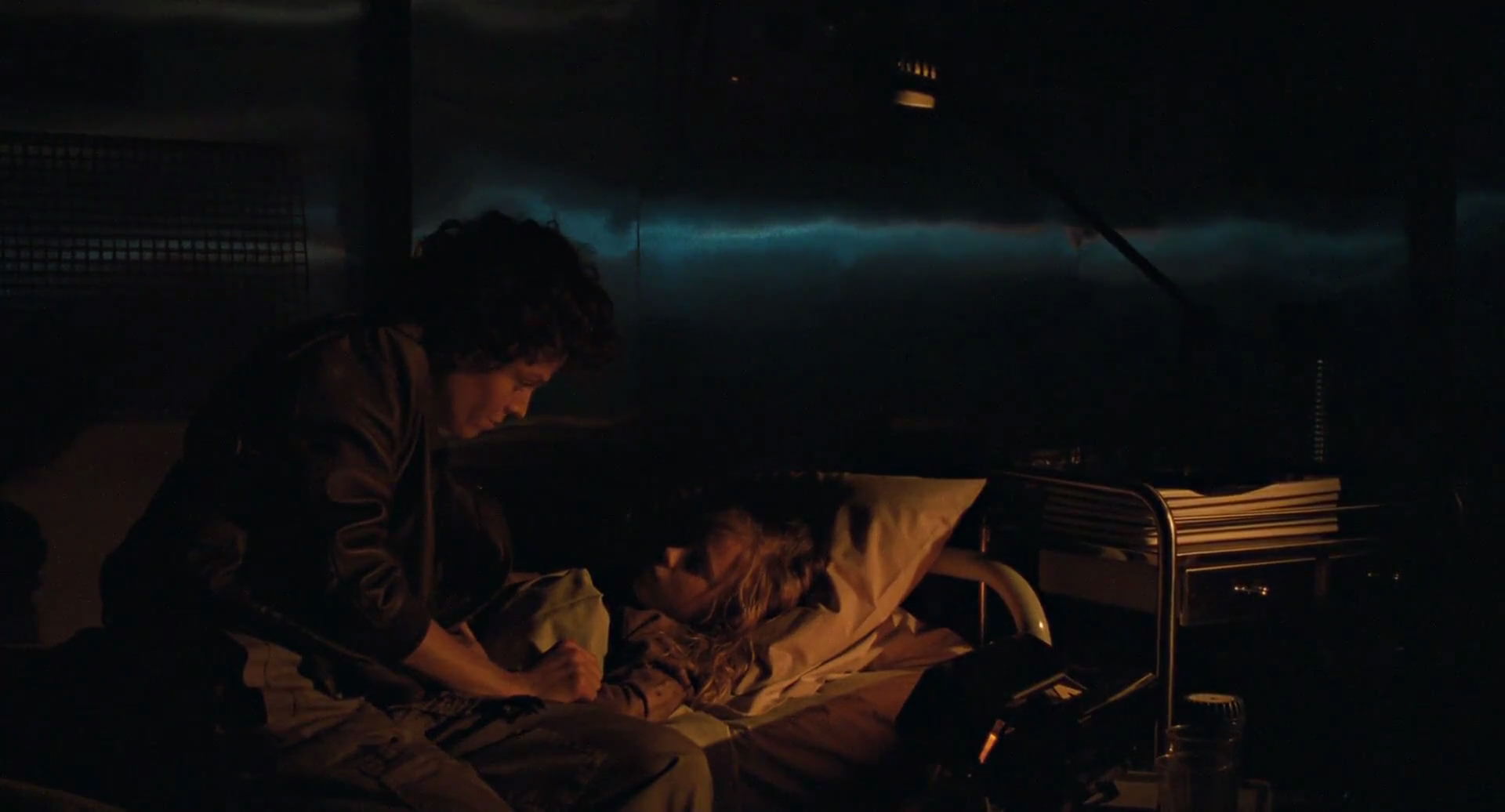
But it’s in what he chooses not to cut out that matters most. Like with The Terminator, the movie stops cold at certain points to go into full on emotional mode. When Ripley puts Newt to bed in the Medlab, Cameron puts the entire film on Sigourney’s shoulders as she carries the emotional pathos of building a relationship with this little girl who’s so fully captured her affection. It’s also true that (in the theatrical version) Newt doesn’t enter the movie until the 40 minute mark, minimizing the time that Ripley can build rapport. This time, though, there isn’t a sense that Cameron has to compress the relationship due to limited time. There’s a confidence he has in Sigourney’s performance, and he knows the duty of care that Ripley has (she did literally save the cat in Alien) will translate to a plucky innocent like Newt.
As for Newt herself, she’s a series of contradictions that balance each other out. She’s tough enough to survive for weeks in Hadley’s Hope by herself, but not so hardcore that she’s gonna pick up a gun and start slaughtering aliens alongside the marines. She is certainly a child and interested in weird words like “affirmative” but can also be precocious when Ripley tries to see the dreams in her doll’s plastic head. Given the subject matter, Newt simply shouldn’t work in a movie like this, but it can’t begin to work without her.
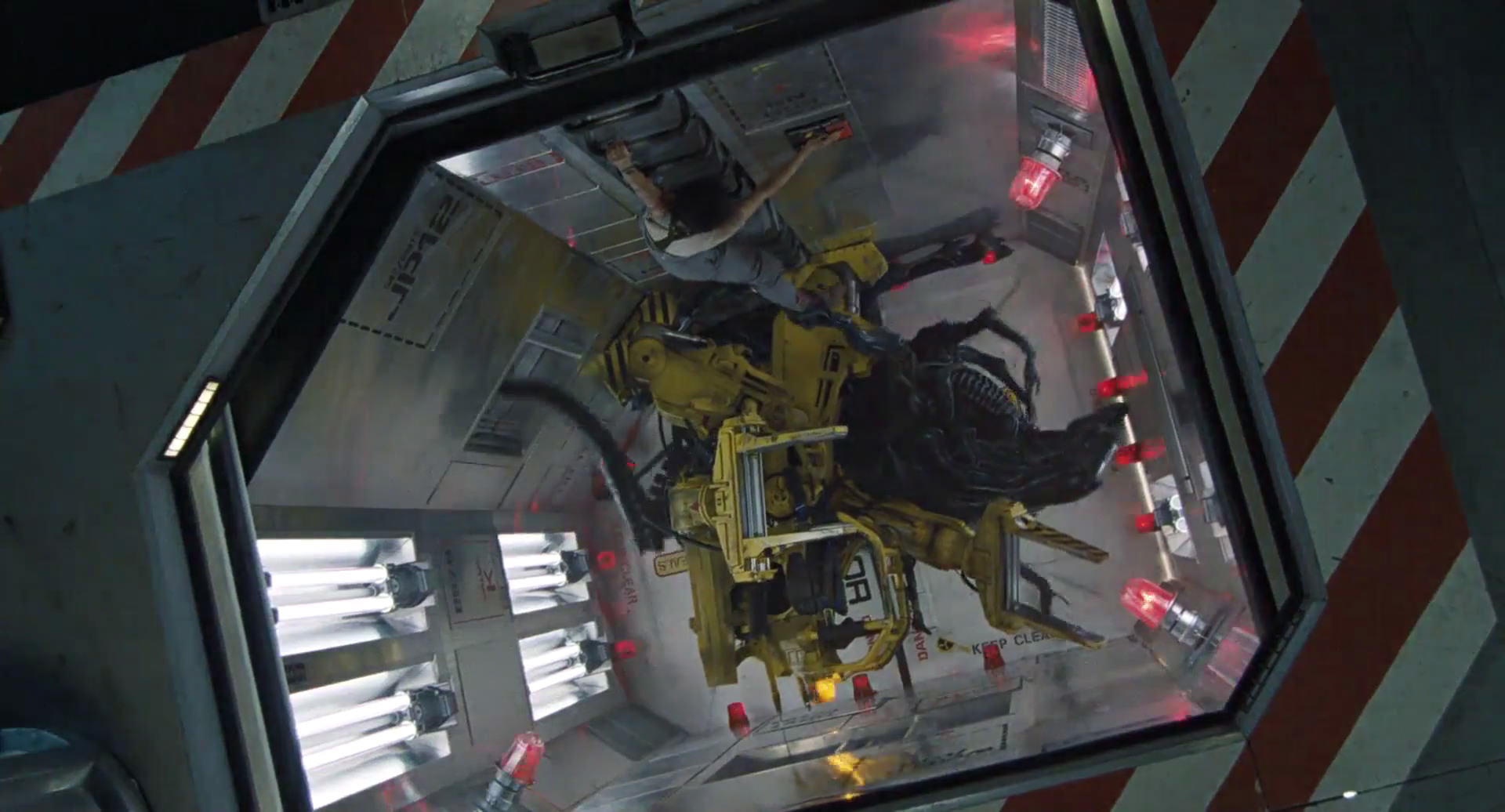
No one seems to complain about this. No one ever says that Cameron hits these themes “too hard”. Even fans of the special edition at most say “it’s unnecessary” rather than “it ruins the movie.” No one complains about the emotional pathos of the Newt/Ripley relationship or the sledgehammer of the Queen being the evil mother to counterbalance Ripley’s own burgeoning motherhood.
Thematics
This is a recurring feature of Cameron’s films. Because he’s making populist entertainment, stuff that will have the broadest possible appeal considering the scope of his audience, the emotional thematics he’s portraying have to be as big and as bold as possible. He’s not subtle in what he does, but when the movie is working on every single level, people don’t really seem to care how much he’s sculpting away big chunks with a sledgehammer.
And… why would they? Audiences love schmaltz as long as storytellers earn it. In this case the schmaltz is Ripley going full-on commando mode to get Newt back. It’s her explaining that nothing bad will happen to her and then protecting her during the facehugger attack in the Medlab.
If there’s maybe an issue with Aliens, it’s that people can still walk away with bad takes about the space marines and how Cameron is endorsing badass military action. Maybe this needed a scene where someone talked about how all the marines failed everyone. Maybe Bishop needs some quip remark or Hicks should bitch about how he never liked this chickenshit outfit.
But doing that would break the film, just like going less on the motherhood thematics would possibly lose the richness of this text. To slam the marines even textually is overkilling what James Cameron has already painted with stunning, vibrant clarity.
It also doesn’t help that the marines shouldn’t be winning their first battle in the movie. We expect the aliens to win all the way to the very end. What people seem to miss, though, is their rout’s scope, which… the only way it could have gone worse is if Vasquez, Hicks, & Hudson didn’t make it back. But then you don’t have the rest of the movie. ↩