She Always Did Love To Dance - Serenity
Joss Whedon's theatrical debut was a sci-fi blockbuster that brought Firefly to a close, but in the wake of his cancelling, does it still hold up?
Two decades ago, Joss Whedon made his feature film directorial debut. Having cut his teeth in Hollywood as a script doctor in the 90s, in 1997 Whedon stumbled into television, creating an adaptation of Buffy the Vampire Slayer. Buffy ran for seven seasons, spinning off another five-season TV series (Angel). Also in that time Whedon made a short-lived series called Firefly. The show (which I’ve discussed previously) came and went, but between it being an incredibly good show, having a culty vocal fanbase, and receiving a full series DVD release, the show had enough cultural power that Universal greenlit a film that would serve as a continuation/followup/closer for a series that had already become the poster child for “cancelled too soon”.
That film was Serenity.
When it came out at the end of September 2005, it made a small amount of money at the box office, basically just enough to recoup its modest $40m budget. The film left room for movie sequels or maybe even a return to TV (though it’s difficult to imagine when film production is far less of an overall commitment and also it had already received one cancellation). For those who want more, the story has since continued in comics and books, many of them under the stewardship of Whedon. But in terms of seeing this cast in this ‘verse, Serenity is the final word on the series.
For at least a decade, Serenity was my go-to favorite film. I named my first car Serenity, and in January/February 2006, I watched this movie every single day, sometimes more than once. My view count for this film is well over a hundred. There’s probably not any single movie I’ve seen more.
In the wake of the allegations against Joss Whedon for his abusive and noxious behavior, this slipped in my estimation. Previously, I’ve spoken about these revelations as a betrayal that deeply hurt, and this movie’s waning influence on my psyche was a casualty of that.
Returning to it now, though, in the wake of revisiting/re-evaluating Firefly, what stands out is much the same as I found there. Whedon might have been a beneficiary of the artistic industrial complex that values “tortured artists” as geniuses worth tolerating as abusive individuals, but it’s also worth noting that the film itself is really a work of staggering excellence. One of the biggest reasons Whedon’s Avengers films are so successful is because he really is one of the best blockbuster filmmakers of his generation. Like Kurtzman & Orci he has a keen sense for action and adventure set pieces, but unlike them his films are remarkably literate, funny, and smart. Whedon has never talked down to his audience, always demanding they step up and meet him on his level and what he’s doing.
It’s this quality that speaks most to me within the context of Serenity. I fully understand why Whedon is still in creator-jail, and I have not seen anything to make me think he shouldn’t still be there (again, contrition would go a long way). And yet, if the blockbusters of today had half of the voice, vision, and crackle of this movie, there wouldn’t be a sense that big-budget blockbusters are a vapid enterprise.
And we’d all be better off.
Movie Guy
It’s ironic. While Joss Whedon is probably the single person most responsible for my love and obssession with television, Whedon himself had little intention of that as his full career. He got his early start writing on Roseanne and Parenthood, but Whedon originally wanted to be a writer/director making big blockbuster films. Buffy in television form was a complete accident, an opportunity he took on lest he see his work desecrated again.
In retrospect, television was the best move for him. The dirty secret of television is that the writer has always been king of that medium. Directors work best in film because the singular nature of a one-story film itself means there needs to be one person shepherding it through the process. With many installments and a larger picture, writers need to herd all the pieces in place; directors come in to help facilitate installments of that larger vision. Good a director as Whedon is, it’s his writing that’s always (rightly) been his strength, and that’s what made him such a singular force within television itself.
As an aside, it’s worth noting that television and film have different strengths and roles within society. To use unfortunately gendered stereotypes, film is a much more masculine medium. It’s about high action and things happening and answers and resolution. It’s a visual medium that (at its best) does not require dialogue to tell the story. Television is more feminine. It is more thinky, more talky, more emotional. It’s more content to live in extended periods of time, to take its time, and trail off with a series of eternal ellipses.
Following Serenity, Whedon’s attempts to swing into film confused me. Television was such a natural fit for him and his talents. Sure there were bigger budgets in film, more of a direct reach to direct audiences, but big writer guy should have wanted to stay in big writer medium. Also? He was a self-proclaimed feminist. Surely he’d want to stay in the more feminist medium. It’s where I wanted to live (and that was his fault). In retrospect, and knowing what we know now about Whedon’s very male gazey POV, it makes complete sense that he wanted to live in film. Dude’s a guy. And a raging egomaniac. Of course he wants his name up in director lights.
Without the background in television, though, what modest success Whedon had in film would have been far less.
Technical prowess
One of the major criticisms leveled against Whedon is the way that his films “feel like television”. Serenity itself splits into really clean arcs, where the film feels episodic as it goes along. Hell, the movie itself would make a solid three-part season finale of Firefly1.
Nevermind that Star Wars or Raiders of the Lost Ark have a similar, episodic feel to them. It makes sense considering those also have their origins in classic, serialized adventures. But whatever. People should meet films on the terms of the art itself, not crossed-arms and making demands about how it should conform to traditional structures.
Regardless, Whedon himself is an incredible director. Serenity is dynamic and exciting, with an outrageous amount of coverage considering the film had a budget of only $40m. It has half-a-dozen action set pieces, and one of those is the relentless, 30-minute long final act. But even the dialogue scenes crackle, where insert shots inform character work, almost subliminally conveying what something about each character.
Take Zoe for instance. Zoe is a character who isn’t at the center of the narrative. She’s a first officer who exists to obey the captain’s orders. But there are moments that Whedon highlights her specifically. When Mal slams Simon to the table following River’s bar fight, Whedon is sure to include a shot of Zoe’s hand by her holster, ready to draw if things break bad (and he frames Wash in there, connecting the two in the process). Later, when Jayne throws Mal’s relationship with the Battle of Serenity Valley in his face, Whedon puts the camera on Zoe, slowly sliding the image into focus until she’s centered herself long enough to tell Jayne to leave the room.
This is a movie where every time I watch it I notice some new shot or edit. And I’m someone who’s watched Whedon’s commentary on this film multiple times. Whedon’s commentaries can be technical and detailed, talking about specific choices and why he made them. This can be as obvious as using a oner to ground the audience following the disjointed teaser (also establishing Serenity, her layout, and her crew in the process) or as subliminal as the dark lighting he puts on The Operative after the final battle, when the film’s nemesis has become a true shadow of himself following Mal’s successful sending of the Miranda message.
Comparing this to something like the average Marvel movie and it’s a clear difference. It’s a film built on incredible mise-en-scene, where coverage is robust but shots are specific and working to tell the story.
A lot of this also comes from the extremely tight $40m budget Whedon had to work with. Every cent is on screen. To continue beating up on Marvel, Marvel has functionally limitless resources to go back and remake the movie in post until they get it right the release date arrives. But with $40m Whedon has to make choices and stick to them. This is especially important for visual effects. Sure enough, for the final fight between Mal and The Operative, Whedon spoke about how he was only able to show the generator itself five times. This meant creative filming techniques and needing to be very specific when deploying those shots. If you go back and watch, you can tell that each time he shows the generator it’s for a very specific reason2. He can’t afford anything else.
In a world where modern blockbusters are monuments to excess and visuals live inside computers, Serenity is a very tactile movie. There’s visual effects throughout, but Whedon doesn’t have a budget such that he can hide behind them (not that he would). The script has to has to has to work.
And also the effects that are present all look great.
Unlike many other films, all of these action beats inform the characters themselves. They’re very dense and specific. There’s no generic action where Whedon just pointed the camera and said “whatever, it’s action time I guess”. There’s intent to the composition, where each shot exists to showcase some specific move or piece of choreo. It’s not so different from how the Daniels made Everything Everywhere All At Once, where the reason that film’s action thrills like it does is because they considered every individual beat and figured out the best possible way to display each. The Daniels themselves pulled that from Tarantino, who in turn learned those techniques from old kung fu movies in the making of Kill Bill.
Nowadays, action can feel nonspecific. Films that exist for spectacle can feel generic or muddy. When was the last time a major studio blockbuster (some CGI spectacle) had a fight that was half as dynamic as the fight between Mal & the Operative when he goes to rescue Inara? That scene (like the bar fight) is extremely short, but still rich and dense and satiating.
The juicy bits
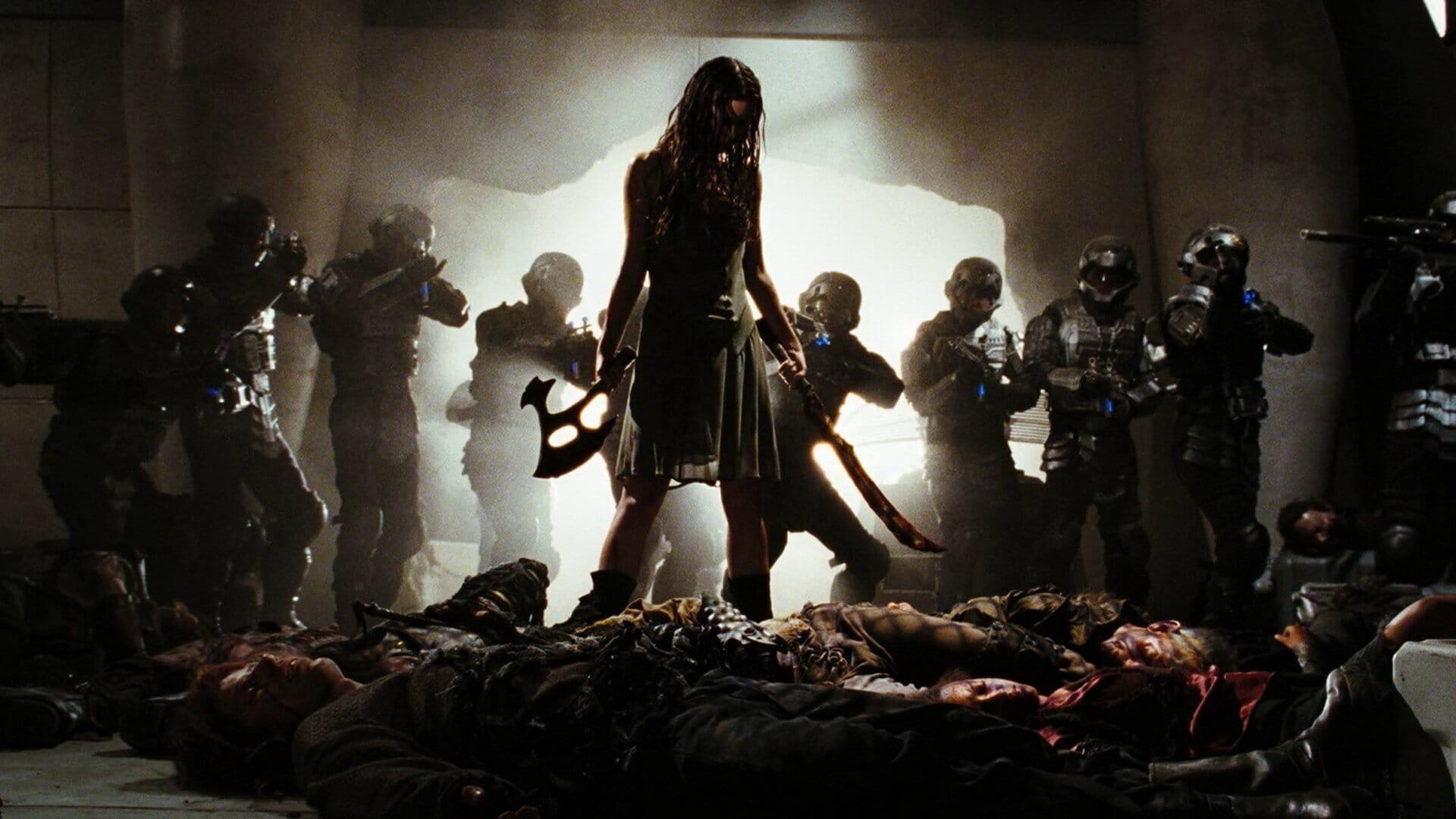
All of this without talking about the story at all. To return to the earlier point about Whedon’s “dudeness”, it’s telling that Serenity is Mal’s story and Whedon feels incredibly comfortable telling the story of a white guy. Of course, it’s not a Whedon project if there’s not some teenage girl finding strength in herself to be an incredible superhero. It’d be easy to go after Whedon here for objectifying River in this manner, but the truth is that… I don’t know. River rocks. Seeing her kick ass in the final act of the movie is a wonderful deployment of Summer Glau and her incredible physicality. The film is better for it.
This is the thing about Whedon, and I fully acknowledge this is why I find it difficult to be objective when it comes to him and his work. Whedon is one of those artists who’s always appealed to my tastes. Maybe it’s my own inherent dudeness or as someone who also wants more women leading big action movies like this. But it’s true that Whedon’s love of action-adventure violence appeals to my own love of the same. The way he saturates this movie with abbreviated, but dense and engrossing setpieces is amazing. The hovercraft chase scene is barely four minutes long and River’s fight in the bar is less than two minutes from start to finish. But these jolts of adrenaline make for a propulsive ride that leads to a breathless finale.
It’s also hard for me to think of any fillmmaker who’s made bigger or better third acts. Serenity’s is an incredible thrill ride where the narrative basically explodes as the film reaches its climax. Whedon repeats this trick not just with his two Avengers films but also with The Cabin in the Woods (which he might not have directed, but as co-writer, the recurrence is clearly a trope). Other blockbusters might have their big action showcase in the middle, but the way Whedon builds to his cascading, massive climaxes… there’s really no one who does it better. When it comes to loud spectacle and intimate character moments, he never sacrifices either for the other. Better than that, the spectacle and intimacy harmonize with each other to bring something suitably epic. And that’s not just him as a director, that’s him as one of the great writers of his generation.
Basically no one does it like him. No one ever really has.
At most, the ickiness of Whedon manifests in Mal’s general bullheadedness when he’s a captain trying to navigate the dangerous realities of the film’s plot. But Whedon frames all of that prickliness as something Mal is aware of but can’t change (and even portrays it as unsavory). When Mal says to Inara “Maybe that ain't a man to lead but they have to follow so you wanna tear me down do it inside your own mind,” it’s Whedon grappling with leadership and his own insecurities about being the guy in charge. Sure, Mal is right in the end, but Mal is hardly some smug hero through the whole film. He shoots three unarmed men over the course of the film. Hardly a paragon of virtue.
Mal’s arc is the core of the movie, and seeing the journey of a man who thinks belief is a waste of time slowly become an individual of great conviction is fabulous.
This is to say nothing of how funny and quotable this movie is. Whedon’s humor has always been my go-to because of how much he builds his jokes off of the humor of these characters rather than some pre-written joke line. It’s a fluidity that makes the movie (and the characters) feel lived in and real. So too the dialogue sparkles, with each line punching that pseudo-western twang.
Was it… too good?
And now… to go off the reservation for a bit… the major reason Serenity didn’t succeed is because Firefly (being a cancelled TV show) had a ceiling of viewership that couldn’t support a film even at this modest scale. Even though Whedon designed it to be new-viewer friendly, it’s difficult for new viewers to appreciate all of what’s happening.
But even if it was a popular movie, there is a concern in my head that movies like this are just… too smart for the general public. Whedon’s always lived in a genre world, and that, too, brings a ceiling of broad appeal. This film is just…. so smart, though. Like with the pilot to Firefly, Whedon throws all his incredible skill into the storytelling and filmmaking. At two hours, the film is dense yet breezey, casual but ruthlessly efficient and economic. Even still, there are grand movements that make sense the first time but its details grows richer and richer on subsequent viewings.
It’s unfair to call this a failing, especially for a storyteller as gifted as Whedon. But to compare him to someone like Chris Nolan, whose films are also incredibly smart and wildly emotional, Nolan has had remarkable success at building worlds, characters, and films that audiences hunger for. Even when what he’s making is a three hour biopic about the creation of the first nuclear bomb, audiences will absolutely show up.
To also go one step further, Whedon made Serenity as a piece to bring closure to his loyal fanbase of Firefly diehards. It doesn’t answer all the questions. Book remains an enigma and there’s no full resolution for Mal/Inara. Wash is the sacrifice to provide a cost to the movie….
But several years after Serenity, I was thinking about Firefly and what I’d want out of the future. I’d watched Serenity dozens of times by that point, but I realized that in making the ultimate Firefly movie, Whedon had succeeded in satiating a hunger I’d expected to be eternal. Sure, I would absolutely love more Firefly, even with all of these actors twenty years older, it would be an utter joy to experience and I’ve no doubt I’d fall in love all over again. But… if I never ever get any other Firefly ever again, would I be happy?
The answer, shockingly, is yes.
Because this movie makes me wondrously, deliriously happy. This isn’t like Arrested Development where people clamored for a season four for years and after it came out no one ever really talked about Arrested Development again3. In the wake of Serenity there was a fever pitch within the community for more of this. Yes. God yes more. I joined them. Of course I wanted more of this. I still do.
And yet, Whedon successfully managed to fulfill the primary goal of the film: it gave closure to a too-soon-cancelled TV show and paid off all the things that mattered, leaving everything in a place that everyone could live with. We hoped for more, but all of that was the stuff of dreams.
We live in the real world, though. In this real world, we got a Firefly movie. It’s excellent. It provides closure when such a thing seems impossible. Even twenty years later, it’s a gold standard to which we should hold other blockbusters.
And it’s one of my favorite movies of all time.
The Operative arriving at Inara’s doorstep comes at the ~40 min mark and would be the cliffhanger to episode one. The Reaver about to grapple Serenity as it returns from Miranda comes at the ~80 min mark and would be the second. ↩
For those curious: The first is to establish the space. The second is to provide a moment of danger as Mal falls into the chain (which Whedon cheats in repeating the shot when he returns to the scene a minute later. The third is to show what happens if anyone were to fall in (the crate disintegrates). The fourth is to re-establish before the final moments. The fifth is to show Mal leaving. ↩
Because season four is hardly satisfying and borderline not good… ↩