Robust Backstory - The Royal Tenenbaums
Wes Anderson's breakout hit introduces all of his idiosyncracies... except for his sterility.
Explore the history of film criticism and it won’t take very long Pauline Kael comes up. Kael’s career spanned from 1968 to 1991, which means she provided commentary and critical evaluations from the ending of the Hays Code to just before the rise of the indie filmmakers of the early 90s. The 70s alone were a massive explosion of film, and those early years saw her come up against a new generation of filmmakers who were rapidly asserting authorial control over their films to make movies that felt bold, daring, and edgy.
One of the hallmarks of Kael’s writing is her critique of “auteur theory”, the idea that a film (a piece of art produced by hundreds of individual artists working towards a common goal) could have a single, driving author at its center. At an example of this theory, Kael wrote about the film Citizen Kane, arguing that rather than acclaimed visionary director Orson Welles, co-screenwriter Herman J. Mankiewicz was the primary author of the one of cinema’s great films1.
I’m not entirely on Kael’s wavelength, though I do bristle whenever I see anyone refer to a film as “a film by…”, as though there is only one sole author to the piece and the version on the screen is their exclusive vision2. Someone can write, direct, edit, score, shoot, and produce their own movie, but there’s still actors and production designers and makeup artists and prop masters and sound designers and mixers and digital artists and assistant directors and production assistants and gaffers and more who all make sure that the movie ends up happening. These roles might be technical, but they still contribute to the overall final vision. At what point does the word “by” matter? When it’s 50% of the work? When it’s more? And even then, how would you measure that? In comparing man-hours?
By the time of Wes Anderson’s first film Bottle Rocket (1996), Kael had retired from regular criticsm. His second film, Rushmore (1998), was even more esoteric and specific but far more of a breakout than the little indie film he’d made with Luke & Owen Wilson.
One month after Kael’s death, Anderson’s third film premiered at the New York Film Festival. The Royal Tenenbaums was an undeniable hit, making more than $70m off a $21m budget. It had an all-star cast, including Gene Hackman and Anjelica Huston as the patriarch and matriarch of the Tenenbaum family, Ben Stiller, Luke Wilson, and Gwenyth Paltrow as their children, and Bill Murray, Danny Glover, and Owen Wilson rounding out the ensemble in various roles connected to the family.
But the main takeaway of the film is Wes Anderson, who received an Oscar nomination for its screenplay alongside co-writer Owen Wilson (they lost to Jullian Fellowes for Gosford Park). Anderson’s esoteric vision is undeniable, and there are very few other filmmakers out there who so refute Kael’s anti-auteur theory views.
That sense of authorial ownership, though, comes from a smoke and mirrors game of convincing his audience that he has more fully mastered this particular narrative than he actually has. And he does that by knowing exactly where to squeeze.
The Wes Anderson House Style™
Even more so than Rushmore, The Royal Tenenbaums solidified what audiences expect from a Wes Anderson movie. Some of that is visual flair: his shots can feel like dioramas built upon what feels like zero-point perspective. Another is the flat, almost emotionless tone with which his actors blurt at a rapid clip, where words come fast and it feels like characters speak at one another, rather than with each other, or even to them. And there’s his rococo aesthetics: everything is vibrant and in specific color palettes, being both a snapshot of a specific moment time and timeless in its flavor.
But the real power of The Royal Tenebaums comes from Anderson’s mastery of the narrative. The script (which he co-wrote with Owen Wilson) conveys a sense that the Tenenbaum family is one that the writers have fully-realized. You could ask them about any character on any day of their life and Anderson or Wilson could go beat-by-beat, minute-by-minute and explain what that character did and how that ended up informing them in the story they’re telling.
It’s that old writing trick, of “what is the scene before your first scene” or “what is the scene after your last?” Only for Anderson it’s developing their entire lives.
This sense of there being more than even what we see starts from the first shot of the film, where a copy of the book The Royal Tenenbaums receives checkout stamps from an unseen librarian. It then smash cuts to the cover of the book (because that’s what we’re reading) and the film plays out with interstitial chapter titles, themselves the literal pages of the book. It’s easy to read the words as those images remain static, giving a small taste of what Anderson himself is about to show.
Honestly, the only thing missing is an ornate dropcap of each chapter’s first letter.
This meticulous detail is the thing that struck me the first time I watched it. It subliminally conveys that this story exists not just as a screenplay or a film, but in fully-realized prose. Even the prologue is just a massive, no-one-should-ever-do-this exposition dump to establish Royal, his wife, and their three children. It’s an overwhelming amount of information, like Anderson and Wilson have all of these stories about these infinite people and are cramming as much as they can into five minutes of precious screen time. They flit from character to character, bouncing around their specific hangups and trauma sources, but it’s like they throw a ball and tell the audience to start juggling. And then every few seconds throw another ball with the assumption that the juggling will continue as it rapidly, infinitely complexifies.
Impossible, of course.
Via Anderson’s penchant for a specific rhythm that (as long as viewers can harmonize with it) pulls his audience along, the volume of knowledge a reassurance that they’re in good hands. He’s sand-blasting the environment with information, but that’s a confidence in which audiences can cling to and trust.
Now I watch it and it feels like a remarkable economy by which Anderson can fully communicate his world as quickly as possible so all of those elements have texture for when he pays them off. Shortly after the prologue, Anderson brings the world to the future, and the context he laid out only matters so much in the wake of how truly screwed up everyone has gotten in the previous decades.
Details and flourishes
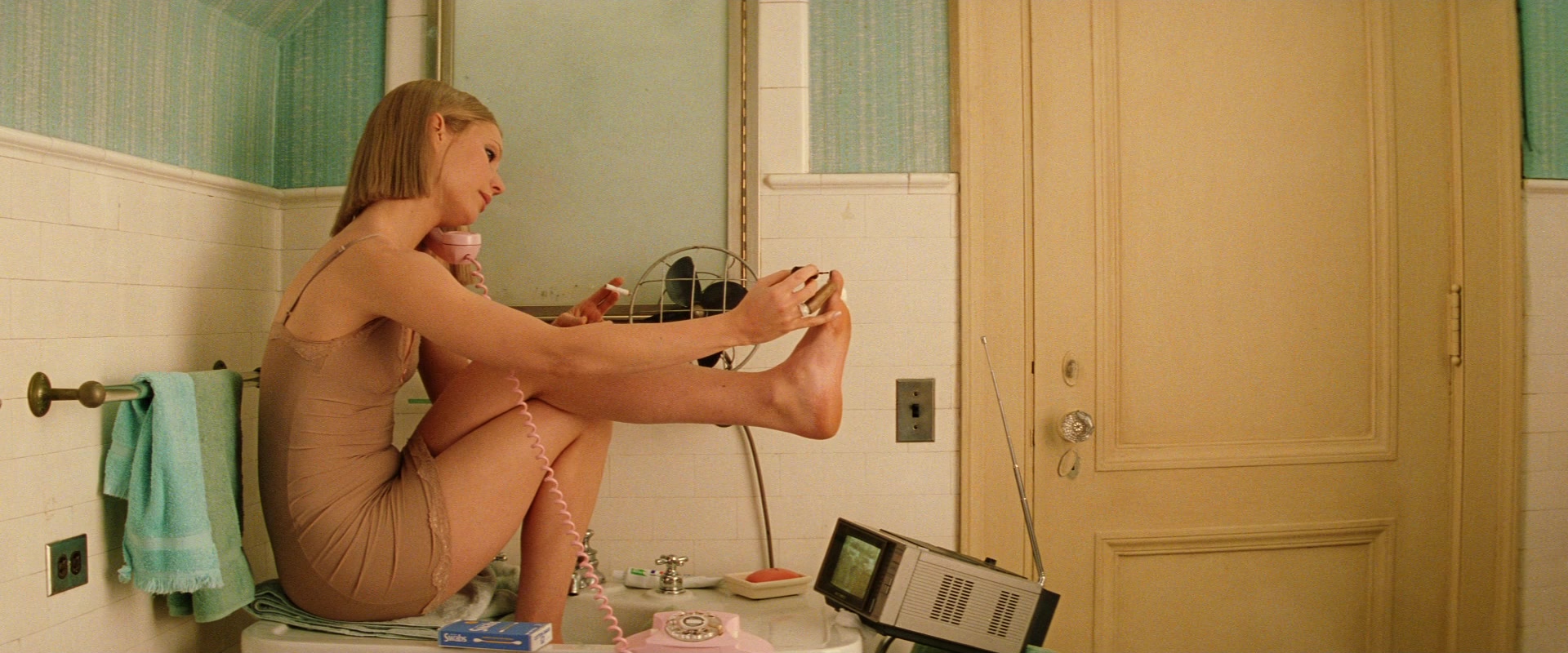
It’s these sensations that matter. Immediately, the film conveys Margot’s alienation because of her status as “adopted” and the salt in the wound of Royal being a complete dick about her play (which doubly hurts because she’s 11). The name of the play doesn’t matter. Nor does the equine nature of the horse and zebra costumes. Emotional devastation, though? There’s a direct line from that to when next we see her: sitting alone in her hermetically sealed bathroom, smoking a cigarette and turning the lock on the bathroom door with her freshly manicured toes.
So too it doesn’t matter the name of Richie’s boat even though it feels remakably specific and lived in. It doesn’t matter who else Etheline had as suitors even though they all get prominent placement and name cards to show her eclectic tastes in men post-Royal. But all of these small details give a life and texture to the world of the film. It’s not just Anderson’s meticulous attention to the mise-en-scene. That attention extends to the writing itself and the delicate care by which every word that appears on the page manifests on screen.
In a way, these details don’t matter at all. In others, they matter completely to the overall perfect tapestry Anderson knits. There’s not a missed stitch.
Grimy imperfection
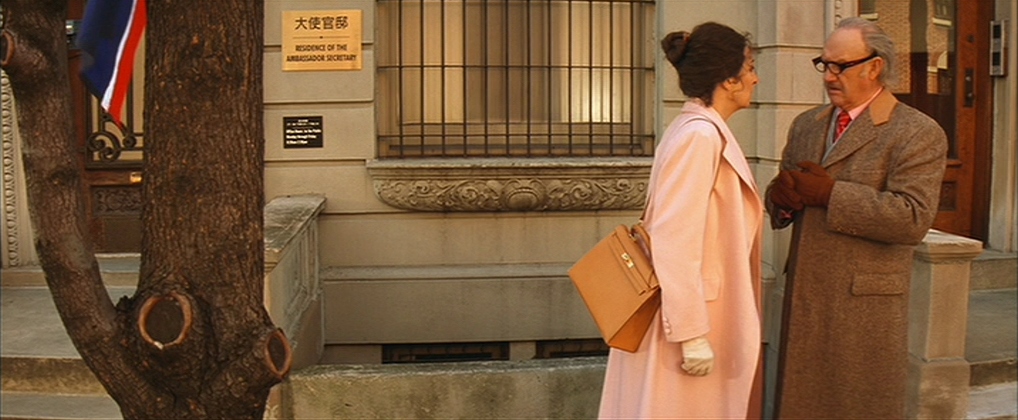
Eventually, Anderson’s movies take on an air of manicured sterility. By the time of The Phoenician Scheme or even The French Dispatch, everything is a set or backlot, where the artifice is the point. By The Grand Budapest Hotel, it feels like Anderson is even measuring out any blades of grass with his personal grass-measuring ruler.
In Royal Tenenbaums, though, Anderson hasn’t reached the full level of perfectionism that has so defined his work for decades. There’s plenty of sets and flashy direction, but when the film goes outside to the streets of New York City, there’s a degree of time and grime that Anderson can’t bleach away. When Royal tells Etheline he is dying, the window on the building in the background has dark stains where water has dripped over time. While his larger filmography can all feel like timeless period pieces, plucked from the ether of collective memory, making a movie that’s so contemporary benefits from the lingering life of a lived-in New York City.
This makes The Royal Tenenbaums something of a specific sweet spot, where Anderson has received the budget to fully execute his vision, but it’s while he’s still figuring out just how esoteric he can get with his specificity. Not only that, but this also means he builds a genre unto himself.
Pinks
The following section contains mention of suicide…
As a genre unto himself, Anderson also recognizes that his heightened realities can let him reach into unpleasant places without it feeling like too much. His later films seem like vehicles for aesthetics, but that ignores these threads of darkness and bleakness that permeate the stories he’s telling and the characters he places within them.
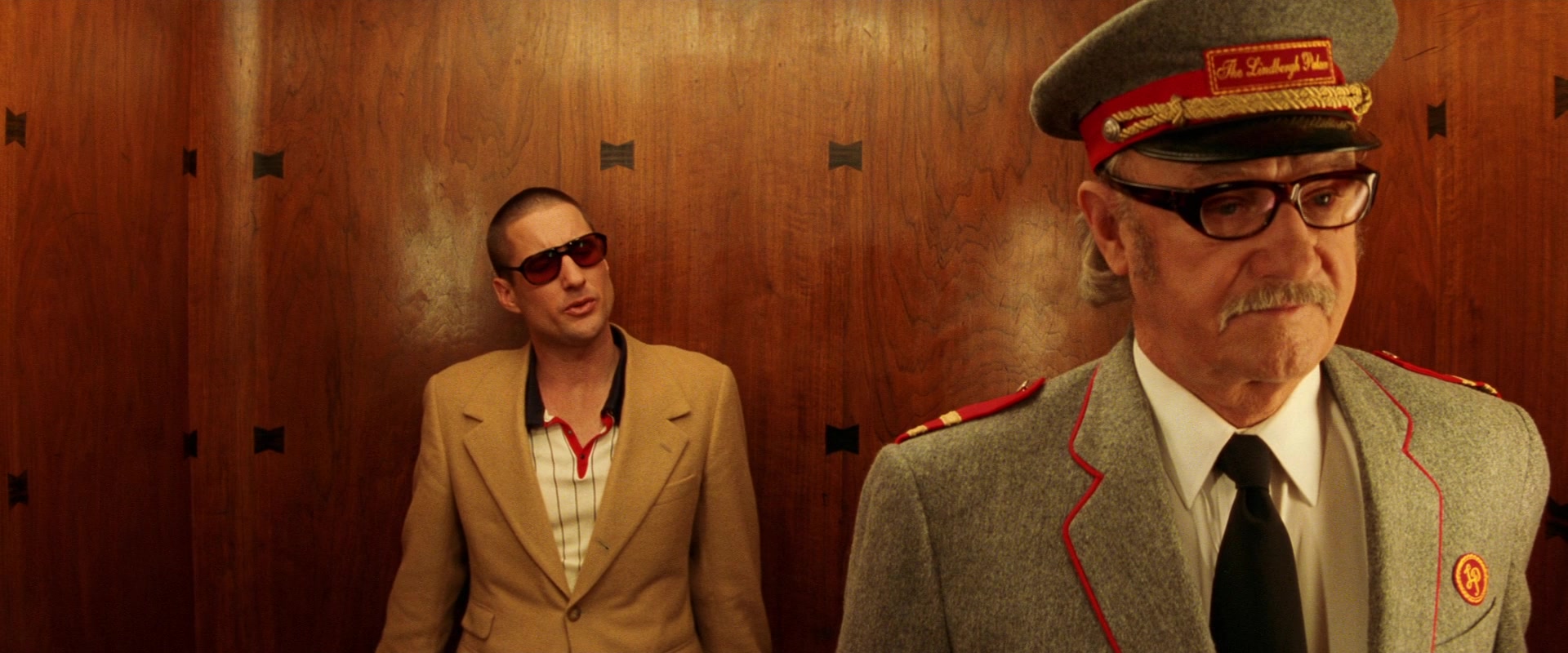
Take, for instance, the color pink. Generally a color of romance, it reflects a melancholy here that feels soothing but also plays slightly off. The Tenenbaum house is a pink, salmony color, inside which reflects all the sadness lying just under the surface. Every Tenenbaum is dealing with some underlying trauma (as laid out in the prologue) and the movie is about bringing them all out so the family can exorcise them and move on. Even the hotel in which Royal lives and later works has a bright pink awning over its entrance.
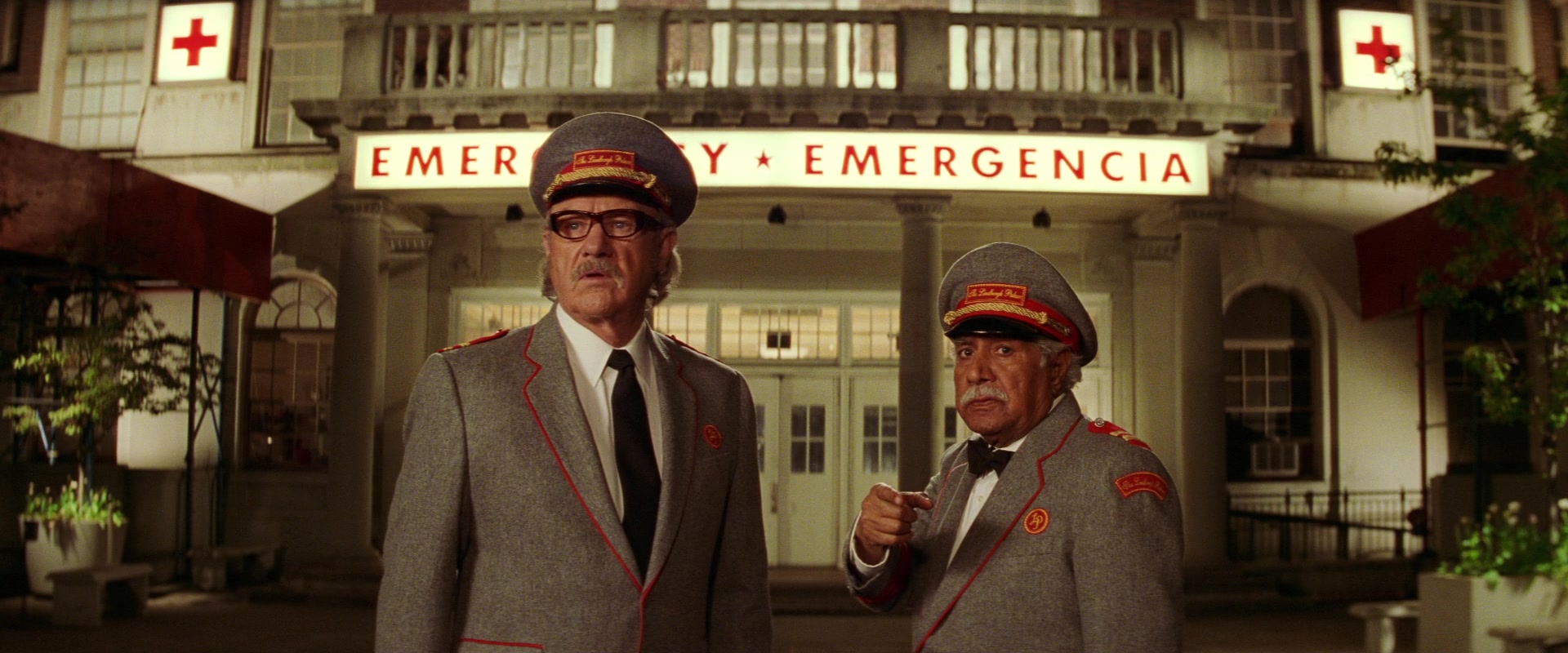
Pink, though, is just a very light tint of red, and the reds in this movie are all punches. The bellhop uniforms that Royal eventually winds up in feature red piping along the jacket’s edges. Chas and his children wear bright red tracksuits, an outfit that screams the pain and anguish left by Chas’s wife’s shocking death. Chas, himself, is a raw nerve, always ready to freak out because of the thing he expresses without ever saying.
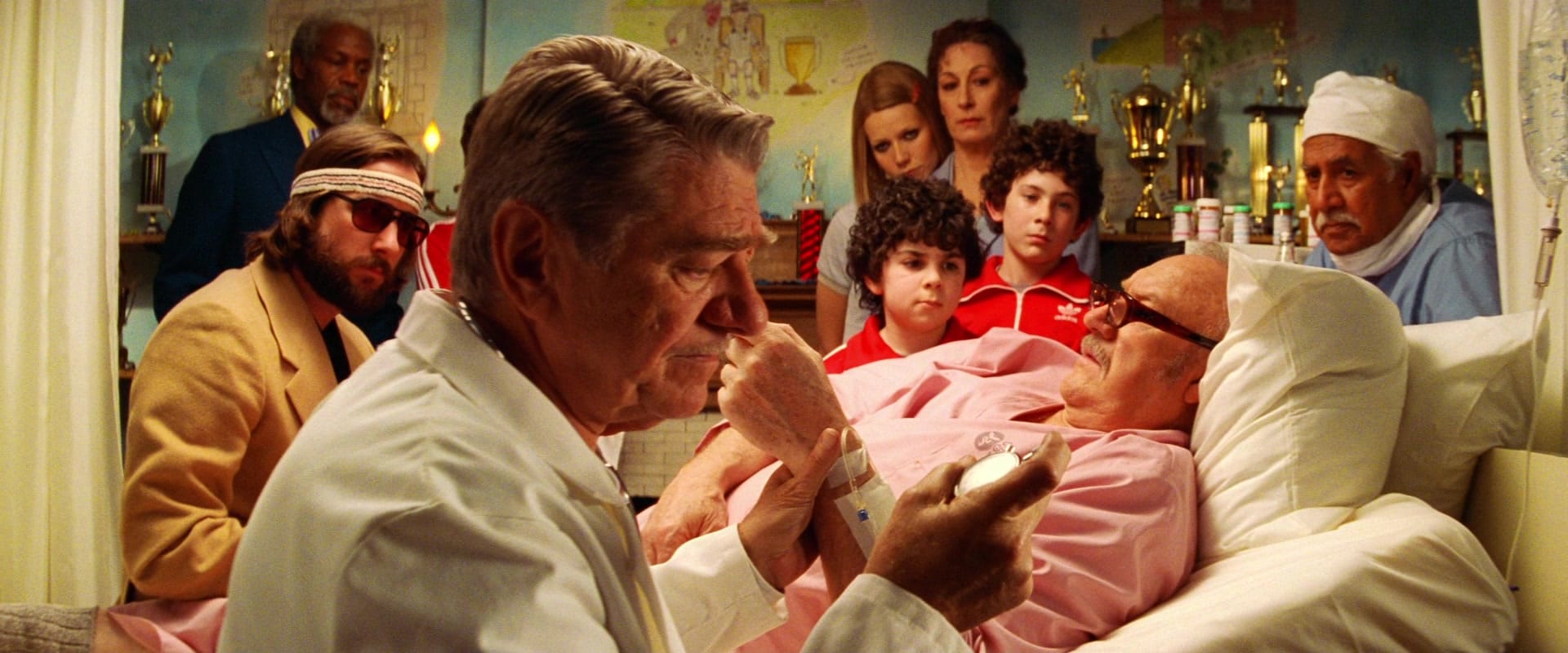
But the most vivid red in the movie is during Richie’s attempted suicide. The shot of the blood pouring out of his veins and the rivers it makes as it floods intot he sink is utterly, undeniably gorgeous. Following his release from the hospital, Richie returns to the Tenenbaum house, wearing all white. But as he and Margot are reconciling their love for each other he shows her his fresh cuts, peeling back the white purity of his freshly unburdened soul to reveal the pain and suffering that still lingers fresh from his outpouring. Healing, but awful.
It’s a remarkable display of contrasting color, and a filmmaking trick Anderson comes back to over and over again.
Unrecreatable
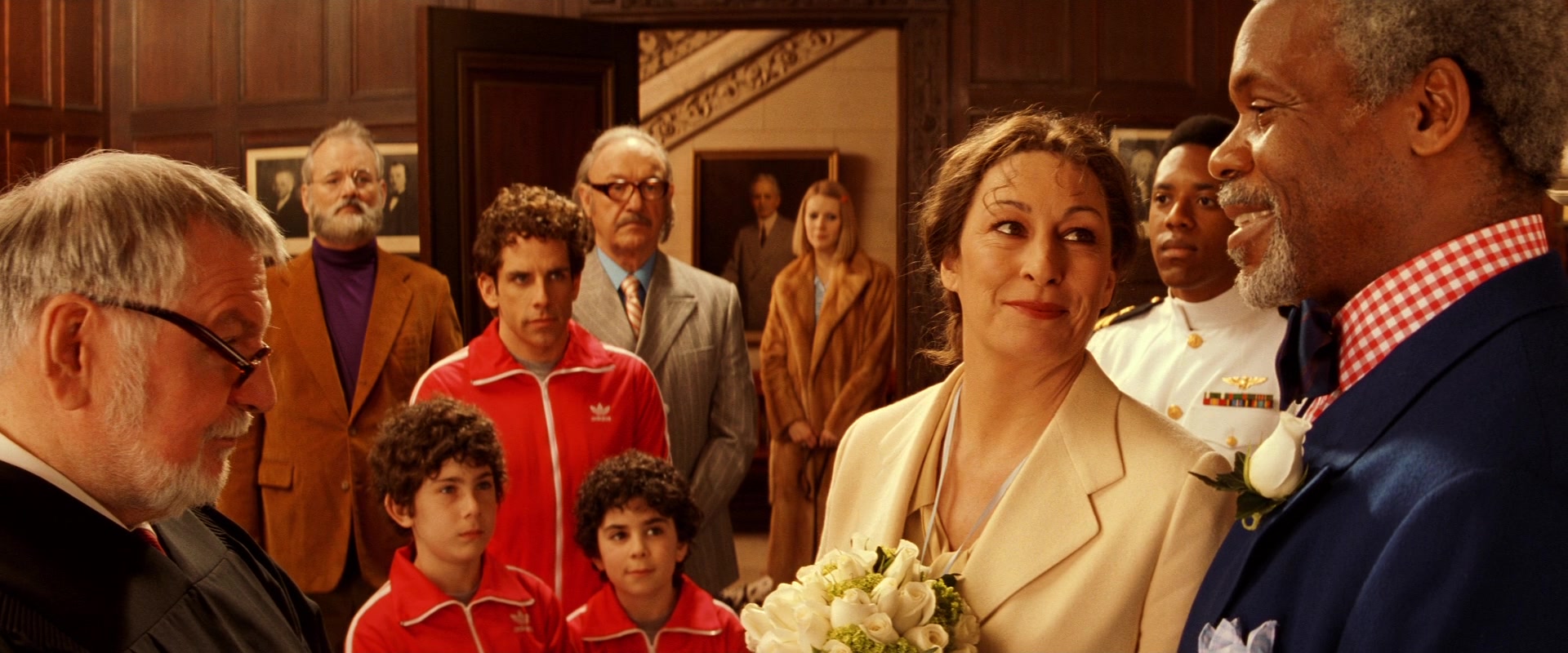
The specificity of Anderson’s vision is undeniable. No one should be able to look at his movies and think that they’re anything other than the work of a dude who knows what he wants and is pulling it directly from his brain and personally painting it on screen. This might have seemed like a spark of genius in 2001, but a quarter century and nearly a dozen films later, Anderson’s style has grown even more pronounced and more inimitable. There can be AI videos that try to ape him, TikTok influencers who try to spoof what he does, and even sketch shows that try to capture the esoteric style…
None of those efforts have the care and heart Anderson has for his characters and their stories. Imitators mistake aesthetics for substance, where Anderson’s tastes and vision are merely the actualization of an aesthete who fills his dark stories with pleasures that bring him joy and fulfillment.
But it still brings up the question of why The Royal Tenenbaums made the splash that it did while his later films (aside from Grand Budapest) didn’t. Maybe it’s that it came out in 2001, a melancholy antidote that fully captured the bittersweetness of what America wanted to feel in the aftermath of 9/11. Or maybe it’s that this is really the last time where Wes Anderson really goes for something this simply heart on its sleeve.
I keep coming back to The Phoenician Scheme, which was really excellent but fell prey to what could feel emotionally opaque. Anderson very early sets up that that film will be about the relationship between Zsa-Zsa and his daughter Liesl, but the bells and whistles of the actual plot, the numerous hoops Zsa-Zsa has to jump through to enact his eponymous scheme, and the machinations to ensure an outcome worthy of him throwing away everything he has all conspire to obfuscate that core relationship. It’s plenty present, but it’s easy to lose oneself in the loudness of Anderson’s style and the way most of the discussion around him centers on his particular tics etc.
This isn’t a problem, perse, but it is a feature of all his movies after this, where so much of the first time watching a his is trying to see the forest amidst a million fascinating, engrossing trees.
The Royal Tenenbaums is not that. This is a movie that makes it clear who Royal is (and this swan song performance by Gene Hackman really is one of his best) and that his goal is to heal the family his assholery helped break. Whatever that might mean, the film goes about doing that, continuously showing how shattered everyone is, but revealing the incremental progress that justifies the final shot of everyone leaving Royal’s graveside together.
That emotional clarity is the sort that a general audience needs to really connect with a film like this.
There’s a debate about whether this is Wes Anderson’s best film. It’s easy to see why people cite this as a favorite, but a lot of it is the way that it does everything his later films do while also feeling like it’s not nearly so sterile. Rather than a fresh reality that feels like it comes from a storybook, this feels like a New York that’s just slightly more heightened than our own. The script frontloads all of the telling-not-showing so that they can impress the audience immediately and then have the rest of the film be these characters bouncing off one another. There’s no weird cutaways or fractured narratives to distract from what’s happening. It stays linear and it works like gangbusters. It is a story an audience can grasp on a first viewing, even though multiple viewings are richly rewarding.
Much as it pains me to say, this is probably a key factor why Anderson’s fanbase is small but ravenously loyal. Filmmakers shouldn’t expect audience members to return multiple times, to pore over all the deep joys buried like easter eggs. Other filmmakers who benefit from multiple viewings (Christopher Nolan for sure, but the Coen Brothers also come to mind) can make films potent enough to thrill an audience with one sitting.
Wes Anderson, though, doesn’t care. Dude’s still churning out movies and there’s no sign of him stopping. And each one is so perfectly him that few other directors have the license to be so unapologetically themselves. He gives his movies everything he has, saturates them with meaningless, frivolous detail, and shows off just how masterful he is at being the sort of auteur Kael would have railed against. I mean… the cast alone
I do wonder what he would change if he had the ability to do this again. Would it be more sterile? More opaque? And… would that make it a lesser film? Probably. And yet, I wouldn’t trade any3 film of his for any other. This would be less if it were as bleached out as Asteroid City, and that film would be far less if it decided it was a good idea for every shot to not look like a bright and vibrant tourist post card. Anderson’s mastery of his own narratives and films means even the little mistakes can feel like they’re intentional, and the characters feel larger than they are simply because Anderson and Wilson sketched out big sweeping lives for them that we will never see.
It doesn’t matter that he’s faking all of this. The entire movie is like any other story: pure artifice. And goodness isn’t that beautiful?
Power to Kael for this. Mank (as the eponymous movie called him) certainly put a lot of his own voice into the work, and Hollywood has always tried to minimize the role of writers and their importance in film. That said… come on, man. Welles was such a dominating force in that movie that it’s like… come on. ↩
The lone exception I can think of this where I don’t bristle is Bo Burnham’s Netflix Special “Inside”, which he wrote, directed, produced, starred in, edited… That’s the closest thing we might ever get to a singlular work of such. ↩
Yeah okay you caught me. The Darjeeling Limited can go… ↩