
Myth Meets Reality - Before Midnight
It's one of the great cinematic love stories and unlike the others, this one isn't exactly a feel good...
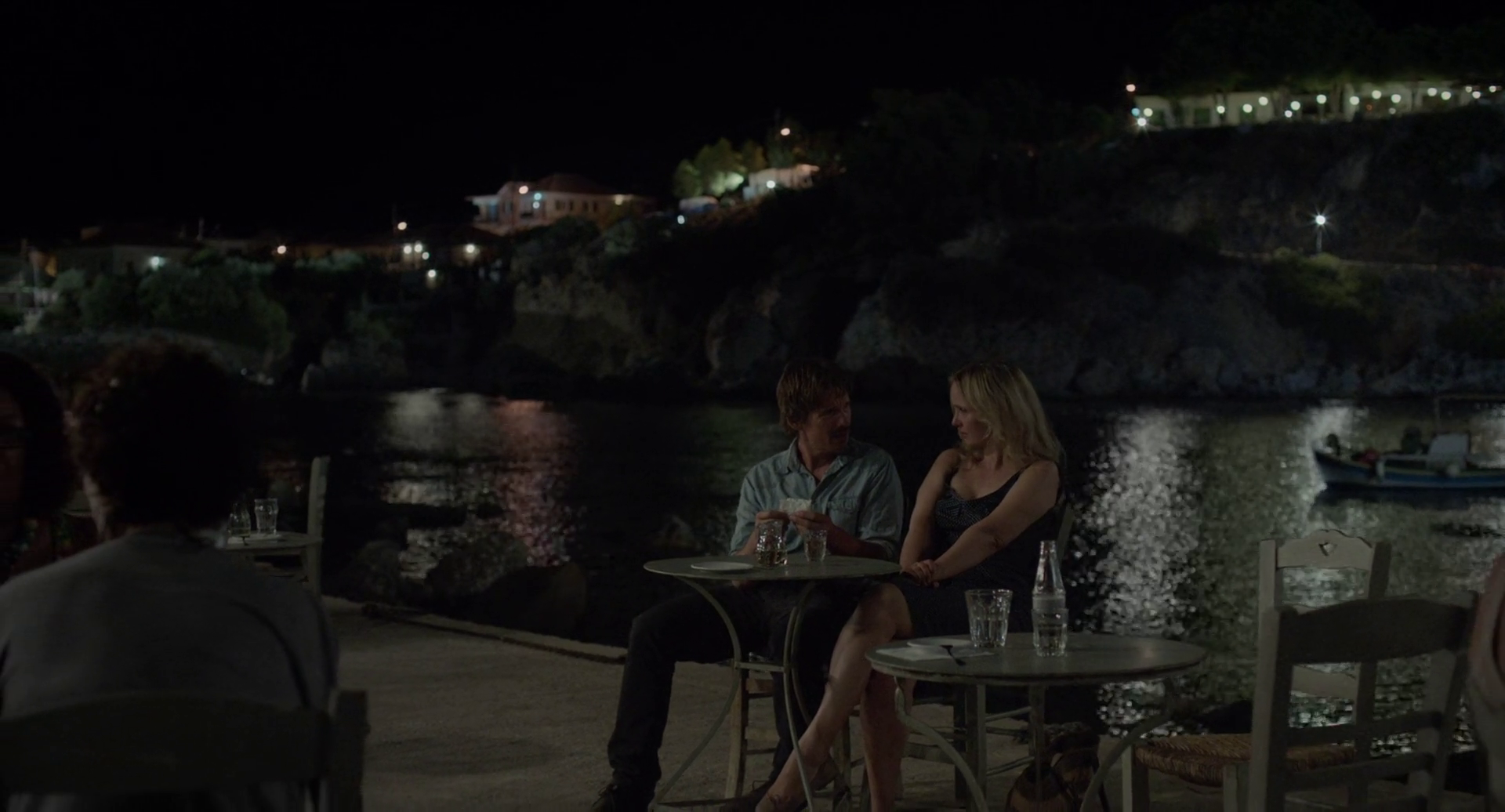
The first thing anyone remembers in Before Midnight is the fight.
It is an extended, brutal scene in which writers Richard Linklater (the director), Ethan Hawke (Jesse), and Julie Delpy (Celine) attack each other, subjecting their audience to an endless stream of eviscerations, payback for slights both real and imagined. It is a nightmare, the sort it’s not clear how these two could move forward.
There’s probably not any long-term couple that hasn’t had something like this happen. I’m fortunate enough that I could probably count on two hands the total number of fights that got anywhere near this bad. But I do remember one that happened right before bed that kept me up while my partner (who had reached a resolution) had passed out. We were in a hotel room and I sat in an armchair for hours trying to get my brain to stop turning over what I worried was the end of the relationship.
Because that’s the biggest problem with these tiffs. In a world where we participate in relationships, any disruption to a life we choose to build can feel like the world is literally ending.

The sunk costs of parenting
Revisiting Celine & Jesse after nine years follows the pattern of Before Sunrise and Before Sunset. But where Sunrise was about your 20s, the promise of youth, and the romance of the future, and Sunset was about your 30s, feeling life slip away, and desperately shifting your life into a new direction, Midnight ends up being much darker. Now in their 40s, Jesse & Celine find themselves near the midpoint of your life, where the window to make substantial changes is rapidly closing in many ways (assuming they haven’t already closed).
Linklater complicates this almost immediately. No sooner has Jesse finished dropping his son off at the airport than the camera ends its shot to reveal not only Celine but their two girls, twins asleep in the back of their car. It’s unsurprising, though their age makes it clear that Jesse & Celine had them relatively quickly following Before Sunset. In the middle of the fight, Celine remarks that they lived in New York for two years before returning to Paris to give birth to the twins. They’ve never left.
On the one hand, this presents the problem of a sunk cost. They love their children, and they’re the subtle threat throughout. The long unbroken take of Jesse & Celine driving the hills of Greece keeps the twins in frame. They might be asleep, but they represent the larger stakes of the relationship. If the parents fall apart, there’s no telling what will happen with their kids or what the deal with that would be.
For Jesse, this is slightly more complicated than it is for Celine. Jesse has already sacrificed years without his son, Henry. His ex-wife won the custody battle and the two only get to see him at Christmas and then in the summer for an extended vacation. It’s eating him alive and even now he’s openly musing to Celine about moving back to the states to try to be with him as he goes through high school and enters adulthood.
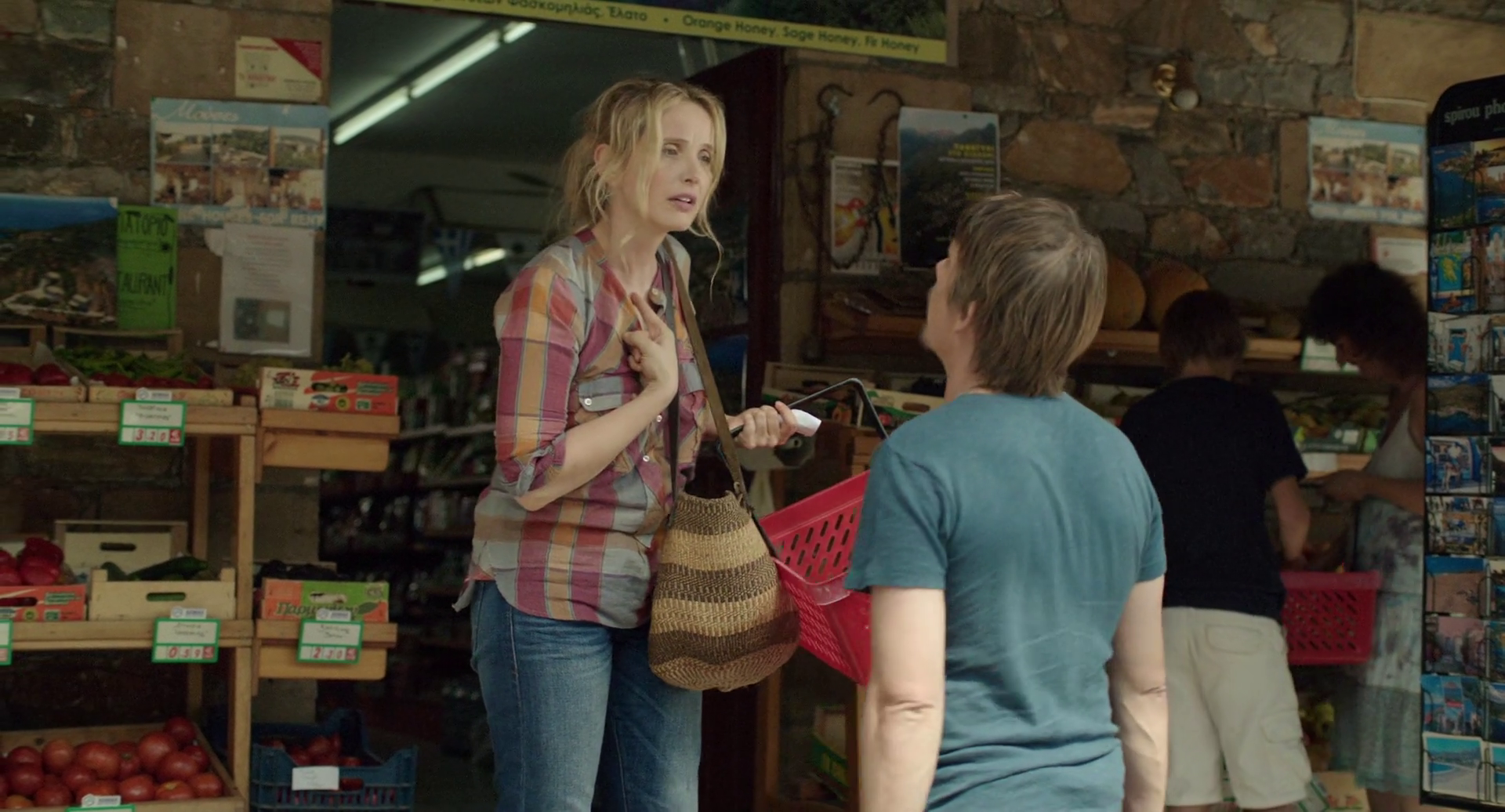
But for Celine, it’s equally an issue. Linklater makes the smart choice to not show her interacting with Henry. On the one hand, this allows the first scene to be about the precious final moments between father and son. On the other it isolates Celine from Jesse’s kid, emphasizing the bleak truth at the end of Before Sunset: Jesse had a choice in his life, and he chose to live the mythic life with his one true love over his only son. Even though Henry calls Celine at least twice to check in as he takes the various plane flights back to the states, it still complicates this whole situation.
Wisely, Linklater, Hawke, and Delpy do not turn Celine into some villain when it comes to him. The movie makes it clear that they have their own relationship; she loves him because he is Jesse’s son, and there doesn’t seem to be any resentment towards the life he lived in the years before they got together. If anything, Celine’s flippancy in not handing the phone to Jesse only supports his later argument that Celine is domineering, controlling, and uncompromising. Despite this, it’s hard to fault Celine for desperately wanting her own relationship with Henry independent of Jesse. These things get messy very easily.
Not coincidentally, Henry’s second call to her is also the last thing that happens before Jesse and Celine devolve into their fight.
Making it easy to leave
It’s only natural that Celine would have developed a relationship with Henry over the previous nine years. Of course, part of that is probably lingering guilt for being a major reason he doesn’t have a father figure on the daily. Jesse, I’m sure, feels jealous of being not a part of any minor facet of son’s life when the real estate is so precious. Feeling left out on top of everything else must hurt.
Though, hang on, why in the world would Celine want this independent relationship with Henry?
Part of this is the other major question here. Jesse and Celine aren’t married. Why?
For starters, it makes sense that Celine wouldn’t want to. Celine has always openly questioned society and the norms that underpin it. Given everything she talks about, it makes sense that she wouldn’t want to anchor herself to anything that would get in her way, especially when it’s a patriarchal system like marriage. Based on all the conversations we’ve seen between her and Jesse and considering that Jesse has already tried the marriage thing, it’s not surprising that he seems fine with the way things are. Being with her is its own reward.
This, though, makes it extremely easy for the two of them to dissolve the partnership. Marrying someone is fairly simple, but divorcing them is a massive web to untangle, especially when it involves children. It’s why the first time Celine walks out on Jesse is so scary. Ostensibly, there’s nothing tying her to him. I’m sure there’s some sort of custody battle that would need to happen, but beyond that…?
So while it might seem foolish to not be married or like the two of them have no desire to make that legal commitment to each other, what it really reveals is that the two of them believe in the myth of their love story in the same way that we do: they are enough. They don’t need guardrails because they’re meant for each other.
That said, this does leave them extremely vulnerable when something as human as a big fight comes along.
Unsubtle comparisons
There’s more to the movie than this fight, though. Despite the indications that this fight is rather singular, Linklater is careful to build up various elements before it all comes crashing down.
He starts early with the drive through the Greek countryside, giving Jesse & Celine the opportunity to idly chat about all the things going on in life. It’s different from the conversations in previous movies, where they spent a lot of time talking about the world, philosophy, and grand thematic ideas on their minds. Midnight’s conversations are mundane, almost tedious. But this is what happens as they have grown together: they live with each other so they discuss the doldrums of life.
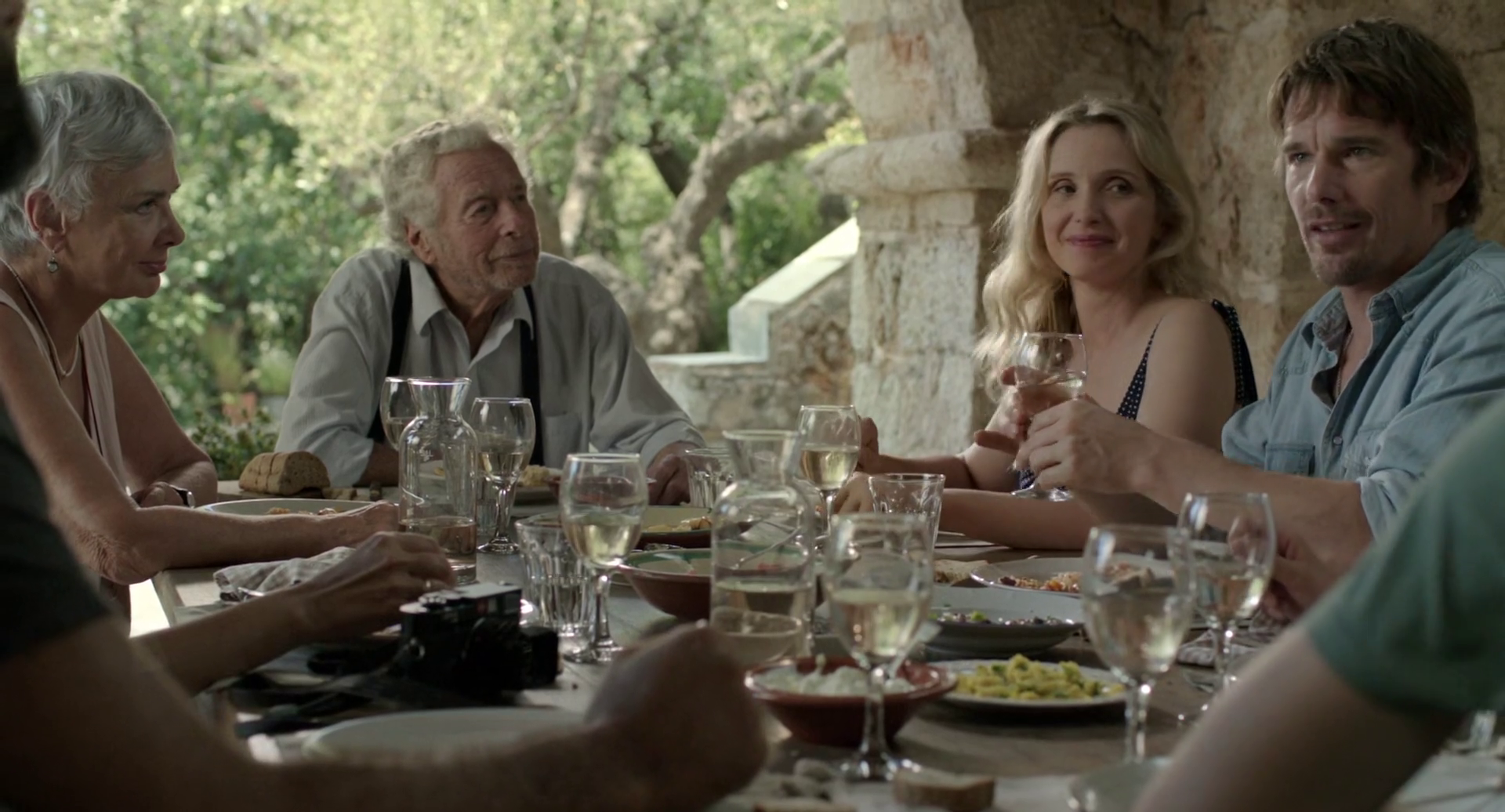
There’s then a sequence at the Greek villa where they’re staying for the summer. The trip is almost over, but there’s an unsubtle parallel within all the people staying there. At the dinner are Jesse & Celine as well as three other couples.
The old couple (Patrick & Natalia) represent a mature relationship in twilight years. They aren’t romantically together, but share a platonic relationship. With the specter of a breakup haunting the entire film, the widowing feels like a point where Jesse is no longer in Celine’s life, widowing her metaphorically. Patrick, meanwhile is himself a writer, mirroring Jesse’s profession.
The middle couple (Stefanos & Ariadni) are a mirror of the current Jesse & Celine. Stefanos in particular is a sex-obsessed perv who wants to know details and can’t turn off his heightened libido. That’s not so different from Jesse, who’s spent the better part of three movies in a sex obsessed haze. He’s very good at working around it, but it’s clear it’s always on his mind.
But the young couple (Anna & Achilles) are the most interesting. Certainly representing the youth of Before Sunrise, the two have a very clear vision about the relationship they have with each other, but Anna has a deep maturity about the shelf life of their relationship. They know they will break up, but they are choosing to enjoy the ride as it exists.
If these three couples represent Jesse & Celine, is it possible that they were always meant to break up? It’s possible that the fairy tale of Sunrise and the life pivot of Sunset has completely obscured their ability to recognize that maybe they are bad for each other and that the best they can hope for is a temporary togetherness. What Before Midnight represents is that instead of one night or an hour and a half, the two of them have taken nine years to be together and that gift is possibly about to run out.
The lives of the mythic
The myth of themselves is just powerful enough to maintain all of this. Jesse built his career off the promise of their relationship, but Celine makes it known at every opportunity that she dislikes that so many people only know who she is through Jesse’s interpretation of her. If Celine has always been a strong-willed, individualistic feminist, it’s only natural that such an existence would irk her.
While that can be true, it is also true that she does love the actual myth of them. In Sunset, she’s the one who made the choice to meet up with Jesse. She wouldn’t have done that if she didn’t believe in the promise of Sunrise.
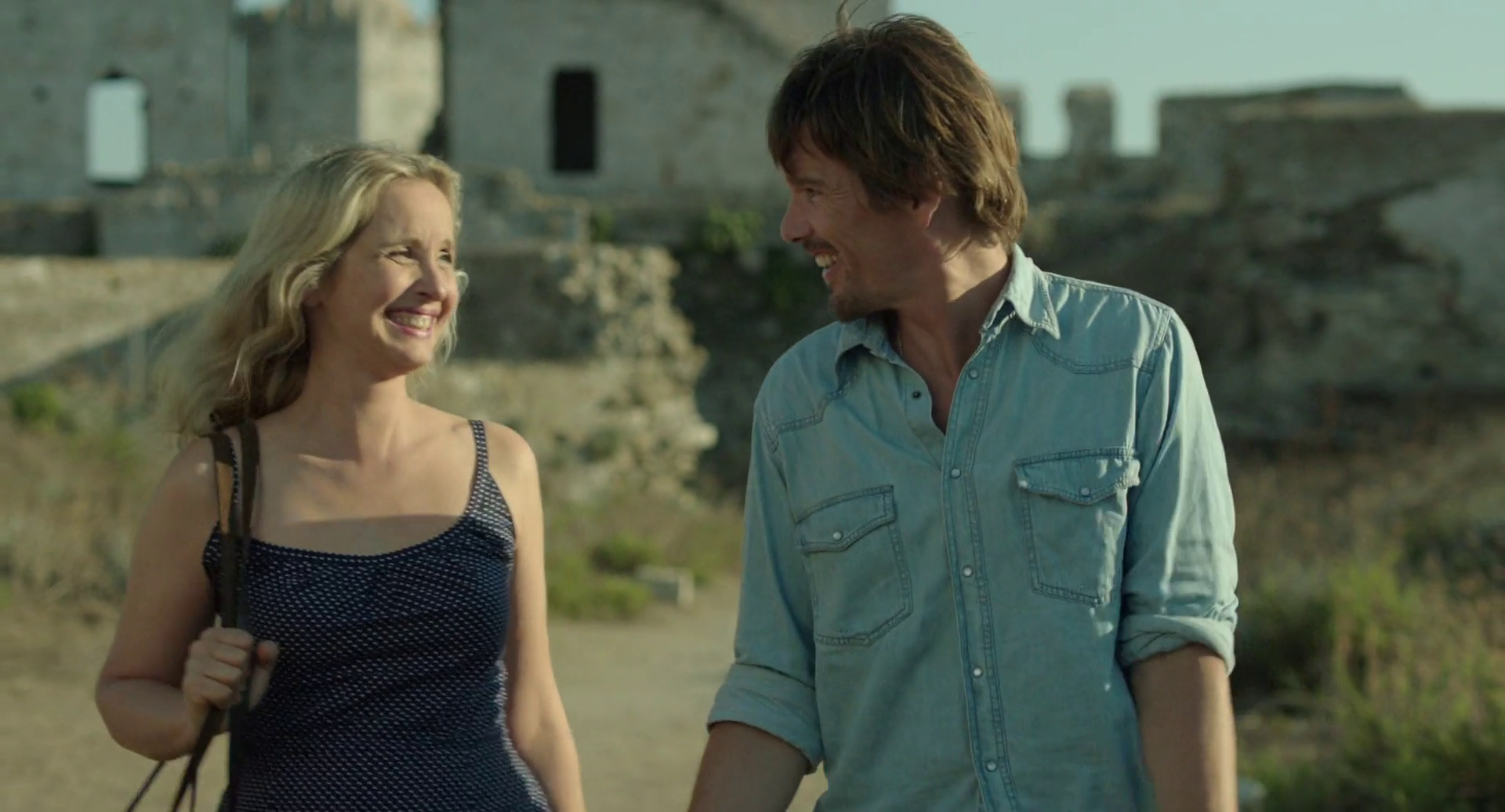
And… watching Before Midnight, Linklater does go out of his way to give the audience what they want. Stefanos et al conspire to give Jesse & Celine a night on their own, and the second the two start walking their way across the Greek countryside and into the village they slip into the easy conversations of Sunrise & Sunset. Sure, life creeps in like it did in the car, but the two of them discussing life, the world, existence, and philosophy blankets the movie like a warm comfortable blanket. But they’re less cagey with each other, Celine licking her thumbs in the church as a tease of the sex they should imminently have. All pretense has fallen away
To put a pretentious perspective on it, Stefanos (himself a fan of Jesse’s work and the mythic potency of Jesse & Celine) bankrolls a Before movie. The couple get to walk. We get to see them potentially consummate their relationship. And then it all goes to shit.
What they did wrong
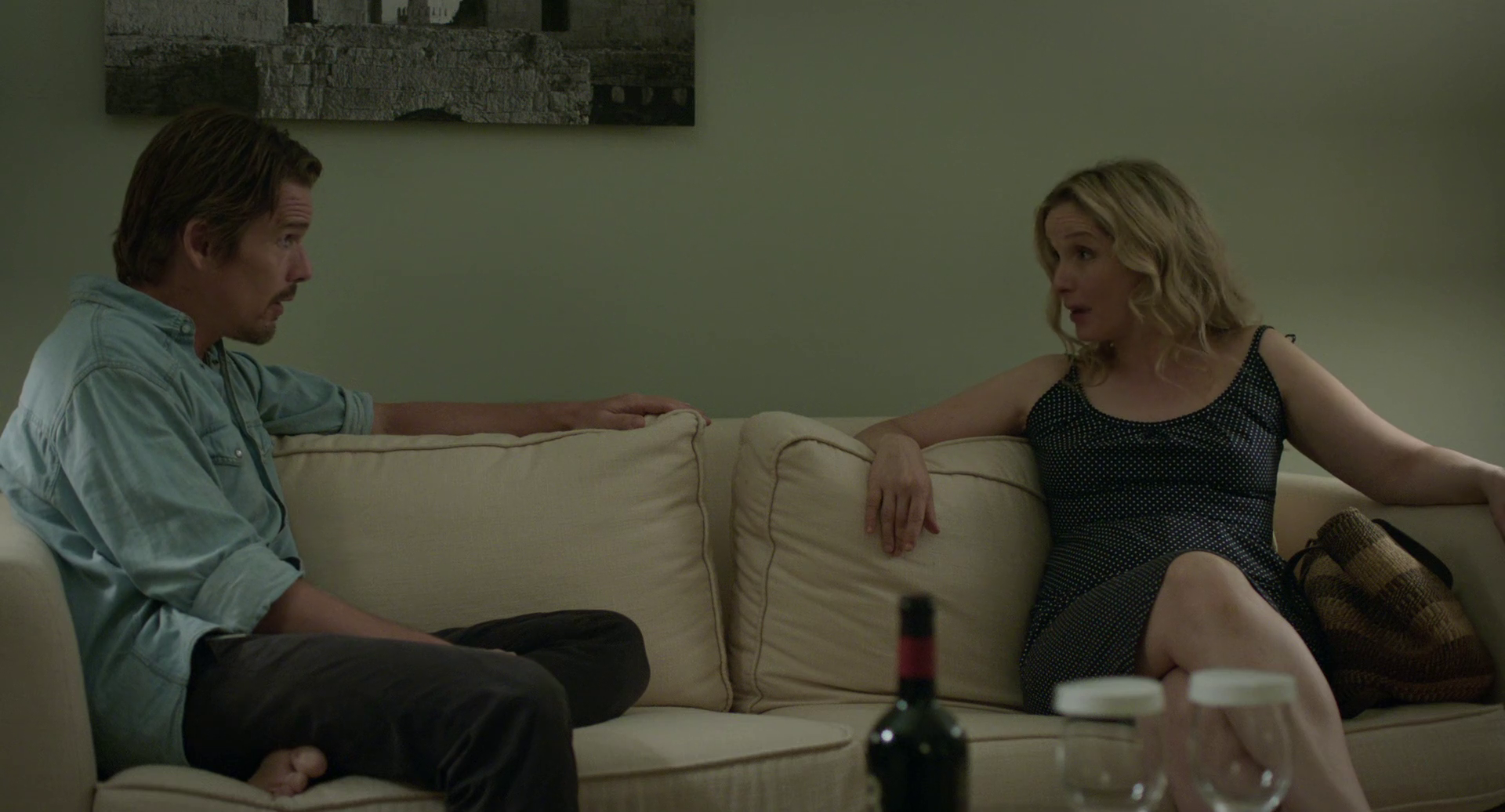
As with any good story, Linklater, Delpy, and Hawke all work to make sure that Jesse & Celine’s perspectives come through. Both have tremendously good points, and there’s even points in the argument where they don’t have a witty comeback.
The biggest of these is Celine’s calling Jesse on having an affair with a girl named Emily. Notably, he doesn’t deny it, but pivots to how he’s given her everything.
Which… he has. If the great catalyst for this film’s conflict is the relationship with his son and the lingering guilt of walking away from all of it, he is absolutely telling her the truth. But the idea that he cheated on her in a moment of weakness might be too much to handle.
And yet, his words in this fight matter. There are points where he opens up and lets her have it, but he reiterates over and over and over again just how committed he is to her and their relationship. He is magnanimous and open to her venting. While itthis relationship might have started as a fling on the train, his buying into the myth defines his entire existence.
He sees her clearer now than he did nine years ago and he still does everything he can in the moment to try to assuage her fears and reiterate his commitment to her. “I fucked up my whole life because of the way you sing” is a powerful thing for him to say to say. In a vacuum it sounds like something he would yell in anger, but in Hawke’s performance he approaches the moment with empathy, trying to help Celine realize that while he might have done it in a spur of the moment, he wouldn’t take anything back. Sunset made it clear that he was deeply unhappy in his previous marriage, and Midnight features Celine calling his ex-wife a crazy alcoholic cunt who is always going to fight custody battles out of spite.
(Though in fairness, if I was married to someone I really loved and had a kid with them and then he went out on a book tour and got together with a random one-night-nine-years-ago woman from his past and didn’t come home and then functionally abandoned our kid… I would probably resent him too.)
Going back in time
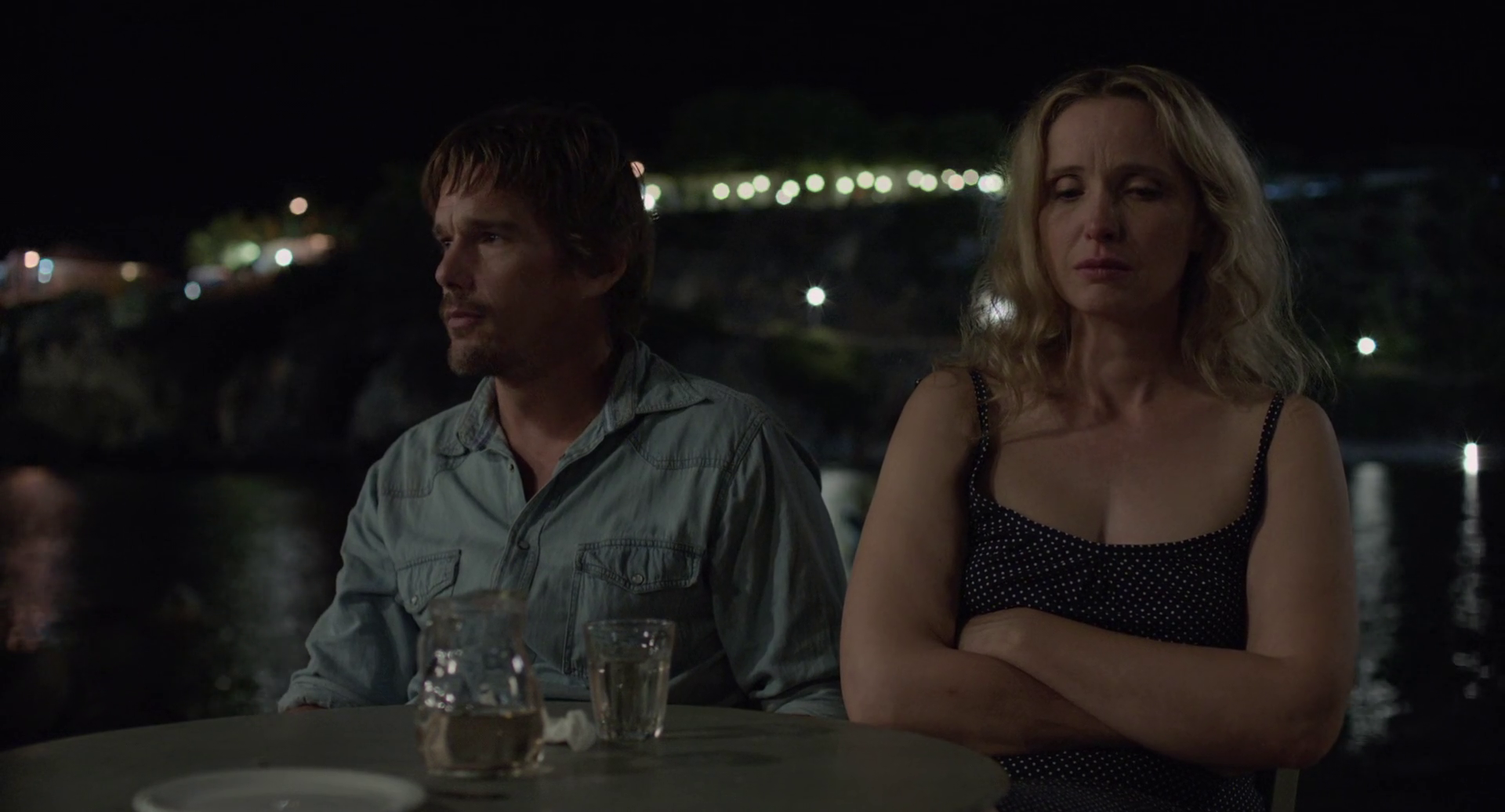
In the end, Celine does walk out on him. The last thing she says is that she doesn’t think she loves him any more. In a scene where they threw every dagger they could at each other, that one cuts the deepest.
Jesse is not done, though. In the final scene, he meets her at the cafe from earlier and pretends to be from the future.
That makes this fight feel singular. They might have fought before, but this doesn’t feel like business as usual, perhaps because the two of them so rarely get time alone together to hash out their many issues. Jesse playing this little game feels unique and new and it’s hard to tell if what Celine said to him is actually true.
In the end, what matters is his recognition that the Before trilogy is incomplete without this. The love of Sunrise was the ecstatic joy of one gorgeous night. In Sunset it’s fixing one of the great regrets of your life and getting a do-over. But in Midnight, this is what real romance actually is. For all their wonderful compatibilities, their ease in bouncing back and forth, even they aren’t immune from base human conflict.
By arriving via time travel, it matters that Jesse doesn’t try to put the toothpaste back in the tube. Not that he could (time travel is impossible), but accepting the fight for what it is and trying to move forward from this moment is impossibly mature. He doesn’t even pretend to go back to any time prior to the current moment. Instead, he tells Celine that even after all this vitriol he still accepts the relationship and wants to be in it.
To her credit, Celine plays along, though with the specter of everything hanging over them, it’s not clear they’re out of the woods yet.
Maybe they’ll never be clear of this. Maybe their next several decades is going to be fights and disagreements and not breaking up because they don’t want a Parent Trap situation to happen in the future. Maybe they break up.
But in the end, Linklater leaves the film in a place of bleak ambiguity, in the middle of the night, zooming out and leaving them to figure their shit out. It’s easy to look at it cynically, to see this as the first in a long series of moments until their inevitable breakup.
They don’t show it, though. If Linklater, Hawke, and Delpy wanted to do a breakup they would have made a fourth Before film a couple years ago. They’re probably afraid that in the future Jesse and Celine don’t end up together. It’s possible they don’t really have anywhere to go with this. This one movie paints a more vivid portrait of their lives than both of the other films, and this one just shows the tedium of the day to day.
Reacting to the ending comes down to worldview. I don’t think they break up. I like to live in a world where Jesse’s emotional maturity and Celine’s ability to grow can overcome any of these inevitable tiffs. But the truth of their story is that they already made the commitment to each other long ago. Before Linklater even gets to the two of them talking, he reveals that they have children. Just like Henry’s mother is always going to be in the picture, for so long as their children live, Jesse & Celine will be unable to fully separate from each other.
Relationships don’t have to be hopeless. Plenty of bad relationships go on far too long and plenty of good relationships give up way too soon. What they need is a foundation of compromise and accepted sacrifice.
And because of that, I dare say Celine & Jesse have a good one.