Martin Scorsese Is How Old? - The Wolf of Wall Street
By the time he made this debauched, wild ride of a movie, Martin Scorsese was already collecting social security checks...
At the age of 81, Martin Scorsese said this during press for Killers of the Flower Moon. Once again, he’d mixed his innate cinematic talent with decades of experience to create a another masterpiece in the twilight his career. It’s one of those great “late” works of art, where the fire of youth has given way to the wistful sage wisdom of a life well lived.
Rarely as consistent as early bursts of brilliance, late works can manifest as autobiographical (The Fabelmans), fantastical (Once Upon a Time In Hollywood), experimental (Akira Kurosawa’s Dreams), or regretful (Dickens’s Great Expectations). They might not always be good (or even consistent), but they’re always fascinating, compelling. Some creators never get there, but great ones (with enough success and when allowed to) do.
While Killers is the most obvious example of this in Scorsese’s career1, this has been an undercurrent in Scorsese’s work going back to at least Hugo. But where Hugo celebrated the early days of cinema, his followup The Wolf of Wall Street features retrospective fell into his hallmark patterns and motifs
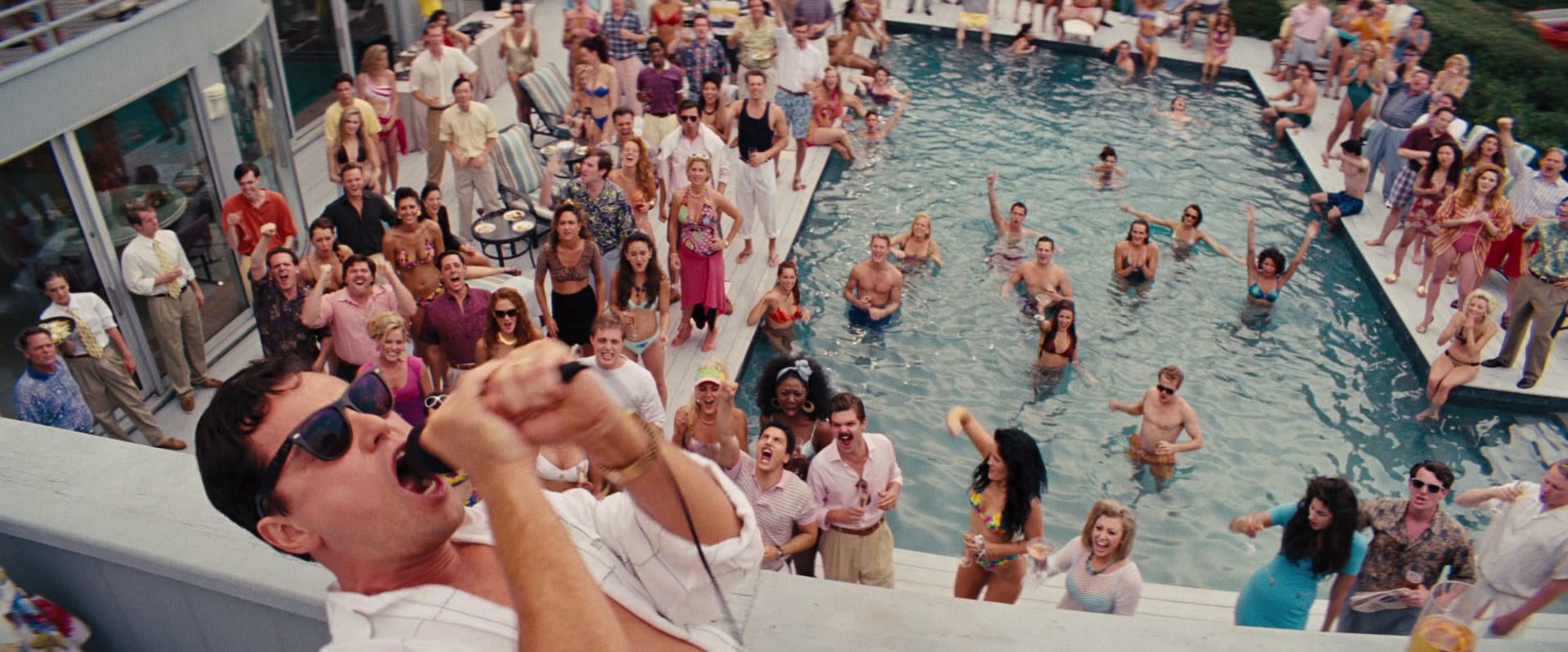
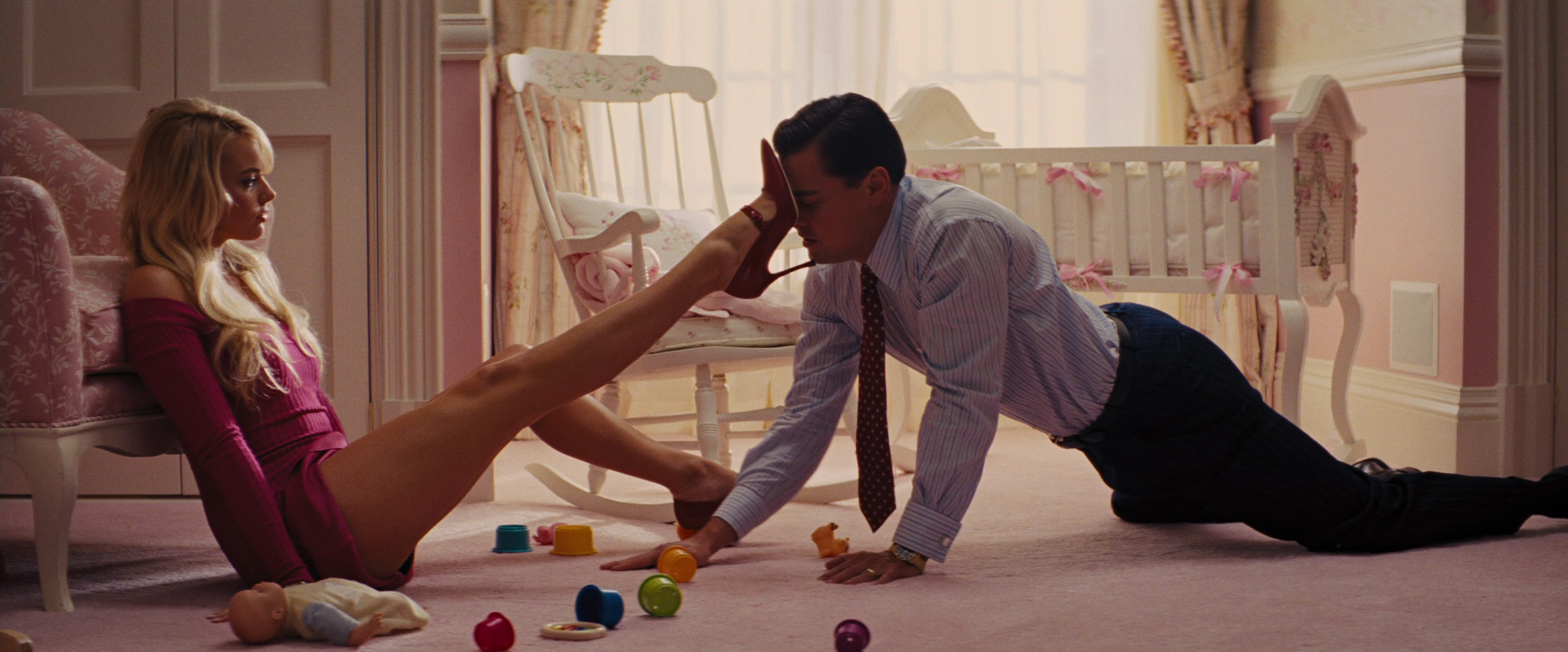
But there’s something… different about The Wolf of Wall Street and how it approaches its main character Jordan Belfort. The creep of Scorsese’s “I’m old” manifests in a film with the aesthetics of a man of much more youthful vigor. While this wasn’t the first Scorsese film to initially receive an NC-17 rating, it was different than the others. Taxi Driver might feature a child prostitute, but it along with Goodfellas and Casino all received theirs because of excessive violence. The Wolf of Wall Street opens with Jordan Belfort snorting cocaine out of a woman’s asshole. It only gets more depraved from there.
White Collar Goodfellas
More than any other of Scorsese’s films, it’s hard for The Wolf of Wall Street to escape the shadow of Goodfellas. Both center on young men autobiographically telling their life’s story, charting the glorious excess of the criminal activity that saw their ascent to glory and the subsequent collapse into obscurity. Throw in the colloquial narration and fourth wall breaking, and it’s almost like screenwriter Terrence Winter is doing his own riff on what’s become Scorsese’s signature film.
Where they differ is the worlds of the two leads. Ray Liotta’s Henry Hill valorizes his criminal lifestyle in Goodfellas, but ingratiating himself to the mafia’s world makes him an outcast on the fringes of society. As he says at the end of that movie:
“It was easy for all of us to disappear. My house was in my mother-in-law’s name. My cars were registered to my wife. My social security cards and driver’s licenses were phonies. I never voted. I never paid taxes. My birth certificate and my arrest sheet, that’s all you’d ever have to know I was alive.”
While this sounds like a deeply unpleasant reality, there is an allure to Hill’s contentment in living in those margins. When he interacts with the world, it’s like the gangsters in the movie all live on an island off the coast of the mainland, and they visit intermittently to acquire what they need before returning back to their life of depravity. The society that Henry lives in is one that has its own rules, own moral code, own law staying out of the law’s reach by behaving within its bounds as necessary. It’s misogynistic and violent and also self-sustaining. This closed ecosystem gives requires a level of responsibility and care to keep the feds away. You get pinched? Keep your mouth shut. Made men are off limits. Keep your shit clean. And on and on and on.
Jordan Belfort, on the other hand, thrives in the bounds of society. Sure, he’s engaging in financial fraud from basically his first day on the job, but it’s not like he super hides it. In fact, the hallmark of the movie is that Belfort himself is a genius at coming up with schemes that rip people off. But this flagrant disregard for the bounds of society is what lands him on the FBI’s radar. But when the feds come knocking, it’s not like he’s smart about it. Wealth and power make him feel invincible, like he can talk to the FBI without a lawyer present. He’s so completely clueless that he doesn’t seem to realize just how explicit Agent Denham read his very clear bribe until Denham asks him to repeat his words exactly, only this time in the presence of his colleague (who is now over Belfort’s shoulder).
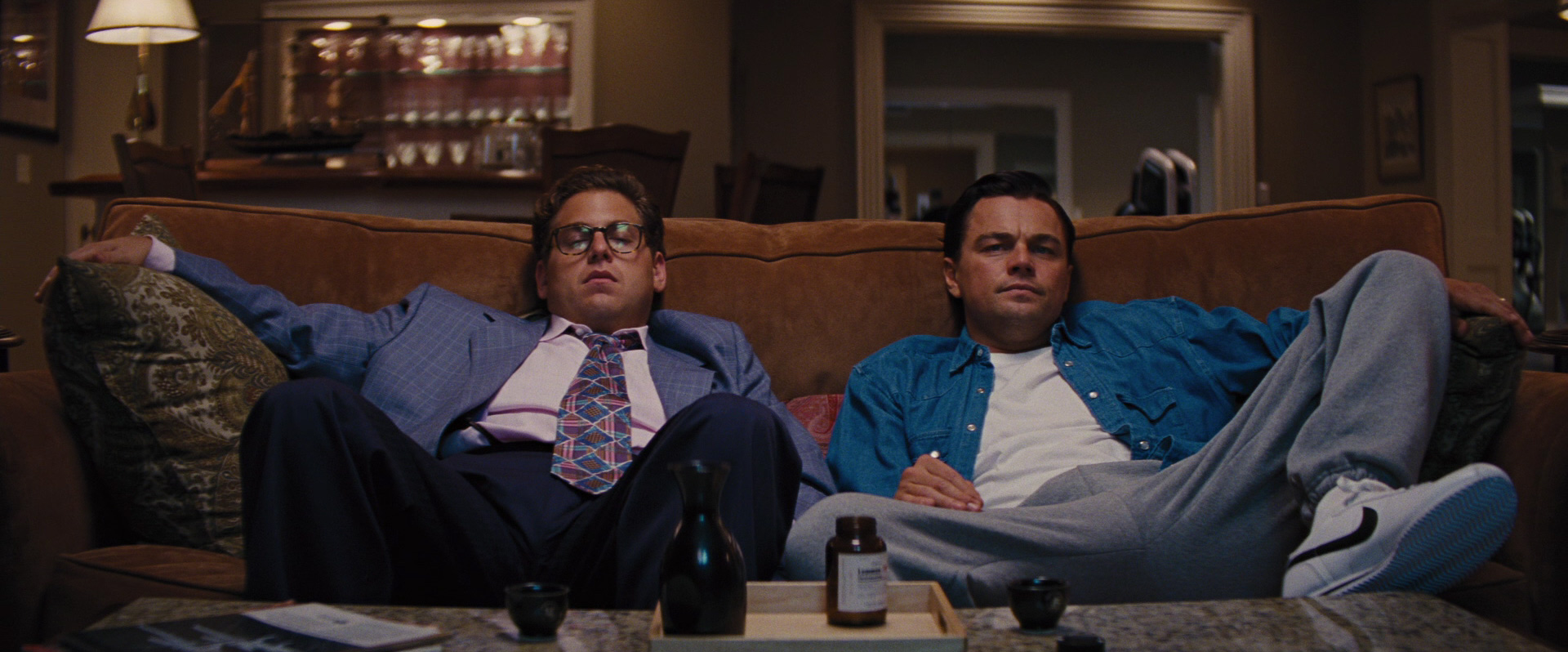
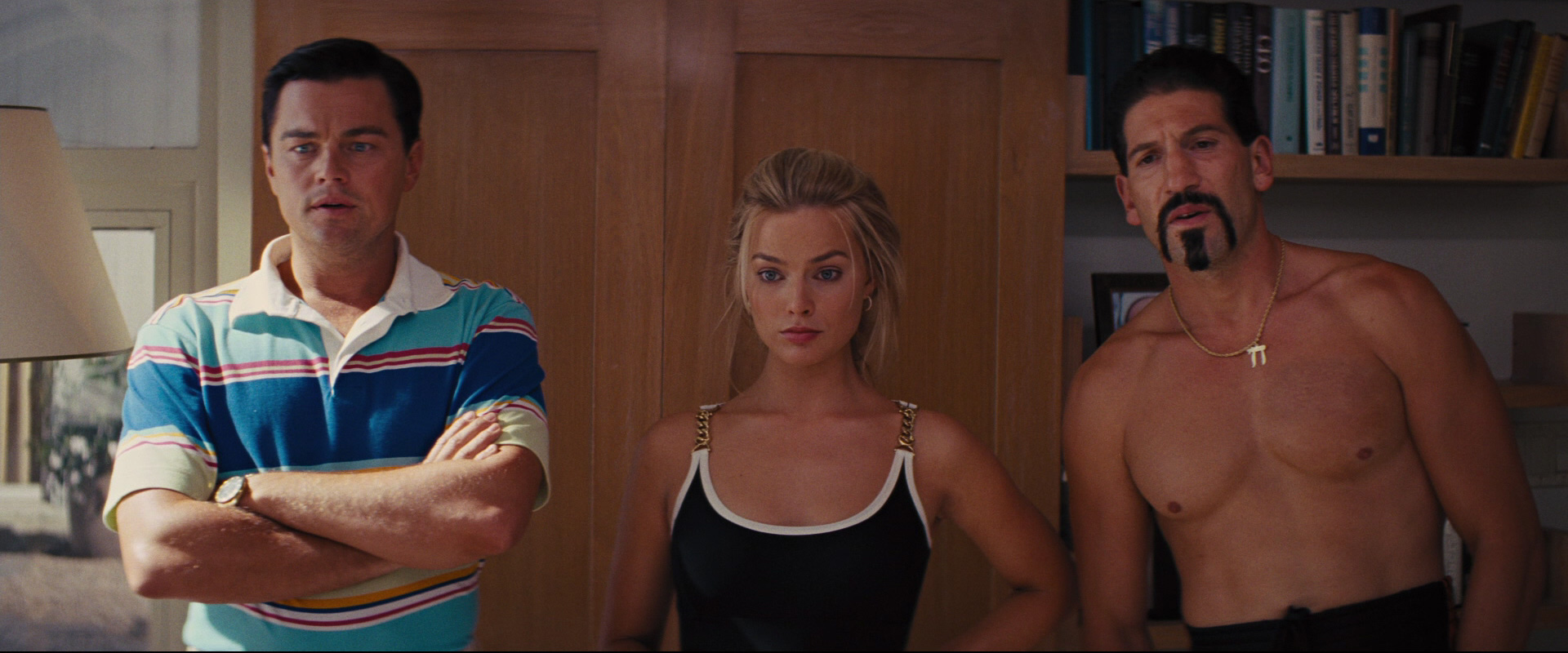
In fact, one of the defining features of the movie is just how stupid these characters are. The quaalude sequence is outrageously hilarious, but its underlying premise comes because Jordan Belfort is too much of a moron to realize that he shouldn’t ever be talking on his house phone about anything. He has to race home because Donnie calls the freaking Swiss banker on the Belfort landline and starts slurring his way through whatever nonsense is in his addled head. He’s lucky it’s completely unintelligible. It’s the height of arrogance to never think (even after his previous interaction with the FBI) that he should act with any level of discretion. He’s damn lucky Brad served his time instead of ratting out the whole operation.
But this is the point. Brad is a character who would be a bit player in Goodfellas. The code he holds to means accepting the costs that can incur from the benefits.
Scorsese’s superpower
Men who don’t fit into the traditional norms of society saturate Scorsese’s films. In most situations, this means his most transgressive films have earned him the most acclaim. But even in his more minor work like Alice Doesn’t Live Here Anymore, his unsparing view of spousal abuse is a harrowing standout sequence featuring toxic masculinity. Taxi Driver and Raging Bull center on deeply toxic men, emphasizing their use of violence to make up for their social failings. But there’s also The Last Temptation of Christ, which explores Jesus’s ostracization, torn as he is between his duty as a divine entity (dying for the sins of all mankind) and his compulsions as a human being (… just like… not wanting to die). Even his religious epics like Kundun and Silence cloak themselves in how belief drives members of religious orders to sacrifice themselves in the name of protecting innocent followers.
The Wolf of Wall Street, though, doesn’t explore violence or a moral duty/obligation or crises of faith. With all the money in the world Belfort doesn’t need to fight for territory like in Gangs of New York or kidnap a television star like in The King of Comedy. His vice becomes drugs, women, and an empire built on fraud.
Nonviolence might be the answer
Violent crime thrillers are always going to be Scorsese’s claim to fame, but that comports well with American ideals. From its birth in the Revolution to the caning of Charles Sumner to the use of force against the Civil Rights movement to the attack on the Capitol on January 6, there’s been a mass desensitization to violence as an aspect of America’s larger culture.
Many years ago, I showed my pre-teen cousins Star Wars, though there was a bit of a sticking point with Episode III. Their dad didn’t super trust the PG-13 rating and wanted to screen it himself to make sure there was no sex or anything in it. A fair question considering how liberal the PG-13 rating can be. But when I explained that most of the PG-13 in the movie was because of an atypical amount of upsetting violence and slaughter, he told me he wasn’t particularly worried about that. It was sexual content that he was trying to be careful of.
This isn’t unusual. American society seems to have no problem witnessing violence, but the second there’s sex of any kind it immediately becomes a whole thing. It’s an adage going back decades, but it says a lot about the quality of our values that people don’t bat an eye at same-sex shootings but can’t stand same-sex physical intimacy. Martin Scorsese built his entire career on pushing the bounds of what levels of violence his viewers would tolerate.
But here he comes as a septuagenarian Scorsese making a movie that involves some extremelly graphic non-violent adult content. Goodfellas, Casino, and The Departed might have featured drug use, but that’s nothing like the one scene where Belfort proudly lists off his daily drug regimen. Other Scorsese movies might have had nudity and sexual content, but that’s nothing like Margot Robbie doing multiple full-frontal nude scenes, the misogynistic depictions of the various prostitutes rolling around the offices of Stratton Oakmont, or a blitzed-out-of-his-mind Jonah Hill jerking off to Naomi at the party. Henry Hill slept around behind Karen’s back, but there’s such a flagrancy with which Jordan and his cohort cheat on their wives that it’s surprising Teresa doesn’t figure it out until she catches him literally on top of Naomi in the limo.
I still can’t wrap my head around the idea that a dude who’s collecting social security checks walked around the set of a major film production and directed naked actors like it’s the set of a Lars von Trier movie. He had to give notes to Leo on how to sexually assault a stewardess while Belfort’s cohort are all wasted on the plane. It must be funny but also deeply grotesque. The famous scene where Naomi denies Jordan sex is a whole mess of tones, blazing a trail that is funny, sexy, sad, and pathetic. Scorsese had to get in there and coach Robbie and DiCaprio in order to execute his vision.
While it seems like this might be out of left field, it’s just Scorsese applying his capacity to portray violence towards sex and drugs. It’s why he’s got such a breathtaking body of work. The man is utterly fearless in trying to capture the unsavoriness of the world and never blinks when it comes to the harsh reality therein. If The Wolf of Wall Street feels even more extreme than, say, Goodfellas, that’s because the subject matter indulges in sex (a cultural taboo) as opposed to normalized violence.
Casting judgment
But there’s another way Scorsese’s age plays a role here. Like with Killers of the Flower Moon, there is a sense of moral clarity with Jordan Belfort’s life that doesn’t apply to Henry Hill. So much of Goodfellas is about how excessive the life is but also in fetishizing the promise of what such a life could be. It’s hard and cruel, but the highs are excellent. The brotherhood is irreplaceable.
Yet Scorsese never portrays Jordan Belfort as anything other than a reckless, conceited egomaniac who thinks through nothing beyond his next scheme. If the movie revels in Belfort’s deprave excesses, it’s only because Belfort is bragging about how incredible his life was. At no point does Scorsese hold him up as some sort of beacon for a moral society. He might get to have sex with Naomi and marry her, but he’s absolutely nothing in bed. He fires prematurely the first time they have sex, and the last time they have sex it’s a pathetic display of a needy man who’s completely lost control of his life. And then she asks for a divorce and he goes and shreds a pillow so he can sneak a few hits of some emergency cocaine. It’s the showcase of a total loser.
There are moments of humanity, like when his rescue plane explodes in the sky or when he warns Donnie that he’s wearing a wire. These, though, don’t make up for a dude who values money above all else. In Goodfellas, the dudes at the center revel in the status of their life itself. That importance and power is a thing money can’t buy. Jordan can act like he has that, but it’s all built on ephemeral liquidity. Jordan can make more money than god (the most incendiary scheme makes him $22 million in three hours), and that capacity adds to his air of invincibility.
But there’s more to life than money. Jordan has a couple friendships, but they’re all sycophants who constantly tell him how cool he is. He has a marriage, but that ends when Naomi’s had enough (and she also rarely seems to have tons of respect for him). In the end, the Feds seize his house, his records… And the last thing we see is Jordan bouncing back by working as a life coach.
There’s a sucker born every minute
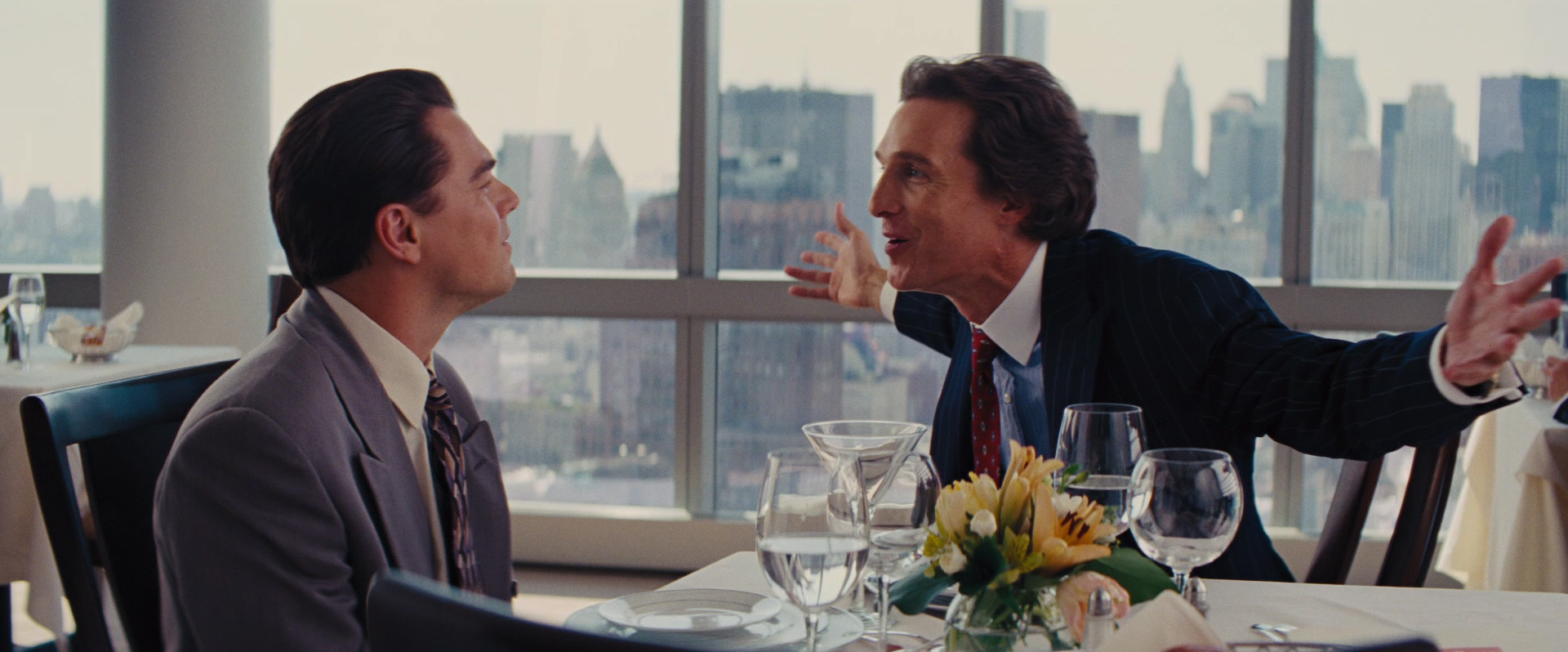
For all of this movie’s glorious excess, the visceral thrill of memorable moments like the McConaughey tribal thump, the rampant drug use, the Quaaludes sequence, Jonah Hill jerking off, the endless parade of nudity, the FBI meeting on Jordan’s yacht… it’s that last shot that really leaves me thinking.
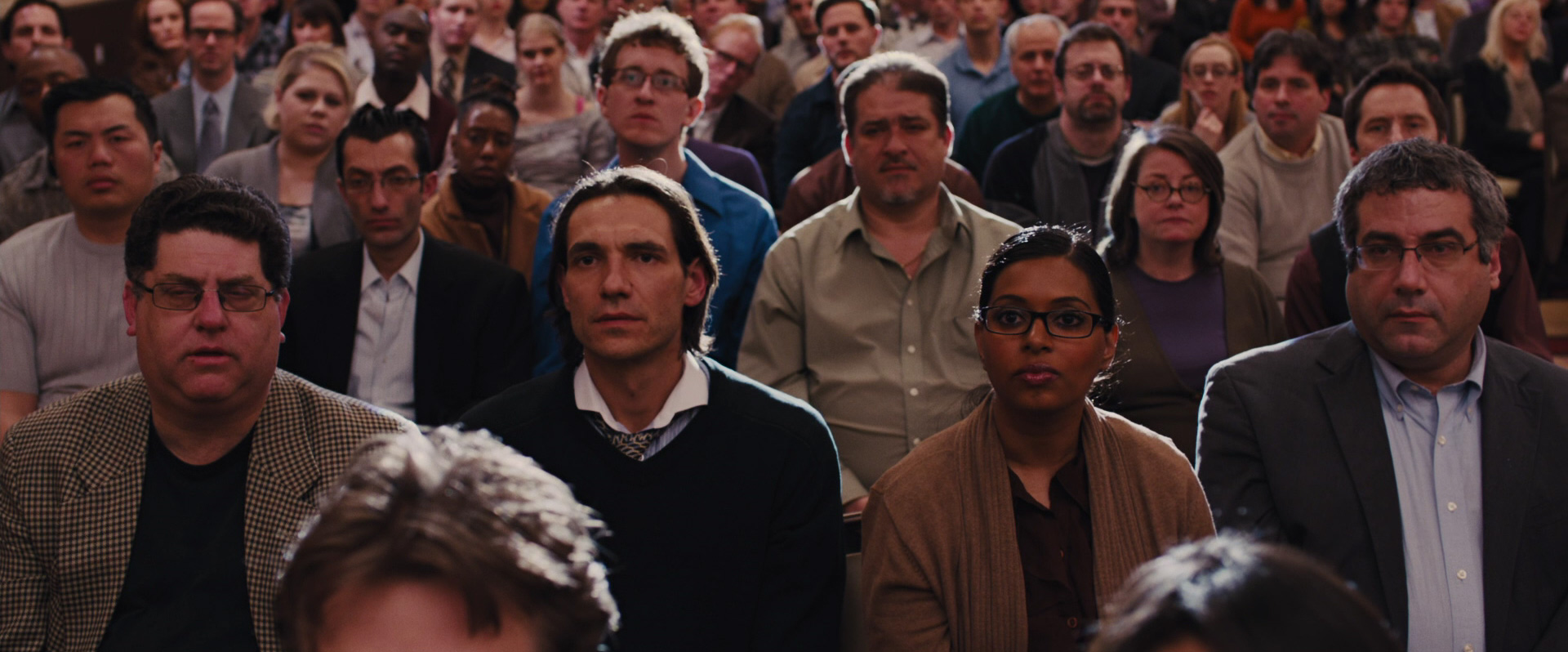
As Jordan begins his seminar in the last scene, he calls back to a moment early in the movie where he explains what it takes to sell a pen… He tells an audience member to do it to him. When that person fails he moves to the next. And then Scorsese pans across to the next person and the next before finally panning up to the larger audience. It’s very quiet, but in a movie that spends its entire run time rocking out, that silence has stayed in my head for over a decade.
As Scorsese’s career has matured into “old master” territory", he’s grown more and more comfortable leaving his movies on elliptical thoughts. Most notably, Silence ends on an image that reframes the entire third act and makes a definitive statement about the main character and who he was even when he pretended he was not. It might not be totally surprising, but its potency hits as a devastating capstone to an extremely depressing film. While not the final image, Scorsese’s cameo in Killers of the Flower Moon sucker punches to the entire film, commenting not just on the underserving of Mollie’s legacy but also his own limitations. He might not be the best person to tell this story, but his awareness of that fact gives a permission structure to note where he lets the story down.
In the end of Wolf of Wall Street, Scorsese makes a commentary on the exact movie he’s making. Jordan Belfort and his cohort might live glamorous lives and their station might be one the audience envies, but it’s not like he’s someone society should emulate. And yet as he pans to the audience he shows all the people happily sitting in Belfort’s new seminar. Based on the preceding three hours of film, there is a question of just how hard Belfort is about to fleece these people. More damingly, here comes an entire legion of people who will open themselves up to such a fleecing if it means just a taste of his “success.”
Goodfellas holds a special place in the film canon and will always be one of Scorsese’s most seminal films. And… hell. I prefer Goodfellas to The Wolf of Wall Street (though the latter film is very high on my overall Scorsese rankings), but the thematic point of his gangster epic is nowhere near as sublime as his ponderings of America via white collar financial crimes.
In 2013, the country was still slowly recovering from the Great Recession. Its root cause five years earlier was a direct result of Wall Street’s insatiable greed. That ethos might have resulted in Jordan Belfort’s conviction, but his actual schemes had nothing to do with the 2008 crash. Likewise, his book (which came out the year before the mortgage crisis) wasn’t exactly material either. Yet the spectre of a mass banking collapse hangs over the entire film, and Scorsese holds within the film a tension of “fuck these people” and “but isn’t this the American dream?”
And there at the end is the audience, lapping up this story, a mirror of the viewers in the theater doing the exact same thing. And those audiences went. The Wolf of Wall Street is the biggest box office hit of Martin Scorsese’s career, bringing in people to witness how Belfort and his employees exploited a broken financial system for almost a decade. He scammed people for hundreds of millions of dollars and in the end when the Feds nail him with an airtight case he gets… what? Three years? And he gets to play tennis? And then he goes on to have a prolific career doing high paying speaking tours? And he writes a best selling book?
Meanwhile the end of Goodfellas is Henry Hill lamenting that he’s going to spend the rest of his life in anonymity, his free ride over forever. Now he’s just a bum.
Thumb on the pulse
In the real world, drug dealers go to prison for years and years and years and then can have tremendous difficulty re-assimilating into society. Sell on the corner on one bad day and that can be a decade. And in that prison there’s no tennis.
All of this is the work of a profound master. Using his vast powers, he makes a movie that is nihilistic without feeling hopeless, hedonistic without feeling gratuitous or excessive. Like with the rest of his filmography, Scorsese makes a movie that is insanely watchable. I spent the entire time writing this wishing I’d just put it on in the background. Almost in spite of his age, Scorsese made a movie that feels young and fresh and exciting. But this is what happens when he’s constantly engaging with himself and allowed himself to evolve and grow into an even better filmmaker.
While this movie might masquerade as a film about Jordan Belfort’s capacity to be something insane, what it really is is a showcase for what it’s like when one of the greatest directors of all time allows himself to expand and grow and make genius works long after the star of a lesser artist would have faded. It’s that fearlessness and humility that makes him one of the greatest directors of all time. It allows him to open his veins and pour his soul onto celluloid.
At this point he’s correct that the days where he’s capable of making movies are rapidly diminishing. But long before that he decided he wasn’t going to waste any time. Based on his work over the last two decades, it’s safe to say that he has not.
And now the question isn’t what a late-Scorsese masterpiece would look like, but rather just how many of its kind does he have left?
Could make the argument The Irishman fits this bill, but Killers is much a straight up masterpiece while that earlier film is just a fantastic movie. ↩