Jan 2026 Check-in
Mrs. Landingham... what's next?
And so it’s a new year.
There’s a thing my partner’s therapist said once (not to me, obvi) about how the deadlines and goals we set for ourselves are arbitrary. It’s not that she’s saying we shouldn’t work towards them, but rather that we should give ourselves grace when we’re behind on things.
The last two weeks of 2025 consisted of me pulling together and making the Top 250 Movies list. It was a lot of writing (so much writing) and what time wasn’t writing was a lot of me thinking about the movies I had yet to talk about and shadow writing them while talking to other people. It meant being not nearly as present over the holiday as I should have been. I should have probably been nicer to myself and allowed the list to bleed over into 2026 a bit more, but the arbitrary Dec 31 deadline really does have a good amount of power. We have to have page-turn days, and keeping a consistent one every year means I busted my ass to hit a deadline I missed by about 17 hours.
And for all of the hours and hours and hours of work I put into that 250, pulling together the full list of considerations, going over it again and again, culling where necessary, adding as I realized something wasn’t there… I didn’t realize until Saturday morning that I completely left off Wong Kar-wai’s In the Mood for Love. Did I get Chungking Express in the Honorable Mentions? I sure did. Is 2046 on the list because it’s drafting off my love for the that other masterpiece? You bet. Did I even write the Chungking Express entry assuming In the Mood For Love was earlier and being so confident about it I never bothered to double check? Definitely.
But for all the kvetching it sounds like I’m doing, it’s not bothering me. Making a list (especially one as long as that one) is always going to be complex. Hell, the entire reason I made it is because there were like a hundred movies I left off the previous Top 100 that probably would have been there had I remembered them. And it made that list feel incomplete. This time I know there’s a movie missing from the Top 250 simply because it didn’t make it in the ranking engine. It means my list is already imperfect and I’ll have to make another one some time in the future. In the meantime we’ll see what other movies come to mind that inspire more “oh this list is incomplete.”
I’m being graceful to myself, though. Having all of those pieces done has been its own reward and I’m still remarkably pleased with the list I’ve put together. It’s 250 Films I absolutely love. Just… pretend like In the Mood for Love is on there probably between 51-100 or so.
After posting, I let the first few days of the year be mostly things I put to the side while I was working on those. While I wanted to be fully caught up on listening to Blank Check by the release of Fire & Ash and then by the end of the year, that didn’t happen. I’m in mid-October and should(?) catch up to weekly by the end of the month. It’s a little frustrating, but with the end in sight I’m very content with the time it’s taken to get here. It’s a lot of episodes, all of them are quite long, and I can’t just see the light at the end of the tunnel; the lanterns are on as we approach the station. Very much looking forward to that and adding it to my weekly podcast rotation. Gah I can’t wait.
I edited the new episode of our new Sandee Boyz podcast about Isles of the Emberdark (out next week) and got a little more work done on the Stormlight RPG. More on this in an upcoming post, I am sure. I went to four movies in four days (thank you A-List, but that locked me out of the movies until today; c’est la) and even managed to start Deadhouse Gates on my run this week, getting through the prologue and first two chapters. Already, nature is healing.
As for the rest of this month, I’m still cobbling together what to write about this year. I want to pull away from nonstop movie reviews and get a bit more general culture topics or whatever. Of course I say that, and I’m already making plans for a series on the films of Christopher Nolan as part of prep for The Odyssey. And there’s also a number of theater films I’m seeing this month (including No Other Choice, 28 Years Later: The Bone Temple, Send Help, and even a screening of A Woman Under the Influence as part of the Criterion Challenge). We’ll see what ends up worthy of discussion.
I know in the wake of trying to put movies on the backburner a bit, I would like to talk about television episodes. Maybe like as a rotating topic of whatever great ep of TV happened in a given week. I’ve been toying with weekly episode reviews of The Pitt as the show’s big return just happened and it’s the hottest ticket in town. Wouldn’t mind having that for a show or two that fit into that regardless. Just needs to be something that I find interesting enough to write about week after week.
Anyways. Here’s a quick recap of three films I saw last weekend when I was finally able to put the Top 250 in the rearview.
The Housemaid
In 2018, director Paul Feig put out A Simple Favor. Starring Anna Kendrick and Blake Lively, it was a departure for a director who’d spent the preceding decade making his name with a bunch of female-led comedies. Bridesmaids was a phenomenon the year it came out, but The Heat, Spy, and Ghostbusters are all action comedies. They’re pretty good. No complaints.
But A Simple Favor wasn’t an action comedy. Instead it was a comic thriller, functioning much more as a calling card for his control over tone and tension. Since then, Feig has done a couple of other movies (several comedies) and returned early last year with Another Simple Favor (which I haven’t gotten around to yet). But for the holiday season, Feig made an adaptation of Frieda McFadden’s best seller The Housemaid, which felt like a cousin to my favorite movie of his.
It certainly fits in there, with Sydney Sweeney playing a young woman looking for a job and then finding herself hired as a full-time live-in nanny for a rich white socialite family who live just outside of NYC. There’s lots of twists and developments, and a lot of it is the tense eerie nightmare that Feig (and McFadden) want the film to be. What makes it so good, though, is that it really doesn’t give a shit about following a guide to be good. It’s a movie where Feig trusts the source text and makes a movie that doesn’t make perfect sense, but that keeps the audience in hand for the entire runtime. It wasn’t as good as A Simple Favor but it did for me exactly what I wanted it to.
Honestly, if Paul Feig stayed in the mode of just making batshit crazy thrillers about rich white women who live in the suburbs, I would be beyond happy. I’ll watch every one.
Marty Supreme
This is a buzzy new release from one-half of the Safdie brothers. They recently split as a team to work on their own solo projects. The Benny Safdie-directed The Smashing Machine came out last year (to mixed reviews), while the Josh Safdie-directed Marty Supreme came out right at Christmas in a slot for (and looking like) the sort of late-year release that tries to get in under the wire for an awards season push. With Timothee Chalamet in the lead role, it’s a solid hit and will probably get a number of nominations and Chalamet might even win the Oscar (though, we’ll see how the next few weeks shake out).
Following the story of fictional character Marty Mauser, it tells the story of a young table tennis player in the early 1950s, who works his ass off to…. well… all sorts of things. He wants to bring the sport to the America’s mainstream. He also definitely wants to be the best. And he also wants to be rich. And he also wants to be famous. And indulgent. And all sorts of stuff. Dude is complicated.
What makes the film work so well is the portrait of Marty as a compulsive liar who basically bullshits his way through life until he hits the sorts of walls that he can’t fake his way through. It’s very much like Uncut Gems (also a Safdie film) in that respect, though in that film Adam Sandler’s Howard Ratner is already deep in his many holes as that movie starts. Marty, though, is a con artist who really does have talent and skill in his chosen profession, and so much of the joy of the movie is watching all of his outstanding debts come to call.
It’s a tremendous performance for Chalamet, who is really one of the great actors his generation. Marty is an asshole, schmuck, and other similar terms, but if the soul of drama is creating characters who are engaging (rather than characters the audience “likes”), then Chalamet does a tremendous job imbuing every single scene with Marty’s drive and ambition. The audience knows what Marty wants at all times, and is very aware of the stakes of him not getting it.
This certainly isn’t a film for everybody, but it’s one that I’ve turned over and over in my head since I saw it last weekend and I’m sure when I revisit it I’ll like it even more.
Is This Thing On?
Finally, the latest Bradley Cooper movie…
To be perfectly honest, the only reason I went out to see this is because it’s a Blank Check movie they covered last week (which I’m excited to listen to soon!).
A lot of this hangup is on my end. I didn’t like either A Star is Born or Maestro, and a lot of that comes from an existing image of Bradley Cooper I can’t really shake. He’s not a bad actor, but he’s come to represent a sort of… masculinity that’s turns me off.
To briefly sidebar with a wild tangent that will pay off in a few paragraphs, writer/director Cameron Crowe’s first four leading men (setting Singles aside) were John Cusak (Say Anything), Tom Cruise (Jerry Maguire & Vanilla Sky), Patrick Fugit (Almost Famous), and Orlando Bloom (Elizabethtown). All four of those actors (and especially in those performances) don’t exude a sort of… macho masculinity. Crowe (being a male writer/director) has a bit of a blind spot when it comes to his male-centric vision of the world, and by the time he gets to We Bought a Zoo even the soulfulness of Matt Damon as a single dad doing his best can’t avoid the big male energy coming off of his character.
In Aloha, Bradley Cooper exacerbates this.
Cooper has been around for decades, dating back to a supporting role in Wet Hot American Summer and the first two seasons of Alias. His big breakout, though, was in early 00s comedy films, playing Rachel McAdams’s beyond-douchebag fiancé in Wedding Crashers before his big big breakout in The Hangover movies. His first Oscar nominations came from his collaborations with David O. Russell (Silver Linings Playbook, American Hustle), and he was the avatar of a manly American hero dude in Clint Eastwood’s American Sniper (which also got him Oscar noms). By the time he’s in Aloha, he’s come to represent this extremely “bro” brand of masculinity that is (quite frankly) a massive turnoff. I don’t know what it would take to shake it off him at this point.
Once he moved into directing, that energy transmuted. Cooper himself has always wanted to be a director, and he certainly has talent for it. But there is a flavor that comes with his movies that feel like he’s gunning for Oscars. Which is fine. People can want awards. But A Star Is Born and Maestro are both terribly dramatic, feel like Oscar bait, and (unfortunately for him) contain starring roles for himself which underline that hunger. Add in that A Star Is Born is about one of the most tortured/toxic men imaginable (and that movie is far more Jackson Maine’s story than it is Ally’s) and he has Sam Elliot for a brother and like… yeah. All that bro energy is there.
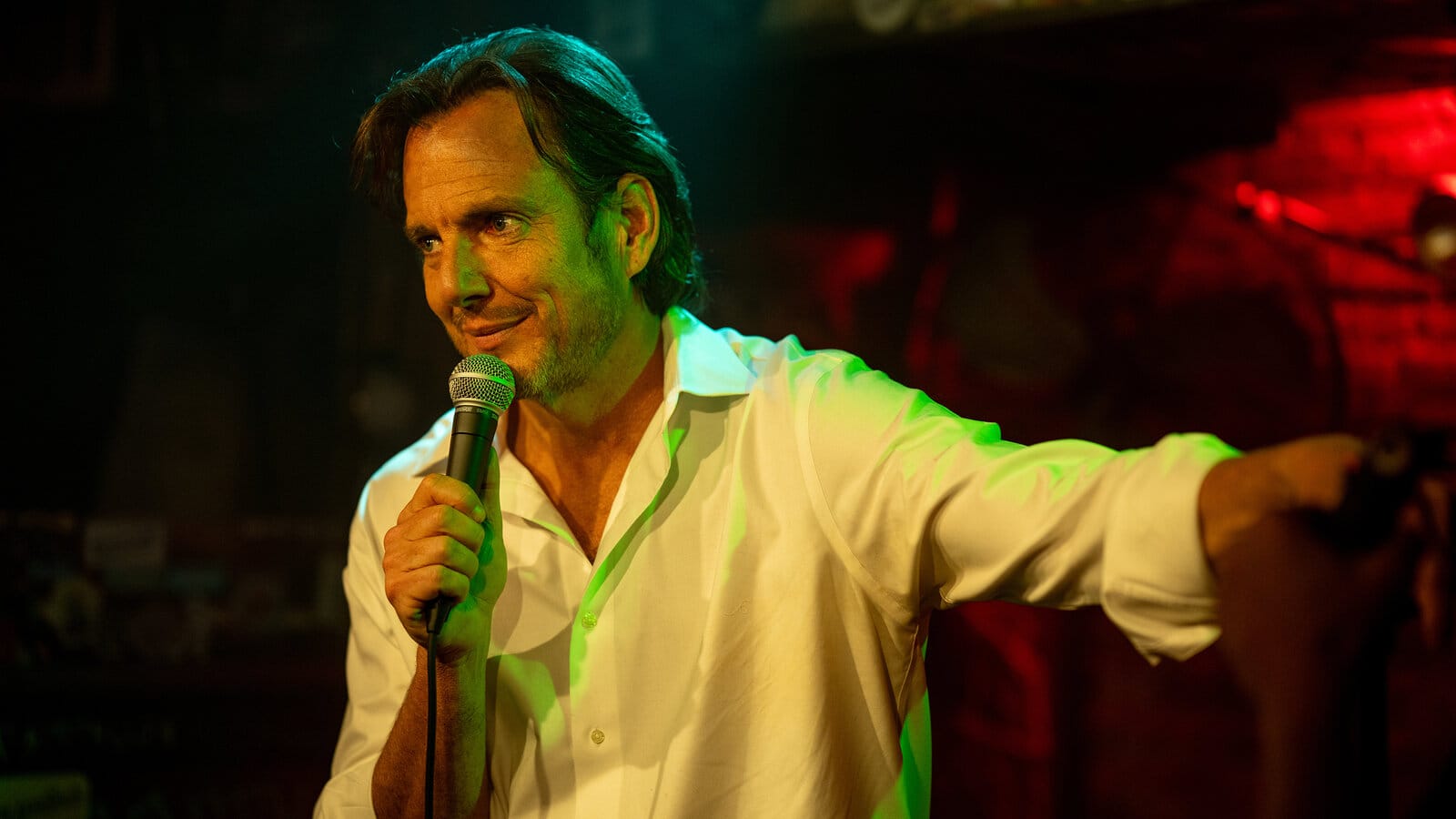
His latest film, Is This Thing On?, tries for something different. He casts Will Arnett in the starring role and puts him opposite Laura Dern. The movie explores the relationship between their two characters as they navigate their recent separation and the beginning of their imminent divorce. The meat of the actual premise is about Arnett’s character slipping into standup comedy by going to open mic nights and talking about his current mental/emotional state & life.
Cooper casts himself in a supporting role as the dumbest, most arrogant space cadet wannabe actor ever. Pure comic relief. Despite only appearing in only a few scenes (and surprising no one) he’s very, very funny. Every second on screen during my showing there was at least one person in the audience laughing. But he also plays a key role by one half of a couple that mirrors the Arnett/Dern relationship. The strained marriage between him and his wife (Andra Day) reflects and comments on the main couple and their “giving up”. It also provides a path forward for them as the film reaches its final act.
Meanwhile, any director who’s been in the conversation for Best Director (or who has directed a film nominated for Best Picture) is going to garner at least some Awards interest for anything they release. Especially when his first movie was a remake of a classic, star-defining vehicle with Lady Gaga as the lead; the second was a biopic about a legendary gay composer where the first act is entirely in black and white. Is This Thing On? was always going to have the rep. Putting it out in the last week of December only adds to it.
I’ve been wrestling with this film all week. I don’t want to be a hater and come down hard on Bradley Cooper simply because I don’t like what Hollywood pigeonholed him into for a decade and a half. It’s not fair to walk into a movie expecting to not like it, though the initial buzz that his third directing at-bat didn’t work helped lower my expectations.
The thing is… while it’s not a good movie, at least some of its collapse is under the weight of expectation. The second Bradley Cooper made something that didn’t earn at least some Awards attention, it would be a disappointment. And… that’s what this is.
If this was Cooper’s first movie, though, and this were his opportunity to work out all the jitters of things that don’t work in a movie, it would probably skate by relatively unnoticed. This is far more intimate, far less flashy, and even more personal than the other pieces. It feels like a first film (in a good way). But that also means it just… doesn’t work.
There are bits that do. The divorce Arnett’s character (Alex) is going through with Laura Dern’s (Tess) feels like it comes from a real emotional place. Not understanding where things went wrong and trying to figure it out becomes the driving force of the film. There’s a confusion where Tess and Alex share the lingering feelings for each other given their long marriage/time together and that hasn’t abated just because Alex has moved into his own apartment. They’re hard to turn off, and Cooper really does a lot of work to dramatize the fuzzy boundaries of their relationship as they build this new reality for themselves.
But… because of that lack of crystal clear picture, it’s really hard to get a grasp about why they broke up in the first place. The only time this happens is in a scene towards the end where Tess and Alex stay up late at a beach house, where their rerospective on what went wrong devolves into an unconventional fight that shows what it must have been like towards the end. It’s interesting to see, especially after Cooper has very specifically kept this level of intimacy away from the audience until then. They get angry at each other, frustrated. They call each other on their bullshit. And it’s easy to see why the two reached a point where they couldn’t do it anymore. Their unhappiness doesn’t seem to be with each other so much as what their relationship has eventually brought them to. Their separation wasn’t easy, but it seems to have come from a place of them reaching an endpoint of not knowing what to do with each other. It was the only path forward.
This is extremely hard to dramatize, and the negative space of their relationship is a hell of a thing to attempt. I respect the attempt, and Arnett really does dial into the character to show his emotional turmoil. Dern, as always, is fabulous.
There’s a problem with all of this, though.
What the movie starts with is the premise that these two have separated. It’s a big step, one the film begins with already having happened. Alex might find it devastating, but Tess seems quite at peace with it. Any level of backsliding on their separation feels like character regression rather than development. As they start to weave back into each other’s life, each development comes with a sense of “hey maybe this is a bad idea”.
That said, while the emotional core is something that I can at least mostly parse (though I think it comes out like a deflated souffle), the problem becomes the actual framing device: in which Alex randomly signs up for an open mic night (because he doesn’t want to pay a cover) and that ends up becoming an outlet for his emotional turmoil. It’s not… a horrible idea. But it’s also simply not possible to convincingly pull off in a two hour movie, especially when so much of the movie is about Alex and Tess working with and without each other. The dude is in his 40s, and he definitely works hard at being good on stage, but there’s not really any moments where he’s undergoing any challenge at it. He never bombs. At a certain point the stand-up sets feel like mid-movie Jerry Seinfeld sets.
It feels like it’s there to give the film a narrative engine (so he isn’t just wandering around aimlessly) and a place for him to express the complicated feelings going through his head. Cooper even ups the intimacy by making sure all of these bits on stage feature tight shots of Arnett, almost claustrophobic as we get into the character’s headspace. He doesn’t give a lot of attention to the audience. It’s the right choice even though it does make these scenes all feel very similar. From his first set (which is awkward) to his triumphant call-up on a regular comedy night (which he crushes) to the last one we see (where he is in his darkest, angriest place) there’s no sense of progression or growth for the character with regards to this hobby of his.
I can already hear the complaint from comics everywhere who look at the process and think about the years it took for them to be as good as he is basically immediately and think it’s a disingenuous representation of the medium. And they’re right. Alex’s power is in his channeling the raw emotion of his experience and fearlessly conveying it to the Comedy Cellar’s audience. It’s certainly compelling, but it’s not… craft. It’s not… improvement. The film also uses the sets to advance the plot, where people from his life see him on stage and then speak to him after about how that affected them. Without spoiling, the biggest of these moments (when they call him in to fill 10 minutes, his first time not as an open mic guy) is really strange in that it basically sets off everything else that happens in the film. There’s also a different moment earlier where one of the comedians who seems to like him/his work propositions him and they end up sleeping together. That’s believable, but in tandem with that later moment adds to a weird wish fulfillment fantasy of “he’s so funny that…”. Using sex like this is… not the best look, especially for a dude with whom I’m trying to separate out his egotistical/male gazey aspects from his artistic persona.
There are good choices. They mention that Alex is in finance but they never go into it beyond that. His job is exists entirely in the abstract, completely separate from his stand-up hobby and family life. Tess, on the other hand, gets that professional aspect. She was an Olympic athlete, and as that faded she transitioned into a maternal family role. That loss of identity became a major impetus in their estrangement. Seeing her come into the next act of her professional career is thrilling.
But mostly… Is This Thing On? suffers from that malaise of a nebulous conception of world of these characters and how it works. It makes a lot of attempts to paint a picture, and I see what Cooper is going for. But there is a point (especially in the back half) where the movie starts taking leaps that it doesn’t quite earn. That might be the script (it probably is) or the directing (which… it has to be at least somewhat) or the performances not going big enough to justify the smallness of the changes. Whatever it is, I’m at least glad I watched it if for no other reason than it justified basically a full-length review in what was supposed to be a quick check-in.
And also, seriously, what was that “Amazing Grace” scene?
Coming Soon…
Looking ahead, should be a great month of posts. There’s things I should still write about w/r/t the most recent season of Survivor. The Traitors is back (and it’s already great!).
But I’ll have a review of the first episode of The Pitt out over the weekend. Next week should be a podcast about Isles of the Emberdark, a discussion of the most recent season of The Diplomat, and maybe even something about Pluribus. Let’s see what happens.
Thanks as always for reading! See you on the ‘stack!