In the Shadow of Greatness - To Kill A Mockingbird
A cinematic translation of the 20th Century's most-read book
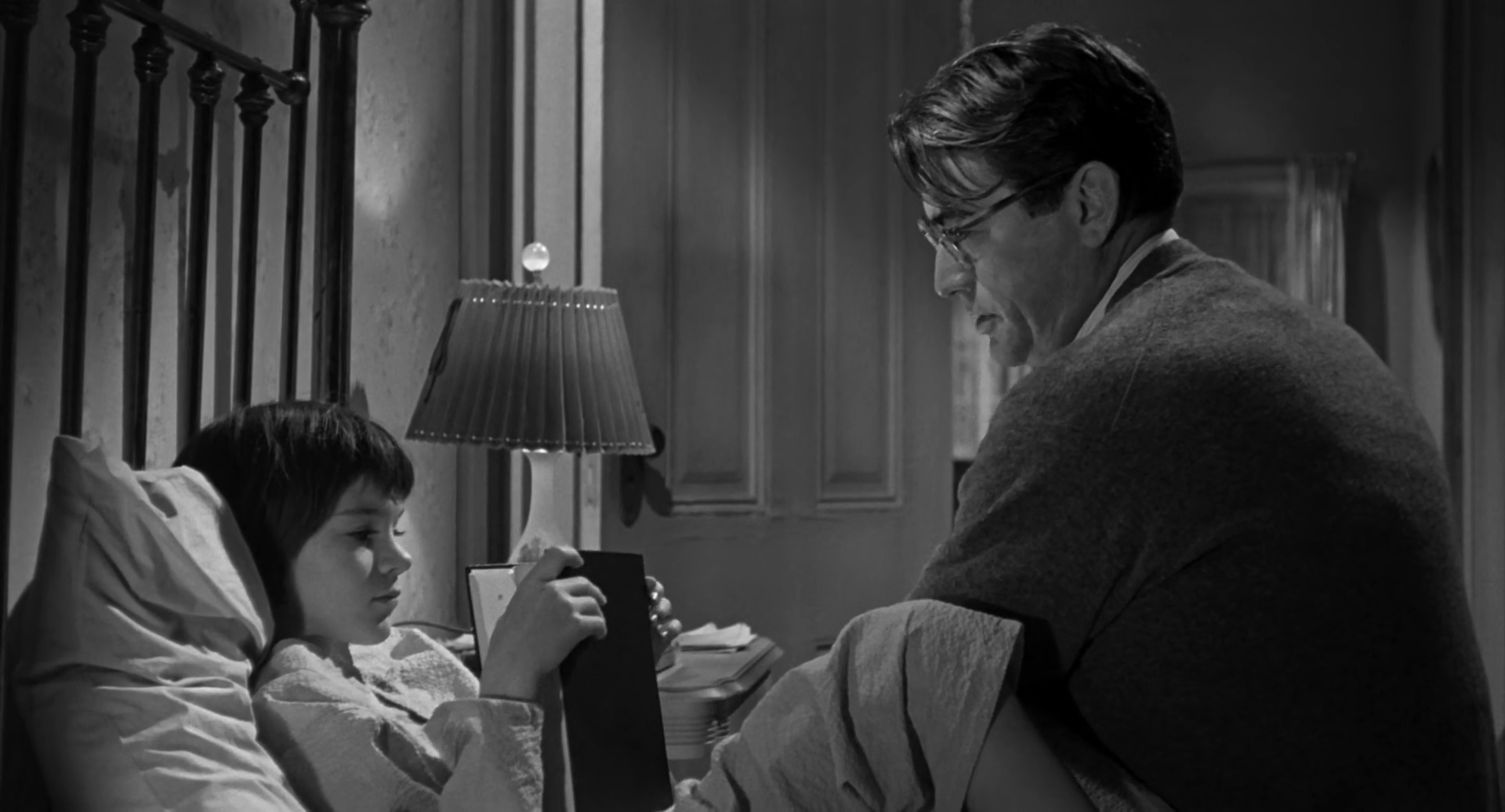
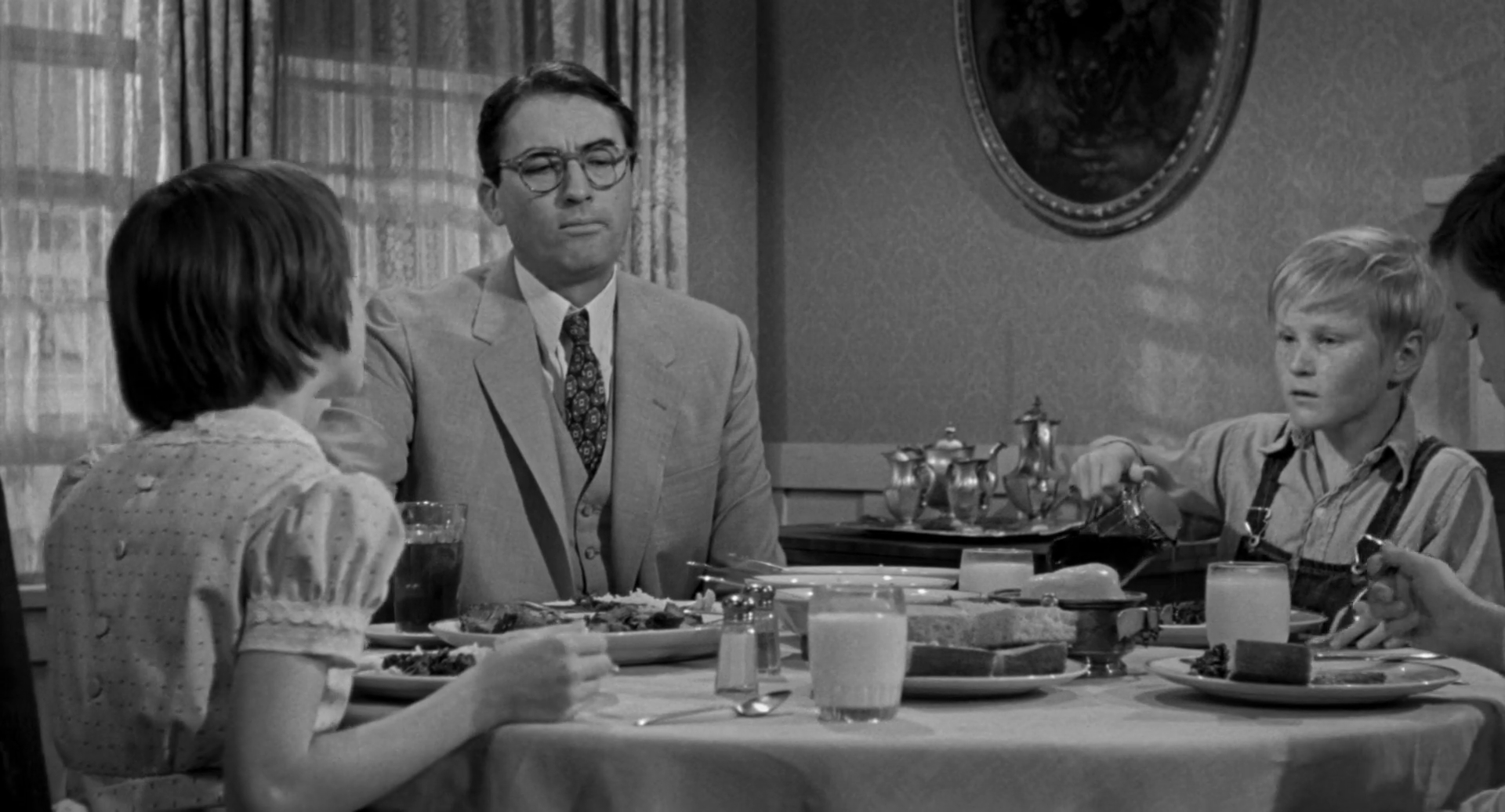
Coming just two years after Harper Lee’s seminal novel, Robert Mulligan’s 1962 film adaptation of To Kill A Mockingbird became an instant classic, scooping up a bunch of Academy Award nominations and earning a handful of wins. At the center of the experience sat its two lead performances: Mary Bedham as the young and rambunctious Scout and Gregory Peck as her upstanding father Atticus Finch. By the 90s, it had cemented itself as a fixture in American cinema, regularly appearing on any relevant annual list put together by the American Film Institute.
Enshrinement does wonders for a reputation.
More than half a century later, the book continues to be a best seller and one of the most popular texts taught in high school. Lee’s depiction of the Jim Crow era South of the Great Depression helps teach children about prejudice, racism, class divides, white supremacy and does so by wrapping itself in a story of youth, childhood, and small town adventure.
If it feels like an exception is coming, well…
Classics like To Kill A Mockingbird are exceptionally rare. That book is the sort of story that only comes around a few times per generation. It makes sense that Hollywood wanted to capitalize on the book’s popularity and put it into production more or less immediately. Hell, Peck’s Atticus Finch more or less justifies the entire endeavor. And yet, there is something that makes the movie feel incomplete. The adaptation would not exist without the novel, but more damningly it functionally cannot exist without the novel. The adaptation is too direct, translating the page to the screen with all the fealty such a text demands. While welcome, watching To Kill A Mockingbird leaves an all-too-familiar viewing experience, where the entire run time feels like a waste when the opportunity to read the book itself is right there.
In such a paradigm, To Kill A Mockingbird has to fight even harder to justify its existence. There are times where it doesn’t feel like it can.
A right to exist
An oft-refrain in casual criticism is the argument that some low status piece of media “is better than it has any right to be.” It’s a silly claim. No idea or narrative should have an upper limit to the quality that it can possibly achieve.
Considering a piece of art and it’s “right to exist” (or being “better than it has any right to be”) prioritizes the medium’s art rather than its practical applications as an inherent value of art itself. Even if To Kill A Mockingbird sucked ass on every level (it doesn’t), its very existence requires the work of thousands of people hours. Film productions employ not just craftspeople of all stripes, but also other jobs like payroll, catering, marketing... A book as culturally seismic as Harper Lee’s totemic opus was always going to receive a cinematic adaptation. If it did nothing else, it at least created lots of jobs in an industry that requires entire ad-hoc small businesses to function.
Setting this aside, though, adaptation requires a host of changes and sacrifices as a story morphs from one medium to another. Most of the work is excising elements and then replacing them economically, all while trying to minimize the sacrifices from the original text. It means subtle shifts in tone and character and plot to better conform it to its new container.
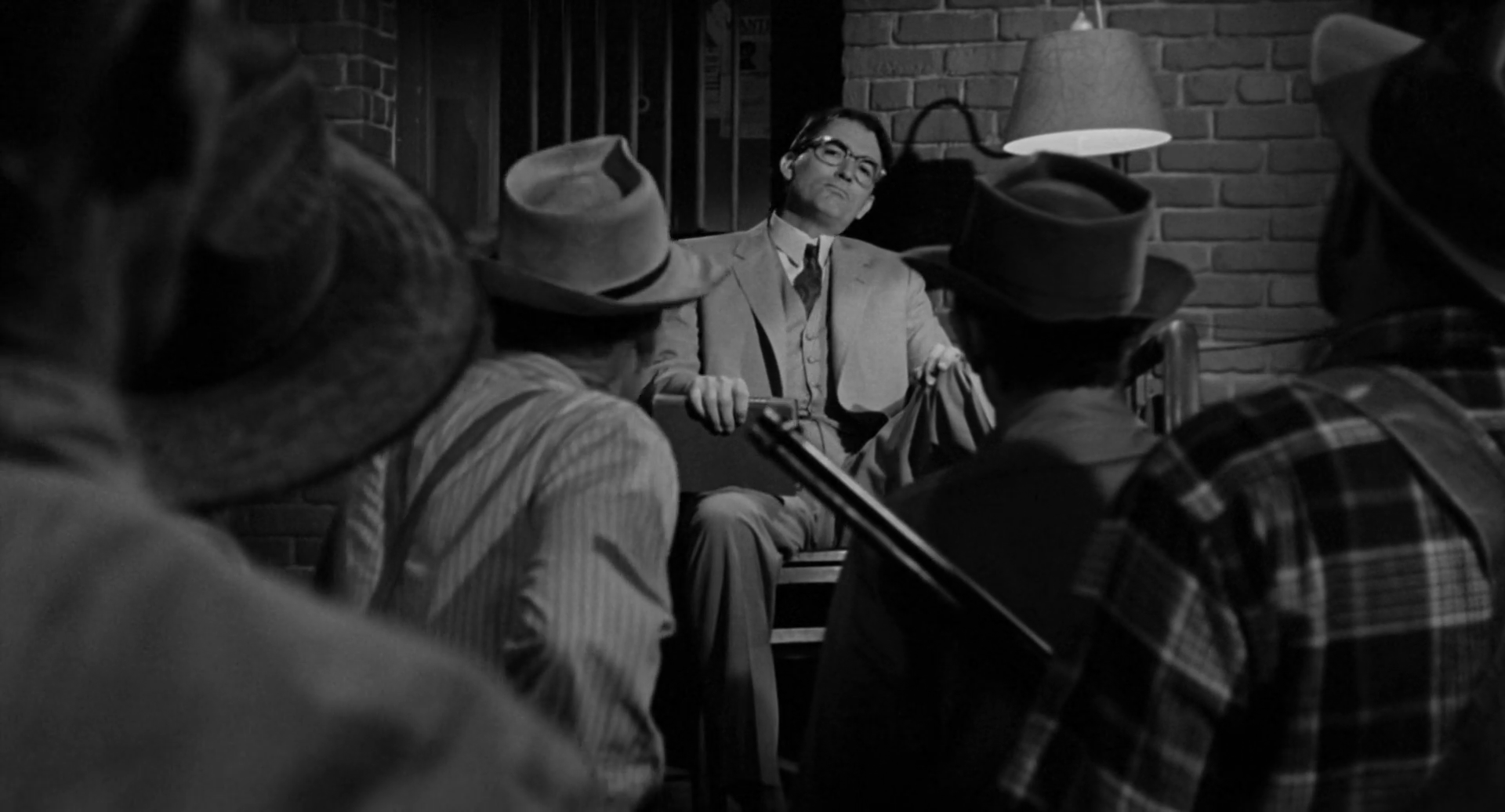
To Kill A Mockingbird is damn faithful to Harper Lee’s source text. I haven’t read the book since high school, and even then watching this movie again was like slipping into the warmest of baths. Plot developments reawakened in my head as I watched. The night Atticus sits sentry at the jailhouse rushed back in, reminding me of the moment where Scout makes a connection in the crowd and that is enough to disperse the mob for the night. The knot in the tree in which Boo Radley places trinkets and gifts for the Finch children is still utterly charming. Atticus putting down the rabid dog.
Fan service in 1962
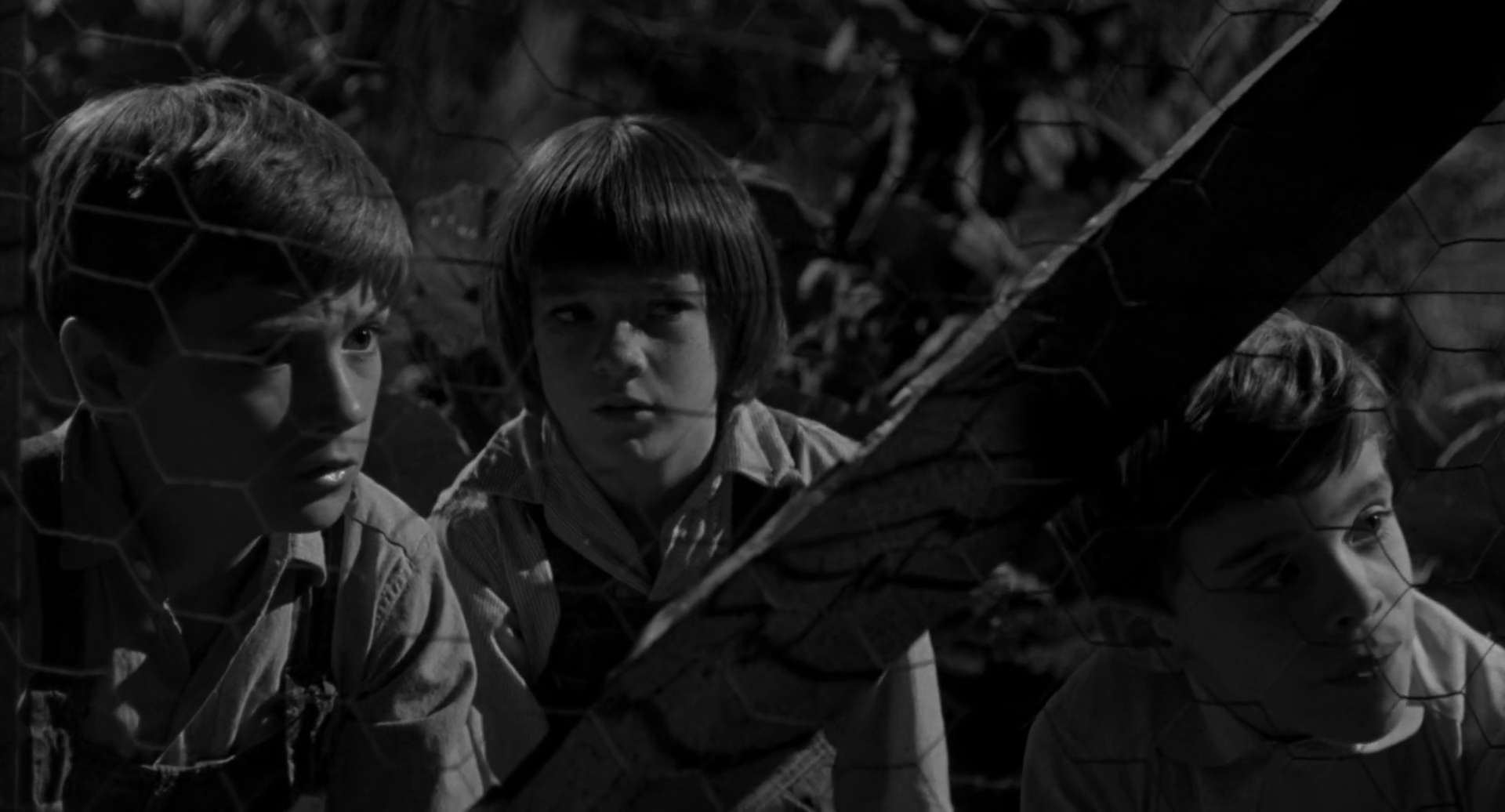
And, yes, the film is providing everything book fans could want. It’s got lots of Scout and Jem and Atticus. It’s hitting all of the book’s relevant points and moments. There are a few clunkier aspects, like losing the book’s evocative opening with Scout’s reflections of Jem’s injured arm and how Lee uses that to frame the book’s central tension as a road to the incident on Halloween when Bob Ewell violently attacks the Finch children.
The trial of Tom Robinson serves as the major subplot that builds to that moment. It might be a story in and of itself, but it and everything around it really present to provide a pretext for Bob’s assault. The actual story of Scout and Jem and their life centers more on their mini adventures around town and their fascination with Boo Radley. That parasocial relationship is the direct cause of Boo’s intervention and almost certainly saves their lives.
What else could the movie, do though? With such a singular work, the prospect of trying to rewrite or drastically change the plot around is laughable. People responded to the novel and its recency required fealty. There’s no reason not to play the novel as it is, to include the same events, to develop the same characters the same way. Such is the joy of any story. There’s no reason not to play the hits.
The problem, though, comes when the source material is so good that an adaptation feels like imitation rather than something that can stand on its own.
Faithful adaptations
To use some recent examples of adaptation, three come to mind.
The first and most relevant is Gone Girl. David Fincher’s 2014 adaptation of Gillian Flynn’s excellent novel (for which she also wrote the screenplay) is an electric film based on a fabulous thriller. On first viewing, it might feel to book readers that the film is just faithfully replaying the original.
This should be dissatisfying, and yet… more on this in a minute
The second is Denis Villeneuve’s recent Dune adaptations. I’m sure I’ll write about this a lot in the leadup to Dune Part 3, but Villeneuve makes multiple changes to Herbert’s novel in an attempt to condense it to film form. The streamlining and expansions and small changes prove seismic, and while Dune itself is so massive it requires a pair of films to adapt, the duology stands entirely on its own. He still has to split the book across two films, but there are smart moves that defy Herbert’s original narrative. The book opens with the gom jabbar scene, and yet Villeneuve makes his audience wait more than 20 minutes for it, instead introducing Arrakis and its hand over to the Atreides, Chani, The Harkonnens, all of the major players in the Atreides family, personal energy shields…
With so much to establish about this far-off future, Villeneuve didn’t want to waste precious early real estate on something so indulgent as the gom jabbar1. While compelling, it doesn’t accomplish nearly as much and would be too much for the general audience without a larger context of this world and how things work.
This, though, helps Dune Part One be its own distinct entity separate from the original novel. It’s not that Villeneuve doesn’t want to do the gom jabbar scene (he clearly does and it’s excellent). It’s that he thinks bigger picture about what the film requires and then acts accordingly.
The third example is more crass. In 1998 Gus Van Sant released what he claimed was a “shot-for-shot remake” of Psycho. Much of the discourse around the film is “why?”, but the argument that Van Sant made was that he wanted to pull Hitchcock’s most iconic thriller apart and figure out what makes it tick. It’s a multimillion dollar vanity project. It’s hard to imagine that the remake of Psycho isn’t just going to make the audience want to go watch the far superior original. Van Sant doesn’t even try to make a superior product. His depends entirely upon Hitchcock’s work. And why would anyone want to watch the 1998 remake when the original is superior in every way.
Which… leads back to Gone Girl. If Gone Girl is just Flynn cribbing her own work in its entirety, what makes it so god damn rewatchable in a way that doesn’t inspire a re-read of the book.
The answer, largerly, is Fincher. With his own unique style and panache, the director can’t help but incorporate his perspective and voice. It informs the performances (which are likewise wonderful) and even the score (where he works with regular collaborators Trent Reznor & Atticus Ross). All of this is a voice that harmonizes with Flynn’s work. Even though the film is largely (and faithfully) rehashing the plot of the book there are plenty of other aspects to keep any audience occupied and engaged and feeling like they’re having an experience the book won’t give them. This is especially true on rewatch.
Lawyer-dad
So what is it that makes To Kill A Mockingbird such a forgettable adaptation? To be honest, I spent the entire run time thinking about how I hadn’t read the book in 20 years and that that was simply too long a span to go without dipping back into such an incredible story. This is not ideal. In the best world, films stand alone. In just about every way, everything the film does, the book does better.
But nothing in the book can live up to Gregory Peck’s majestic performance as Atticus Finch.
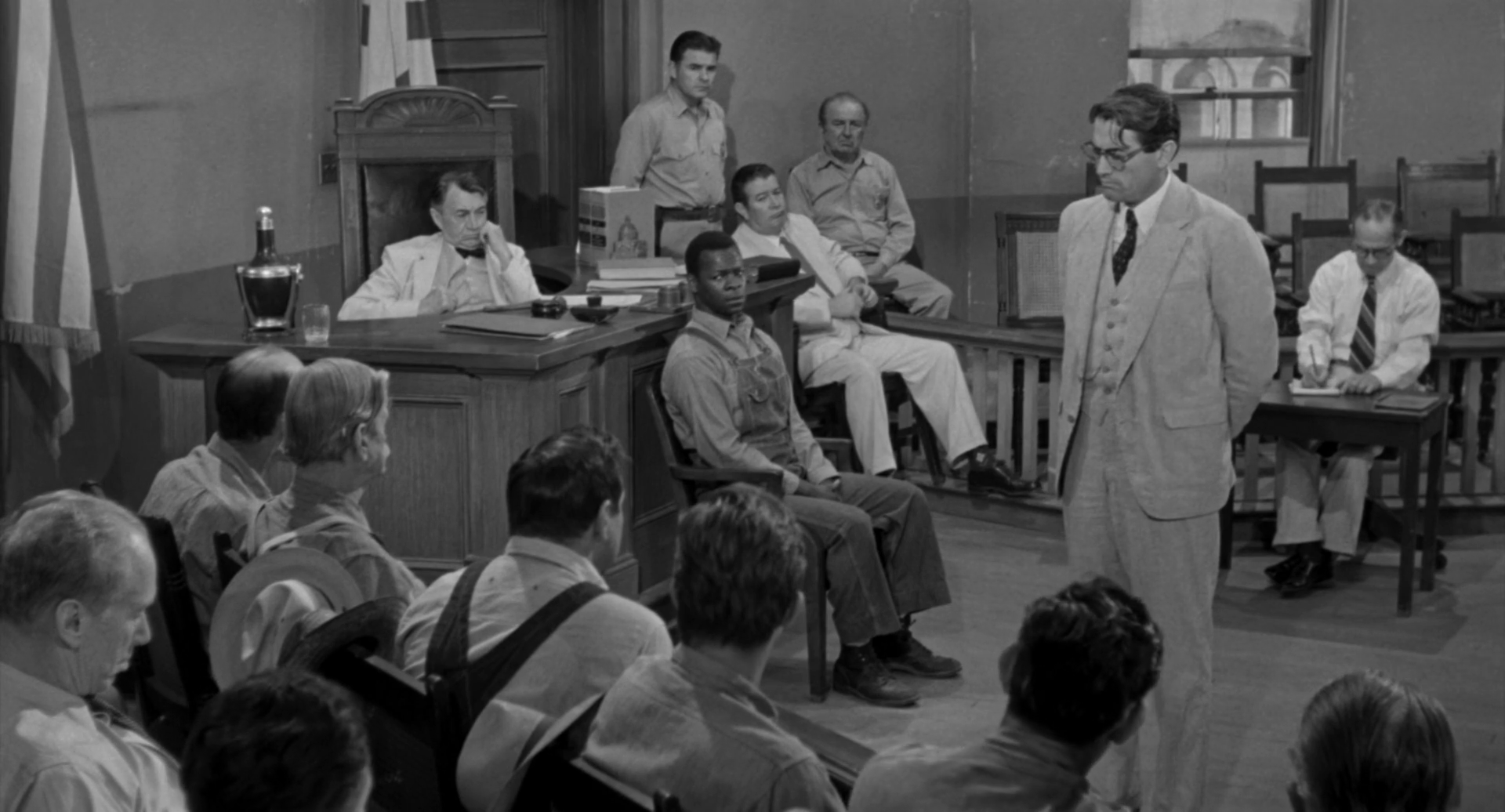
The man understood the assignment. He looked at Atticus Finch and saw one of the most lawful good characters in American literature and played him with all the grace of a compassionate man who loves and cares for his children without sacrificing the firm hand by which he raises them. When the court appoints Atticus to defend Tom Robinson he takes up the case with all the conviction of a man who believes in justice. He cuts right through the underhanded plot of Bob Ewell and the fear-based shame of Mayella to expose their coverup. The court drama is electric, so much so that it’s no surprise Aaron Sorkin penned a stage adaptation in 2018 to fully capture the weight of the sequence.
But Peck’s incredible performance overshadows the entire movie. Scout’s story (and Jem’s within it) is fabulous, but escaping the gravitational pull of the trial with its drama and theatrics and mystery and scandal and glorious speechifying is impossible. Seeing the lead-up through Scout’s eyes works because the dramatic irony of wiser eyes understands the threat and menace of mob violence in the white supremacist hellscape that was the Jim Crow South. The trial, though, doesn’t come via Scout’s eyes. It’s Atticus’s moment to shine. Aside from a few moments to visit Scout in the balcony and the rare high shot looking down, the camera stays on the trial floor. This is the right choice, but it’s a big shift for the narrative and hobbles the movie moving forward.
In the book, Lee can stay within Scout’s perspective as she relays all of the details to the reader. Film would require a defter hand.
After the trial we return to Scout’s perspective but it doesn’t have quite the same energy it once did. Even by the time the movie gets to the big reveal of Boo Radley (played by a very young Robert Duvall) the “he’s just a guy” of it is intentionally deflationary. He’s not the weird creepy menace they thought. It’s sweet and beautiful. But that taints the moment with anticlimax.
Coasting off of greatness
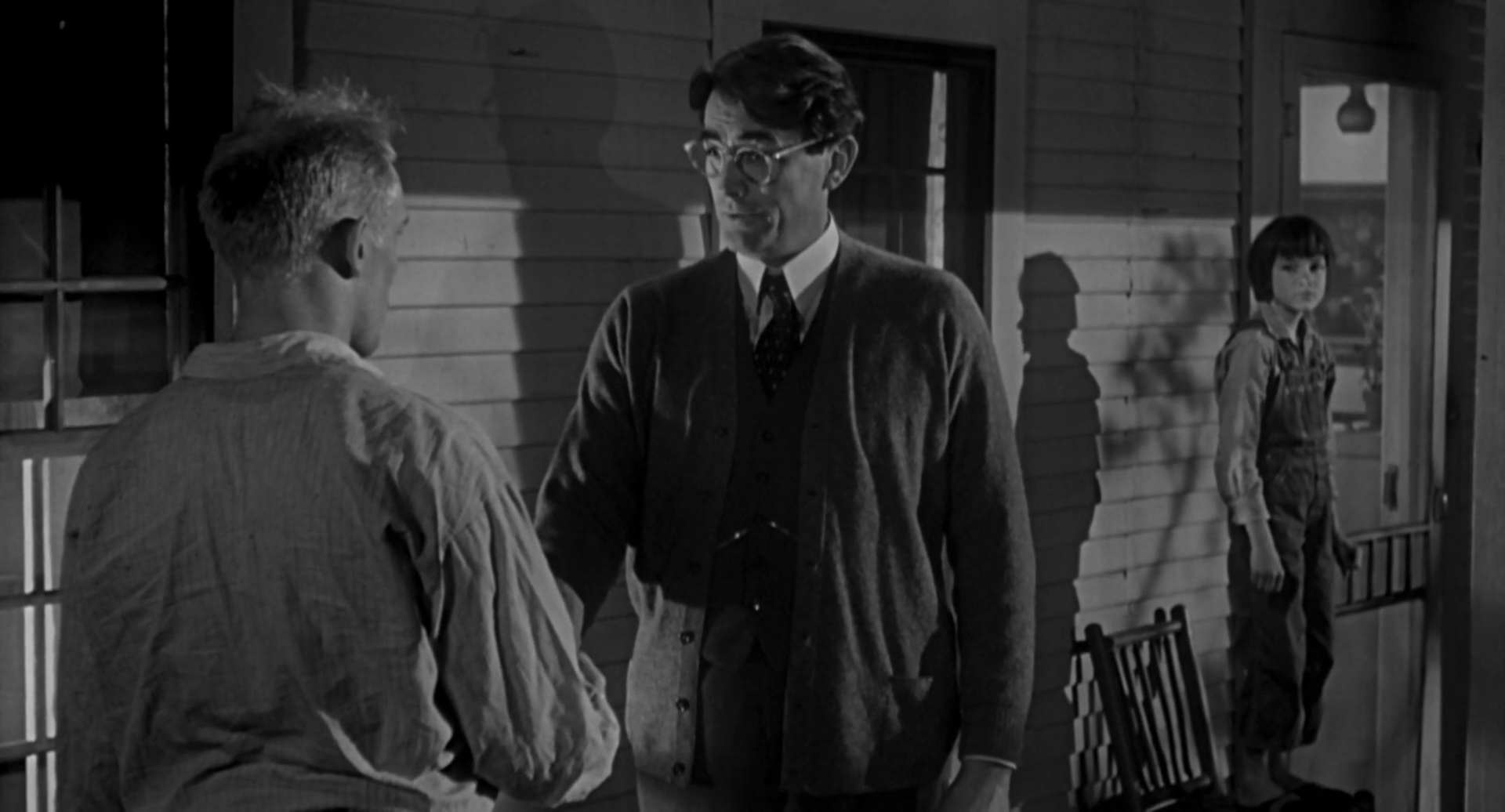
None of this is a fault of Harper Lee, who wrote an all-timer. Experiencing stories, though, comes through the prism of the audience’s own personal experience. In making the film, director Robert Mulligan does as faithful an adaptation of the novel as he can, but this keeps his film in its shadow.
Compare this to, say, The Wizard of Oz. What makes that such a singular film is that it treats the book as a springboard from which to tell the story. It gives the film its own unique experience that goes far beyond the “sepia-to-color” transition or the iconic musical songs. That movie is its own interpretation of Baum’s work, throwing out entire sequences and adding new ones. When compared to the book it is (in a lot of ways) the superior product without completely replacing it.
The first time I watched Gone Girl was very similar to every time I’ve watched To Kill A Mockingbird: it just made me want to reread the novel. The movie seemed to be doing a faithful adaptation and that was about it2. But on rewatch the movie itself felt very different. Fincher makes his own movie that’s still telling the same story, but emphasizing various themes that are subtly different from Flynn. That’s not to say the film is better than the book. It just means that the two each stand on their own and each do not (and cannot) replace the other.
That is not true for To Kill A Mockingbird. Watching the two hour version is just two hours of me lamenting that I only read the novel once and in high school over twenty years ago. All it made me want to do was read the book. Outside of Peck bringing Atticus to life and Bedham anchoring the movie with her phenomenal performance as Scout, the film coasts entirely on the greatness of its source material. If To Kill a Mockingbird were a lesser book, this would be a far lesser film.
Balancing the line between delivering the joys of the text while enhancing it with a unique perspective or authorial interest is incredibly difficult and runs the risk of being inherently alienating. But it also means creating something that itself can stand on its own as a representation of a larger story. Quite often the original source text is the superior work. That’s fine. But to completely supplicate to its superiority and instead attempt to execute without messing it up will create a final product that is more translation than adaptation.
And an adaptation that reaches for something and fails is far better than a quaint curio than translates a text and then calls it a day.
This isn’t a unique realization. David Lynch realized the same thing when adapting Dune in the 1980s, and he also chose to frontload other pieces of information before he let Paul put his hand in the box. ↩
Funny enough, this was also my experience watching The Social Network for the first time. I’d read the script (which was very good) and thought Fincher had “just made the script.” But on rewatch it’s clear that all the ways that movie is in both harmony and tension with the Fincher v Sorkin perspective of the story is what makes that movie so incredible. ↩