Have Stories Gotten Too Long?
Or is it just our insatiable appetite telling us we're perpetually hungry?
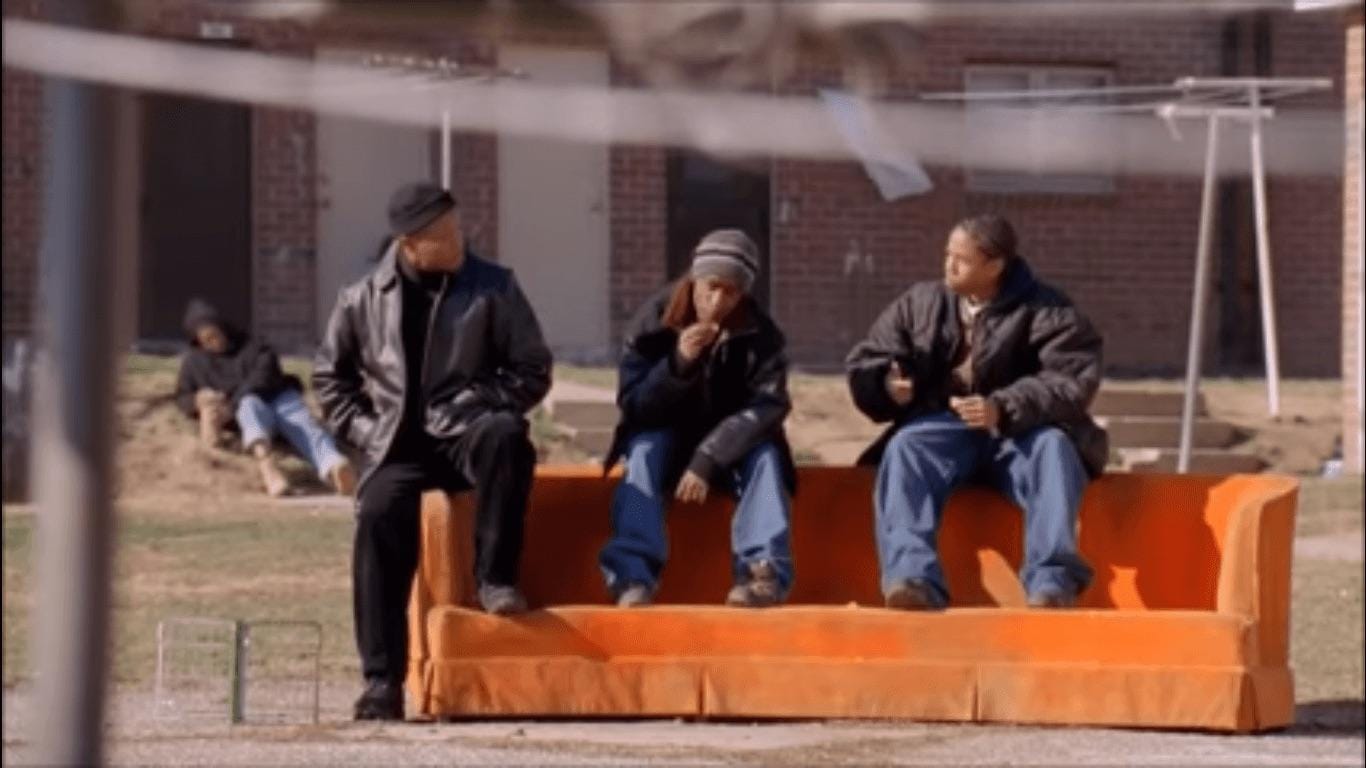
Before every season of The Wire, series creator/showrunner David Simon would walk into the Writers’ Room with a mission statement. Simon, himself a journalist-turned-screenwriter, would then say that HBO had given them 12-13 hours of time to make what they wanted. At no point in the season would they take these precious minutes for granted. They had a responsibility to make the best television they possibly could. David Simon took this very seriously.
Anyways The Wire is still like the best television series of all time, so… he was doing something right.
The reason this anecdote has stuck in my head in the decade or so since I heard it is because it frames creation in a way that doesn’t derive from someone who’d come up through the Hollywood system. Simon has always referred to himself as an outsider; nothing says it more than him feeling responsible for the precious time HBO gives him.
In a world where we’re a society that perpetually consumes content in all shapes and forms, from the random movie night to catching up on a television series to the daily podcast grind to scrolling for hours on TikTok (or Reels, I’m not judging), our attention is a precious resource over which all of these media-spigots fight1. If we’re not communing with those around us, chances are we’re plugged into something, catching up on a list that we’ll never, ever complete.
(I’m guilty of it. My podcast app has hundreds-to-thousands of hours of podcasts on there that I just won’t ever listen to. There are not enough hours in the day.)
Of course, more content is generally a good thing. The more things that are out there, the more diversity in what we have to find. As art gets more esoteric, it increases the likelihood that we will find something that we, personally, can connect to. But given that we choose to live in a world of near-infinite material, is there a responsibility creators have that should bound their creation in some way?
Long Ass Movies
This idea of how to spend our precious time has come up a lot in the last few years. For one podcast (that shall remain nameless) I listen to, releasing a two-hour film is tantamount to a war crime. Regardless of how much the hosts/guests might have liked a movie, they will complain if it’s longer than two hours. They’ve done at least one show this year trying to make film recommendations for films less than 90 minutes. While that’s a nice constraint, it perpetuates this idea that we should have more films that are less than 90 minutes, or that we should make movies as short as possible. Why? So… people can go watch other movies, I guess?
There are plenty of films that are great and under 90 minutes. One of the best films of this year, Black Bag, is a lean 93 minutes. Could it have been longer? Maybe. But Soderbergh is a remarkably efficient storyteller and astute as to how to move quickly through his narrative without sacrificing coherence.
And… yeah. There are movies that are way too long. The whole reason I’m writing this today is because I watched Scent of a Woman over the weekend. That’s a two and a half hour movie to tell a story that should have been maybe a hundred minutes. By the end of the film I was yelling at the TV to roll the credits because director Martin Brest had so reached a point in his career that no one was telling him that maybe an editor should really tighten its flabby ass up. Scenes would languidly trudge along. The climactic sequence where Al Pacino defends Chris O’Donnell in front of the school is arduous, dragging on and on and on so Pacino could get to his big Oscar monologue. An earlier sequence at the end of the second act where Pacino threatens to finally kill himself simply takes forever. It’s a big moment the movie has been building to, but it feels like ten minutes of the two men yelling at each other about what’s going to happen, dragging the tension out past the point of an audience’s ability to stay focused. It goes in circles rather than blazing forward, burning out the adrenaline of the scene’s premise.
(Meanwhile I have to watch Meet Joe Black tomorrow and I didn’t realize that movie was three hours long. I’m sure Brest learned his lesson and really made all those minutes count. Ugh.)
It’s not unusual for artists to fall in love with their own material and think what they’re doing is utter genius, their output a gift for all humanity. Stick around long enough and any great director can make a film that feels like it’s way too long. Chris Nolan has The Dark Knight Rises2 and Edgar Wright has Hot Fuzz3 and on and on. Even James Cameron has multiple extended cuts, including his own for Aliens (gratuitous), The Abyss (wonderful), and Avatar (which has a blu-ray release that features multiple different extended cuts depending on what you want to see).
Yet Cameron is a great example here. He’s said that when showing a cut of the first Avatar to the studio they wanted him to cut the scene of Jake and Neytiri flying together on the Banshees for the first time. It didn’t feel “necessary”. Cameron pushed back, saying that while it might not have expressly moved the narrative forward, the flying was something he needed to see. He extrapolated that if he needed to see it, then the audience would as well. And he’s right. It gives the movie a sense of wonder and humanity that extends far beyond the go-go-go of the film’s plot.
When he released Way of Water, it was a sequel that was over three hours long, testing the patience of every person who said “but who is asking for more Avatar movies” by giving them one longer than any Marvel movie. And yet, despite this “absurd” run time, that movie is the third highest grossing film of all time. Imagine how many more people might have shown up if he’d just cut an hour out of the movie. Maybe more. But also? Maybe less. Maybe the audiences really loved being on Pandora for those new 192 minutes. Maybe that run time is why people like me went four times in theaters. I’ve spent over half a day of my life in watching just that movie on an IMAX screen. Can’t say I regret it.
What would you cut?
When it comes to work like this, I tend to defer to artists, interrogating why they felt the need to include whatever feels extraneous. Many times I’ll read discussions of books or movies I like and some groupthink online will say things like Stephen King can’t hold back his word vomit or Brandon Sanderson’s books were better when he had an editor from earlier in his career. Maybe I’m weird, but that rarely bothers me. I can’t think of anything I’d want to take out of any of Sanderson’s Stormlight books. The Stand might be a incredibly long, but it’s such an epic journey that there’s nothing I’d excise.
And the same is true for films. How often do audiences loudly set sights on movies that blow past the two and a half hour mark and complain they’re just too long? Take Mission: Impossible - Dead Reckoning as an example. I’ve seen that movie half a dozen times and there’s nothing that I’d want removed. The submarine opening? Anything in the 25 minute pre-credits teaser? The car chase? Maybe something in the airport scene? But McQuarrie’s intent with that film was to slow down, take time, and build up characters. In the version that’s 90 minutes (one that smashes the two Recknonings into one sitting), we lose the scenes like Benji trying to defuse the nuclear bomb in the Abu Dhabi airport or Grace talking to Kitteridge on the train. These moments matter, delicate fabric that make up the texture of the film.
This isn’t just action films. Fans have mocked Wicked Part One since Universal announced they would be bifurcating the musical. Even more ludicrous? The entirety of Part One would be longer than the show in its current run on Broadway. And the stage show includes an intermission!
But, again, what would you cut? The scene where Elphaba comes across Fiyero in the forest before his arrival at Shiz? That scene exists to lock the audience in on Elphaba & Fiyero as a couple before they have a chance to cement Galinda/Fiyero4. Or maybe the moment where Elphaba shoots the coin, thereby impressing Madame Morrible? The soundtrack to Wicked Part One alone is 56 minutes. At what point do we start cutting songs from the soundtrack? If the creative team can figure out how to make them work. So the movie is a little long. Most Wicked fans I know (even the skeptical ones) had no complaints about seeing a remarkably faithful adaptation put on the screen as lovingly and wholesomely as this one. Let the audience live in Oz. Maybe Universal made the right choice and made a lot of money.
The alternative in adaptation? Well. My partner’s favorite musical is RENT. You can imagine how they feel about being as blessed as Wicked’s fans are.
Giving permission and holding accountable
All this to say, hold stories accountable to your particular taste. If something is too long, figure out where the creators went wrong and start pulling out what doesn’t work. None of this is an excuse to let artists freely waste our time. To frame Simon again, it’s the artist’s responsibility to get in, move efficiently, and get out. The least they can do is take their audience’s time seriously and with respect.
If media is disrespectful of that time, we get what happens with literally every Netflix series. The biggest problem with Netflix is not the lack of weekly episodes, but the lack of care in maintaining audience interest within episodes themselves. Based on reporting of what it’s like to make a series for Netflix, execs could care less what happens in the middle of any given episode. Run around in circles, spin the wheels. All they care about is that when the credits start rolling, their user-base doesn’t feel the need to pick up the remote. Have a good opening five minutes, meander for the next forty, and then end strong with ten minutes of accelerating cliffhangers. Done. How many episodes? Doesn’t matter. Just enough to make sure you mindlessly stick around for all the other slop they release.
This freedom to tell stories at a proper length is not just a gift for creators. It’s a responsibility they should take seriously. Lots of them do, but many don’t. Yes, creatives have an inherent obligation to entertain, but there’s also a need to be engaging, respectful, and aware. When building something they shouldn’t take their audience for granted. Inertia can be powerful. It pushed me through Scent of a Woman. But inertia is not nearly as compelling as the humming engine of a perfectly sculpted vehicle, traveling down the path as we settle in for some amount of time.
We want to escape, to find ourselves transported, to explore worlds, and lose ourselves in narratives. As this happens, we enter into a communion with the creative in charge, a bargain that we’ll give them the time as long as they promise to do something worth our while. Be it a twenty second influencer video, a three-hour film, an 8-hour season, or a weeks-long video game, all of it comes down to the same basic principle: we’re trusting them, the least they can do is not burn that faith that they won’t waste our time.
Because when they do give us a reason to care and engage and lose ourselves, is there anything better?
For more on this, I highly recommend Chris Hayes’s most recent book The Siren’s Call. It’s all about the ways our attention works and the ways everyone from media corporations to influencers to Donald Trump try to capitalize on and profit from that attention. ↩
And I like that movie but man is it too long ↩
The first time someone told me Hot Fuzz was only 2 hours, 1 minute long I didn’t believe them. It feels like a two-and-a-halfer to me. ↩
This is a classic storytelling pitfall. Because society has so wired our brains to be heteronormative, when we see a male lead and a female lead share their first scene together, our brains immediately start to romantically pair them. It’s partially why Greta Gerwig used nonlinear storytelling for her adaptation of Little Women. By placing Laurie and Amy’s reunion early in the film, it tilts the audience in their favor rather than the more traditional (but utterly doomed) Laurie/Jo pairing. The novel does this, Gerwig has spoken about how the Laurie/Amy pairing felt disingenuous to her given the novel’s Laurie/Jo centrality. ↩