Harnessing the Metatext - Unforgiven
Clint Eastwood deconstructs westerns, tests his audience's patience, and delivers a masterpiece
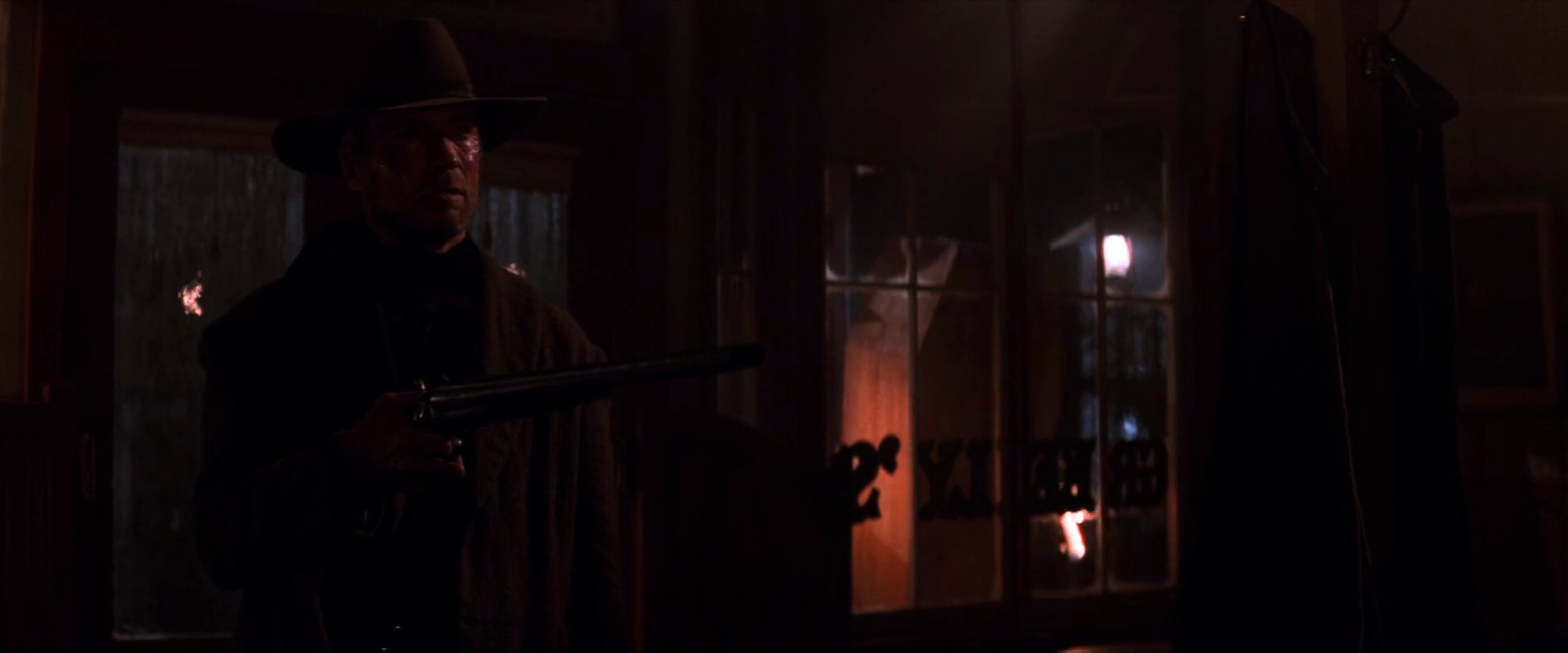
At the climax of Unforgiven, there is a shootout.
This isn’t surprising. It’s a western. There’s guns. There’s disagreements. Gotta have a payoff the third act with a giant action setpiece.
But it comes at the end of a movie defined by a distinct lack of action. The violence that happens is distinctly unwestern: a man carving up the face of a prostitute, “Little Bill” Dagget (Gene Hackman) beating the shit out of “English” Bob (Richard Harris), or even the ambush on the ranch house where the Schofield Kid (Jaimz Woolvett) murders Quick Mike while he’s shitting in an outhouse. Anyone who walked into the theater expecting director Clint Eastwood to give them a spectacle of stunts and gunfire would be disappointed by everything up to that point. Not even a “do you feel lucky, punk?” Really?
He certainly ends up giving it, though. Bill Munny (Clint Eastwood) walks into that bar to exact vengeance for the death of Ned Logan (Morgan Freeman). As he does Eastwood boldly makes a definitive, final statement about the entire genre itself.
And the swagger on it is jawdropping.
Legacy
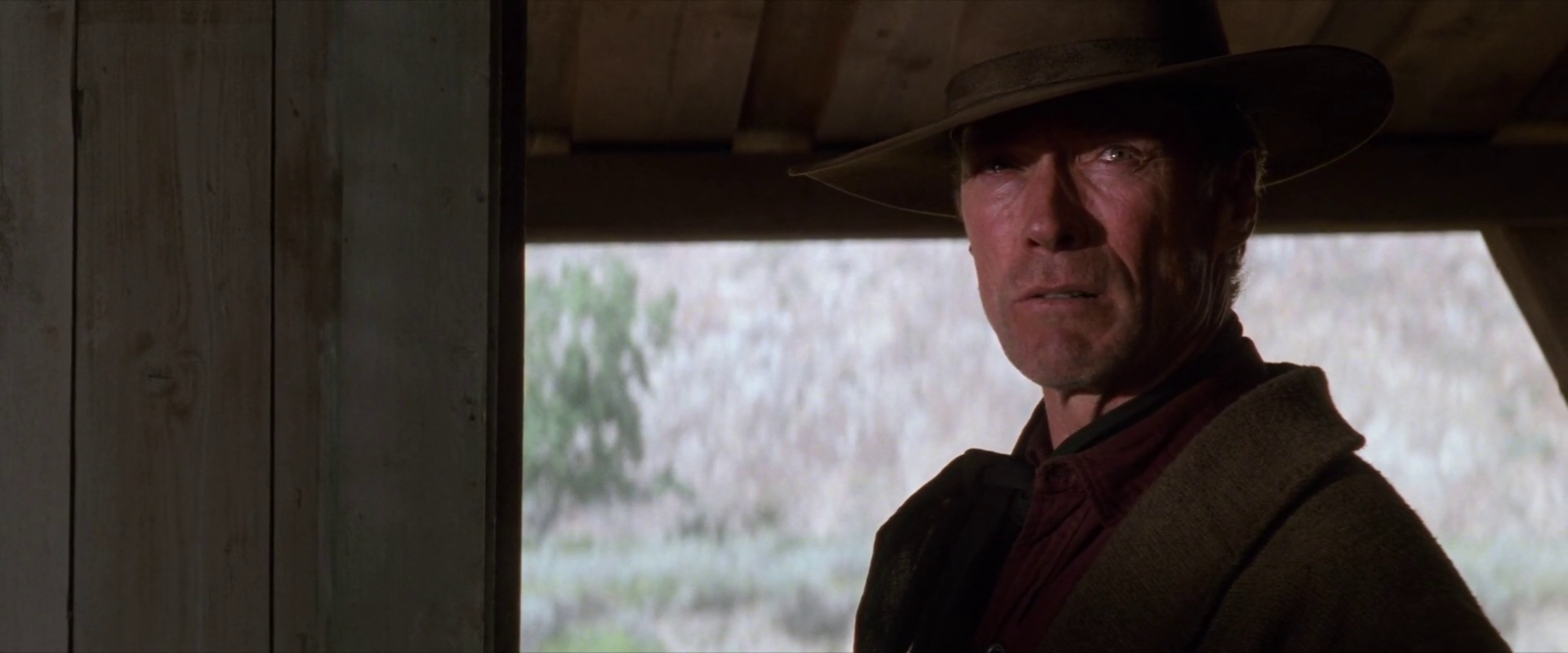
Clint Eastwood’s legacy will always be as a leading man. The movie star energy and charisma and charm coming off the dude whose chiseled jaw defined Sergio Leone westerns, Harry Callahan, and Escape From Alcatraz can’t just disappear. Eastwood’s gruff demeanor and rugged looks helped define masculinity for decades. And yet, Eastwood shifted his primary career to behind the camera. He’d directed more than a dozen films by the onset of the 90s, but once he won the Oscar for Unforgiven he started appearing on camera almost exclusively in his own films. In the Line of Fire or Trouble with the Curve were rare outliers.
This created scarcity. Want to see Eastwood in a movie? Gotta go see one he directed.
What Eastwood has never been able to escape, however, is his representation as a red-blooded, all-American male. It makes sense why audiences so associated him with westerns, as it’s a genre that comes directly and exclusively from America. Pair it with cinema (which is a major artistic output for the United States), and it’s a natural fit. Even when shooting them in Spain under an Italian filmmaker, his gravitas anchors the piece in an ethos that his shadow single-handedly obscrued casts full of Italian actors.
As he moved into directing, Eastwood shifted this commentary on America into the sorts of stories he was telling. He regularly explores this country via its weird contradictions and nuances, heroes who work within and without the system.
Except Bill Munny is hardly a hero.
Not even an anti-hero
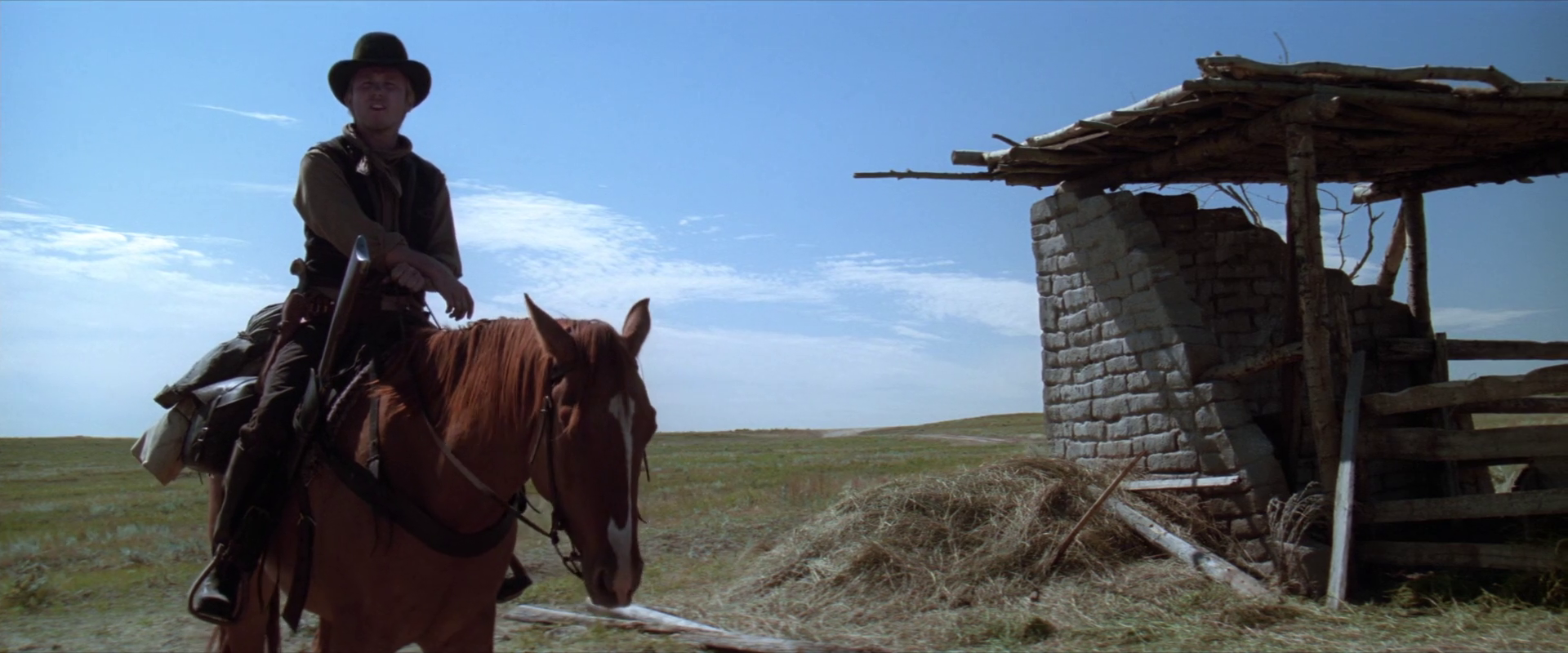
We first meet Bill Munny as a pig farmer, widower, and raiser of his two children. An opening title card describes him as an outlaw and murderer who’s tried to put that life behind him when he married. It’s a plant for a payoff Eastwood makes the audience wait almost two hours for.
What Eastwood knows, though, is that his audience knows what he’s capable of. This is the guy who carried himself like that into Alcatraz, did a whole monologue about bullets in a six-shooter, and starred in an entire western trilogy without ever getting a name. Every person walking into Unforgiven knows Clint Eastwood. The story’s arc is waiting for him to let it out.
Only… to see Bill Munny unleashed upon the world is watching relentless viciousness seep across the screen. The man isn’t sadistic. He is just pure evil. That outlaw/murderer nature? Eastwood plays it in the most chilling way possible: this is who this man is. There’s no him loving it or him regretting it. It simply is.
It’s easy to separate an actor/director from their characters, and yet this aspect of vicious bloodthirst is in Eastwood enough that the scene is chillingly believable. The actor has it in him to portray it. The director has it in him to recognize the utter monstrosity of the man and to portray it as unrelenting and distilled as he possibly can. This is not the sort of man you glorify.
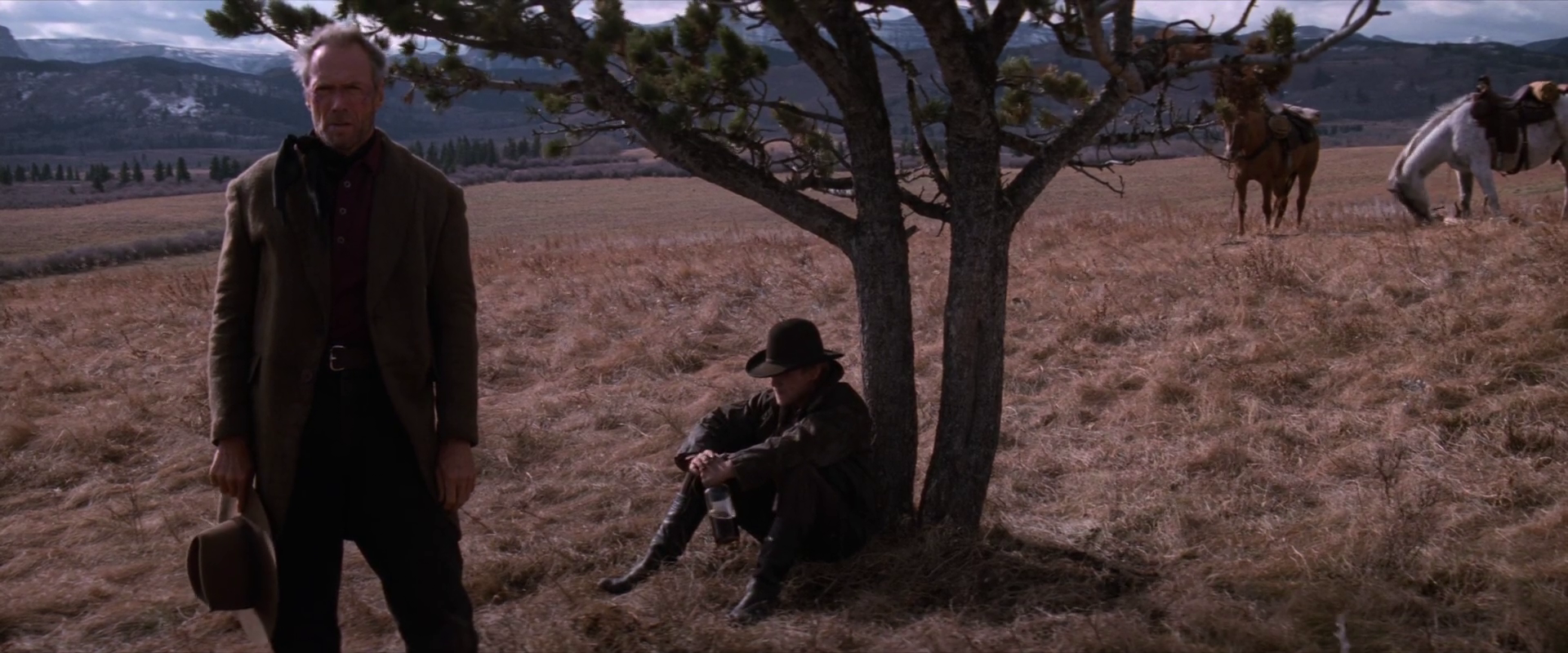
So they glorified him
When the Academy Awards came around they lauded Unforgiven with Best Picture and Clint Eastwood with Best Director1. They’re worthy wins.
And yet, it also feels like lauding it as they do is the last word on the entire genre for a generation. Despite being dominant for nearly half a century, the western had greatly declined by 1992. Every year since then gets maybe one or two major releases that reach a broad public consciousness. Unforgiven, though, is a unique blend of bleak cruelty in the Old West. There’s nothing fun about it.
Compare that to the year before, when the Billy Crystal comedy City Slickers came out as a way of having fun with the genre. The following year got the star vehicle (yet traditional) Tombstone, which is a delightfully fun romp about the OK Corral. 1995 brought Sam Raimi’s The Quick & The Dead, mixing his signature, high camp Looney Tunes silliness with real emotional pathos. But for all its fun, it’s still in the shadow of Unforgiven. It features Gene Hackman as a merciless sheriff who rules over his town with an iron fist by controlling the violence therein. Basically Little Bill but with a Master of Ceremonies vibe.
By the end of the decade/turn of the century, however, the biggest westerns are Wild Wild West (the one with the steampunk robot spider) and Shanghai Noon (the one with Jackie Chan).
It’s not until 2007 that there’s a big push for westerns. James Mangold remakes 3:10 to Yuma and Brad Pitt stars in The Assassination of Jesse James by the Coward Robert Ford. This is also the year where the Coen Brothers’ adaptation of No Country for Old Men comes out. It might have even won best picture, but it isn’t a western in the traditional sense, playing with the genre as it does in a modern context.
There’s a reading that lauding Eastwood as they did was enough for Hollywood to move on for a while, but it’s more than that.
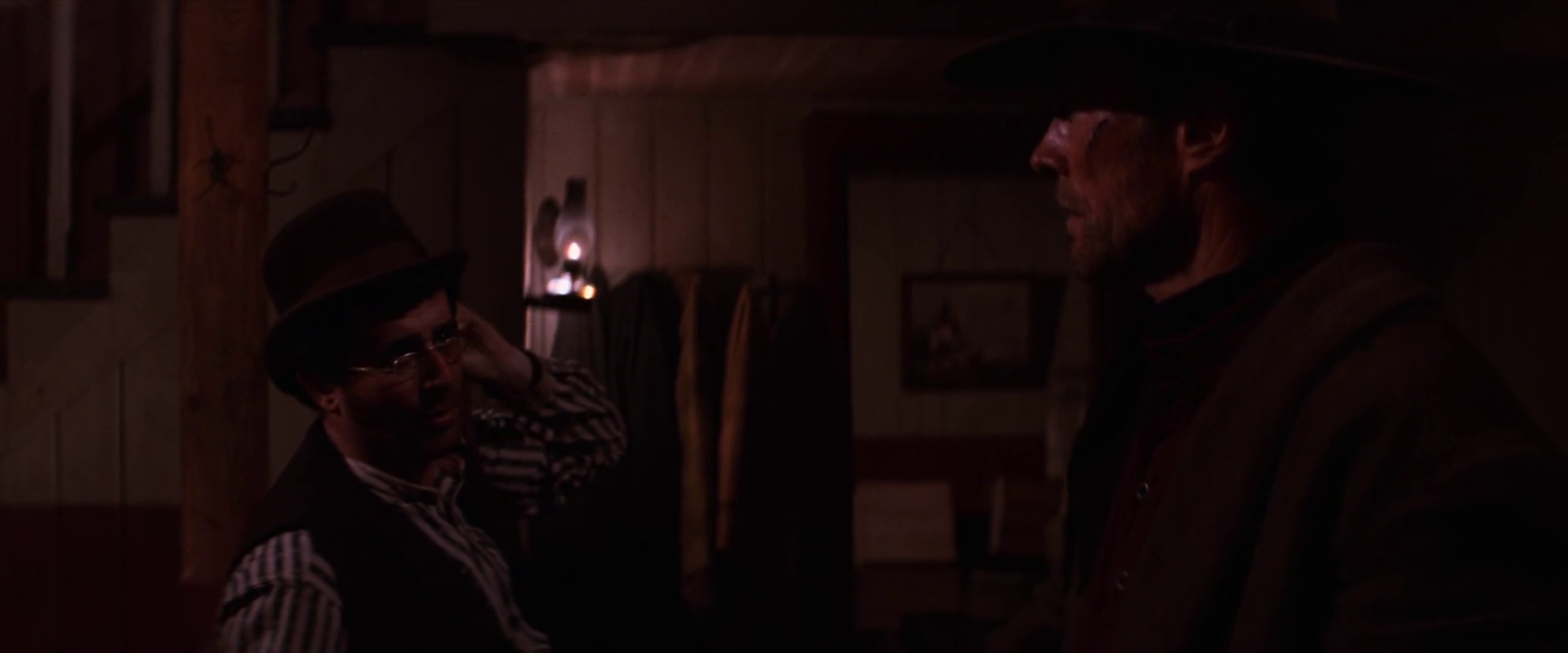
Old man says get off my lawn
When Bill Munny opens fire in the saloon, he kills every person he shoots with one shot, tells the rest to get out, and then drinks.
It’s exciting, but the most engrossing bit is after, in which biographer W.W. Beauchamp bumbles around Munny trying to put together what he just witnessed. The writer has already moved from English Bob to Little Bill, glomming onto the biggest western icon he can. It seems like he’s struck gold in Little Bill, a man who is happy to share his philosophies of the Old West, talking about who to kill first and the importance of keeping a level head.
But Munny is something different. The man doesn’t have philosophy. He doesn’t think about this horrible craft he’s perfected. He’s “just lucky”. And then he kicks Beauchamp out, walks over to Little Bill, and finally shoots him dead.
It’s over before it feels like it should be. Munny yells at everyone to be cool. He slowly walks to his horse and then trots out of town, into the rain, into the darkness, into the night.
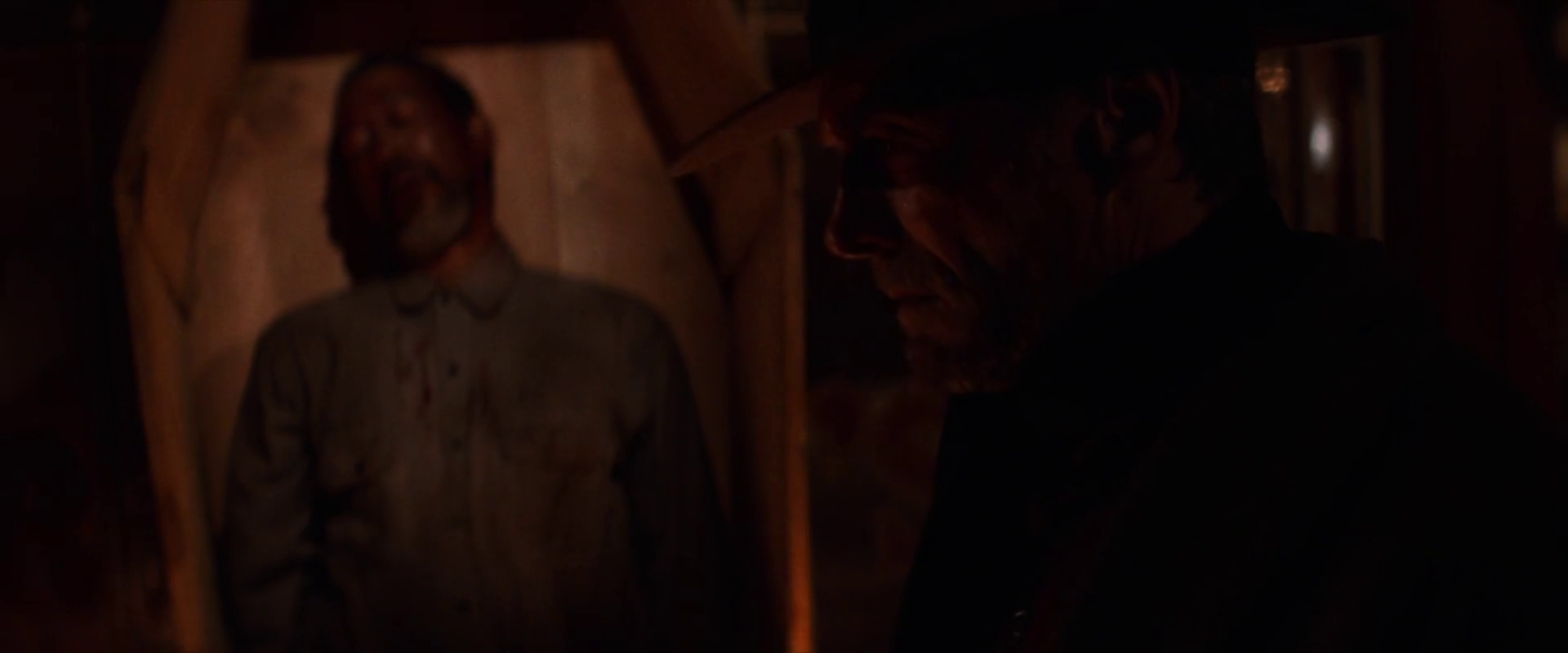
You come at the king, you best not miss
There’s something about the way Eastwood yells out his warning. Yeah he threatens to kill not only anyone who comes at him, but also their wives and all of their friends. It’s a ludicrous statement. And yet, in just the most recent five minutes of the movie it’s entirely believable.
This line, though, is coming not just from the actor, but also from the director. One of the great cowboys of the screen is yelling at all these people who can’t compete with him to not even try to make something happen. He shuts the whole enterprise down.
It feels like Eastwood is yelling at the entire genre. That he’s too old for this. Too tired. But push him even a little bit in just the right place and he will descend like the devil’s right hand to show everyone how it’s done. This is far from the frail Bill Munny whom Little Bill’s men roughed up in the saloon earlier. This is a dude who killed everyone he saw and never really considered it. Even as he murders Little Bill, he takes a minute. But Eastwood never gives it a sense of remorse. There’s no sense of hesitation. It’s all a blank conviction, as though time stands still while the process takes effect. It goes on just long enough to think that Munny won’t do what he’s the undeniable best at.
But he does it. He pulls the trigger. And he walks away. Did the audience really want a Clint Eastwood western where he kills the villain and his henchman? Because that’s what he gave them.
This is the work of a master, someone who doesn’t need to explain his process. Just like Munny was born to murder people, Eastwood was born to make movies and be in westerns. It’s natural to him.
The called shot of this is astounding. The balls to make a movie that denies the audience what it wants for nearly two hours and then to come back and violently show them what it is they’ve been drooling for is chilling in its cynicism.
And yet, there’s a weird sense of hope to it. Munny disappears, abandoning his hog farm and going out west to where temptation (to be in a western) can never reach him again. So too Eastwood disappears from westerns. He leaves this final statement and moves on to where there’s more opportunity. More work. And he can be far from the life he knew for so long.
It’s not so bad. The alternative is far worse.
He lost Best Actor to Al Pacino in Scent of a Woman. Nice to see Pacino finally get an Oscar for a career of incredible performances, but god that’s a rough one. ↩