Gothic But Modern - Frankenstein & Wuthering Heights
Two films, two directors, two different attempts to adapt 19th century literature for a modern audience...
The following contains spoilers for Frankenstein and “Wuthering Heights”
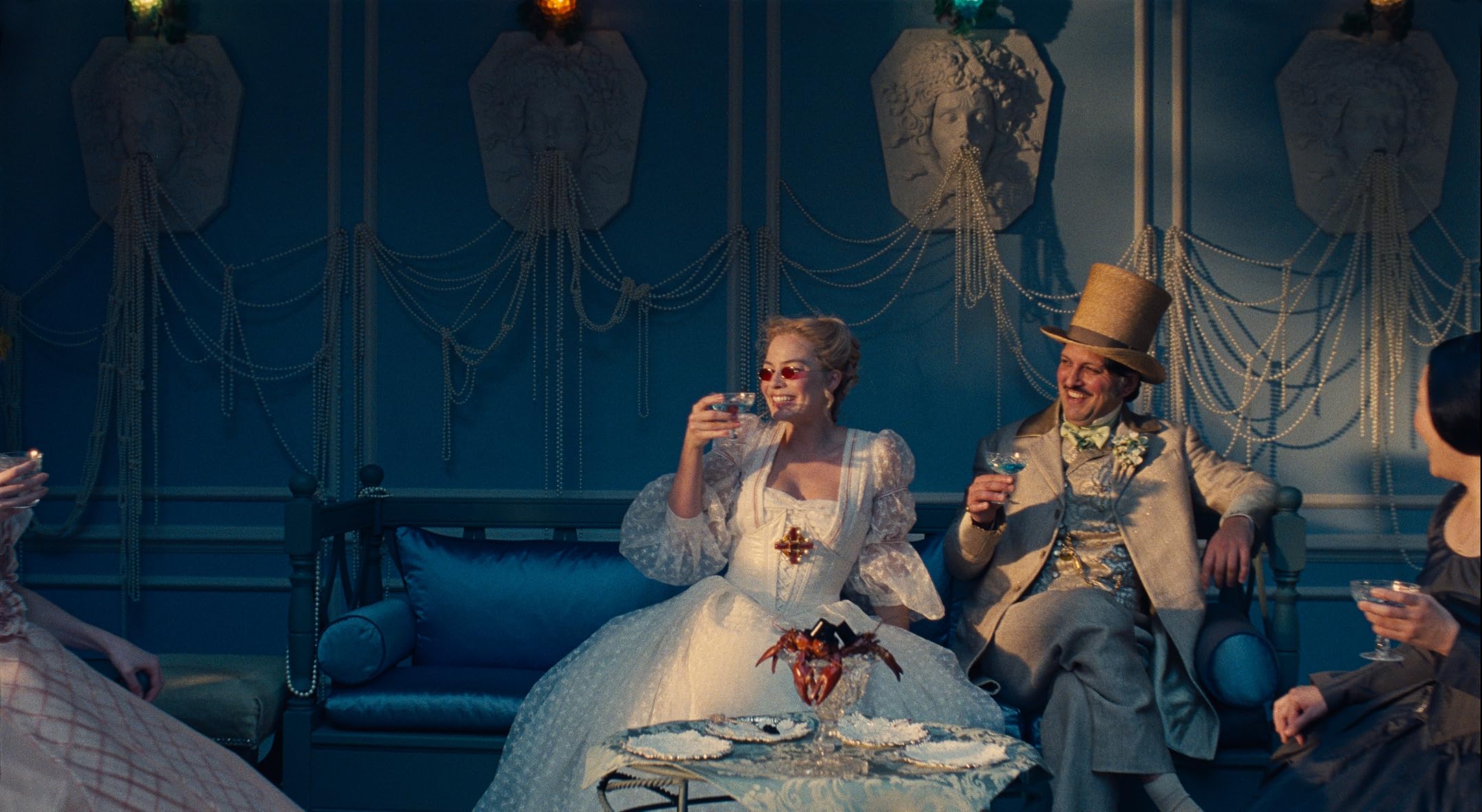
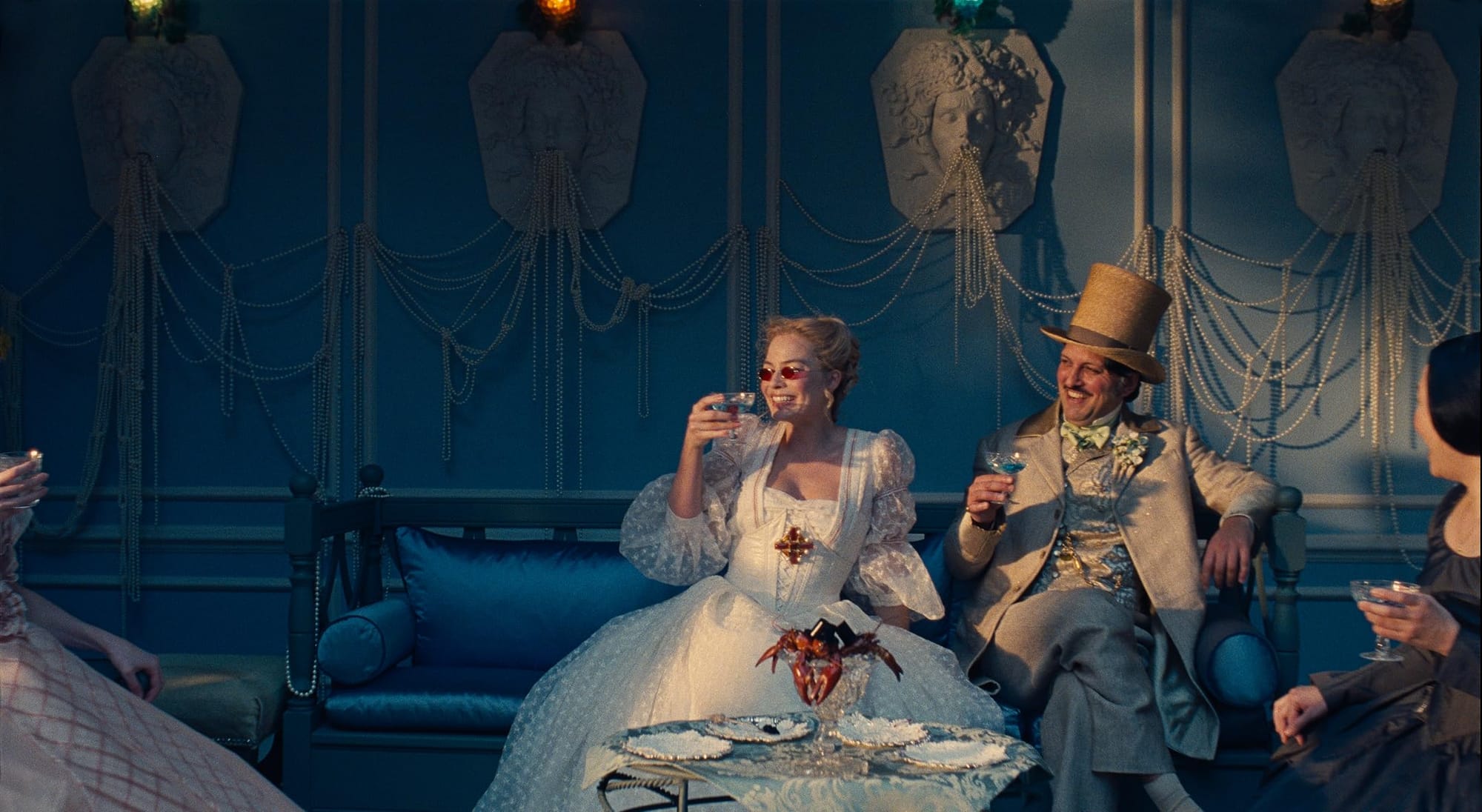
Early into “Wuthering Heights”, I figured out my pithy little Letterboxd review: “Maximalist edgelord shit.” Hardly surprising. The new adaptation of Emily Brontë’s only novel comes from Emerald Fennel, a director who has previously made movies designed to evoke violent responses. Her last at bat featured a scene in which Barry Keoghan literally fucks the fresh grave of the man he loved. She builds films to maximize audience response.
It’s an odd creation. And early reviews handed down a mixed reception. Die hard book fans seemed to revile it whereas those without the knowledge came down on it a bit easier.
Meanwhile, one of this year’s Best Picture-nominated films adapts a novel from a few decades before Brontë’s and got a number of other noms to boot. Frankenstein has been a long-gestating project for director Guillermo Del Toro. Like “Wuthering Heights”, Del Toro’s film had a mixed reception, but because Del Toro has become an Oscar darling, there’s an urge to (at least briefly) consider any of his movies as contenders for awards consideration. His sense of craft and vision and artistry make him a filmmaker to look out for.
If there’s a connection to these two creations (besides the fact that Jacob Elordi plays a monster in both) it’s in the contrast of their approach to adaptation. Fennel’s “Wuthering Heights” was always going to be a contentious film. But her decision to jettison major aspects of the novel’s plot so that she could produce what the marketing called “The Greatest Love Story of All Time” is something of a head scratcher. Del Toro’s Frankenstein on the other hand is a relatively accurate translation of its source material with a few minor changes. It’s not like he casually tosses away Mary Shelly’s framing device.
But…………… maybe there’d have been value in him having done so.
The relative safety of GDT’s Frankenstein
Read any interview with Guillermo Del Toro and he’ll mention how much he loves monsters. They might run the spectrum from menacing to friendly, but they’re always present in his work.
With that remit, it’s no surprise Frankenstein has been a dream project for Del Toro for his entire career. It’s the ultimate monster story. Add to it that the past few decades have cemented a critical reading of one of Shelley’s key themes:
“Knowledge is knowing that Frankenstein is not the monster. Wisdom is knowing that Frankenstein IS the monster.”
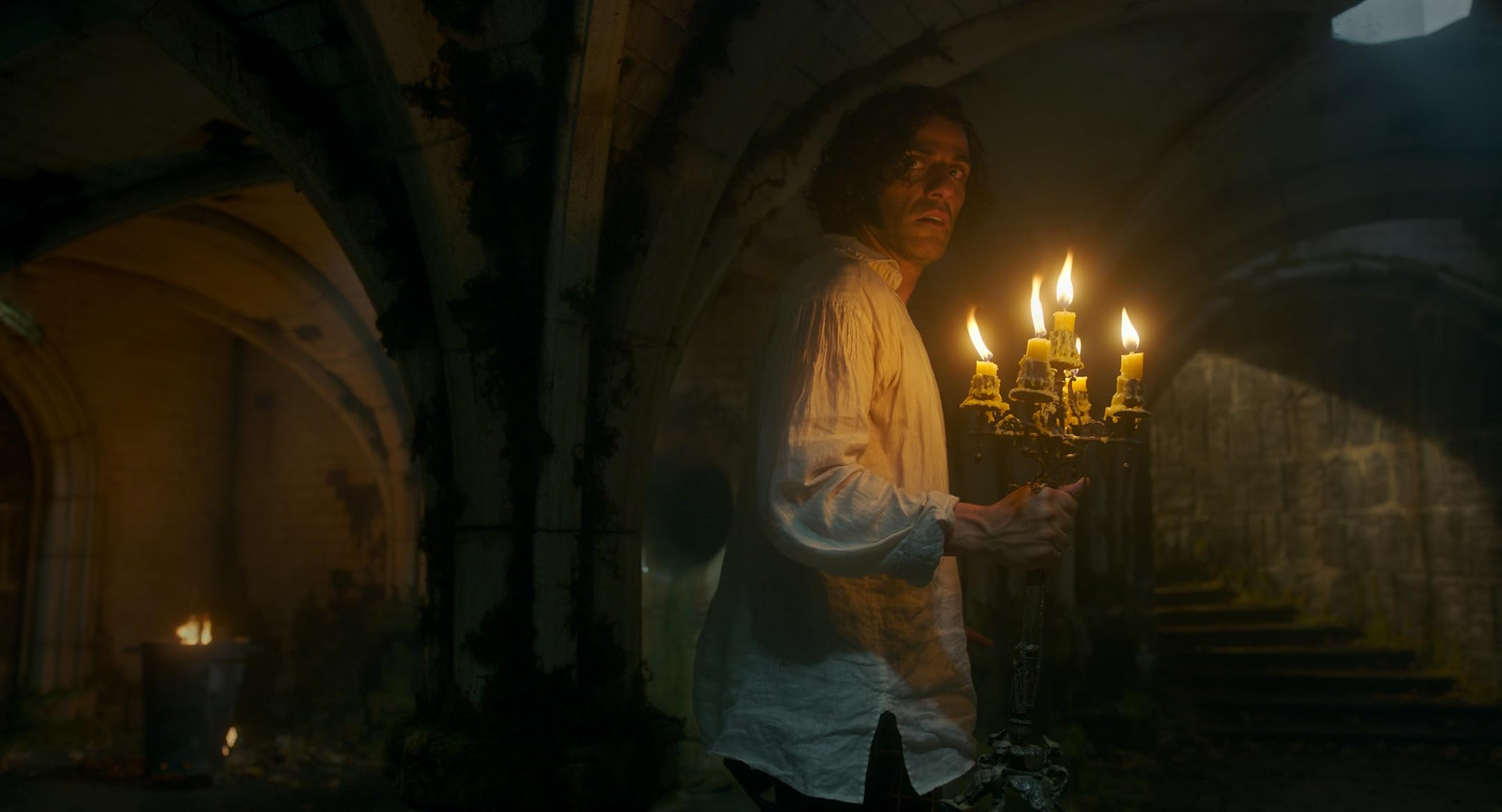
For Del Toro, this is obvious. Victor Frankenstein (Oscar Isaac) himself is an utterly monstrous individual. This isn’t (as the story’s characters would have you believe) because he creates life, but rather because of the way he treats the scion of his magnificent brain. Meanwhile, the Creature (Jacob Elordi) remains the central character for the back half of the film and Del Toro works extremely hard to build the audience’s empathy for him.
(In case anyone is worried this is reading too much into it, Del Toro made sure to write the aforementioned cultural zeitgeist line into actual dialogue.)
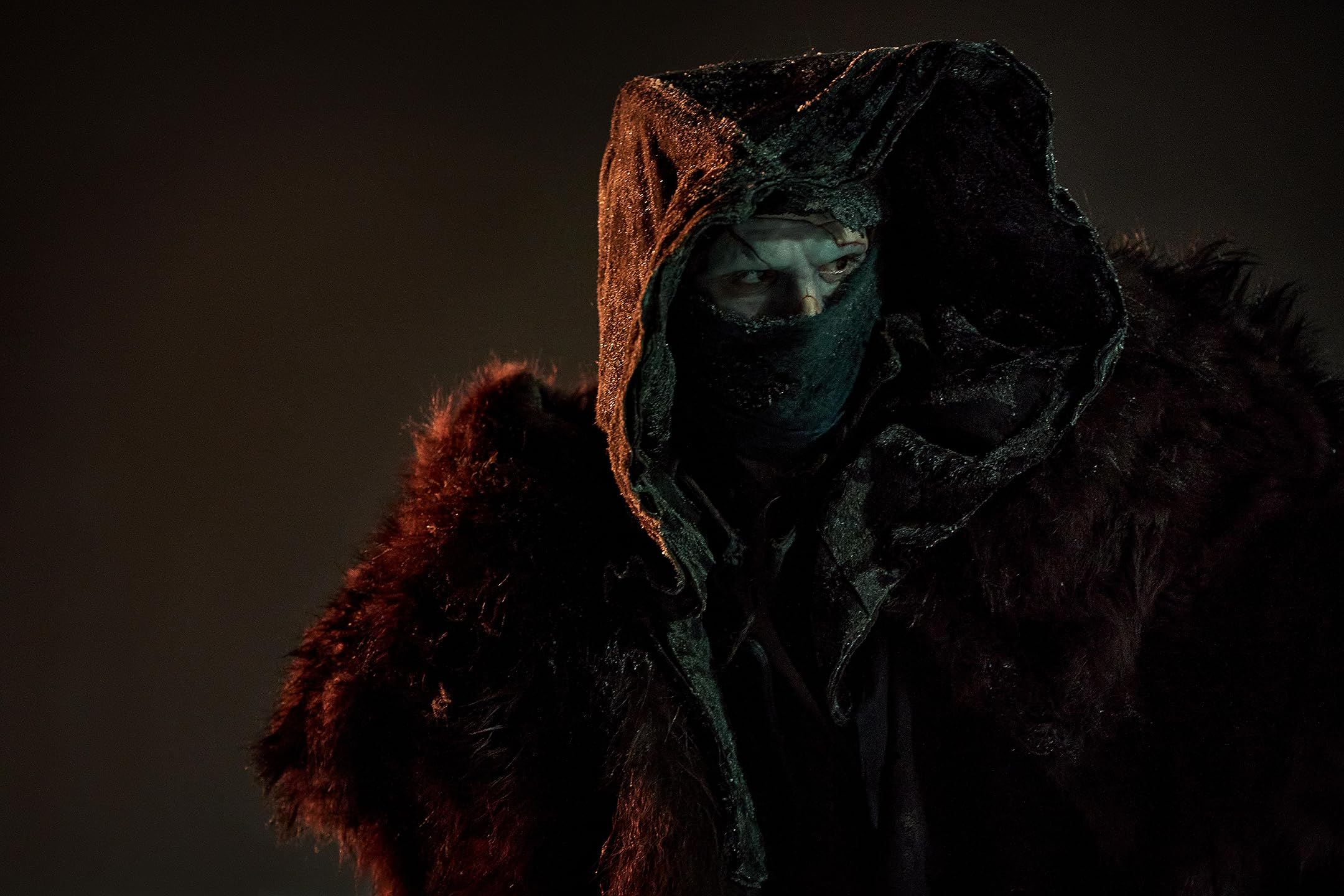
Sure enough, this focus on the creature feels a bit unlike most other takes on the character. Elordi is tall and beautiful, almost human form in its most ideal state. Yes, he’s got the patchwork skin, but Del Toro designs that scarring to feel like a quality of his inherent beauty rather than something that makes him grotesque (though it is that too). He’s got long hair and perfect musculature. And also he looks like Jacob Elordi.
If there’s more here, it’s in the ultimate curse of what Victor gave to him. Victor didn’t just create life, he created a super magnificent being that literally cannot die. He has cursed his creation with eternal life. At a certain point he begins begging for Victor to grant him the sweet release of death. And neither guns nor blood loss nor even a stick of dynamite exploding in his hand can bring him any closer to it. It’s the most interesting idea in the film by far, but without the revenge plot of creation against its creator, it leaves the creature with little in the ways of raison d’être.
In minimizing the monstrosity of the creature, Del Toro both portrays Victor as a complete asshole and doesn’t fill the vacuum of the creature’s story with enough narrative juice to sustain the film long term. Book Victor (a biased narrator) portrays his creation as one seeking revenge against him. Here, though, Del Toro refuses to see the creature as willingly indulging in such violence, only engaging in destructive action only when absolutely necessary (like protecting the Blind Man from the attacking wolves).
All this adds up to… something that’s not entirely clear. What is it Del Toro is bringing to this that makes it unique? Two centuries after the film’s release, Frankenstein is not just one of the most adapted texts in the history of film. Broaden the scope to include “depictions of Frankenstein” and the list gets absurdly long. Someone as wildly imaginative and thorough as Del Toro and who also happens to have an obsession with monsters should result in a specific vision. It should be a slam dunk.
Where his adaptation succeeds most is in its aesthetics. The Angel of Death feels like a quintessential Del Toro design, and the scope and breadth of the castle in which the eponymous doctor conducts his experiments is breathtaking in all the lush ways we’d want a big budget Frankenstein to be. More than that, Del Toro doesn’t seem to shy away from the artifice of cinema. Settings exist to serve the story and convey tone, not necessarily to convince audiences that what they’re watching is real. This arch gothic style contributes to the sense of fairy tale and fantasy.
Most impressive of these is the design of the creature himself, where Del Toro removes the (probably copyrighted) stitching that defined Boris Karloff’s iconic look. He revels in the body’s patchwork appearance, and finds beauty in it. Casting Jacob Elordi for the role only ups the eroticism of him when he casts away the cloak and stands in all his resplendence.
But film needs to be more than just design.
For comparison, the film he made just before this one is the stop-motion Guillermo Del Toro’s Pinocchio. His Pinocchio is a wooden boy who has all the intelligence of a newborn crossed with the swagger of a teenager. Del Toro also sets the story amidst the backdrop of Fascist Italy, providing political commentary not dissimilar from Pan’s Labyrinth’s use of the Spanish Civil War. It’s a bold vision that stands in contrast to the Disney-fied touchstone most audiences know.
Maybe there’ll be more that reveals itself in later viewings, but there’s still always going to be the lingering thought that Del Toro’s flair for design and aesthetic is the real powerhouse here. Not the story. It’s a weird thing he’s created, and never quite manages to justify its existence.
The audacity of Emerald Fennel’s “Wuthering Heights”
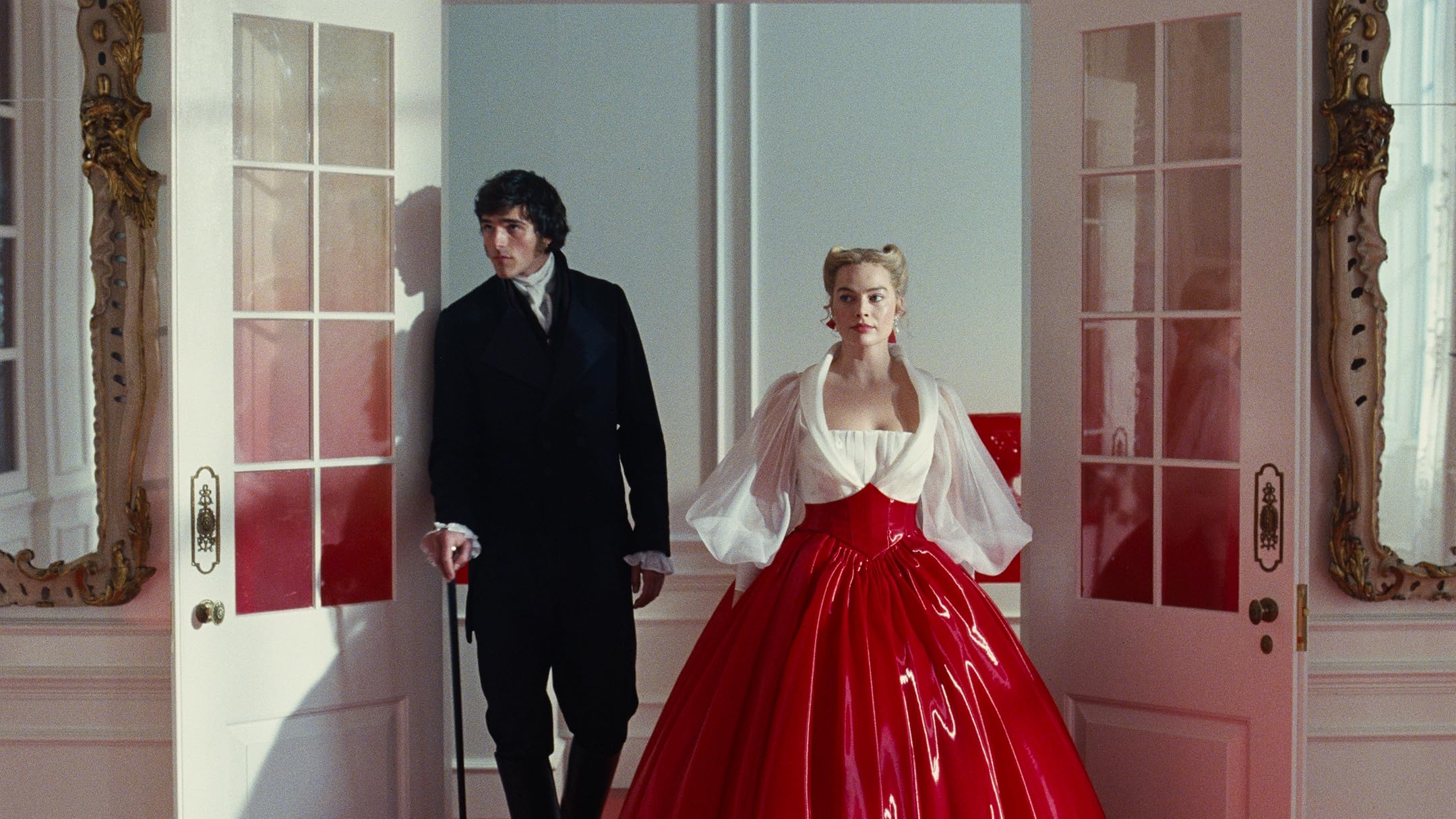
As “Wuthering Heights” approached its ending, it was difficult to figure out how the hell Emerald Fennel was going to pull out of the third act’s tail spin. Cathy (Margot Robbie) is dying of sepsis, a byproduct of an untreated miscarriage. Heathcliffe (Jacob Elordi) has gone full monster mode, corrupting Isabella Linton (Alison Oliver) into a BDSM relationship in which he treats her (and she acts like) a dog. For a film that billed itself as “inspired by the greatest love story of all time” it sure seemed to be ending poorly.
And poorly did it end. Cathy dies as a result of the infection, and Heathcliffe’s obstinance and stubborness results in him arriving too late to even say goodbye. The last image is of him crying over her corpse. It’s a bitter ending. And without intimate knowledge of the book it felt both audacious and perplexing.
What I didn’t know in the moment, though, is this audacious ending comes amidst Fennel straight up excising the novel’s main framing device. Emily Brontë filtered her tale of Cathy and Heathcliffe through Nelly’s recounting their history. Dating back to childhood, the book is a bittersweet case of their timing never working out and how those choices ripple into the future. Cathy does die as a result of her pregnancy, but she dies giving birth to a daughter (also named Cathy) whose father is O.G. Cathy’s husband Edgar Linton (Shazad Latif). Meanwhile, Isabella absconds in the aftermath of Cathy’s demise and gives birth to Heathcliffe’s son: Linton. Fennel smothers those developments. Cathy’s death is an operatic flow of blood from her miscarriage finally spilling into the real world (like her womanhood is literally the thing that kills her), and there’s not even the hint of an Isabella pregnancy). The Gothic novel’s extensive motif of supernatural ghosts, lurid details of Heathcliffe digging up Cathy’s grave multiple times, and the complex dynamics of Cathy & Heathcliffe’s respective children after decades of life don’t factor into Fennel’s interpretation at all.
Of the people I know who are fans of the book, this is scandalous. It removes one of the thorniest and most engaging parts of the novel, and gives no mention of an aged Heathcliffe who has lived for decades in the absence of Cathy. Stripping out one of the novel’s signature thematic buttresses should annoy those who the full Wuthering Heights experience, especially a modern one that comes with sexy movie stars like Robbie and Elordi.
And yet… while the first thirty minutes felt garish and the sort of hedonistic excess that hallmarked Fennel’s previous film Saltburn, the film shifts once Cathy commits the cardinal sin of marrying Linton. It immediately enters a multi-year montage set to the music of Charlie XCX. It chronicles her misery. Her withering in the face of marriage felt right, a fitting rebuke to her reckless, incorrect choice to marry Linton. Her pregnancy with his child is the thing that pulls Heathcliffe back to the narrative, as though it’s the line the universe cannot abide her crossing. The pregnancy anchors her to Linton. The baby is unquestionably his.
And suddenly Heathcliffe returns.
It isn’t long before they’ve delved into a torrid affair. In the original novel, Brontë does not allow the two to consummate their love (undoubtedly due in part of her era’s conventions). In all her maximalism, Emerald Fennel makes it clear that not only do they bang it out, but they bang it out many, many times in another montage… also set tot he music of Charlie XCX. This one is far more liberating even if it comes with Fennel’s… weird portrayal of sex in all its tactile strangeness. More importantly Heathcliffe never catches wind of her pregnancy. She manages to keep it from him even though they’re having sex probably daily. Their time together is incredibly brief, and it’s only through external factors that he learns of it.
The rest of the movie is the two falling apart, what with the revelations of Cathy’s pregnancy, Heathcliffe’s offer to murder Linton, the weird BDSM marriage he has with Isabella, and Cathy’s miscarriage developing into the sepsis that kills her. All of this is… fine. Hell, Cathy’s marriage to Linton (by way of giving him an heir) is the ultimate reason for her demise. Heathcliffe’s reckless marriage to Isabella and brutish manner in trying to jealous Cathy back into his life leaves his fate in the hands of a vindictive Nelly. Had he swallowed his pride, perhaps he could have convinced Cathy to pass the miscarriage before it got too bad.
By centering the story exclusively on Cathy & Heathcliffe, it’s hard to figure out what another satisfying ending would be. They’re horrible for each other. Retaliatory actions escalate until the inevitable breaking point. Revenge leads to ruin.
And so, the film ends with the two shattered. Heathcliffe’s future is uncertain, and without the novel’s children there is no way for their story to continue. The lingering sense on which the film leaves is one of bitter, bitter loss. His life will be miserable. With Cathy’s death, so too does his narrative.
The audacity of adaptation
There’s no reason to think “Wuthering Heights” will work for everyone. But… there is something to Fennel’s vision that’s missing in Del Toro’s long-gestating Frankenstein. While I’m not sure what it is Fennel was trying to say with this film (Sean Fennessy on The Big Picture podcast spoke about how all three of her films are about lower class individuals infiltrating the corrupt society of upper class elites and absolutely destroying their system; that’s as good a read as any, I guess), there is an audacity to it that I appreciate.
On the drive home I called my partner to explain what Fennel did. The quick wikipedia download aided our discussion. It helped to get context from someone who’d read the book a few times, and without that knowledge in the darkened theater it was impossible to know all the elements I’d missed out on. Despite myself I kept coming back to the idea that Fennel’s brash and garish take on this story was far more interesting than Frankenstein. One felt like exactly what I’d expected. The other was a maximalist going full fucking edgelord.
“Wuthering Heights” is a massive, unapologetic swing that feels like exactly the film Emerald Fennel wanted to make. If it’s not scratching the Wuthering Heights itch, there’s dozens of other adaptations from the past century to check out. Sure, none of those have Margot Robbie or Jacob Elordi, but they probably have a lot of discussions of ghosts and Heathcliffe being even more cantankerous and broody in his old age. As a bitter love story from the same person who did Promising Young Woman and Saltburn… yeah it makes sense that her final image almost directly homages Robert Eggers’s in his remake of Nosferatu. Heathcliffe is monstrous, with Cathy hardly any better. Their love (or lack of ability to throw caution to the winds and just embrace their mutual desire) really was toxic. It ended in tragedy for both of them.
This sort of adaptations is far more preferable to the one that gives Frankenstein’s creation immortality and super powers. It’s safer and generally comes with deference to the source material and an acknowledgement that the adaptation will always be inferior so why bother trying to outdo it. But that can ignore all the various artists who come together to bring imagination into reality. Embracing this idea of filtering a work through a creative’s lens allows for something that can exist as supplement or annex to the original work. Perspective and choice helps to reshape an original narrative so it might be something more.
The flip side of this is the point at which pushing the bounds of a story can warp it into something that bears little resemblance to the original source. “Wuthering Heights” is the sort of wild swing that does this, and in a lot of ways it discards some of Emily Brontë’s ideas to the detriment of it reflecting her novel. But this method will always be more interesting than some bland regurgitation. Instead of breaking, perhaps such ambitious efforts can make for a bolder, grander final product.
And maybe once it’s there, it will have a life of its own.