Freshening Up A Genre-Medium - The Good, The Bad, and the Ugly
The distance from the birth of cinema to Leone's third film is roughly the same time span as this to our present. How long until we can get something this good with the zeitgeist of the now?
The first thing that happens in Sergio Leone’s iconic, epic, spaghetti western The Good, The Bad, & The Ugly? Ennio Morricone score hits. Oh. This iconic western sound? Yeah. That’s this movie.
Despite only ever making seven films, Leone had an outsized impact on cinema. The generation that came up on the 90s and early 2000s drew influences from Leone and his style. Quentin Tarantino cited him as a major influence and even hired Ennio Morricone to do the score for The Hateful Eight, the only time Tarantino has used an original score for his films. Edgar Wright’s films also have a ton of Leone in them. There’s a direct line from the big climactic shootout in The Good, The Bad, & The Ugly Edgar Wright’s quick-cut editing style.
Watching now, this is a bit more challenging today than it probably was when movies were mostly in cinema houses. It’s three hours long. It has no stars aside from Clint Eastwood. While Lee Van Cleef’s “Angel Eyes” is trying to track down the gold from the film’s second sequence, Tuco and Blondie take a full hour to join the film’s plot. It’s not until the carriage’s arrival that the two men kick into gear. It takes a long time to do anything. And the climactic shootout is all buildup for a quick exchange of a few bullets and a climactic moment of Tuco balancing his toes on a grave-marker cross to keep Blondie’s trap from hanging him. It’s far from, say, the extended shootout of James Mangold’s 3:10 to Yuma remake, which is the sort of action a modern blockbuster would demand given the core premise of “get Russell Crowe on that train by any means necessary.”
The Good, The Bad, & The Ugly is a micro epic. The narrative sprawls across the Old West but keeps its focus tight on the three central characters and their dynamic, even if they weave in and out of each other. That, mixed with Leone’s sense of style, the iconic, and the mythic is why it’s survived into the conversation for more than half a century.
It helped to reshape and revitalize a genre. There are other genres that could use such a shot in the arm.
So yeah. I guess I should talk about superheroes.
Spaghetti
As America’s wealth enabled the rapid growth of the film industry in the early 20th Century, westerns became the cheap, easy thing to produce. During the silent era, there was a time where the western section of the Universal Studios backlot could film up to six productions simultaneously. They were cheap. They had action. They drew a cadre of reliable stars… The sheer volume of westerns Hollywood produced up through the early 70s is an insane number.
It also helps that as a genre, the western is quintessentially American. It’s about the frontier and expansion and freedom and exploring new land in the name of settlement. Heroes fought nature and the lawlessness of minimal civilization and also the indigenous populations they were displacing. Naturally, this meant westerns skewed heavily in favor of white male heroes. That also meant that there was a simplicity to the stories. There were good guys and bad guys. Because filmmakers and studios were making these for mass consumption, this could often be quite reductive.
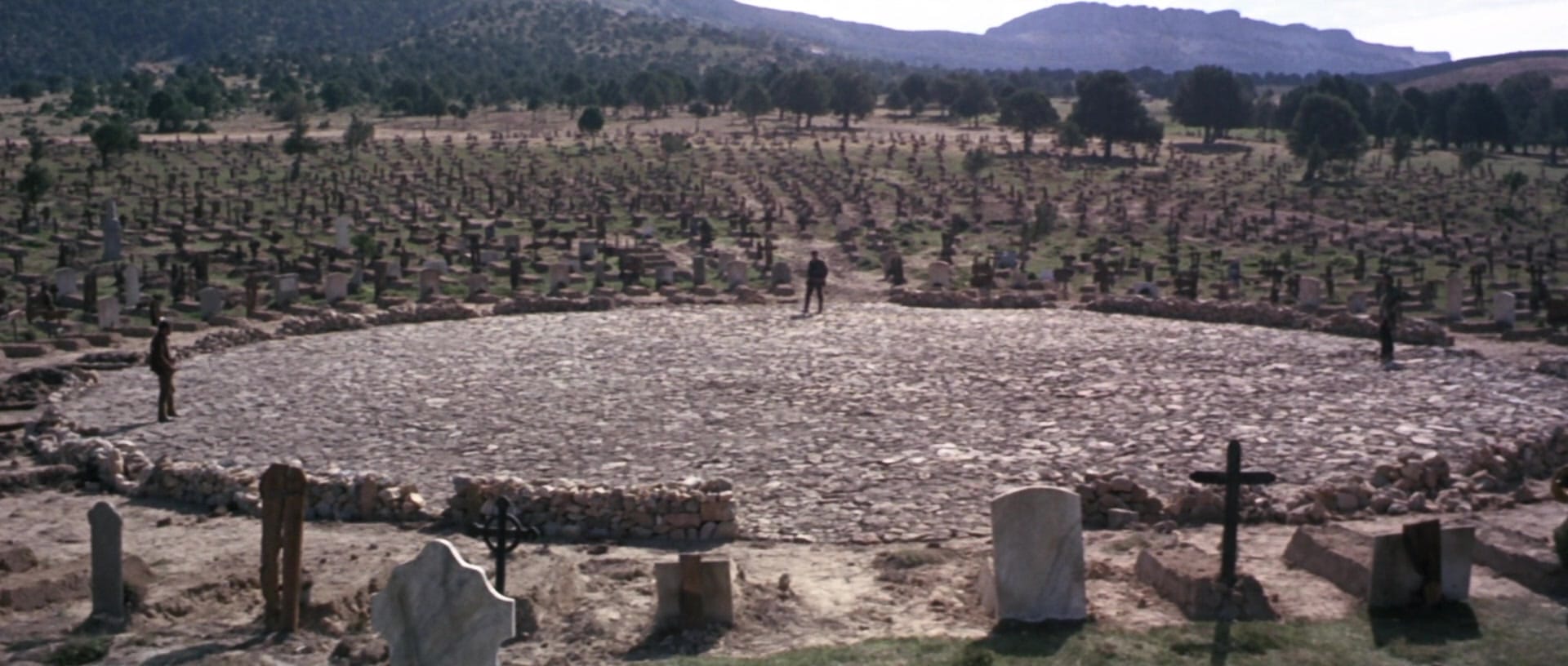
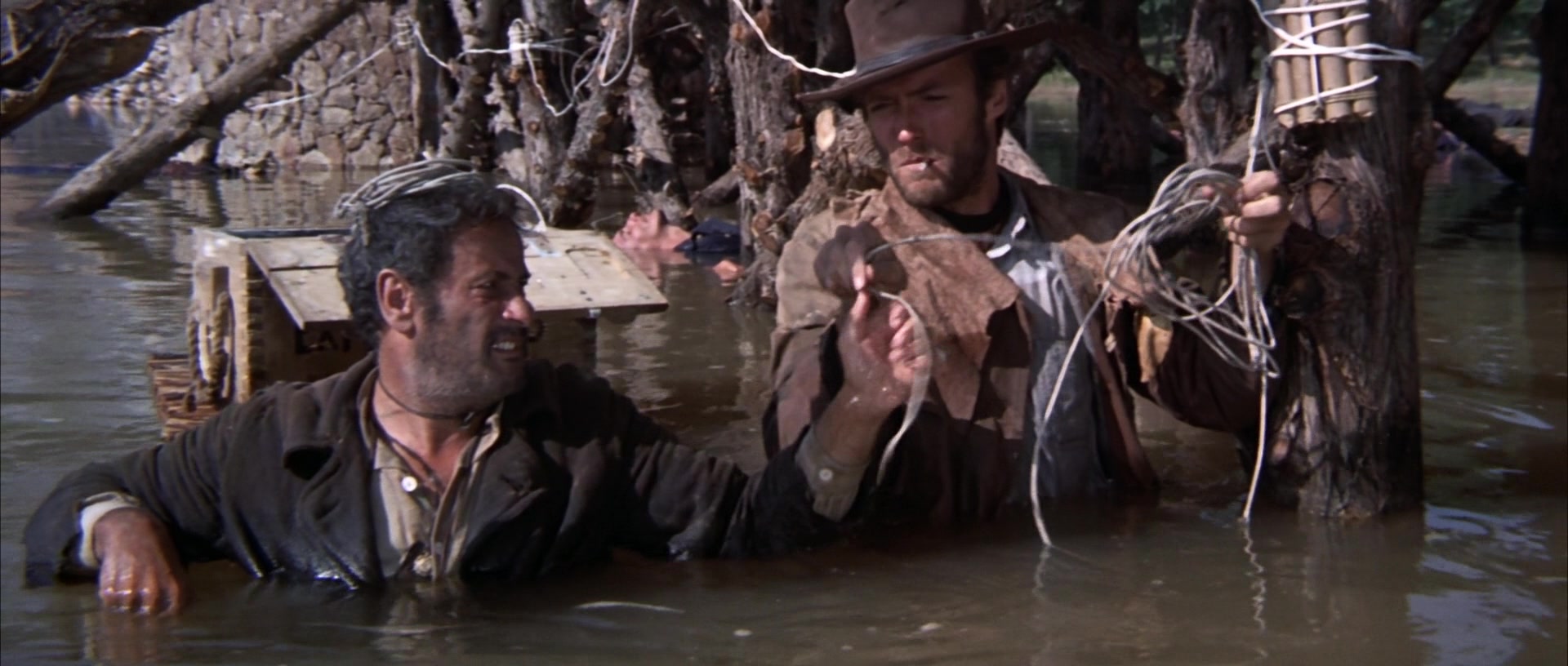
So that’s why when someone like Sergio Leone came along with his own spin on the genre it took the world by storm. Leone wasn’t the first European to make a western, but Fistful of Dollars was undeniable, even if Leone did basically rip off the entirety of Kurosawa’s Yojimbo1 for his own purposes. And while I liked For A Few Dollars More, The Good, The Bad & The Ugly is undeniable as a capper to that unofficial trilogy. It’s slow and meandering, a simple story (three men find out about some gold and they all head out to retrieve it, tripping over each other as they do) told over the course of three hours but the characters of the piece and the compositions Leone puts into the movie are truly incredible. By the time Tuco is running through the graveyard trying to find the correct grave, it’s a breathless climax. When all three men stand in the middle of the graveyard’s dais, it’s incredible to see everything we’ve seen come down to one quick draw.
Leone’s editing here is unreal. Even watching it now, all these close-ups to tell the story becomes the film’s legacy. The acceleration almost like a the quickening of a heartbeat as the adrenaline pumps and pumps until a full release.
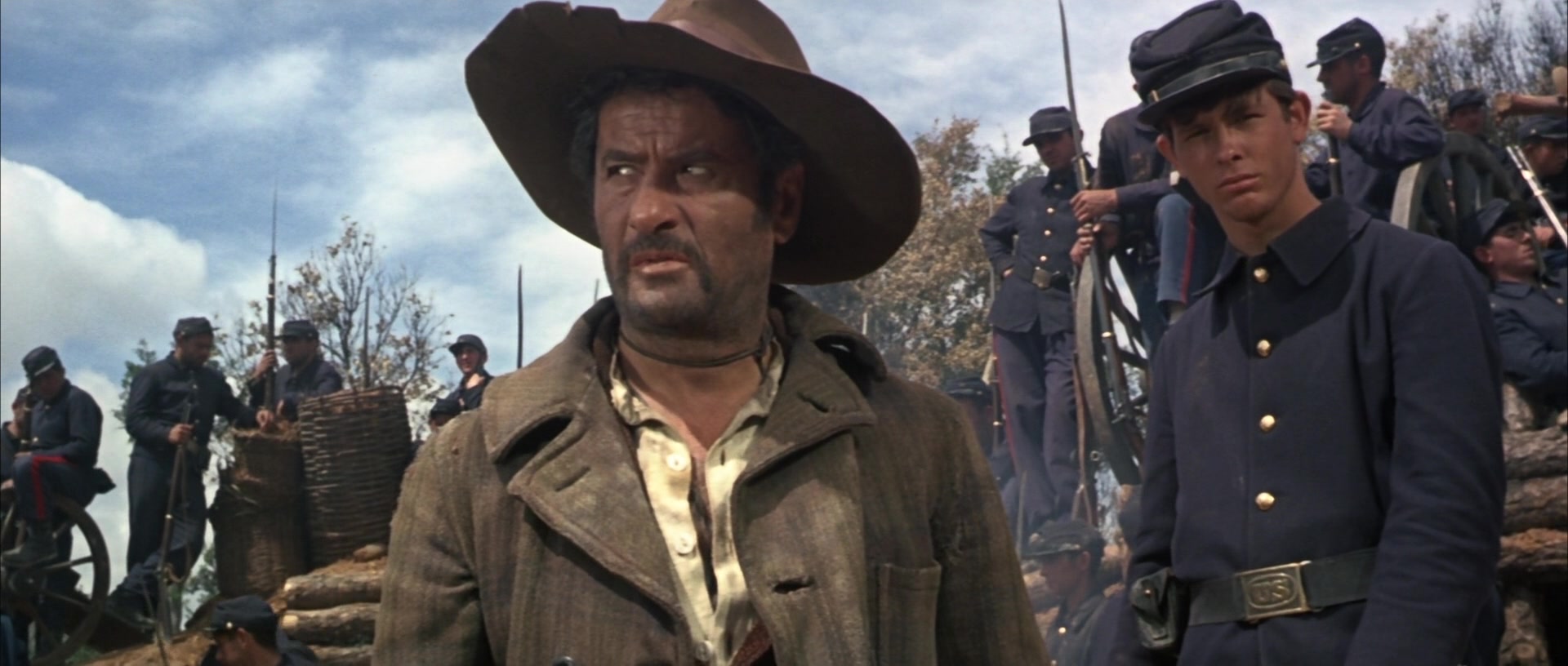
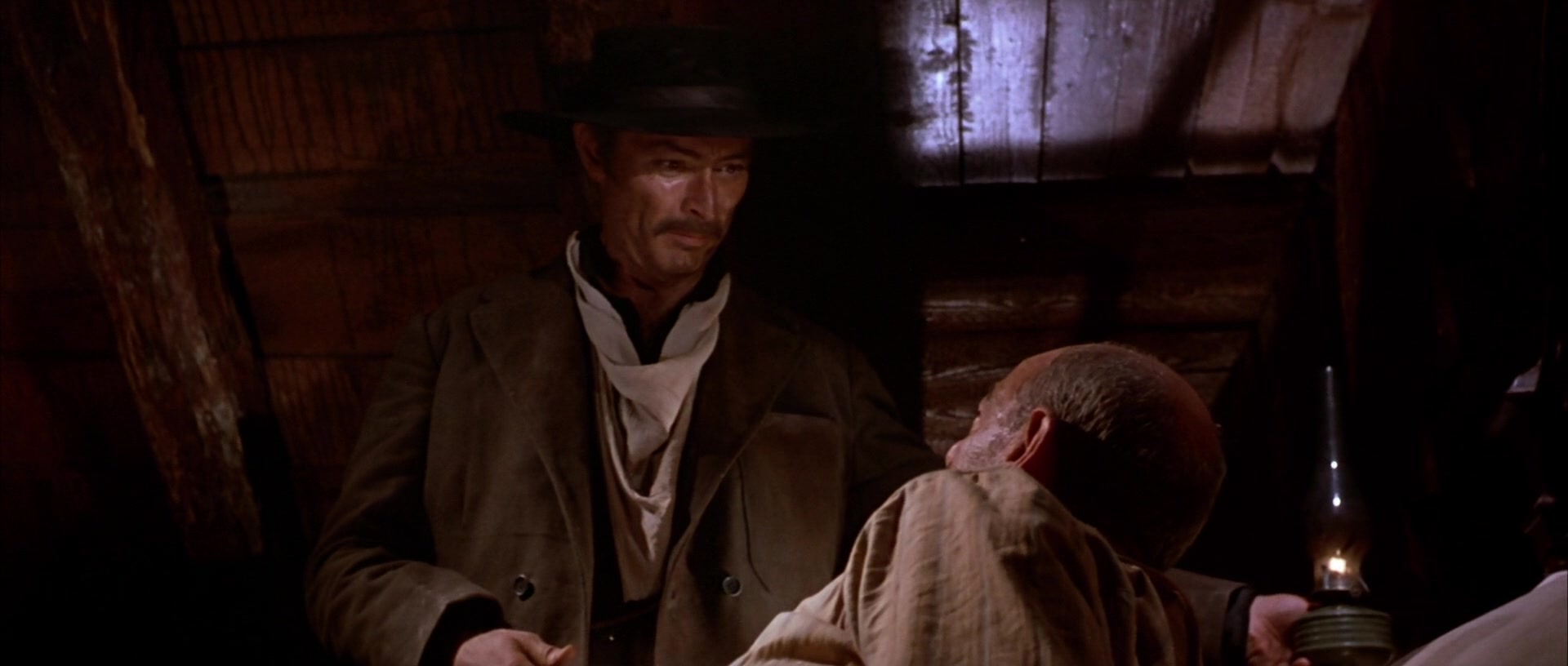
But even on a narrative level, this isn’t as simplistic as the title card annoucning who Leone views as each titular adjective. Blondie might be the good but he’s also a huge dick. Angel Eyes might be a sadistic bastard but he also doesn’t kill Tuco after Tuco’s given him the information. And Tuco? Sure, he’s ugly in that first shot, but he’s got them other adjectives too. All three blend the adjectives together to create complex characters within the traditional archetypes of the form itself.
It pushes the ball forward, expanding not just what a western is capable of, but also what cinema is capable of.
Yes I’m gonna talk about Watchmen again…
When Chris Nolan talks about film as a nascent artform, Leone is certainly one of the people who undeniably pushed the medium forward. Importantly, though, he also pushed the genre forward as well. The western was less than a hundred years old when Leone made his, and he was in dialogue with all that came before it.
In a world where people are very against superhero movies, it’s easy to draw a comparison from them to westerns. Had there been social media in the 30s and 40s, people probably would have bitched about the absolute glut of westerns Hollywood shelled out every month. Leone’s films (his first three anyway) felt like fresh takes on the genre rather than full-on deconstructions (Eastwood would go on to do one in Unforgiven).
When it comes to superheroes and deconstruction, Watchmen is always the first to come to mind. Zack Snyder’s Watchmen adaptation put nipples on the Ozymandias suit as a vapid commentary on Joel Schumacher’s Batman & Robin. Snyder didn’t seem to have anything to say to that, it just felt like a reference to Schumacher and the controversy. If anything, it’s that detail that indicates the film version of Watchmen as premature. Snyder can only point at the detail. He has nothing to say within it.
By the time the Alan Moore/Dave Gibbons miniseries came out in 1986, superheroes had existed for almost half a century. The two of them pulled from that entire history to subvert and push forward the genre itself.
Snyder’s Watchmen came out in 2009. It’s hard to pin down the beginning of superhero films. Superman The Movie was a major entry in 1978, but the next major contribution was Batman in 1989. There followed a slow drip of superhero movies (the 90s Batman movies, Steel, Blade, etc.) but it didn’t break out into a big proper replicable thing until X-Men in 2000 followed by Spider-man in 2002. There have been leaps forward at times, and it’s easy to chart Raimi’s Spider-man to Nolan’s Dark Knight Trilogy to the MCU (specifically from Avengers to Endgame) and see the moments where they level up. Spider-man 2, The Dark Knight, Black Panther…
But even if starting at Batman is the right choice, that means Watchmen came out barely 20 years into the genre-medium’s lifespan. Even today, we’re dealing with a genre-medium that’s less than forty years old. Compared to the rest of cinema, superhero film is somewhere around Stagecoach at the absolute latest. We haven’t even gotten superhero Casablanca yet.
Because Marvel has been at the center of this genre-medium, it’s easy to assume that Marvel is about what superhero films are capable of. But that ignores something like the Spider-verse movies or Nolan’s films. In the hands of extremely talented storytellers and filmmakers, innovation and mindblowing leaps forward are not just possible, but probable.
Imagine living in the mid-60s and being a bit of a western fan but feeling like things have fallen off a bit. John Ford made The Searchers but that was a few years ago, and it still feels like the best version of the sorts of movies that Hollywood has been making for decades. You’re living in a doldrums.
And then, out of nowhere, here comes that one guy who was on seven seasons of Rawhide and he’s making these movies directed by some random Italian dude on very little budget out in the middle of the Spanish desert. They feel both totally right and also fresh and exciting. What a shot in the arm they are. This isn’t just any western. This is someone at the level of John Ford only driving a totally different vehicle. It’s cinema.
The big new
This comparison is not quite one-to-one. The dynamics of making a superhero film are wildly difference from the point and shoot of a western that used cheap sets and low budgets. The plan with a superhero movie is to practically saturate the product with robust digital effects. That means expense. Superhero movies have also cornered a market on the big budgets in which studios want to invest, leaving very little room for other films (sci-fi, big sexy adventures, etc.) to flourish.
There’s still the sense that we live in this strange fallow period where superhero movies seem to be less bankable than they used to be. Marvel’s format feels tired. James Gunn’s Superman was remarkable, but in part because of all the ways Gunn subverted Marvel’s house style. We can wait for the next Spider-verse, but the production cycles on those movies are so long. The western must have gone through this.
And yet, where’s the superhero corrollary to The Good, The Bad, & The Ugly?
Weirdly, maybe we already had one. It’s not exact, of course, but SS Rajamouli’s RRR is one he described as a superhero movie, even if most people outside India were unfamiliar with those two freedom fighters. They don’t wear capes, but they are heroic and superhuman. Like Italy and the western, Rajamouli hails from India and taking RRR as a major blockbuster event a la an MCU release reveals what this might look like. And Rajamouli steeps RRR in Indian culture and history and it still traveled internationally to be a huge global smash.
It’s insane to think about. It’s insane to think that some day a superhero score will probably happen that becomes the new de facto go-to format, something that shifts us from Williams (Superman), Elfman (Batman), or Silvestri (The Avengers) and give us something with the potency and innovation of Morricone. None of this is a guarantee, but all of the potential energy is there for gifted and talented artists to come out of nowhere and produce something at this level of insane and wonderful.
This might be decades away. It also might not.
Such a film could inspire another wave of filmmakers who watch it over and over again, translating stylistic flourishes into lessons of their own and creating some voice that evolves the medium into the future. This can all happen long after all of us die.
All we need is risks and studios rational enough to take mad swings on visionaries. A genre-medium won’t change as long as a house style dictates its overall direction. It requires free thinking, incredible filmmakers, and a willingness to grab for something risky. It will also mean being open to international cinema.
And it also means finding the next Ennio Morricone.
To the point where watching Fistful of Dollars shortly after Yojimbo made me feel like I was taking crazy pills. And then I looked it up and it was like “oh.” ↩