Fragmented Narratives - Weapons Review
Zach Cregger's followup to Barbarian is a smash at the box office, but one complaint is more of a feature than a bug
Between seeing Weapons on Friday night and screening Barbarian with fresh-eyed friends over the weekend, writer/director Zach Cregger’s been on my brain for the past few days.
There is a challenge when discussing horror. The genre spans the cheap thrills of jump scares to the giddy fun of a good slasher to the macabre grotesquerie of torture porn (which itself spans from Saw to Terrifier). As someone who came to horror later in life (somewhere in my early 20s), there are certain realms I don’t stray into. I’m very leery of going anywhere near torture porn, and demonic possession movies like The Exorcist turn me off because demonic shit just feels so… sensationalist. Same goes for Evil Dead or what have you. But a slasher? I’m generally pretty in. Movies that live in spaces of dread and terror… definitely. Hell, anything that skews more towards thriller is always going to have my attention.
As a fan of Barbarian, the first trailer for Cregger’s followup Weapons was “oh hell no that looks terrifying”. And yet, anything that scares me like that… It won’t kill me. And movies generally don’t give me nightmares. And there’s usually a breath at the end of release that… I don’t know. There’s two spendable hours in my life. And that exhale is so satisfying. And after it I can… just walk out of the theater.
Weapons works similar to Barbarian. It’s a layered story that Cregger tells by gently taking the audience’s hand at the beginning and dragging it through the tale’s labyrinth until his name pops up in the credits. He’s extremely good at what he does and is maybe the best of this ilk since Jordan Peele.
And yet, there was a complaint I saw from someone on Letterboxd, and it was annoying enough that I debated unfollowing that person. It got me back onto my pet peeve issue of people complaining about how a piece didn’t align to their taste rather than meeting the artist on their terms. We’re all guilty of this.
But this one stuck with me. I’m going to try not to spoil Weapons (which everyone should see and in a theater; it’s a riotously good time), but… this is your warning that things might slip.
Bite-sized narratives
Much like Barbarian, Cregger’s approach to Weapons is one that attacks the subject from different angles. For his first film, he more or less bifurcates the narrative, where he builds to a massive, shocking moment at around the 40 minute mark, does a hard reset, and then more or less plays through things in an accelerated manner to get back to that moment. When he gets to the intersection the audience is waiting for, there’s a brief reset (more an interlude, really) before it brings it back to the dual threads that will run in tandem through the rest of the film. If it falls apart in the third act, it’s because that interlude is mostly just creepy ass backstory rather than narratively propulsive. Cregger technically doesn’t need to put it there, and it is mostly present to dramatically demonstrate the house’s big secret, locking in the tension of the first two narratives’ intersection to keep them from fizzling1.
Weapons, though, is much cleaner despite being more diffuse. Like Barbarian, Cregger keeps the focus tight on individual characters and cuts away at moments of maximum “what the fuck”, letting the various characters within the town of Lumberton color in the various sections of the tapestry to show that this is the story of a larger community rather than one myopically focused on the ostensible main characters.
And yet, this came across my screen the other night:
Between the useless multiple-narrative structure here and the admittedly more engaging mid-movie "twist" in Barbarian you begin to wonder if Cregger can sustain a narrative for longer than 30 or so minutes before he feels compelled to start a new one.
Now, Weapons didn’t fully work for this quoted individual. But this is a complaint I heard about Barbarian, where Cregger’s rapid smash cutting to something right in a moment of maximum tension gave a sense that he had lost interest in his own narrative and needed to go do something else to build to a moment like that again.
That’s one way of thinking of things. But doing so ascribes a dismissiveness to Cregger that isn’t fair. For one, the second narrative informs on the first. Where the first chunk of the movie is almost exclusively about the danger warnings our patriarchy hardwires into a female brain, the second shows the privilege of someone for whom the patriarchy is a luxurious good time. The red flags aren’t threats but opportunities. She (like us) is on edge for basically the entire movie; he doesn’t realize there’s danger until it’s way too late.
Complaining that Cregger can’t sustain a narrative for longer than 30 minutes makes it sound like the parallel tracks of Barbarian would somehow be more effective if truly in parallel. Had Cregger done this, it would have robbed him of the thematic work that makes up the core DNA of his movie. Cregger didn’t think long and hard about his movie and decide that the best way was to go completely free associatey.
To be even more ungenerous, it’s possible that this reviewer is venting his frustrations on the way films have continued to shred great structure because the frenetic punchiness of Star Wars led to decades of studios demanding blockbusters follow formulaic [Campbellian] structures. Even today, big blockbusters need action beats every 15-20 pages. Most major movies don’t allow themselves to slowly build to some grand catharsis— as though every movie could be Paris, Texas2.
Now, to his credit, that quest to be exciting and attention-consuming has gotten worse and worse over the last several decades. Social media has rapidly shredded what little remained. YouTube, Instagram, TikTok, and more all function on the idea that any given video has approximately three seconds to grab the viewer’s attention before they might swipe away. Netflix assumes it has 60-90 seconds to grab the audience’s attention before they go off to do something else. That’s not better.
With film (especially when going to a theater), there are built-in securities that will buy time to keep the audience around long enough to get into something. Audiences have put on pants, left home, purchased a ticket, and maybe even bought some snacks. They’re not going anywhere. Movies still work to capture interest and attention as fast as possible, but they don’t have to worry that after 90 seconds the audience is going to stream out of the theater in armed revolt because the plot hasn’t started racing ahead.
In both of his films, Cregger has constructed them in such a way that his stories’ mysteries will keep audiences locked in. Every time he drags viewers to something new, he makes sure there’s a cliffhanger of sorts to keep on the brain. It’s not like he heads off midsentence and leaves the audience wanting more. While the movie goes off to somewhere else, that other story is sitting there, still simmering on the backburner until he’s ready to reintroduce it to his grand cook. As time passes, the audience is still trying to make the connections to fit his grand puzzle together. It’s not that Weapons is a deep, thinky movie, but it does work to keep the audience’s brains operating at all times.
For one, this is a brilliant move for the current era. With fractured attention spans, it means Cregger can jump to something more interesting while he waits for another storyline to percolate enough information that exposition won’t drag down the rest of the film. When it works, this sort of crosscutting and plot weaving is the mark of a good writer and shows that the person with the pen is completely in control of the story they’re trying to tell by knowin how all the pieces fit together. Given the success of these two films, it seems like something in Cregger’s structure is working here.
For another, it helps to keep the story interesting and engaging. As humans, we put a lot of effort to trying to make distinct pieces part of some coherent whole. This happens with Barbarian, where the moment before the big smash cut to black followed by the gorgeous establishing shot of Malibu immediately kicks the human brain into a place of trying to make these two disparate pieces fit together. Not only that, but the horrific violence of the moment before is a promise to Cregger’s horror-watching audience: here’s a taste of the brutal, bloody, fucked up thing you came here for. Now… I’m gonna get you more, but let’s earn even more this time.
If the issue is that Cregger can’t sustain a narrative for longer than 30 minutes, that doesn’t make him some kind of lesser storyteller. Tarantino has a propensity for films with distinct, delineated chapters. Kill Bill alone is a film with like… twelve chapters. Does that call to question Tarantino’s capacity to tell a story that’s longer than the individual pieces? Should the opening chapter of Inglourious Basterds be shorter or not present, when really all it exists to do is to set up Hans Landa and then a reason Soshonna is going to spend the rest of her narrative laser-focued on revenge?
It’s easy to whale on new talent for having a specific style or format they like to utilize. It can be gimmicky, but if it’s serving the story, then… it’s hard to see what the issue is.
Individual Chapters
Of course, the other part of this is that the reviewer in questions specifically says that Cregger “wastes 45 minutes on dueling cop/junkie sketches”. Now, obviously I disagree with that, and saying these two storylines are useless ignores the richness they add to Weapons’ thematic discussions of average suburban communities like Lumberton going through a mass trauma events like the one at the film’s center. But setting that aside… okay. So he didn’t like these two storylines. People have tastes and these weren’t to his. Happens.
This is the risk that comes with a fractured narratives like this, especially when they come with explicit chapter cards for the audience to read. To jump back to the Kill Bill analogy above, I find I lose interest in the anime sequence that introduces O-Ren Ishii’s backstory in Volume 1. Similarly, I lose interest in Volume 2 when Bill takes the Bride to train under Pai Mei. Both are plenty entertaining, and I understand why both are there… and yet whenever those parts of the movie happen my mind starts to wander, wanting to get back to Lucy Liu or the Bride and her struggles to take out the final two assassins before she goes off to fulfill the title of the film.
There isn’t really a remedy here. But it is something to be aware of when constructing these fragemented, character-centric narratives.
To return to the Inglorious Basterds example, the only problem with the chapters of that movie is that none of them are long enough. I could spend hours watching Tarantino’s inspired take on World War II. The Basterds hunt Nazis through France could be an entire film series. The cellar sequence could go for another 20 minutes. Even if Shoshonna is the weakest storyline in the movie, every scene with her is explosive and incredible. All of these disparate threads being so exquisite is why that film is Tarantino’s best.
The question I would turn back to the reviewer in question (as though he’d ever read this) is what would it have taken for those two stories to be interesting. Obviously, he read it as purely a plot device to justify their roles in the film’s final act… but if you straight up pull those two chunks out of the movie, does that make the movie better?
It’s always so easy to critique artists for decisions we cross our arms and don’t like. God knows a lot of times I go to talk about some not-current film it’s going to have a tinge of setting right some grievance that felt overly dismissive of a narrative I viewed as carefully, delicately crafted by serious craftspeople.
Weapons is one of the great movies of the year because of all the scratches it itches: it’s terrifying, funny, sickening, heart-wrenching, thinky, and also hilarious. It cements Cregger as a cinematic voice worthy of my attention anytime he wants to come out with a movie.
What’s frustrating, though, is that all movies, television, and stories are worthy of far more than a pithy dismissal, especially when it’s parrotting some zinger that comes secondhand. Criticism should be bigger and bolder than “Superman doesn’t even throw a punch” or (even worse) the word “meh”, which to this day freely flies from uncaring mouths. Sure, this reviewer didn’t say that, but giving “meh” as a response is a level of dismissal that’s more insulting than even the most searing of pans.
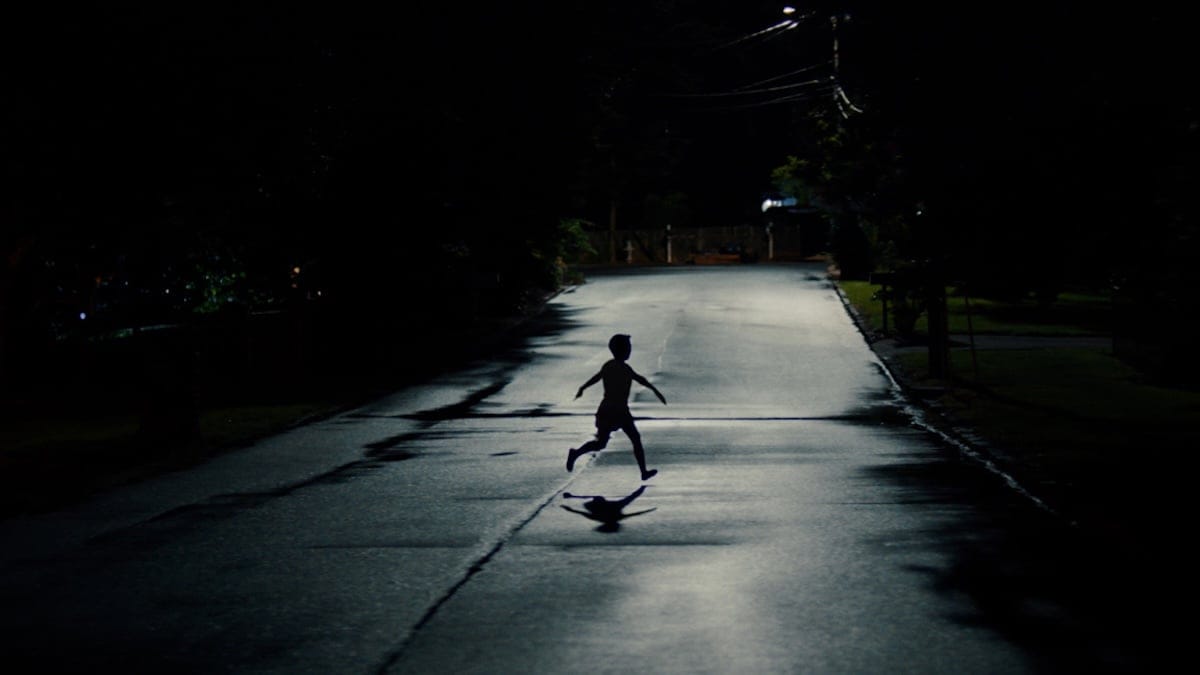
Crossing arms and pouting never helped anyone. Instead, spread your arms like the children in Weapons and run free into wherever a story’s wind might take you. Unlike those children, it will probably take you to a better place.
Which makes sense. The collision is basically good for one scene before they get spiral off to their own respective second act tracks before coming back together for the third act… ↩
The big exception to this this year is Mission: Impossible - The Final Recknoning, which does have some small action in the first half, but holds almost all of its cards for the back half of the movie. Once Ethan’s team starts to make a play for the sub’s coordinates, it’s a rocket to the end. Up until that point, it’s a slow burn. ↩