
Flagships and Offshoots: A Brief Overview of Star Trek's Various Series

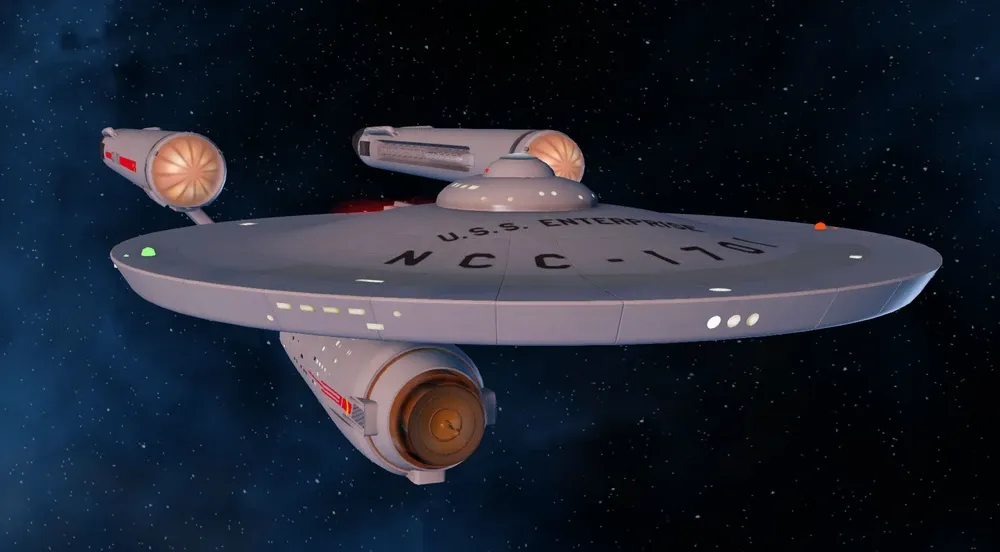
When Star Trek left the airwaves in 2005, it left a vacuum.
A staple of first-run syndication for almost twenty years, Gene Roddenberry's updated vision of the future supported more than 600 episodes of television across a collective twenty-five seasons. The story of the 24th Century started in 1987 and proved that the general public had enough interest in it to sustain far beyond what anyone thought possible. Almost ten times as many episodes as The Original Series. What had started with Kirk, Spock, McCoy, and the Enterprise became the retro progenitor. The Next Generation became a perfectly apt nomenclature for the fans of not just Jean-Luc Picard, Data, Worf, and the Enterprise-D, but also all relevant spinoffs.
When Trek returned from its hiatus in 2017, it was as a herald of yet another streaming service. With genre television ascendant (thanks Game of Thrones), CBS gambled that bringing all of the series into one library and then pumping out new shows at prestige production values was the right move.
In a way, they were right. Star Trek: Discovery was a long-gestating project from the mind of Bryan Fuller (Dead Like Me, Pushing Daisies), who had gotten his start writing for 90s Trek on the staff of Star Trek: Voyager. Why Discovery was ultimately a failure is a different discussion, but some of that series' choices have defined Trek's image since its premiere. In a very general sense, that vision has pulled itself in two contradictory and irreconcilable directions.
The most recent Trek show just wrapped up its first season. Called Star Trek: Starfleet Academy, reception towards the show has been anywhere from vague ambivalence to outright hostility. I'll write more about that show in the coming days, but trying to reconcile the ripples from Discovery's many choices with the modern capacity to create a good Star Trek show is worthy of its own discussion. As a universe, Trek has felt rudderless despite strong editorial oversight from a big name writer/producer dictating a central vision. The many directions of this rebooted decade have started to unmoor the central pillar, distorting the path and making it hard to feel centered in any real way.
The Past
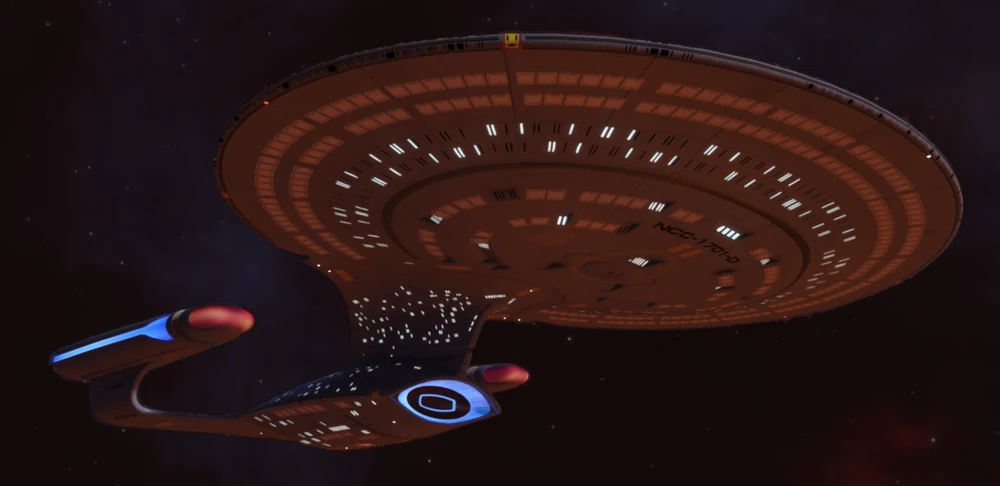
Blank Check With Griffin and David has dipped in and out of the Star Trek discourse over the past few years. As a lifelong Trekkie, host David Sims has thoughts and perspectives on the current zeitgeist and how it functions. While not privy to all his innermost thoughts, he spoke recently (I don't remember the episode) about Starfleet Academy's premise as a spinoff of Discovery. He implied it went against what fans like him wanted. Specifically: while he was growing up, Trek (specifically The Next Generation, Deep Space Nine, and Voyager) spent a decade and a half ensconced in the 24th Century. The tech was universal, and (for TNG and DS9 specifically) the larger arcs concerned themselves with intergalactic politics, painting a picture of how all of these various civilizations interacted. Relationships between the Federation, Klingons, Romulans, Cardassians, etc.
This ignores the fact that The Next Generation itself was not an obvious move. 100 years after TOS? A balding British captain instead of Kirk's Iowa swagger. Not immediately bringing back the Klingons or legacy chararcters/aliens. It might have taken a few seasons, but TNG spent years and years building up a vision of the future that invested its audience enough to sustain itself on its own merits.
This flowed into Deep Space Nine, which eventually became about the dynamics of these civilizations amidst galactic war. It also trickled into Voyager, which transported TNG's remit of exploring new planets and standalone sci-fi ideas to the other side of the galaxy. There, the writing staff could let their imaginations run wild. There was always a sense of creating something new.
By the time Enterprise rolled around, and the production team designed a prequel series that took place a century before TOS, their reasoning was to try to limit the 24th Century technology that had "made everything too easy". Of course, they failed to recognize that Voyager's technobabble-forward plots superseded actual character development and dynamics. They missed that writing great genre requires as much character work as any other narrative. The gizmods and gadgets are just window dressing.
(But anyone who watched Voyager could have seen this bearing down on them from a mile away...)
When building Star Trek: Discovery, Bryan Fuller tried to recapture the magic of The Original Series by setting the series between Star Trek: Enterprise (which took place in the 22nd Century) and TOS (which took place in the 23rd). As a fan who cut his teeth on post-TNG Trek who held TOS in high regard, Fuller's vision meant getting back to the contentious Federation/Klingon dynamic, long before the frictions of TOS and the detentes of TNG/DS9.
From its inception, Discovery betrayed the idea that Star Trek needed to move forward. Its first two seasons lived in that liminal space of bumping up against established timelines and without the capacity to develop its own unique canon as TNG had. By season two, Captain Christopher Pike (the Enterprise's captain in the original TOS pilot "The Cage) took command of the Discovery, and Spock and the Enterprise played major roles in the back half of the season.
Enterprise had been a cautionary tale of this, where trying to tie into the future missed the potency of those initial encounters as first-of-their-kind experiences. The results were basically a disaster. The Enterprise crew coming across Borg survivors by being a quasi-sequel to First Contact? Romulan appearances despite "Balance of Terror" establishing that the Federation had never actually seen the Romulans before that episode? A Ferengi takeover of the ship despite that civilization not coming into serious contact with the Federation until early TNG? There were other problems, of course, but Enterprise's attempts to foment storylines that could be both big enough to feel important while minor enough to be ignorable in TOS saw them introduce the Temporal Cold War (which is a cool sounding term that means nothing at all) and a season-long incursion into Xindi space. Neither went over well.
By its season three, Discovery figured out it needed to jump the ship and her crew into the future, far beyond what Trek had previously explored. It allowed for the show to blaze its own trail, creating a galactic problem that had crippled the Federation (and the galaxy) for the preceding century.
More on this in a bit.
The Present
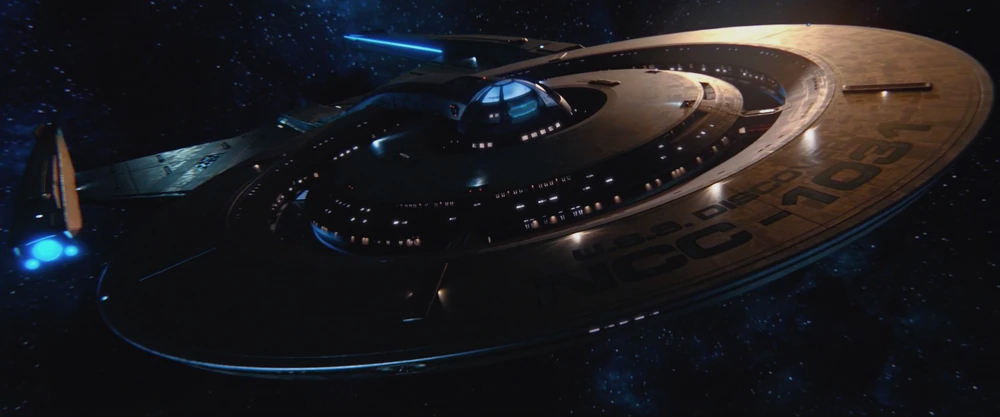
With Discovery off doing its own thing, the introduction of Christopher Pike left a space for Trek to explore the time period immediately before TOS but in a way that celebrated that series' sense of exploration etc. That series (Strange New Worlds) features an episodic (as opposed to serialized) structure, where installments stood alone to explore sci-fi concepts. When it's at its best, it's like TOS and TNG at theirs.
It's a marvelous show, and it's the closest this era has come to making Star Trek work within the framework of streaming prestige television. Episodes are big and lush, but the writers don't fear keeping things on a purely premise level as the ongoing storylines peek out of the background. But every time I watch it, it can't shake its prequel status. SNW is one of the best prequels period, but that keeps it from the boundless freedom of Trek at its best.
And that keeps it from being a flagship show.
In the syndication era, The Next Generation was the standard bearer for Star Trek. When Deep Space Nine premiered, it was the red-headed stepchild. The spinoff. With TNG's cancellation, DS9 didn't become the new default Trek show (even though it was the only Trek available for six months). Voyager did. It helped that it had a permanent home on the UPN network, Federation aesthetics and designs (as opposed to DS9's garish Cardassian style), sleek visual effects, and an eponymous spaceship that could explore the cosmos (as opposed to a space station that made DS9 feel static to a close-minded viewership).
That's not judging either show's quality, just their status within the history of Trek itself. Even with the massive re-evaluation it's gone through, DS9 will always be in conversation with those original perceptions of the show and how it worked. Voyager (for all its many, many faults) will have more legitimacy because of what it represents as TNG's successor. Anyone pretending that's not true should check their internal misogyny sensor.
Being first out the gate made Discovery the flagship show of the streaming era. Strange New Worlds was a direct spinoff, but offshoot shows like Picard, Lower Decks, and Prodigy all felt like branches of the larger Trek project even though they didn't connect to the spine at all. They grew out of the post-Star Trek Nemesis paradigm.
Those offshoot shows tied back in where they could, but otherwise felt free to do what they wanted. For Picard this meant fan service. For Lower Decks it meant lampooning Trek's self-seriousness via animated mayhem. Prodigy held itself less to the galaxy's zeitgeist and tried instead to be a kid-friendly series with an animation-friendly crew spinning loosely off Voyager and its Delta Quadrant setting.
In these series, David Sims and people like him (of whom there are many) got what they wanted: a continuation.
Nevermind that Kirk's era only spanned three seasons and half a dozen movies, all of which took place in the 23rd Century. TNG and its capacity to build something new flew in the face of those who wanted to see "what happened next" to the original crew. Aside form the Dr. McCoy cameo in the pilot, TNG hardly has any major crossovers until "Sarek" and afterwards slowly introduces legacy elements. Seasons of work building its sure-footed foundation made sure it could stand on its own two feet, independent of TOS.
In doing so, the syndication era was a smashing success that generated more than 600 episodes of television across four series. Even if Voyager rarely covered what was happening in the Federation, it still felt like it was part of the continuity that started with "Encounter at Farpoint". Fandom took ownership of this era of Trek, and wanting it to continue is a major factor in Picard's existence. While good, that show was really mostly about 1) amending the death of Data into something more palatable and 2) getting the band back together for one last ride. Its long-threatened spinoff (codenamed Legacy) would follow Seven of Nine, Picard's son Jack, and other characters in the newly-christened Enterprise-G, all of whom flitted around the edges of the final season's grand reunion.
But what is left to explore in the 24th Century? Deep Space Nine did the Dominion War. Voyager and the TNG films might have ignored it at the time, but its legacy is such that that's not possible anymore. Given its scope, that fallow demands a century of economic and political instability while a new paradigm emerges. Voyager had to throw itself to the other side of the galaxy to get away from the gravitational pull of Picard and his crew. At least the first season of Picard had ideas like the Tal'Shiar excavating a Borg Cube, a Romulan ronin, and giant interstellar space flowers. Anything after season one isn't exactly doing anything new so much as dredging up legacy elements in the name of fan service (albeit really, really delicious fan service).
That's why Discovery's jump to the 32nd Century was a brilliant move even if fandom decried it at the time (and still do). It gave that show space to cultivate its own vision of the galactic order and determine its own unique identity.
Unfortunately, this needed to be how Star Trek: Discovery started. Doing this as the premise starting in season three was way too late for people to care. It continued the destabilization of Discovery's core premise. Without a sense of grounding, each season felt different, and so the show felt more and more discordant as the years dragged on.
The Future
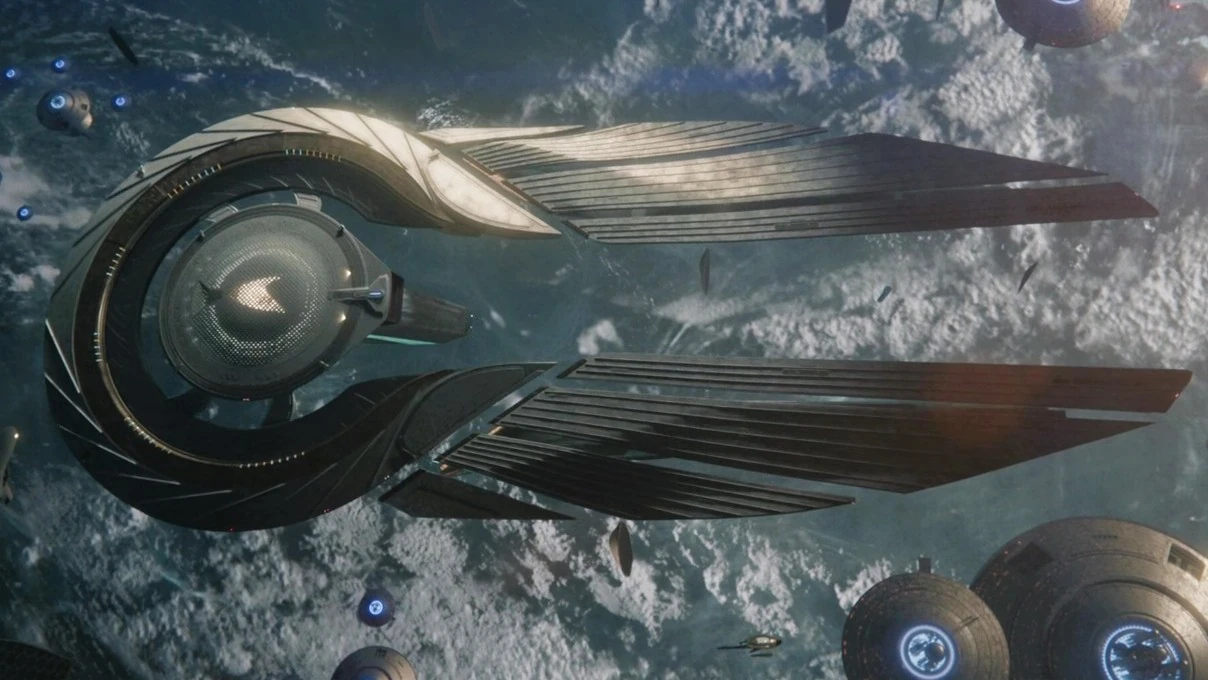
Discovery's cancellation left a space for a new flagship Star Trek show. Much like Voyager took the flagship mantle from TNG as the series with a starship crew explored the galaxy and searched for new life and new civilizations, Starfleet Academy stood poised to take over Discovery's mantle. It also took place in the 32nd Century and focused on the rebuilding of core tenets of the United Federation of Planets. Carrying over characters like Jett Reno (Tig Notaro), Admiral Vance (Oded Fehr), and Sylvia Tilly (Mary Wiseman) cemented this as unmistakably a continuation of its immediate predecessor.
While I'm definitely in the camp of "move Trek farther into the future", Discovery's trip into the future went far beyond what the series needed. The 32nd century is nearly 900 years beyond where the crew came from and more than a thousand years from the viewership at home.
The 23nd Century was enticing for TOS (and SNW) because of its proximity to the now. From a cultural, economic, and technological standpoint, Roddenberry created a universe that felt attainable regardless of the present moment. Sure between now and then were mentions of dystopic law & order, the Bell riots, and World War III, but... humanity attaining a nearly utopic civilization is and always has been gloriously optimistic.
When Roddenberry jumped TNG into the 24th, it felt like an updated, more sleek version of what he'd already built. While slightly more utopic, it still felt close and attainable as an end to which humanity could aspire.
The 32nd Century is just too far into the future to capture that aspirational spirit.
So why the 32nd? Why not the 25th Century? Or, hell, the 26th?
As with so many post-DS9 things... blame Voyager and Enterprise head writer/showrunner Brannon Braga.
When Voyager played with time travel in the episodes "Future's End" and "Relativity", it established temporal technologies as common in the 29th Century. Enterprise's Temporal Cold War (a major spine of the series's first three seasons) took place in the 30th Century at a point where those ubiquitous technologies had become dangerous. Once the time travel box opens, there's really no putting it back the way it came.
Discovery (wisely) wanted to move beyond the possibility of that, such that when it reached the 32nd Century, the creative team established new laws around time travel and strictly controlled its use and existence. It's akin to Dune's vision of Galactic Empire as one birthed from apocalyptic wars versus artificial intelligence. For Frank Herbert, no robots means no having to futz with that associated thematic topic so he could instead focus on his political and ecological interests.
Taking canon as canon, moving past the 29th Century is something necessary to avoid regular temporal incursions from the future. But it also means that Trek is now way, way out in the future, with eight centuries of unexplored history between what people are most familiar with (TNG) and the galaxy as it exists in Star Trek's new "present".
So some quick math.
- Starfleet Academy's first episode aired in 2026 and takes place in the year 3191.
- Discovery's first season aired in 2017 and takes place in 2265.
- The Next Generation started in 1987 and takes place in 2364.
- Star Trek first aired in 1966 and takes place in 2265.
Which means... if television always existed, and Star Trek on television reflected the world of the future relative to when it aired and the year it explored was circa 2026...
- Star Trek's contemporary needle drops would have been hits from Johann Sebastian Bach.
- The Next Generation would have aired during the English Civil War.
- Discovery (for its first two seasons) would have aired as entertainment during the Minutemen's wintery stay at Valley Forge.
- And Starfleet Academy would have aired in the 860s, during the reign of Charles the Bald, grandson of Charlemagne.
Compounding that, shows like The Next Generation or Deep Space Nine or Voyager made tons of references and allusions to 20th Century culture and history as though everyone in the crew shared a common fascination with ideas that made sense to a 20th Century audience. This is the cost of doing business, and the sort of thing that audiences can just accept.
But the 32nd Century is so far away from where we are now. The Battle of Hastings was more recent. Denis Villeneuve's realization of Arrakis in his Dune movies is more coherent than trying to understand why Starfleet ships still use the same "saucer/nacelle" look of the original Enterprise. They're... thinner I guess. At least the Relativity from its eponymous Voyager episode tried for something that assumed the Federation would have updated its aesthetic choices over the intervening five centuries.
Overcorrecting for Discovery's genesis as an ill-advised prequel is what got us here. And... yeah. No one wants to fuck with something as messy as the Temporal Cold War and all the other nonsense Brannon Braga and his teams on Voyager and Enterprise poisoned into Trek's future. But at the same time, default Trek is now so far into the future that it's going to be impossible to relate to. For like... centuries.
And we'll still be asking why the bridge of the U.S.S. Athena is basically analogous to those of ships that existed almost a millennium earlier. There's not been any updates to feng-shui in all that time?
As an issue, all of this is basically an insurmountable hill for Starfleet Academy to climb, and that's before the camera even started rolling. But that's just the baseline context of the pressure weighing down Trek's newest flagship show. A lot of its problems stem from this, but there's a lot more going on with it than just "a show hardcore Trekkie's don't like."
That's next time.