They're Not Making a New Buffy Show (for now...)

News broke on Saturday that the new Buffy the Vampire Slayer continuation series would not be proceeding at Hulu.
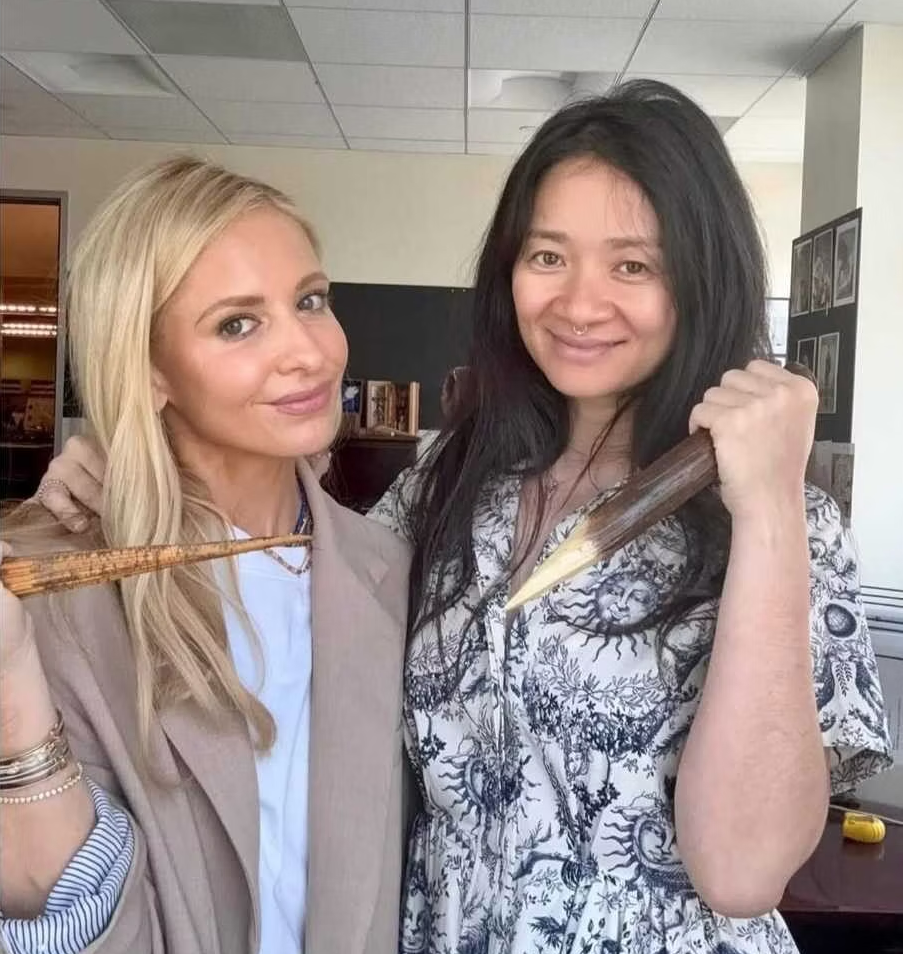
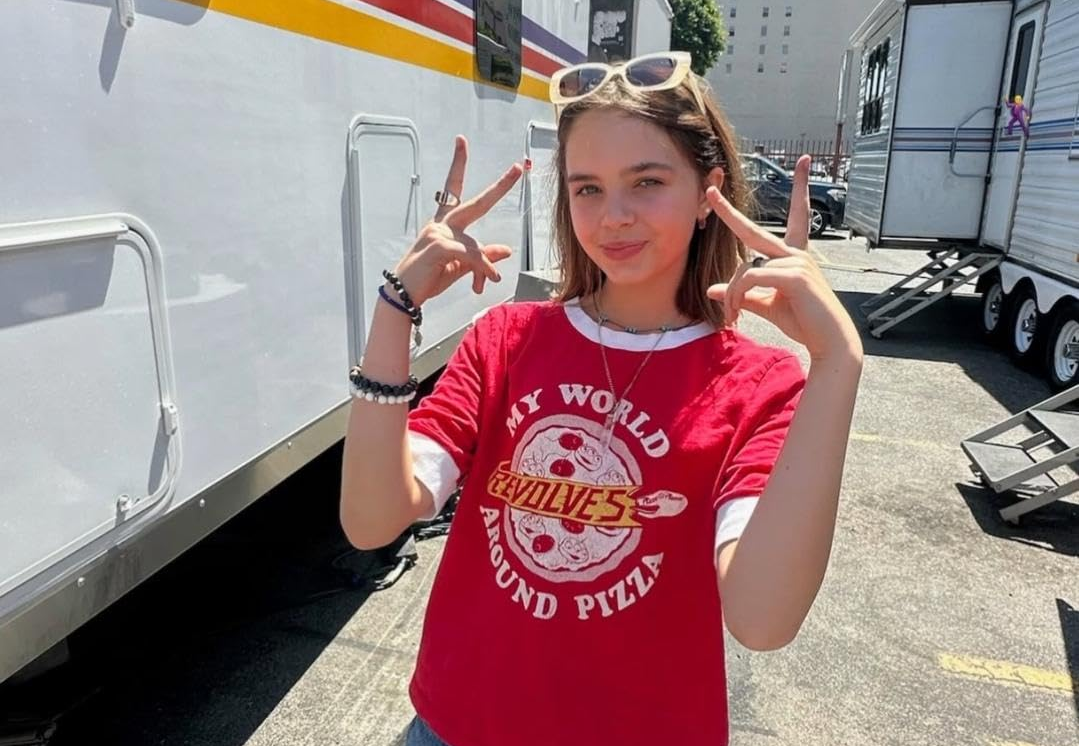
The initial announcement was a pretty big story: Oscar-winning director Chloé Zhao (Nomadland, Hamnet) would direct a pilot from Nora and Lilla Zuckerman (Poker Face) with Sarah Michelle Gellar back in the titular role. The series (called Buffy the Vampire Slayer: New Sunnydale) would have picked up after the original series, putting newcomer Ryan Kiera Armstrong (Star Wars: Skeleton Crew) as a co-lead alongside Gellar. They filled out the cast, shot the pilot... and now it's dead (at Hulu).
While possible another network could pick it up, that sort of thing rarely happens. For all intents and purposes, this is probably dead.
When the news first came out about the new series happening, I had at least a dozen people ask for specific thoughts about the show and what it meant and how I felt. A friend asked me about it on one of our morning walks and the discussion lasted an hour as we pulled apart all of the "reboot"'s implications.
If Hulu had picked up New Sunnydale, I was already planning on writing extensively about it and pairing it with a Buffyverse rewatch in the leadup. Now that there'll be something else, it's worth unpacking the whole endeavour regardless. It speaks to our current zeitgeist, legacy narratives, nostalgia, and creators' rights.
Basically everything I love talking about.
Thorny Background
There have been threats to reboot Buffy going back at least a decade. That's hardly a surprise. Buffy is one of the singular and most definitional pieces of art since it premiered. It grounded spectacular horror concepts and monsters into deep emotional reality and glued them together via metaphors. It was dramatic and funny. It had action. It's hard to think of many genre writer who didn't watch the show or at least know how it was changing the medium.
The reason for this success is due in large part to Joss Whedon.
I wrote about Whedon last year and the unfortunate way his career has withered into oblivion. When they announced New Sunnydale, it was with the acknowledgement that it would be without Whedon's involvement. This is not a bad thing. Whedon has not done enough (or anything really) to prove that anyone should let him be in charge of a film set again. He's also not a dude who trusts basically anyone else with his writing. Too many bad experiences in his early career.
In the world of sequels, prequels, remakes, and reboots there had been threats of a new Buffy, rebooting the series from scratch by using the same basic premise Whedon had created. Whedon himself does not have the rights to Buffy (he sold them in the early 90s to get the original film film made) and his work in creating the show came about because he had the first right of refusal when the production company explored turning Buffy into a television series. In teaming with Whedon, the production company succeeded far beyond what they were expecting.
But Buffy is undeniably Whedon's show. He showran it for seven seasons, oversaw every single episode (save for a few at the start of season six), defined its esoteric tone, and used it as a personal film school to be a better director so he could finally be the writer-director he'd always wanted to be. His vision is so esoteric that it's impossible to imagine Buffy without him. Even something like the film (which I, admittedly, have still never watched) feels like an odd curio side tangent that's wholly irrelevant to Buffy as it exists on television, the tone coming from director Fran Rubel Kuzui being a major reason it feels entirely disposable.
Without Whedon's involvement, Buffy would be different.
But the biggest issue is... if Buffy were to continue, especially as a television series starring the star of the original show, Whedon's influence would be undeniable. Even without that, any Buffy that happens or goes out would almost certainly have his name on it (much like every episode of Buffy & Angel listed Fran Rubel Kuzui and producer Kaz Kuzui as executive producers despite them doing allegedly zero work on the show). That means that any support of New Sunnydale would put money directly into Joss Whedon's pocket. Which... it should. And supporting that is a quagmire all its own (but more on this later...).
There's no real way around this. Any Buffy that happens is in Whedon's shadow.
Unto every generation...
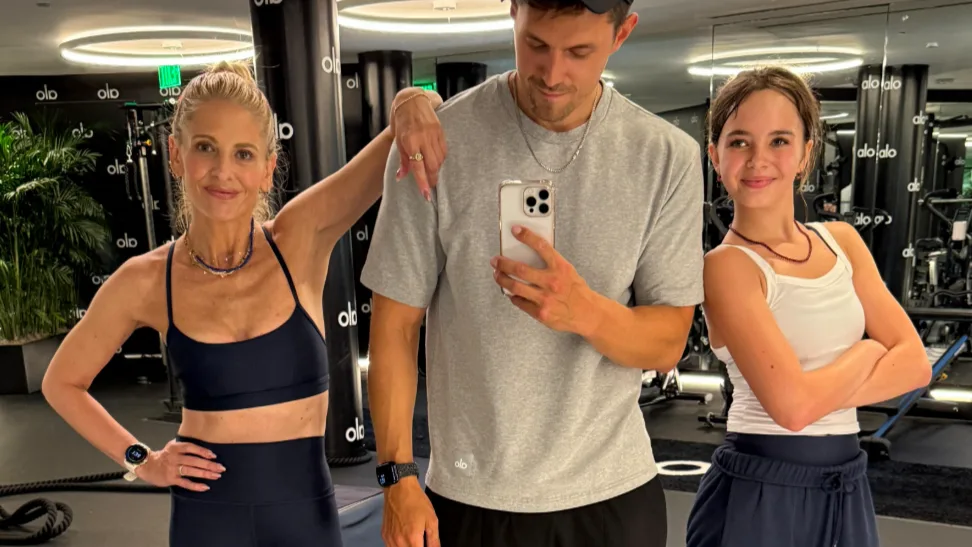
With Sarah Michelle Gellar as the major front-facing player in New Sunnydale's creation, this problem only intensifies. Her presence is an explicit admission that this is something the creative team is building off Whedon's foundation. She's taken a leadership role as the lead spokesperson. Some of this is normal, performative social media work. She posted updates and pictures, a video telling Ryan Kiera Armstrong that she had won the co-lead role of new vampire slayer Nova, shared traning videos of the two of them, and more. And she was also the one to break the news on Instagram that Hulu would not be moving forward with New Sunnydale.
Gellar had previously said she "never" would play Buffy again (partly because of her complicated relationship with Whedon), but (as she said as recently as Friday) the lesson should be to never say never, especially when creatives as talented as this team comes in with a vision that so appeals to her. Gellar has also been open that long conversations with Chloé Zhao's about Buffy and what the show and character meant tot hem have added to this sense of Buffy being important enough to bring back for a new generation with Gellar at the front.
And... look, I admit that Gellar's involvement gave New Sunnydale a level of legitimacy that no one other than Whedon could bring. The stamp of approval matters. Without her, any Buffy reboot would always live in the shadow of the original as some cheap imitator. Anything less than a seven season run that revolutionizes television would be a disappointment. And the fandom would let everyone know how much they bungled it.
But does it have to be Buffy?
That built-in fanbase makes it a prime candidate for our era of remakes, reboots, prequels, and sequels. Buffy returning in some form is inevitable, especially considering Whedon does not hold the rights and people who do hold rights like to make money. It's also been more than two decades since Buffy was last on television (the show ended a full eight years before Armstrong's birth), and giving Buffy to a new generation really does have inherent value.
Within that, though, is the inherent tension.
Buffy the Vampire Slayer is a story and a character created by a man trying to fill a hole he felt in the world. He wanted female heroes who kicked ass in the way male characters kicked ass. He was also a womanizer who objectified women and terrorized his sets with casual cruelty. Regardless of this, Buffy did reach for feminism even if it might not have always been perfect. It's a show that women responded to for the strength and emotional realism of its female characters, and it's a show that men loved because a man wrote the damn thing. It regularly featured action and violence. It has the beats and rhythms that reflect Whedon's understanding of the world through the male-dominated vision of mainstream media.
To continue the series in any capacity is to continue that vision in at least some way. The DNA is too tightly entwined with the core premise. Gellar can star and executive produce, Chloé Zhao can direct the pilot, and the Zuckermans can write, produce, and showrun the show, but Buffy cannot change its origins.
New Sunnydale might have subverted this, and if there's a way to bring Buffy back so that it can step beyond the limitations of Whedon's worldview, it's hard to think of a situation with more promise. The entire senior production team is female and bring a perspective that Buffy lacked in its original form. The closest it came to a major female force dictating the show's direction was Marti Noxon who joined the writing staff in its second season and climbed the ranks to Whedon's co-showrunner/right hand by the final two. But creating a new paradigm via this female gaze means questioning the underpinnings of the show, understanding the patriarchy that created it, and working tirelessly to counter its inherently rotted nature.
All of this wouldn't be an issue if Zhao, the Zuckermans, and Gellar all worked to create something new. Gellar's presence alone puts any project she's working on in conversation with Buffy. It defines her entire career much like Ferris Bueller infects every Matthew Broderick performance and how it's impossible to see Carrie-Ann Moss, Keanu Reeves, and Laurence Fishburne without thinking about The Matrix.
But that's not how the business works at the moment. If this team couldn't convert on a Buffy reboot, there's even less of a chance something original that lacks the built-in audience would have gone either. Without that most-ideal option on the table, a continuation is entirely acceptable.
The "New" in New Sunnydale
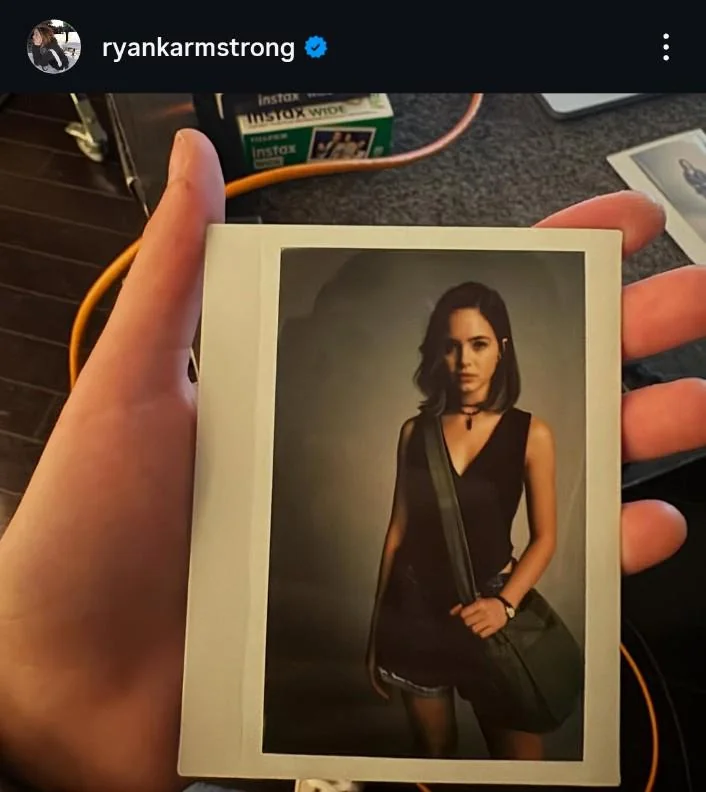
And yet, when the news came through that New Sunnydale wasn't proceeding, I found myself sadder than I was expecting. For all that I desperately want new stories that take Buffy's zeitgeist and evolve it into something grander, I can't deny the excitement from all of the pieces in place on this. I loved the casting (especially Sarah Bock). Chloé Zhao might not be my favorite filmmaker, but her artsy indie style would be different from Whedon's literal/blockbuster vision. The Zuckermans showran the hell out of Poker Face. And... who doesn't love Sarah Michelle Gellar?
I'm also not above acknowledging that I would love to check in with Buffy decades after the ending of the series and see her continue to be amazing. Gellar said she wanted to bring back everyone from the original show and... the appeal of checking in on all my old friends is the sort of thing I don't know if I could ever say no to.
Which... brings us back to Whedon.
No, I don't want Whedon involved. And it's insane that that remains true considering how much Buffy without Whedon feels inconceivable.
But saying it's not Buffy without Whedon intertwines the two in a way that shackles the former to the latter when all art (at its best) must transcend its creators. To keep the two together is to relegate Buffy into the same blighted fate as Harry Potter, where Rowling's iron grip on that entire world has made Harry Potter inextricable from her anti-trans bigotry and actions. Any money going into anything Harry Potter goes (at least in some large part) into J.K. Rowling's pocket, and she's been loud and proud about saying this money is going right out the door to fund her jihad against a marginalized subset of the population.
To let Whedon's shittiness define Buffy flies in the face of the entire reason Zhao got Gellar on board in the first place.
This does not belong to him.
If Whedon is to make money off Buffy's continuation? That's the cost of doing business in a world where we (myself included) cannot say no when offered more of what we love. Whedon should receive compensation (and his relative disappearance is far preferable to Rowling's loudly funding and bolstering atrocious causes). No amount of shittiness should rob an artist of years and years of hard work and toil, and that's especially if Gellar is continuing a story of which he is the primary author even though it ended decades ago. Stripping artists of residuals creates a vile precedent that empowers the already money-obsessed financiers who want to profit off the hard work of creation by siphoning money out of creators so they can line their pockets with more golden parachutes. Not only that, such an idea shrinks the pool of who can or cannot create, leaving the act to those with means rather than empowering those without. We need more artists, and we need them to be more diverse, not fewer artists who are more homogenous.
Cut Whedon his check and let's move on. Maybe his absence will hasten an acceptance of responsibility for his actions and the resulting contrition can bring him back to the world so he can get back to work as a better person.
Buffy (like all other art) belongs to us. If there's benefit from its continuation, there's almost a moral obligation to continue the story if the opportunity is there. If more Buffy must exist, then we should hope for the best Buffy we can possibly get (and if that means Whedon coming back... idk we'll cross that bridge if/when it happens).
I wish New Sunnydale could inspire the next generation in the same way it inspired those of us who grew up with Buffy and Willow and Xander and Giles and Cordelia and Angel and Oz and Wesley and Anya and Spike and Harmony and Dawn.
If there's one thing that this did, it's remind me how important Buffy is and how we shouldn't let a small subset of powerful yet horrible people destroy the hard work of many and what has inspired generations of fans. I've been so wary of rewatching Buffy ever since the news of Whedon's indiscretions broke, and it didn't help that his ex-wife's note about all of his infidelities dropped as I was literally halfway through "Conversations With Dead People" as Buffy grappled with her dad cheating on her mom and how that left a profound impact on her life. Had the show moved forward, I'd already determined to revisit all of Buffy and Angel from beginning to end in the name of reclaiming it for myself. The text deserves an active interrogation now that we know all we know, and for too long I've let Whedon define what is still my second favorite television series of all time.
Maybe it will be unwatchable.
Or maybe a fuller picture of Whedon will increase an appreciation of the show and I can live in the same world as Sarah Michelle Gellar, who put on the character again and spent a ton of time and energy trying to bring back her most beloved role.
For the first time in half a decade I am actively excited to rewatch Buffy. New Sunnydale bringing me that makes the entire enterprise a wonderful thing.
And even though it is dead, I hope we get to see it some day.