Andor is Star Wars's Template for the Future
Star Wars is more than just a film series; it's a medium all its own.
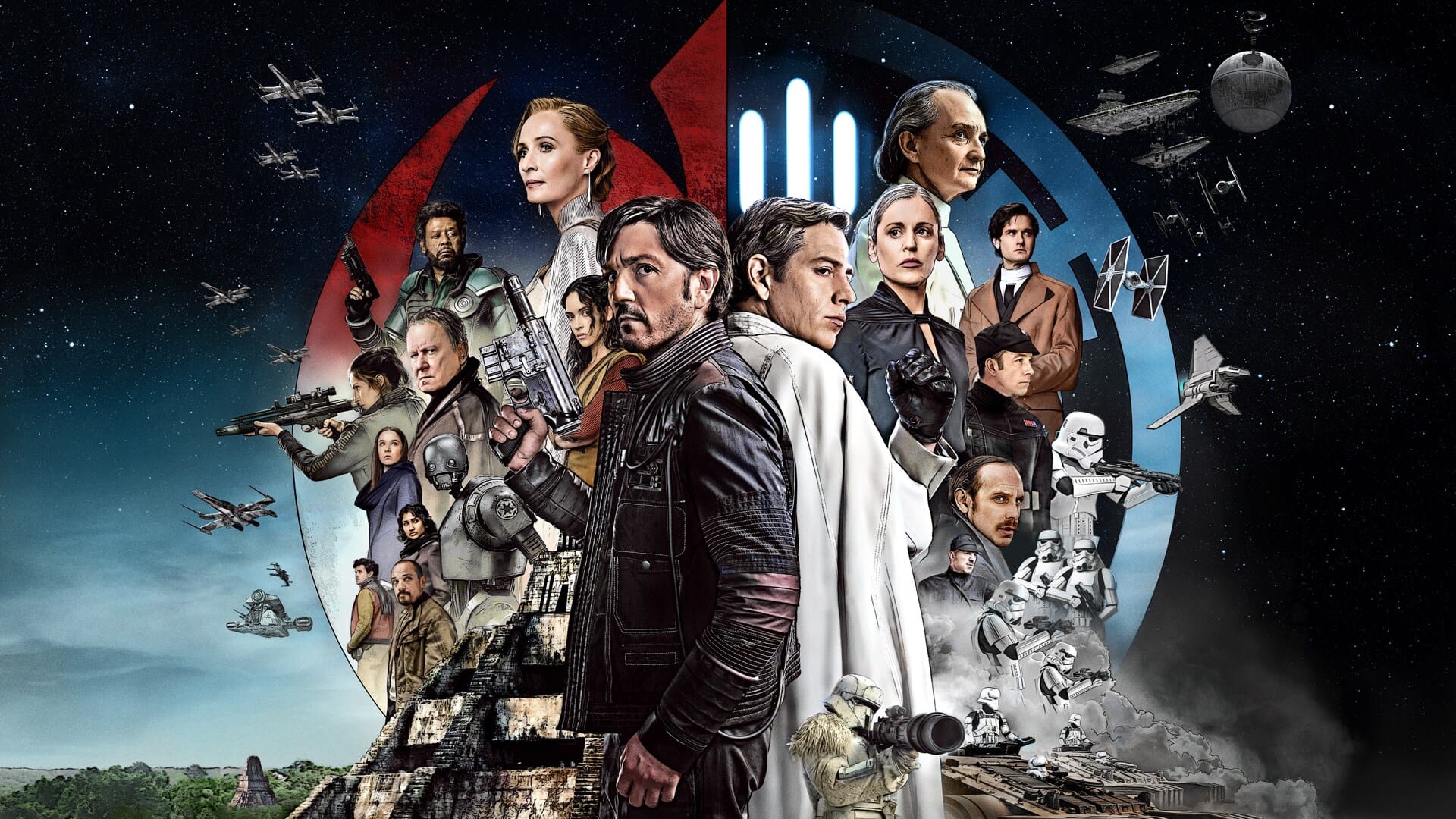
There was a brief period of time where it seemed like Star Wars could do anything. Between 2015’s The Force Awakens and promising developments in early 2016, Disney’s purchase of Lucasfilm was paying off. They reshaped the December box office by remixing one of the greatest success stories in the history of film and had lined up new, interesting directors to blaze a trail for what could come next. They had Gareth “Godzilla” Edwards’s making Rogue One as the first live action, non-Episode film. Rian “Looper and also your favorite episodes from Breaking Bad” Johnson was already in production on Episode VIII. Phil Lord & Christopher Miller (The Lego Movie) were on board to make a Solo film. Sure, head of Lucasfilm Kathleen Kennedy had hired Colin Trevorrow for Episode IX, but maybe it would work out.
This facade more or less crumbled over the course of 2017. Lord & Miller left Solo early in production, replaced by steady hand Ron Howard. Colin Trevorrow exited Episode IX in September due to creative differences (though, really, Carrie Fisher’s death had turned Episode IX into an impossible task). And then, of course, Episode VIII was almost immediately the sort of movie that had Star Wars fans loudly revolting because of how much it had ruined everything.
Released just one year after The Force Awakens, Rogue One serves as the inflection point for Star Wars post-Lucas. It’s The moment before it first landed in front its audience’s eyeballs LucasFilm had cobbled together something bold and daring, one of the most since 1977, anyways. There is a line from Rogue One to The Last Jedi that charts the 12-month path that ends up cracking Kennedy’s bold foundation to produce great projects. Had Kennedy stuck to her guns and trusted what was working, things would have been different. It’s clear that she, herself, believed in what she was doing. Just before The Last Jedi’s premiere LucasFilm announced that they were working with Rian Johnson on an all-new Star Wars trilogy, wholly divorced from anything that came before. To think of anyone making a Star Wars project and getting a pre-release greenlight to develop an entire trilogy of films is laughable in retrospect. The point, though, is that wouldn’t have happened if Kennedy and co thought things were going poorly.
Maybe if they’d trusted that for all the loud complaining The Last Jedi still made scads of money. Maybe the death of Carrie Fisher would have encouraged them to take a year off to ensure they’d get The Rise of Skywalker right1, the movies wouldn’t have collapsed as they did. Maybe we’d be in a world where interesting directors were given free rein to do what they wanted within the bounds of Star Wars. Maybe The Mandalorian wouldn’t have had to buttress the institution for over half a decade. I mean, have you seen much non-Mandalorian Star Wars merch since The Rise of Skywalker?
Perhaps this collapse was inevitable, but watching the series sour so quickly is a byproduct of a series of mistakes. These mistakes hamper what Star Wars can do. With the second season of Andor premiering tonight, maybe we can try this again. Maybe this time something great can open the possibilities of what Star Wars can be, rather than hobbling its potential by shackling it to traditional storytelling forms.
We just need the fans to not get in the way.
Kathleen Kennedy: HBIC
Kathleen Kennedy is a legendary producer. Her producing credits start with E.T. The Extra Terrestrial in 1982 and run parallel to basically everything Steven Spielberg touched through The B.F.G. (ironically, the last film written by writer-of-E.T. Melissa Matheison). She’s produced a ton of films that go beyond Spielberg, and include Gremlins, Back to the Future, Twister, The Sixth Sense, and even Martin Scorsese’s Cape Fear2. She’s one of the most impressive producers in the history of the medium post-Jaws/Star Wars. By 2012 George Lucas had hired her to be co-chair of Lucasfilm and she became president of the company when Lucas sold his company to Disney at the end of that year. That company has been her fief for over a decade. It technically still is though there are signs she will be retiring sooner rather than later.
What made/makes Kennedy so perfect is the way her background harmonizes with her role at Lucasfilm. In theory, it’s Disney running the Kevin Feige play all over again: hiring an incredible producer to oversee production on a bunch of narratively cohesive films. And… look at the ambition of her early efforts. Setting Colin Trevorrow aside3 it’s clear that Kennedy was trying to make Star Wars as big and as bold as possible, courting an entire generation of filmmakers who had grown up on Star Wars and doing the cinematic equivalent of buying them Ferraris.
And it’s clear that, until the release of The Last Jedi it was going well for everyone. Sure there was the hiccup with Lord & Miller leaving Solo. It’s hard to blame Kennedy for hiring Ron Howard when she needed the movie to get across the finish line in less than twelve months4. It’s just unfortunate the film came out six months after the bed-wetting reaction to Episode VIII had poisoned the fandom’s bloodstream. Knives were out for any weaknesses. Ron Howard, being a steady but conservative hand, was an easy mark.
The first crack, though, came with Rogue One: A Star Wars Story. Outside of a few great moments, most people in my orbit were underwhelmed by the movie and what they considered thinly-drawn characters in a bumpy narrative. It’s understandable. The film was the result of massive re-writes and re-shoots to fix the cinematic equivalent of stumbling in the dark.
But count me among the faithful who view that movie as a staggering achievement in the IP era of blockbuster filmmaking. Rogue One is the most daring, bold vision of Star Wars since The Empire Strikes Back. It’s big, action packed, and deeply cynical, a movie about all the minorities and women who had to die so precious fanboys could get their 99% male, 99% white space opera. Gareth Edwards’s vision of Star Wars is the grimy imperfection Lucas was legendarily trying to capture on those sets in the mid-70s, when he yelled at crew members for polishing the floors. That lived-in aesthetic really advances what a Star Wars movie can look like.
Nowadays, the film is probably considered a noble failure with something of a critical re-evaluation. It’s hardly reviled like The Last Jedi. But fandom’s vocal distaste for these two films is what led us to an Obi-Wan Kenobi miniseries and another based on Boba Fett. Now, despite my quite liking those, it’s not like either of them do much to evolve how Star Wars works. The ripple effects smothered not just the confidence in Rian Johnson’s brand new trilogy and but also other directors like Taika Waititi, They’ve discussed other films in the pipeline, but at this point, I’ll believe them when the cameras are rolling.
It didn’t have to be like this.
Making Star Wars Great Again
Today, most consider The Force Awakens as the post-Lucas high point. Unfortunate. The Force Awakens is a blast and a half, but to hold it up as some pinnacle of revolutionary success is basically admitting that Star Wars works best when it’s playing within the shapes of its original form. It lifts up Chosen One narratives about promising young people from backwater farmsteads who journey wide-eyed into a wider universe and discover their untapped power. It valorizes bloodlines and genetics as an indicator of potential success. To be great in the Star Wars universe of Lucas’s vision (and by extension, The Force Awakens) has nothing to do with who you are. It’s all about where you were born. Who you were born to.
These stories are old. They’re very classical and very western, derived from systems of power that venerate Kings and Queens.
Quite frankly, we have more than enough of those stories.
To briefly defend The Last Jedi…
The genius of Rian Johnson’s Episode VIII is that the entire film is giddily abuzz with the prospect of telling better Star Wars stories. People wanted Supreme Leader Snoke to be some grand bad guy, but he was always going to be a cheap simulacra of the Emperor. Snoke literally drags Rey to a viewscreen and forces her to watch a space battle where all her friends are dying.
People hated the arc of Luke Skywalker from ascendant Jedi in Episode VI to a hiding curmudgeonly hermit, despite the fact that the Luke of that movie was not some telekinetic badass who brought down the Empire, but a simple man who saved the universe by keeping a cool head and not giving up on his dad. Don’t we want fallible heroes? Isn’t Rian Johnson developing an arc for him to play preferable to keeping him a locked-in-amber fossil? It’d been 34 years. No one could be a saint for that long. Even Jesus only made it 33.
People demanded Rey have some parents of grand lineage, but Rise of Skywalker angrily hate-fucked the audience with the only answer that could possibly be “satisfying”. Last Jedi posited that Rey’s blank-slate past meant her future was entirely unwritten. It never mattered who Rey was before BB-8 rolled into her life. What mattered was everything she chose to do moving forward into every next moment.
People complained about how Admiral Holdo figured out some “genius maneuver” to destroy Star Destroyers via cruiser kamikaze, but can you imagine how expensive and irreplaceable that ship was? Her desperate attempt was a last-ditch effort to save what little she could. It stemmed from conviction and left the Millenium Falcon the only ship the Resistance had by the end of the film, hardly some great force by which they could overturn a fleet of First Order Star Destroyers5.
A loud subset of die-hard fans made these complaints known. They rejected this vision of what their precious little bubble could be. Instead, The Rise of Skywalker closed out the sequel trilogy, rewarding Last Jedi fans with an angry screed that ripped up a movie they loved by the roots as part of a “not like this!” temper tantrum. The haters finally, finally got the apotheosis of all nine movies, using Palpatine as the hub for a sublime harmony. Fandom was euphoric. It’s certainly not like that movie was so bad it killed Star Wars films until today. Everyone, especially the Last Jedi haters were happy.
And this is why you don’t listen to fans, but creatives are under no obligation to cede to the demands of these terrorists…
And then there’s Rogue One…
I’m so Rogue One-pilled I can’t begin to fathom why the hate exists. Even if the story were garbage and the characters were thin6 Gareth Edwards is obsessed with spaces and mis-en-scene. Every shot has something interesting to look at, some intoxicating atmosphere or rich texture that speaks to the history of the thing. Even when we’re playing in familiar spaces like the base on Yavin IV or Princess Leia’s Tantive IV, they speak to our own history watching Star Wars, and the iconography that George Lucas so thorougly burned into our brains. Londoners make jokes about using the Canary Wharf Underground station as a setting for an unused scene. I can only speak as someone not familiar with that Tube station when I say that the two shots of it in the trailer set my imagination on fire. I’d never seen Star Wars look like that. It was more specific and lived in than any setting in the Prequels and a number of those from the Original Trilogy.
Despite this love, I had very little interest when they announced Tony Gilroy would be making a prequel series about Cassian Andor. For me, pushing narratives forward is preferable to twiddling our thumbs with unnecessary back story. Handcuffing ourselves to some predetermined end is a risky proposition, especially considering Rogue One is the story of Cassian’s ultimate sacrifice in the name of a triumph he will never see. Andor asks if there’s more to him, perhaps a better story we can tell.
Oh god is there.
The New Hope
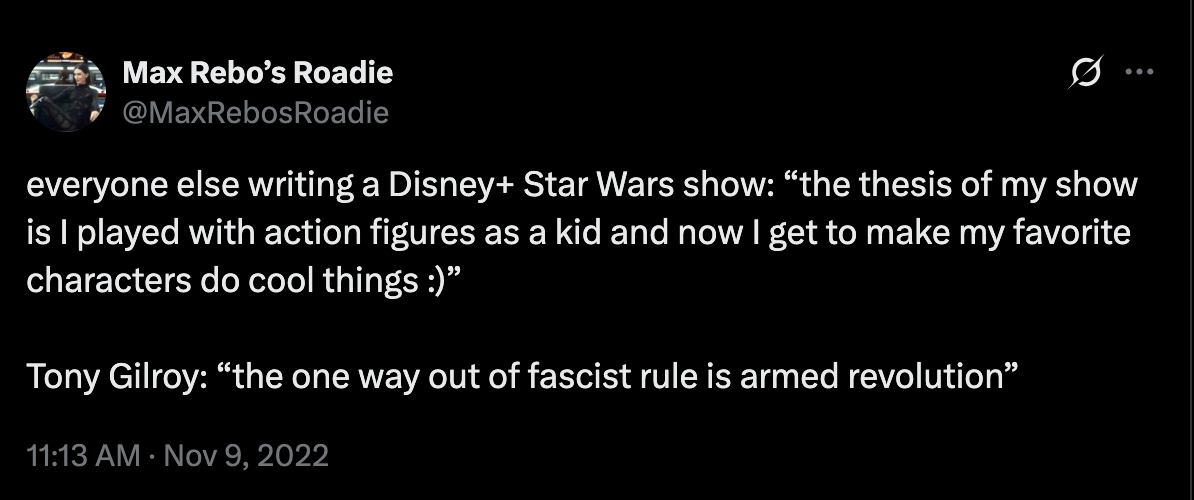
George Lucas is always the first in line to say that Star Wars is for children. It’s a patronizing take. It boils his dream of a big budget, seriously-taken, all-ages, pulpy space opera serial from his youth down to its lowest common denominator. Based on the Prequels, there’s a sense that Lucas was trying to make grander statements about societies and the demise of democracy in the face of an overwhelming call for authoritarianism. He was always sure to include the cute robots so he could say it was for children, but Lucas always did love themes that were grand and operatic, even if the reach exceeded his grasp.
Tony Gilroy’s Andor is not for kids. Or, at least, children can watch it, but Gilroy and his writers build the thematic content to be, perhaps, beyond their typical comprehension7. Notable for such films as Michael Clayton and the Jason Bourne films, Gilroy doesn’t seem like an obvious match for Star Wars even though he was a major force in the post-production re-working of Rogue One. He might have directed some of the re-shoots and performed extensive re-writes, but… this is a guy whose big directorial calling card is the one where the big moment is a car explosion that George Clooney only sees from afar because he got distracted by a couple of horses. And Gilroy dove into a medium known for its spaceships, blaster battles, and laser sword fights?
Turns out, Gilroy is probably the creative force to-date most attuned to the possibility of what Star Wars can be. His specific worldview lends itself perfectly to depictions of evil autocracies. Paul Greengrass might shoot the hell out of some shaky-cam action scenes in the Jason Bourne films, but Gilroy’s scripts center on the inner workings of intelligence bureaucracies reckoning with forces they’ve created but can’t control.
The banality of an evil space bureaucracy
When I sell people on Andor, I always describe the early scene where Syril Karn informs his boss about the deaths of two Imperial officers. Karn wants to investigate, but his boss is a security chief, some pudgy, mustachioed bureaucrat. The older man bemoans the details of the crime, playing through the more sordid details that might make the Empire look bad. He orders the case doctored, the file closed. To put it bluntly, he’s mostly concerned about the paperwork that might result from the truth. Scandalized, Karn can’t believe it, but his superior understands the Empire’s reputation is paramount. All other concerns are secondary.
I’ve never seen the Empire portrayed like this. Usually the Empire’s lackeys are space Nazis, all vinegar and iron gloves. The prequels paint the Emperor’s path to power as methodical, pulling strings by pitting the galaxy against itself. The cost is millions of lives and untold suffering. Palpatine cackles and guffaws through all of it, devoid of redeeming qualities as he manipulates Anakin to the Dark Side and Machiavellis his way to control of the galaxy.
Gilroy, though, understands that this is a child’s understanding of evil. The truth might be harder to write about, far less flashy, less inherently engaging. But the opposite of love isn’t hate. It’s apathy. The Empire is a horrible, autocratic force that the Rebellion must topple not because it’s slaughtering its citizens (though it does that), but rather because it is not operating in a benevolent manner towards its populace. It keeps them from living fruitful, bounteous lives.
Halfway through the first season, Cassian finds himself on a resort planet, hiding out after the stunning heist he just completed. While there, he gets randomly scooped up by an Imperial patrol, simply for being in the wrong place at the wrong time. He is quickly arrested, indicted on trumped up charges, and summarily convicted and sent to a prison where he will spend the next (and best) arc of the season.
As America slowly gets its taste of fascism in the era of Donald Trump 2.0, it’s remarkable how accurate Gilroy and his writers are in portraying what it’s like to live in autocracy. Cassian might have made galactic news by being part of the heist on Aldahni, but that has nothing to do with his imprisonment. Hell, they don’t even bother to verify his identity (which is fake) before condemning him to the carceral state. It was believable when it aired in 2022, but given the current events of this country, the suspending of due process, and the Trump administrations’ practice of snatching people off the streets and shipping them to concentration camps in foreign countries, we’re in a much darker place today.
Perhaps, most shockingly, no one in the Empire gives a shit about the man they threw into prison. If they knew they’d picked up Cassian Andor they would have treated him differently, but the utter ambivalence with which he is so casually stripped of his freedom is a succinct portrayal of life under dictatorial fiat. There are entire moments when it feels like the Empire is omniscient and all-seeing. It’s clear very quickly that there simply aren’t enough people to rule with an iron fist8. It’s a lot of smoke and mirrors, banking on humanity’s natural tendency towards deference, genuflection, and submission. The apathies are mutualistically symbiotic.
To put it another way, the reason democracy is preferable to other forms of government is because it allows its citizenry to hold their state’s inner workings to account for its actions. If the government functions normally, we can throw out those who harm us and instead elect those who might increase our prosperity. It’s an imperfect system, and perhaps too easy to manipulate. but it allows for the most self-determination and freedom of anything we’ve yet developed.
This is the war that Cassian Andor fights. Most are content to go through their day, put food on the table, make sure they get to bed safe. They do just enough to keep their heads above water, barely able to avoid the perpetual threat of drowning. Cassian learns the hard way that this corrupt system doesn’t give a shit about those who operate in it. Those in power will do anything to stay in power. If this benefits you, great for now! But if there is no recourse through legal means for other citizens, what makes you so special when the government inevitably sets its sights on you. Without the protections of the law, what is keeping the tyrannical overlords from turning it against you?
Again, it’s sad that 2017 ended in what most consider a downward spiral for Star Wars, but Star Wars can be far, far more than the story of the galaxy’s key aortic bloodlines. There are hundreds of planets to explore, a galaxy’s worth of stories to tell. These all stem from a world that reflects our own and can portray imagined pulp versions of endless historical allegories. Andor is the first to realize that Star Wars at its best isn’t some blueprint about narrative architecture. Instead, it’s a medium that springs from the pop-sci-fi aesthetics of the 1970s. As a medium it is not itself bound by genre or convention. It is a canvas on which we can paint better stories.
In 2022, Gilroy proved that Star Wars has life beyond what anyone thought possible. It can have something to say about the world we live in. It can be the science fiction so many claim Star Wars regularly is. The implications are limitless. It can be a story that rages with anger and fuels itself on deeply political themes. Like all great storytellers, he wraps these themes incredible action setpieces, a stunning heist plot, an incredible prison break arc, and phenomenal characters. It’s got all-time performances for all involved, whether it’s Stellan Skarsgard slowly selling his soul in the name of galactic liberty or the extremely brief, two-and-a-half episodes of watching Andy Serkis evolve from a rule-following ardent to a radical revolutionary.
Andor not just the best Star Wars narrative ever told, it’s one of the best shows on television in an era where great shows are a quasi-regular occurrence. I am beyond giddy for this second and final season and I am insanely sad to see it go. But for this one, shining, 24 episode stretch we’re getting something mythically good. Something fully worthy of the reputation of its underlying source material.
We are going to have more Star Wars in the world. Disney paid a lot of money to make sure it exists forever and stuff is already in various stages of the pipeline. If this is the case, may we be so lucky that it blaze new frontiers, lest we retreat again to the cannibalistic safety of diminishing returns.
Probably impossible regardless, but definitely possible with the “Lol. Nope. Gotta have a yearly Star Wars movie” attitude. Nevermind that the first two trilogies featured three-year gaps between releases. ↩
For the sake of completionism, if you go down the list it also includes Joe Vs. The Volcano, Who Framed Roger Rabbit, Noises Off…, Twister, Jurassic Park III, Congo, The Bridges of Madison County, Signs, Seabiscuit, The Curious Case of Benjamin Button, and so much more. The mind boggles. ↩
It’s easy to understand why people thought Trevorrow would be something, especially in a world where no one had seen The Book of Henry yet. ↩
That is, the obvious solution in the first place was to not be so dead-set on having a Star Wars movie out every twelve months, but that ship had sailed and hindsight is 20/20. ↩
Maybe if things were bad the Resistance could hyperspace the Millennium Falcon through a different Star Destroyer. I dunno. Might make for good kindling for a couple of kills. Maybe they should try it. Seems like a good use for one of the most famous spaceships in cinema history. ↩
Which is not the case… ↩
Though who knows. I try not to underestimate children, but they never cease to impress us. ↩
Honestly, it’s probably because lots of guards is not cost efficient. ↩