
And the Children Shall Lead... - Star Trek: Starfleet Academy Season 1

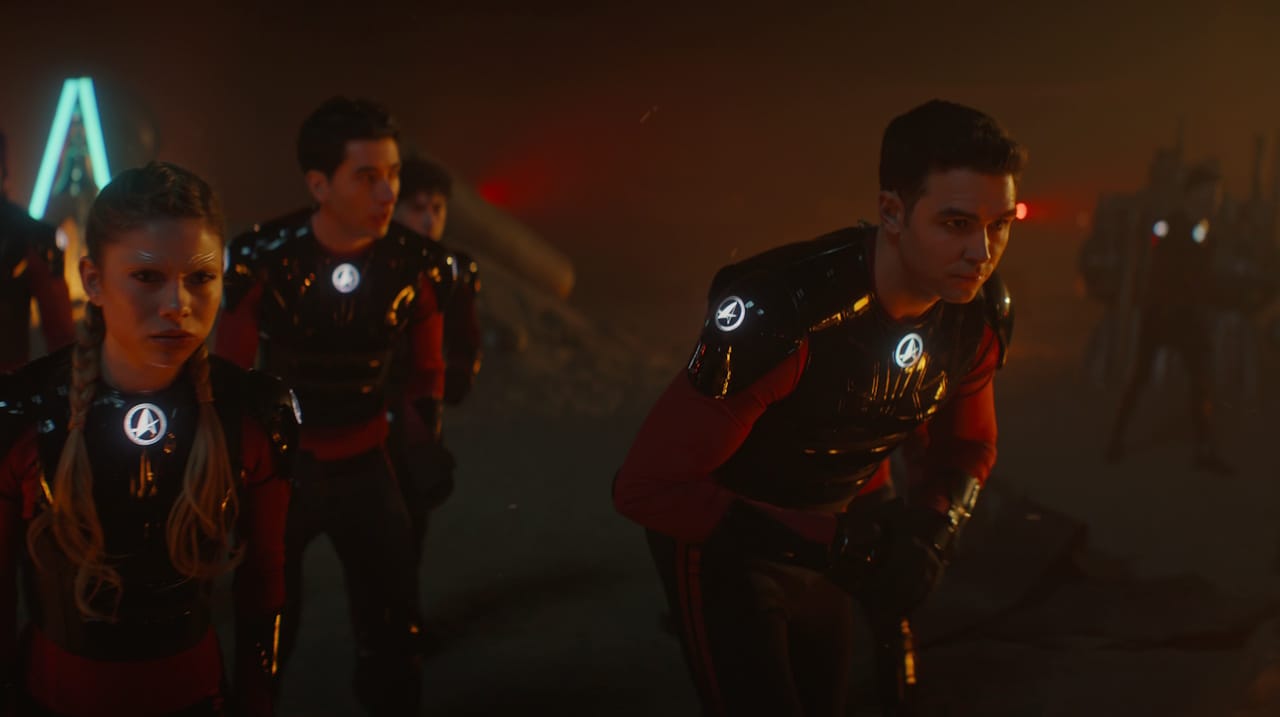
I’ve been working on this post for the past few days, and while trying to get it out the door, CBS announced that it has canceled Starfleet Academy with season two.
Now that the future of this show is in the rearview, this is a different conversation. Any discussion about Starfleet Academy is now one about its status as the biggest failure of… any Trek show ever? Only Prodigy comes close, and even then that show had the low, low stakes of an animated Nickelodeon show. It wasn't Paramount+'s big push for the next era of Star Trek.
The production team might have been able to avoid all this, but there was so much going against it that it's hard to think this wasn't basically inevitable.
Picking up where the timeline left off
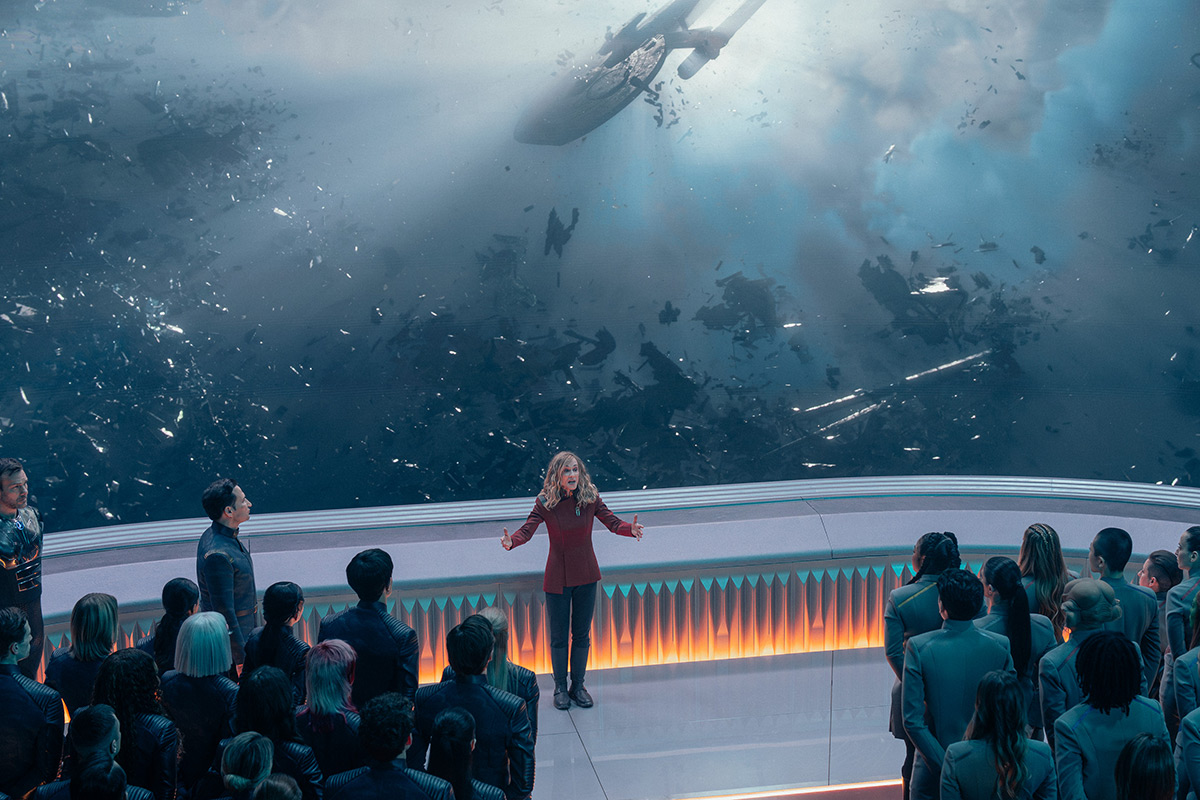
After Discovery brought Star Trek's main timeline in the 32nd Century, its cancellation left a void. No other show had ever traveled so deep into the future, nor stopped there to explore it so fully.
As the show that picked up where Discovery's timeline left off, Starfleet Academy carried the torch and picked up the mantle of marquee Star Trek show. On paper, this should be a no brainer. Discussions of a show set at Starfleet Academy have percolated for decades, though almost all of those ideas have centered on Kirk & Spock and the rest of the Enterprise crew. The dramas of them as cadets, meeting each other, being rivals then friends... Spock as the first Vulcan in Starfleet, Kirk as the hotshot who beat the Kobiyashi Maru... all with a healthy dose of young adult drama and satiating the endless quest for prequels that explain things.
These were part of the appeal of the 2009 Star Trek film, where the first chunk of that movie centers around young Spock and Kirk, their mini-rivalry, Kirk beating the Kobiyashi Maru, Spock as a senior instructor, Bones and Kirk bombing around... It even continued into the actual main adventure against Nero, but by the end had essentially blossomed into a "Enterprise's first adventure" tale.
Weirdly, seeing all of this in movie form puts this desire into a specific context: Alex Kurtzman & Roberto Orci (as the film's writers) basically touch the major hits people would want from the premise, and lighting all of those on fire kills the desire to see something more languid and drawn out. If it's what the people want, give it to them immediately and they won't want it anymore.
Obviously, that's not happening in the 32nd Century.
New faces
As a new series set in the 32nd Century, Starfleet Academy works within the context of trying to build and explore the new setting. It takes the "next generation" idea quite literally, and in a world where this era of Star Trek is around for years and years, these characters would be a well for Trek to return to for decades.
This setting also permits a level of freedom that other shows (Discovery's first two seasons, the entirety of Strange New Worlds) can't avoid. The canvas is open and rich, and it allows the show can do batshit crazy things to the galaxy, Federation, and these characters.
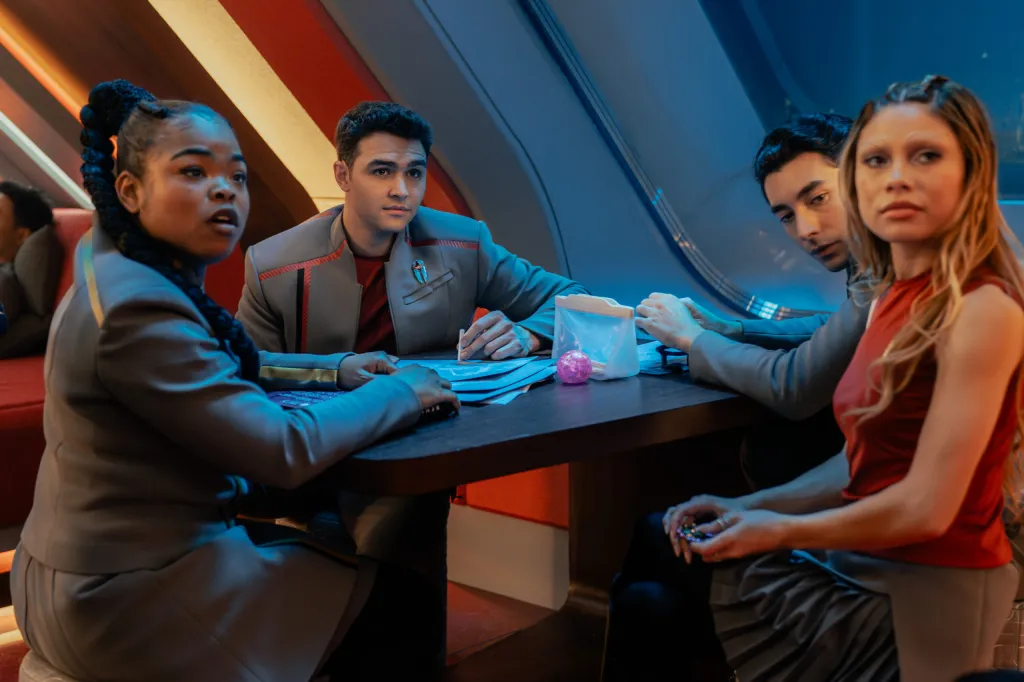
The best example of this is Kerrice Brooks's Sam (short for Series Acclimation Mil) who follows in the legacy of characters who are "first of their kind" to go into Starfleet:
- TOS established Spock as the first part-Vulcan Starfleet officer.
- TNG brought Worf as the first part-Klingon in a Starfleet uniform.
- DS9 built Nog into the first Ferengi to join Starfleet.
- Discovery started with Saru as the first Kelpian...
Sam is a fun character, and the sort who leaves an indelible impression in part because of Brooks's exuberance and charm, but also because being the first Starfleet cadet of her holographic race opens a whole range of individual experiences in just one short 10-episode season. She gets an episode that's a love letter to Deep Space Nine as she seeks out what happened to Sisko. She also gets drunk, and towards the end of the season her species rebuilds her backstory into her being The Doctor's adopted daughter.
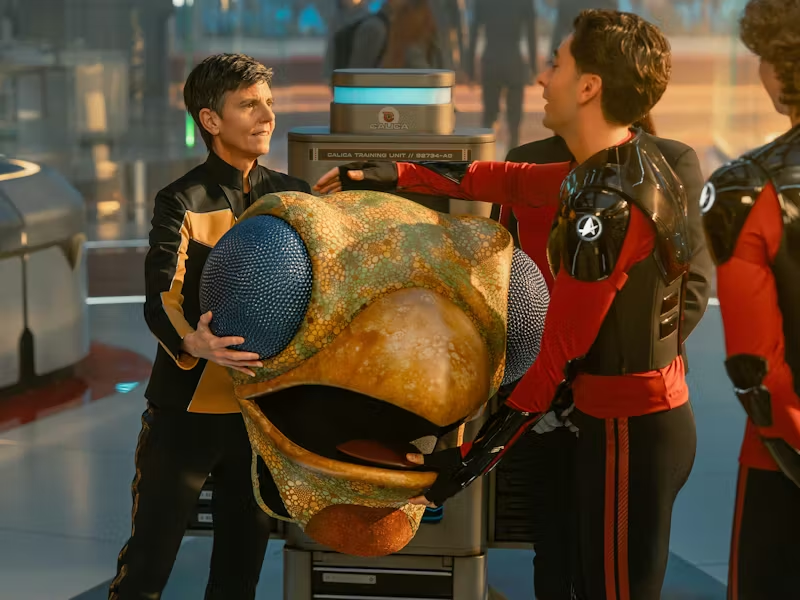
There's also Gina Yashere as Lura Thok, a half-Klingon, half-Jem'Hadar officer who serves as first officer of the U.S.S. Athena and also a lead instructor at the school. For all the complaints that "the Jem'Hadar are clones and don't breed" or whatever nonsense the fandom wants to throw at a problem from 800 years before the series takes place, she's a clever character who fits fully into the genre it's playing in. She also has a sweet relationship with Jett Reno (Tig Notaro) that advances the show's woke agenda beyond "same sex couple" or whatever.
Though Thok is a fun character, Trek's current format doesn't really lend itself to exploring her in any sort of deep way. Not when Holly Hunter is the lead as the Athena's captain/Academy headmistress and there's a half dozen cadets all ahead of her in line when it comes to scrambling for air time. Mostly she exists for Tig Notaro pathos and to bark appropriately Klingon/Jem'Hadar rudeness at cadets for not living up to her cultural ideals.
At the same time, it feels like a bit of a cheat. 800 years after the Dominion War is more than enough time to justify a hybrid like Thok, but it only feels cool and new to us because we've never seen it before. This feels like something that would have happened long before the 32nd Century.
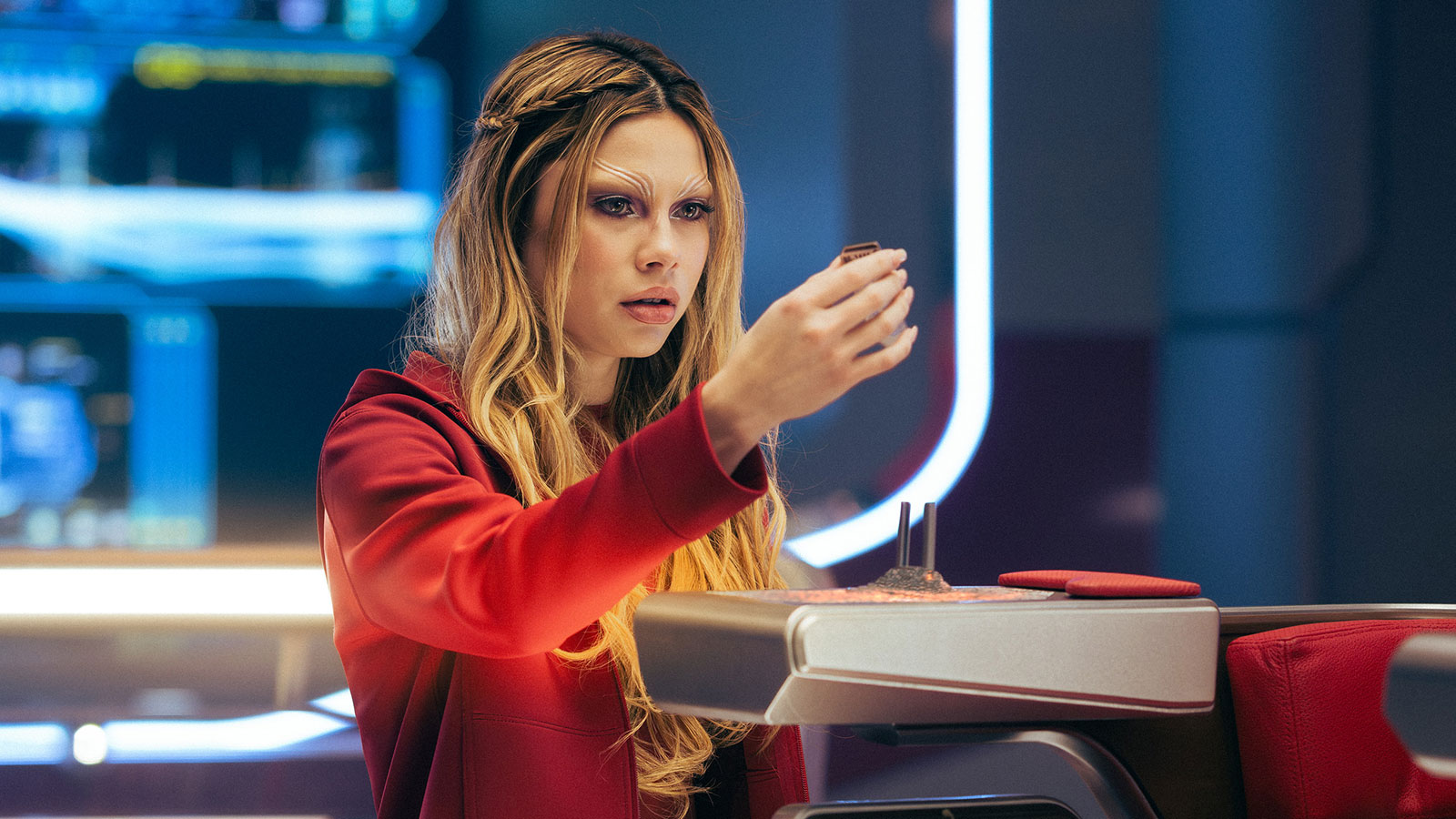
That might make it sound like Sam is an island of new species, but she's not. Darem Reymi (George Hawkins) and Genesis Lythe (Bella Shepherd) are a Khionian and a Dar-Sha specifically. The former's genetic makeup matters a lot in the first episode, when he has to do a spacewalk in his alien form to survive in the vacuum for an extended stretch. The latter... has cool Trek-standard forehead bumps.
It's good that the show doesn't reduce Darem or Genesis to their species' various physical signifiers. It's not like everything about Vulcan culture came in the first ten episodes of TOS or like the Ferengi started DS9 as a fully-formed species. Much as I want to know why the hell Genesis has the face prosthetics she does, reducing these characters to these alien stereotypes is both bad character development and allows for the sort of stereotyping that can so easily define a species like the Klingons. Aliens are no more some monolith than humans are. While Trek has largely homogenized all of human culture into a singular monoculture, a thriving, planetwide civilization contains many different subcultures within its social sphere.
The presence of Lura Thok and Jay-Den Kraag (Karim Diane as a Klingon medical student who's also the first openly gay Klingon in the series) feels like catnip for the nerds. These are familiar elements. But they're not what the show focuses on.
Catering to a specific audience
As shared universes have become the default mode of high profile film/television, Starfleet Academy continues in the vein of what studios attempt for their various outputs. Any shared universe's boon is its built-in audience. Having a baseline of interest is always preferable to building from scratch, but the point of a baseline is as a foundation from which to build, not a monolith on which to death grip. To justify the investment, properties must branch out and attempt all new and different things to try to expand a possible audience. It's the only way to build something sustainable over years.
Marvel Studios worked when they expanded their existing aesthetic to encompass fans of 70s spy thrillers, space operas, and the untapped market of black cinema with films like Captain America: The Winter Soldier, Guardians of the Galaxy, and Black Panther (respectively). Those movies made it feel like anything was possible, brought in new fans, and created an air of invincibility that lasted til the end of the decade.
Meanwhile, Rogue One and The Last Jedi were less radical attempts to expand what sort of stories were possible within Star Wars. Fierce backlash from fandom's vocal minority forced Star Wars to retreat into a defensive. The end result of such reactionary thinking was the seven-year death of theatrical Star Wars upon the release of Rise of Skywalker. In May, The Mandalorian and Grogu is the long-awaited return to the medium. Anecdotally, it doesn't feel like anyone has high expectations. And certainly not when the trailer is showing nothing but Star Wars signifiers and nothing new outside of that.
Making populist entertainment means expanding to cover the broadest audience possible. Star Trek had previously catered to those who would tune in because it's Star Trek (Discovery) and rabid TNG fans (Picard)... but the breadth of Trek's appeal expanded to those who love adult animated shows like Rick & Morty (Lower Decks), kids who watch animated Nickelodeon shows (Prodigy), and fans of the retro Trek format (Strange New Worlds).
Starfleet Academy, meanwhile, tried to appeal to a younger audience. The cast was younger and pretty in the way CW characters are pretty. Television critic Alan Sepinwall compared the show to The OC as a touchpoint for the show's tone.
Even the main character Caleb (Sandro Rosta) has a backstory about resenting Starfleet based on his past interactions with the organization. He despises what it represents and what it can do for him. The only reason he joins is because Captain Nahla Ake (Holly Hunter) tries to right the wrong done to him and his mother when he was a child. Their separation haunts the two of them, and she offers Starfleet's vast resources in the name of rectifying the past. He's an outside who doesn't like Star Trek. Seems like an avatar for a potential audience to grow in their affection for the Federation like he will.
And why wouldn't a show like this be a teen soap opera? Did no one ever consider that a show about kids going to a school would be something akin to Buffy or Degrassi? Did no one consider that this would be a show about flirting and relationships between young people?
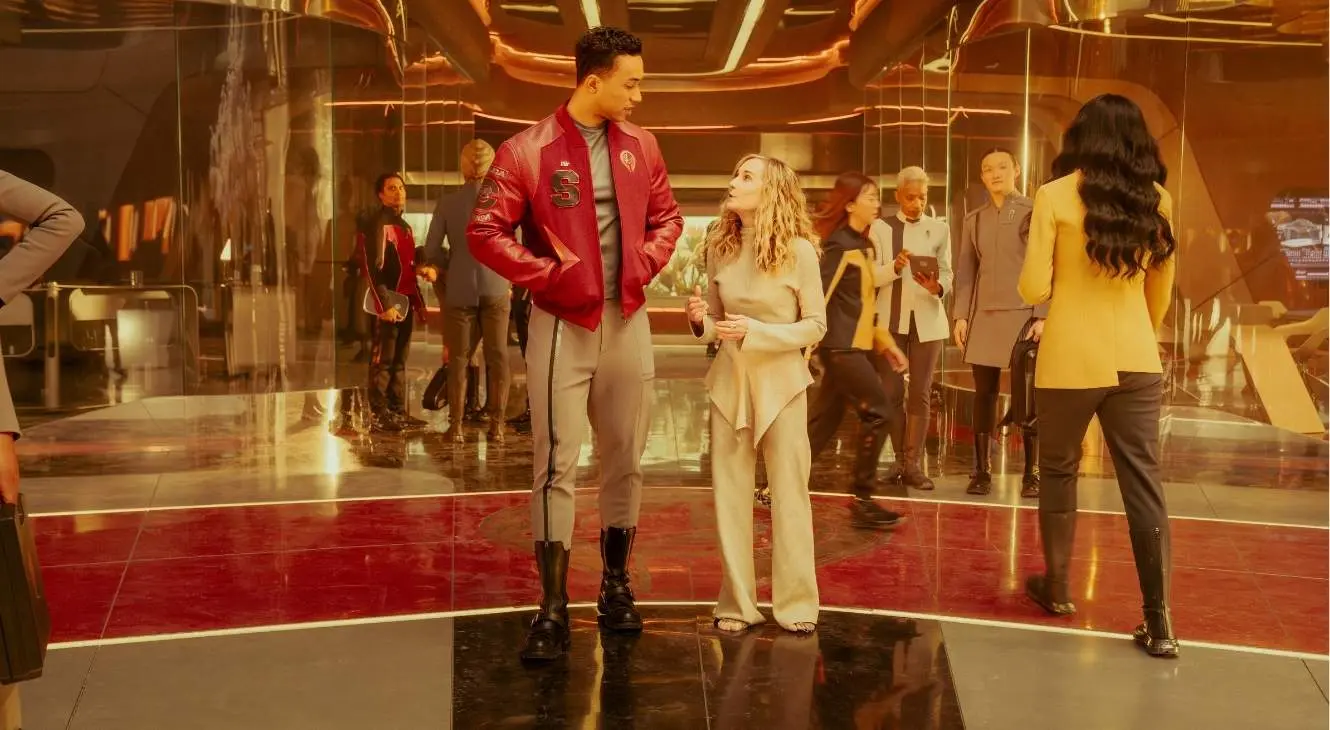
It should be no surprise that Starfleet Academy fell into the trap of what these shows do. Three episodes in the school gets into a prank war with the more militant War College. One episode focuses on Sam and her term paper about Benjamin Sisko. Another features a four-day weekend in which the cadets get to indulge in their lives outside of school. And there's even an episode that brings in Tilly to help the cadets use the play Thornton Wilder's Our Town to help one character work through their PTSD.
This idea of trying to cater to additional audiences is good in theory, but usually suffers in execution. It takes a really firm hand to create something that fits within an existing architecture but that feels totally new. "Teen soap opera" is not a thing that fits into the ethos of most Star Trek writers. More than that most Trek fans tuned into Starfleet Academy in the hope that they would get Star Trek. Not My So Called Life.
Giving the fans what they want
As the inheritor of the mantle of "Lead Star Trek series", this is doubly frustrating. With nothing else set in this time period, Starfleet Academy stands alone as the future of Trek is. More damningly, it's trying to serve so many masters that the show is basically unwieldy.
On the one hand, the 32nd Century has so many things to explore: a galaxy recovering from The Burn. A reunification between Romulans and Vulcans. Pirates. The rebuilding of the Federation. And now Nus Braka (Paul Giamatti) as a vile rapscallion hellbent on ruining everything that Federation stands for. An early episode attempts to bring Betazed back into the Federation's folds and consturcts a political solution to make that happen. Another shows the Klingons as an endangered species in need of a new homeworld that they might colonize with the goal of rebuilding their civilization. This sort of grand scope of the galaxy was always something that fit within the remit of Deep Space Nine, where the center of the action was around the most tactically important location in the galaxy for that specific stretch of time. The Next Generation could only do this from an askance point of view, limited as it was to the Enterprise's interstellar travels. There was a Klingon Civil War bridging seasons four and five of TNG. It only mattered through the context of Worf's alliances and his joining the fight.
But... why is the Academy involved in the politics around Betazed rejoining the Federation. What does the solution to set the Federation's seat on their planet have to do with a school full of cadets? The show tries make the connection via giving Caleb a romantic relationship with Betazed's president's daughter. That's weak.
Likewise, why is the Athena a flagship when its remit is to foster this first class of Cadets? Why have it land as a monument in San Francisco when it's constantly going out into the stars?
The reason why is because Discovery doesn't exist anymore. This is Trek's main timeline for moving forward. So Starfleet Academy has to continue the story of the Federation and its status in the galaxy while fostering the first cadets to matriculate in more than a century. And it also has to be Star Trek Degrassi but with a ten episode season rather than the twenty plus such a premise would need.
These requirements are difficult in the best circumstances. As the Trek-verse stands now, they're impossible to reconcile.
Zeitgeist
As Trek continues to struggle within the framework of prestige streaming television, it means that a show that lends itself so well to the soap opera of a 20+ episode season (one of Trek's great strengths) can't dig into the characters the way the premise requires. The volume of episodes in syndication-era Trek meant a decent chunk of any given season featured a noticeable set of episodes whose quality ranged anywhere from bad to flat out shitty. But it also meant that the show could get downright transcendent entirely on accident because something needed to go out and the creators couldn't afford to second guess themselves.
It means that Caleb's relationship with Tarima is fairly surface level. It means that nearly a third of the season features his search for his mother. It means there's not a great opportunity to really explore Holly Hunter's Nahla Ake. Sure, characters get their opportunity to shine (Jay-Den gets episode four, Genesis and Darem both get episode seven), but it's hardly what a show like this needs. They all feel yoked to the limited run time the series can command.
This makes the tone weird. To compare, the serious tone that comes from The Doctor and Nahla fighting for Sam's continued existence conflicts with Paul Giamatti's Big Bad Nus Braka. The show isn't just an opportunity for Giamatti to bathe in the river of ham, it invites that. The dude has a game of tic-tac-toe shaved into the side of his head. Braka is one of the broadest villains in a universe that contains Sybok, Lore, and the Kazon. And also... O's win the game on his head.
With all of this in mind, it's difficult to parse who this series is for, and it's hard to raise much of a defense for a show that is running around trying to figure out what it wants to be.
It won't get that chance. And so much of long form Trek is about building shows and figuring out what does and doesn't work. The first two seasons of Next Gen are godawful. Deep Space Nine is a rough ride until the Dominion show up at the end of their second season too. Voyager had some okay episodes in their first three seasons, but the number of people who prefer that show before "Scorpion" is very low. These shows had dozens and dozens of episodes to throw things at the wall and see what would happen and what could make them stick. With only ten episodes to play with (twenty if you count the second season they greenlit before it premiered) it's possible Starfleet Academy won't have found itself until around the season two finale.
If there's a comparison series, it's Deep Space Nine. But Deep Space Nine had a giant cast of interesting characters, and the writers rotated through each in turn. They had more than enough real estate to give everyone multiple episodes, often in different combinations. It allowed a firm foundation before they started indulging in galactic politics once the Dominon showed up. At least Next Gen had the time to figure out how to write Star Trek stories that could be consistently dramatically interesting. That also took two years and a one-of-a-kind showrunner in Michael Pillar to discover.
It's really hard to justify, though, a show that needs to have the low stakes of "kids going to college" with the high stakes of "here's how it is to rebuild the United Federation of Planets in the 32nd Century". It could do one or the other. Not both.
And it certainly can't do that when it's the flagship show. Not when Trekkies literally have nowhere else to turn for their Trek hit. Not when it's at the farthest edge of the future and anyone who wants to know "what happens next" needs to tune in to find out. Even if Strange New Worlds was able to fill the flagship void, its status as a prequel series mixed with its only having sixteen episodes left to air makes it a lame duck.
Starfleet Academy's premise can't really handle the task at hand. It stretches credulity for first year cadets to constantly be on the leading edge of the Federation's rebuilding efforts, especially when the finale is about them foiling the nefarious plot to wall in the Federation from the galaxy. The diplomatic efforts with Betazed happen on the Athena... because that's the set production sank a lot of money into. The Athena has to play a critical role in the founding of a new Klingon homeworld? Really?
The stretching requires too much. Even the sixth episode (one of the best of the season) integrates an Academy training exercise that goes south once Braka and his legions ambush the Athena in the name of the season's metaplot. It's exciting and tense, but that's because it's the only episode of the season that feels like it builds from actual consequence and stakes and an exciting, actiony yarn that moves the metaplot forward. It's the only one that feels like it matters.
The rest of the time... the writing staff is writing love letters to Sisko and talking about Thornton Wilder like he's someone from the recent past and not someone whose work might as well be Aeschylus. However justified, the Sisko ep is not a great idea. Bringing in a clearly better show might help be a love letter to a series that's long overdue to receive its laurels and acknowledgements from larger Trek. But it's just going to invite bad comparisons rather than helping to develop Starfleet Academy as a series with its own identity.
It's too bad. Because... I should be a target demo for this show. There's not a whole lot of great young adult shows I'm watching at the moment, and the thought of Trek that airs on the CW is not a turnoff for me like it is for Trekkies everywhere. Hell, this is the sort of evolution and trying new things that I'm constantly yelling at Star Wars to attempt. Trek is and has been doing that. Some of these are going to fail. But the flagships... shouldn't.
Surprising no one, my favorite character on the show is Genesis, the plucky girl works hard to aspire to climb the Academy's command track and be the group's ostensible leader. She's smart, funny, and exactly the sort of character I like to follow. Meanwhile, I have very little patience for the male characters who aren't Caleb.
The end of the show, though, left me incredibly cold. It's both too big and not big enough. It's too small and also not intimate enough. As the season wraps, everyone talks about how great it was to go through an entire year at the Academy... but it's like... bitch we've only been here eight weeks. At least when school years end in traditional linear television they're tracking roughly the real time of an actual school year.
This is the streaming era, though. Shows like this only get ten episodes a year. Starfleet Academy was going to run for a maximum of five seasons. There would be a meta arc, but that's impossible to balance with the premise's inherent need to have standalone, character-based episodes as the majority of their weekly drops. With this tiny episode count, it feels like the show is still getting started.
And now it's dead.
Reaching out to the future
This, though, is what Star Trek has built. The shows are just too expensive, slow, and lackadaisical to make anything mad compelling. At its best, Trek wasn't like this. People might have complained about small budgets, but a budget is nowhere near as important as good writing.
Weirdly, I keep coming back to Deep Space Nine as this show's antecedent. But that show was about the ease of being a saint in paradise and living out on the frontier of it. It was about the seismic shifts in the galaxy's political landscape, the aftermath of an occupation, the rehabilitation of a terrorist-turned-first-officer, space religions, and much much more. There was a clear tonal and thematic vision to that series, how it worked, and what it all meant to fit together.
It also didn't have the capacity to do massive stories every week. There were times where they had to confine themselves to the station and a couple of standing sets. And that meant they had to focus on the characters rather than the big premise or the spectacle. For every "Sacrifice of Angels" there was a "Duet".
People might have clamored for Starfleet Academy, but exploring the 32nd Century needed the mentality of Trek at its most basic form. Just to prove they could do it. Maybe then they'd be in a better place. But that requires a going back to basics that doesn't fit with streaming's demands for big, hooky, high concept premises. Maybe if this was an offshoot of that imaginary lead show it wouldn't feel quite so much like the blind alley that jumping to the 32nd Century probably was.
This show can't be Star Trek's spine. It is an appendage at best. And Trek put its entire narrative weight on top of it.
And so it exists at the far end of Trek's timeline, standing alone, and rapidly hemorrhaging the tepid interest from the fans who would normally have supported it while being unable to bring in an audience that was always going to be difficult to ensnare. It's unclear if Trek will continue to blaze the trail into the far future of the 32nd Century. Honestly, it's probably not a great idea. This time is unrecognizable to the average viewer unless they know Star Trek itself. Being so self-reflective and inside baseball means it doesn't have the broad-appeal it seems to want. This is a show for Trek fans.
It's hard to see Trek not retreating from this. After so much time spent in this time period and so little traction with it, Trek is again trying to figure out how the hell to make something new and that works. Who knows where the property will go from here, but... it's not a place that Trek is safe to be. Strange New Worlds is in its last lap. There's nothing even in the pipeline to replace Starfleet Academy... and for the first time since its return in the streaming era, the future of Trek is deeply, deeply uncertain.
And if there's one thing no one wants from Star Trek, it's feeling uneasy about the future.