[Adjective]-able Characters - The Last of Us Season 2
Ellie's vengeance trip to Seattle is a gruesome, blood-soaked road to hell. And it's only half the story...
![[Adjective]-able Characters - The Last of Us Season 2](/content/images/size/w2000/2026/02/2dff5d18-8e19-4865-9b18-be4416915456_1600x800-jpeg.jpg)
The following contains spoilers for The Last of Us Season 2. You have been warned…
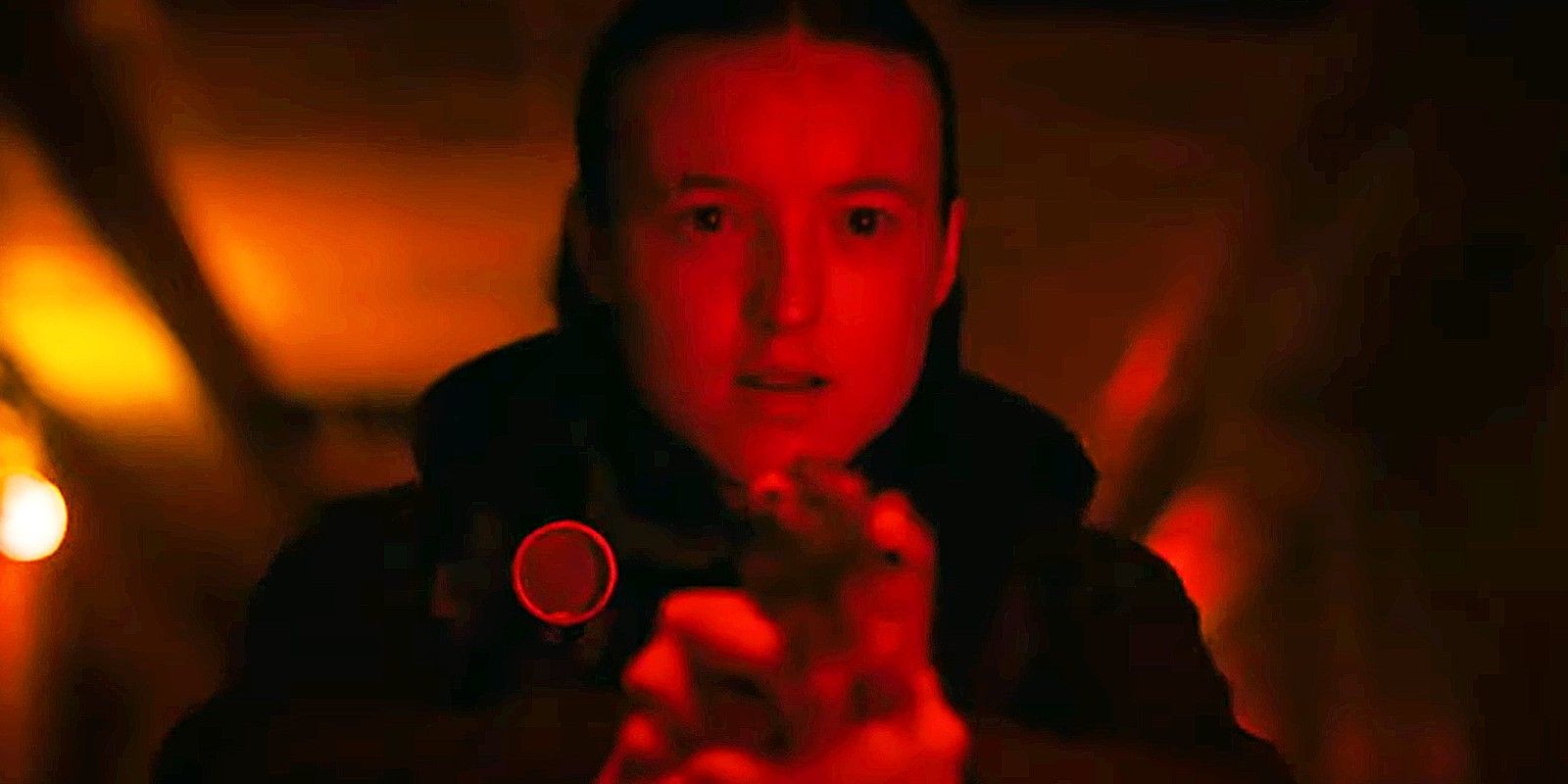
While scrolling through BlueSky the other night, I came across a thread by someone I follow. He’s not someone who regularly posts about television, but he went on a mini-rant about how horrible Ellie is, how unlikeable she is, how much of a monster she is, how she’s not someone the audience could root for or even like. He was so angry. Irate. He raged about why he was supposed to give a shit about her and then detailed all of Ellie’s many sins throughout the season.
It’s really hard to argue against his many points. To put it mildly, Ellie is a deeply troubled, problematic character. She is, indeed, outright monstrous. She is snotty and self-righteous and selfish. And, yes, there is a sense in the show that the characters around Ellie do excuse her reprehensible actions, refusing to abandon her as she grows more and more monstrous and crosses more and more lines, putting more and more innocents in harm’s way.
Compound that with the decision to bifurcate Part 2’s narrative. The Last of Us does itself no favors leaving audiences on a one-way bullet train to hell with no promise that anything will get better. For all that it’s the right call, Ellie’s story is incomplete without Abby’s. Now we have to wait maybe two more years for the end of this story1.
For all that this series is a huge hit for HBO, the buzz (especially from critics) is that this season is vastly inferior for this focus on Ellie and gutting its core strength: the double act of Bella Ramsey & Pedro Pascal. That’s a valid concern, but this isn’t meeting the show on the terms of the story it wants to tell. And… sure. Maybe people don’t want to hear this particular story. When I first heard the premise (which is the major event of this season’s episode two) I know I wanted nothing to do with it. But given the goodwill from the first season and the knowledge that they’ve only half-told this leg of the story, it’s a journey that those who’ve gotten this far deserve to see to the end..
Taken together, has this show gone wrong? And will its upcoming focus on Abby maybe turn the tide? This hole that the show seems to have dug itself into might seem like some pit they won’t be able to scramble out of, but in reality it is the start of a tunnel that will lead to a predetermined end. It won’t be easy, but hopefully it will be fulfilling, no matter how dark it gets.
The noxious truth about likability
Whenever someone comes out and complains about “why they should give a shit about” any given character, it rankles. These “why should I care” complaints, questions about “is this character likable?” always come from the dissatisfied consumer who find themselves revolted at whatever story is in front of them. At its core, it might mean that the story isn’t working at some level, but there are plenty of characters in massively popular movies who don’t conform to anything resembling “likable”2.
With all respect, “likability” is at best lazy criticism. Characters might not be people, but there are plenty of people in anyone’s life who don’t fit the profile of “likable” at any given moment. Humans are messy, contradictory. There are people in my life who, when I talk to friends about them, will engender questions of “why are you even friends with that person?” Even if it goes unsaid, this is a fairly regular phenomenon. Everyone has acquaintances who fundamentally don’t understand relationships between those they know and those with whom they’re tangentiallly familiar.
The truth is people are complicated. Emotions, motivations, fascinations… for all that we might seem logical at certain times, everyone is varying degress of irrational. Our relationships are our business, and if outsiders judge them… well. They could never possibly know the full picture.
With regards to Ellie and the earlier complaint that her actions are monstrous: it’s no doubt they are. Barring some level of sociopathy, every viewer of this show is going to hit a point where Ellie crosses the line. It might be later for some than others, but at a certain point Ellie is so problematic that viewers won’t be able to follow her anymore. For me, that point happened fairly early, but by the final stages of the video game, there was at a point where my head was yelling “enough!” with every press of a button, every wiggle of a joystick. Ellie’s actions became unendorseable, the suffering beyond measure.
By the end of this season, Ellie murders three people for their roles in Joel’s execution. She tortures one of them (Nora) and leaves her to die a horrible fate: eaten alive by the hospital’s spore factory. Ellie kills Owen when he pulls a gun on her, sure, but that bullet clips Mel in the crossfire, resulting in the death of her and her unborn baby. While she didn’t pull the trigger, Ellie’s reckless actions directly result in Jesse’s death, and when the season ends it leaves the fates of Ellie, Tommy, Dina, and Dina’s unborn baby on a knife’s edge. Prognosis: grim.
All of this after episodes’ worth of warning signs that this will not end well. That Ellie should turn back. She doesn’t. And the bill is already racking up debt.
This descent into darkness is the point. For all the complaints that the show is unfun, that Ellie is not likable, the show doesn’t endorse Ellie’s actions. It doesn’t take listening to the podcast to know that Ellie making mistake after mistake after mistake, lying about the world to get what she wants, and acting irrationally and causing serious harm. In the finale season, Ellie screams at Jesse that she has no community, ignoring the fact that Jesse and Tommy both came for her, that Dina has gone above and beyond to prove that the love between them is real, that Jackson writ large does think highly of her.
What the show is asking for is a degree of empathy for this character. Seeing her on this revenge tour makes sense for all that the audience disagrees with her and the lengths she’s willing to go to accomplish her goal. Everyone has a breaking point, though. It’s hard to conceive anyone who watched the finale, who watched Ellie’s action directly kill a very pregnant Mel (and thus her baby), and who didn’t think “this has gone too far.”
Likability is a question of empathy. Empathy comes from understanding, not superiority. It’s obvious that in her bottomless pain, Ellie is making mistake after mistake. It’s not easy to watch. It’s not what we want to see from her. And yet, the show is strip mining the audience’s empathy in the name of its thought experiment about violence, vengeance, and justice.
Joel-less
The counter-balance to Ellie’s revenge bender is Joel, whom the narrative unceremoniously kills off two episodes into the season. Abby’s executing Joel is brutal, narratively deisgned to engender an endless well of rage from which to fuel Ellie’s aforementioned quest for “justice”.
And yet, Joel himself is monstrous. Even before he gets to the Firefly hospital in Salt Lake City at the end of season one, before he slaughters that entire complex in the name of saving Ellie’s life (and dooming the world in the process), he tortures people, inflicts violence, murders without compunction. In episode six, when we get the flashback to all the things we’ve missed between Ellie & Joel, his execution of Edgar is horrible, but then self-righteously telling Ellie about the cover-up and then implementing that story in front of her is simply staggering.
Is there a defense for any of this? While the mass extermination of every person in a hospital is indefensible, Joel’s conviction of “I would do it all again” reflects the infinite love he has for Ellie as her parent. It’s a bleak exploitation of Pedro Pascal’s natural charisma. We see him do terrible, awful, unforgivable things, and yet when he’s on screen we want to watch him. At no point do we find Joel so repellant that we wish him death, much less the horrible savagery he suffers at the hands of Abby.
And it’s even worse than that. In the end, in his final scene with Ellie, when he confesses the crimes he’s committed and the admits the lies he’s told, it should be unforgivable. Hell, Ellie does not forgive him. And yet! Within this entire scene, Joel does not apologize. He would do it again! The best he gives is remorse for his actions being necessary.
I ask you, is Joel “likable”? If the answer is no, does it even matter? Abby and her team more or less delivered justice in murdering Joel. But what would we give exchange for more episodes with Pedro Pascal? What would we excuse?
Half-tale
In leaving this season half told, the show gambles that people will want to see what comes next. All of this violence has to have an end, some point. This is a show that portrays senseless violence but is always saying something about it.
This season (like the game) is incomplete without hearing the story of Abby. There are many hints throughout this season (especially in this final episode) that there’s more going on in Seattle than Ellie’s limited scope. The war between the WLF and the Seraphites is something we only get glimpses of. It’s enough, though, to recognize that this is a war of attrition, where each side has so dehumanized the other that the violence is infinitely cyclical with no end in sight.
Because the game splits cleanly where this season does, I remember how I felt when I was at this point, trepidatious to get Abby’s side of the story and wondering if it would be worth it. Sure, by the end of the Ellie version, when Abby is standing there, with Ellie at her mercy, her rage is entirely justifiable. But it also matters what Abby has been through. When I reached this point again in the game, having gone through what Abby went through, it was a different experience. It was, however impossible it might seem at this moment, even worse.
The context matters. None of what’s going to happen with Abby is going to excuse Ellie or what she’s done, the pain she’s inflicted, the suffering she’s caused. If anything, it’s going to make Ellie’s actions even more inexcusable.
“I let you live”
Prior to playing the game and knowing what I knew then, the only thing that made me excited to see this story was the prospect of getting more Kaitlyn Dever on the screen. Dever has been amazing since bursting onto the screen as Loretta in Justified. Abby is a very different role than the sort of high school ingenues of Booksmart or Dear Evan Hansen or even as Romeo’s capable ex-girlfriend in Rosaline. Abby is a stone killer, and casting her puts her inherent cutness and innocence in tension with the violence she needs to play. In the game, Abby’s rougher edges are immediately obvious, but making Abby empathetic is going to make next season even harder.
But it also makes the above moment even more powerful. In the game, Abby’s “I let you live” is devastating. For all that Abby was on a revenge tour against the monster who murdered her father and doomed humanity in the process, she did show mercy in not extending her plot beyond its tight focus. She is right. She did let Ellie live even though she didn’t have to.
In casting an actress of Dever’s caliber, it makes the anguish all the more excruciating. As the show cuts to black and shows Abby waking up, it’s a gambit to get people to come back next season. It shifts the show in a way that (not knowing what was coming) would be at the very least intriguing. Knowing where it’s going, it promises that there’s still something to explore, something to say. Maybe all this suffering will add up to a bigger picture.
If there’s a critique, it’s that revenge stories have been around for as long as humans have been telling stories. Stories about how vengeance hollows people out, leaves them with nothing… It’s not that The Last of Us is doing anything revolutionary with revenge, anything we didn’t already know. But it is exploring the cyclical nature of violence like this.
When Abby growls “I let you live” she’s saying that she wished the violence would stop there. Abby might have been there for vengeance, any number of the meat-tenderizing blows she landed on Joel’s body could have been in the name of revenge and not justice. But she did stop. She did walk away. She did look back. She did put it in the past. She was hoping the cycle of violence and revenge would stop there.
Ellie is the problem here. Ellie couldn’t let it go. And… why would she? Joel was her family just like the doctor Joel murdered was Abby’s. She wished for violence and suffering and justice. But violence, suffering, death, none of it is in a vacuum. To be human is to build communities and connections. Severing those connections comes with consequence. Severing in return is a road to blindness. For all the complaints of a slow justice system, dictatorial justice means we live in a world like this, one of retribution and dehumanization.
The road to empathy…
Mazin, Druckmann, and the rest of those making the show are showing the end result of this. Forgiveness is powerful because it is so contrary to what we would normally do. Forgiveness is a demonstration of empahty, the desire to perform the mercy we would wish to have if the situation were reversed. In the lawless, violent, apocalyptic world of The Last of Us, empathy is harder than it might be in our more civilized existence. And yet, even in our cushy world it is easy for us to divide into tribal lines, to dehumanize others (even people we know). It is easy to withhold empathy we should so freely give, all in the name of our own self-righteousness. It’s easy to watch a show like this and write off Ellie as a selfish egomaniacal monster, funneling her anguish into a blood-soaked revenge tour, powered by love in its more grotesque form.
But maybe all of this is the point. Maybe the viewers are not ahead of the story. And maybe we can live in a world where people approach storytelling at this level with some degree of humility. Maybe every critique is one that Mazin and Druckmann have labored over and questioned. They wouldn’t be pushing this hard and inflicting this much pain if they didn’t know exactly how much agony it would cause. We’ve seen torture porn. This ain’t it.
The Last of Us is an exercise in creating a perimeter of violence and using that to create a negative space where the empathy should be. Like the game before it, it’s exploring this idea almost too well, denying its audience any easy answers because the world these characters make for themselves only gets more and more complicated with every inevitable mistake. If it’s bad, maybe stop watching. But stopping now means not getting to the incredible empathy of this story’s tragic ending.
Can’t wait for season three.