A Wonderful Melancholy - The Grand Budapest Hotel
With his first solo-writing credit, Wes Anderson distills his own style to its purest form
The Royal Tenenbaums is the first movie that really put Wes Anderson on the map. Despite that, the rest of the decade didn’t really deliver on that promise. The Life Aquatic With Steve Zissou was an expensive indulgence that didn’t quite work and The Darjeeling Limited had an unfortunate colonialist bent to it1. Fantastic Mr. Fox was a delightful all-ages diversion but also came with the stigma of animation. 2012’s Moonrise Kingdom felt like a return to his esoteric style through a broader prism than the insular navel gazing that marked those previous films.
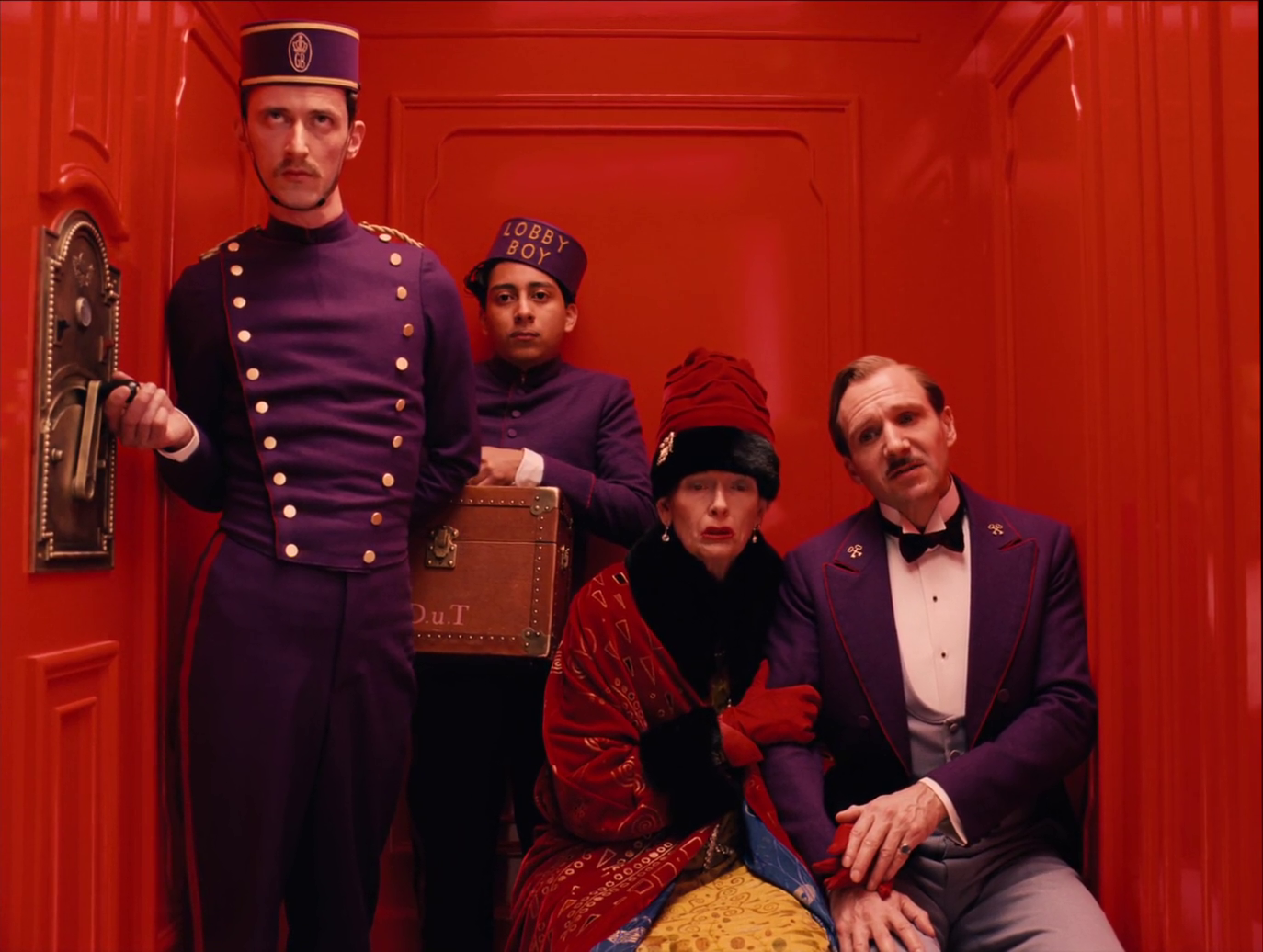
When he released The Grand Budapest Hotel in 2014, there was a key difference. While Wes Anderson shares writing credits on almost all of his films, this is the first for which he only shared a co-story credit (with Hugo Guinness). It’s Anderson’s script through and through. He’s continued that practice ever since.
At the time, the discussions around this film noted and reflected that change. Grand Budapest is more violent than his other films, but his aesthetics also feel like a major evolution from even Moonrise Kingdom. Simply put, it adds up to a movie that feels more attuned to his exacting and specific vision. If one of the boons of The Royal Tenenbaums was its inability to fully remove the grime from New York City, by Grand Budapest, the joy is in meticulously aligned surfaces, the immaculately manicured carpet patterns, and glorious designs of his diorama style.
It’s like watching Wes Anderson level up in real time.
Looney Tunes
In 2014, the hype was real. Everyone was talking about how excited they were for Anderson to go big and bold and baroque. I went with a big group of friends, but with the screening starting at 9pm, I fell asleep halfway through, catching only random glimpses of the film as it went. Of the few things I remember, one is the moment Jeff Goldblum loses his fingers.
This isn’t the only moment of violence in the movie, but it’s certainly the most visceral. Given the plucky energy of all the films preceding this one, Willem Dafoe’s character using a door to slice cleanly through the digits plays as a visceral moment of macabre comedy. It’s almost cartoonish the way they sploot off. And yet, Anderson doubles down on the image, zooming in close on those fingers and the spilt blood as Dafoe reaches down to pluck the evidence away.
He repeats the same trick in this year’s The Phoenecian Scheme, where early in that movie (spoilers) an explosive attack on Zsa-Zsa’s plane blows a passenger cleanly in half, leaving his bottom half still strapped into the seatbelt, sitting.
This heightened cartoonish reality comes from Anderson’s aesthetic. Fingers spring off knuckles. Someone dramatically holds up a severed head. In a wide shot, a dead cat lays splayed out on the ground stories below, bloody and comical. Even when one of the prisoners slaughters a room full of guards to protect M. Gustave’s daring escape, the perfectly composed frame showcases the leftover carnage, where even the carnage feels like Anderson tweaked small, invisible realignments between takes to perfect the image.
Reaching for perfection
For all the violence or even the dirt and grime of the extended prison setting, these pristine, almost sterile environments have long since been a hallmark of Anderson and his style. While it can be a turnoff for people, these aesthetics serve a very particular function, giving a window into the director’s vision.
But it also does something else.
Having recently rewatched all of David Lynch, Anderson shares a parallel quality with him. Anderson’s environments always have a heightened quality. The colors pop. The design is almost rococo. Lines feel symmetrical. Lynch, meanwhile always2 lets fantasy elements bleed in, but sets his stories in worlds roughly analagous to ours. But while this might seem like verisimilitude, Lynch’s work never feels like he’s attempting to capture that.
No. Lynch is constantly reminding his audience about the artificiality of the worlds he creates. Effects in Twin Peaks: The Return look deliberately shitty. The camera in Inland Empire is an off-the-shelf camcorder shooting smeary, blurry images and recording them to videotape. The bird in Blue Velvet is… well… the fakest looking bird in cinema history. He creates emotionally immersive stories, but not worlds that feel like ours reflected back to us. Not on the screen anyway.
Anderson, too, does the same. As an audience member, at no point is it possible to forget you’re watching a Wes Anderson film. The world is too vibrant, too unique. The compositions are too staged and staid. He constantly draws attention towards the artifice, yet it doesn’t hurt the final product. Or, at least, it doesn’t hurt so long as Anderson’s style tickles the brain’s various pleasure centers.
When Jeff Goldblum’s fingers fly off, it comes as a heavily stylized and cartoonish. This, however, is the pleasure of the thing. It accentuates the heightened reality, growing from it. When the severed head comes into frame, it’s terrifying, but comes with Anderson’s textbook pristine design. Have you ever seen a more beautiful and immaculate severed head?
Minority report
Of course, this isn’t all perfect. Because the design is so uniformly excellent, it means that the more gnarly aspects of Anderson stick out at odd angles. Darjeeling opens him up to a particular line of attack about his worldview. The critique that “white guy Wes Anderson makes movies about white men’s problems” becomes inescapable once he kills brown children so white men can learn their lesson.
There’s certainly more care here than there, and it would not be surprising to hear that he took that complaint to heart. Indeed, while this story is about M. Gustave’s escapades, Zero is the one who tells it. It’s through him and his reverence that the audience learns about Gustave. And by 1968, Zero has long since taken over Gustave’s position as a man of culture and esteem.
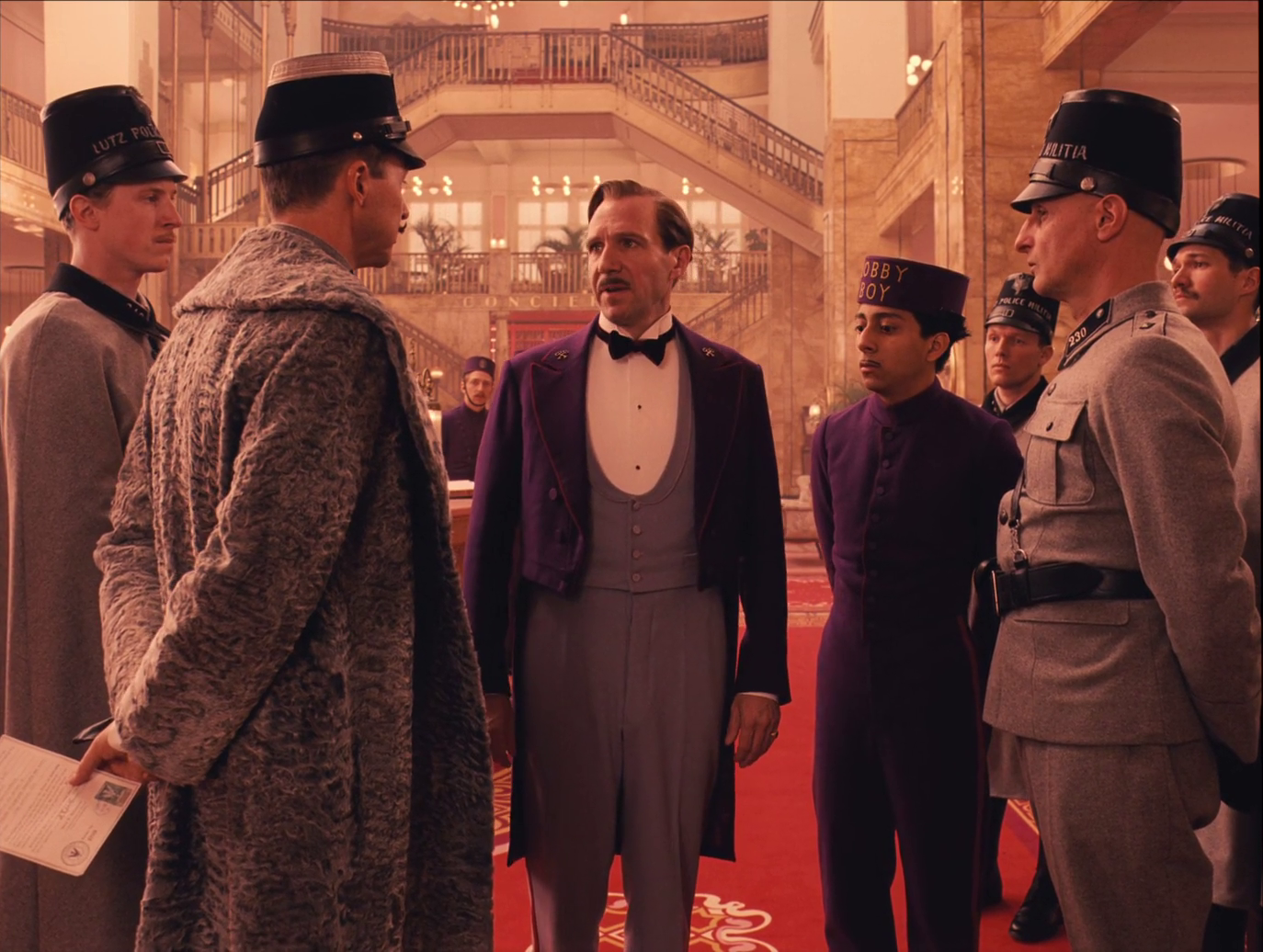
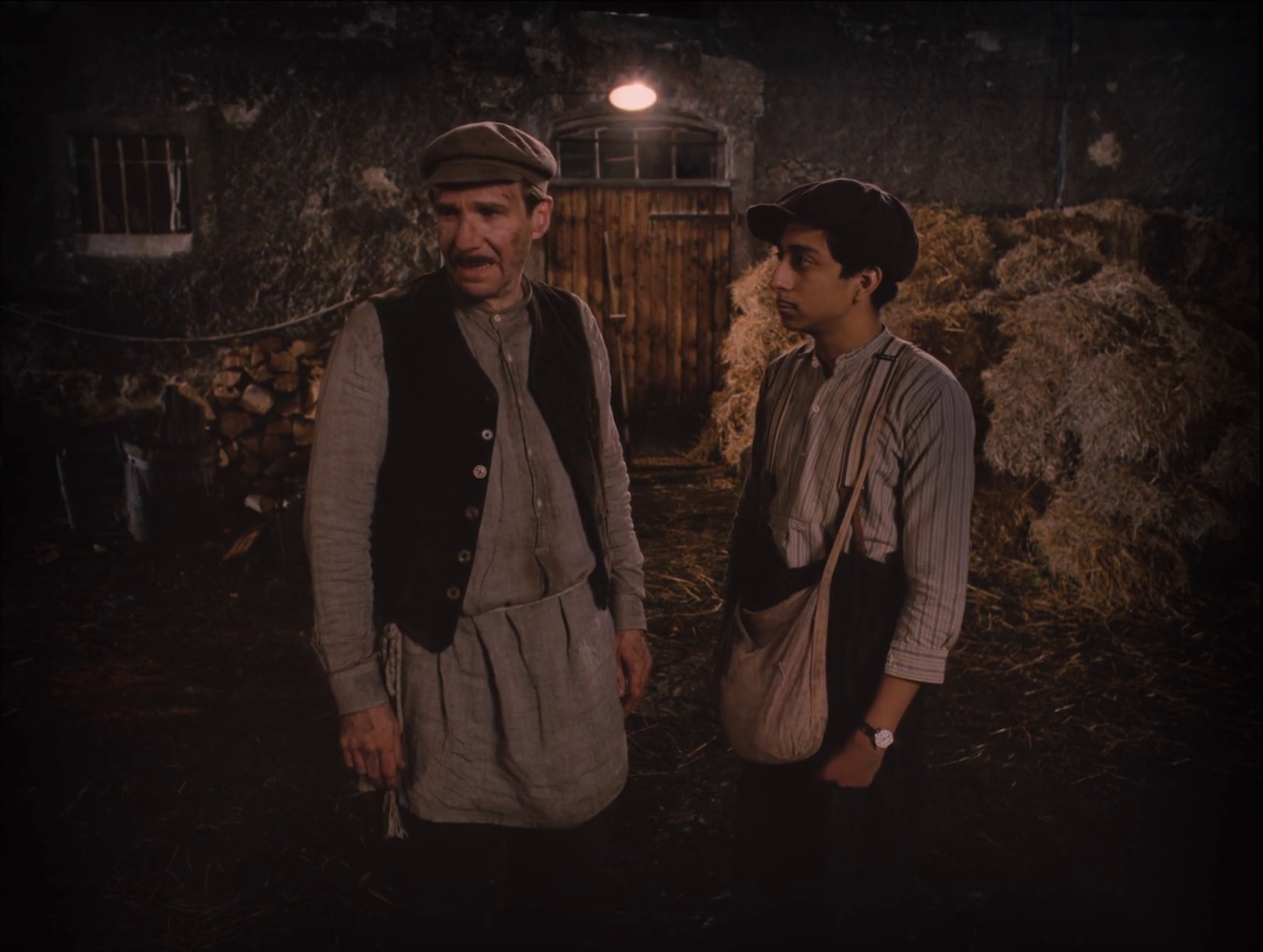
Wes Anderson doesn’t hide from the story’s “othering” of Zero. Working 19 hours per day, the Lobby Boy lives in a small sparse room with minimal belongings. While he dresses in an immaculate uniform and wears his hat proudly, his spartan existence draws direct contrast with Gustave’s lavish one. More than that, though, there is the moment where the military stops the train during the closing of the frontier. They demand to see Zero’s papers and rough up him because he doesn’t fit into the whole Zubrowka aesthetic.
Not fitting into the aesthetic, though, plays differently in 1932 Eastern Europe. It’s the middle of the depression but also the dawn of proper fascism. Over the past century, tensions between Eastern Europe’s various saturated cultures (Serbs, Slavs, Croats, and many many others) have resulted in armed violence and even (at worst) genocide. Anderson injects that idea of racial or identity purity directly into the text of his first “solo” writing credit.
Gustave is quick to recognize what’s going on. He manages to waylay the racist actions of the military long enough for Henckles to arrive so he can provide the not-white guy temporary legal documentation.
Despite this, Gustave is not immune from horrific racism. When Zero forgets his cologne, the hotelier goes on the following tasteless rant:
“I suppose this is to be expected back in Aq-Salim-al-Jabat, where one’s prized possessions are a stack of filthy carpets and a starving goat, and one sleeps behind a tent flap and survives on wild dates and scarabs. But it’s not how I trained you! What on God’s earth possessed you to leave the homeland where you obviously belong and travel unspeakable distances to become a penniless immigrant in a refined, highly-cultivated society that, quite frankly, could’ve gotten along very well without you?”
Setting aside that this “refined, highly cultivated society” is the same one with the sliced-off fingers and severed head and murdered cat, it’s not like Anderson wrote that speech because he finds Gustave’s views good. They’re deplorable, an awful way to speak to anyone, let alone a subordinate. It’s pure racism and all for the want of a spritz of cologne. After he subsequently learns Zero is a refugee who fled his home country to escape from violence after the murder of his entire family he apologizes.
But even then what Gustave seems to fail to recognize is that working at the Grand Budapest is the closest he can currently get to the sort of rarified air that Gustave breathes on the daily. He is working tirelessly to make his life even a bit better without any guarantee of success. This has value.
Most importantly, this acknowledges the central tension at the core of high society: the finery that M. Gustave represents requires the labor of refugees, immigrants, and minorities to function.
The vibe of an aesthete
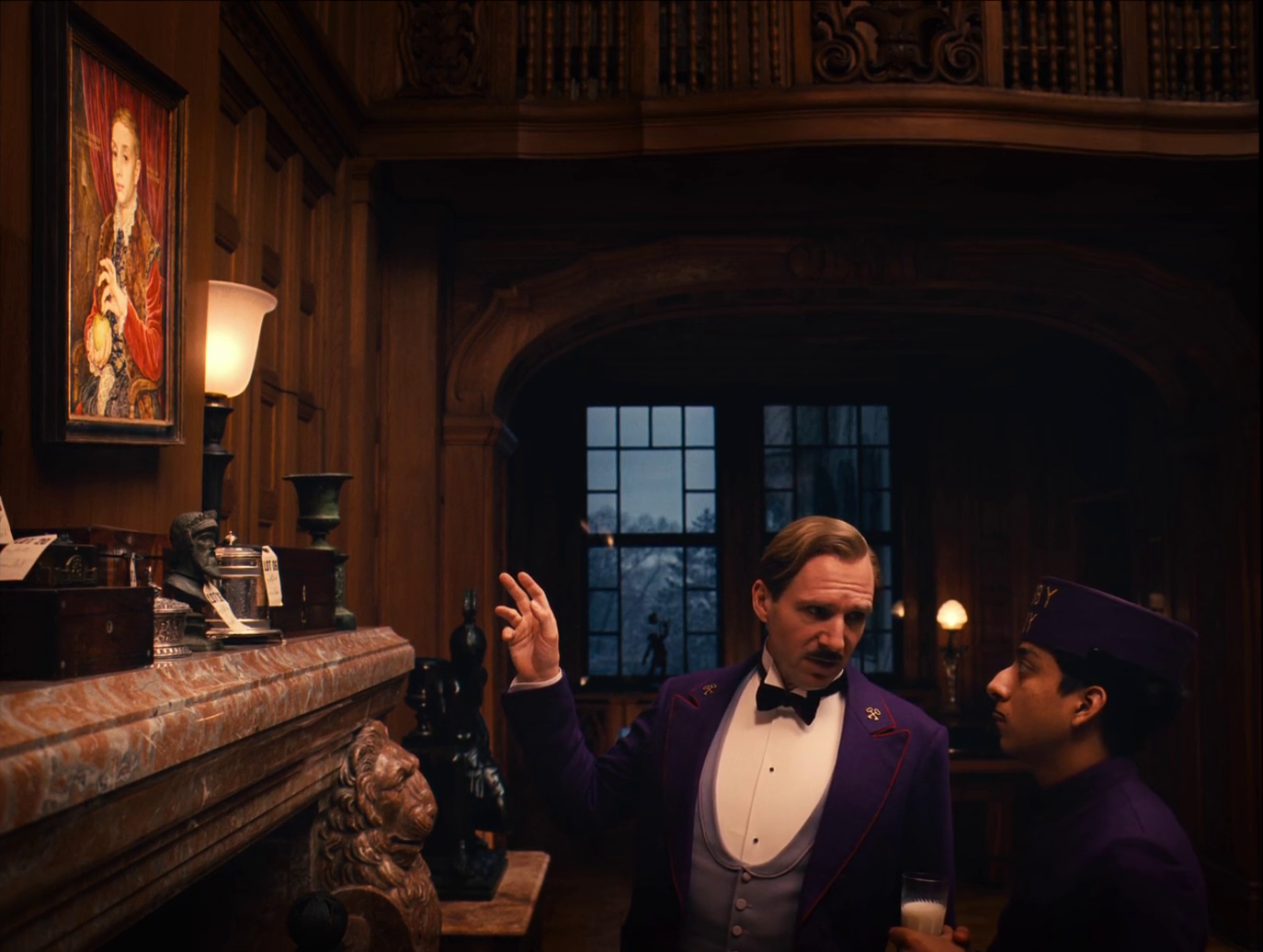
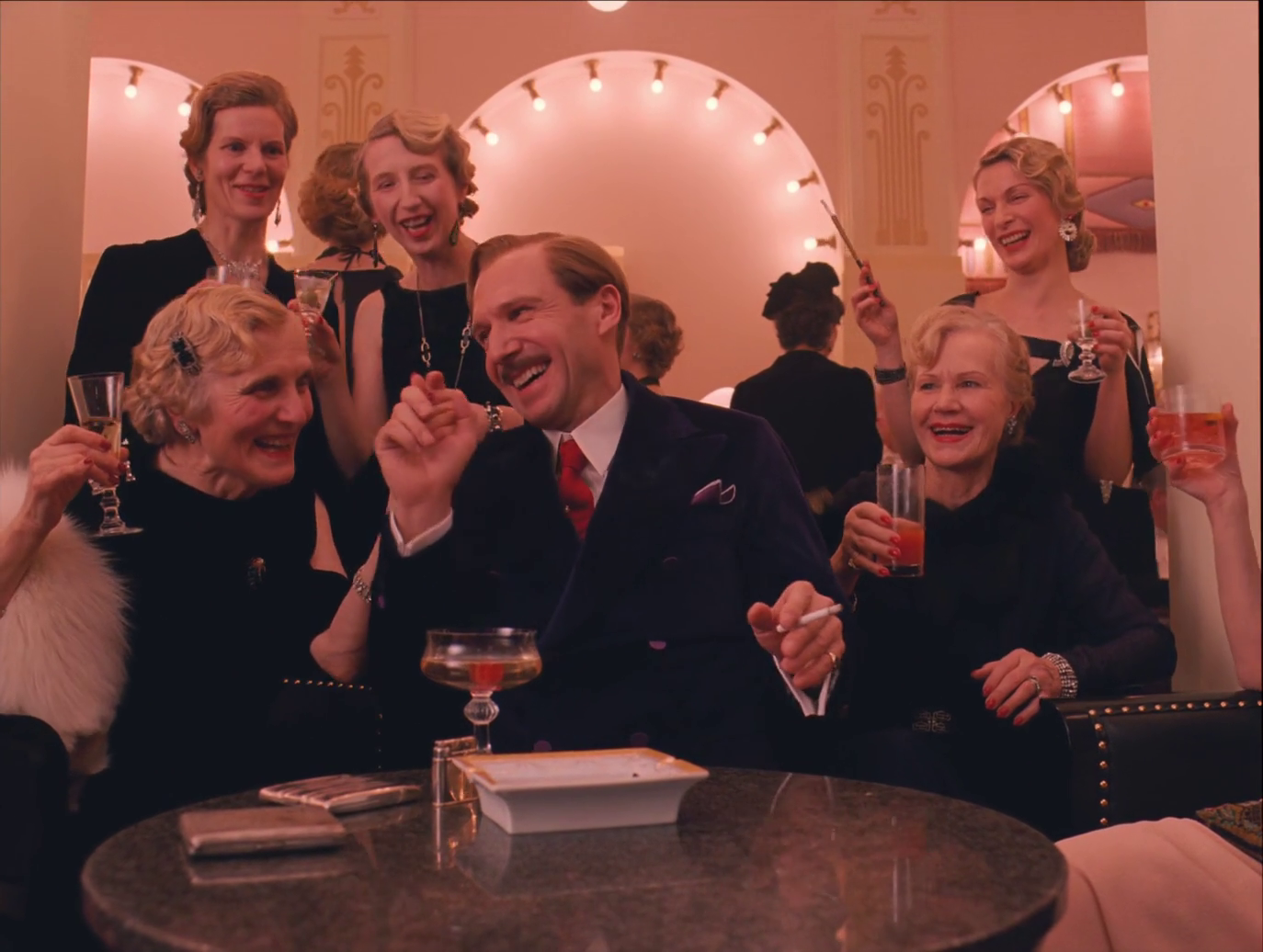
Reading Gustave as Wes Anderson himself is hardly a huge lift. M. Gustave has a deep love and appreciation of art and finery. The art that Céline leaves him is one that he loves with the care of a man steeped in high culture. He knows the artist and the context and loves the idea of owning it not because it will fetch him a life-changing amount of money at auction, but because it will bring status and prestige to both his establishment and his standing in society.
Meanwhile, Wes Anderson is a dude whose decennial Sight & Sound list was 10 favorite French films because he was making the list in France. The immaculate look and feel of his movies (which has only grown more potent as the years have gone on) speaks to his love of design and artistry. Given that directors create worlds they want to live in, it’s hard to look at his output and not think that he loves every second he spends on set.
His movies give him a cultural cache. There’s basically no other filmmaker who can maintain such an immediately recognizable aesthetic while also being a fabulous storyteller whose tales convey real emotion.
This might have been true before Grand Budapest, but Grand Budapest is the one that cements it, doing all the things Wes Anderson did previously but with a level of fantasy that he really hadn’t done outside of Fantastic Mr. Fox.
And he’s felt different since Grand Budapest. There’s an ease to his movies that isn’t present in Royal Tenenbaums or Life Aquatic. It’s like he took all of his “here’s the perfectly realized backstory of all the main characters” of his previous films and applied it to his entire visual language. Everything present on screen feels like it has a sense of time and eternity. Even the Grand Budapest itself (when we first see it) has a sense of falling apart, like its heyday is long past through no fault of Zero’s stewardship. But the disrepair and weathering feels like something Anderson knows everything about.
Three timelines
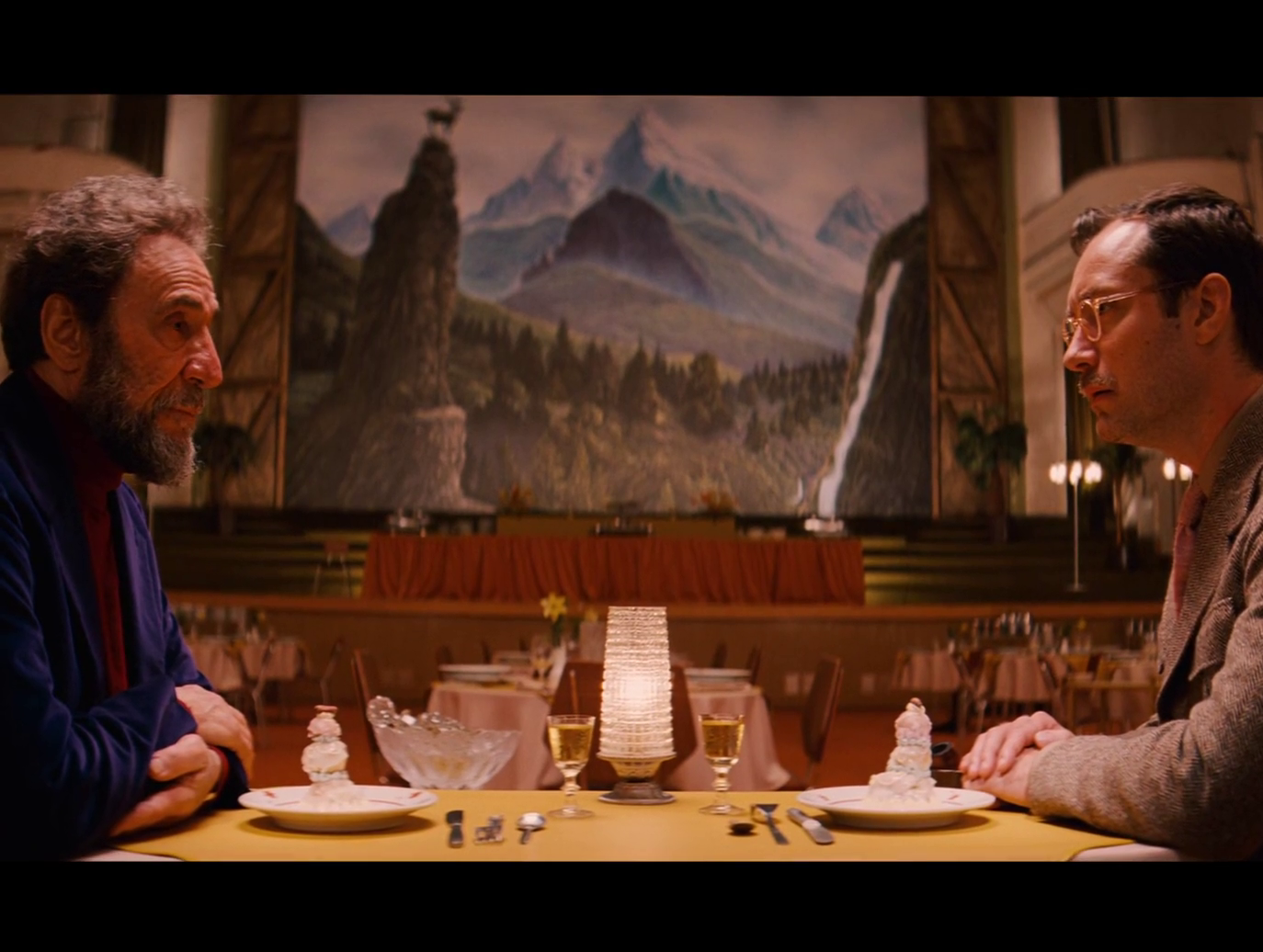
It’s peculiar that he starts the film in a cemetery in the nation formerly known as Zubrowka. The woman at the center of this brief prologue is at a marker remembering a writer who released a book about The Grand Budapest Hotel from 1985, which itself the Author based on a trip he took in 1968, in which Zero relays the main story, which itself took place in 1932. These layers on layers on layers feel excessive. He could easily start with the Authorial narration from 1985. Or even cleaner he could begin at the 1968 trip.
All of this has the effect of removing the audience from the story, like we’re dropping into layers upon layers of Inception-like dreams, each time transporting us back farther and farther into the past.
Art itself is inherently backward looking, almost always stemming from some point in the past. Appreciating art is (in at least some way) looking into how the artist viewed the world as they once upon a time brought their brain thoughts into reality.
It’s easy for art to be nostalgic. Indeed, even something like Anderson’s work, which feels both crystalized in amber and also extremely modern should feel nostalgic. And while it does, that’s not the primary emotion here.
It’s wistful.
Zero feels melancholic as he tells his story. He misses M. Gustave, but he also misses Agatha. Anderson plays a game through the final act, where it feels like Agatha is going to have some sudden or unfortunate end as a result of this caper to retrieve the will from the painting. But it’s all fake out. Agatha survives and marries Zero. But soon after that she and their infant son die from a cruel disease.
In a way, this is Anderson (again) utilizing his “and here’s all the details about these characters” that he so effectively deployed in the prologue of The Royal Tenenbaums. But here he almost weaponizes it. Zero, being 36 years older as he relays his tale, doesn’t seem to want to return to the past (as nostalgia so frequently seems to inspire). He is instead reflective about the past he remembers. The curse of long life brews a torturous concoction with the burden of memory.
Decades later, as the Author writes his book, as the girl sits at his memorial reading it, the overriding sense is of a wonderful melancholy. It is sad that time has passed, and yet that is what the past does. It makes us remember things as wackier than they were, as more beautiful and perfect than it was. M. Gustave was hardly a bastion of excellence. He was short-tempered, rude, and snobbish. Despite his imperfections, Zero can still miss him.
All of this is within Anderson’s work, hiding just beneath the surface. For his long shots of M. Gustave running away from the police and the beautiful model work of all the establishing shots and architecture, Anderson finds so much beauty and joy in his perfect world. And this little perfect work of art captures Anderson in his perfect, most platonically idealistic form.