A Very Personal List of Top 250 Films - Part 4: #100-51
Three of Satoshi Kon's four films, a couple of Best Picture winners, and a heaping dose of DiCaprio...
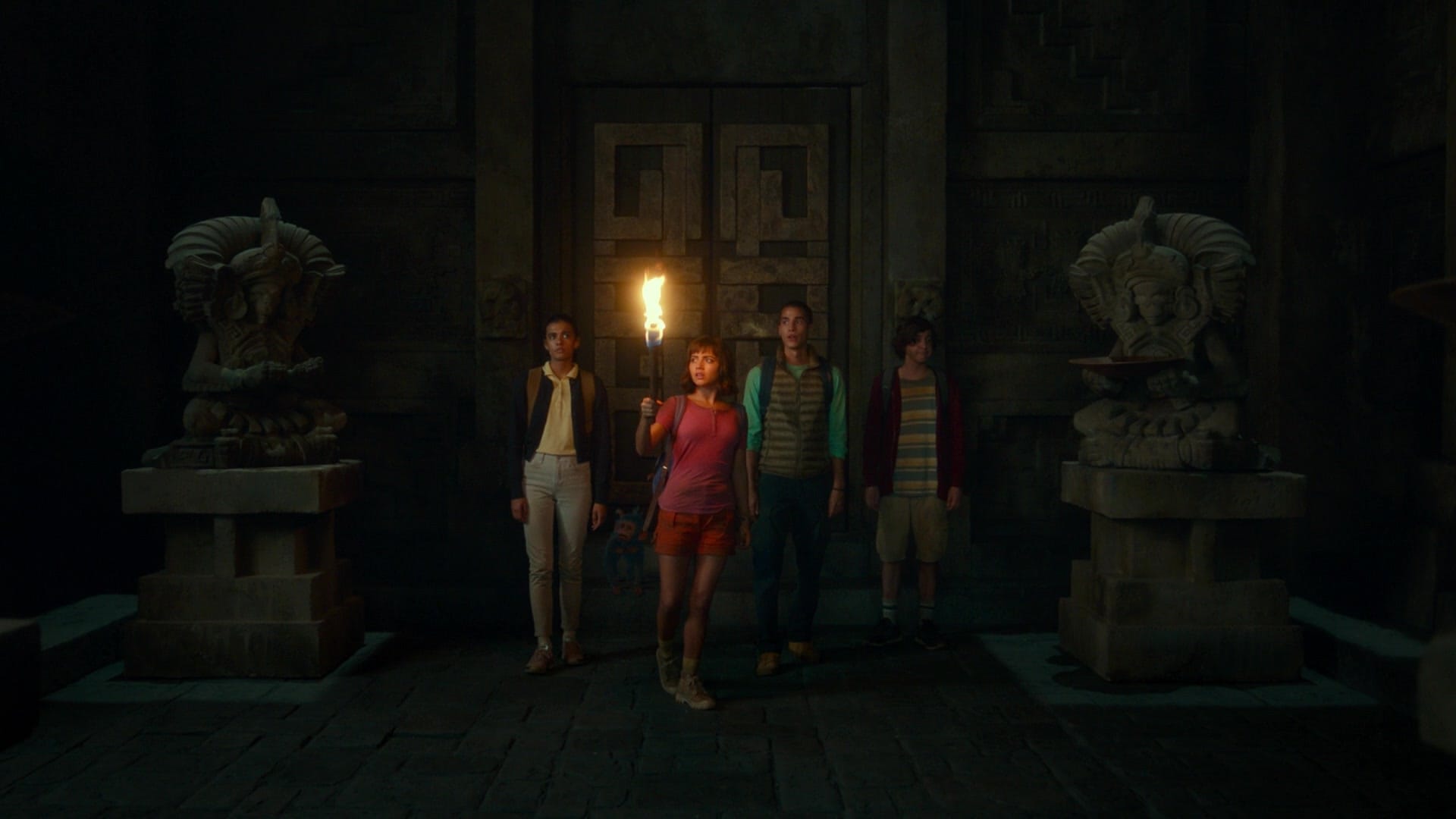
We’re in the Top 100 now, and these 50 movies that didn’t make the Top 50. There are so many on this full list that I’ve been spending a nonzero amount of time trying to remember if certain things made it versus not. I’m remarkably proud of it, and I’m trusting my own system to have included everything I could have squeezed in. None of these movies feel embarrassing or premature or like they’re indefensible and the net was wide enough that I’m fine acknowledging that the live action Dora the Explorer movie Dora and the Lost City of Gold probably wouldn’t have made it. But damn I should have included it in the hopper. Wouldn’t have killed me.
Also, because we’re getting close to the top, I feel like I shouldn’t have to say it but I’m saying it anyway. This list is not a measure of objectivity. There are plenty of movies that are really great that just don’t appeal to me. Apocalypse Now is an incredible, unbelievable film that more or less captures Francis Ford Coppola’s sense of losing his fucking mind. Not a movie I have any desire to rewatch or put on any list of mine. Same goes for something like Blade Runner, which is a great movie but… not for me.
Objectivity is bullshit and really not worth exploring when coming from one singular voice. Best to have a bunch of subjective lists that coalesce into one gestalty quasi-objective one.
So let’s walk into my brain again.
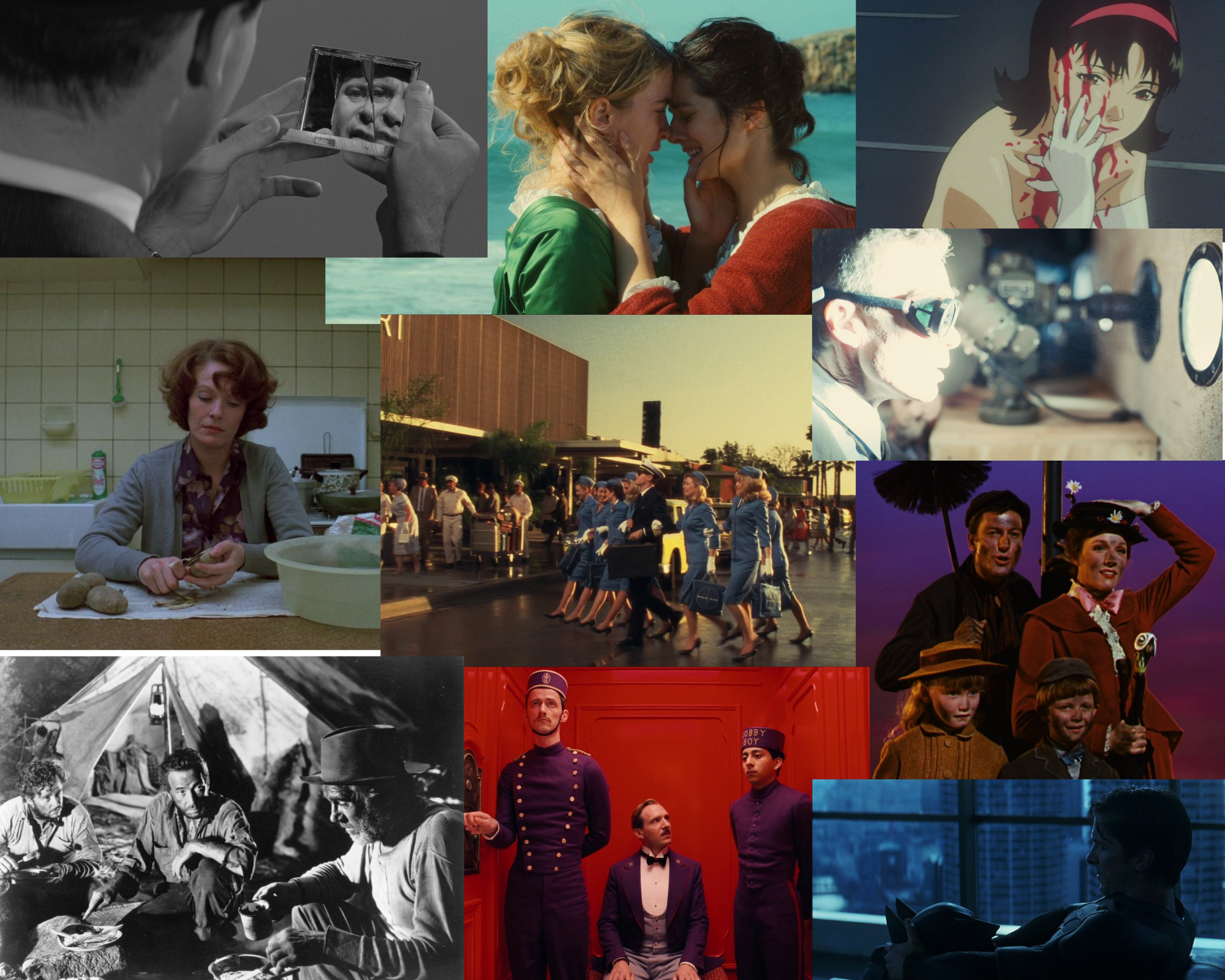
100. Portrait of a Lady on Fire (2019)
Directed by: Céline Sciamma
Written by: Céline Sciamma
Previous Ranking: N/A
Portrait of a Lady on Fire is one of those 2019 international films that was a sensation and viewers heralded it as one of the great films of the century. High priase. Watching it, though, it feels even more remarkable than that. Parasite took up the bandwidth for international fare in 2019, and the 2020 pandemic really cut off our ability to connect with pre-pandemic films with the recency bias that comes from films that come immediately after. Regardless, Céline Sciamma’s historical romance centers on the relationship between an upper class woman and the woman she has hired to paint her portrait. The movie builds itself on the tension of their mutual attraction, the longing at the forbidden romance that is impossible in 18th Century France, its eventual consummation, and its bittersweet ending. It’s a powerful, devastating film, and… yeah. One of the greats of the century.
99. Perfect Blue (1997)
Directed by: Satoshi Kon
Written by: Sadayuki Murai, Yoshikazu Takeuchi (original text)
Previous Ranking: N/A
Though his career was brief, Satoshi Kon proved a remakably powerful, influential voice in anime. Perfect Blue is his directorial debut, a film about a young J-pop idol named Mima who quits her girl group to move into full-time acting. It’s extremely dark, focusing on both the psychotic break/personality crisis within Mima and also a serial killer who might or might not be linked to her. This isn’t a science fiction film, nor is it for children. Nor is there even a romantic subplot like in Your Name. Perfect Blue is an intense psychological thriller about isolation and have that can cause the destabilization of one’s identity. Its harrowing sequences go beyond just the thrills and scares of the surreality happening in the stalker/serial killer plot. There’s an intense scene involving her as an actress having to perform a graphic, public rape scene, and the film smears the line between what Mima is really feeling versus what she is acting within the role she’s playing. This, more than maybe any other is a film that I would point to as an example of what else the medium can do beyond Akira or the work of Hayao Miyazaki, and there’s a reason it’s still such a popular poster on college dorm room walls.
98. Mary Poppins (1964)
Directed by: Robert Stevenson
Written by: Bill Walsh, Don DaGradi, P.L. Travers
Previous Ranking: #63
This suffers a bit from Saving Mr. Banks, which imposes the “it’s about their father” reading in such a way that it’s impossible to escape from in future watches (kinda like how Freud used Hamlet to explain his theory of the Oedipus/Elektra Complex; it completely nuked any ability to see the relationship between Hamlet & Gertrude without at least acknowledging Freud’s interpretation of sexual attraction). That doesn’t take away from this, though. Julie Andrews is fantastic, and the Edwardian setting of a Disney-clean, pre-World War I, urban London fits exactly into Walt Disney’s nostalgic zeitgeist for his childhood ethos. The songs by the Sherman Bros. bring it all together. They can be remarkably hit and miss, but every song in Mary Poppins is a banger, from “Spoonful of Sugar” to “Supercalifragilisticexpialidocious” to “Stay Awake”. There’s a reason this film has withstood the test of time, and it’s not because this is yet another movie musical in which Julie Andrews plays a nanny to upper class children in the name of teaching their father a lesson about loving them better.
97. Catch Me If You Can (2002)
Directed by: Steven Spielberg
Written by: Jeff Nathanson, Frank Abagnale Jr. (original book), Stan Redding (original book)
Previous Ranking: #71
Post-Saving Private Ryan, there is a sense that Spielberg has passed the point of seeking validation. Everything he’s done since then has come from a place of extreme interest rather than trying to live up to “what Spielberg would do”. Catch Me If You Can is one of those movies that’s even better in the wake of The Fabelmans. Frank Abagnale Jr. (Leonardo DeCaprio) runs away from home to be a con artist/check fraudster and tries to navigate the strained relationship with his father while picking up all sorts of fake jobs along the way. His mother meanwhile has had an affair with a man she actually loves (someone they both knew together) and they’ve gone off to be together; he basically loses contact with her. This is Spielberg continuing to work through his childhood trauma and he does so via some soft crime and an incredible 60s aesthetic. It’s fabulous.
96. Oppenheimer (2023)
Directed by: Christopher Nolan
Written by: Christopher Nolan, Kai Bird (original book), Martin J. Sherwin (original book)
Previous Ranking: N/A
Without his usual genre trappings to fall back on, Christopher Nolan’s Oppenheimer has nothing to rely on but his incredible skill as a filmmaker. I never should have doubted him. Despite being three hours long, this biopic of J. Robert Oppenheimer covers a tremendous amount of ground and doesn’t so much have a plot as a loose recounting based on vague linear time and (in the last hour) a lot of emotional logic. There’s such thematic richness to it, and the density of its subject mixed with its furious pacing means there’s aspects that film fans will spend years unpacking. My favorite of these ideas is the tension of Oppenheimer working to create this weapon that might destroy the world, and of all the people who get power, it’s the little men like Strauss who hold the apocalypse button in their hands. Oppenheimer cracked a public joke about him once and the man torched his career. Imagine what would happen if an actual threat came around. There’s a reason Nolan (and all of us really) should view nuclear weapons with (at the very least) a wary skepticism. All of this contributed to the undeniable coronation of Nolan as the defining filmmaker of his generation. Oppenheimer expanded the possibility of what he could do and is the turning point of his work in cinema. With The Odyssey out next year and who knows after that, the future of his filmography seems bright as hell even if all of it will be (at least in part) in this film’s shadow.
95. Jeanne Dielman, 23, quai du Commerce, 1080 Bruxelles (1975)
Directed by: Chantal Akerman
Written by: Chantal Akerman
Previous Ranking: N/A
Arty bullshit in the extreme. Jean Dielman, 23, quai du Commerce, 1080 Bruxelles is three and a half hours of watching three days in the life of a single mother/house wife do her daily routine. That means lots of chores, lots of static shots, lots of silence, lots of repetition. It sounds so tedious and like the sort of pretentious nonsense Sound & Sight would put #1 on their 2022 list of Best Films of All Time to prove how woke criticism has gotten and how much cultural progress we’ve made. Only… the film’s power is in that glorious tedium. Writer/director Chantal Ackerman spends more than an hour lulling the audience into an almost hypnotic trance, keeping the rigid routine of this woman and her carefully manicured life perfectly. And then… the movie starts repeating itself as it reaches the point in the day when she starts doing those same daily chores it showed at the beginning. The one time I watched it, I started to lose my mind and that didn’t stop for the rest of the three hour runtime. So little changes and yet everything does, but noticing theses tiny shifts is only possible after all the careful setup to help illuminate exactly what’s going wrong. It’s a masterful film and completely unique in what it does, and certainly worth the legitimacy the one high profile canon bestowed upon it in 2022.
94. The Grand Budapest Hotel (2014)
Directed by: Wes Anderson
Written by: Wes Anderson (Story/Screenplay), Hugo Guinness (Story)
Previous Ranking: N/A
A high point for Wes Anderson’s career. The Grand Budapest Hotel is a movie that takes all the careful aesthetics of his vision and makes a movie celebrating them. There’s something about the prisoners using tiny hammers to dig a whole out of their cell. And their friends on the outside only manage to smuggle all those tiny hammers in because of small but beautiful cakes that are too gorgeous (and small) for prison guards to justify destroying. It’s a celebration of this execution of perfection, where even the folds in characters’ clothes as they move around feel specific and exact. I can’t imagine the cognitive disconnect of being a Wes Anderson fan and thinking this isn’t his great masterpiece.
93. The Dark Knight (2008)
Directed by: Chris Nolan
Written by: Christopher Nolan (Story/Screenplay), David S. Goyer (Story), Jonathan Nolan (Screenplay)
Previous Ranking: #52
The first thing that comes to mind when thinking about The Dark Knight isn’t Heath Ledger’s unreal performance as The Joker. It’s a moment during the car chase at the center of the film. Boxed in on all sides, Batman uses the Batmobile to crash head on into a garbage truck. It wedges the truck into the ceiling, and the truck’s roof smooshes into the cement as it scrapes to a stop. The camera only mostly captures the effect, and every time I watch it I expect (and want) the camera to reframe it so Nolan can capture the full effect. It doesn’t, because Nolan is so in control of this movie that even the seeming imperfections come with intent and attention to detail. Everything about The Dark Knight exists to pull the audience in and keep them engaged The rest of this movie, the most seminal superhero film of this decade, follows that pattern as Nolan’s inherent filmmaking skill results in the first giant megablockbuster of his career.
92. The Treasure of the Sierra Madre (1948)
Directed by: John Huston
Written by: John Huston, B. Traven (original novel)
Previous Ranking: N/A
Between Casablanca, The Maltese Falcon, and The Big Sleep Humphrey Bogart’s legacy is as a debonair and dashing individual. But seeing him in The Treasure of the Sierra Madre shifted that context. It’s not like he’s not handsome, but he looks like he smells. He’s unkempt, and that face that looks so chiseled in those other films appears gaunt and haunted. His teeth look weird and sharklike. These details only add to his arc where he’s slowly losing his mind. The rest of the movie is excellent, but it’s that lingering reshaping of a conception of Bogey that proves not just what a great actor he is, but what it’s like when actors allow themselves to throw their image away in the name of creating the best possible version of a character & film.
91. The Apartment (1960)
Directed by: Billy Wilder
Written by: Billy Wilder, I.A.L. Diamond
Previous Ranking: #37
The Apartment is charming, delightful romcom that nevertheless deals with some truly dark and disturbing subject matter. Even in the era of the Hays Code, it’s impressive watching Billy Wilder slip through ideas like all of these men sleeping with mistresses and the psychological torment that causes Frank Kubelik to take the drastic steps she does when things go south with Sheldrake. It’s a brilliant film that perfectly executes on what it’s doing. And… dare I say it, Billy Wilder winning Best Director for this (his second win after The Lost Weekend) was a deserved win, even considering it was up against Psycho, which would be Hitchock’s final directing nomination. Sorry, haters.
90. Ikiru (1952)
Directed by: Akira Kurosawa
Written by: Akira Kurosawa, Shinobu Hashimoto, Hideo Oguni
Previous Ranking: N/A
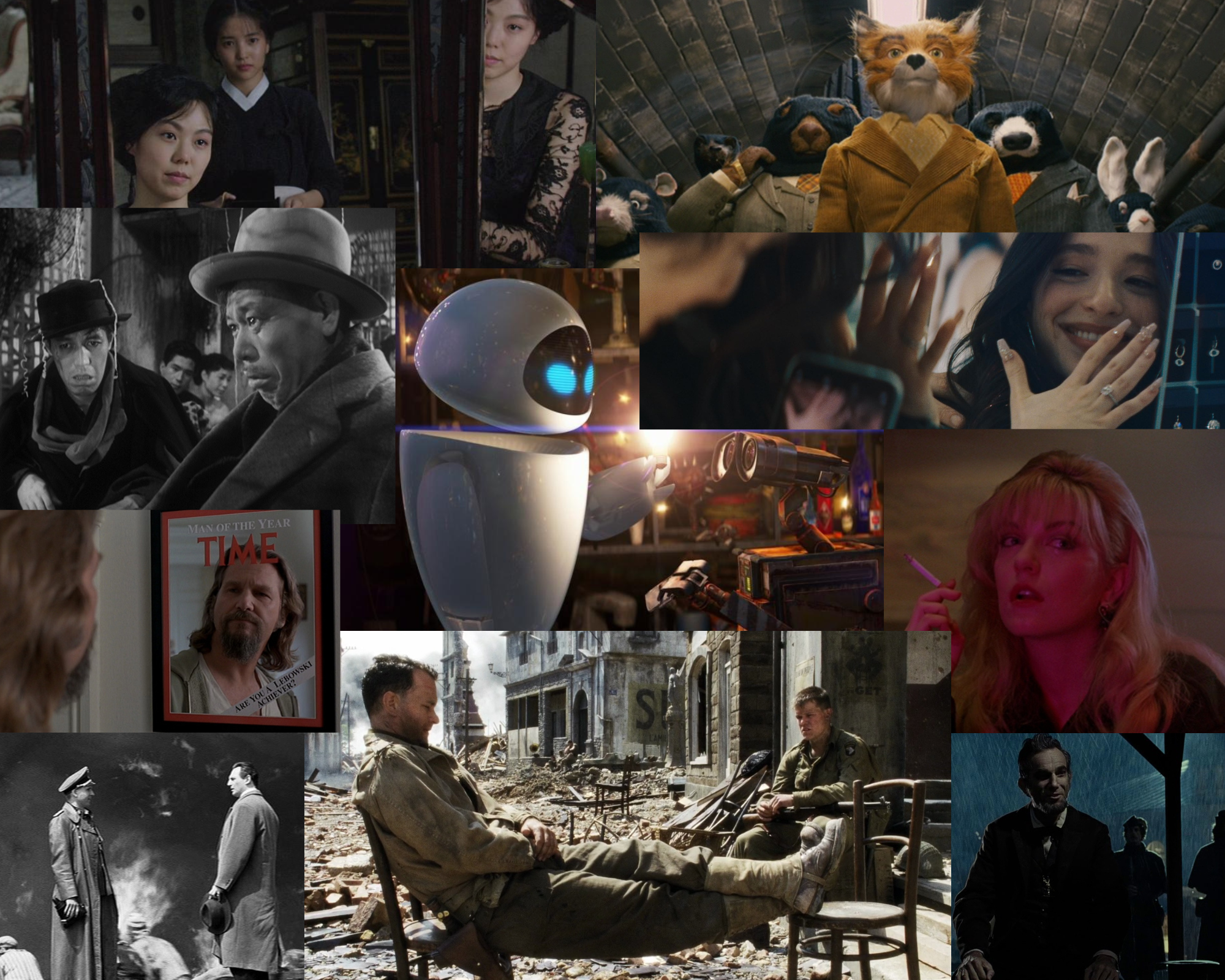
The iconic shot of Ikiru comes at the end of the movie. The main character sits on a swing in the middle of an empty park and sings to himself. After everything else in the movie, it’s a devastating, profound moment about finding satisfaction in life and quietly celebrating a job well done. By the time I got there the first time I watched it, I was sobbing uncontrollably even though I knew it was coming and exactly what it would be. Everyone remembers Akira Kurosawa for his samurai films, but Ikiru is the one that everyone should watch to know that there are dozens of non-samurai Kurosawa films that are seriously worth the effort.
89. Schindler’s List (1993)
Directed by: Steven Spielberg
Written by: Steve Zaillian, Thomas Keneally (original book)
Previous Ranking: N/A
It’s an extremely difficult watch, but Steven Spielberg’s unflinching portrayal of the Holocaust is one of the most significant achievements in the history of cinema. If the point of the medium is to take people to other worlds, other stories… if the reason to make something is to connect people to it in an emotional, tangible way, Schindler’s List barrels straight into life during the deployment of industrialized genocide. Spielberg stares it straight in the face. It is also, as David Sims described it on Blank Check, “liquid entertainment”, and for all the weight of the subject matter, Spielberg can’t shut off his innate instinct to captivate audiences and hold them close for the entire experience. Making a film this crowd-pleasing about a subject matter this important/hard to deal with is a societal service. As a final point, one of the most heinous comments about the film came from Stanley Kubrick. When asked if he thought it was a good representation of the Holocaust he replied: “Think that’s about the Holocaust? That was about success, wasn’t it? The Holocaust is about 6 million people who get killed. Schindler’s List is about 600 who don’t.” Damn that’s a killer line, Stanley Kubrick. It’s also grotesque. Not only did Spielberg portray the Holocaust with as much unflinching horror as is possible, fuck him I guess for trying to find one glimmer of humanity to come out of it, the dimmest, faintest of lights to pull him through one of the bleakest acts in human history.
88. Twin Peaks: Fire Walk With Me (1992)
Directed by: David Lynch
Written by: David Lynch, Robert Engels, Mark Frost (original TV series co-creator)
Previous Ranking: N/A
David Lynch’s cinematic sequel/prequel to Twin Peaks is in no way the thing that anyone was expecting or asking for. Going back to the week before Laura Palmer died, Lynch explores the girl upon whom he and Mark Frost built the show, but whom no one ever really knew. She’s a deeply complex and complicated character, defying the sort of grand generalizations that come with a girl who was both popular and deeply, deeply traumatized. Lynch had integrated horror into his films before, but in trying to capture what went happened to Laura Palmer, the man made a straight up horror movie where the supernatural elements pale in comparison to the utter wretchedness of humanity. And yet, for all that the film is viscerally upsetting and deeply depressing, Twin Peaks: Fire Walk With Me ends with a sense of hope, compassion, and warmth. None of this is possible without Lynch’s infinite empathy and his implicit plea to view Laura not as a victim, but rather as a tragic, fully realized girl for whom death was really the only escape. That doesn’t have to be sad. It can be freeing. And after everything in the preceding two hours, for Lynch to make grace the overriding emotion as the credits roll shows why he was one of the greatest filmmakers of all time.
87. Anora (2024)
Directed by: Sean Baker
Written by: Sean Baker
Previous Ranking: N/A
The first half of Anora is a whirlwind a breathless survey of falling in love, having lots of sex, and the wonderful discoveries of a new relationship. The second half is a drawn out agony, the interminable minutes and hours of a breakup and how hellish and isolating that can feel. The relationship (then marriage) in Sean Baker’s Oscar winning tale centers around a 23-year old sex worker named Anora (“Ani”, played by Mikey Madison in an Oscar-winning role) and the son of a Russian oligarch to whom she gave a lap dance. The movie is a lot of things at once: a study of young love, a fascination with immature 20-somethings behaving like they’re serious adults with the mature wisdom of a long life. It (like many of Sean Baker’s other films) is about the complicated relationship between sex and love, and how money only intensifies that state. Modulating between intense, harrowing, and wickedly funny, Baker’s fearless look into the lives of sex workers enables him to explore one of society’s most taboo topics, normalizing open discussion about a near-universal but rarely examined human experience.
86. Saving Private Ryan (1998)
Directed by: Steven Spielberg
Written by: Robert Rodat
Previous Ranking: N/A
It’s impossible to avoid the discussion of the Invasion of Normandy sequence, which is one of the most gruesome, unflinching, upsetting depictions of war ever shown on the silver screen. It’s so effective that veterans who survived it watched the film more than 50 years after D-Day and found not a psychological trigger of PTSD but rather the balm of catharsis. Finally, people could fathom the horrors of war and what they went through. But Saving Private Ryan is so much more than that. It’s a quintessential war story, with horrific, upsetting action sequences broken up by deep character moments of this squad getting to know each other as they trek out on this ludicrous mission. Not an easy watch to be sure, but definitely worthy of Spielberg’s second Oscar just a few years and three films after his first.
85. Lincoln (2012)
Directed by: Steven Spielberg
Written by: Tony Kushner, Doris Kearns Goodwin (original book)
Previous Ranking: N/A
Honestly, the biggest problem with this movie is going to Disneyland, sitting down for Great Moments With Mr. Lincoln, seeing that animatronic come to life, and then not hearing Daniel Day-Lewis’s voice come out of the life-sized robot. Capturing any story about Lincoln would be next to impossible. Even though his time in public life was relatively limited, he was the greatest American President of all time and the his brief tenure as President was full of incident and radical change for the country. Centering Lincoln on the last few months of the man’s life helps to paint a rich picture of him, though the joy of this is seeing Daniel Day-Lewis bring the man to life. It’s an insane performance, so good that I would pay real cash money for an audiobook or whatever of just him reading all of Lincoln’s great speeches. That final tease of the second inaugural is just not enough. The movie is one of Spielberg’s best, but the lasting legacy is that no one will even seriously attempt to make another movie starring Abraham Lincoln for at least a generation. That’s movie magic.
84. The Big Lebowski (1998)
Directed by: Joel Coen, Ethan Coen (uncredited)
Written by: Joel Coen, Ethan Coen
Previous Ranking: N/A
I came to The Big Lebowski late and so am still growing in appreciation for the Coen Bros’ big stoner comedy. That said, it’s one of their many masterpieces. It has all of their trademark quirkiness and electric characters, storylines that stick out at odd angles, and a plot that doesn’t move by conventional methods... Though the best thing in the movie is not Jeff Bridges (great) or Julianne Moore (delicious) or John Turturro (fabulous) or Steve Buscemi... It’s John Goodman giving one of the best performances of one of his most iconic characters. There’s so much richness to Walter, a bitter Vietnam vet who is constantly screaming and raving, but Goodman brings the best out of him, shifting his charisma to make the character not insufferable. Put him on the $20 bill.
83. The Handmaiden (2016)
Directed by: Park Chan-wook
Written by: Park Chan-wook, Jeong Seo-kyeong, Sarah Walters (original novel)
Previous Ranking: N/A
Part sexy, part profane, part sublime love story, Park Chan-wook’s adaptation of Sarah Waters’ novel Fingersmith is a twisty, turny journey through an exceptional thriller. If keeping the audience perpetually on edge, trying to figure out what going on and what will happen next is a key aspect for the genre, there’s not many better thrillers out there. While it does have violence and sex, those trappings mostly enhance the overall experience rather than drive it; Park’s focus remains on the central couple. Hell, one of the tricks he plays in this movie is keeping an extremely tight POV, such that when he plays moments back they have a richer context to help the audience better understand what’s happening. Those little story choices make the world feel believable as the emotional lives shine through.
82. Fantastic Mr. Fox (2009)
Directed by: Wes Anderson
Written by: Wes Anderson, Noah Baumbach, Roald Dahl (original novel)
Previous Ranking: N/A
They dug around in the dirt. They raced around various outdoor settings. They didn’t wear mocap dots. In a world where Wes Anderson is an exacting perfectionist, it’s fun to recognize that the actors of Fantastic Mr. Fox were borderline chaotic, capturing the reality of their animated, anthropomorphic characters without the rigid structure of Anderson’s usual dioarama style. Maybe my favorite thing, though, is the third act Anderson and Baumbach add to Dahl’s original story rounding out the narrative from an almost ellipsis into something with a definitive ending.
81. Wall-E (2008)
Directed by: Andrew Stanton
Written by: Andrew Stanton (Story/Screenplay), Jim Reardon (Screenplay), Pete Docter (Story)
Previous Ranking: #65
Perhaps no other film is responsible for Pixar’s glowing reputation than their masterpiece about a lone robot on an abandoned Earth. There’s a school of thought that the film really loses a lot of steam once Wall-E shifts from to the humans surviving on a far-off spaceship. But that’s just the point at which the film starts to behave more traditionally. The actual story of this robot in love stands true, and “Dancing” is one of the most staggeringly beautiful sequences in any Pixar movie. But people really respond that first section because it connects the studio with the origins of cinema, when creators couldn’t even enforce a uniform score across screenings. This reliance entirely on visuals and a Thomas Newman score is the moment when Pixar as a studio finally grows up.
80. Mad Max: Fury Road (2015)
Directed by: George Miller
Written by: George Miller, Brendan McCarthy, Nico Lathouris, Byron Kennedy (characters)
Previous Ranking: #33
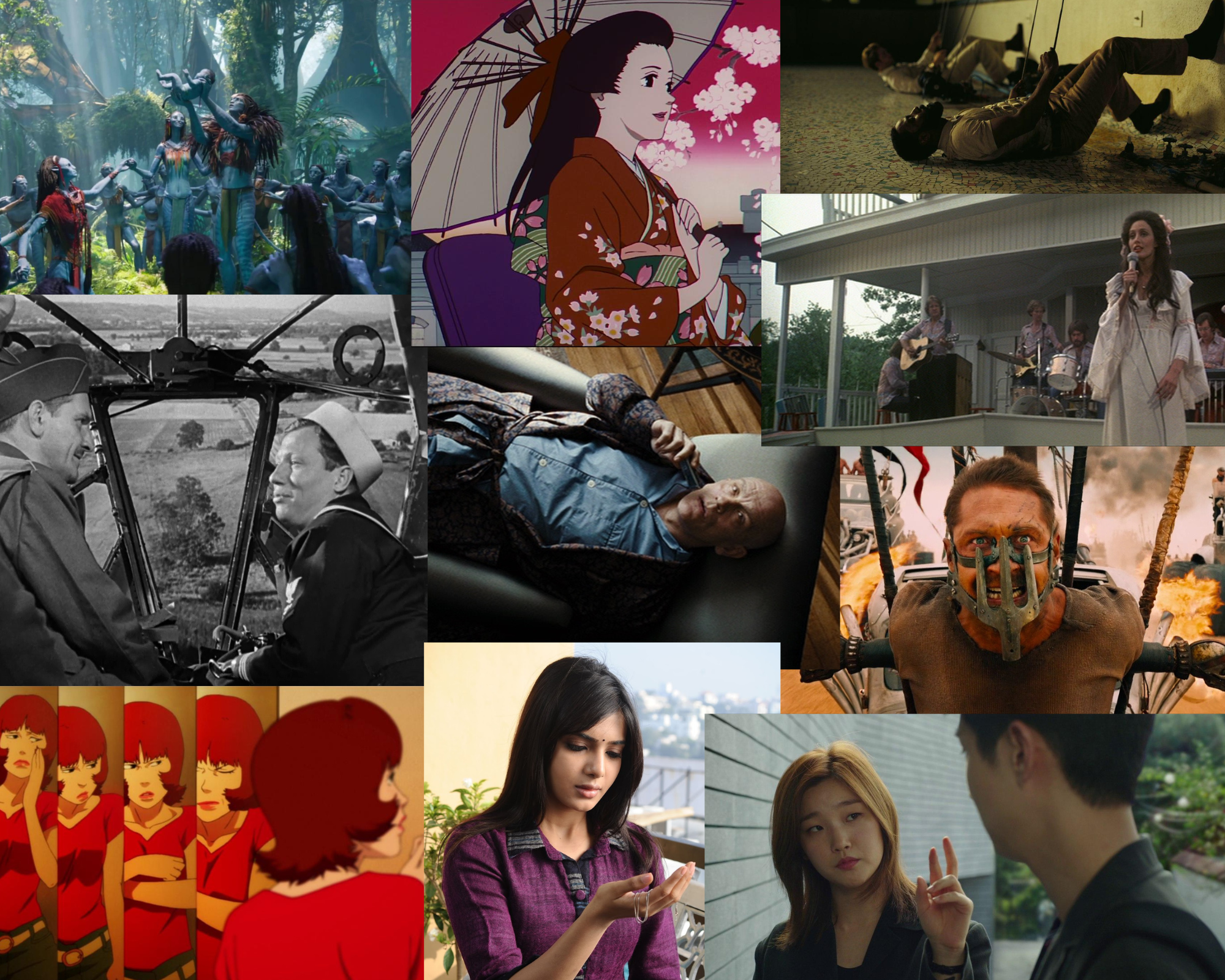
People didn’t die making this? Seriously? George Miller’s return to the post-apocalyptic wasteland that started his career is one of the most mindblowing films of all time. He manages to make a movie-long chase scene, engaging the entire audience for its two-hour run time. This works in the same way Godzilla Minus One does: it makes something massive in scope and still keeps it intimate, emotional, and deeply esoteric. Sometimes, you can have it all, and the “all” in this case is brain-melting action in bright vivid colors and with the design aesthetic of punk rock on acid. It’s hard to argue this isn’t the best action film of all time. Or at least, I wouldn’t.
79. The Best Years of Our Lives
Directed by: William Wyler
Written by: Robert E. Sherwood, MacKinley Kantor (original book)
Previous Ranking: N/A
The most remarkable thing about this three hour film is that it came out in 1946. Centering on three veterans who return home after World War II, The Best Years of Our Lives is a damning indictment of the treatment of veterans and the indifference in which the military reintroduced them to society and the apathy the general public felt towards aiding that reintegration. These men went out and saved the world and came back to find that the world had moved on without even so much as a thank you. Director William Wyler, meanwhile, approaches the entire story with a rich empathy. There is a scene towards the end where Homer Parrish (played by real-life amputee Harold Russell) explains how he lives his life with hooks for hands to the woman he’s in love with/wants to marry. It’s so raw and tender and vulnerable, and the girl of his dreams offering to help him forever is just… unspeakably gorgeous. It’s a long watch, but coming just a year after the war ended, it was deeply controversial for speaking an uncomfortable truth we’re still grappling with today. William Wyler just tried to be honest about what was happening in real time. Watching it now, this is probably the best Best Picture winner you’re probably only hearing about for the first time now. Couldn’t recommend it more.
78. Millennium Actress (2001)
Directed by: Satoshi Kon
Written by: Satoshi Kon (Story/Screenplay), Sadayuki Murai (Screenplay)
Previous Ranking: N/A
Satoshi Kon made his second film on no budget, which is insane for the scope and ambition in telling the life story of this one actress and what drove her to be a star. There are so many locations and transitions… It plays in a world of living memory, where an aging actress reflects on how all of these different roles over the decades of her career reflected her macro-emotional journey and the tale of Japan through the 20th Century. It’s heartbreaking, but insane that he accomplishes all of this in less than 90 minutes. It’s not the psychological thriller of Perfect Blue or the surrealist horror of Paprika. Millennium Actress is, instead, an intimate epic. So unique. So beautiful. So wonderful.
77. Nashville (1975)
Directed by: Robert Altman
Written by: Joan Twekesbury
Previous Ranking: N/A
Robert Altman made a lot of sprawling, ensemble-based opuses. While I haven’t seen most of them, on paper this one didn’t appeal to me at all. A folk festival? I don’t like folk music. A bunch of folk singers? That’s not any better. No way. But Altman’s bitter cynicism comes with a bite, reflecting the bicentennial with the skepticism and borderline malice of post-Nixon America. There are more than a dozen main characters in Nashville and despite only a couple of scenes of screentime, Altman knows exactly how to make each character pop and give each one a moment. And there is also so many freaking folk music performances soaking up that precious real estate. And the fok music was great? Gah. I loved this movie.
76. Parasite (2019)
Directed by: Bong Joon Ho
Written by: Bong Joon Ho (Story/Screenplay), Han Jin-won (Screenplay)
Previous Ranking: N/A
Bong Joon-Ho’s stone cold masterpiece won four major (deserved) Oscars. Parasite is undeniable, a total triumph of a thriller that takes some insane left turns but always returns to themes about classism and the struggle for societal validation. Remarkably sophisticated, it’s a movie that keeps on giving as it goes on, taking the concept of “Upstairs/Downstairs” to a whole new level.
75. Paprika (2005)
Directed by: Satoshi Kon
Written by: Satoshi Kon, Seishi Minakami, Yasutaka Tsutsui (original novel)
Previous Ranking: N/A
There’s a joke that Christopher Nolan ripped of Paprika wholesale when he made Inception. It’s an understandable theory. Both films focus on people who travel into dreams as part of their business, but where Nolan’s dreams attempt to treat the subconscious as a mostly rational place into which the mind can intrude, Satoshi Kon creates a dreamscape of absolute pure nightmare shit. Moments of Paprika are downright upsetting and the final reel is only barely understandable on first watch. Regardless, it follows Perfect Blue as an incredible contribution to the medium. Satoshi Kon’s premature death following this. his final movie is an incredible, devastating loss. Thank god we have what we have though. All of them (plus his anime series Paranoia Agent) are incredible gifts to the medium. Losing him means holding this close and keeping that work even more special than they would be had he survived to grace us with more.
74. Burn After Reading (2008)
Directed by: Joel Coen, Ethan Coen
Written by: Joel Coen, Ethan Coen
Previous Ranking: N/A
So rarely is there someone who likes the Coen Bros’ followup to No Country For Old Men like my parter or I do. But that’s crazy. Burn After Reading is a masterful, joyously cynical look at the security state of Bush Era politics. It’s their most screwball comedy, with some of the dumbest people they ever wrote into their movies stumbling drunkenly around this narrative, giving all great moments with great, ridiculous characters. Whether it’s Brad Pitt’s character being so dumb it feels like he actively has no brain, Richard Jenkins looking longingly at Frances McDormand with the saddest, most pathetic puppy dog eyes in any movie ever, or John Malkovich saying the word “memoir”… God it’s just so funny and so stupid and so exactly what I want from the Coen Bros. screwball comedy.
73. Tenet (2020)
Directed by: Christopher Nolan
Written by: Christopher Nolan
Previous Ranking: N/A
It’s the closest thing Nolan will ever get to James Bond, but (like with Spielberg making Raiders), why make a Bond movie when something like this is possible? He uses similar tropes but also gets to incorporate sick ass time travel with some truly mindblowing setpieces. Why in the world make something that would be part of something else and undoubtedly lesser? But the best thing about Tenet is that Nolan doesn’t make this just some big bold technical exercise. The two narrative strands at the center of this jumble of cross-weaving time-travel is an rich emotional buttressing that can sustain this heavily load. One, the relationship between the Protagonist and Neil is a great, slow burn that makes me want so many more Tenet movies. But the other (and stronger) is Elizabeth Debicki as Kat, a woman trapped in a violent and abusive marriage to Sator (Kenneth Branagh), this film’s Bond villain. Sator is a brutal, ruthless man with an arch, madcap plan to destroy the world. Nolan rushing Tenet out to theaters in the name of preserving the theatrical experience was premature and harshed this film’s success. Not even Nolan was enough for this to overcome the deep pandemic gloom of late 2020. He was premature, but only by about nine months. Had this come out in 2021, this would have been an entirely different conversation. As it stands, the movie feels like a naughty secret gem within Nolan’s nigh-perfect filmography. Real ones know.
72. Avatar: The Way of Water (2022)/Avatar: Fire & Ash (2025)
Directed by: James Cameron
Written by: James Cameron, Rick Jaffa, Amanda Silver, Josh Friedman (Story), Shane Salerno (Story)
Previous Ranking: N/A
I expected Fire & Ash to make this list, but with such little time between the first time seeing it and the giant ranking, it wasn’t something I’d sat with enough to adequately. That’s just as well. The Way of Water and Fire & Ash are companion pieces, two halves of an Avatar 2 script that was just too big to produce (even for Cameron) as one film. So he made them both together and then separated them by their own beginning/middle/end and individual thematic concerns. The Way of Water is a movie that’s only grown in my estimation since that first viewing (and I loved it that first time). It does everything Cameron does well, but mixes his utterly batshit insane ideas (Kiri, Quaritch in an Avatar body, Payakan) with serious grounded emotion and complex family dynamics. Fire & Ash, meanwhile features maybe the sexiest character in the history of cinema, a wild Na’vi drug trip, and Spider growing a kuru thanks to Kiri’s quick thinking/communing with Eywa. If Fire & Ash is the story of a new generation (rightly) questioning orthodoxy and proving themselves right, The Way of Water is about the limits of parenthood and how even the best of intentions can have disastrous consequences. Parents might try their best, but they will always fail. How much is the only real question that matters. Meanwhile, the new generation can save us with their optimism and fresh thinking. With the potential to literally reshape millennia-old convictions, we might get a better, stronger, more unified world. And if there’s one thing I want it’s a stronger Pandora. Fuck humanity sometimes.
71. Eega (2013)
Directed by: S.S. Rajamouli
Written by: S.S. Rajamouli, Janardhana Maharshi (dialogues), V. Vijayendra Prasad (concept)
Previous Ranking: N/A
One of the best cinematic experiences of my life. People who’ve only seen RRR have no idea how Rajamouli could make a better movie, and Baahubali leaves the impression that his best work will be in period pieces. But Eega is a contemporary film with a completely batshit premise: a young man dies at the hands of a jealous rival only to return reincarnated as a fly. And not a Jeff Goldblum fly or a talking fly. Just… a fly. And Rajamouli commits to that premise so hard that he figured out how to literally shoot footage of a fly and shot the movie to reflect that. It involved overlighting sets and beyond-extreme close-ups. More than that is not worth expounding on. All I’ll say is this: the only time I saw this was in the midst of RRR fever in 2022, and the electric surge that ran through the theater as the last beat before the interval was unlike anything I’ve ever experienced. It only got better from there.
70. Tangerine (2015)
Directed by: Sean Baker
Written by: Sean Baker, Chris Bergoch
Previous Ranking: N/A
Sean Baker making a small indie movie about sex workers? Sure. But what makes Tangerine so truly wonderful is the way it fully inhabits the world of these characters. They’re all queer with many of them trans. He never looks down on them or judges them (even if they judge themselves) or the relative run-down area in which they operate. Instead, he makes a movie about people trying to get by and the complicated way sex and gender interact with everyone’s lives. It’s the rare example of one movie so good it made me a ride-or-die fan of it’s filmmaker for life.
69. Do the Right Thing (1989)
Directed by: Spike Lee
Written by: Spike Lee
Previous Ranking: N/A
Spike Lee could dust off the script and remake Do the Right Thing today and outside of a few anachronisms it would still be relevant. It’s sucks that the big incident this film builds to still happens every day in this country. Multiple similar instances have sparked mass protests over the last decade and a half and nothing has really changed outside of a general awareness of it or acceptance as a way of life. In discussing this film with a family member recently, he remarked that he wished that everything had stayed orderly, not recognizing that this was the very trap Spike Lee was setting for people exactly like him. What is the value of life? What is the value of business? And why is it that we value some lives more than business and some lives less? This doesn’t excuse behavior, but fuck us for still wrestling with this question. Much as it sucks that this is still relevant, if it has to be? At least it still is.
68. The Fabelmans (2023)
Directed by: Steven Spielberg
Written by: Steven Spielberg, Tony Kushner
Previous Ranking: N/A
Spielberg’s most personal movie is a semi-autobiographical story of a young man who grows up wanting to be a movie director. It’s a staggering work but functions entirely on its own as a story about a boy whose innate talent ostracizes him from the world. But… really it’s about Spielberg. Much like Schindler’s List, the director attacks the topic head on, addressing themes from his entire career: estranged fathers, eccentric mothers, ripped apart families, childlike wonder. He lays his whole life for the audience and invites them in. It’s one of the most remarkably personal films of all time, especially one with a decent budget and the backing of a major studio. The Fabelmans is an indisputable triumph of late Spielberg, a film so good he probably could have stopped making movies here. What else is left? We’ll find out this summer when Disclosure Day comes out. I’m mad excited, but there’s still a trepidation that after a movie where Spielberg says just about everything we could conceive, he might not have anything left.
67. Once Upon a Time In Hollywood (2019)
Directed by: Quentin Tarantino
Written by: Quentin Tarantino
Previous Ranking: #80
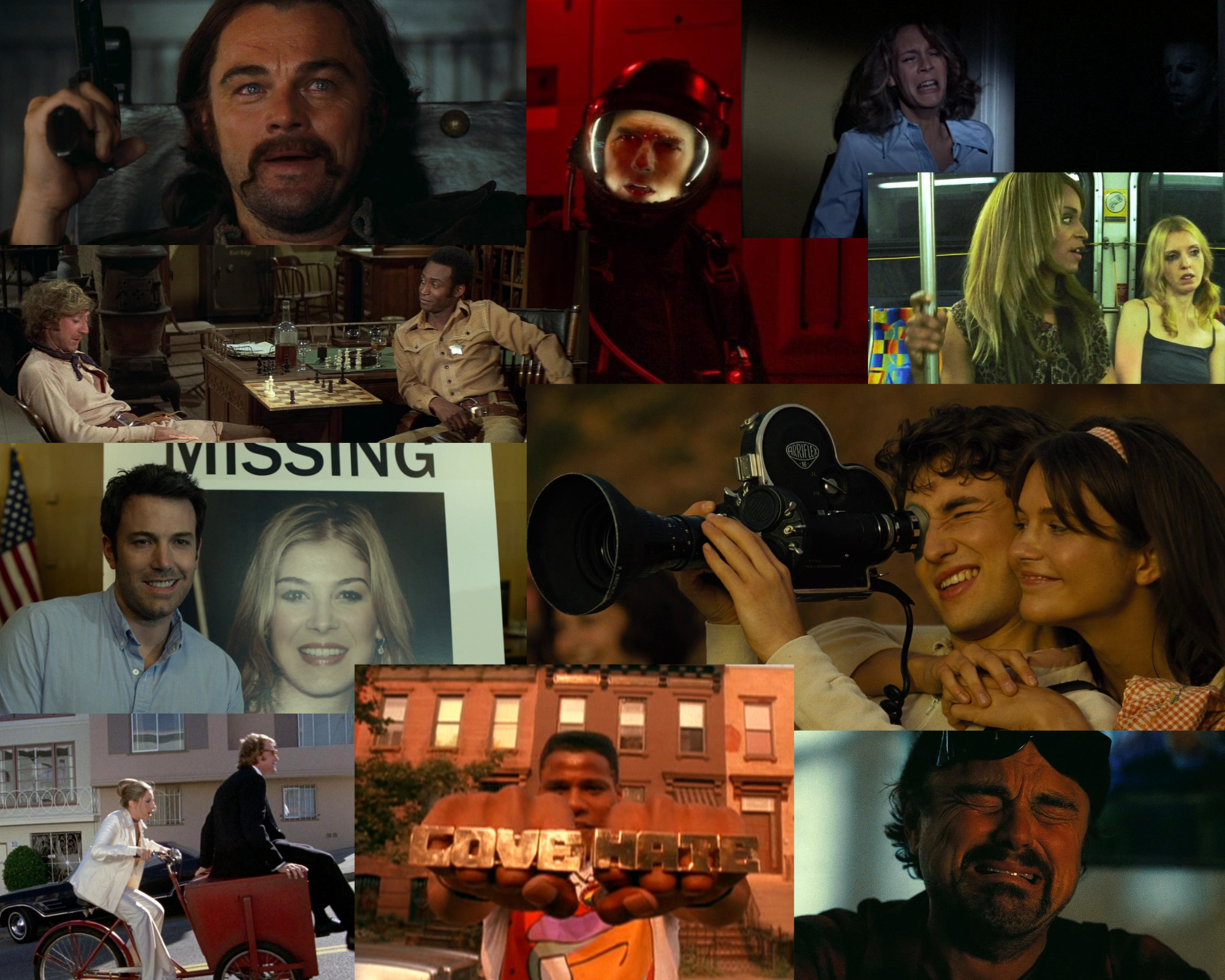
Tarantino recently called Once Upon a Time in Hollywood his favorite movie of his filmography. But…. compared to basically everything before it, it’s a deeply strange and very different film. He’s come so far from the blood soaked stageplay of Reservoir Dogs or the blood soaked revenge epic in Kill Bill. His most recent film is almost a fairy tale about the moment when Hollywood began to change forever. The only real violence is in the final reel, and the rest of it is a slow, dreamy trip through this corner of a slightly alternate 1969. It’s a perfect film, and there’s reason to believe that the thing that’s taking Tarantino so long to make his tenth “and final” film is a sense that he won’t be able to top this. He might not. This new flavor of Tarantino is so, so much softer than the cartoonish violence and bloody slaughters he was doing as recently as The Hateful Eight just a few years earlier. He’s done happy endings before (Kill Bill, Inglourious Basterds, Django Unchained) but Once Upon a Time in Hollywood’s is saccharine, doubly so by his standards. Considering the grace and beauty of this fantasy world and the serene, joyful final moment, it’s impossible to blame him. This is all I want too.
66. Halloween (1978)
Directed by: John Carpenter
Written by: John Carpenter, Debra Hill
Previous Ranking: N/A
John Carpenter’s totemic pillar of the slasher genre holds up. Oh how it holds up. The music with that staccato piano and haunting, pulsing synth. The small indie budget that meant the streets on Halloween night needed to be eerily empty. Even the weirdness of Michael Meyers putting on that stupid sheet and pretending to be a ghost (complete with dead boyfriend glasses) is utterly perfect. Carpenter only topped himself one other time and only because that’s a transcendent masterpiece. Halloween is merely an outstanding one.
65. Mission: Impossible - Fallout (2018)
Directed by: Christopher McQuarrie
Written by: Christopher McQuarrie
Previous Ranking: #24
The ultimate apotheosis of Mission: Impossible movies doesn’t globe trot like Rogue Nation or have a gimmick where Ethan falls in love like in II or III. Instead what it has is rich themes about letting go of the past and allowing for something bigger. The action setpieces are some of the best they’ve ever done, including the car then motorcycle chase through the streets of Paris, the sprinting across London rooftops, the HALO jump, the third act helicopter chase… the music from Lorne Balfe. Even the Ilsa Faust in this movie is a slight improvement on who she was previously, with Rebecca Ferguson being more dialed into her complicated status as seeking redemption. More valuably, theirs is the best Ethan-finds-a-companion relationship in the entire series. God this movie rocks.
64. What’s Up, Doc? (1972)
Directed by: Peter Bogdanovich
Written by: Peter Bogdanovich (Story), Buck Henry (Screenplay), David Newman (Screenplay), Robert Benton (Screenplay)
Previous Ranking: N/A
Barbara Streisand mutters the title early in the film when she first meets Ryan O’Neal. Surprising no one, she is eating a carrot. What’s Up Doc? proceeds to be a wild slapstick farce fully in the spirit of the eponymous Bugs Bunny phrase. Mistaken identities, bag switching… hell, the car chase in this movie is so good and inventive and funny that as soon as it was over I stood up from my couch and clapped. And like… not only do I never do that, but Peter Bogdanovich was dead by that point. Sometimes a movie has that effect, where it engenders a specific response because the level of craft is so good. And What’s Up Doc? is really just that good.
63. One Battle After Another (2025)
Directed by: Paul Thomas Anderson
Written by: Paul Thomas Anderson, Thomas Pynchon (original novel)
Previous Ranking: N/A
An undeniable masterpiece. Even though this film is only a few months old, it really is one of the best films in years. Paul Thomas Anderson made a crowd pleaser that not only was more expensive than the box office gross of any other movie he’d made before, but also popular enough that it was still playing in theaters months later. PTA perfectly tapped into the zeitgeist of the now, and while I know people who watched this and had an adverse reaction to its depiction of its world relative to ours as it exists now, that really speaks to just how hard PTA stuck this landing. It is a bleak portrait in places, but it’s such an optimistic and uplifting film, celebrating the idea that revolution can take generations and comes in many different forms. And also? White Supremacists are ridiculous douchebags and they all suck. This is going to win Best Picture in a few months, and PTA is going to win Best Director. There’s nothing this year that even comes close.
62. Gone Girl (2014)
Directed by: David Fincher
Written by: Gillian Flynn
Previous Ranking: N/A
Director David Fincher and original novel writer Gillian Flynn perfectly capture her book Gone Girl without ever making it or the film feel redundant. It’s a great example of the difference between media. The themes of marriage and what we do to each other play even clearer when coming from the mouths of Rosamund Pike and Ben Affleck, but Fincher can’t quite capture the enigmatic qualities of the book in the same way. This is the end of Fincher’s absolutely incredible run, where he produced five stone cold bangers in seven years. What makes Fincher movies great, though, is that watching them once is its own reward, but rewatching them unearths all of the craft and technical detail Fincher puts not just into making a good movie, but telling a compelling and powerful story. You’d think that wouldn’t be possible from a story with as heavy a twist as this one. It just goes to show that the base knowledge of “what happens” is only the beginning of an engagement of the text. If it’s doing its job, there’s just so, so much more to unearth once the digging starts.
61. Blazing Saddles (1974)
Directed by: Mel Brooks
Written by: Andrew Bergman (Story/Screenplay), Mel Brooks (Screenplay), Norman Steinberg (Screenplay), Richard Pryor (Screenplay), Alan Uger (Screenplay)
Previous Ranking: #67
I thought Young Frankenstein might make this list (albeit at a very high number), but Mel Brooks’s send up of Universal monster movies has never held the sway over me Blazing Saddles has. It’s insanely quotable (at least in my head; a lot of lines here ain’t good for repeating out loud) and a loving ode to the Western while being a nonstop laughs spoof that changed the face of cinematic comedy for at least a generation. But the best and brightest thing is trying to explain why it works to young people who haven’t seen it and why Mel Brooks’s continuous use of the N-word is so fucking funny. It helps to discuss it, engaging with why Blazing Saddles — a movie that should be so offensive is rather a laugh riot. When pulling this movie apart, it becomes apparent that Mel Brooks isn’t being racist. He’s pointing out how foolish and pigheaded racists are. These people aren’t scary. They’re just ignorant. And that is something we can all fix if we try.
60. Jackie Brown (199
Directed by: Quentin Tarantino
Written by: Quentin Tarantino, Elmore Leonard (original novel)
Previous Ranking: N/A
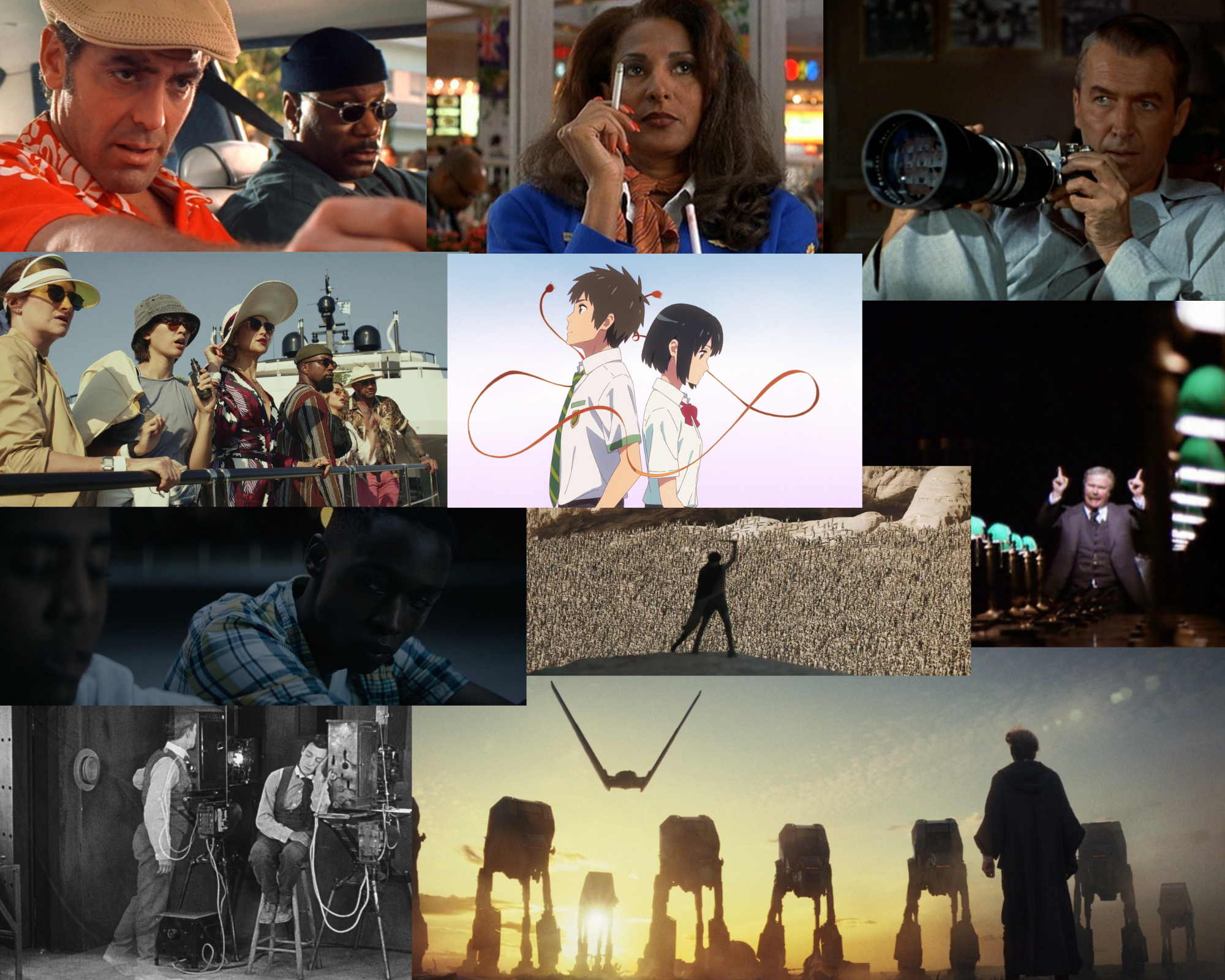
Of all the films I’ve rewatched over the past few years, none received as dramatic a re-evaluation as Jackie Brown. All of this is my fault. Coming off of Reservoir Dogs and Pulp Fiction (and even Kill Bill), when Jackie Brown wasn’t the unsparing, hardcore, postmodern cool of his earlier work, it felt like… what are we even doing here? This isn’t Quentin Tarantino. Watching it now, though, after the appeal of that youthful fire and brimstone has greatly diminished, Jackie Brown has revealed itself to be one of Tarantino’s best films. Like top three. He brings a maturity and confidence to this movie that is easy to mistake as weakness. The transitions are stunning, the needle drops (a Tarantino signature) reflect the film as part of the narrative tapestry rather than a song that adds some tonal or narrative flavor. Someone I follow on Letterboxd pointed out that following the muted response to this (as opposed to the ecstatic response of his previous two movies), Tarantino retreated into genre pastiche for more than 20 years. (Honestly, Tarantino doesn’t get back to this sort of filmmaking until Once Upon A Time In Hollywood and that’s part of the reason that movie rocks as hard as it does.) While I still love Tarantino’s post-Jackie Brown work, there is a sadness that he probably came at this movie too early in his career when he was still cementing himself. Three movies in, audiences & critics wanted the sure footing of something post-modernly. Instead, Tarantino adapted an Elmore Leonard crime novel as a means of evolutionary leapfrogging to the next stage of his career. That soon after Pulp Fiction, trying to simply make a great movie (and succeeding) really ended up being more valuable in the long term than the navel-gazing of a big flashing lights Tarantino movie. The sliding doors moment of what we might have had if this had been as smashy as Pulp Fiction or Reservoir Dogs is too mindwarping to think about, but at least we’ll always have Jackie Brown. Ad at least I’ve finally come around to seeing what so many others already have.
59. Rear Window (1954)
Directed by: Alfred Hitchcock
Written by: John Michael Hayes, Cornell Woolrich (original story)
Previous Ranking: #55
Vertigo is Hitchcock’s masterpiece, but Rear Window is currently the Hitchcock I most want to regularly watch. As often happens, it’s the restraints baked into the premise that draw me in. That one location, one courtyard idea. Needing to play within the space and build things out visually and from only one angle and without the benefit of lots of dialogue outside. The mystery of this particular murder, where we, like James Stewart, find ourselves confined to chairs, watching the proceedings and trying to “solve it” from afar is an incredible way to engage the audience. Really, though, what’s best about Rear Window is watching it in a theater, reaching those moments with a fresh audience that doesn’t know. The moment Thorwald notices the tapping of the ring is an incredible use of the form to make the audience panic, and it creates for a pulse-pounding final act even if you’ve seen it before. Hitchcock’s ultimate crowd pleaser? There’s nothing better.
58. Your Name. (2016)
Directed by: Makoto Shinkai
Written by: Makoto Shinkai
Previous Ranking: N/A
It took me too long to get around to Makoto Shinkai’s body swap movie where a city boy and a country girl switch places and start alternating between living each other’s lives. But that’s just the beginning of the movie, and it only gets crazier from there. Your Name. is a love story (is the central relationship hetero? It’s a love story), but goes in so many different directions that the whole movie ended up taking my breath away. One of the recurring themes of Makoto Shinkai’s work over the past decade is a focus on the aftermath of the Tohoku earthquake in March 2011. Alongside Weathering the World With You and Suzume, it’s easy to miss this context and not understand how those films fit into that larger narrative of disaster movie and the lingering trauma Japan experienced as the result of such natural devastation. Unlike Suzume (which requires at least a base understanding of that underlying theme), that context is not necessary to appreciate Your Name. It works as a simple relationship drama between two people separated by a vast distance, who share the intimacy that comes from a bodyswap premise. To add to it, Shinkai uses the inherent language of magic and wonder within anime to weave all of this drama together Honestly, I love this movie so much, I thought this would be higher.
57. Network (1976)
Directed by: Sidney Lumet
Written by: Paddy Chaefsky
Previous Ranking: #26
Howard Beale’s going nuts on live television is iconic. The Ned Beatty board room scene is terrifying. Network is one of only three movies to have three of its stars win Oscars for their performances (the other two are A Streetcar Named Desire and Everything Everywhere All At Once) (and honestly Ned Beatty shoulda won). Regardless, Network covers a long span of time, and if they had made this today (or if they remade it) it would be a miniseries because of the sheer scope of its time dilation and its sprawling cast. Regardless, in this compressed cinematic form, it basically cuts out every unnecessary scene and acts as a rocket, bouncing rapidly without ever feeling overwhelming. This is a magnificent satire about the intrinsic need for news networks to drive viewership by gaining attention rather than reporting important (boring) news. Half a century later, the arguments remain the same, and Paddy Chaefsky’s understanding of media’s underlying mechanics present a level of prescience that’s downright prophetic.
56. Out of Sight (1998)
Directed by: Steven Soderbergh
Written by: Scott Frank, Elmore Leonard (original novel)
Previous Ranking: N/A
While not my favorite Soderbergh, I can’t argue that it’s not his best movie (of what I’ve seen). Upon its release in 1998, the general public mostly ignored Out of Sight much in the same way they ignored Soderbergh’s 2002 Solaris remake or this year’s excellent Black Bag. Starring George Clooney (right before he got big) and Jennifer Lopez, it (like Jackie Brown) is an adaptation of an Elmore Leonard novel, which means big interesting characters and a healthy dose of crime. With music by David Holmes, it feels like Soderbergh doing a dry run for something like Ocean’s Eleven, only… as Elmore Leonard. I recommend this to everyone looking for a movie to watch, especially if they love the general aesthetics of Ocean’s Eleven and want something a bit more Leonardy.
55. Star Wars Episode VIII: The Last Jedi (2017)
Directed by: Rian Johnson
Written by: Rian Johnson, George Lucas (characters)
Previous Ranking: #13
More than any other in its vast canon, The Last Jedi makes an argument that Star Wars itself must evolve or it will die. Not that any of this went over well with a very vocal subset of the viewing public. Star Wars fans made it known just how much they reviled Johnson’s contributions, from Canto Bight to bisecting Snoke to making Luke a remorseful hermit to the Holdo Maneuver to… god knows what else. All of it sucked. These points are not worth re-litigating except to say that the biggest problem with The Last Jedi was a bunch of Star Wars nerds having a fixed, rigid idea of what Star Wars is and refusing to meet Johnson where he is: giving them quite literally the coolest, most well-directed Star Wars movie of all time. Every single argument anyone would make against it is one that Johnson thought about and refutes within the text itself, either implicitly or explicitly. Luke Skywalker has never been cooler. Leia (who’s not even a focus here) has never been cooler. Poe, Rey, Finn? Never been cooler. Rose (admittedly I’m biased) owns bones. Kylo Ren? Never better. And it has the Rey/Kylo Ren fight versus the Praetorian Guard, the best lightsaber fight ever committed to film. The Last Jedi is a gift and a miracle and the sort of movie that we are so lucky to have. If there’s a bad thing about it, it’s that Lucasfilm panicked so much at the loud screaming, teeth gnashing, and clothes rending that they salted the earth with The Rise of Skywalker. Much like the fandom, JJ Abrams’ followup violently stamps its feet as it incompetently rips apart what Johnson was trying to build. It sours the movie to know we’ll never get the sequel that The Last Jedi so richly deserved. But as an ending for Star Wars…. god it ends on a high note.
54. Dune Part Two (2024)
Directed by: Denis Villeneuve
Written by: Denis Villeneuve, John Spaihts, Frank Herbert (Original novel)
Previous Ranking: N/A
Dune Part Two doesn’t just adapt the second half of Frank Herbert’s seminal sci-fi classic. It fully realizes the book the author thought he was making. I’m sure I’ll write more extensively about the two Villeneuve Dune movies next year in preparation for Dune Part Three, but there is a quick read of how these little tweaks led to seismic changes. By building Chani as they did, centering the relationship between her and Paul, doubling down on the Fremen religious fervor, and then having Paul accept his destiny, Villeneuve and co built a movie that is bleak, dark, and cynical about this entire enterprise. Back in the 60s and 70s, many readers finished the book and thought Paul was the hero. Herbert spent the rest of his life making it clear that this messianic figure was a huge mistake that cost billions of lives. By the end of Dune Part Two, Villeneuve can walk into Part Three with everyone knowing that Paul sucks. These movies are triumphs of modern blockbuster filmmaking and some of the best science fiction films of this century. If Part Three sticks the landing as hard as everyone thinks, this is going to be one of the all-time best movie trilogies ever.
53. Glass Onion (2022)
Directed by: Rian Johnson
Written by: Rian Johnson
Previous Ranking: N/A
While I finally understand the complaints about Glass Onion (it’s too smug, Johnson is spending too much time on his pet issue and personal politics and grinding axes) (all of which I disagree with), this is still far and away my favorite of the Benoit Blanc mystery films. The primary reason for this is a combination of its structure and how Janelle Monae fits into it. She absolutely smashes the movie, especially in the second half when the movie reveals why it’s her time to shine. But the other is that unlike the films on either side, this is the one with the most clear and central Benoit Blanc. Knives Out is Marta’s story and Blanc flits in from the margins as part of the investigation. Wake Up Dead Man is thematically richer, but Blanc is mostly just trying to keep Father Jud afloat as they try to solve the murder. In Glass Onion, everything from after the opening teaser to the midpoint is from Blanc’s perspective. Johnson purposefully obfuscates a lot of the larger picture for obvious reasons (and we get it anyways in the second half, which has plenty of Blanc), but needing Blanc to carry the first half means he has to interact with the plot and suspects more than he does in the other films. He can’t just sit back and let the main character dictate where things are going next. Add in that it is a great mystery, wickedly funny, deliciously zeitgeisty, and gorgeous as hell, and… yeah. It’s my favorite.
52. Sherlock Jr. (1924)
Directed by: Buster Keaton
Written by: Jean Havez, Joseph A. Mitchell, Clyde Bruckman
Previous Ranking: N/A
The shortest movie on my 250, so far under a minimum run time of 70 minutes that it really shouldn’t qualify... Who cares. Sherlock Jr. is an undeniable masterpiece from one of the great silent stars ever. There are entire stunts that are absolutely mindblowing and comedy bits that are riotously funny. But the most outstanding thing is the premise, when the projectionist (played by Buster Keaton) falls asleep and begins to dream. Witnessing that and knowing it came out more than a hundred years ago and seeing how wildly experimental Keaton was being even int he early days of cinema? The dude was a total mad man and he’s responsible for one of the greatest silent movies ever made.
51. Moonlight (2016)
Directed by: Barry Jenkins
Written by: Barry Jenkins (Screenplay), Tarell Alvin McCraney (Story)
Previous Ranking: N/A
Barry Jenkins’ absolutely devastating picture of a gay black man growing up moves in three acts: him as a child, him as a teen, and him as an adult. It’s an incredible, singular study of the black experience (and especially the part where he’s queer). It’s also not… exactly a feel good movie, but that doesn’t mean it’s a depressing bummer either. Things might not have worked out the way we wanted, but… they do work out in a way people can live with. There is a sense of hope and beauty that overrides basically everything this movie does. Amazing this isn’t a miserable experience. As it stands, Moonlight is one of the great films of the 21st Century. Thank god it won Best Picture. If it had lost to La La Land (a movie I quite love), it would have been a stain even greater than Green Book.
We’re in the home stretch now!
Just 50 films to go and they will WILL be out by the end of the year.
And man are they all just incredible. I can’t wait to put them out tomorrow.