
A Sense of Belonging - Moonrise Kingdom
When society fails, fall out of it and build your own
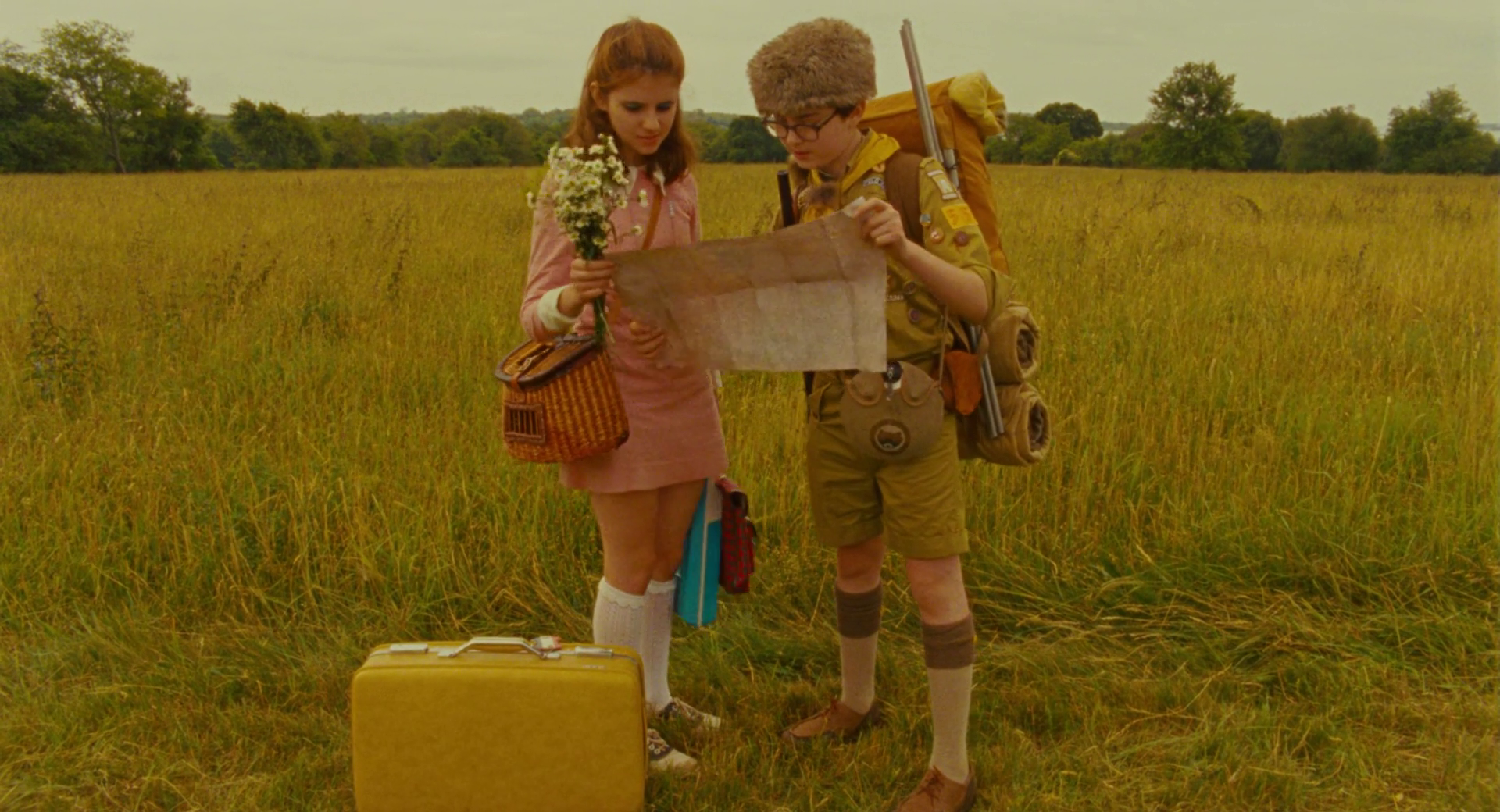
Scouting wasn’t my scene.
It was only for a few years, lasting from the end of elementary school into the first two years of middle school. There was a lot of time outside, camping, learning survival skills, knot tying, and camaraderie with other men. It didn’t jive with my whole thing. I much prefer staying home where there’s plumbing and insulated protection from the elements. I also love watching movies and reading and playing board games. Perhaps most relevantly, I have always found myself drawn to non-male friends. Much as I would have loved to be able to say “Eagle Scout!” on my resume (something that my dad and brother both can), there’s no way I was ever going to make it through all of that.
So when Sam Shakusky bails on his scouting troop in Wes Anderson’s Moonrise Kingdom to run away with some girl named Suzy Bishop, it’s something I deeply relate to.
This isn’t just some love story about two kids who run away together. Sam is a foster kid, an orphan who feels unloved at home and alienated from his compatriots at scout camp. While not an orphan himself, Anderson has been very open about the autobiographical nature of this film, and there are many details within that come directly from his own childhood experiences (including Suzy finding a parent’s copy of Coping with the Very Troubled Child).
In the grand scheme of Anderson, this doesn’t have the totemic weight of the other two films covered in this series of essays. The Royal Tenenbaums put him on the map, and The Grand Budapest Hotel serves as a perfect application of his style with his pet themes.
And yet, that personal touch of Moonrise Kingdom has an enchanting quality to it, and it still stands as special entry into his magnificent canon.
The Magic of the Theater
In discussing The Royal Tenenbaums, one of the joys of that film is Anderson trying to fit his immaculate/sterile aesthetic with the natural grime and age of New York City. When he followed that film with The Life Aquatic with Steve Zissou, much of the budget for that film went to immaculate environments. Even today, it feels like the perfectly manicured settings Anderson loves lack the personality of a great location. And yet, Moonrise Kingdom manages to capture his signature aesthetic with locations on Rhode Island.
It makes this movie feel like a dream.
In building up the island of New Penzance, Anderson builds a locale where even the tempest of a hurricane can feel perfect. The rocks on the beach all feel like they have a pattern, though there doesn’t seem to be anything specific to define that. Camp Ivanhoe (from whence Sam flees) has an organized chaos that feels like a perfectly controlled environment. Even the forests the children run through have a perfect framing to them.
But given that the thing that inspired Anderson was a romance between two children, it shouldn’t be surprising that it starts in a theater.
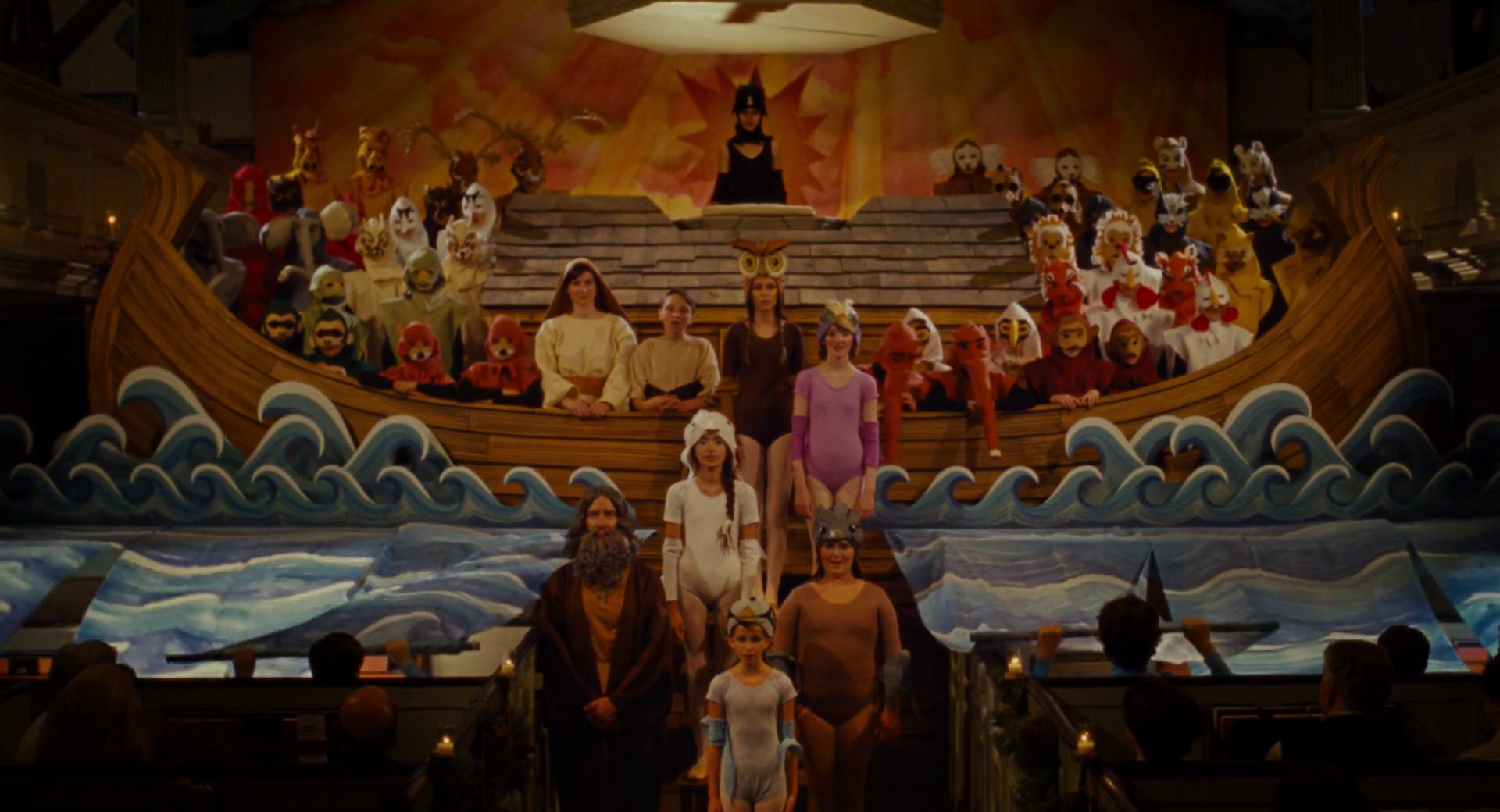
Sam first clocks Suzy in a production of Noye’s Fludde. Itself a one-act play designed for amateur performers, Anderson himself had performed in that same play as a child1. The first meeting between them reveals a lot about Sam, the way he fixates on specific ideas and how his inquisitive mind leads him to learn about the world around him. He has some interest in the performance, but it’s Suzy who captures his interest and finding her what leads him through the backstage area until he does.
There’s something marvelous about Anderson using children’s theater as a vehicle for youthful rebellion and awakening. Suzy’s role as the raven is all dark feathers and befits her morose quiet demeanor. Compared to the soft pastels of the rest of the production, she’s an outlier. What Sam sees in her is a reflection of himself: an outsider forced into the confines of society. Theater (like scouts) enforces a certain type of behavior.
But it also helps Sam to fantasize about her and to create a vision of who this girl could be. She’s more than meets the eye. One of the first things he asks is about why her hand is injured, and her confession of anger issues reveals someone much more than just a girl in a child’s opera. When he sees her spreading her wings at the show’s climax, the infatuation is all-consuming.
The awkwardness of childhood romance
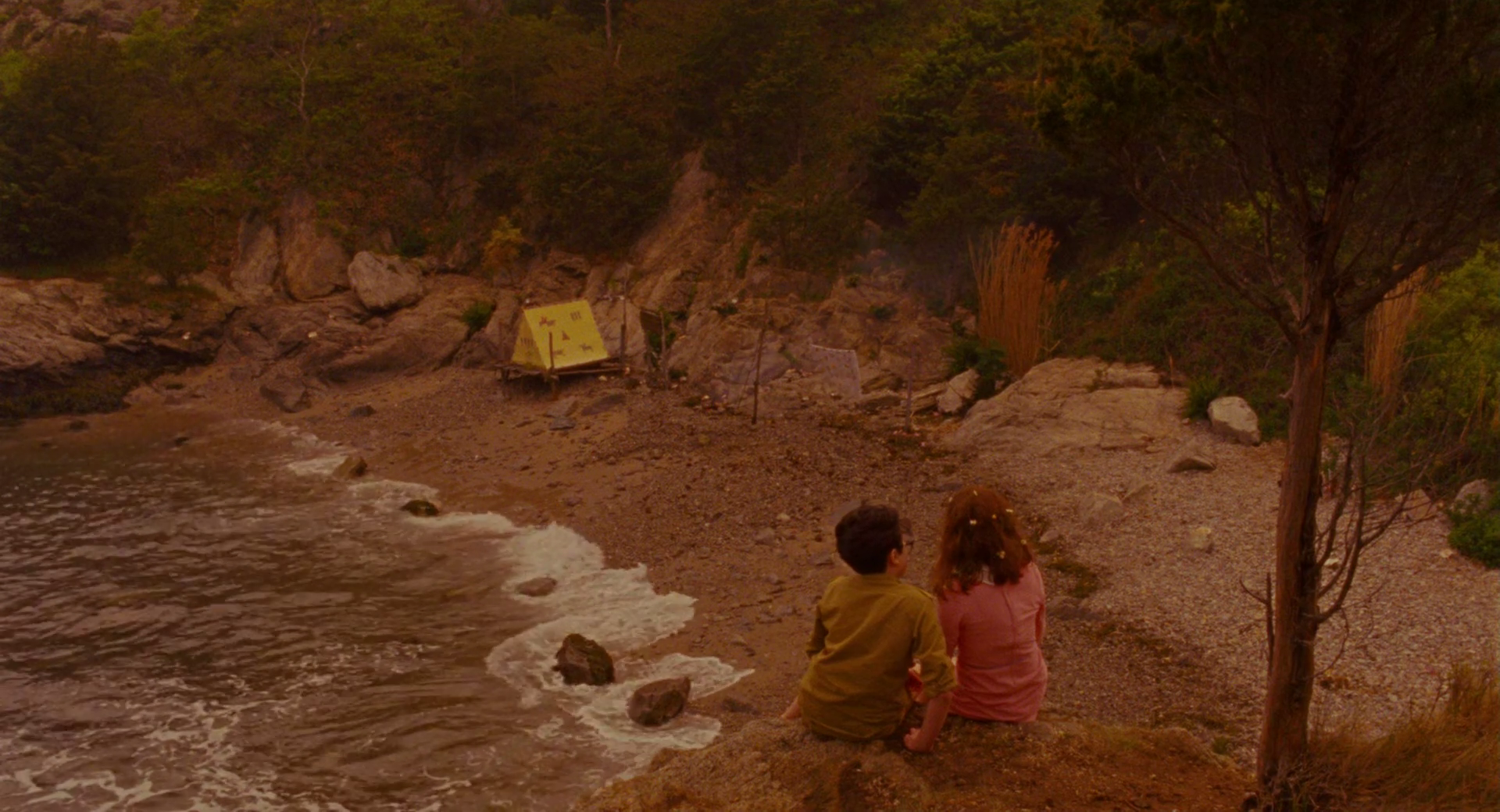
It’s undeniably awkward that Wes Anderson makes a film about children that so openly portrays romance between them. The scene where Suzy and Sam slow dance on the shore of the eponymous beach is undeniably awkward, all the more so when they end up sharing their first kiss. Anderson constructs the scene with delicate care, ratcheting up the way it’s uncomfortable to watch minors engage in physical intimacy.
And yet, within the reality of the scene, everyone involved executes it with tremendous grace and care. It’s not sexualized or sensationalized. If anything, the emotional realism of the moment is what makes it so powerful.
A large part of that is the casting. Jared Gilman and Kara Hayward were both twelve at the time of filming, with Anderson casting age-appropriate rather than older-aged-down. It’s common for shows or films about teens/high schoolers to cast actors in their early 20s, feeling that homogeneity and emotional realism can bridge the verisimilitude gap. While that might help with filming and allowing productions to avoid labor safeguards placed around minors, there really is no replacement for seeing youth represented by real performer. Just watch Claire Danes in My So Called Life to witness an incredible example of that.
Seeing it like this, there is so much value in portraying this experience authentically. Awakenings into adulthood are necessarily awkward and weird, exactly how Gilman and Hayward convey this experience. While you can almost hear Anderson laughing behind the camera, ecstatic at his vision so realized, part of that is because the emotional truth here is so spot on.
Melancholic loneliness
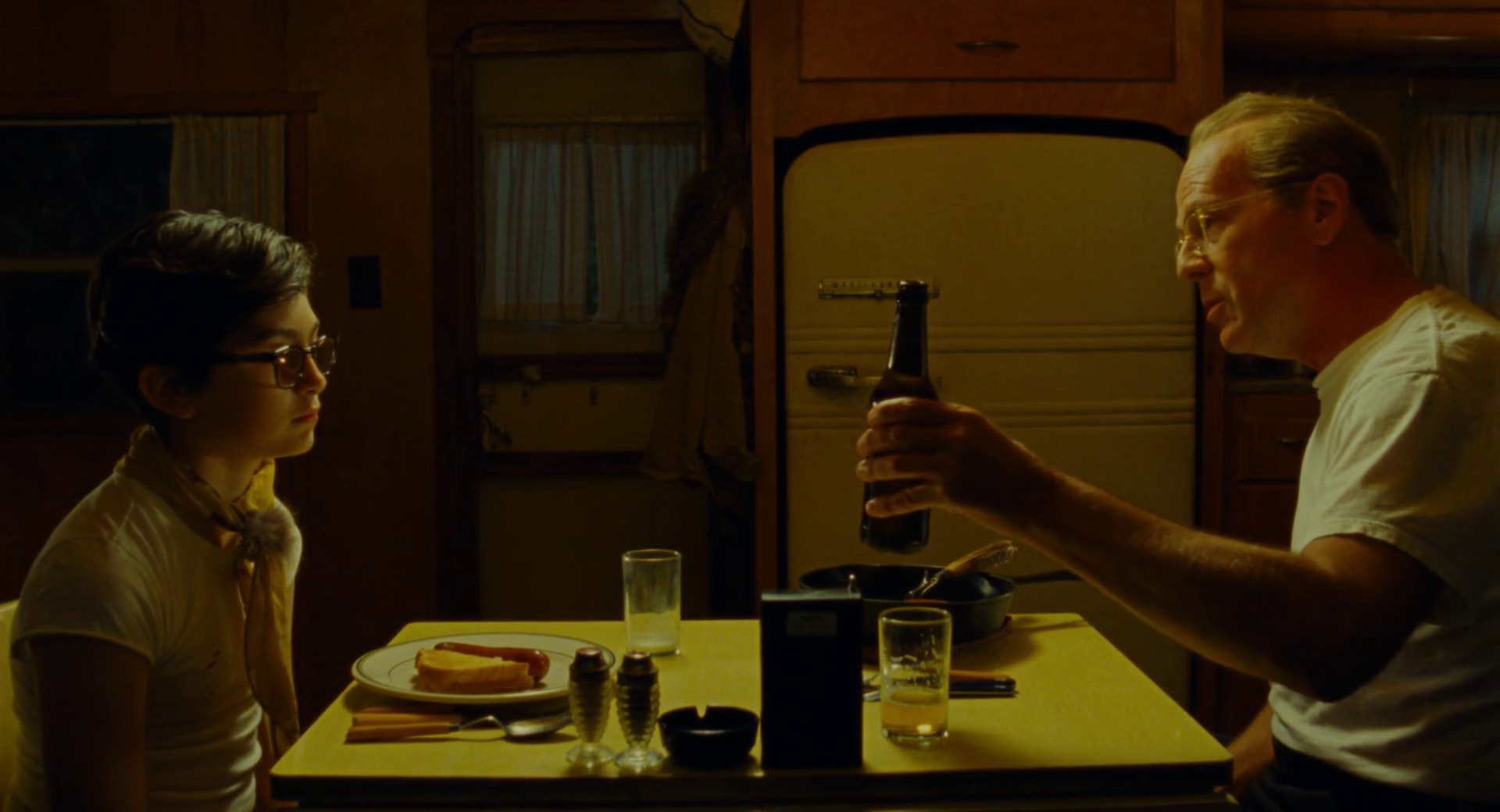
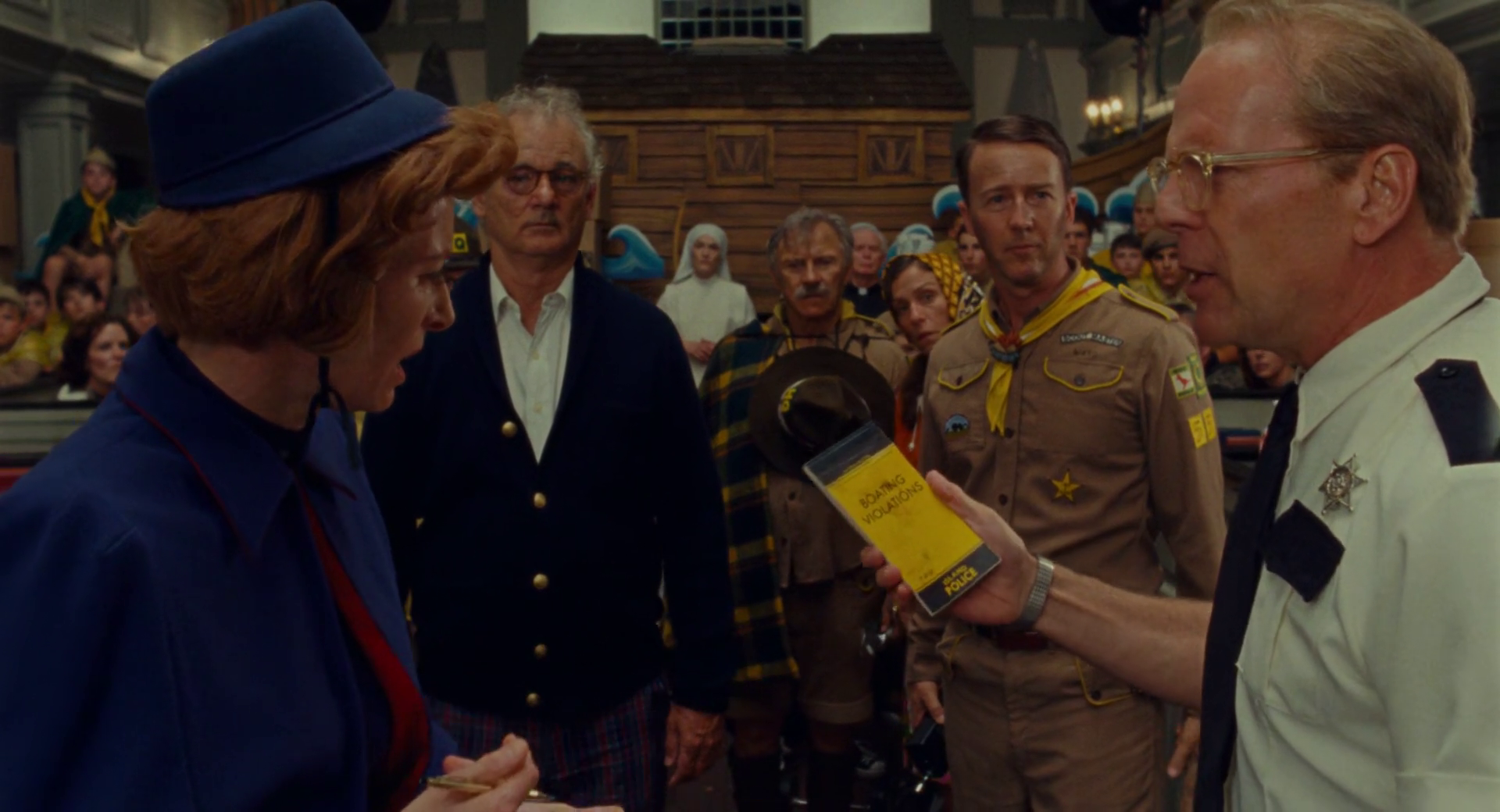
While Sam & Suzy share this experience, the other major arc of the movie comes from Captain Duffy Sharp (Bruce Willis). He ends up adopting Sam, but Anderson portrays the character in such a way that it’s clear what brings the two together is a need for companionship amidst an unvoiced loneliness.
Sam has ensconced himself in loneliness. It’s probably involuntary. While scouts as an organization presents itself as a rugged expression of early 20th Century outdoorsy masculinity, what it teaches more than anything is a sense of community amongst likeminded individuals. There is a brotherhood amidst all the scouts present, where both the ones at Camp Ivanhoe under Scout Master Randy Ward (Edward Norton) and those under Commander Pierce (Harvey Keitel) at Fort Lebannon have a sense of shared purpose. They operate as a unit, and even after the parents forcibly break up the young couple, Sam’s scout troop finds it in themselves to help with his and Suzy’s escape from the island. He’s one of them.
But that’s not how it works for Sam. He’s fine with them, sure. But they don’t mean anything to him relative to Suzy. He abandons them and later gets into a scuffle in the woods that results in (amongst other things) the death of Snoopy the camp dog2. The biggest reason it seems that Sam is into scouting at all is because he really likes the actual ins and outs of scouting’s various skills. He loves showing Suzy what he knows and he’s smart enough to use all of the tools at his disposal to survive without adult supervision.
None of this, though, can hide his solitude. Unlike Suzy (who ran away from home) Sam doesn’t have parents or family. Leaving the troop was relatively easy, no harder than leaving the foster family raising him.
Likewise, Captain Duffy Sharp lives a solitary life on this isolated island. He has a relationship with Laura (Suzy’s mom), but its clandestine nature is not nearly as satisfying as something consistent and constant and fully visible.
Building outside of institutions
As social beings, it makes sense that companionship and emotional/psychological intimacy are necessary components to a healthy existence. It’s why we send kids to schools and try to keep the bars open. Professional sports play in massive arenas on international television, and youth leagues are common in even small communities. Scouting might be a weird relic of a time when the automobile was just going mainstream, but it fosters a sense of community among likeminded individuals and builds off the growing, post-industrial understanding of childhood as a key period of human development.
There is, however, a limit to what these communities are capable of. For instance, while separating scouts by gender creates camaraderie, it can also reduce diversity of thought. Putting Sam into scouts seems like good character building, but if he can’t relate to those around him, it might only add to his alienation. If he finds someone he’d rather spend time with, of course he’ll leave in the middle of the play to go find her.
Likewise, Suzy feels alone within her house. She has younger brothers, but they don’t relate to things like she does. Her parents view her as a troubled kid and don’t know what to do with her.
It might seem lucky that the state has a solution to this. For Sam, the state has basically run out of foster homes for him and will probably end up putting him in an orphanage and subjecting him to electroshock therapy. If his square peg won’t conform to the round hole of society, they will sand down his edges until he does. I have some sympathy for this. While Tilda Swinton’s Social Services character might be strict and unyielding, there is a sense the system is doing what it can to help despite no good options.
But just because Sam (and Suzy) fail to conform, does that mean that they are unfit for society? In a way, their running away flips society the bird as they venture off to make their own life together. Going through the marriage ceremony during their grand escape links their arms such that it will be more difficult to break them apart. There should be a place for them, though. Not fitting into society doesn’t mean society itself is wrong for overlooking what it can’t have foreseen. But it becomes society’s responsibility to mold and re-shape itself to allow all responsible citizens within it to live prosperous lives.
That’s why the end of Moonrise Kingdom feels like such a triumphant happy ending. Captain Duffy Sharp convinces Social Services to allow him to adopt Sam. She acquiesces. And so Sam gets to live on the island, in close proximity to Suzy, wearing a uniform that better reflects his existence and doesn’t feel quite so uncomfortable as the scouting outfit.
It’s not that society can’t make this happen. Bureaucracy hinders it, attempting to codify and limit the need for unique procedure. But individuals like Duffy Sharp or even Social Services can work to change minds and allow for a better and more inclusive society if that’s what it needs.
For Anderson, this is film and his unique artform. It must have felt so isolating to have this specific brain that has all of these peculiar and obtuse interests. His popularity feels like the sort of odd fluke that happens every so often. It’s not like he makes movies with huge budgets that make hundreds of millions of dollars.
He does, however, produce art that appeals to a narrow band of cinephiles. Lucky for us, society has expanded to allow him to create robust and beautiful art like this. His style is so unique and aesthetically pleasing, but who else would do a movie like this? More so than even Grand Budapest, Moonrise Kingdom feels quintessentially Wes Anderson with regards to its themes and specific insights into childhood and the isolation therein. To say that Grand Budapest has a leg up in this respect is to prioritize his aesthetics over thematics. That film might be his masterpiece. There might be even others that Anderson fans will pick over this.
But if his filmography were like this island, Moonrise Kingdom is the eponymous shore/cove itself: a special, hidden oasis, where those who love and appreciate it can roam free and feel alive and celebrate this weird, lovely specimen of a film. Everyone else will come around eventually.